Understanding Inground Pool Texas Cost in 2026
The inground pool Texas cost in 2026 ranges from $35,000 for basic vinyl installations to over $100,000 for luxury gunite pools with premium features. As a Texas homeowner, you’re investing in more than just a pool—you’re adding value to your property while creating an oasis to escape the legendary Texas heat. Understanding the complete cost breakdown helps you budget effectively and avoid surprises during your pool construction project.
Texas presents unique opportunities and challenges for pool installation. The state’s diverse climate, from humid Houston to arid West Texas, affects both construction methods and long-term maintenance costs. With over 29 million residents and a booming housing market, Texas leads the nation in pool installations, creating competitive pricing and abundant contractor options. This guide breaks down everything you need to know about inground pool costs across the Lone Star State.
Breaking Down the Inground Pool Texas Cost by Pool Type
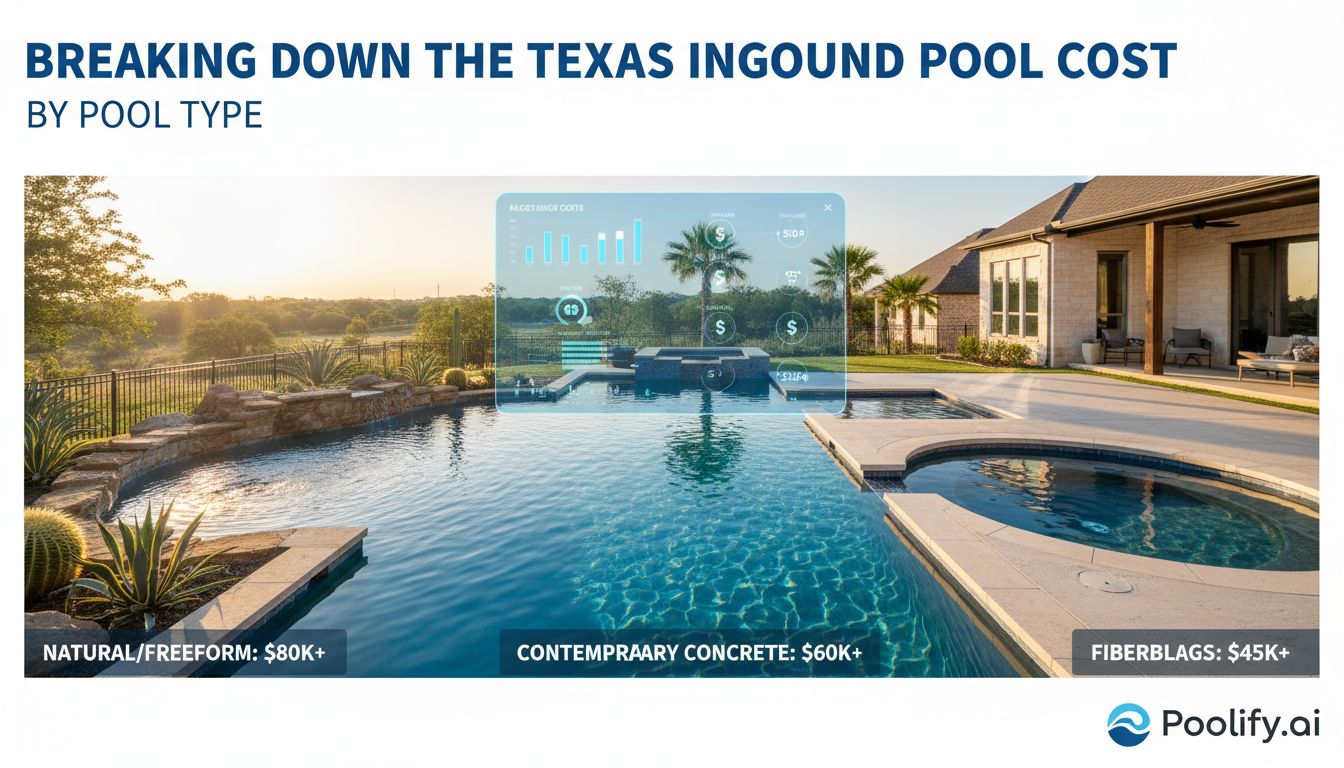
The type of pool you choose dramatically impacts your overall investment. Each material offers distinct advantages, and understanding these differences helps you make the right choice for your budget and lifestyle needs in 2026.
Vinyl Liner Pools: Budget-Friendly Option
Vinyl liner pools represent the most affordable entry point for Texas homeowners, with costs ranging from $35,000 to $55,000 for standard installations. These pools feature a custom-fabricated vinyl liner over a steel, polymer, or concrete frame. The smooth surface feels comfortable underfoot and resists algae growth better than concrete alternatives.
However, vinyl liners require replacement every 7-10 years at a cost of $4,000 to $7,000, which factors into your long-term ownership expenses. Texas heat can accelerate liner degradation, particularly in areas with intense UV exposure like West Texas and the Panhandle region.
Fiberglass Pools: Mid-Range Investment
Fiberglass pools cost between $45,000 and $75,000 in Texas for 2026 installations. These pre-manufactured shells arrive at your property ready for installation, significantly reducing construction time to just 3-6 weeks compared to 8-12 weeks for concrete pools.
The non-porous gel coat surface requires fewer chemicals and less maintenance than concrete, saving Texas homeowners approximately $500-800 annually on chemical costs. This makes fiberglass particularly attractive in areas with hard water, common throughout Central Texas and the Hill Country region.
Gunite and Concrete Pools: Premium Choice
Gunite pools represent the premium tier of inground pool Texas cost, ranging from $60,000 to $100,000 or more for elaborate designs. This construction method sprays concrete over a rebar framework, allowing complete customization of shape, depth, and features.
Texas pool builders favor gunite for its durability in shifting soil conditions, particularly important in areas with expansive clay soils like the Dallas-Fort Worth metroplex. The material withstands ground movement better than other options, reducing long-term structural issues. For more information on pool construction methods, visit the Association of Pool & Spa Professionals for industry standards and guidelines.
Why Inground Pool Texas Cost Varies by Region
Texas spans 268,596 square miles with dramatically different climates, soil conditions, and economic factors that influence pool installation costs. Understanding these regional variations helps you budget accurately based on your specific location.
Houston and Gulf Coast Region
The Houston metropolitan area, home to over 7 million residents, experiences high humidity and frequent rainfall averaging 50 inches annually. The inground pool Texas cost here ranges from $40,000 to $90,000, with additional expenses for drainage systems and moisture management.
The expansive clay soils common throughout the Gulf Coast require extensive excavation preparation and reinforced structures. Pool builders in Houston typically add 10-15% to base costs for soil stabilization measures. The region’s median home value of $285,000 makes pool additions attractive investments, typically adding 7-10% to property values.
Dallas-Fort Worth Metroplex
The DFW area represents Texas’s largest pool market, with over 8 million residents and a median household income of $75,000. Competition among contractors keeps prices competitive, with inground pool Texas cost averaging $38,000 to $85,000 for standard installations.
The region’s clay-heavy soil expands and contracts with moisture changes, requiring specialized construction techniques. Summer temperatures regularly exceed 100°F, driving strong demand for pools and creating seasonal price fluctuations. Booking installations during fall or winter can save 10-20% compared to peak summer pricing.
Austin and Central Texas
Austin’s booming economy and population growth of 3% annually have created robust demand for pool installations. The inground pool Texas cost in Central Texas ranges from $45,000 to $95,000, reflecting the area’s higher construction costs and premium market positioning.
The region’s limestone bedrock requires specialized excavation equipment, potentially adding $3,000 to $8,000 to base costs depending on rock depth. However, the area’s moderate climate with 300 sunny days annually maximizes pool usage throughout the year. According to U.S. Census data, Travis County’s median home value of $450,000 makes pool investments particularly attractive for property value enhancement.
San Antonio and South Texas
San Antonio offers some of Texas’s most competitive pool pricing, with inground pool Texas cost ranging from $35,000 to $75,000. The area’s lower cost of living and abundant contractor availability create favorable market conditions for homeowners.
The region’s hot, dry climate with temperatures exceeding 100°F for 40+ days annually makes pools highly desirable. Water conservation concerns have driven adoption of efficient filtration systems and covers, adding $2,000 to $5,000 to initial costs but reducing long-term water expenses by 30-40%.
West Texas and Rural Areas
West Texas presents unique challenges affecting inground pool Texas cost, with prices ranging from $40,000 to $90,000. Limited contractor availability often requires bringing crews from major cities, adding 15-25% for travel and logistics expenses.
The arid climate and high evaporation rates necessitate automatic fill systems and covers, adding $1,500 to $4,000 to installations. However, the region’s stable soil conditions reduce foundation concerns, potentially offsetting some additional costs.
Key Factors Affecting Inground Pool Texas Cost in 2026
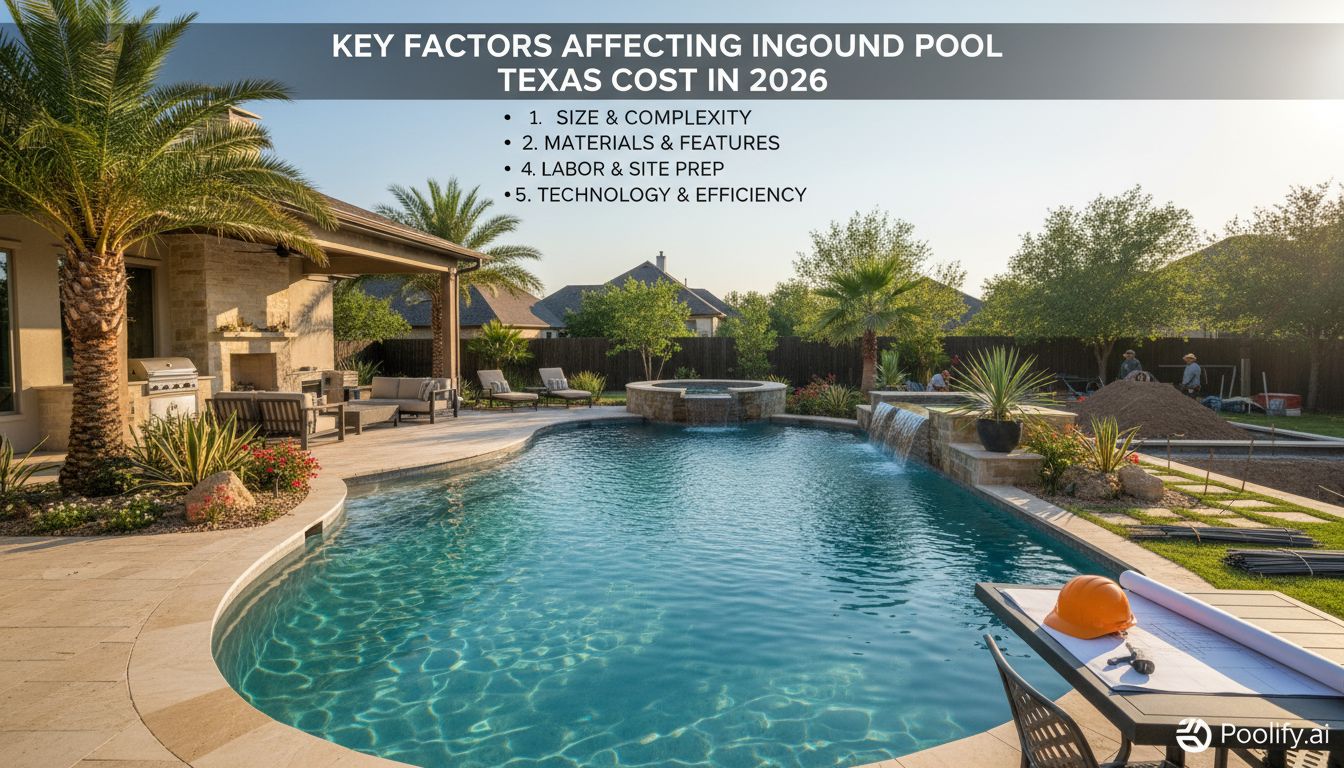
Beyond pool type and location, numerous factors influence your final investment. Understanding these variables helps you make informed decisions and avoid budget overruns during construction.
Pool Size and Depth
Standard residential pools measure 12×24 to 16×32 feet with depths of 3.5 to 6 feet. Each additional square foot adds approximately $50-100 to your inground pool Texas cost, while deeper excavation increases expenses by $1,000-2,000 per additional foot of depth.
Texas homeowners typically opt for larger pools than national averages, with the standard size being 14×28 feet. The state’s spacious lots and outdoor lifestyle culture support these larger installations. Consider your lot size, intended use, and long-term maintenance costs when determining dimensions.
Excavation and Site Preparation
Site preparation costs vary dramatically based on soil conditions, accessibility, and existing landscaping. Basic excavation adds $3,000 to $8,000 to your project, while challenging sites with rock, slopes, or limited access can increase costs to $15,000 or more.
Texas’s diverse geology means excavation costs vary significantly by region. Rocky Hill Country terrain requires specialized equipment and extended timelines, while the Coastal Plain’s sandy soils allow easier excavation but may need additional structural reinforcement.
Permits and Inspections
Texas municipalities require building permits for pool installations, typically costing $500 to $2,000 depending on location and project scope. Major cities like Houston, Dallas, and Austin have comprehensive permitting processes requiring electrical, plumbing, and final inspections.
Some Texas homeowners’ associations impose additional requirements and fees ranging from $200 to $1,000. Review your HOA covenants before beginning design work to avoid costly modifications later in the process.
Decking and Surrounding Hardscape
Pool decking represents a significant portion of your inground pool Texas cost, ranging from $5,000 for basic concrete to $25,000+ for premium materials like travertine or flagstone. Texas homeowners should prioritize heat-resistant materials that remain comfortable barefoot during scorching summer months.
Popular Texas decking options include cool-deck concrete ($8-12 per square foot), travertine pavers ($15-25 per square foot), and flagstone ($20-30 per square foot). The intense Texas sun makes light-colored, reflective materials particularly valuable for comfort and energy efficiency.
Water Features and Lighting
Water features like waterfalls, fountains, and deck jets add $2,000 to $15,000 to your project depending on complexity. LED lighting systems cost $1,500 to $5,000 but dramatically enhance nighttime ambiance and safety while consuming minimal electricity.
Texas pool owners increasingly incorporate smart lighting systems controllable via smartphone apps, adding convenience and energy management capabilities. These systems typically add $500-1,500 to installation costs but provide long-term operational savings.
Additional Costs Beyond Basic Inground Pool Texas Cost
Smart budgeting accounts for expenses beyond the pool shell itself. These additional investments enhance functionality, safety, and enjoyment while protecting your long-term investment.
Heating Systems
Pool heaters extend your swimming season, particularly valuable in North Texas where temperatures drop significantly in winter months. Gas heaters cost $2,500 to $5,000 installed, while heat pumps range from $3,500 to $7,000. Solar heating systems require higher upfront investment of $4,000 to $8,000 but offer minimal operating costs in sun-rich Texas.
Heat pumps work efficiently in South Texas’s mild winters but struggle when temperatures drop below 50°F, common in northern regions. Gas heaters provide reliable heating statewide but cost $200-400 monthly to operate during heating season.
Automation and Smart Controls
Pool automation systems cost $1,500 to $4,000 but provide convenient control of filtration, heating, lighting, and water features from your smartphone. These systems optimize equipment runtime, reducing energy costs by 20-30% while ensuring proper water circulation and chemical balance.
Texas’s tech-savvy homeowners increasingly demand smart pool features, with adoption rates exceeding national averages by 15-20%. Integration with home automation systems adds convenience and property value for tech-oriented buyers.
Safety Equipment and Fencing
Texas law requires barrier protection for residential pools, typically costing $3,000 to $10,000 depending on materials and lot perimeter. Options include mesh fencing ($15-25 per linear foot), wrought iron ($25-40 per linear foot), or glass panels ($150-300 per linear foot).
Additional safety features like pool alarms ($200-500), safety covers ($1,500-3,000), and automatic pool covers ($8,000-15,000) provide peace of mind and may reduce homeowner’s insurance premiums by 2-5%.
Landscaping Integration
Professional landscaping around your pool creates a cohesive outdoor environment, costing $3,000 to $15,000 depending on scope. Texas-appropriate plants include drought-tolerant natives like Texas sage, lantana, and ornamental grasses that thrive in heat while minimizing water consumption.
Strategic landscaping provides privacy, wind protection, and shade, reducing evaporation rates and creating comfortable lounging areas. Consider working with designers experienced in Texas climates to select plants that withstand pool chemicals and high chlorine exposure.
Financing Your Inground Pool Texas Cost
Understanding financing options helps make your pool project financially manageable while preserving cash reserves for other priorities. Texas homeowners have multiple financing paths, each with distinct advantages and considerations.
Home Equity Loans and Lines of Credit
Home equity financing offers competitive interest rates, typically 6-9% in 2026, with tax-deductible interest in many cases. Texas homeowners can typically borrow up to 80% of home equity, making this viable for properties with substantial equity accumulation.
Home equity lines of credit (HELOCs) provide flexibility to draw funds as needed during construction, paying interest only on amounts used. This approach works well for phased projects where you’re adding features over time to manage cash flow.
Personal Loans
Unsecured personal loans for pool financing range from $10,000 to $100,000 with interest rates of 8-15% depending on creditworthiness. These loans close quickly, often within days, and don’t require home equity or appraisals.
Texas credit unions often offer competitive rates for members, with some providing specialized pool financing programs. Compare multiple lenders to secure optimal terms, as rate differences of 2-3% significantly impact total interest paid over loan terms.
Contractor Financing
Many Texas pool builders partner with financing companies offering promotional terms like 12-18 months interest-free or low introductory rates. Review terms carefully, as deferred interest promotions charge retroactive interest if balances remain after promotional periods.
Contractor financing provides convenience but may not offer the most competitive rates. Compare these options against traditional lending sources to ensure you’re securing favorable terms for your inground pool Texas cost financing.
Reducing Your Inground Pool Texas Cost Without Sacrificing Quality
Strategic planning and informed decisions help you maximize value while controlling expenses. These proven approaches reduce costs without compromising pool quality, safety, or longevity.
Timing Your Project Strategically
Texas pool contractors offer significant discounts during off-peak seasons from October through February. Booking installations during these months can reduce your inground pool Texas cost by 10-20% as contractors seek to maintain crew employment during slower periods.
Winter installations also provide faster permitting and inspection processes as municipal departments handle fewer concurrent projects. You’ll have your pool ready for spring swimming season while avoiding the premium pricing and extended timelines of peak summer demand.
Simplifying Pool Shape and Features
Rectangular and simple geometric shapes cost 15-25% less than elaborate free-form designs requiring complex formwork and additional labor. These classic shapes also maximize swimming space while minimizing surface area, reducing long-term heating and chemical costs.
Consider adding premium features in phases rather than during initial construction. Installing basic infrastructure like plumbing rough-ins for future water features costs minimal amounts initially but allows you to add enhancements as budget permits.
Selecting Cost-Effective Materials
Standard plaster finishes cost $3-5 per square foot compared to $8-15 for premium aggregate finishes. While upgraded finishes offer enhanced aesthetics and durability, quality plaster provides 7-10 years of service when properly maintained.
Similarly, standard concrete decking costs half the price of premium pavers while offering excellent durability. You can always upgrade decking in future years as budget allows, making this an ideal area for initial cost savings on your inground pool Texas cost.
Comparing Multiple Contractor Bids
Obtaining 3-5 detailed quotes from licensed Texas pool contractors reveals market pricing and helps identify outliers. Ensure bids include identical specifications for accurate comparisons, covering all materials, labor, permits, and warranty terms.
Verify contractors hold proper Texas licensing and insurance coverage. The Texas Department of Licensing and Regulation oversees pool contractor licensing, providing verification services to protect homeowners from unlicensed operators. For comprehensive pool maintenance strategies that can reduce long-term costs, explore our guide on essential pool maintenance tips.
Long-Term Ownership Costs for Texas Pool Owners
Understanding ongoing expenses helps you budget accurately for pool ownership beyond initial construction. Texas’s climate and water costs create unique considerations for long-term pool operation and maintenance.
Utility Costs
Pool pumps and equipment consume 1,500-2,500 kWh annually, costing $180-350 at Texas’s average electricity rate of 12-14 cents per kWh. Variable-speed pumps reduce energy consumption by 50-70%, paying for themselves within 2-3 years through utility savings.
Water costs vary significantly across Texas, from $3-4 per 1,000 gallons in Houston to $8-10 in arid West Texas. Initial pool filling costs $150-400, while evaporation and backwashing add $300-800 annually depending on location and pool size.
Chemical and Maintenance Supplies
Texas pool owners spend $400-800 annually on chemicals including chlorine, pH adjusters, and algaecides. The state’s hot climate and extended swimming season increase chemical consumption compared to cooler regions, with peak summer months requiring weekly additions.
Professional maintenance services cost $80-150 monthly for weekly cleaning and chemical balancing. Many Texas homeowners opt for professional service during peak summer months while self-maintaining during cooler periods to balance cost and convenience.
Repairs and Equipment Replacement
Budget $500-1,200 annually for repairs and equipment replacement. Pumps last 8-12 years ($500-1,200 replacement), heaters 10-15 years ($2,500-5,000 replacement), and filters 5-7 years ($300-800 replacement). Texas’s hard water accelerates equipment wear, particularly in Central Texas and West Texas regions.
Pool resurfacing becomes necessary every 10-15 years for gunite pools, costing $5,000-10,000 depending on finish type and pool size. Proactive maintenance extends surface life, making this a critical consideration for long-term ownership budgeting. Learn more about maintaining pool equipment in our detailed pool equipment maintenance guide.
Maximizing Return on Investment for Your Texas Pool
Strategic planning ensures your pool investment enhances property value and lifestyle quality. Texas’s strong pool market provides excellent return potential when you make informed decisions about design, features, and maintenance.
Property Value Enhancement
Inground pools add 5-10% to Texas home values in markets with strong pool demand, particularly in areas with extended swimming seasons like South Texas and the Gulf Coast. The actual return varies by neighborhood, with pool-dense communities showing stronger value appreciation.
Pool quality and condition significantly impact value contribution. Well-maintained pools with modern equipment and attractive hardscaping command premium valuations, while dated or poorly maintained pools may actually decrease property appeal to potential buyers.
Energy Efficiency Features
Investing in energy-efficient equipment reduces operating costs while appealing to environmentally conscious buyers. Variable-speed pumps, LED lighting, and solar heating systems typically recover their additional cost within 3-5 years through utility savings.
Pool covers reduce evaporation by 90-95%, saving thousands of gallons of water annually while reducing chemical consumption and heating costs. In Texas’s hot climate, covers pay for themselves within 2-3 years through combined water, chemical, and energy savings.
Timeless Design Choices
Classic pool designs and neutral color schemes appeal to broader buyer demographics than highly personalized features. Rectangular and simple geometric shapes remain popular across decades, while trendy free-form designs may feel dated within 10-15 years.
Focus on quality construction and durable materials rather than temporary trends. Well-executed basics like proper circulation, adequate decking, and quality finishes provide lasting value that transcends changing aesthetic preferences.
Frequently Asked Questions About Inground Pool Texas Cost
What is the average inground pool Texas cost in 2026?
The average inground pool Texas cost in 2026 ranges from $35,000 to $100,000 depending on pool type, size, and features. Vinyl liner pools start around $35,000, fiberglass pools average $45,000-75,000, and gunite pools range from $60,000 to $100,000 or more. Regional variations, soil conditions, and custom features significantly impact final costs. Most Texas homeowners invest $50,000-70,000 for a quality mid-range pool with standard features and decking.
How does Texas soil affect pool installation costs?
Texas soil conditions dramatically impact excavation and construction costs. Expansive clay soils common in North and East Texas require reinforced construction and drainage systems, adding 10-15% to base costs. Rocky limestone areas in Central Texas need specialized excavation equipment, potentially adding $3,000-8,000. Coastal sandy soils allow easier excavation but may require additional structural support. Your contractor should conduct soil analysis before providing accurate cost estimates for your specific site.
Are pools a good investment in Texas?
Pools represent excellent investments in Texas due to the state’s hot climate, extended swimming season, and strong pool culture. Quality pools add 5-10% to home values in pool-friendly markets, with the strongest returns in areas with median home values above $300,000. Beyond financial return, pools provide lifestyle value through entertainment, exercise, and outdoor living enhancement. The investment makes most sense for homeowners planning to stay in their property 5+ years to recover installation costs.
What time of year offers the best pricing for pool installation?
Fall and winter months from October through February offer the best pricing for Texas pool installations, with potential savings of 10-20% compared to peak summer rates. Contractors seek to maintain crew employment during slower seasons and offer discounts to secure projects. Winter installations also provide faster permitting and shorter construction timelines due to reduced demand. Your pool will be ready for spring swimming season while avoiding the premium pricing and extended wait times of peak demand periods.
Do I need a permit for an inground pool in Texas?
Yes, Texas municipalities require building permits for inground pool installations, typically costing $500-2,000 depending on location and project scope. Permits ensure compliance with safety codes, electrical requirements, and setback regulations. The permitting process includes plan review, multiple inspections during construction, and final approval before pool use. Working with licensed contractors familiar with local requirements streamlines the permitting process and ensures code compliance. Some homeowners’ associations impose additional approval requirements beyond municipal permits.
Key Takeaways
- Inground pool Texas cost ranges from $35,000 to $100,000+ in 2026, with vinyl liner pools at the lower end, fiberglass in the mid-range, and gunite pools commanding premium pricing for ultimate customization and durability.
- Regional variations significantly impact pricing across Texas, with factors like soil conditions, contractor availability, and local market dynamics creating 15-25% cost differences between areas like Houston, Dallas, Austin, and rural regions.
- Strategic timing and smart choices reduce costs by 10-20% without sacrificing quality, including off-season installations, simplified designs, and phased feature additions that spread expenses over time.
- Long-term ownership costs of $1,500-3,000 annually include utilities, chemicals, maintenance, and equipment replacement, with energy-efficient equipment and proper maintenance reducing these ongoing expenses significantly.
- Quality pools add 5-10% to Texas home values in strong markets while providing lifestyle benefits that justify the investment, particularly in regions with extended swimming seasons and high pool demand among buyers.
See Your Dream Pool in Your Actual Backyard
Upload a photo and get an AI-designed pool visualization in 10 seconds. 3 free designs, no login required.
Try Poolify Free →Conclusion
Understanding the complete picture of inground pool Texas cost empowers you to make informed decisions about your 2026 pool project. From initial construction expenses ranging from $35,000 to $100,000+ to ongoing ownership costs and long-term value considerations, thorough planning ensures your investment delivers maximum enjoyment and return.
Texas’s diverse regions present unique opportunities and challenges that affect both installation costs and long-term pool performance. Whether you’re building in Houston’s humid climate, navigating Dallas’s expansive clay soils, or working with Austin’s limestone bedrock, partnering with experienced local contractors ensures proper construction techniques for your specific conditions.
The key to successful pool ownership lies in balancing upfront investment with long-term value. Strategic choices about pool type, features, and timing can reduce your inground pool Texas cost by thousands while still delivering the quality and functionality you desire. Energy-efficient equipment, proper maintenance, and timeless design choices protect your investment while minimizing ongoing expenses.
As you move forward with your pool project, obtain multiple detailed quotes from licensed contractors, verify references, and ensure comprehensive contracts protecting your interests. Your pool represents a significant investment in your property and lifestyle, and careful planning ensures it delivers decades of enjoyment for your family while enhancing your Texas home’s value and appeal. For additional guidance on pool design and planning, visit our comprehensive resource on innovative pool design ideas to inspire your project.
References
- Association of Pool & Spa Professionals – https://www.apsp.org/
- U.S. Census Bureau – Texas QuickFacts – https://www.census.gov/quickfacts/TX
