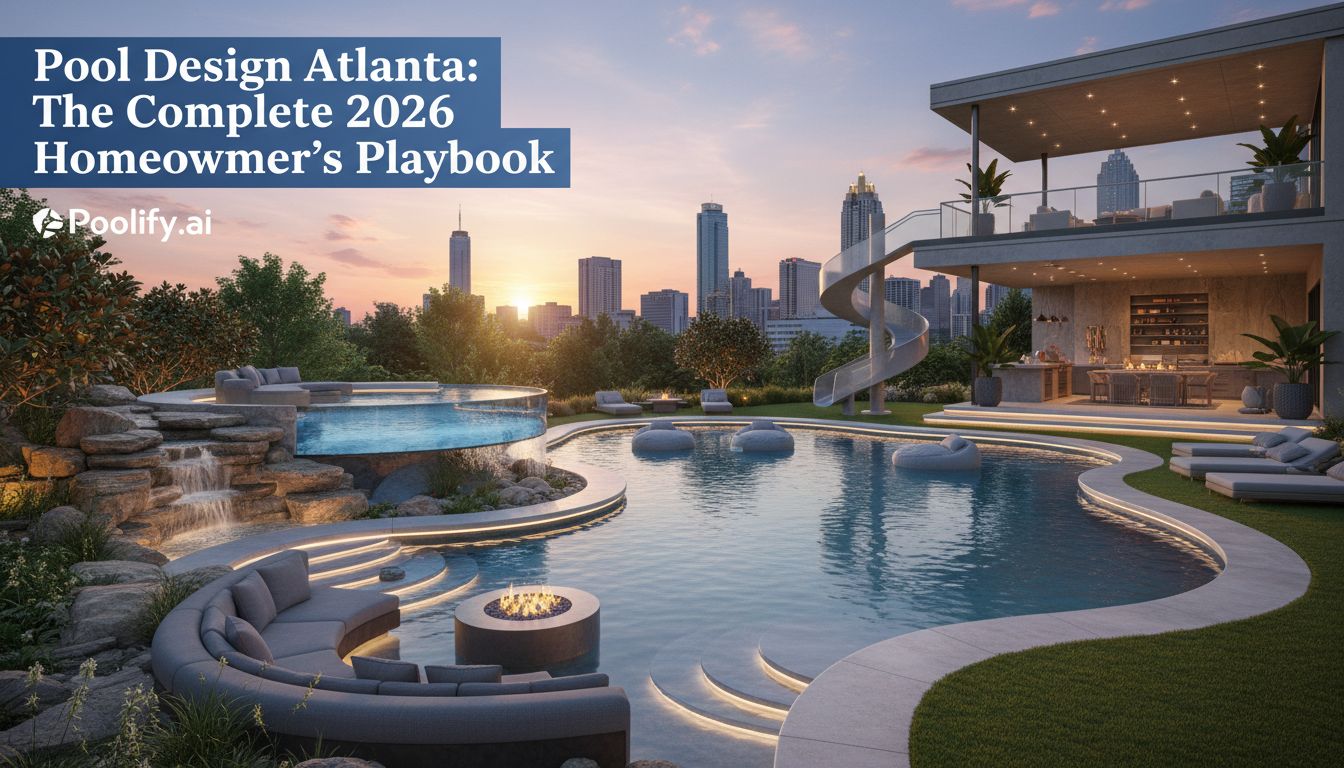
Planning a stunning backyard oasis requires careful consideration, especially in Atlanta’s unique climate and regulatory environment. Pool design Atlanta homeowners are embracing in 2026 combines Southern charm with modern functionality, creating outdoor spaces that withstand hot summers while complementing the region’s architectural diversity. Whether you’re in Buckhead, Decatur, or Sandy Springs, understanding local requirements and design principles ensures your investment delivers lasting value and enjoyment for years to come.
This comprehensive guide walks you through everything from initial planning and permit requirements to selecting materials that thrive in Georgia’s climate. You’ll discover how Atlanta’s specific conditions influence design choices, explore cost considerations across different neighborhoods, and learn actionable strategies to create a pool that enhances your property value while reflecting your personal style.
Why Pool Design Atlanta Requires Specialized Knowledge
The Atlanta metropolitan area presents unique challenges and opportunities for pool design that differ significantly from other regions. Understanding these local factors is essential for creating a successful project that meets both your aesthetic goals and practical needs.
Atlanta’s climate features hot, humid summers with average temperatures reaching 89°F in July and mild winters where temperatures rarely drop below freezing for extended periods. This weather pattern allows for a longer swimming season compared to northern states, typically spanning from April through October. However, the high humidity levels require specific considerations for pool equipment, decking materials, and landscaping choices that resist mold and mildew growth.
The city’s diverse topography, ranging from rolling hills in North Fulton to flatter terrain in South DeKalb, affects excavation costs and drainage planning. Properties with significant slope may require retaining walls or terraced designs, while flatter lots offer more flexibility but need careful attention to water runoff management. According to the City of Atlanta government, proper drainage planning is mandatory for all pool installations to prevent neighborhood water issues.
Atlanta’s population of approximately 498,000 residents within city limits, expanding to over 6 million in the metro area, creates a competitive market for pool contractors and designers. The median home value in desirable neighborhoods like Ansley Park and Virginia Highland exceeds $650,000, making pool design Atlanta homeowners pursue a significant investment that must align with property values and neighborhood aesthetics.
Local Climate Impact on Pool Design
Georgia’s red clay soil composition presents specific challenges for pool installation. This dense, compact soil requires specialized excavation techniques and often necessitates soil stabilization measures to prevent shifting or settling. The clay’s poor drainage characteristics mean that proper backfill materials and drainage systems are non-negotiable elements of any pool design Atlanta contractors recommend.
The region receives an average of 50 inches of rainfall annually, concentrated during spring and summer months. This precipitation pattern influences decisions about pool covers, automatic water levelers, and overflow drainage systems. Smart pool design Atlanta professionals incorporate anticipates heavy rain events and includes features that prevent flooding and maintain water chemistry balance during wet periods.
Atlanta’s occasional winter freezes, while brief, require freeze protection for plumbing lines and equipment. Most pool design Atlanta projects include insulated pipes and strategically placed equipment housings that protect mechanical systems during cold snaps, ensuring longevity and reducing maintenance headaches.
Essential Permit Requirements and Regulations
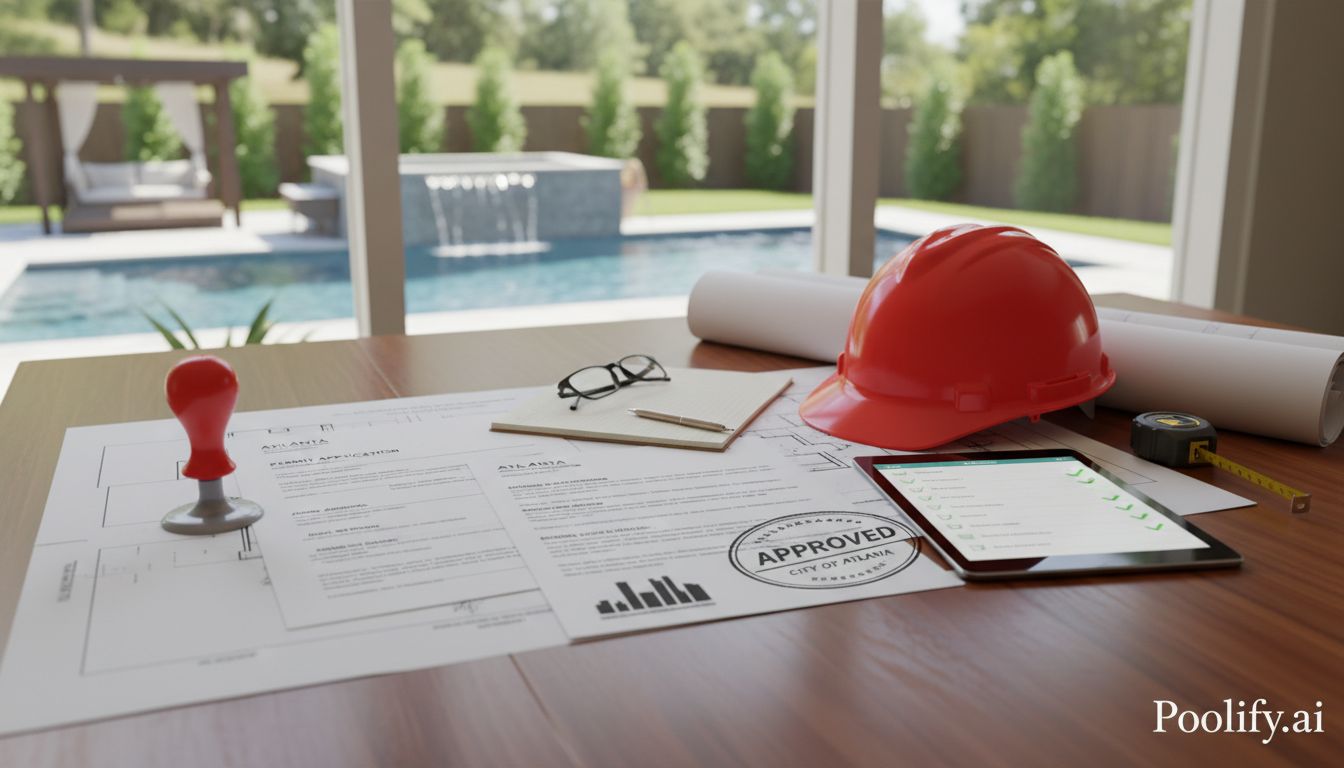
Navigating Atlanta’s permitting process is a critical first step that many homeowners underestimate. The city requires multiple permits and inspections, and failure to comply can result in fines, required removal, or complications when selling your property.
Building permits for pool design Atlanta projects must be obtained from the Atlanta Department of City Planning before any excavation begins. The application requires detailed construction drawings, site plans showing property lines and setbacks, and proof of property ownership. Permit fees typically range from $500 to $1,500 depending on project scope and property location.
Setback requirements mandate that pools maintain specific distances from property lines, typically 10 feet from rear and side boundaries, though this varies by zoning district. Corner lots and properties in historic districts face additional restrictions. The Fulton County government enforces these regulations strictly, and variance requests can add months to your project timeline.
Electrical permits are separate requirements covering pool lighting, pumps, heaters, and any auxiliary equipment. Licensed electricians must perform all installations, and inspections verify compliance with National Electrical Code standards for wet locations. Ground fault circuit interrupters (GFCIs) are mandatory for all pool electrical systems.
Fence and Safety Regulations
Georgia law requires barrier protection for all residential pools exceeding 24 inches in depth. Fencing must be at least 4 feet high with self-closing, self-latching gates that open outward from the pool area. Many pool design Atlanta projects incorporate these safety features into the overall aesthetic, using decorative wrought iron, glass panels, or landscaping elements that satisfy legal requirements while enhancing visual appeal.
Additional safety features often required or recommended include pool alarms, safety covers, and anti-entrapment drain covers compliant with the Virginia Graeme Baker Pool and Spa Safety Act. These elements should be integrated into your initial design rather than added as afterthoughts.
Popular Pool Design Styles for Atlanta Homes
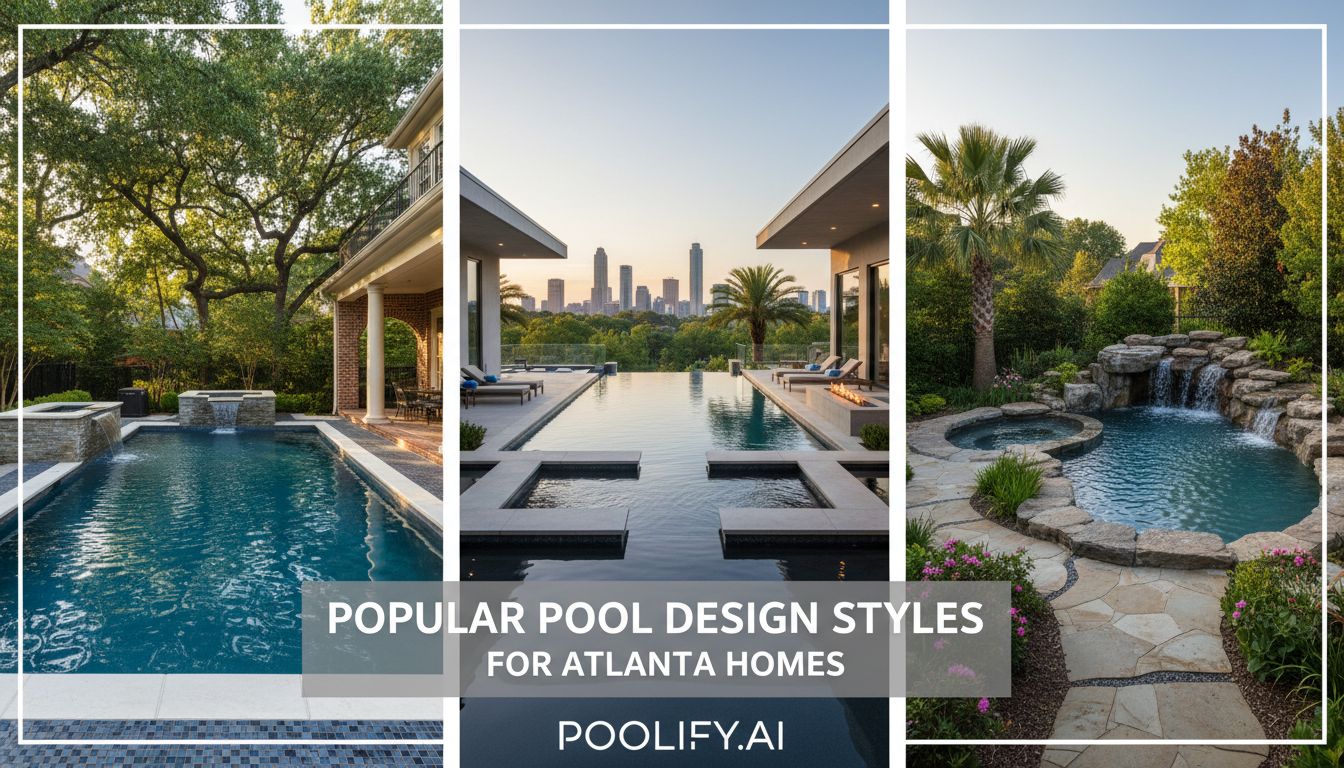
Pool design Atlanta trends in 2026 reflect both national movements and regional preferences shaped by Southern architectural traditions and lifestyle patterns. Understanding these styles helps you create a cohesive outdoor environment that complements your home’s character.
Resort-style pools dominate luxury neighborhoods like Brookhaven and Vinings, featuring organic shapes, beach entries, and integrated spas. These designs create vacation-like atmospheres with extensive decking, outdoor kitchens, and lush tropical landscaping. The resort aesthetic works particularly well with Atlanta’s longer swimming season, encouraging frequent use and outdoor entertaining.
Geometric pools with clean lines and rectangular or L-shaped configurations appeal to homeowners with modern or contemporary architecture. These designs maximize lap swimming space and pair beautifully with minimalist landscaping featuring architectural plants like ornamental grasses and sculptural evergreens. Geometric pool design Atlanta professionals recommend often includes raised spas with spillover features and integrated fire elements for year-round visual interest.
Naturalistic pools incorporating rock features, waterfalls, and irregular shapes blend seamlessly with Atlanta’s wooded lots and natural topography. These designs work especially well in neighborhoods like Druid Hills or Cascade Heights where mature trees and existing landscape features inspire more organic approaches. Natural pool design Atlanta contractors execute requires careful integration with existing vegetation and often includes native plant selections that thrive in poolside microclimates.
Infinity Edge and Vanishing Edge Designs
Properties with elevation changes present opportunities for dramatic infinity edge or vanishing edge pools where water appears to merge with the horizon. These sophisticated pool design Atlanta options are particularly striking on hillside lots in areas like North Buckhead or along the Chattahoochee River corridor. The visual impact justifies the additional engineering and construction costs for homeowners seeking statement pieces.
Infinity pools require precise grading, catch basins, and powerful circulation systems to manage the continuous water overflow. The initial investment runs 30-50% higher than traditional pools, but the dramatic effect and property value enhancement often justify the premium in luxury markets.
Material Selection for Atlanta’s Climate
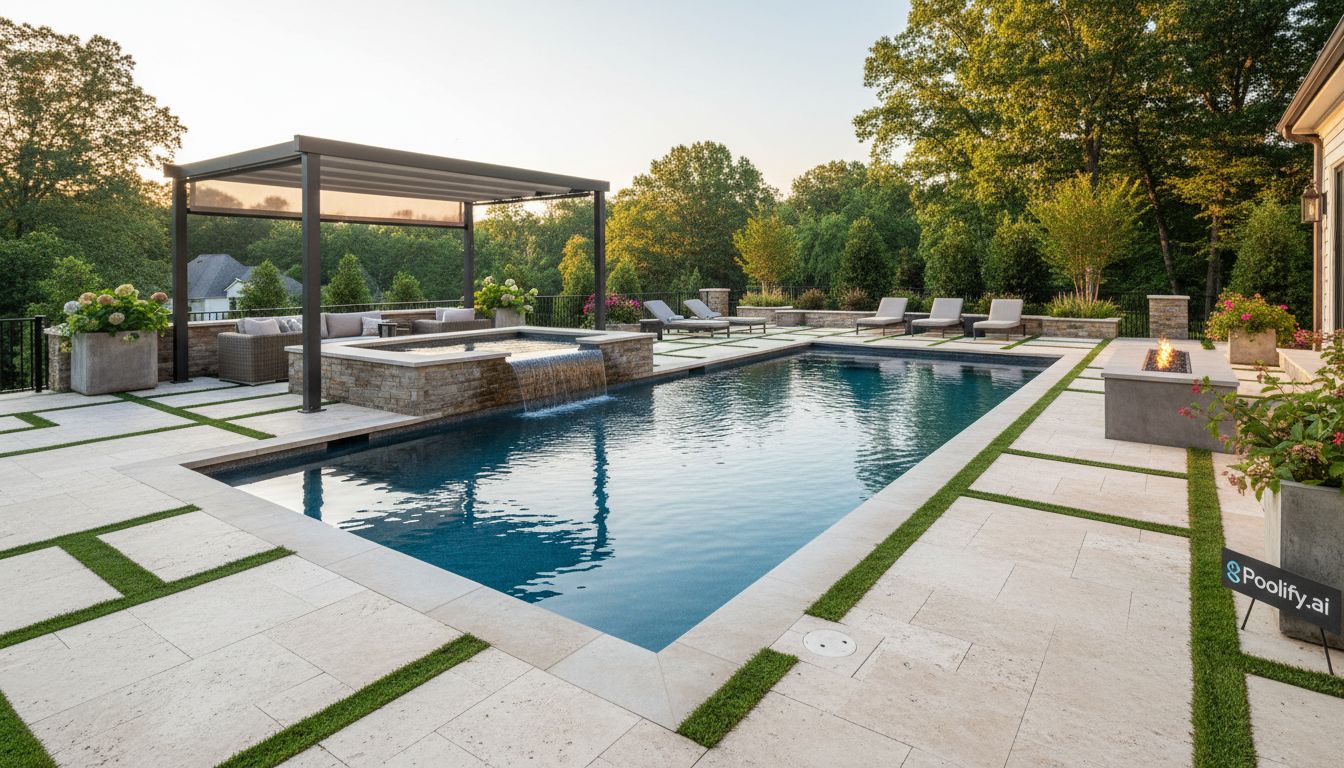
Choosing appropriate materials for pool design Atlanta projects directly impacts longevity, maintenance requirements, and aesthetic satisfaction. Georgia’s climate demands materials that withstand temperature fluctuations, high humidity, and occasional freeze-thaw cycles.
Concrete pools, either gunite or shotcrete, represent the most popular choice for custom pool design Atlanta homeowners pursue. Concrete’s versatility allows unlimited shape options and accommodates integrated features like benches, steps, and water features. The material withstands Atlanta’s climate well when properly constructed with adequate steel reinforcement and appropriate concrete mixtures. Surface finishes range from traditional plaster to premium options like pebble, quartz, or glass bead aggregates that offer enhanced durability and visual appeal.
Fiberglass pools have gained popularity for pool design Atlanta projects prioritizing quick installation and lower maintenance. These pre-manufactured shells install in days rather than weeks and feature smooth, non-porous surfaces that resist algae growth and require fewer chemicals. However, shape options are limited to manufacturer molds, and transportation restrictions may limit size options for properties with narrow access.
Vinyl liner pools offer the most economical entry point but require liner replacement every 7-10 years, adding long-term costs. While less common in luxury pool design Atlanta markets, vinyl pools serve budget-conscious homeowners well and can deliver attractive results with proper design and quality installation.
Decking Material Considerations
Decking materials must balance aesthetics, safety, and durability while withstanding Atlanta’s hot summers and occasional winter freezes. Travertine and limestone pavers remain popular for high-end pool design Atlanta projects, offering natural beauty and heat-reflective properties that keep surfaces comfortable underfoot. These natural stones require sealing every 2-3 years to prevent staining and weather damage.
Concrete decking with stamped or stained finishes provides versatile, cost-effective solutions that mimic natural stone or brick patterns. Modern concrete technology includes cool-deck additives that reduce surface temperatures, addressing one of the primary concerns for pool design Atlanta summers present. Properly installed concrete decking lasts decades with minimal maintenance beyond periodic sealing.
Composite decking designed specifically for pool environments offers wood-like aesthetics without splinter, rot, or maintenance concerns. These materials work particularly well for elevated decks or pool houses where traditional wood decking might deteriorate quickly in humid conditions. Quality composite products carry premium price tags but deliver long-term value through durability and minimal upkeep requirements.
Cost Considerations Across Metro Atlanta
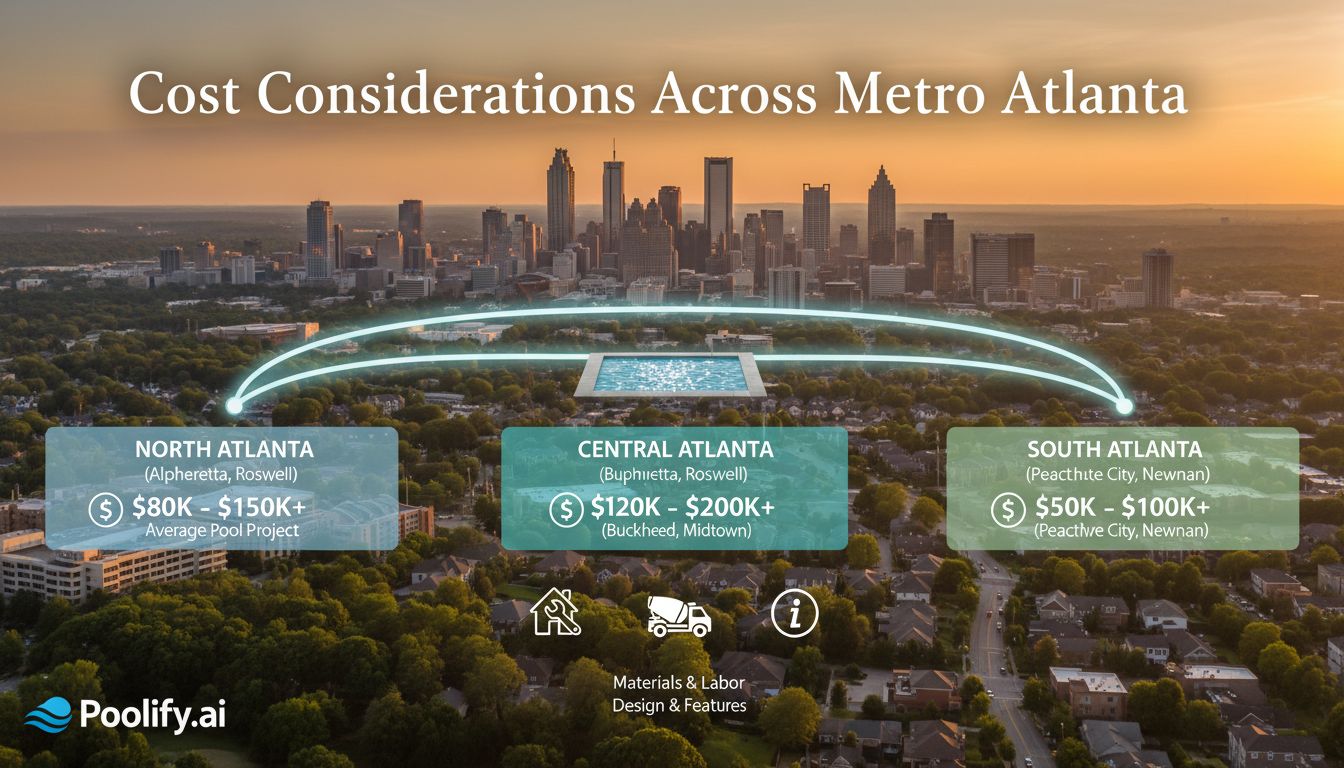
Understanding the financial investment required for pool design Atlanta projects helps you budget appropriately and make informed decisions about features and finishes. Costs vary significantly based on location, size, materials, and complexity.
Basic in-ground pools in metro Atlanta start around $40,000-$60,000 for simple rectangular concrete designs with standard finishes and minimal features. Mid-range pool design Atlanta homeowners typically invest between $70,000-$100,000 for custom shapes, upgraded finishes, integrated spas, and enhanced landscaping. Luxury installations with extensive features, premium materials, and sophisticated automation systems regularly exceed $150,000-$200,000 in desirable neighborhoods.
Geographic location within metro Atlanta influences costs substantially. Projects in Buckhead, Brookhaven, or Johns Creek typically run 15-25% higher than comparable installations in southern suburbs due to higher land values, stricter architectural review requirements, and premium contractor rates. Access challenges on heavily wooded or sloped lots add $5,000-$15,000 for specialized equipment and additional labor.
Excavation costs vary based on soil conditions and site preparation requirements. Atlanta’s red clay, while challenging, is generally less expensive to excavate than rocky terrain. However, properties requiring significant grading, tree removal, or retaining walls may see excavation costs reach $10,000-$20,000 or more. Smart pool design Atlanta planning minimizes these expenses by working with existing topography rather than fighting against it.
Ongoing Operational Costs
Beyond initial construction, pool design Atlanta homeowners must budget for ongoing operational expenses that include utilities, chemicals, maintenance, and repairs. Monthly costs typically range from $150-$300 during swimming season, with reduced expenses during winter months when pools operate minimally or close completely.
Energy-efficient equipment including variable-speed pumps, LED lighting, and solar heating systems reduce operational costs by 30-50% compared to traditional equipment. While these upgrades increase initial investment by $3,000-$8,000, the payback period typically spans 3-5 years through reduced utility bills. Many pool design Atlanta professionals strongly recommend these efficiency features given Georgia Power’s summer rate structures.
Professional maintenance services cost $100-$200 monthly for weekly cleaning, chemical balancing, and equipment monitoring. Some homeowners opt for DIY maintenance to reduce costs, but this requires time investment and learning proper techniques. Equipment repairs and periodic resurfacing represent additional expenses, with major renovations needed every 10-15 years for concrete pools.
Integrating Landscaping and Outdoor Living Spaces
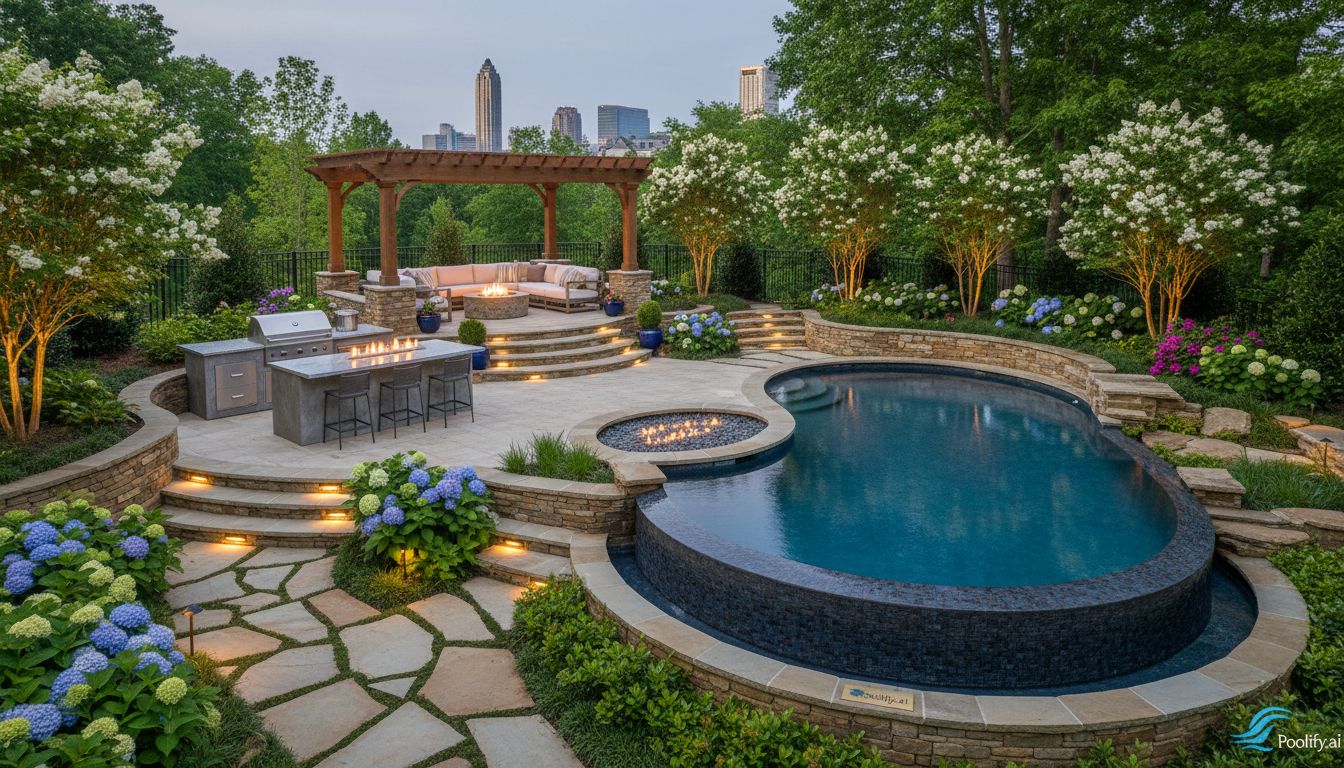
Successful pool design Atlanta projects extend beyond the water’s edge to create cohesive outdoor environments that maximize usability and aesthetic impact. Thoughtful landscaping and complementary structures transform pools from isolated features into integrated lifestyle spaces.
Strategic plant selection frames pool areas while addressing practical concerns like privacy screening, shade provision, and wind protection. Evergreen options including Southern Magnolia, Nellie Stevens Holly, and Leyland Cypress provide year-round screening in pool design Atlanta landscapes. Deciduous trees like Crepe Myrtles offer summer shade without excessive leaf drop that complicates pool maintenance. Avoid plants with invasive root systems that might damage pool structures or create ongoing maintenance headaches.
Outdoor kitchens and dining areas have become essential components of upscale pool design Atlanta homeowners expect. These spaces extend entertaining capabilities and encourage frequent pool use by eliminating trips indoors for meals and refreshments. Basic outdoor kitchens with grills and refrigeration start around $10,000, while fully equipped spaces with pizza ovens, bars, and extensive counter space reach $30,000-$50,000.
Pool houses and cabanas provide changing areas, bathroom facilities, and equipment storage while adding architectural interest to pool environments. These structures range from simple changing rooms costing $15,000-$25,000 to elaborate guest houses with full amenities exceeding $100,000. Proper pool design Atlanta planning integrates these buildings into the overall aesthetic while ensuring compliance with setback requirements and building codes.
Lighting Design for Safety and Ambiance
Comprehensive lighting plans address both safety requirements and aesthetic goals, transforming pool areas into dramatic evening destinations. LED pool lights offer energy efficiency, longevity, and color-changing capabilities that create varied moods. Most pool design Atlanta projects include 2-4 in-pool lights plus extensive landscape and architectural lighting that highlights plantings, water features, and structures.
Pathway lighting ensures safe navigation between house and pool, while step and deck lighting prevents trips and falls. Modern lighting control systems allow smartphone operation and programmable scenes that adjust automatically based on time or activity. Quality outdoor lighting systems add $5,000-$15,000 to project costs but deliver significant safety and usability benefits.
Technology Integration and Smart Pool Systems
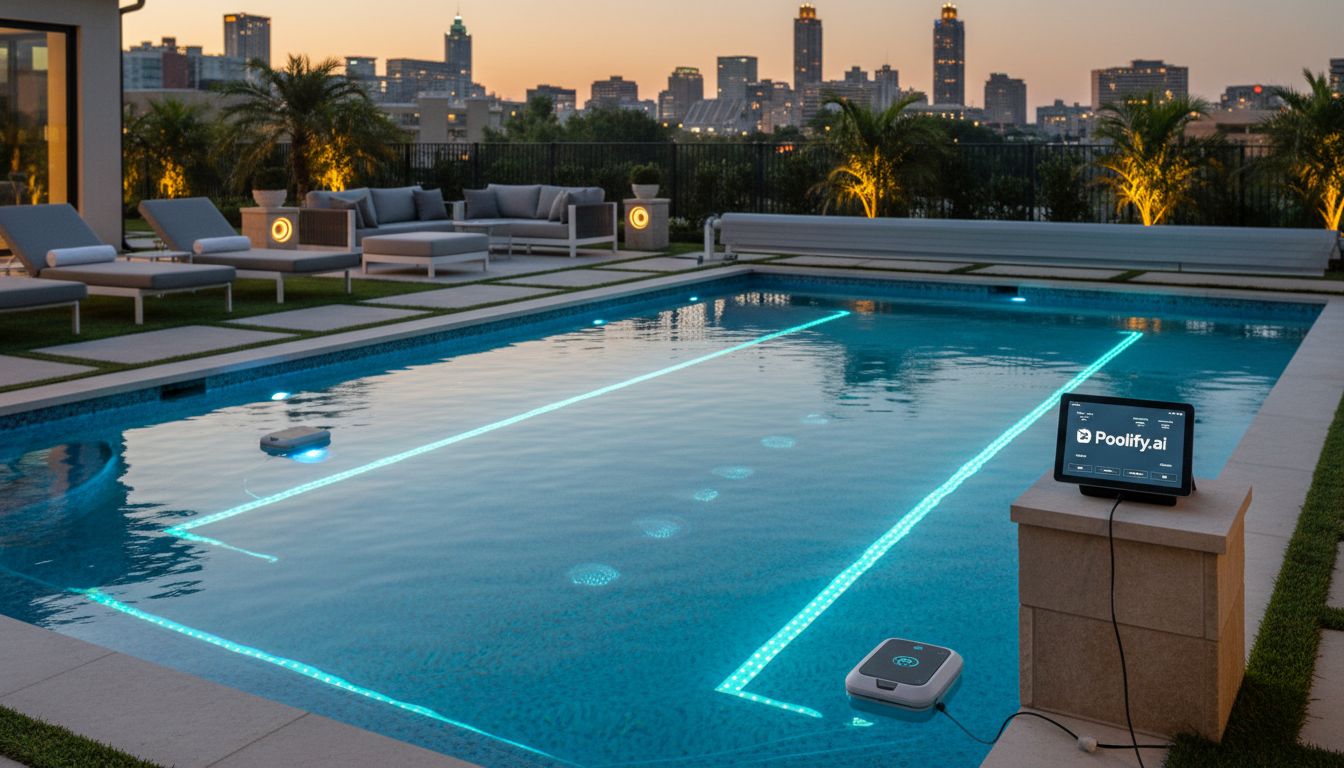
Modern pool design Atlanta homeowners increasingly expect includes sophisticated automation and control systems that simplify operation while optimizing efficiency. These technologies have evolved from luxury additions to standard features in mid-range and premium installations.
Smart pool controllers manage filtration schedules, heating, lighting, and water features through smartphone apps or voice commands via Amazon Alexa or Google Assistant. These systems learn usage patterns and adjust operations automatically to minimize energy consumption while maintaining ideal conditions. Controllers typically cost $1,500-$3,000 installed but deliver convenience and efficiency that justify the investment.
Automated chemical monitoring and dosing systems maintain optimal water chemistry without manual testing and adjustment. These systems reduce chemical waste, prevent equipment damage from imbalanced water, and ensure safe swimming conditions consistently. Advanced systems send alerts when supplies run low or parameters drift outside acceptable ranges. Installation costs range from $800-$2,000 depending on sophistication level.
Robotic pool cleaners have revolutionized maintenance by autonomously scrubbing surfaces, vacuuming debris, and filtering water without relying on pool circulation systems. Modern robots map pool dimensions for efficient cleaning patterns and return to charging stations when complete. Quality robotic cleaners cost $800-$1,500 but reduce pump runtime and manual cleaning labor significantly.
Energy Efficiency Technologies
Variable-speed pumps represent the single most impactful efficiency upgrade for pool design Atlanta projects, reducing pump energy consumption by 50-75% compared to single-speed models. These pumps adjust flow rates based on actual needs rather than running constantly at maximum capacity. Georgia Power offers rebates up to $200 for variable-speed pump installations, further improving the value proposition.
Solar heating systems extend swimming seasons while eliminating or reducing gas heating costs. Atlanta’s abundant sunshine makes solar an attractive option, with systems typically paying for themselves within 3-5 years through reduced utility bills. Solar panels install on roofs, shade structures, or ground mounts, requiring approximately 50-100% of pool surface area in collector panels. Complete systems cost $3,000-$7,000 installed depending on pool size and desired temperature increase.
Selecting the Right Pool Design Atlanta Professional
Choosing qualified designers and contractors significantly impacts project success, final quality, and long-term satisfaction. Atlanta’s competitive market includes numerous options ranging from small specialty firms to large design-build companies.
Verify licensing and insurance before engaging any contractor for pool design Atlanta projects. Georgia requires contractors to hold appropriate licenses through the State Construction Industry Licensing Board for projects exceeding $2,500. Request proof of general liability insurance with minimum $1 million coverage plus workers’ compensation insurance protecting you from liability if workers are injured on your property.
Review portfolios focusing on projects similar to your vision in terms of style, size, and budget. Visit completed installations when possible to assess quality firsthand and speak with previous clients about their experiences. Reputable pool design Atlanta contractors readily provide references and welcome site visits to showcase their work.
Obtain detailed written proposals from at least three contractors including complete scope of work, materials specifications, payment schedules, and project timelines. Compare proposals carefully, understanding that the lowest bid may reflect cut corners or inferior materials rather than genuine value. Expect quality pool design Atlanta installations to require 8-12 weeks from excavation to completion, with delays possible due to weather or permit issues.
Design-Build vs. Separate Designer and Contractor
Design-build firms handle both design and construction under one contract, streamlining communication and accountability. This approach works well for straightforward projects but may limit design creativity compared to independent designers. Design-build pool design Atlanta companies typically charge 10-15% less than separate designer and contractor arrangements due to eliminated coordination costs and markup layers.
Hiring an independent pool designer or landscape architect followed by competitive bidding among contractors offers maximum design flexibility and potentially lower construction costs through competitive pricing. However, this approach requires more homeowner involvement in coordination and may create finger-pointing if problems arise. Independent designers charge $2,000-$8,000 for complete plans depending on project complexity.
For more insights on maintaining your investment, explore our guide on essential pool maintenance strategies that keep your Atlanta pool in pristine condition year-round.
Neighborhood-Specific Considerations
Different Atlanta neighborhoods present unique opportunities and constraints that influence pool design decisions. Understanding these local factors helps create installations that enhance property values and neighborhood character.
Buckhead’s luxury market favors sophisticated pool design Atlanta installations with resort-style amenities, extensive outdoor living spaces, and premium finishes. Properties in this area typically feature larger lots allowing expansive designs, though mature tree preservation requirements often influence placement and configuration. Homeowners associations in neighborhoods like Tuxedo Park enforce strict architectural guidelines requiring design approval before construction begins.
Intown neighborhoods including Virginia Highland, Candler Park, and Decatur feature smaller lots where creative pool design Atlanta solutions maximize limited space. Plunge pools, cocktail pools, and compact lap pools work well in these areas, often incorporating vertical elements like raised spas or water walls to add visual interest without consuming extensive square footage. Privacy considerations become paramount given closer neighbor proximity.
North Fulton suburbs including Alpharetta, Johns Creek, and Milton offer larger lots with varied topography ideal for dramatic pool designs. These areas see strong demand for family-friendly pool design Atlanta options with shallow play areas, slides, and diving features. Neighborhood pools are common, so private pools often emphasize unique features that differentiate them from community facilities.
Historic District Requirements
Properties within Atlanta’s historic districts face additional review processes through neighborhood preservation committees. These bodies evaluate pool design Atlanta proposals for compatibility with historic character, often requiring traditional materials and designs that complement period architecture. Approval processes add 4-8 weeks to project timelines but ensure installations enhance rather than detract from neighborhood integrity.
Frequently Asked Questions
How long does pool design and installation take in Atlanta?
Complete pool design Atlanta projects typically require 3-4 months from initial consultation to finished installation. This timeline includes 2-4 weeks for design development and permit acquisition, followed by 8-12 weeks for construction. Complex projects with extensive landscaping, pool houses, or site challenges may extend to 5-6 months. Weather delays during winter months or heavy rain periods can add additional time, making spring starts ideal for summer completion.
What pool features work best for Atlanta’s climate?
Pool design Atlanta professionals recommend features that extend usability and address local climate conditions. Heating systems, whether gas, electric, or solar, allow comfortable swimming from April through October. Shade structures like pergolas or covered lounging areas provide relief during peak summer heat. Automated covers reduce heating costs, minimize water evaporation during hot months, and simplify winterization. Water features including fountains or spillways add visual interest while aerating water, helping maintain chemistry in humid conditions.
Do pools increase property values in Atlanta?
Well-designed pools typically add 5-8% to property values in desirable Atlanta neighborhoods, though return on investment varies by location and market conditions. Premium areas like Buckhead and Brookhaven see stronger returns, while pools in neighborhoods with numerous community pool options may add less value. Quality pool design Atlanta installations that integrate seamlessly with home architecture and landscaping perform best. Over-built pools that consume excessive yard space or clash with neighborhood character may actually reduce marketability.
What maintenance is required for Atlanta pools?
Atlanta pools require weekly maintenance including skimming debris, vacuuming, brushing surfaces, and testing water chemistry. Chemical adjustments maintain pH, alkalinity, and sanitizer levels within safe ranges. Equipment checks ensure proper pump, filter, and heater operation. Monthly tasks include filter cleaning and detailed equipment inspections. Seasonal maintenance involves opening pools in spring with thorough cleaning and chemical balancing, plus winterization in fall including equipment draining and cover installation. Many pool design Atlanta homeowners hire professional services costing $100-$200 monthly to handle these tasks.
Can I install a pool myself to save money?
While DIY pool installation is technically possible, it’s rarely advisable given the complexity, required expertise, and potential for costly mistakes. Pool design Atlanta projects require excavation equipment, concrete or fiberglass installation skills, plumbing and electrical knowledge, and understanding of local codes. Permit requirements mandate licensed contractors for electrical and plumbing work regardless of who handles other aspects. Insurance and warranty coverage typically require professional installation. Most homeowners find that professional installation delivers better results, faster completion, and fewer headaches despite higher costs. Consider DIY approaches only for above-ground pools or minor landscaping elements surrounding professionally installed in-ground pools.
Key Takeaways
- Local expertise matters: Pool design Atlanta requires understanding Georgia’s red clay soil, humidity, climate patterns, and specific permitting requirements that differ from other regions. Working with experienced local professionals ensures designs that withstand regional conditions.
- Plan for comprehensive costs: Budget beyond initial construction to include permits, landscaping, outdoor living spaces, and ongoing operational expenses. Quality installations in desirable neighborhoods range from $70,000-$150,000+ with monthly operating costs of $150-$300.
- Prioritize energy efficiency: Variable-speed pumps, LED lighting, solar heating, and automated controls reduce operational costs by 30-50% while improving convenience and environmental impact. These features pay for themselves within 3-5 years through reduced utility bills.
- Integrate with overall landscape: Successful pool design Atlanta projects create cohesive outdoor environments through strategic landscaping, complementary structures, and comprehensive lighting that extends usability and enhances property values.
- Navigate regulations carefully: Obtain proper permits, meet setback requirements, install required safety barriers, and comply with neighborhood guidelines to avoid fines, removal orders, or complications during property sales.
See Your Dream Pool in Your Actual Backyard
Upload a photo and get an AI-designed pool visualization in 10 seconds. 3 free designs, no login required.
Try Poolify Free →Conclusion
Creating your ideal backyard oasis through thoughtful pool design Atlanta planning transforms outdoor spaces into valuable lifestyle amenities that deliver years of enjoyment. By understanding local climate considerations, navigating permitting requirements, selecting appropriate materials, and working with qualified professionals, you’ll develop a pool that enhances your property while reflecting your personal style and meeting your family’s needs.
The investment in quality pool design Atlanta homeowners make extends beyond the water itself to encompass integrated landscaping, outdoor living spaces, and smart technology that simplifies operation and maximizes efficiency. Whether you envision resort-style luxury, modern geometric elegance, or naturalistic tranquility, Atlanta’s diverse market offers professionals capable of bringing your vision to life within your budget and timeline.
Start your journey by researching qualified designers and contractors, visiting completed installations in neighborhoods similar to yours, and developing a clear vision for how you’ll use your pool. The planning phase determines project success, so invest time upfront to make informed decisions that deliver lasting satisfaction. For additional guidance on keeping your pool in optimal condition, check out our comprehensive pool cleaning and maintenance resource.
Atlanta’s climate, culture, and lifestyle make it an ideal location for pool ownership, with longer swimming seasons and outdoor entertaining opportunities that justify the investment. By following the strategies outlined in this guide, you’ll create a stunning pool design Atlanta neighbors admire and your family treasures for decades to come.
References
- City of Atlanta Official Government Website – https://www.atlantaga.gov/
- Fulton County Government – https://www.fultoncountyga.gov/
