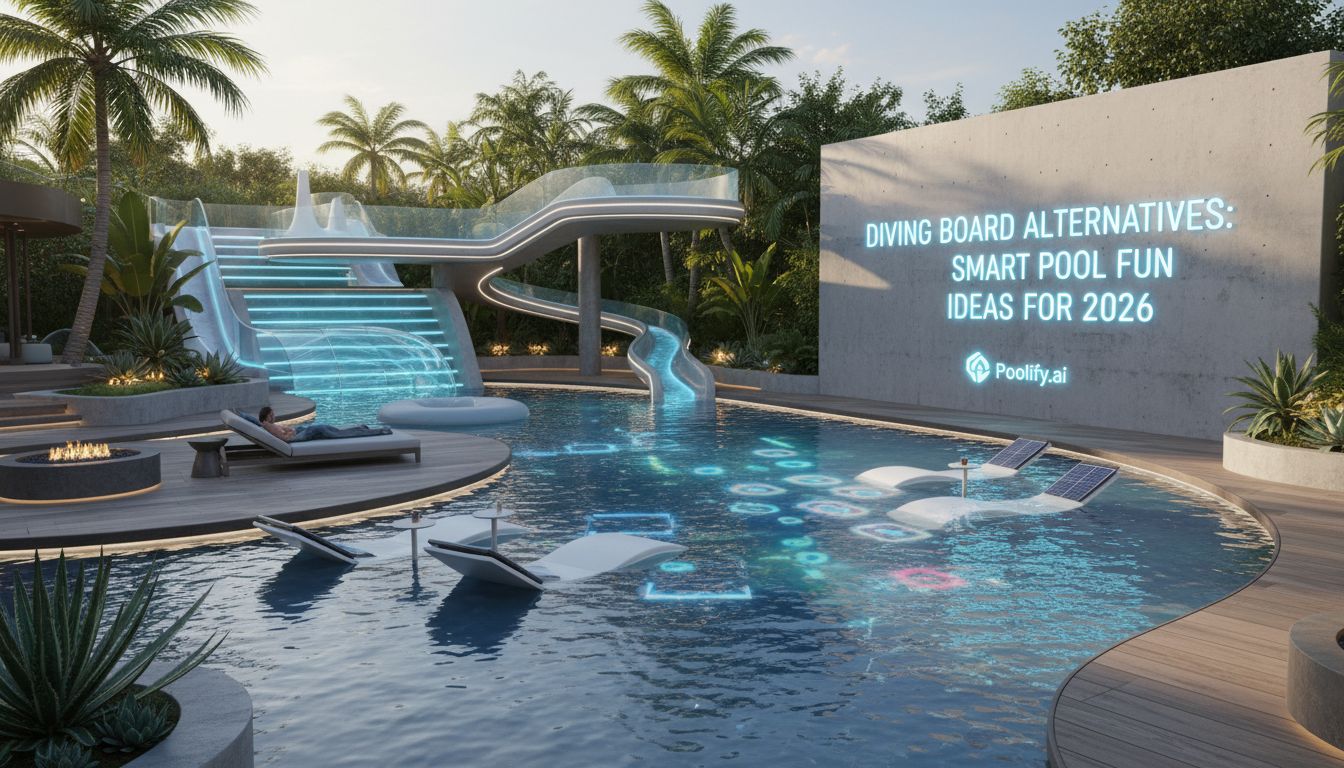
Introduction to Modern Diving Board Alternatives
Traditional diving boards have long been a pool staple, but homeowners in 2026 are increasingly exploring diving board alternatives that offer safer, more versatile entertainment options. Whether you’re concerned about liability, insurance costs, or simply want more creative ways to enjoy your pool, diving board alternatives provide exciting solutions without the traditional risks. This comprehensive guide explores the best diving board alternatives available in 2026, helping you transform your backyard pool into a safer, more engaging recreational space for the whole family.
Why Homeowners Are Choosing Diving Board Alternatives
The shift toward diving board alternatives reflects changing priorities in pool ownership. Insurance companies have become increasingly cautious about covering pools with diving boards, often raising premiums significantly or excluding coverage altogether. Diving board alternatives address these concerns while maintaining the excitement factor that makes pools enjoyable.
Safety statistics drive much of this transition. According to the Consumer Product Safety Commission, diving-related injuries account for thousands of emergency room visits annually. Diving board alternatives reduce these risks by eliminating high-impact entries and encouraging safer water activities. Modern alternatives also offer greater versatility, accommodating different age groups and skill levels simultaneously.
Space considerations also favor diving board alternatives. Traditional diving boards require significant depth—typically 8 to 12 feet—which limits design options and increases construction costs. Many diving board alternatives work perfectly in standard-depth pools of 4 to 6 feet, making them accessible to more homeowners. This flexibility allows for creative pool designs that maximize usable space while maintaining entertainment value.
Insurance and Liability Considerations
Homeowners insurance policies increasingly view diving boards as high-risk features. Many insurers either exclude diving board coverage or charge substantial premium increases. Diving board alternatives typically face fewer insurance restrictions, potentially saving homeowners hundreds of dollars annually. Before installing any pool feature, consult your insurance provider to understand coverage implications and requirements.
Liability concerns extend beyond insurance costs. Homeowners bear responsibility for guest safety, and diving board alternatives generally present lower liability exposure. Features like pool slides and splash pads have established safety standards and lower injury rates compared to traditional diving boards, providing peace of mind for pool owners who frequently entertain guests.
Top Diving Board Alternatives for 2026
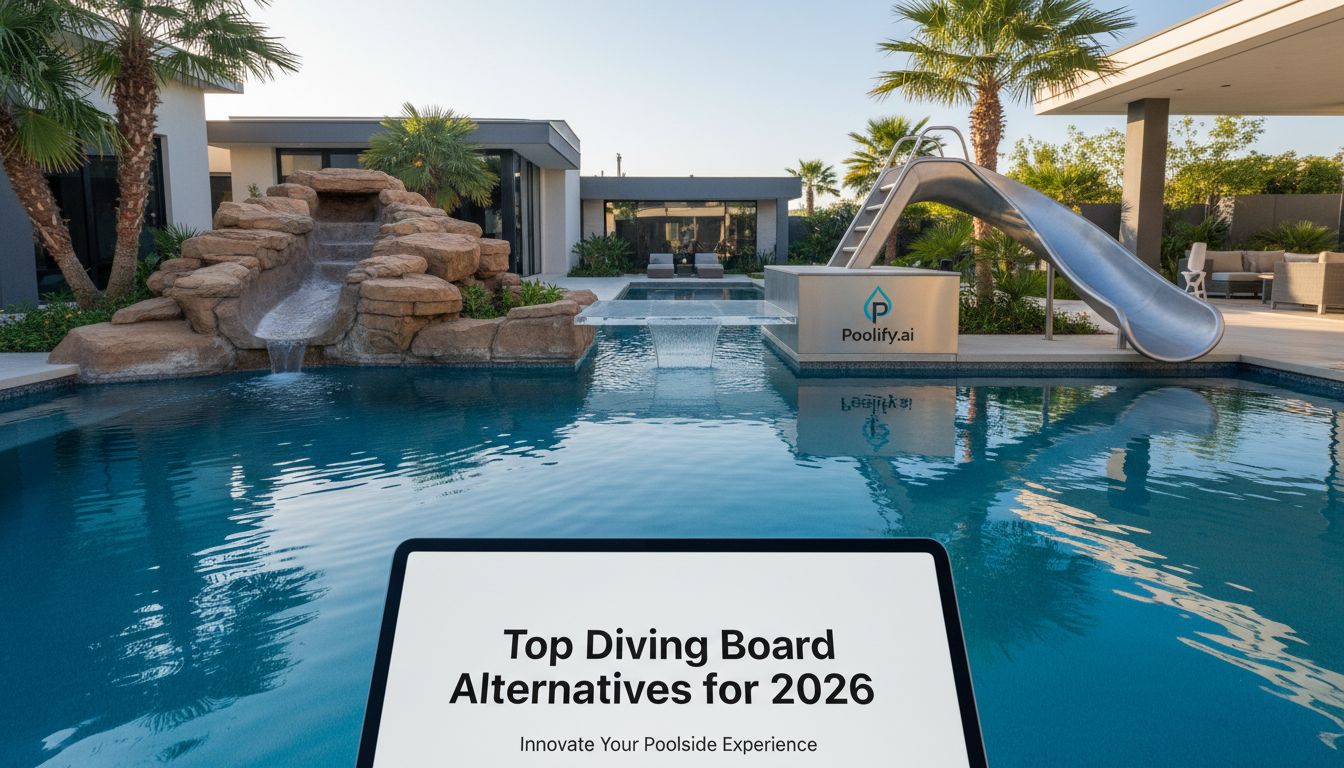
The market for diving board alternatives has expanded dramatically, offering options for every budget, pool size, and aesthetic preference. These diving board alternatives combine safety with entertainment, creating memorable pool experiences without traditional diving board risks.
Pool Slides: The Classic Alternative
Pool slides remain among the most popular diving board alternatives, offering thrilling entries with significantly reduced injury risk. Modern pool slides come in various configurations, from gentle curves for young children to steep drops for thrill-seekers. Quality slides feature UV-resistant materials, smooth finishes, and safety handles, ensuring durability and user protection.
Installation flexibility makes pool slides excellent diving board alternatives. Unlike diving boards requiring specific depth zones, slides can be positioned at pool edges with 3 to 4 feet of water depth. This adaptability suits most residential pools, including those with shallow ends. Slides also accommodate multiple users throughout the day, whereas diving boards typically serve one person at a time.
Contemporary slide designs integrate seamlessly with pool aesthetics. Rock-style slides mimic natural formations, creating resort-like atmospheres. Curved slides add architectural interest while maintaining safety profiles. Some models include water features like cascading streams or spray jets, enhancing the overall experience. When selecting from diving board alternatives, consider slide height, entry angle, and landing zone requirements.
Jump Rocks and Boulder Features
Jump rocks represent natural-looking diving board alternatives that blend functionality with landscape design. These artificial boulders provide elevated jumping platforms while maintaining organic aesthetics. Jump rocks typically rise 1 to 3 feet above water level, offering excitement without the height-related risks of traditional diving boards.
As diving board alternatives, jump rocks offer exceptional versatility. They serve as jumping platforms, seating areas, and visual focal points. Multiple rocks can be arranged to create varied jumping heights, accommodating different comfort levels. The textured surfaces provide secure footing, reducing slip hazards common with smooth diving board surfaces.
Installation of jump rock diving board alternatives requires careful planning. Proper placement ensures adequate water depth and safe landing zones. Most installations position rocks where water depth reaches 4 to 6 feet, sufficient for safe jumps while avoiding the deep-end requirements of diving boards. Professional installers can integrate jump rocks with existing pool structures, creating cohesive designs that enhance property value.
Water Trampolines and Bounce Platforms
Water trampolines have emerged as innovative diving board alternatives, providing bouncing fun directly on the water surface. These inflatable or semi-rigid platforms float in deeper pool sections, offering jumping experiences without fixed installations. Water trampolines excel as portable diving board alternatives, easily stored when not in use.
The appeal of water trampoline diving board alternatives lies in their dynamic play value. Users can bounce, flip, and splash in controlled environments with forgiving water landings. Unlike rigid diving boards, water trampolines absorb impact, reducing stress on joints and minimizing injury severity if users lose balance. Many models include safety nets or handles, further enhancing user protection.
Consider size and capacity when evaluating water trampoline diving board alternatives. Smaller models suit individual use in compact pools, while larger platforms accommodate multiple users simultaneously. Quality construction ensures durability through seasons of use. Anchoring systems keep trampolines positioned correctly, preventing drift into shallow areas or pool edges.
Climbing Walls and Poolside Features
Climbing walls represent adventurous diving board alternatives that challenge users physically while providing safe water entries. Pool-mounted climbing walls attach to pool edges, allowing climbers to scale surfaces before dropping into water. These diving board alternatives combine exercise with entertainment, appealing to active families seeking multi-functional pool features.
Modern climbing wall diving board alternatives feature weather-resistant materials designed for aquatic environments. Handholds and footholds provide secure gripping surfaces, while textured panels prevent slipping. Heights typically range from 4 to 8 feet, offering challenge without excessive risk. Water depth requirements mirror those of jump rocks, making climbing walls suitable for standard residential pools.
Installation of climbing wall diving board alternatives requires structural support and proper anchoring. Professional installation ensures walls withstand repeated use and environmental stresses. Some designs incorporate adjustable difficulty levels, allowing handholds to be repositioned as users develop skills. This adaptability extends the useful life of these diving board alternatives, growing with family needs.
Safety Features of Modern Diving Board Alternatives
Safety innovations distinguish contemporary diving board alternatives from traditional options. Manufacturers prioritize user protection through thoughtful design and quality materials. Understanding these safety features helps homeowners select appropriate diving board alternatives for their specific situations.
Depth Requirements and Landing Zones
Reduced depth requirements make diving board alternatives accessible to more pool owners. Traditional diving boards mandate 8 to 12 feet of water depth, whereas most diving board alternatives function safely in 4 to 6 feet. This difference expands installation possibilities and reduces construction costs for new pools.
Landing zone design varies among diving board alternatives. Slides direct users along predictable paths, allowing precise landing zone planning. Jump rocks and climbing walls require clear areas free from obstacles, but smaller zones than diving boards. Water trampolines create their own landing zones, floating in areas with appropriate depth. When comparing diving board alternatives, evaluate landing zone requirements against your pool’s configuration.
Non-Slip Surfaces and Grip Features
Slip resistance represents a critical safety element in diving board alternatives. Quality slides incorporate textured walking surfaces and sturdy handrails, preventing falls during ascent. Jump rocks feature rough, natural-looking textures that provide excellent traction even when wet. Climbing walls use specialized grip materials that maintain friction in aquatic environments.
Regular maintenance preserves the safety features of diving board alternatives. Inspect surfaces for wear, clean away algae or biofilm buildup, and verify that handholds remain secure. These simple steps ensure diving board alternatives maintain their safety profiles throughout their service lives. Proper maintenance also extends equipment longevity, protecting your investment.
Age-Appropriate Design
Many diving board alternatives accommodate wider age ranges than traditional diving boards. Slides with gentle slopes suit young children, while steeper configurations challenge teenagers and adults. Jump rocks at varying heights allow family members to select comfortable entry points. This inclusivity makes diving board alternatives valuable for households with children of different ages.
Supervision requirements differ among diving board alternatives. While all pool activities require adult oversight, some alternatives enable easier monitoring. Slides with open designs and lower jump rocks allow supervisors to maintain clear sightlines. Water trampolines keep users visible at the surface. When selecting diving board alternatives, consider how design features support your supervision capabilities.
Installation and Cost Considerations
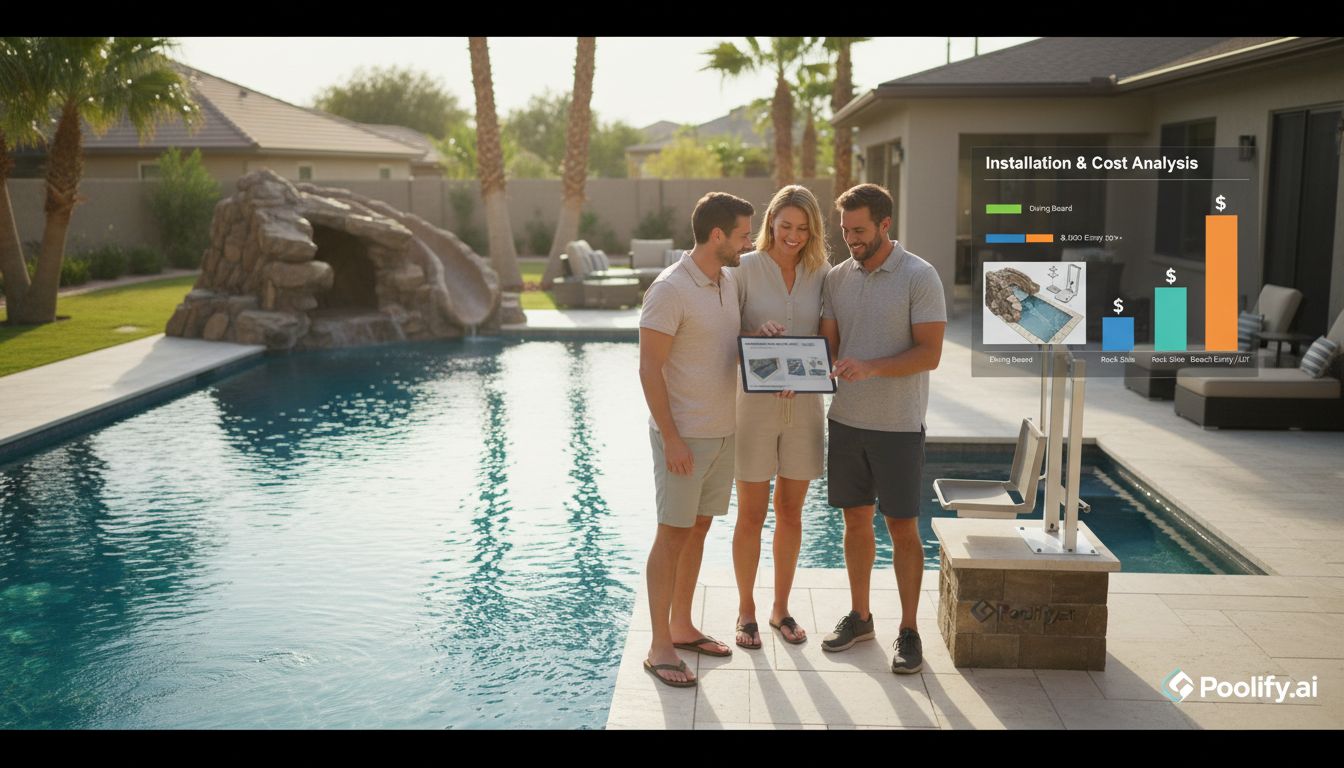
Budget planning for diving board alternatives requires understanding both initial costs and long-term value. Installation expenses vary widely based on feature type, materials, and site conditions. However, many diving board alternatives offer favorable cost comparisons to traditional diving board installations when considering total project scope.
Initial Investment Ranges
Entry-level diving board alternatives start around $500 for basic pool slides or inflatable water trampolines. Mid-range options, including quality slides and jump rock installations, typically cost $2,000 to $5,000. Premium diving board alternatives like custom rock formations or professional climbing walls may exceed $10,000. These prices often include installation, though complex projects may incur additional labor charges.
Compare these costs against traditional diving board installations, which range from $1,500 to $4,000 for the board itself, plus potential pool modifications for proper depth. When pools lack adequate depth, excavation and structural work can add $5,000 to $15,000 to project costs. Many diving board alternatives eliminate these additional expenses, potentially offering better overall value.
Installation Requirements
Installation complexity varies significantly among diving board alternatives. Portable water trampolines require minimal setup—simply inflate and anchor. Pool slides need secure mounting to pool decks or coping, typically achievable in a single day. Jump rocks and climbing walls involve more extensive installation, including structural support and professional placement.
Professional installation ensures diving board alternatives meet safety standards and local building codes. Experienced installers understand proper positioning, depth requirements, and structural considerations. While DIY installation may seem cost-effective for simpler diving board alternatives, professional work provides warranty protection and peace of mind. For more information on pool equipment installation, check out our comprehensive pool equipment installation guide.
Long-Term Value and Maintenance
Maintenance requirements influence the long-term cost of diving board alternatives. Pool slides need periodic inspection for cracks or surface degradation, plus regular cleaning to maintain appearance. Jump rocks require minimal maintenance beyond occasional cleaning. Water trampolines need proper storage during off-seasons and periodic inspection for air leaks or material wear.
Durability varies among diving board alternatives based on materials and construction quality. UV-resistant plastics and composite materials withstand sun exposure better than cheaper alternatives. Stainless steel hardware resists corrosion in pool environments. When evaluating diving board alternatives, consider warranty coverage and manufacturer reputation as indicators of long-term reliability.
Design Integration and Aesthetic Appeal
Modern diving board alternatives complement various pool designs and landscape styles. Thoughtful selection and placement transform functional features into design elements that enhance overall property aesthetics. Understanding how different diving board alternatives integrate with existing designs helps create cohesive outdoor spaces.
Matching Pool Styles
Contemporary pools with clean lines pair well with sleek slide designs featuring smooth curves and modern finishes. Natural-style pools benefit from rock-based diving board alternatives that mimic geological formations. Resort-style pools accommodate multiple diving board alternatives, creating water park atmosphics in residential settings. Consider your pool’s existing style when selecting from available diving board alternatives.
Color coordination enhances visual integration. Many diving board alternatives come in multiple color options, allowing matches with pool finishes, decking materials, and surrounding landscapes. Neutral tones blend seamlessly, while bold colors create focal points. Some homeowners use diving board alternatives to introduce accent colors that tie together various outdoor elements.
Landscape Integration
Successful integration of diving board alternatives extends beyond the pool itself. Rock features can be surrounded by plantings that soften edges and create natural transitions. Slides may be partially screened with strategic landscaping while maintaining clear sightlines for supervision. Climbing walls can incorporate planters or water features, blending functional elements with decorative details.
Lighting design enhances both safety and aesthetics for diving board alternatives. LED accent lights highlight slides and rock features after dark, improving visibility while creating ambiance. Underwater lighting illuminates landing zones, supporting safe evening use. Solar-powered options provide energy-efficient illumination for diving board alternatives in areas distant from electrical sources.
Popular Diving Board Alternative Combinations
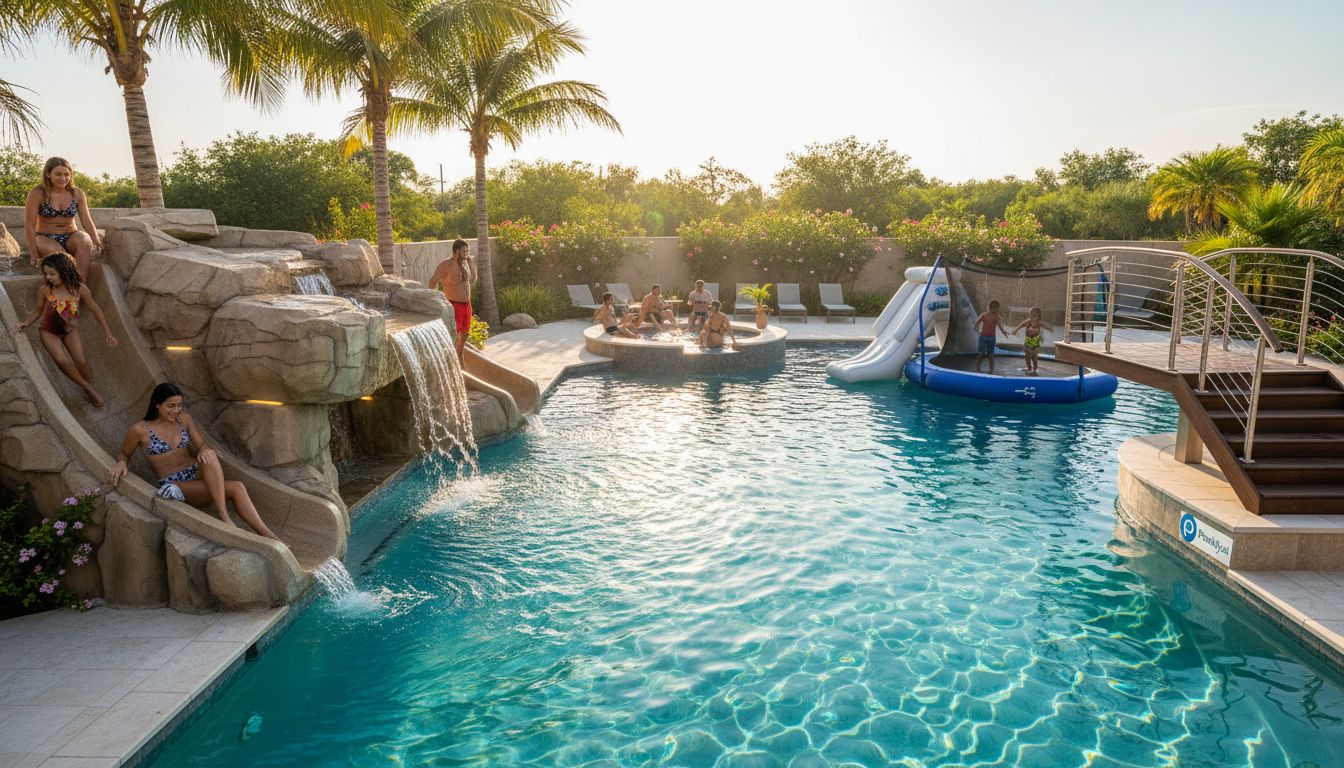
Many homeowners install multiple diving board alternatives to create varied pool experiences. Combining different features accommodates diverse interests and age groups while maximizing pool entertainment value. Strategic combinations transform ordinary pools into backyard destinations.
Family-Friendly Configurations
Family-oriented combinations of diving board alternatives typically include features at varying difficulty levels. A gentle slide serves younger children, while jump rocks provide progression as kids develop confidence. Water trampolines add another dimension, offering bouncing fun that differs from sliding or jumping. This variety keeps pool time engaging across multiple age groups.
Spatial planning ensures multiple diving board alternatives function without interference. Position features in different pool areas, maintaining adequate clearance between landing zones. Stagger activities to prevent crowding—place slides and jump rocks at opposite ends when possible. Thoughtful layouts allow simultaneous use of different diving board alternatives, reducing wait times and increasing overall enjoyment.
Entertainment-Focused Designs
Pools designed for entertaining benefit from dramatic diving board alternatives that serve as conversation pieces. Custom rock formations with multiple jump heights create focal points while offering varied experiences. Professional-grade slides with thrilling drops appeal to adventurous guests. Climbing walls add competitive elements, encouraging friendly challenges among visitors.
These entertainment-focused diving board alternatives often incorporate additional features like integrated waterfalls, LED lighting, or sound systems. Such enhancements transform pools into true outdoor entertainment centers. While initial investments may be substantial, the resulting spaces provide years of memorable gatherings and family enjoyment. For additional pool entertainment ideas, explore our guide to pool entertainment features.
Maintenance and Care for Diving Board Alternatives
Proper maintenance extends the life of diving board alternatives while preserving safety and appearance. Different materials and designs require specific care approaches, but general principles apply across most options. Establishing regular maintenance routines protects your investment and ensures continued safe operation.
Routine Cleaning and Inspection
Regular cleaning prevents buildup that can compromise safety and aesthetics. Rinse diving board alternatives with fresh water after pool chemical treatments to prevent surface degradation. Scrub slides and rock surfaces periodically to remove algae and biofilm. Inspect all diving board alternatives monthly for cracks, loose hardware, or wear patterns that might indicate developing problems.
Pay special attention to connection points where diving board alternatives attach to pool structures. Verify that mounting hardware remains tight and corrosion-free. Check that handrails and safety features remain secure. Early detection of maintenance issues prevents minor problems from becoming safety hazards or requiring expensive repairs.
Seasonal Considerations
Climate affects maintenance requirements for diving board alternatives. In regions with freezing winters, remove portable features like water trampolines for indoor storage. Cover fixed diving board alternatives or ensure proper drainage to prevent freeze damage. Spring preparation includes thorough inspection and cleaning before seasonal use begins.
UV exposure gradually degrades many materials used in diving board alternatives. Apply UV protectant products to plastic and composite surfaces according to manufacturer recommendations. Consider shade structures or strategic landscaping to reduce direct sun exposure during peak hours. These protective measures significantly extend the service life of diving board alternatives.
Repair and Replacement
Even well-maintained diving board alternatives eventually require repairs or replacement. Address minor issues promptly to prevent escalation. Small cracks in slides can often be repaired with specialized patching materials. Worn handholds on climbing walls can be replaced individually. Consult manufacturers or professional pool service providers for guidance on appropriate repair approaches.
Know when replacement becomes more practical than continued repairs. Diving board alternatives showing extensive wear, structural compromise, or outdated safety features should be replaced. Modern versions often incorporate improved safety elements and durability features that justify replacement costs. For comprehensive maintenance guidance, visit our pool maintenance tips resource.
Frequently Asked Questions About Diving Board Alternatives

Are diving board alternatives safer than traditional diving boards?
Most diving board alternatives present lower injury risks than traditional diving boards. Reduced heights, gentler entry angles, and decreased depth requirements contribute to improved safety profiles. However, all pool features require proper supervision and adherence to safety guidelines. The specific safety advantages depend on which diving board alternatives you choose and how they’re used.
What depth do I need for diving board alternatives?
Depth requirements vary among diving board alternatives. Most pool slides function safely with 3 to 4 feet of water depth at the landing zone. Jump rocks and climbing walls typically require 4 to 6 feet. Water trampolines need sufficient depth to prevent contact with pool bottoms—usually 5 to 8 feet depending on trampoline size. Always follow manufacturer specifications for your specific diving board alternatives.
Can I install diving board alternatives in an existing pool?
Yes, most diving board alternatives can be added to existing pools. Slides and jump rocks require deck space and appropriate mounting surfaces. Water trampolines simply need adequate pool dimensions and depth. Climbing walls need structural support, which may require professional assessment. Consult with pool contractors to determine which diving board alternatives work best with your current pool configuration.
How much do diving board alternatives typically cost?
Costs for diving board alternatives range from $500 for basic options to over $10,000 for custom installations. Simple pool slides and inflatable features occupy the lower price range. Mid-tier diving board alternatives like quality slides and jump rocks cost $2,000 to $5,000 installed. Premium options including custom rock formations and professional climbing walls command higher prices but offer distinctive aesthetics and functionality.
Do diving board alternatives affect pool insurance rates?
Many diving board alternatives have minimal impact on insurance rates compared to traditional diving boards. Some insurers view slides and similar features more favorably due to lower injury statistics. However, policies vary significantly among providers. Contact your insurance company before installing any diving board alternatives to understand potential rate implications and coverage requirements.
Key Takeaways: Choosing the Right Diving Board Alternatives
- Safety advantages: Diving board alternatives typically offer reduced injury risks through lower heights, gentler entries, and decreased depth requirements compared to traditional diving boards.
- Versatile options: Modern diving board alternatives include pool slides, jump rocks, water trampolines, and climbing walls, each offering unique benefits for different pool sizes, budgets, and family preferences.
- Cost effectiveness: Many diving board alternatives provide better overall value than traditional diving boards when considering installation costs, insurance implications, and required pool modifications.
- Design flexibility: Contemporary diving board alternatives integrate seamlessly with various pool styles and landscape designs, enhancing aesthetics while providing entertainment value.
- Maintenance requirements: Regular cleaning, inspection, and seasonal care extend the life of diving board alternatives while maintaining safety standards and visual appeal.
See Your Dream Pool in Your Actual Backyard
Upload a photo and get an AI-designed pool visualization in 10 seconds. 3 free designs, no login required.
Try Poolify Free →Conclusion: Making the Switch to Diving Board Alternatives
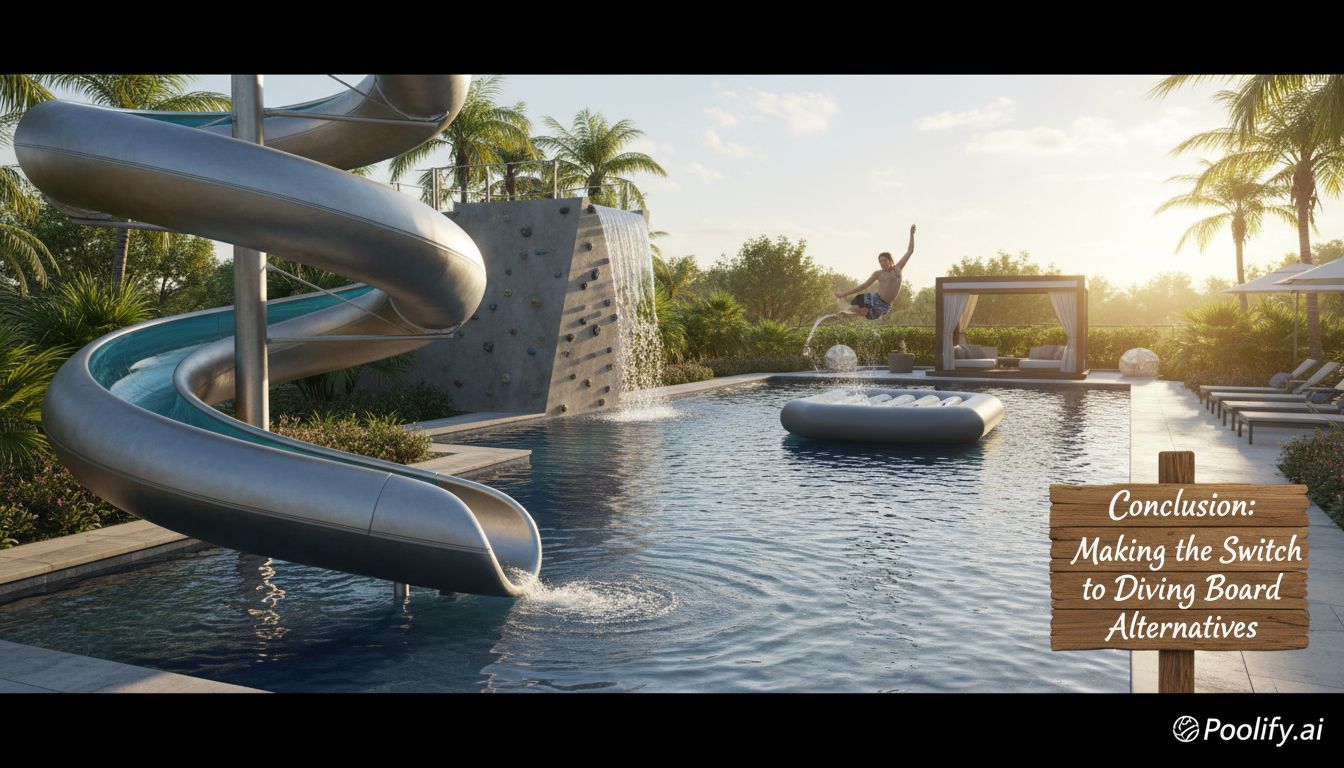
Diving board alternatives represent the evolution of pool entertainment, combining safety, versatility, and excitement in ways traditional diving boards cannot match. As we move through 2026, more homeowners recognize the practical and financial advantages these modern features provide. Whether you’re concerned about liability, seeking more inclusive entertainment options, or simply wanting fresh pool experiences, diving board alternatives deliver compelling solutions.
The diverse range of diving board alternatives ensures options for every pool size, budget, and aesthetic preference. From simple slides to elaborate rock formations, these features transform ordinary pools into engaging recreational spaces that families enjoy for years. The reduced insurance concerns and lower injury risks provide peace of mind while maintaining the excitement that makes pools central to outdoor living.
When selecting diving board alternatives, consider your specific needs, pool configuration, and long-term goals. Evaluate safety features, maintenance requirements, and installation costs to identify options that align with your situation. Professional consultation can provide valuable insights into which diving board alternatives work best for your property. With thoughtful planning and quality installation, diving board alternatives create memorable pool experiences that enhance your home’s value and your family’s enjoyment.
References
- Consumer Product Safety Commission – Pool Safety: https://www.cpsc.gov/Safety-Education/Safety-Education-Centers/Pool-Safety
