Introduction to Pool Leak Detection
Pool leak detection is one of the most critical skills every pool owner should master in 2026. With water costs rising and environmental concerns mounting, identifying leaks early can save you thousands of dollars annually while protecting your property from structural damage. Whether you’re noticing a slight drop in water level or facing unexplained increases in your water bill, understanding pool leak detection methods empowers you to act quickly and decisively. This comprehensive guide walks you through everything from simple DIY tests to advanced professional techniques, ensuring you have the knowledge to keep your pool in optimal condition throughout the year.
Why Pool Leak Detection Matters More Than Ever
The importance of pool leak detection has intensified significantly in 2026. Beyond the obvious financial implications, undetected leaks create a cascade of problems that affect your home, your wallet, and the environment. A typical pool losing just one-quarter inch of water daily wastes approximately 18,000 gallons annually—enough to fill a standard swimming pool halfway. This translates to hundreds or even thousands of dollars in wasted water costs, depending on your local utility rates.
Pool leak detection becomes even more critical when you consider the hidden damage leaks cause. Water escaping from your pool doesn’t simply disappear; it saturates the surrounding soil, potentially undermining your pool’s structural integrity, damaging your home’s foundation, and creating conditions favorable for mold growth. According to the EPA’s WaterSense program, household leaks waste nearly 1 trillion gallons of water annually nationwide, with pool leaks representing a significant portion of residential water waste.
Early pool leak detection also prevents chemical imbalances. As water escapes, you’re constantly adding fresh water that dilutes your carefully balanced chemicals. This creates an endless cycle of adjusting pH, chlorine, and alkalinity levels, wasting both chemicals and your time. Professional pool leak detection services report that homeowners who address leaks promptly save an average of 30% on annual chemical costs compared to those who ignore minor leaks.
Understanding Common Pool Leak Sources
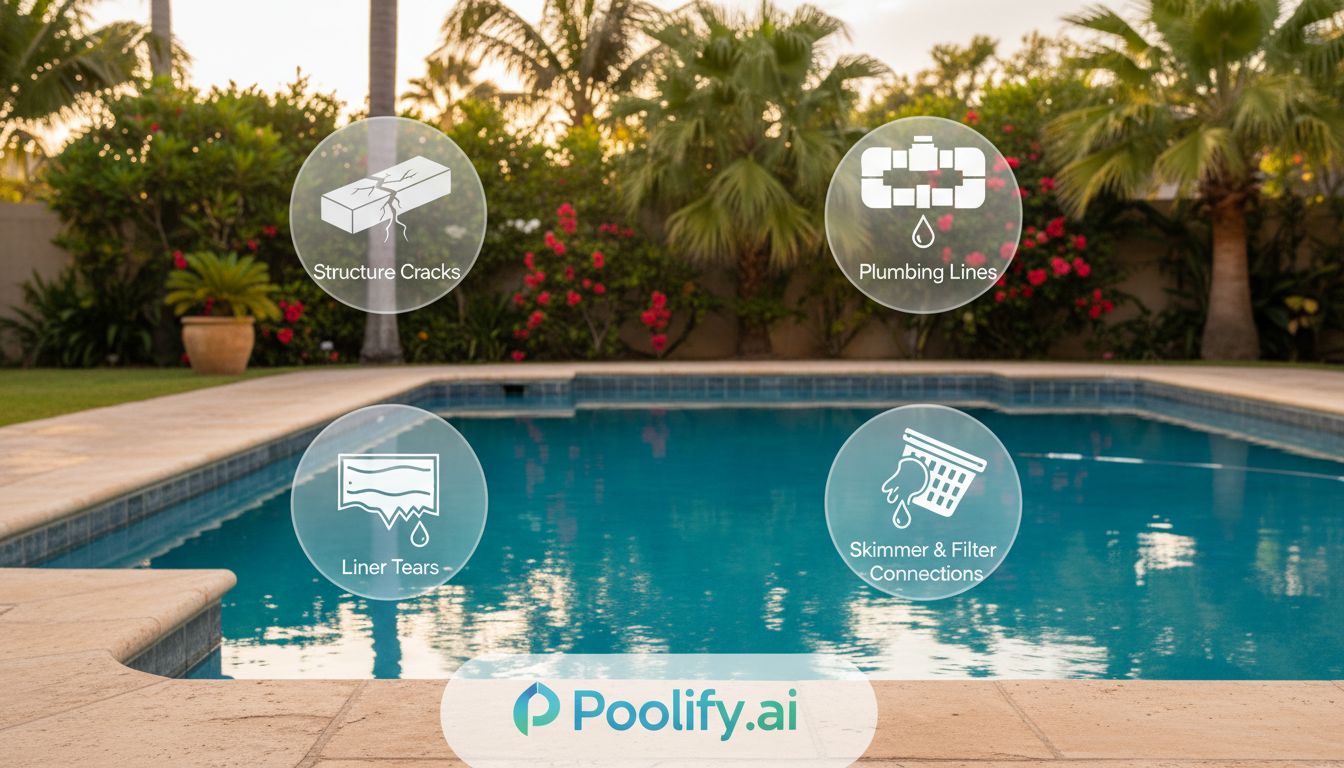
Effective pool leak detection starts with knowing where leaks typically occur. Pools are complex systems with numerous potential failure points, and understanding these vulnerable areas helps you conduct more targeted pool leak detection efforts. The most common leak sources include structural cracks in the pool shell, deteriorating plumbing lines, failing equipment seals, and compromised pool fixtures.
Structural Pool Shell Leaks
Pool leak detection often reveals that the pool shell itself has developed cracks or separations. Concrete pools are particularly susceptible to structural leaks as they age, with thermal expansion and ground movement creating stress fractures. Vinyl liner pools develop leaks when the liner tears or separates from the track, while fiberglass pools may crack if the ground beneath them shifts. Proper pool leak detection techniques can pinpoint these structural issues before they require complete pool renovations.
Plumbing System Failures
Underground plumbing represents one of the most challenging aspects of pool leak detection. The pipes connecting your pool to the equipment pad, carrying water to and from the filter, heater, and other equipment, can develop leaks from corrosion, ground movement, or simple age-related deterioration. Pool leak detection professionals estimate that plumbing leaks account for approximately 40% of all pool water loss issues, making them a primary focus during any comprehensive pool leak detection assessment.
Equipment and Fixture Leaks
Pool leak detection frequently identifies equipment-related issues as the culprit. Pump seals, filter housing o-rings, heater heat exchangers, and automatic chlorinator bodies all contain seals and gaskets that deteriorate over time. Return fittings, skimmers, main drains, and light fixtures also represent common leak points. The advantage of equipment-related pool leak detection is that these leaks are often visible and relatively straightforward to repair once identified.
DIY Pool Leak Detection Methods
Before calling professionals, homeowners can perform several effective pool leak detection tests. These DIY pool leak detection techniques help you determine whether you have a leak, estimate its severity, and sometimes even locate the source. Mastering these basic pool leak detection methods saves you time and money while giving you valuable information to share with professionals if needed.
The Bucket Test for Pool Leak Detection
The bucket test remains the gold standard for basic pool leak detection. This simple yet reliable pool leak detection method distinguishes between water loss from evaporation versus actual leaks. To perform this pool leak detection test, fill a plastic bucket three-quarters full with pool water and place it on your pool step, weighted down so it won’t tip. Mark the water level inside the bucket and the pool water level outside the bucket. After 24 hours, compare the two water levels. If the pool water dropped more than the bucket water, you’ve confirmed a leak through this pool leak detection test.
For more accurate pool leak detection results, run the bucket test twice—once with your pool equipment running normally and once with everything shut off. If water loss is greater when equipment runs, your pool leak detection efforts should focus on the plumbing and equipment. If water loss remains constant regardless of equipment operation, the leak likely exists in the pool shell itself. This information proves invaluable for targeted pool leak detection and repair.
Visual Pool Leak Detection Inspection
Visual inspection is an often-overlooked pool leak detection technique that can reveal obvious problems. Walk around your pool looking for wet spots in the deck, unusually lush grass patches near the pool, or areas where the ground feels soft or spongy. These signs often indicate where water is escaping. Check out our pool maintenance tips for more guidance on regular pool inspections.
During your visual pool leak detection inspection, examine all visible fittings, including skimmers, return jets, lights, and drain covers. Look for cracks in the pool shell, tears in vinyl liners, or separation at the tile line. Equipment pad pool leak detection involves checking for water around the pump, filter, heater, and other equipment. Even small puddles indicate seal failures that waste water and should be addressed promptly.
Dye Testing for Precise Pool Leak Detection
Once you’ve identified a suspected leak area through broader pool leak detection methods, dye testing pinpoints the exact location. This pool leak detection technique uses special leak detection dye or simple food coloring. With your pool equipment off and the water completely still, release a small amount of dye near the suspected leak. Watch carefully as the dye will be drawn toward any opening where water is escaping. This pool leak detection method works exceptionally well for identifying cracks, holes, and fitting leaks.
Professional pool leak detection specialists use this same principle with specialized equipment, but homeowners can achieve excellent results with patience and careful observation. Focus your dye testing pool leak detection efforts on areas that showed problems during visual inspection or where you’ve noticed unusual water movement patterns.
Professional Pool Leak Detection Technologies
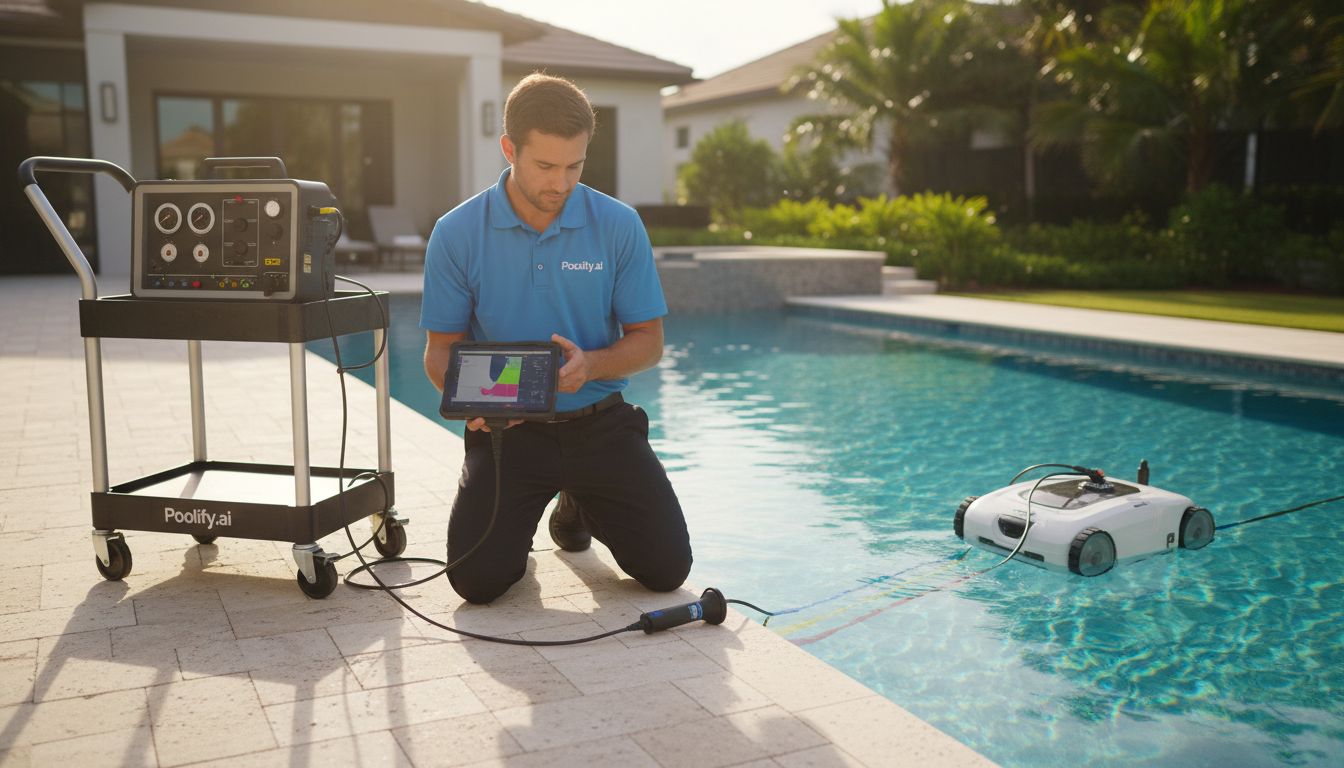
When DIY pool leak detection methods prove insufficient, professional pool leak detection services employ advanced technologies that locate leaks with remarkable precision. Understanding these professional pool leak detection techniques helps you appreciate the value they provide and make informed decisions about when to call experts.
Electronic Pool Leak Detection
Electronic pool leak detection uses sophisticated listening devices that detect the sound of water escaping under pressure. Professional pool leak detection technicians use these instruments to scan plumbing lines, identifying leaks in underground pipes without excavation. This non-invasive pool leak detection technology has revolutionized the industry, allowing precise leak location that minimizes repair costs and property disruption.
The latest electronic pool leak detection equipment in 2026 incorporates advanced signal processing that filters out background noise, improving accuracy even in noisy environments. Some professional pool leak detection companies now use acoustic correlators that compare signals from multiple points, triangulating leak locations with extraordinary precision. Learn more about maintaining your pool equipment with our comprehensive pool equipment guide.
Pressure Testing for Pool Leak Detection
Pressure testing represents another crucial professional pool leak detection method, particularly for plumbing systems. During this pool leak detection process, technicians isolate individual plumbing lines, seal them, and pressurize them with air. A pressure drop indicates a leak in that specific line. This pool leak detection technique definitively identifies which lines are leaking before any digging begins, saving substantial excavation costs.
Advanced pool leak detection pressure testing now includes digital pressure monitoring that provides real-time data on leak severity. This information helps pool leak detection professionals and homeowners prioritize repairs based on actual water loss rates rather than guesswork.
Camera Inspection Pool Leak Detection
Video camera pool leak detection involves threading tiny waterproof cameras through plumbing lines to visually identify leak sources. This pool leak detection technology proves particularly valuable for diagnosing complex plumbing issues or confirming suspected problems before committing to expensive repairs. Modern pool leak detection cameras provide high-definition images that clearly show cracks, separations, root intrusions, and other plumbing failures.
When to Call Professional Pool Leak Detection Services
While DIY pool leak detection methods handle many situations, certain circumstances demand professional pool leak detection expertise. Knowing when to transition from DIY to professional pool leak detection saves you time, money, and frustration while ensuring problems get properly resolved.
Call professional pool leak detection services when your bucket test confirms a leak but visual inspection and dye testing fail to locate it. This scenario typically indicates an underground plumbing leak requiring specialized pool leak detection equipment. Similarly, if you’ve identified multiple potential leak sources and need help prioritizing repairs, professional pool leak detection assessments provide valuable guidance.
Professional pool leak detection becomes essential when water loss exceeds one inch per week, when you notice structural damage around your pool, or when your water bills have increased dramatically without explanation. According to the Department of Energy, addressing pool leaks promptly prevents secondary damage that often costs ten times more than the original leak repair.
The cost of professional pool leak detection services in 2026 typically ranges from $300 to $500 for comprehensive assessments, while basic leak detection starts around $150. Given that undetected leaks can waste thousands of dollars annually, professional pool leak detection represents a sound investment that usually pays for itself within months through reduced water bills and prevented damage.
Preventing Future Pool Leaks
The best pool leak detection strategy is preventing leaks before they start. While some leak causes are unavoidable, proactive maintenance significantly reduces pool leak detection emergencies and extends your pool’s lifespan. Implementing these preventive pool leak detection practices keeps your pool healthy and your water where it belongs.
Regular pool leak detection inspections should become part of your routine maintenance schedule. Perform the bucket test quarterly, even when you don’t suspect problems. This baseline pool leak detection monitoring helps you catch small leaks before they become major issues. Monthly visual pool leak detection walkarounds identify problems in their earliest stages when repairs are simplest and least expensive.
Maintain proper water chemistry as part of your pool leak detection prevention strategy. Imbalanced water chemistry accelerates deterioration of pool surfaces, plumbing components, and equipment seals. Corrosive water conditions create the very problems that pool leak detection services later identify. Keep pH between 7.2 and 7.8, maintain appropriate alkalinity, and ensure calcium hardness stays within recommended ranges for your pool type.
Address minor issues immediately rather than waiting for them to worsen. That small drip you notice during your pool leak detection inspection will become a steady stream if ignored. Replace worn gaskets, tighten loose fittings, and repair small cracks promptly. This proactive approach to pool leak detection and maintenance prevents the majority of serious leak problems homeowners face.
Pool Leak Detection Costs and ROI
Understanding pool leak detection costs helps you budget appropriately and recognize the return on investment these services provide. While spending money on pool leak detection may seem like an unnecessary expense when your pool appears fine, the financial analysis clearly favors regular pool leak detection assessments.
DIY pool leak detection costs virtually nothing beyond your time and perhaps $10-20 for dye testing supplies. Professional pool leak detection services range from $150 for basic assessments to $500 or more for comprehensive evaluations using multiple technologies. Specialized pool leak detection for complex problems may cost $800-1,200, but this investment prevents thousands in wasted water and structural damage.
Consider that a leak losing one-quarter inch of water daily wastes approximately 18,000 gallons annually. At typical 2026 water rates of $5-10 per 1,000 gallons, that’s $90-180 in direct water costs. Factor in wasted chemicals, increased equipment wear from constantly refilling and reheating water, and potential structural damage, and the true cost of ignoring pool leak detection easily exceeds $500-1,000 annually. Professional pool leak detection that costs $300-500 pays for itself within months through identified savings.
The ROI of regular pool leak detection extends beyond immediate financial savings. Pools with documented leak detection maintenance histories command higher resale values. Prospective buyers appreciate knowing the pool has been properly maintained, and professional pool leak detection reports provide tangible evidence of responsible ownership. For more information on protecting your pool investment, visit our complete pool ownership guide.
Common Pool Leak Detection Mistakes to Avoid
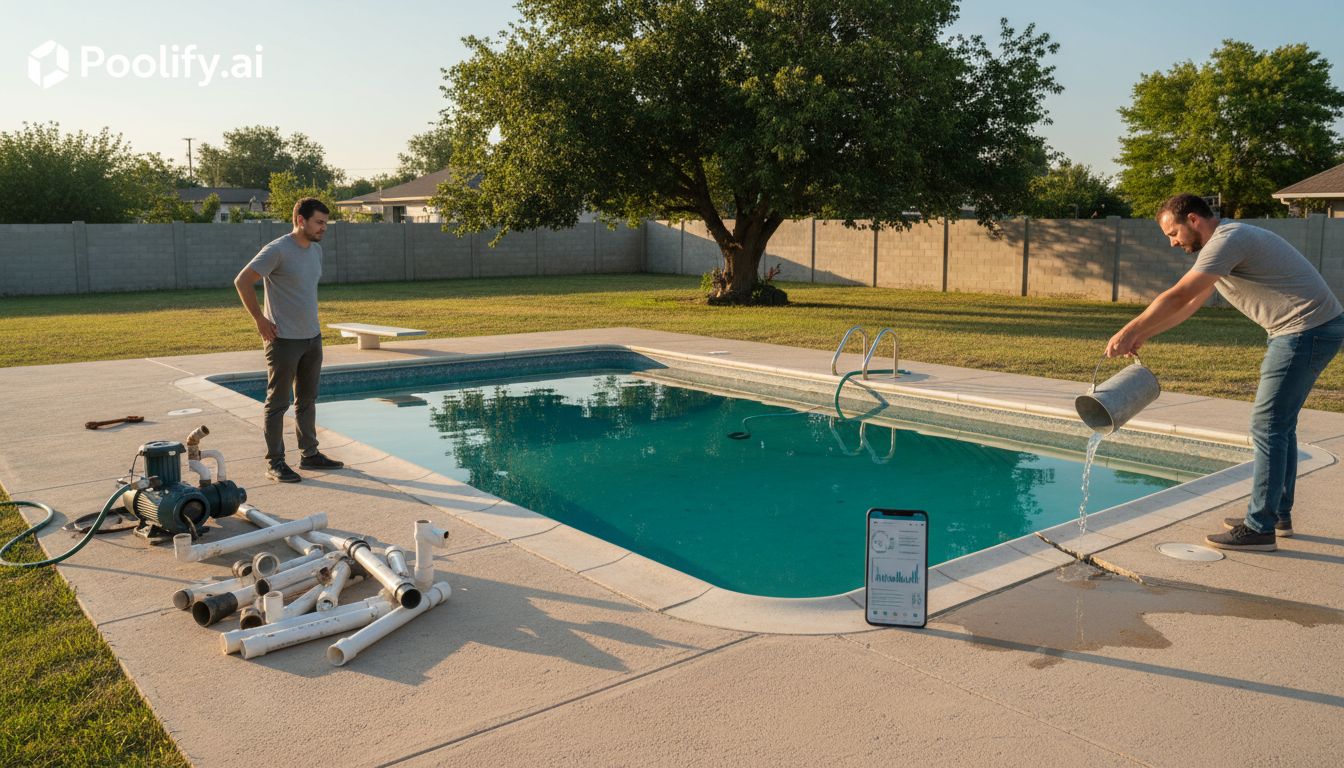
Even experienced pool owners make pool leak detection errors that waste time and money. Understanding these common pool leak detection mistakes helps you avoid frustration and achieve better results from your leak detection efforts.
The most frequent pool leak detection mistake is confusing evaporation with leaks. Pool water naturally evaporates, especially in hot, dry, or windy conditions. Without performing proper pool leak detection tests like the bucket test, homeowners often assume normal evaporation indicates a leak, leading to unnecessary worry and expense. Conversely, some homeowners dismiss actual leaks as “just evaporation,” allowing problems to worsen. Proper pool leak detection testing eliminates this guesswork.
Another common pool leak detection error is testing during inappropriate conditions. Performing pool leak detection assessments during rain, extreme wind, or while people are swimming produces unreliable results. For accurate pool leak detection, test during calm conditions with no pool use for at least 24 hours. This ensures your pool leak detection results reflect actual water loss rather than environmental factors or splash-out.
Many homeowners also make the pool leak detection mistake of focusing solely on the pool shell while ignoring equipment and plumbing. Comprehensive pool leak detection requires examining the entire pool system. That wet spot near your equipment pad deserves as much attention during pool leak detection as a crack in the pool wall. Equipment leaks are often easier and less expensive to repair, making them ideal targets for pool leak detection efforts.
Delaying professional pool leak detection after DIY methods prove inconclusive represents another costly mistake. While DIY pool leak detection saves money initially, persisting with unsuccessful attempts wastes water and time. If your pool leak detection efforts haven’t located the problem within a week, calling professionals prevents further water loss and potential damage.
Frequently Asked Questions About Pool Leak Detection
How much water loss is normal versus indicating a leak requiring pool leak detection?
Normal evaporation typically causes one-quarter inch of water loss daily in moderate conditions, though this increases in hot, dry, or windy weather. If your pool consistently loses more than one-quarter inch daily, pool leak detection is warranted. The bucket test provides the definitive answer by comparing pool water loss to evaporation loss. Any significant difference between the two indicates a leak requiring pool leak detection and repair.
Can I perform effective pool leak detection myself or should I hire professionals?
DIY pool leak detection methods like the bucket test, visual inspections, and dye testing successfully identify many leaks, particularly those in the pool shell or visible equipment. However, underground plumbing leaks require professional pool leak detection equipment. Start with DIY pool leak detection to potentially save money, but don’t hesitate to call professionals if you can’t locate the leak within a reasonable timeframe. Professional pool leak detection prevents the ongoing water waste that quickly exceeds service costs.
How long does professional pool leak detection take?
Professional pool leak detection typically requires 2-4 hours for a comprehensive assessment, though complex situations may take longer. Basic pool leak detection services focusing on obvious areas may complete in 1-2 hours. The pool leak detection timeline depends on your pool’s size, complexity, and the number of potential leak sources. Most pool leak detection companies provide time estimates when scheduling your appointment.
What’s the best time of year for pool leak detection?
Pool leak detection can occur year-round, but spring and fall offer ideal conditions in most climates. Moderate temperatures reduce evaporation rates, making pool leak detection results more accurate. However, don’t delay pool leak detection if you suspect a leak, regardless of season. The water waste and potential damage from waiting outweigh any seasonal advantages. Winter pool leak detection in cold climates may require special considerations, but professionals can adapt their pool leak detection techniques accordingly.
Will pool leak detection damage my pool or property?
Modern pool leak detection methods are non-invasive and cause no damage. Electronic listening devices, pressure testing, and camera inspections all perform pool leak detection without disturbing your pool or landscape. Only after pool leak detection identifies a leak location does any excavation or repair work begin. Professional pool leak detection technicians take great care to minimize any impact on your property during both the detection and repair phases.
Key Takeaways
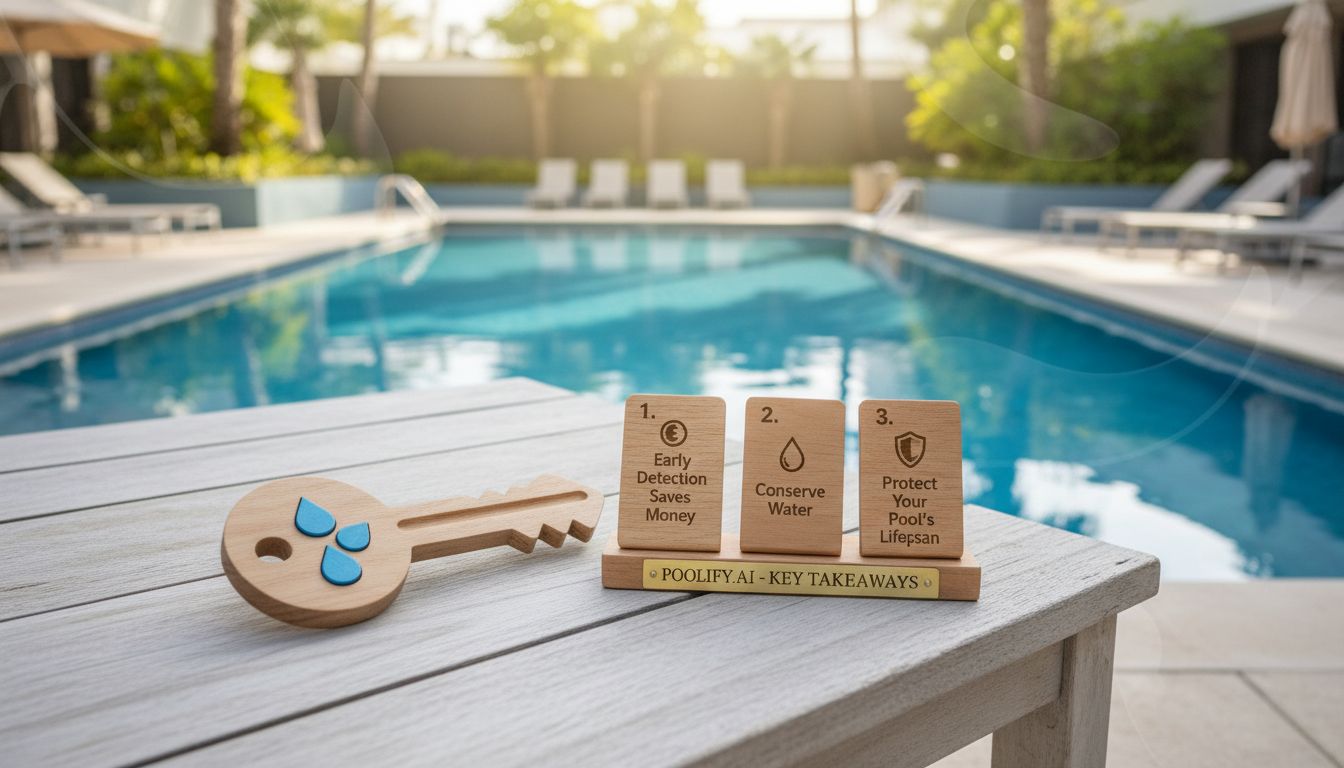
- Pool leak detection saves money and prevents damage: Early leak identification through regular pool leak detection prevents thousands in wasted water, chemical costs, and structural repairs while protecting your property investment.
- Start with DIY pool leak detection methods: The bucket test, visual inspections, and dye testing provide effective pool leak detection for many common leaks without professional costs, though complex issues require expert pool leak detection services.
- Don’t confuse evaporation with leaks: Proper pool leak detection testing distinguishes normal water loss from actual leaks, preventing unnecessary worry or dangerous delays in addressing real problems.
- Professional pool leak detection pays for itself: Advanced technologies like electronic listening devices and pressure testing locate hidden leaks quickly, with typical pool leak detection costs of $300-500 recovering through water savings within months.
- Prevention beats detection: Regular maintenance, proper water chemistry, and quarterly pool leak detection monitoring catch problems early when repairs are simplest and least expensive, making prevention the ultimate pool leak detection strategy.
See Your Dream Pool in Your Actual Backyard
Upload a photo and get an AI-designed pool visualization in 10 seconds. 3 free designs, no login required.
Try Poolify Free →Conclusion
Mastering pool leak detection represents one of the most valuable skills for pool owners in 2026. Whether you’re performing DIY pool leak detection tests or working with professional pool leak detection services, early identification of leaks protects your investment, conserves precious water resources, and prevents costly structural damage. The combination of regular pool leak detection monitoring, prompt attention to warning signs, and professional pool leak detection when needed ensures your pool remains a source of enjoyment rather than frustration and expense.
Remember that effective pool leak detection is an ongoing process, not a one-time event. Incorporate basic pool leak detection practices into your regular maintenance routine, stay alert for warning signs, and don’t hesitate to call professional pool leak detection services when DIY methods prove insufficient. The small investment in proper pool leak detection delivers enormous returns through reduced water bills, lower chemical costs, extended equipment life, and peace of mind knowing your pool is operating efficiently and safely.
References
- EPA WaterSense Program – https://www.epa.gov/watersense/statistics-and-facts
- U.S. Department of Energy – Swimming Pool Heating – https://betterbuildingssolutioncenter.energy.gov/sites/default/files/attachments/Pool%20efficiency_.pdf
