Introduction: Timing Your Pool Installation Right
Deciding when to install a pool is one of the most critical choices you’ll make in your backyard transformation journey. The timing of your pool installation affects everything from construction costs to project completion speed, and even the quality of the finished product. Many homeowners rush into pool projects without considering seasonal factors, permit timelines, and contractor availability, leading to budget overruns and frustrating delays.
Understanding when to install a pool requires balancing multiple factors including weather conditions, construction schedules, material costs, and your family’s needs. The right timing can save you thousands of dollars while ensuring your pool is ready when you want to use it most. This comprehensive guide explores every aspect of pool installation timing, helping you make an informed decision that maximizes value and minimizes stress throughout 2026.
Best Seasons for Pool Installation
The question of when to install a pool starts with understanding seasonal advantages. Each season offers distinct benefits and challenges that impact construction quality, cost, and timeline. Pool contractors experience varying demand levels throughout the year, creating opportunities for strategic homeowners.
Fall Installation: The Smart Choice
Fall emerges as the optimal time when to install a pool for most homeowners. From September through November, contractor schedules open up as summer demand subsides. You’ll find better availability, more attentive service, and often negotiate better pricing. The moderate temperatures create ideal working conditions for excavation and concrete work, allowing proper curing without extreme heat or cold interference.
Installing during fall means your pool will be ready for spring swimming season. Contractors can take their time ensuring quality work without rushing to meet summer deadlines. Material suppliers also offer competitive pricing as they clear inventory before winter. The ground conditions remain workable in most regions, and you avoid the spring permit rush that can delay projects by weeks.
Winter Installation Considerations
Winter presents unique opportunities when deciding when to install a pool, particularly in mild climates. December through February typically sees the lowest contractor demand, translating to significant cost savings—sometimes 10-20% below peak season prices. Contractors appreciate winter work and often provide their most experienced crews for projects that keep them employed during slower months.
However, winter installation depends heavily on your climate zone. In regions with freezing temperatures, ground conditions may prevent excavation, and concrete curing becomes problematic. According to the National Weather Service guidelines on cold weather construction, temperatures below 40°F require special concrete additives and heating measures that increase costs. Southern states and mild-winter regions offer the best winter installation conditions.
Spring Installation Challenges
Many homeowners consider spring when to install a pool, hoping for summer completion. March through May represents peak demand season, creating several challenges. Contractor schedules fill quickly, often booking months in advance. Permit offices experience backlogs as everyone submits applications simultaneously, potentially adding 4-6 weeks to your timeline.
Spring installation costs typically run 15-25% higher than off-season pricing due to demand. Rain delays become more frequent in many regions, pushing completion dates into summer. If you’re set on spring installation, book your contractor by January and submit permits in late winter to secure your spot in the construction queue.
Summer: The Rushed Season
Summer is generally the least favorable time when to install a pool. June through August brings maximum demand, premium pricing, and rushed timelines. Contractors juggle multiple projects, potentially compromising attention to detail. Extreme heat affects concrete curing and worker productivity, sometimes extending project timelines despite pressure to finish quickly.
The primary advantage of summer installation is immediate enjoyment—you might catch the tail end of swimming season. However, you’ll pay premium prices and face the longest wait times for contractor availability. Most pool professionals recommend avoiding summer installation unless circumstances require it.
Regional Climate Factors in Pool Installation Timing
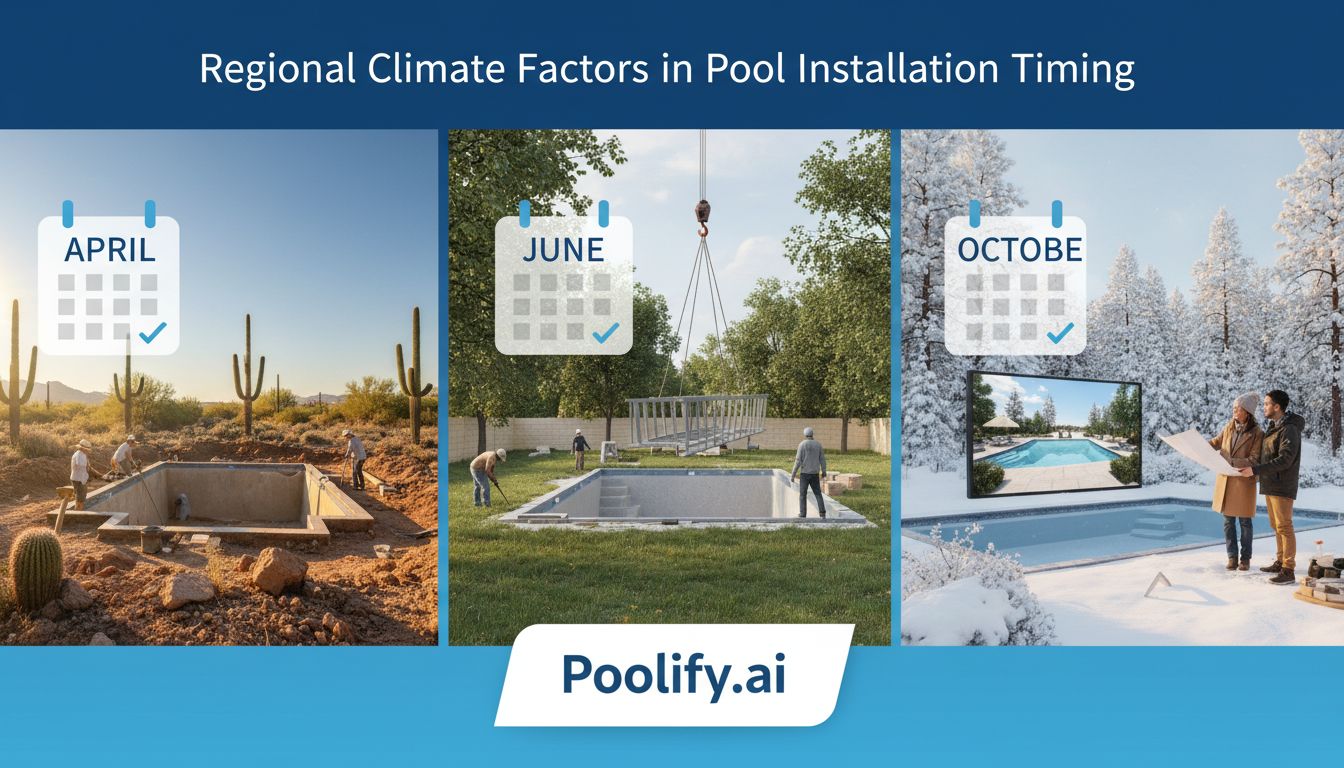
Where you live dramatically influences when to install a pool. Climate zones create distinct installation windows that smart homeowners leverage for optimal results. Understanding your region’s weather patterns helps you avoid costly delays and quality issues.
Northern Climate Zones
In northern states with harsh winters, the window for when to install a pool narrows considerably. Late spring through early fall provides the only viable construction period. Ground freezing prevents excavation, and cold temperatures compromise concrete work outside this window. Northern homeowners should plan installations between May and October, with July and August offering the most reliable weather despite higher costs.
The shortened season creates intense contractor competition. Book your northern installation by February for summer completion. Many northern pool builders offer early-booking discounts to secure winter contracts, providing cost savings despite summer construction timing.
Southern and Sunbelt Regions
Southern states offer year-round flexibility when deciding when to install a pool. Mild winters allow construction in every season, creating strategic opportunities. Winter installation (November through February) provides the best value proposition—lower costs, better contractor availability, and comfortable working conditions.
Summer heat in southern regions can actually slow construction as concrete work requires early morning scheduling to avoid midday temperatures. Fall and winter emerge as the sweet spot for southern pool installation, with spring being second choice due to permit backlogs and contractor demand.
Coastal and High-Humidity Areas
Coastal regions require special consideration when determining when to install a pool. Hurricane seasons, high humidity, and salt air create unique challenges. Install during dry seasons when possible—typically fall and winter in most coastal areas. Avoid hurricane season (June through November in Atlantic and Gulf regions) to prevent weather delays and material damage.
Humidity affects concrete curing times and can extend project timelines. Experienced coastal contractors adjust their schedules accordingly, often preferring winter installations when humidity drops and weather patterns stabilize.
Permit and Planning Timeline Considerations
Understanding permit requirements is crucial when deciding when to install a pool. The bureaucratic timeline often determines your actual installation window more than weather or contractor availability. Most homeowners underestimate permit processing time, leading to frustrating delays.
Average Permit Timelines
Permit approval typically requires 2-8 weeks depending on your municipality and submission season. Spring submissions face the longest delays as permit offices process peak application volumes. Winter and fall submissions often receive faster processing, sometimes within 2-3 weeks. Factor permit time into your installation planning—if you want a May installation, submit permits in February or March.
Complex projects requiring variances or special approvals can take 3-6 months. Properties near wetlands, on slopes, or in historic districts face additional scrutiny. Research your local requirements early and consult with experienced pool designers who understand regional permit processes.
HOA Approval Processes
Homeowners associations add another layer to timing when to install a pool. HOA architectural review boards typically meet monthly, and approval can require 30-90 days. Some HOAs only accept applications during specific periods or have seasonal restrictions on construction noise and hours.
Submit HOA applications simultaneously with or before permit applications. Many contractors won’t schedule your project until both approvals are secured. Winter submissions often receive faster HOA processing as boards face lighter application volumes.
Financial Timing: Budget and Cost Optimization
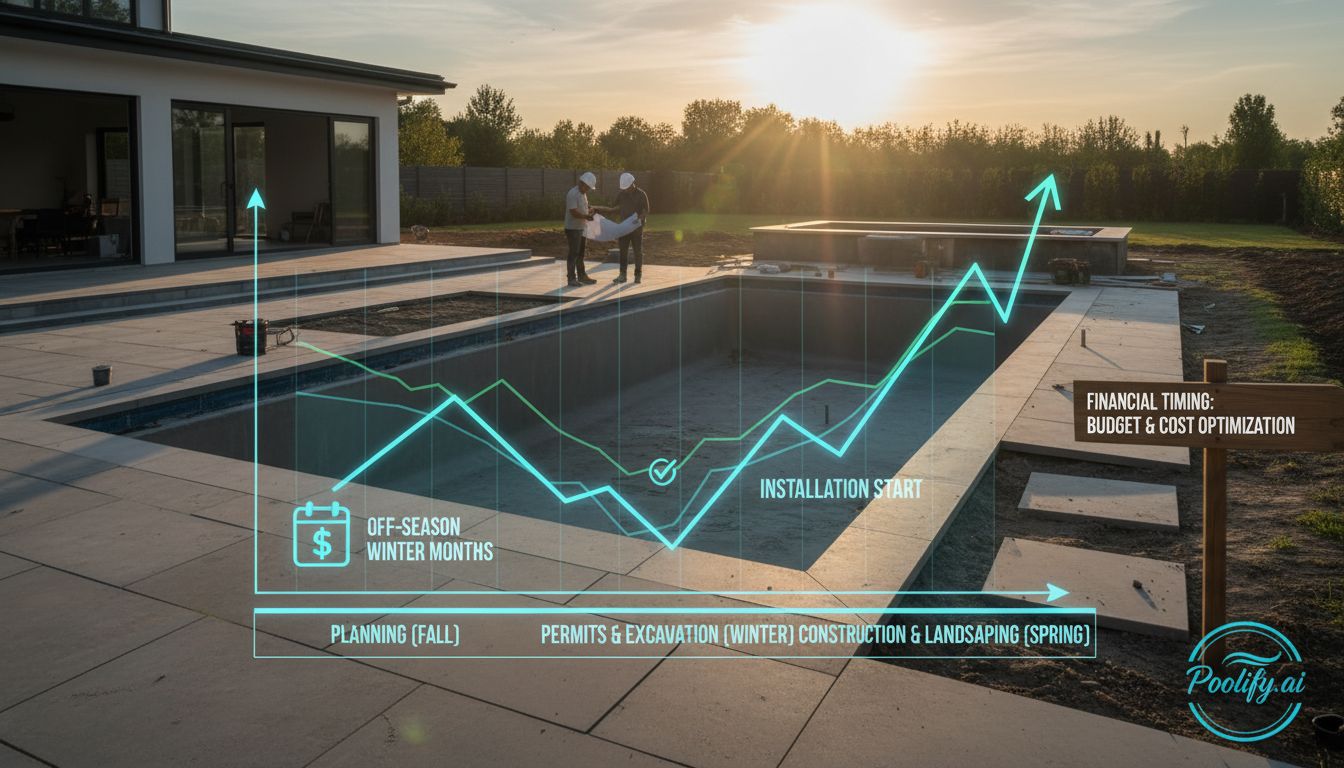
The financial aspect of when to install a pool extends beyond simple seasonal pricing. Strategic timing can save $5,000-$15,000 on a typical residential pool project through various mechanisms.
Off-Season Discounts
Contractors offer their best pricing during slow seasons—typically November through February in most markets. Discounts of 10-20% are common as builders seek to maintain steady work for their crews. Material suppliers also reduce prices during off-peak months, creating compounding savings opportunities.
When negotiating timing for when to install a pool, ask contractors specifically about off-season pricing. Many offer package deals or upgraded features at standard pricing during winter months. The savings often exceed any inconvenience from waiting for warmer weather to enjoy your pool.
Financing Considerations
Interest rates and lending conditions fluctuate throughout the year. Many homeowners find better financing terms in early fall as banks compete for year-end lending goals. Home equity lines of credit (HELOCs) and personal loans may offer promotional rates during specific periods.
Plan your financing timeline before deciding when to install a pool. Loan approval typically requires 2-4 weeks, and you’ll want financing secured before signing contractor agreements. Some contractors offer seasonal financing promotions, particularly during slower winter months.
Tax and Financial Planning
Consider tax implications when timing your pool installation. Some energy-efficient pool features may qualify for tax credits, and timing the installation across tax years can optimize deductions. Consult with tax professionals about potential benefits related to home improvement timing.
Additionally, property tax assessments typically occur annually. Installing after your assessment date means enjoying your pool for a year before increased property taxes take effect. Research your local assessment schedule when planning installation timing.
Personal Circumstances and Lifestyle Factors
Beyond weather and costs, personal factors significantly influence when to install a pool. Your family’s schedule, upcoming events, and lifestyle patterns should guide timing decisions.
Family Schedule Alignment
Pool construction disrupts your yard for 4-12 weeks depending on project complexity. Consider when to install a pool around major family events, graduations, weddings, or extended vacations. Many homeowners prefer installation during school years when children are occupied, avoiding summer disruption.
If you’re planning to host summer gatherings, target fall or winter installation for spring completion. Construction noise, equipment, and limited yard access make hosting difficult during active building phases. Plan accordingly to ensure your outdoor space is available when you need it most.
Work and Travel Schedules
Major construction projects require homeowner involvement for decisions, inspections, and problem-solving. Schedule installation when to install a pool during periods when you’ll be consistently available. Avoid planning construction during extended travel or high-stress work periods.
Remote workers might prefer winter installation when working from home is more common, allowing easy oversight without sacrificing vacation days. Retirees often find fall installation ideal, providing a winter project to anticipate and spring enjoyment to celebrate.
Landscape and Yard Considerations
Existing landscaping affects timing decisions for when to install a pool. Fall installation allows transplanting perennials and shrubs while dormant, improving survival rates. Spring installation risks damaging emerging plants and disrupting growing seasons.
If you’re planning comprehensive landscape renovation alongside pool installation, coordinate timing for optimal results. Many homeowners prefer completing pool construction first, then addressing landscaping during the following season when ground has settled and final grades are established.
Contractor Availability and Quality Considerations
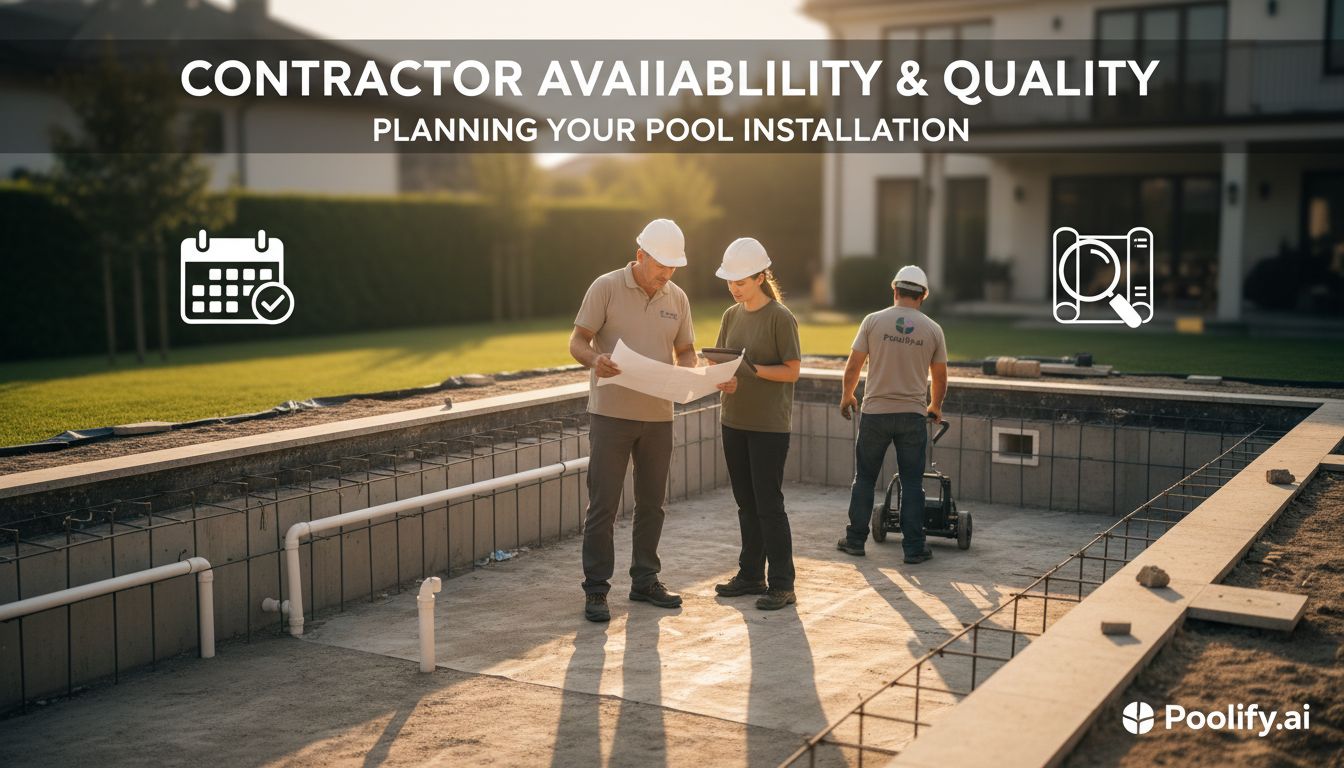
The quality of your pool installation depends heavily on contractor availability and workload. Understanding industry patterns helps you secure the best builders when deciding when to install a pool.
Peak vs. Off-Peak Contractor Performance
During peak season, even excellent contractors juggle multiple projects simultaneously. Crews rush between job sites, and attention to detail can suffer. Off-season installation often means dedicated crews focusing exclusively on your project, resulting in superior craftsmanship and fewer mistakes.
When interviewing contractors about when to install a pool, ask about their current workload and crew availability. Contractors with lighter schedules provide better communication, faster problem resolution, and more flexibility for design changes during construction.
Material Availability and Supply Chain
Material shortages and supply chain disruptions continue affecting construction in 2026. Certain pool equipment, tiles, and finishes experience seasonal availability constraints. Ordering materials during off-peak periods often ensures better selection and faster delivery.
Discuss material lead times with contractors when planning when to install a pool. Some specialty items require 8-12 week ordering windows. Winter planning allows securing materials before spring demand creates shortages, preventing mid-project delays that extend timelines and increase costs.
Inspection and Final Approval Timing
Municipal inspectors face the same seasonal demand patterns as contractors. Spring and summer inspections may require 1-2 week waits between construction phases, extending project timelines. Fall and winter inspections often occur within days of request, keeping projects moving efficiently.
Factor inspection timing into your decision about when to install a pool. Faster inspections during off-peak seasons can reduce total project time by 2-4 weeks, getting you into the water sooner despite starting during cooler months.
Special Situations and Unique Timing Scenarios
Certain circumstances create unique considerations for when to install a pool. Understanding these special situations helps homeowners make informed decisions based on their specific context.
New Construction and Home Building
If you’re building a new home, coordinate pool installation timing with home construction completion. Installing the pool before final landscaping allows heavy equipment access without damaging established yards. However, wait until the home is substantially complete to avoid construction damage to pool equipment and finishes.
The ideal timing for when to install a pool during new construction is immediately after home completion but before final grading and landscaping. This approach minimizes equipment access issues while protecting your pool investment from construction activity.
Renovation and Existing Pool Replacement
Replacing or renovating an existing pool offers different timing considerations. Many homeowners schedule renovations during fall or winter, sacrificing one swimming season for improved facilities the following year. This timing provides contractors with ample time for complex renovations without summer pressure.
If you’re deciding when to install a pool replacement, consider the off-season approach. Demolition and construction noise won’t disrupt summer outdoor living, and you’ll secure better contractor pricing and availability during slower months.
Investment and Resale Timing
Homeowners installing pools primarily for resale value should consider market timing. Real estate markets peak in spring and summer when pools showcase beautifully. If you’re planning to sell within 1-2 years, time installation to ensure the pool is established and attractive during your target listing season.
Installing 12-18 months before listing allows landscaping to mature and any construction settling to resolve. Consider when to install a pool with your real estate timeline in mind, ensuring maximum return on investment through strategic timing.
Common Mistakes in Pool Installation Timing
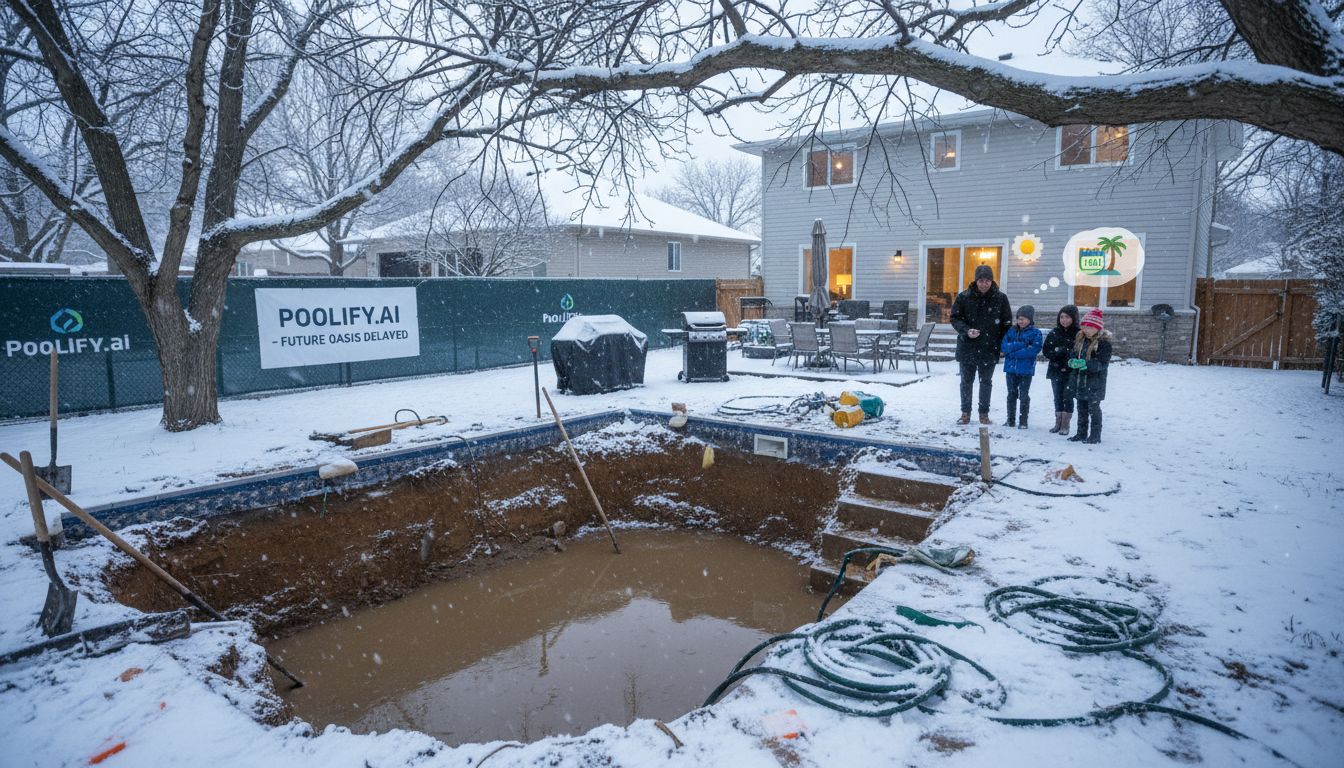
Learning from others’ mistakes helps you avoid costly errors when deciding when to install a pool. These common timing pitfalls trap unsuspecting homeowners every year.
The “Summer Rush” Mistake
The most common error is deciding in April or May when to install a pool, hoping for summer completion. This timing creates a perfect storm of problems: contractor unavailability, permit delays, premium pricing, and rushed work. Projects starting in late spring frequently extend into fall, missing the entire swimming season while paying peak prices.
Avoid this mistake by planning 6-9 months ahead. If you want summer swimming, start planning the previous fall. The best time to think about when to install a pool is actually the season before you want it completed.
Ignoring Permit Timelines
Homeowners frequently underestimate bureaucratic timelines, assuming permits process in days rather than weeks or months. This miscalculation throws off the entire schedule, forcing contractors to delay starts and potentially losing your slot in their schedule entirely.
Research permit requirements immediately when considering when to install a pool. Contact your building department for realistic timelines and submit applications well before your target construction date. Build buffer time into schedules for unexpected delays or revision requests.
Weather Gambling
Some homeowners gamble on weather, scheduling installation during marginal seasons hoping for favorable conditions. This strategy backfires when unexpected cold snaps, heavy rains, or extreme heat delay projects by weeks. Weather delays cost money through extended contractor fees and potential material damage.
Choose conservative timing when deciding when to install a pool. Select seasons with historically stable weather in your region. The few weeks gained by aggressive scheduling rarely justify the risk of weather-related delays and complications.
Creating Your Personal Pool Installation Timeline
Developing a comprehensive timeline helps you determine when to install a pool based on your unique circumstances. Follow this systematic approach to optimal timing.
Step 1: Define Your Target Completion Date
Start by identifying when you want your pool ready for use. Work backward from this date, accounting for construction time (typically 8-12 weeks), permit processing (4-8 weeks), and contractor booking lead time (4-12 weeks depending on season). This reverse planning reveals when you need to start the process.
Step 2: Research Local Factors
Investigate your specific region’s considerations for when to install a pool. Contact local building departments about permit timelines, research typical weather patterns, and interview multiple contractors about their seasonal availability and pricing. Gather information specific to your location rather than relying on general guidance.
Step 3: Assess Your Personal Constraints
Evaluate your family schedule, budget timing, and lifestyle factors. Identify periods when construction disruption would be most and least problematic. Consider your financial situation and when you’ll have funds available or when financing terms might be most favorable.
Step 4: Optimize for Multiple Factors
Balance weather, cost, contractor quality, and personal circumstances to identify your optimal window for when to install a pool. Rarely will every factor align perfectly—prioritize what matters most to your situation. Cost-conscious buyers might prioritize off-season savings, while those with inflexible schedules might pay premium pricing for convenient timing.
Step 5: Build in Buffer Time
Add 20-30% buffer time to every phase of your timeline. Permits take longer than expected, weather causes delays, and material shipments run late. Realistic timelines prevent disappointment and allow flexibility for inevitable complications. If you want to swim in June, plan for completion in May to accommodate delays.
Frequently Asked Questions About Pool Installation Timing
What is the absolute best time when to install a pool?
For most homeowners, fall (September through November) represents the optimal time when to install a pool. You’ll benefit from lower costs, better contractor availability, ideal working conditions, and spring completion timing. Fall installation balances all factors for maximum value and quality.
How long does pool installation actually take from start to finish?
Complete pool installation typically requires 8-12 weeks for construction plus 4-8 weeks for permits, totaling 12-20 weeks from initial application to swimming. Complex projects with custom features, difficult terrain, or extensive landscaping may extend to 16-24 weeks. When planning when to install a pool, allow 4-6 months total timeline for safety.
Can I install a pool in winter in cold climates?
Winter installation in cold climates is generally not recommended when ground freezes or temperatures consistently drop below 40°F. Frozen ground prevents excavation, and cold temperatures compromise concrete curing. In mild winter climates where temperatures stay above 50°F, winter installation is feasible and often cost-effective.
Will I save money by installing during off-season?
Yes, off-season installation typically saves 10-20% on total project costs through lower contractor rates, better material pricing, and increased negotiating leverage. For a $50,000 pool, off-season timing could save $5,000-$10,000. These savings make timing when to install a pool strategically one of the best financial decisions you can make.
How far in advance should I book my pool contractor?
Book contractors 3-6 months before your desired installation date, with longer lead times required for spring and summer installations. Popular contractors book 6-12 months ahead during peak seasons. For off-season installation, 2-3 months advance booking often suffices. Early booking provides better contractor selection and prevents schedule disappointments.
Key Takeaways: Mastering Pool Installation Timing
- Fall installation offers the best overall value when deciding when to install a pool, combining lower costs, better contractor availability, and ideal working conditions for quality construction.
- Plan 6-9 months ahead of your target completion date to account for permits, contractor booking, and construction timelines, ensuring your pool is ready when you want to use it.
- Off-season installation saves 10-20% on total costs through reduced contractor rates and material pricing, making strategic timing one of the most impactful financial decisions in your pool project.
- Climate zone determines your viable installation window when considering when to install a pool, with northern regions limited to warm months and southern areas offering year-round flexibility.
- Permit and HOA approval timelines often determine actual installation dates more than weather or contractor availability, requiring early application submission for on-time project completion.
Conclusion: Making Your Pool Installation Timing Decision
Determining when to install a pool requires balancing multiple competing factors including weather, costs, contractor availability, permits, and your personal circumstances. No single answer fits every homeowner—your optimal timing depends on your unique situation, priorities, and regional conditions. However, most homeowners find that fall installation provides the best combination of value, quality, and convenience.
The key to successful timing lies in early planning and realistic expectations. Start researching when to install a pool at least 6-9 months before your target completion date. This advance planning allows securing permits, booking quality contractors, and optimizing costs through strategic seasonal timing. Avoid the common mistake of deciding in spring that you want a summer pool—this rushed timeline creates unnecessary stress and expense.
Remember that a pool represents a significant investment in your home and lifestyle. Taking time to plan optimal installation timing pays dividends through lower costs, better construction quality, and reduced stress throughout the process. Whether you choose fall for maximum savings, winter for contractor dedication, or spring for summer enjoyment, informed decision-making ensures your pool project succeeds on your terms and timeline. For additional guidance on maintaining your investment, explore our comprehensive pool maintenance resources to keep your pool in perfect condition year-round.
References
- National Weather Service – Cold Weather Construction Guidelines: https://www.weather.gov/safety/cold
- Poolify.ai – Pool Design Consultation: https://poolify.ai/?utm_source=content&utm_medium=inline_link&utm_campaign=article_cta
- Poolify.ai – Pool Maintenance Tips: https://content.poolify.ai/diy-pool-maintenance-tips/
