Introduction to Pool Render Tool Technology
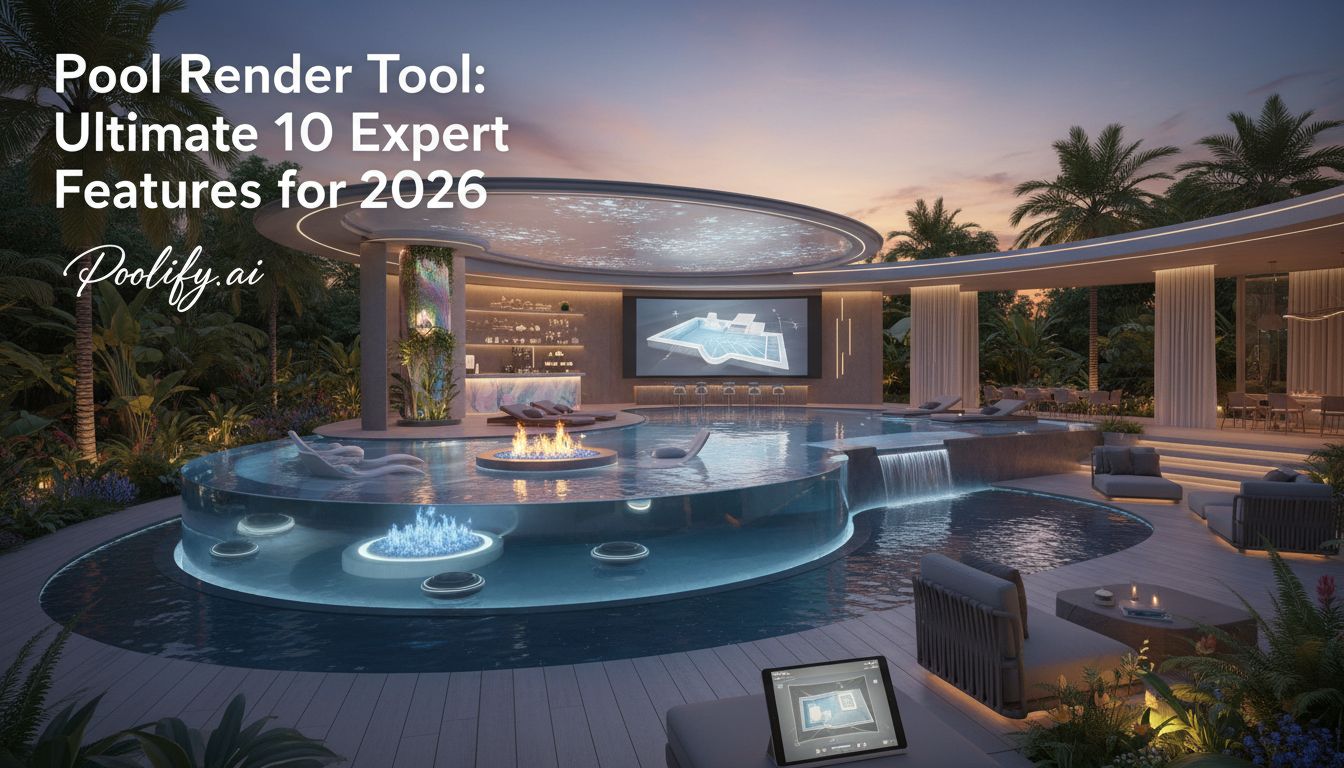
The pool render tool has become an indispensable asset for pool designers, contractors, and homeowners in 2026. This sophisticated software transforms abstract ideas into photorealistic 3D visualizations, allowing you to see your dream pool before breaking ground. Whether you’re a professional designer presenting concepts to clients or a homeowner planning a backyard renovation, understanding how to leverage a pool render tool can save thousands of dollars and countless hours of revision work.
Modern pool render tool platforms have evolved dramatically from the basic sketch programs of previous years. Today’s solutions incorporate artificial intelligence, real-time rendering engines, and extensive material libraries that produce images virtually indistinguishable from photographs. This technology bridges the communication gap between vision and reality, ensuring everyone involved in a pool project shares the same expectations.
What Makes a Pool Render Tool Essential in 2026
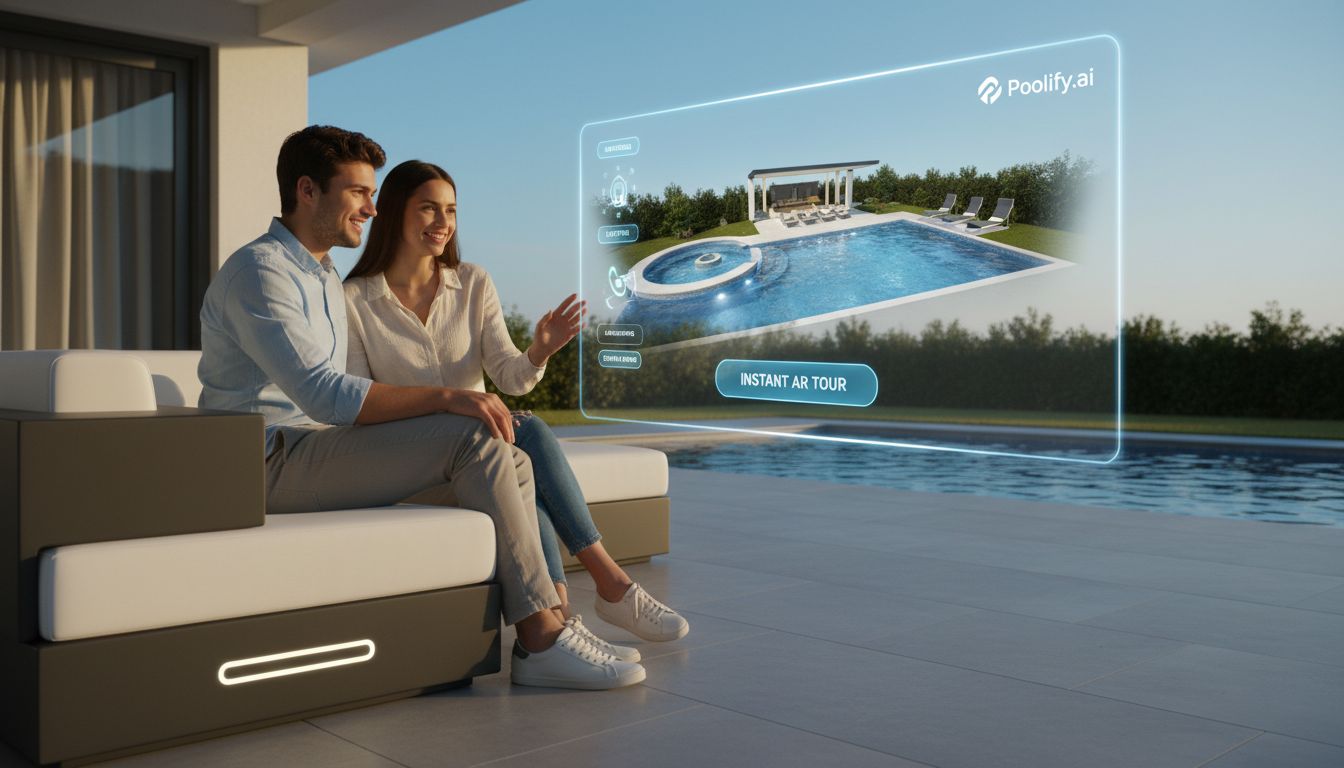
The construction industry has embraced digital transformation, and pool design is no exception. A pool render tool serves as the cornerstone of modern pool planning, offering capabilities that traditional blueprints and hand-drawn sketches simply cannot match. These platforms allow users to experiment with different shapes, materials, lighting, and landscaping elements in a virtual environment.
According to the U.S. Census Bureau’s construction statistics, residential pool construction has increased significantly, with homeowners demanding more sophisticated planning tools. The ability to visualize a project comprehensively before construction begins reduces costly mistakes and change orders that can derail budgets and timelines.
Professional pool builders report that clients who review detailed renders before construction are 73% more satisfied with final results. This satisfaction stems from accurate expectation setting and the collaborative design process that a pool render tool facilitates. Homeowners can make informed decisions about every aspect of their pool, from tile selection to waterfall placement.
The Evolution of Pool Visualization Technology
Early pool design relied on two-dimensional drawings that required significant imagination to interpret. The introduction of basic 3D modeling improved this process, but rendering times were lengthy and results often looked artificial. Modern pool render tool platforms leverage GPU acceleration and cloud computing to generate photorealistic images in minutes rather than hours.
Machine learning algorithms now assist with realistic water simulation, accurate shadow casting, and material texture mapping. These technological advances mean that a pool render tool can show how sunlight will reflect off water surfaces at different times of day or how specific tile choices will complement surrounding landscape elements.
Top 10 Features Every Pool Render Tool Should Offer
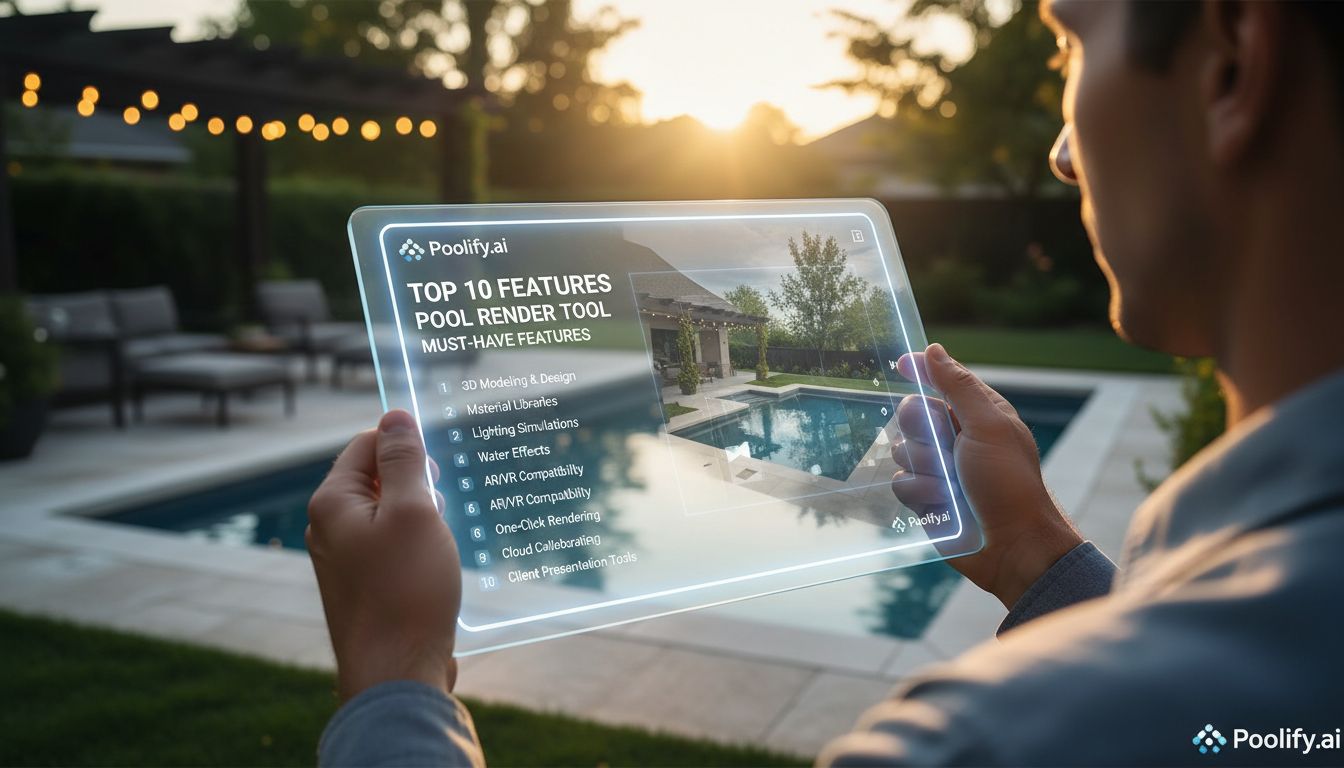
Selecting the right pool render tool requires understanding which features deliver the most value for your specific needs. Whether you’re a professional handling multiple projects or a homeowner tackling a single renovation, these ten capabilities represent the industry standard for 2026.
1. Photorealistic Rendering Engine
The rendering engine forms the heart of any pool render tool. Advanced ray-tracing technology simulates how light interacts with water, creating reflections, refractions, and caustics that mirror real-world physics. Look for software that produces images with accurate color representation, realistic shadows, and convincing material textures. The best pool render tool options offer multiple quality settings, allowing quick previews for design iterations and high-resolution outputs for client presentations.
2. Extensive Material and Finish Libraries
A comprehensive pool render tool includes thousands of pre-loaded materials representing actual products from leading manufacturers. These libraries should encompass pool finishes like plaster, pebble, and tile in various colors and patterns. Additional categories include coping stones, decking materials, outdoor furniture, plants, and hardscape elements. The ability to import custom materials ensures you can match any specific product your project requires.
3. Real-Time Design Modifications
Modern pool render tool platforms enable instant design changes without lengthy re-rendering delays. Adjust pool dimensions, modify shapes, swap materials, or relocate features while viewing updates in real-time. This interactive capability transforms client meetings into collaborative design sessions where stakeholders can experiment with options and immediately see results.
4. Accurate Water Simulation
Water represents one of the most challenging elements to render convincingly. A quality pool render tool must simulate water clarity, color variations based on depth, surface ripples, and underwater lighting effects. Advanced systems account for different water conditions, from the crystal-clear appearance of properly maintained pools to the slightly clouded look of natural swimming pools with biological filtration.
5. Lighting Design Capabilities
Pool lighting dramatically affects both aesthetics and functionality. Your pool render tool should allow placement of LED fixtures, fiber optic systems, and landscape lighting with accurate illumination modeling. The software should demonstrate how different lighting configurations create ambiance during evening hours and highlight architectural features. Some platforms simulate various times of day, showing how natural sunlight interacts with artificial lighting.
6. Landscape Integration Tools
Pools exist within broader landscape contexts. The best pool render tool solutions include extensive plant libraries with species-appropriate models, hardscape elements like retaining walls and pathways, and outdoor living features such as kitchens and fire pits. Integration capabilities ensure your pool design harmonizes with existing or planned landscape elements, creating cohesive outdoor environments.
7. Measurement and Specification Tools
Beyond beautiful visualizations, a professional-grade pool render tool must provide accurate measurements and technical specifications. Built-in calculation tools determine surface areas, volumes, material quantities, and equipment requirements. These features streamline the transition from design to construction, ensuring renders reflect buildable designs rather than impossible fantasies.
8. Virtual Reality and 360-Degree Views
Immersive technologies have transformed how clients experience proposed designs. Leading pool render tool platforms export to virtual reality headsets or generate 360-degree panoramic images that viewers can explore interactively. These features prove particularly valuable for helping clients understand spatial relationships and experience the scale of proposed designs.
9. Cloud Collaboration and Sharing
Modern projects involve multiple stakeholders across different locations. Cloud-based pool render tool platforms enable seamless collaboration, allowing designers, contractors, and clients to access projects from any device. Commenting systems, version control, and approval workflows keep projects organized and ensure everyone works from current designs. Secure sharing links make client presentations simple and professional.
10. Cost Estimation Integration
Understanding budget implications throughout the design process prevents disappointment later. Advanced pool render tool software integrates with cost databases, providing real-time estimates as you modify designs. This transparency helps clients make informed decisions, balancing aesthetic preferences against budget realities. Some platforms connect directly with supplier pricing for maximum accuracy.
How to Choose the Right Pool Render Tool for Your Needs
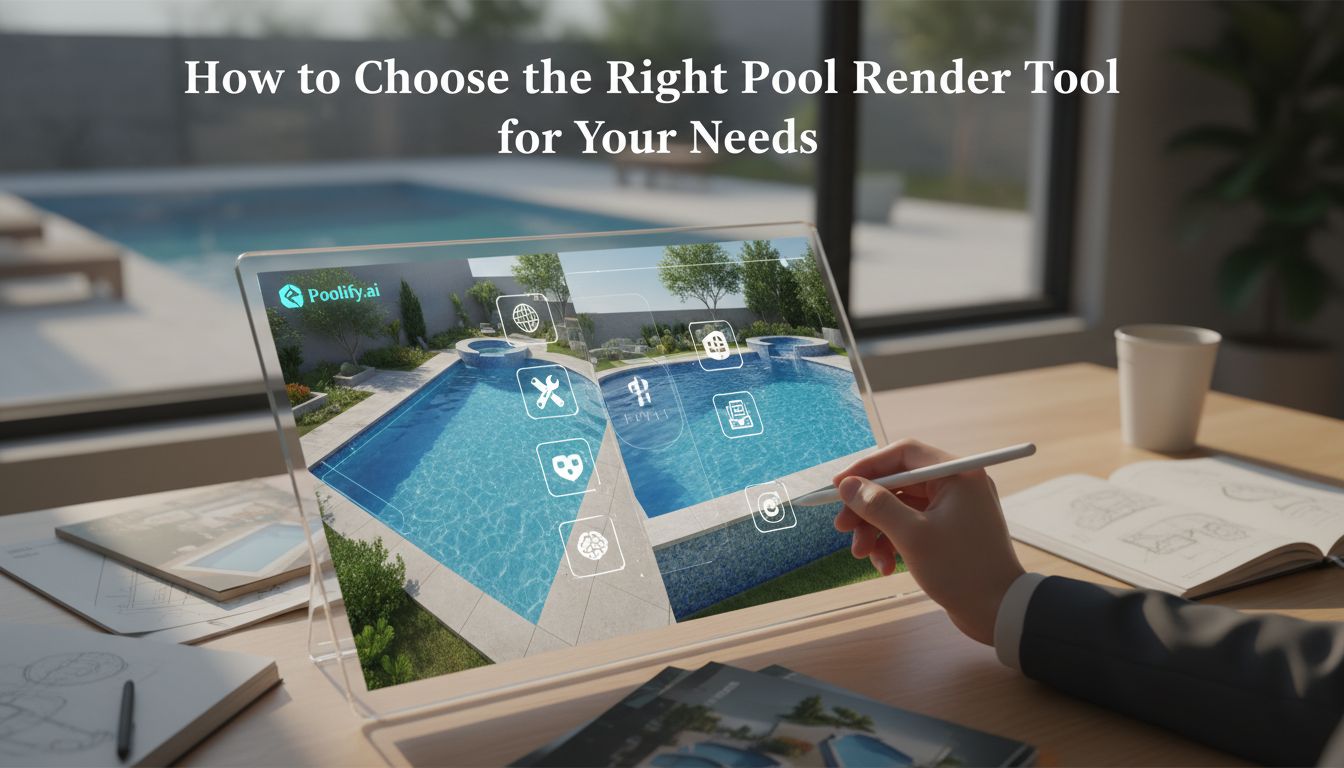
The pool render tool market offers solutions ranging from free mobile apps to enterprise-level platforms costing thousands annually. Selecting the appropriate option depends on your experience level, project complexity, and frequency of use. Professional designers require different capabilities than homeowners planning a single project.
Considerations for Professional Pool Designers
If you design pools professionally, your pool render tool represents a critical business investment. Prioritize platforms offering comprehensive material libraries, technical accuracy, and efficient workflows that minimize time per project. Consider software that integrates with CAD programs you already use and provides output formats compatible with engineering and permitting requirements. Client presentation features like virtual reality exports and professional proposal generation tools justify premium pricing through improved close rates.
Subscription models typically offer better value for professionals handling multiple projects annually. Look for platforms with responsive technical support, regular updates adding new features and materials, and active user communities where you can share techniques. Many professional-grade pool render tool options offer training resources and certification programs that enhance your credibility with clients.
Options for Homeowners and DIY Enthusiasts
Homeowners planning personal pool projects need user-friendly interfaces and sufficient capability to explore design options without overwhelming complexity. Many pool render tool platforms offer free trials or limited free versions that provide adequate functionality for single projects. Focus on intuitive controls, pre-built templates that jumpstart the design process, and tutorial resources that teach basic techniques quickly.
Some manufacturers provide proprietary pool render tool software showcasing their specific product lines. While these free tools have limited flexibility, they excel at visualizing how particular finishes, tiles, or equipment will appear in your space. Consider using multiple tools during the planning phase, comparing results to develop confidence in your design direction.
Evaluating Software Capabilities
Before committing to any pool render tool, test it with a sample project resembling your actual needs. Evaluate rendering speed and quality, ease of learning, and whether the material library includes products you’re considering. Check whether the platform runs on your existing hardware or requires upgrades. Cloud-based solutions offer flexibility but require reliable internet connections, while desktop applications provide consistent performance regardless of connectivity.
Read reviews from users with similar backgrounds and project types. Professional forums and social media groups dedicated to pool design often feature candid discussions about various pool render tool options, including undocumented limitations and workarounds. Many users share example renders, giving you realistic expectations for what each platform can achieve.
Maximizing Results from Your Pool Render Tool

Owning sophisticated software represents only the first step. Achieving professional-quality results from your pool render tool requires understanding best practices, avoiding common mistakes, and continuously refining your technique. These strategies help both beginners and experienced users produce more convincing visualizations.
Start with Accurate Site Measurements
Renders only prove valuable when they accurately represent buildable designs. Begin every project by carefully measuring your site, noting existing features, property lines, setback requirements, and utility locations. Many pool render tool platforms import survey data or allow photo-based measurement techniques. Accurate foundation data ensures your beautiful visualization translates into a functional, code-compliant installation.
Document site conditions that affect design decisions, including sun exposure patterns, prevailing wind directions, views to preserve or block, and drainage characteristics. This information guides material selections and feature placement, ensuring your pool render tool produces designs optimized for your specific location rather than generic concepts.
Leverage Pre-Built Templates and Assets
Most pool render tool libraries include templates representing popular pool styles and configurations. These starting points save hours of work while ensuring proper proportions and realistic layouts. Customize templates to match your specific vision rather than building designs from scratch. Similarly, use pre-built assets for common elements like steps, benches, and water features, modifying dimensions and materials to suit your needs.
Creating custom elements requires advanced skills and significant time investment. Unless you need something truly unique, adapting existing assets produces better results more efficiently. As you gain experience with your pool render tool, gradually expand into custom modeling for signature design elements that differentiate your work.
Pay Attention to Lighting and Time of Day
Lighting transforms pool visualizations from adequate to extraordinary. Experiment with different times of day to find conditions that best showcase your design. Morning light creates long shadows and warm tones, while midday sun produces vibrant colors and minimal shadows. Evening scenes with pool and landscape lighting demonstrate how spaces function after dark, an important consideration for homeowners who primarily use pools during evening hours.
Most pool render tool platforms allow adjustment of sun position, cloud cover, and ambient light intensity. Study how these variables affect your specific design, noting which conditions emphasize key features. Create multiple renders showing the same design under different lighting scenarios, giving clients comprehensive understanding of how their pool will appear throughout the day.
Include Contextual Elements
Pools exist within broader environments. Include surrounding context in your renders to create realistic, relatable visualizations. Add the house or portions of it, existing trees and landscaping, fencing, and neighboring structures visible from the pool area. These contextual elements help viewers understand scale and spatial relationships while making renders feel authentic rather than sterile.
Populate scenes with appropriate accessories like towels, pool toys, outdoor furniture, and table settings. These details humanize renders, helping clients envision themselves using the space. Avoid overcrowding scenes with unnecessary clutter, but include enough detail to suggest lifestyle and functionality. Your pool render tool likely includes libraries of these accessories, making it easy to add finishing touches.
Common Mistakes to Avoid When Using Pool Render Tools
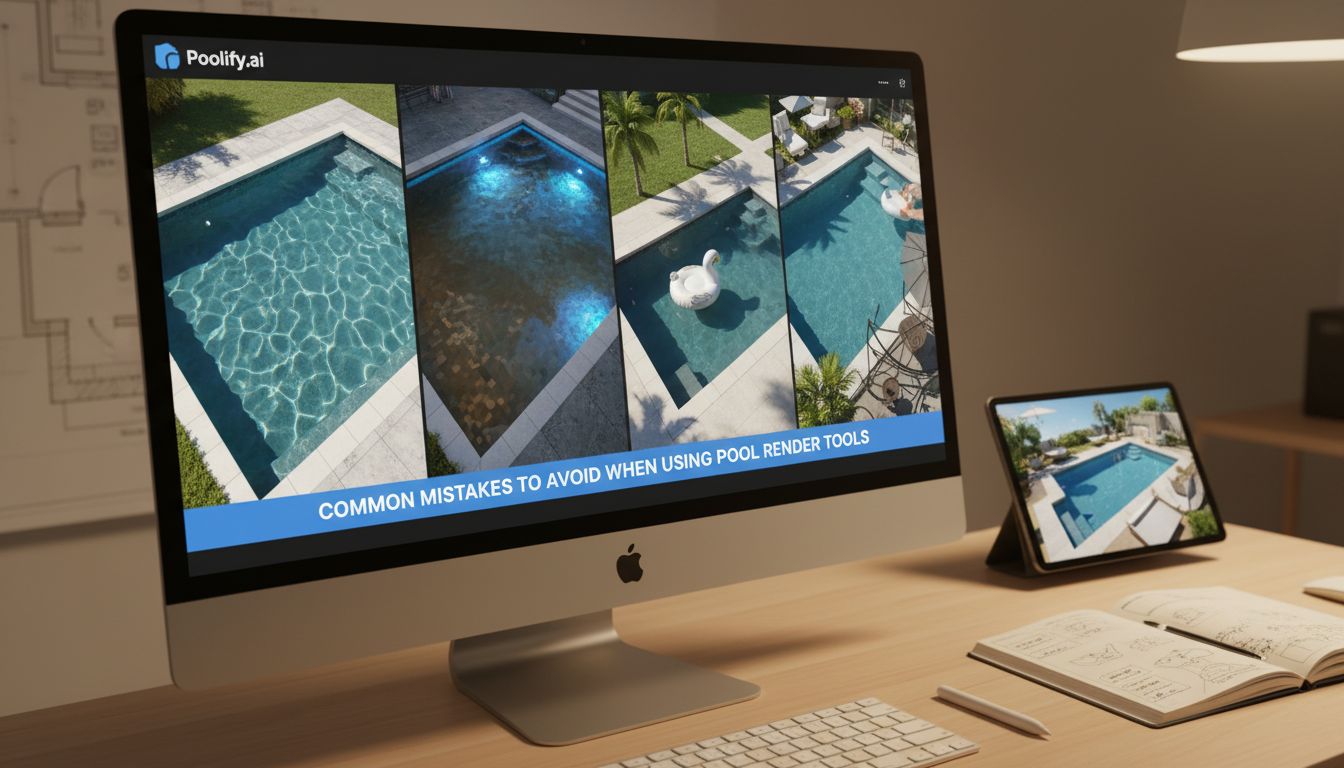
Even experienced designers encounter pitfalls that undermine the effectiveness of their visualizations. Recognizing these common errors helps you produce more convincing renders that accurately represent buildable designs and set appropriate client expectations.
Overemphasizing Aesthetics at the Expense of Functionality
A pool render tool makes it easy to create visually stunning designs that prove impractical or impossible to build. Resist the temptation to prioritize beauty over functionality. Consider maintenance access, equipment placement, circulation patterns, and safety requirements. Renders that ignore these practical considerations waste time and damage credibility when reality intrudes during construction planning.
Neglecting Scale and Proportion
Digital environments distort spatial perception. Features that appear appropriately sized in renders sometimes overwhelm actual spaces or disappoint by seeming smaller than expected. Use your pool render tool’s measurement displays to verify dimensions against real-world standards. Compare pool sizes to familiar references, ensuring designs fit comfortably within available space while leaving room for required decking and safety zones.
Using Unrealistic Materials or Finishes
Material libraries sometimes include options that look beautiful in renders but don’t exist as actual products or perform poorly in pool applications. Verify that materials shown in your pool render tool visualizations correspond to real products suitable for their intended use. This accuracy prevents client disappointment and change orders when theoretical materials must be replaced with practical alternatives.
Ignoring Local Climate and Conditions
Designs must suit their geographic context. A pool render tool might showcase tropical landscaping beautifully, but such plants fail in temperate climates. Consider local weather patterns, seasonal variations, and regional aesthetic preferences. Renders featuring inappropriate elements appear unrealistic to knowledgeable viewers and create false expectations about maintenance requirements or year-round appearance.
Integrating Pool Render Tools into Your Design Workflow

Maximum value from your pool render tool comes through strategic integration into broader design and sales processes. Whether you’re a professional designer or homeowner managing your own project, establishing efficient workflows ensures visualization capabilities enhance rather than complicate your efforts.
Begin projects with conceptual sketches or rough layouts before investing time in detailed rendering. This approach allows quick exploration of multiple directions without the commitment required for full visualizations. Once you’ve identified promising concepts, transition to your pool render tool for refinement and presentation-quality outputs. For more guidance on planning your project timeline, check out our comprehensive pool design guide.
Establish standardized naming conventions, file organization systems, and version control practices. Pool projects evolve through numerous iterations, and maintaining clear records prevents confusion about which design reflects current thinking. Most pool render tool platforms offer project management features that help track revisions, client feedback, and approval status.
Create reusable templates for your most common project types. These templates include your preferred camera angles, lighting setups, and frequently used materials, dramatically reducing setup time for new projects. As you develop signature design elements or unique techniques within your pool render tool, document these processes for consistent application across projects.
The Future of Pool Render Tool Technology
The pool render tool landscape continues evolving rapidly as new technologies emerge. Understanding upcoming trends helps you make informed software investments and prepare for changing client expectations. In 2026, several developments are reshaping how professionals and homeowners approach pool visualization.
Artificial Intelligence and Automated Design
AI-powered features increasingly assist with routine tasks and creative decisions. Modern pool render tool platforms use machine learning to suggest optimal pool placements based on site characteristics, recommend material combinations that complement existing architecture, and automatically generate multiple design variations from basic parameters. These capabilities don’t replace human creativity but accelerate the design process and inspire new directions.
Intelligent rendering engines analyze scenes to optimize quality settings automatically, balancing visual fidelity against rendering speed based on what viewers will actually notice. AI-enhanced water simulation produces more convincing results with less manual adjustment, while automated lighting placement ensures even illumination and dramatic effects without tedious fixture positioning.
Augmented Reality Site Visualization
Beyond traditional renders, augmented reality features allow users to view proposed pools overlaid on actual sites through smartphone or tablet cameras. This technology helps clients understand exactly where features will be located and how designs relate to existing structures. As AR capabilities mature, they’re becoming standard features in leading pool render tool platforms rather than experimental additions.
Enhanced Collaboration and Remote Consultation
Cloud-based pool render tool platforms enable real-time collaboration regardless of physical location. Designers and clients can simultaneously view and modify projects during video conferences, streamlining the approval process and reducing project timelines. Integration with communication platforms, project management software, and contractor bidding systems creates seamless workflows from initial concept through construction completion.
Key Takeaways
- A pool render tool transforms abstract pool concepts into photorealistic 3D visualizations, enabling informed decision-making before construction begins and significantly reducing costly changes during installation.
- Essential features include photorealistic rendering engines, extensive material libraries, real-time modification capabilities, accurate water simulation, and comprehensive lighting design tools that work together to create convincing visualizations.
- Professional designers should prioritize pool render tool platforms offering technical accuracy, efficient workflows, and client presentation features, while homeowners benefit from user-friendly interfaces and adequate capability for single projects.
- Maximizing results requires starting with accurate site measurements, leveraging pre-built templates, paying careful attention to lighting conditions, and including contextual elements that help viewers understand scale and spatial relationships.
- Avoid common mistakes like overemphasizing aesthetics at the expense of functionality, neglecting proper scale and proportion, using unrealistic materials, or ignoring local climate conditions that affect plant selection and seasonal appearance.
Frequently Asked Questions
How much does a professional pool render tool cost?
Professional pool render tool platforms range from $50 to $300 monthly for subscription services, or $500 to $3,000 for perpetual licenses. Entry-level options suitable for homeowners start around $20 monthly or offer limited free versions. Enterprise solutions with advanced features and multi-user licenses can exceed $5,000 annually. Consider your project volume and required capabilities when evaluating cost versus value. Many providers offer free trials, allowing you to test functionality before committing financially.
Can I use a pool render tool without design experience?
Yes, many modern pool render tool platforms cater specifically to users without formal design training. These solutions feature intuitive drag-and-drop interfaces, pre-built templates, and guided workflows that simplify the design process. Tutorial libraries and customer support help beginners overcome initial learning curves. While professional designers produce more sophisticated results, homeowners can create adequate visualizations for personal projects with reasonable time investment. Start with user-friendly options and migrate to more advanced tools as your skills develop.
How long does it take to create a pool render?
Timeline varies based on project complexity, software capabilities, and user experience. Simple pool designs using templates can be rendered in 30 minutes to an hour. Complex custom designs with extensive landscaping, multiple water features, and detailed lighting may require 4-8 hours or more. Actual rendering time after design completion ranges from seconds for preview quality to 20-30 minutes for photorealistic final outputs, depending on your pool render tool’s processing power and selected quality settings.
Do pool render tools work on mobile devices?
Several pool render tool options offer mobile apps for iOS and Android devices, though functionality typically exceeds what tablets and smartphones can handle efficiently. Mobile apps work best for simple designs, client presentations, and project reviews rather than complex design work. Most professionals use desktop or laptop computers for primary design tasks, reserving mobile access for field measurements, client meetings, and quick modifications. Cloud-based platforms provide consistent experiences across devices, syncing projects automatically.
Can pool render tools integrate with construction documentation?
Advanced pool render tool platforms export technical drawings, specifications, and material lists compatible with construction documentation requirements. Many integrate directly with CAD software, allowing seamless transitions from visualization to engineering drawings. Export formats typically include PDF for proposals, DWG or DXF for technical plans, and various image formats for marketing materials. Some platforms generate automated material quantity takeoffs and equipment specifications, streamlining the transition from design to construction bidding and execution.
See Your Dream Pool in Your Actual Backyard
Upload a photo and get an AI-designed pool visualization in 10 seconds. 3 free designs, no login required.
Try Poolify Free →Conclusion
The pool render tool has evolved from a luxury for high-end designers into an essential resource for anyone planning a pool project in 2026. These sophisticated platforms bridge the gap between imagination and reality, allowing comprehensive visualization before committing to construction. Whether you’re a professional designer seeking to improve client presentations or a homeowner wanting confidence in your backyard investment, understanding pool render tool capabilities and best practices ensures successful outcomes.
Selecting the right software requires careful consideration of your specific needs, budget, and technical comfort level. Focus on platforms offering the features most relevant to your projects while maintaining intuitive workflows that don’t impede creativity. Remember that even the most advanced pool render tool only proves valuable when used strategically within broader design and planning processes.
As technology continues advancing, pool render tool capabilities will expand further, incorporating artificial intelligence, augmented reality, and enhanced collaboration features. Staying current with these developments positions you to leverage new capabilities as they emerge. For additional resources on maintaining your pool once construction is complete, explore our essential pool maintenance tips.
Invest time learning your chosen pool render tool thoroughly, experiment with different techniques, and study examples from accomplished designers. The skills you develop will pay dividends through improved design quality, enhanced client satisfaction, and reduced construction complications. Your pool project deserves the clarity and confidence that only comprehensive visualization can provide.
References
U.S. Census Bureau – Construction Statistics: https://www.census.gov/construction/nrc/index.html
Centers for Disease Control and Prevention – Healthy Swimming: https://www.cdc.gov/healthywater/swimming/
