
Understanding Pool Deck Cost in 2026
The pool deck cost for 2026 projects typically ranges from $3,000 to $20,000 or more, depending on material choices, deck size, and installation complexity. As homeowners increasingly view outdoor spaces as extensions of their living areas, understanding the financial investment required for a quality pool deck becomes essential. Whether you’re building a new pool or renovating an existing deck, knowing what drives costs helps you budget effectively and make decisions that balance aesthetics, durability, and your financial goals.
Pool decks serve multiple purposes beyond simple aesthetics. They provide safe walking surfaces around water, create entertainment spaces for gatherings, and significantly impact your property’s overall value. The materials you choose, the deck’s dimensions, and various design features all influence the final pool deck cost. This comprehensive guide breaks down every factor affecting your investment and provides actionable strategies to maximize value while controlling expenses.
Primary Factors That Determine Pool Deck Cost
Several key variables affect the total pool deck cost for your project. Understanding these factors helps you estimate expenses accurately and identify areas where you might adjust specifications to meet your budget constraints.
Material Selection and Pricing
Material choice represents the most significant factor influencing pool deck cost. Each option offers distinct advantages, maintenance requirements, and price points. Concrete remains the most popular choice, with basic poured concrete costing $3 to $6 per square foot for materials and installation. Stamped or decorative concrete increases the pool deck cost to $8 to $18 per square foot, while premium finishes can reach $20 per square foot.
Pavers provide versatile design options with costs ranging from $10 to $25 per square foot installed. Natural stone pavers command premium prices at $15 to $30 per square foot, while concrete pavers offer budget-friendly alternatives. Wood decking costs $15 to $35 per square foot depending on species, with composite materials ranging from $25 to $45 per square foot. Though composite increases initial pool deck cost, reduced maintenance expenses often justify the investment over time.
Deck Size and Layout Complexity
The deck’s square footage directly impacts total pool deck cost. A standard 500-square-foot deck with basic concrete costs approximately $1,500 to $3,000, while the same area with premium pavers could exceed $12,500. Complex layouts with curves, multiple levels, or integrated features like built-in seating increase labor requirements and material waste, adding 15% to 30% to base pool deck cost estimates.
According to U.S. Census Bureau construction data, outdoor living space additions continue trending upward, with homeowners investing more in quality materials and sophisticated designs that enhance property values and lifestyle enjoyment.
Site Preparation Requirements
Ground conditions significantly affect pool deck cost through preparation work. Level sites with good drainage require minimal grading, while sloped terrain needs extensive excavation and retaining walls. Poor soil conditions may require additional base materials or even soil stabilization, adding $2 to $5 per square foot to your pool deck cost.
Removing existing decking or hardscaping adds $2 to $6 per square foot for demolition and disposal. Tree roots, underground utilities, or rocky soil present obstacles that increase labor time and equipment needs, potentially adding 10% to 25% to projected pool deck cost figures.
Complete Material Comparison for Pool Deck Cost
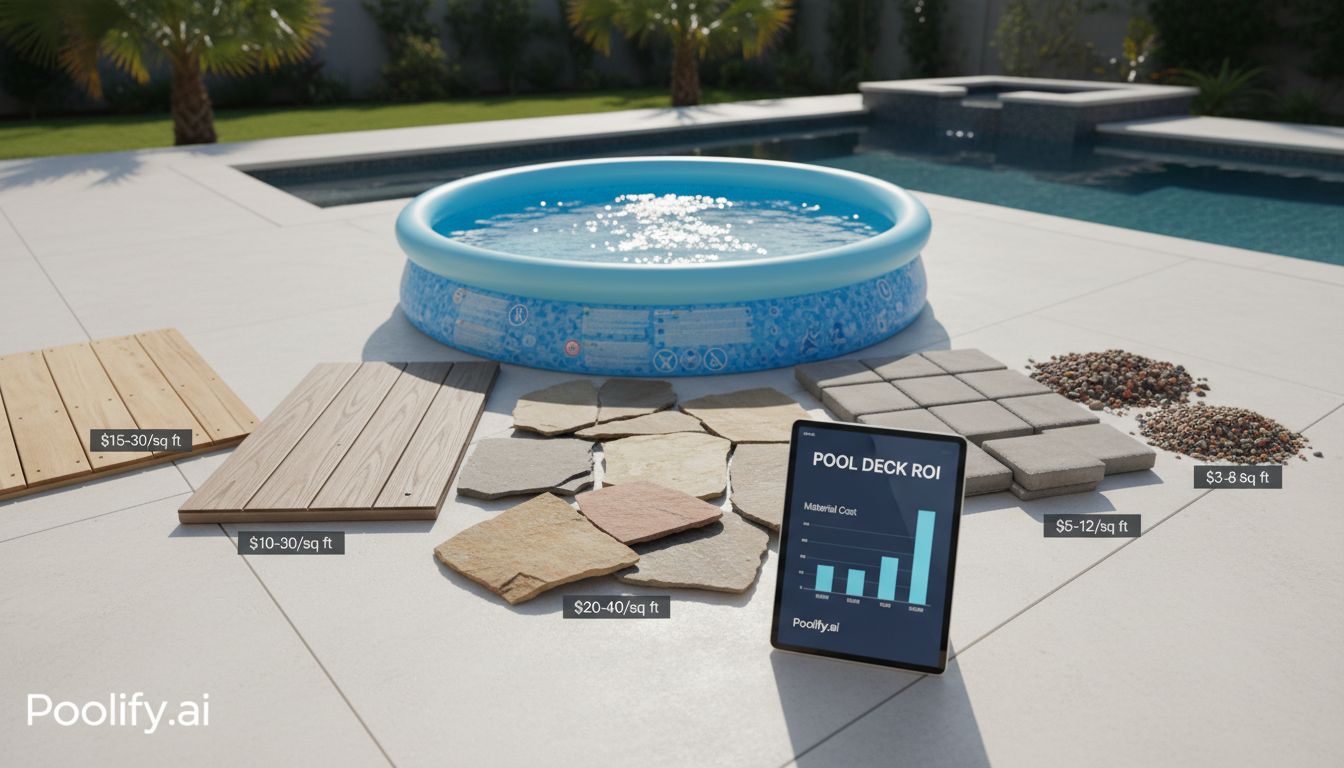
Selecting the right material requires balancing upfront pool deck cost against long-term performance, maintenance expenses, and aesthetic preferences. Each material offers unique characteristics suited to different climates, usage patterns, and design visions.
Concrete Pool Deck Options
Basic poured concrete delivers the lowest initial pool deck cost at $3 to $6 per square foot. This economical option provides durability and heat resistance, though plain concrete offers limited visual appeal. Broom-finished concrete adds texture for slip resistance without significantly increasing costs.
Stamped concrete transforms basic material into decorative surfaces resembling stone, brick, or tile patterns. This mid-range option increases pool deck cost to $8 to $18 per square foot while delivering enhanced aesthetics. Colored concrete adds another $2 to $4 per square foot, creating customized looks that complement your home’s architecture and landscaping.
Exposed aggregate concrete provides textured, slip-resistant surfaces with decorative stone visibility. Expect pool deck cost of $10 to $20 per square foot for this option. The textured finish reduces heat absorption compared to smooth concrete, improving comfort for bare feet during summer months.
Paver Pool Decks
Concrete pavers offer design flexibility with pool deck cost ranging from $10 to $20 per square foot installed. Available in numerous colors, shapes, and patterns, pavers create distinctive looks while allowing easy repairs—simply replace damaged individual units rather than entire sections. The permeable nature of paver systems promotes better drainage around pool areas.
Natural stone pavers like travertine, flagstone, or bluestone command premium prices at $15 to $30 per square foot. These materials provide timeless elegance and excellent heat resistance, staying cooler underfoot than concrete or composite options. Stone’s natural variation creates unique, high-end appearances that significantly enhance property aesthetics, though higher pool deck cost reflects this quality.
Wood and Composite Decking
Pressure-treated wood decking costs $15 to $25 per square foot installed, offering natural beauty and traditional appeal. However, wood requires regular maintenance including staining, sealing, and potential board replacement, adding ongoing expenses beyond initial pool deck cost. Cedar and redwood provide better moisture resistance at $25 to $35 per square foot.
Composite decking ranges from $25 to $45 per square foot, representing higher upfront pool deck cost but minimal maintenance requirements. These engineered products resist fading, splintering, and moisture damage while eliminating staining and sealing needs. Many manufacturers offer 25-year warranties, making composites cost-effective over extended ownership periods despite elevated initial investment.
Hidden Costs That Impact Total Pool Deck Cost
Beyond material and basic installation expenses, several additional factors affect final pool deck cost. Anticipating these items during budget planning prevents unpleasant surprises and project delays.
Permits and Inspections
Most municipalities require building permits for pool deck construction, adding $200 to $800 to total pool deck cost. Permit fees vary by location and project scope, with larger or more complex decks requiring higher fees. Inspection costs typically bundle with permit fees, though some jurisdictions charge separately for multiple inspection visits.
Working without proper permits risks fines, forced removal, and complications during property sales. Always verify local requirements before beginning work, as Consumer Product Safety Commission guidelines emphasize proper construction standards for pool area safety.
Drainage Systems
Proper drainage protects your investment by preventing water accumulation that causes settling, cracking, or material deterioration. Basic grading typically includes in standard installation, but poor drainage conditions may require French drains, channel drains, or catch basins. These systems add $500 to $3,000 to pool deck cost depending on complexity and yard size.
Sloping the deck away from both the pool and your home’s foundation ensures water flows to appropriate drainage points. Inadequate drainage creates standing water that promotes algae growth, becomes slipping hazards, and accelerates material degradation, ultimately increasing long-term maintenance costs.
Lighting and Electrical Work
Deck lighting enhances safety and extends usability into evening hours. Basic solar lights cost $20 to $50 per fixture with no installation expenses, while low-voltage LED systems range from $300 to $1,500 installed for complete deck illumination. These additions increase pool deck cost but significantly improve functionality and ambiance.
Hardwired electrical systems requiring licensed electrician installation add $1,000 to $3,000 to pool deck cost. Consider outlets for pool equipment, outdoor speakers, or entertainment systems during initial construction to avoid expensive retrofitting later.
Furniture and Accessories
Budget for furnishings that complete your outdoor space. Quality weather-resistant furniture costs $1,000 to $5,000 for basic seating and dining sets. Shade structures like pergolas or umbrellas add $500 to $8,000 depending on size and materials. While not strictly part of pool deck cost, these items represent necessary expenses for functional outdoor living spaces.
Money-Saving Strategies for Pool Deck Cost
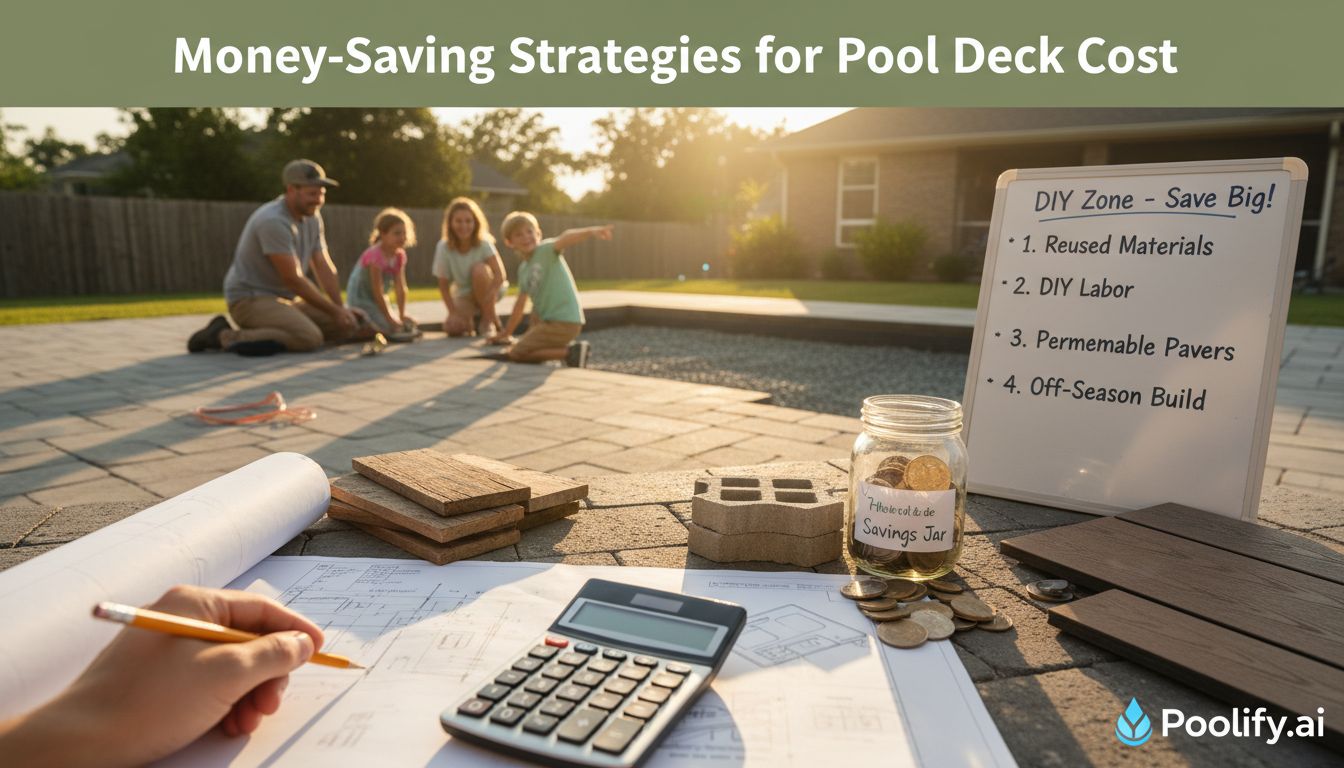
Strategic planning and informed decisions help control pool deck cost without sacrificing quality or longevity. These proven approaches reduce expenses while maintaining value and performance.
Optimal Timing for Installation
Schedule installation during contractor off-seasons when demand decreases. Fall and winter months often bring 10% to 20% discounts on labor costs as contractors seek to maintain steady work. However, weather limitations in cold climates may restrict material options or extend project timelines, so balance savings against practical considerations.
Plan projects several months ahead to secure better pricing and contractor availability. Rush jobs during peak summer months command premium rates that inflate pool deck cost unnecessarily. Early planning also allows time to gather multiple quotes and negotiate favorable terms.
Material Selection Trade-offs
Choose materials strategically based on visible areas and usage patterns. Use premium materials in high-visibility zones near the house while selecting economical options for less prominent areas. This approach reduces overall pool deck cost while maintaining aesthetic impact where it matters most.
Consider concrete pavers instead of natural stone for similar appearance at 30% to 50% lower pool deck cost. Modern manufacturing creates realistic stone replicas that deliver visual appeal without premium pricing. Similarly, select composite decking with wood grain textures rather than exotic hardwoods for comparable aesthetics at reduced cost.
DIY Versus Professional Installation
Labor typically represents 40% to 60% of total pool deck cost, making DIY installation tempting for budget-conscious homeowners. However, deck construction requires specific skills, tools, and knowledge of building codes. Improper installation creates safety hazards, premature failure, and potentially higher costs for professional repairs.
Consider hybrid approaches where you handle site preparation, demolition, or finishing work while hiring professionals for technical installation. This strategy reduces pool deck cost through sweat equity while ensuring critical work meets quality standards. Always consult professionals before attempting DIY work to understand complexity and potential pitfalls.
Phased Construction Approach
Break large projects into phases to spread pool deck cost across multiple budget cycles. Install basic decking initially, then add features like lighting, built-in seating, or decorative elements during subsequent phases. This approach makes premium materials more accessible by reducing immediate financial burden while allowing you to enjoy your pool area sooner.
Plan the complete design upfront even when building in phases to ensure cohesive appearance and avoid costly modifications. Proper planning prevents incompatible materials or designs that compromise the finished product’s integrity and appearance.
Regional Variations in Pool Deck Cost
Geographic location significantly impacts pool deck cost through material availability, labor rates, and climate considerations. Understanding regional factors helps set realistic budget expectations and informs material selection.
Climate Impact on Material Choice
Hot, sunny climates favor materials with superior heat resistance and UV stability. Travertine and light-colored concrete stay cooler than dark pavers or composite decking, improving comfort and potentially reducing pool deck cost by eliminating shade structure needs. Conversely, freeze-thaw cycles in northern regions require materials with excellent moisture resistance and dimensional stability.
Coastal areas demand materials resistant to salt air corrosion. Stainless steel fasteners, marine-grade composites, and sealed concrete prevent premature deterioration that increases long-term pool deck cost through frequent repairs or replacement. Factor climate-specific material requirements into initial planning to ensure longevity and performance.
Labor Rate Differences
Metropolitan areas typically charge 20% to 40% higher labor rates than rural locations, directly affecting pool deck cost. Urban projects also face stricter building codes and permit requirements that add complexity and expense. However, cities offer more contractor options and material suppliers, potentially offsetting higher labor costs through competitive pricing.
Regional economic conditions influence pricing as well. Areas with robust construction industries and abundant skilled labor offer more competitive rates than regions with contractor shortages. Research local market conditions and gather multiple quotes to understand typical pool deck cost in your specific area.
Long-Term Maintenance and Pool Deck Cost
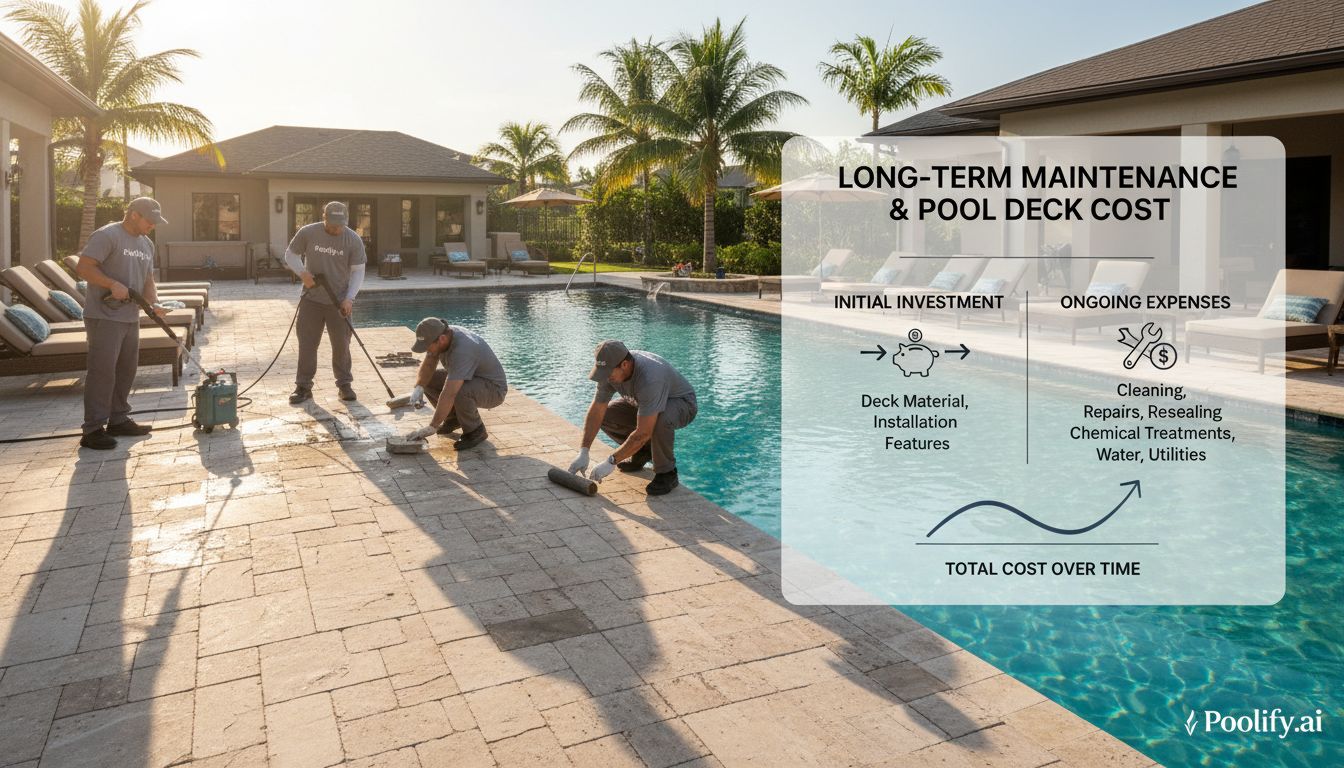
Initial installation represents only part of total pool deck cost over your ownership period. Maintenance requirements vary dramatically by material, affecting long-term expenses and time investment.
Concrete Maintenance
Sealed concrete requires resealing every two to three years at $0.50 to $1.50 per square foot to maintain appearance and prevent moisture penetration. Power washing before sealing adds $0.25 to $0.75 per square foot. Budget approximately $500 to $1,500 every few years for 500-square-foot deck maintenance, adding modest ongoing costs to initial pool deck cost investment.
Crack repairs cost $300 to $800 depending on severity and extent. Proper installation with control joints and adequate base preparation minimizes cracking, making quality workmanship worthwhile despite higher upfront pool deck cost.
Paver Maintenance
Pavers require periodic joint sand replacement and occasional releveling if settling occurs. These tasks cost $2 to $4 per square foot or represent manageable DIY projects. Sealing pavers every three to five years costs $1 to $3 per square foot, protecting color and preventing staining. Total maintenance adds approximately $500 to $1,500 every few years beyond initial pool deck cost.
Individual paver replacement costs $5 to $15 per square foot, significantly less than repairing damaged concrete sections. This repairability makes pavers cost-effective long-term despite higher initial pool deck cost compared to basic concrete.
Wood and Composite Maintenance
Wood decking requires annual cleaning, staining, and sealing costing $1 to $3 per square foot. A 500-square-foot deck needs $500 to $1,500 yearly maintenance, substantially increasing lifetime pool deck cost. Board replacement every 10 to 15 years adds further expenses, potentially totaling $5,000 to $10,000 over 20 years.
Composite decking needs only periodic cleaning at $0.25 to $0.50 per square foot annually, with minimal other maintenance. This low-maintenance characteristic justifies higher initial pool deck cost for homeowners prioritizing convenience and long-term savings. Check out our comprehensive pool maintenance guide for additional tips on protecting your entire pool area investment.
Financing Options for Pool Deck Cost
Various financing methods help manage pool deck cost when budget constraints limit available cash. Understanding options enables strategic financial planning that aligns projects with your economic situation.
Home Equity Loans and Lines of Credit
Home equity loans provide lump sums at fixed interest rates, ideal for defined pool deck cost amounts. Rates typically range from 6% to 9% in 2026, with repayment terms spanning 5 to 30 years. Home equity lines of credit (HELOCs) offer flexible borrowing up to approved limits, useful when exact pool deck cost remains uncertain during planning.
Both options use your home as collateral, offering lower rates than unsecured loans but risking foreclosure if payments lapse. Calculate total interest costs to understand true project expense beyond base pool deck cost figures.
Personal Loans
Unsecured personal loans require no collateral but charge higher interest rates, typically 8% to 15% for qualified borrowers. Loan amounts usually cap at $50,000, sufficient for most pool deck cost scenarios. Approval processes move quickly, often providing funds within days for time-sensitive projects.
Compare total repayment amounts across loan terms to identify optimal financing. Shorter terms mean higher monthly payments but lower total interest, while extended terms reduce payment burden but increase overall pool deck cost through accumulated interest.
Contractor Financing
Many contractors offer financing through third-party lenders, providing convenient one-stop shopping for pool deck cost funding. Promotional rates sometimes include interest-free periods ranging from 6 to 24 months, essentially offering free financing if you repay within promotional terms.
Read financing agreements carefully, as deferred interest promotions charge retroactive interest on remaining balances after promotional periods expire. Calculate required monthly payments to eliminate balances before interest accrual, ensuring promotional financing truly reduces pool deck cost.
Return on Investment and Property Value
Understanding how pool deck cost affects property value helps justify investment and informs material selection. Quality outdoor spaces increasingly influence buyer decisions and home valuations.
Appraisal Impact
Well-designed pool decks typically return 50% to 75% of pool deck cost upon sale, varying by local market conditions and installation quality. Premium materials in desirable neighborhoods often achieve higher returns than basic installations in modest markets. Appraisers consider deck condition, material quality, and design cohesion with overall property when assessing value contributions.
Functional improvements like proper drainage, adequate space for furniture, and safety features add more value than purely decorative elements. Balance aesthetic preferences with practical considerations to maximize return on pool deck cost investment.
Market Appeal
Attractive pool areas significantly enhance property marketability, often reducing time on market even when sale prices don’t fully recover pool deck cost. Buyers increasingly prioritize outdoor living spaces, viewing quality pool areas as essential rather than optional features. Professional photography highlighting your pool deck creates strong first impressions that generate showing requests and offers.
Maintain your deck properly to preserve appearance and functionality. Neglected decks detract from property value and may cost more to repair than regular maintenance would have required, effectively increasing total pool deck cost through deferred upkeep.
Choosing the Right Contractor
Contractor selection dramatically affects both immediate pool deck cost and long-term satisfaction. Thorough vetting ensures quality workmanship, fair pricing, and professional service throughout your project.
Verification and Credentials
Confirm contractors hold appropriate licenses and current insurance coverage including general liability and workers’ compensation. Licensed contractors understand building codes and permit requirements, reducing risks of non-compliant work that creates future problems. Insurance protects you from liability if workers injure themselves on your property or damage existing structures.
Check references from recent projects similar in scope and materials to your planned deck. Visit completed installations when possible to assess workmanship quality firsthand. Online reviews provide additional insights, though consider overall patterns rather than isolated complaints or praise.
Detailed Estimates
Obtain written estimates from at least three contractors specifying materials, labor, timeline, and payment schedule. Detailed quotes enable accurate pool deck cost comparisons and prevent misunderstandings about project scope. Suspiciously low bids often indicate inexperienced contractors, inferior materials, or incomplete understanding of project requirements.
Ask contractors to itemize estimates showing material and labor costs separately. This transparency helps identify where pool deck cost differences arise between competing bids and facilitates informed decision-making beyond simply selecting the lowest price.
Contract Essentials
Comprehensive written contracts protect both parties by clearly defining expectations, responsibilities, and recourse for problems. Contracts should specify materials by brand and grade, project timeline with milestones, payment schedule tied to completion stages, and warranty terms covering workmanship and materials.
Never pay full pool deck cost upfront. Standard practice involves 10% to 30% deposits, progress payments at defined milestones, and final payment upon satisfactory completion. This structure protects your interests while providing contractors necessary cash flow for materials and labor.
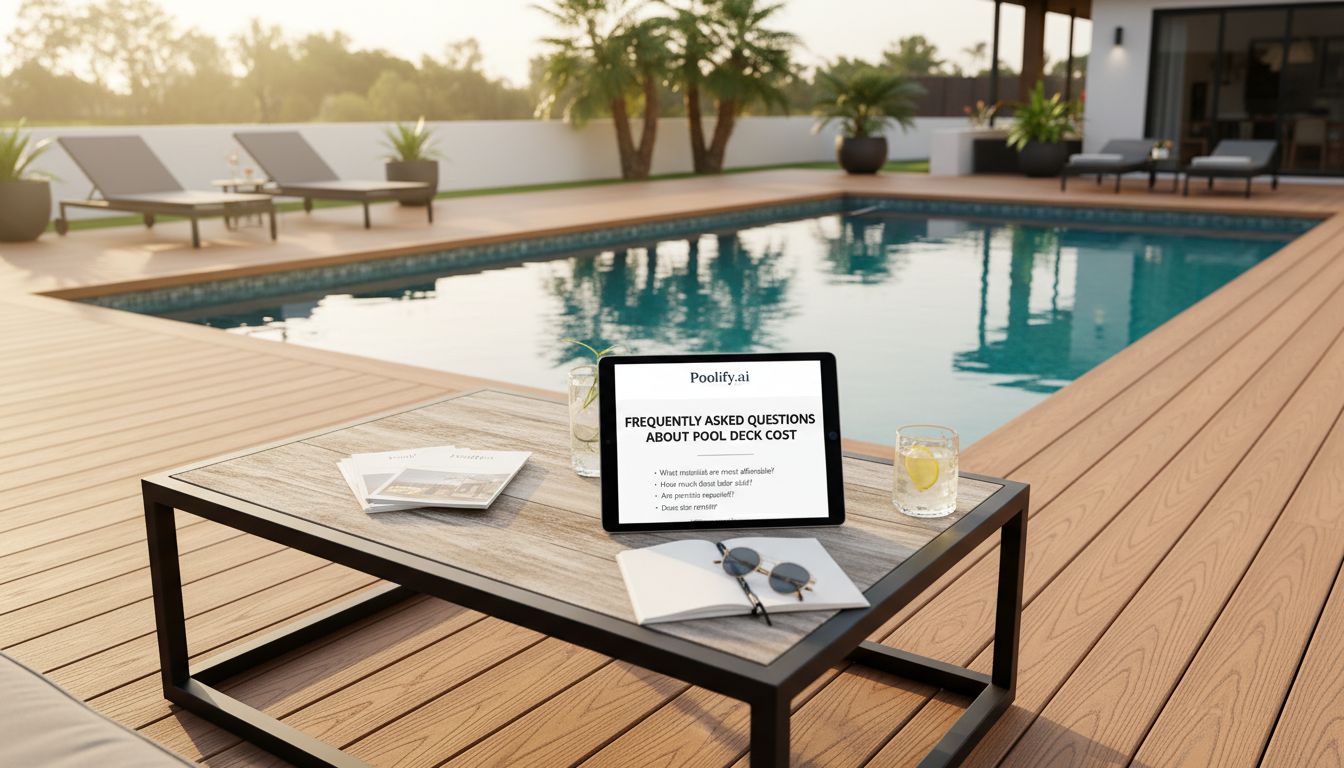
Frequently Asked Questions About Pool Deck Cost
What is the cheapest pool deck option?
Basic poured concrete represents the most economical choice, with pool deck cost starting around $3 to $6 per square foot installed. Broom-finished concrete adds minimal expense while providing slip resistance. For a 500-square-foot deck, expect total costs between $1,500 and $3,000. While concrete offers the lowest initial pool deck cost, consider long-term maintenance and aesthetic preferences when making final decisions.
How much does a 500-square-foot pool deck cost?
Pool deck cost for 500 square feet ranges from $1,500 for basic concrete to $22,500 for premium natural stone pavers. Mid-range options like stamped concrete cost $4,000 to $9,000, while concrete pavers run $5,000 to $12,500. Composite decking ranges from $12,500 to $22,500. Your specific pool deck cost depends on material selection, site conditions, and regional labor rates. Additional features like lighting, drainage systems, or complex layouts increase these baseline figures.
Does pool deck material affect resale value?
Material quality and condition significantly impact resale value, though specific pool deck cost recovery varies by market. Premium materials like natural stone or composite decking appeal to buyers seeking low-maintenance, high-end finishes, potentially commanding higher sale prices. Well-maintained concrete or paver decks also add value, particularly when design complements overall property aesthetics. Focus on durability and timeless design rather than trendy materials that may date quickly or require extensive maintenance.
Can I install a pool deck myself to save money?
DIY installation can reduce pool deck cost by eliminating 40% to 60% of expenses attributed to labor. However, deck construction requires specific skills, proper equipment, and code knowledge. Improper installation creates safety hazards, premature failure, and potentially higher costs for professional repairs. Consider handling site preparation or simple finishing work while hiring professionals for technical aspects like concrete pouring or paver installation. This hybrid approach balances pool deck cost savings with quality assurance.
How long do different pool deck materials last?
Material longevity affects lifetime pool deck cost through replacement timing. Properly installed concrete lasts 25 to 50 years with appropriate maintenance. Pavers endure 25 to 40 years, with individual unit replacement extending overall lifespan. Pressure-treated wood requires replacement after 15 to 25 years, while composite decking lasts 25 to 30 years with minimal maintenance. Natural stone provides the longest lifespan at 40 to 75 years. Consider expected ownership duration when evaluating pool deck cost options, as longer-lasting materials may justify higher initial investment.
Key Takeaways
- Material selection drives pool deck cost, with options ranging from $3 per square foot for basic concrete to $30+ for premium natural stone, affecting both initial investment and long-term maintenance expenses.
- Hidden costs including permits, drainage systems, and site preparation add 15% to 30% to base estimates, making comprehensive budget planning essential for accurate pool deck cost projections.
- Strategic timing and material choices reduce expenses without sacrificing quality, with off-season installation and hybrid material approaches saving 10% to 25% on total pool deck cost.
- Long-term maintenance varies dramatically by material, with wood requiring annual expenses of $500 to $1,500 while composite decking needs minimal upkeep, affecting lifetime pool deck cost calculations.
- Quality installation by licensed, insured contractors protects your investment and ensures code compliance, justifying thorough vetting despite potential short-term pool deck cost increases over unlicensed alternatives.
See Your Dream Pool in Your Actual Backyard
Upload a photo and get an AI-designed pool visualization in 10 seconds. 3 free designs, no login required.
Try Poolify Free →Conclusion
Understanding pool deck cost in 2026 requires evaluating multiple factors including material selection, installation complexity, regional variations, and long-term maintenance requirements. Whether you choose economical concrete at $3 per square foot or premium natural stone at $30 per square foot, informed decisions balance immediate budget constraints against lifetime value and enjoyment.
Successful projects begin with comprehensive planning that accounts for all expenses beyond basic material and labor costs. Permits, drainage systems, lighting, and site preparation significantly impact total pool deck cost but prove essential for safe, durable installations that enhance property value and outdoor living experiences.
Strategic approaches like optimal timing, material trade-offs, and phased construction help control pool deck cost without compromising quality. Investing in proper installation by qualified contractors and selecting appropriate materials for your climate ensures decades of enjoyment with minimal maintenance headaches.
Your pool deck represents a significant investment in your property and lifestyle. By understanding cost drivers, comparing options thoroughly, and planning strategically, you create outdoor spaces that deliver exceptional value and enjoyment for years to come. For more information on creating the perfect pool environment, explore our pool design ideas to complement your new deck installation.
References
- U.S. Census Bureau – Construction Data and Housing Statistics
- Consumer Product Safety Commission – Swimming Pool Safety Guidelines
