Understanding pool landscaping cost is essential for homeowners planning to transform their backyard into a luxurious outdoor retreat in 2026. Whether you’re installing a new pool or renovating an existing space, the landscaping surrounding your pool plays a crucial role in both aesthetics and functionality. This comprehensive guide breaks down everything you need to know about pool landscaping expenses, from initial planning to final installation, helping you make informed decisions that align with your budget and vision.
What Factors Influence Pool Landscaping Cost in 2026?
The pool landscaping cost varies significantly based on multiple factors that interact to determine your final investment. Understanding these variables helps you anticipate expenses and make strategic choices that maximize value while staying within budget constraints.
Property Size and Terrain Complexity
Your property’s dimensions and topography directly impact labor requirements and material needs. Flat, accessible yards require less preparation work compared to sloped or rocky terrain that demands extensive grading, retaining walls, or drainage solutions. Properties with challenging access may incur additional costs for equipment delivery and maneuvering. Larger pool areas naturally require more materials, plants, and hardscaping elements, increasing the overall pool landscaping cost proportionally.
Material Selection and Quality
The materials you choose for hardscaping, decking, and decorative elements represent one of the most significant cost variables. Natural stone pavers typically cost between $15 to $30 per square foot installed, while concrete alternatives range from $8 to $15 per square foot. Premium materials like travertine or bluestone can exceed $40 per square foot. Your plant selections also affect the pool landscaping cost, with mature specimen trees costing $500 to $3,000 each compared to younger saplings at $100 to $300.
Design Complexity and Custom Features
Simple, straightforward designs cost considerably less than elaborate landscapes featuring multiple elevation changes, custom water features, outdoor kitchens, or integrated lighting systems. According to the Department of Energy’s landscaping guidelines, strategic design choices can also reduce long-term maintenance and energy costs. Each custom element adds both material and labor expenses to your project budget.
Average Pool Landscaping Cost Breakdown for 2026
Understanding typical price ranges helps you develop realistic expectations and identify areas where you can optimize spending. The pool landscaping cost in 2026 reflects current labor rates, material prices, and market conditions affecting the home improvement industry.
Basic Pool Landscaping Package
A basic pool landscaping project typically ranges from $5,000 to $15,000 for an average-sized pool area. This budget includes essential elements like simple concrete decking, basic plantings with shrubs and perennials, minimal hardscaping, standard irrigation installation, and basic landscape lighting. This approach provides functionality and curb appeal without extensive customization or premium materials.
Mid-Range Pool Landscaping Investment
Most homeowners invest between $15,000 and $40,000 for mid-range pool landscaping that balances quality and affordability. This budget accommodates upgraded pavers or decorative concrete, diverse plant selections including small trees, enhanced hardscaping with pathways and borders, upgraded irrigation systems with smart controls, and comprehensive LED lighting packages. This range represents the sweet spot for value-conscious homeowners seeking professional results.
Premium Pool Landscaping Projects
Luxury pool landscaping installations exceed $40,000 and can reach $100,000 or more for extensive properties. These projects feature natural stone throughout, mature specimen plantings, custom water features and fire elements, outdoor living spaces with kitchens and cabanas, sophisticated lighting and audio systems, and professional landscape architecture services. The pool landscaping cost at this level reflects premium materials, extensive labor, and complex design implementation.
Essential Components of Pool Landscaping Cost
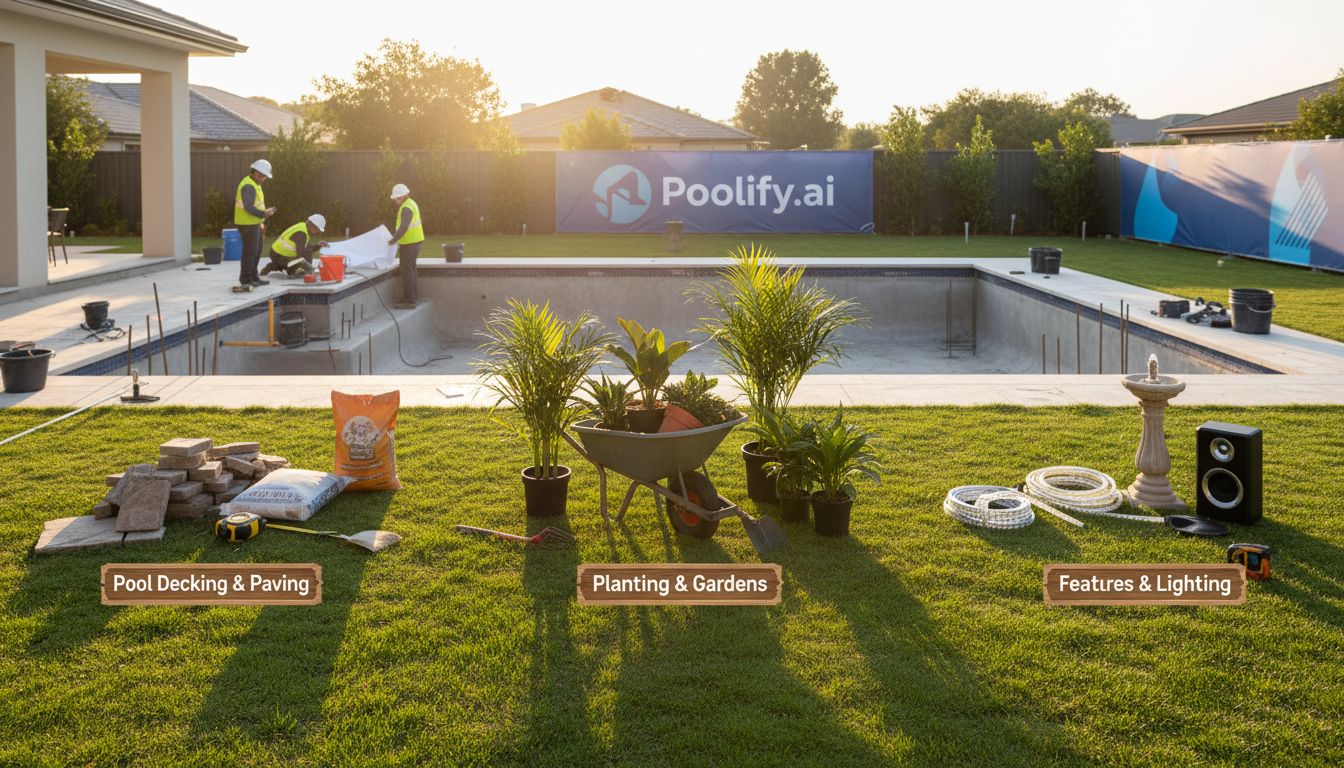
Breaking down the pool landscaping cost into individual components helps you understand where your money goes and identify opportunities to adjust spending based on priorities. Each element contributes to the overall functionality and aesthetic appeal of your pool environment.
Hardscaping and Pool Decking
Hardscaping typically represents 40-50% of your total pool landscaping cost. Pool decking requires durable, slip-resistant materials that withstand constant moisture exposure and temperature fluctuations. Concrete remains the most affordable option at $3,000 to $8,000 for average pools, while pavers range from $8,000 to $20,000 depending on material choice. Natural stone installations can exceed $25,000 for premium materials and complex patterns.
Plant Materials and Installation
Plant selection affects both initial pool landscaping cost and long-term maintenance expenses. Budget $2,000 to $10,000 for comprehensive plantings around an average pool. Choose salt-tolerant species if you have a saltwater pool, and avoid plants that drop excessive debris. Strategic placement creates privacy, provides shade, and enhances visual appeal while minimizing maintenance requirements.
Irrigation Systems
Professional irrigation installation costs $2,500 to $6,000 for pool landscaping projects. Modern systems with smart controllers optimize water usage and reduce utility costs over time. Drip irrigation for planted areas costs less than traditional spray systems but provides superior water efficiency. According to the EPA’s WaterSense program, efficient irrigation systems can reduce outdoor water use by up to 50%.
Lighting and Electrical Work
Landscape lighting enhances safety, extends usability, and creates ambiance after dark. Expect to invest $1,500 to $5,000 for comprehensive lighting including pathway lights, uplighting for trees and architectural features, and accent lighting for water features. LED technology reduces energy consumption while providing superior illumination and longer lifespan compared to traditional options.
Smart Strategies to Manage Pool Landscaping Cost
Controlling expenses without sacrificing quality requires strategic planning and informed decision-making. These proven approaches help you maximize value while creating the pool landscape you envision for your property.
Phase Your Project Implementation
Rather than completing everything simultaneously, phase your pool landscaping project over multiple seasons or years. Start with essential elements like decking and basic plantings, then add features like outdoor kitchens, fire pits, or water features as budget allows. This approach distributes the pool landscaping cost over time while allowing you to refine your vision based on how you actually use the space.
Mix Premium and Budget-Friendly Materials
Strategically combine high-end and affordable materials to achieve upscale aesthetics without premium pricing throughout. Use natural stone as accent borders while installing concrete or pavers for main deck areas. Incorporate a few statement specimen plants alongside younger, less expensive plantings that will mature over time. This balanced approach optimizes the pool landscaping cost while maintaining visual impact.
Prioritize Low-Maintenance Design
Initial savings from cheaper materials often evaporate through increased maintenance requirements. Invest in quality materials and appropriate plant selections that reduce long-term upkeep. Native and adapted plants require less water and care than exotic species. Permeable pavers reduce drainage issues while quality irrigation systems prevent water waste. Consider exploring comprehensive pool maintenance strategies to protect your landscaping investment.
Obtain Multiple Professional Quotes
Request detailed estimates from at least three qualified contractors to compare pool landscaping cost proposals. Ensure quotes include identical specifications for accurate comparison. Verify licensing, insurance, and references before making decisions. The lowest bid isn’t always the best value—consider experience, reputation, and warranty offerings when evaluating options.
Hidden Costs That Impact Pool Landscaping Budgets
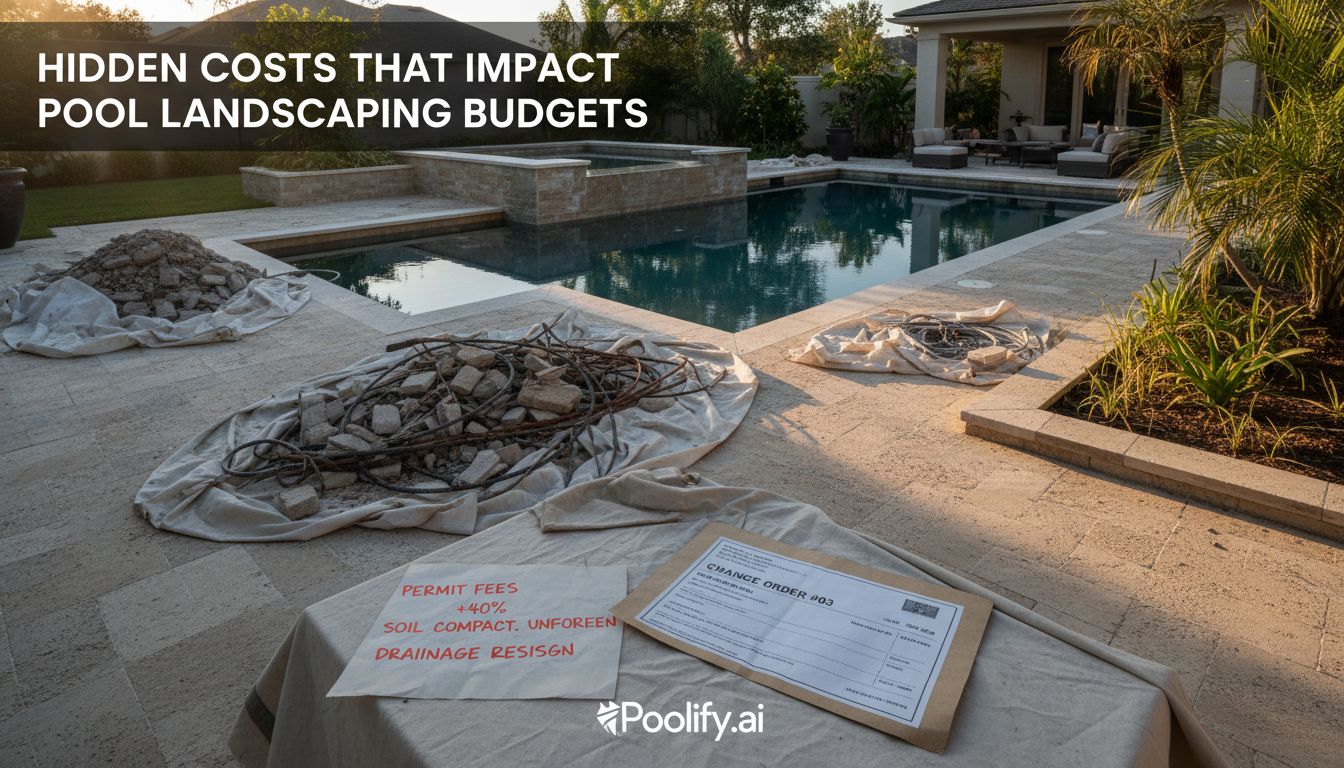
Many homeowners underestimate the total pool landscaping cost by overlooking expenses beyond obvious materials and labor. Anticipating these additional costs prevents budget surprises and ensures adequate funding for project completion.
Site Preparation and Excavation
Depending on your property’s condition, site preparation may require significant investment. Removing existing landscaping, trees, or structures costs $500 to $5,000 or more. Grading and leveling uneven terrain adds $1,000 to $3,000. Poor drainage correction with French drains or catch basins increases costs by $2,000 to $8,000. Rocky soil requiring excavation equipment substantially increases labor expenses.
Permits and Inspections
Most municipalities require permits for substantial landscaping projects, particularly those involving electrical work, irrigation systems, or structural elements like retaining walls. Permit costs typically range from $100 to $1,000 depending on project scope and location. Factor in inspection fees and potential delays if work doesn’t pass initial review. Unpermitted work can create liability issues and complicate future property sales.
Utility Location and Protection
Before excavation begins, underground utilities must be located and marked. While basic utility location services are often free, protecting or relocating utilities discovered during work adds unexpected costs. Damaging underground lines results in expensive repairs and potential liability. Budget contingency funds of 10-15% for unforeseen utility complications that affect the pool landscaping cost.
Ongoing Maintenance Expenses
Beyond initial installation, pool landscaping requires ongoing care that impacts long-term ownership costs. Professional maintenance services cost $100 to $300 monthly depending on property size and service level. Seasonal tasks like mulching, fertilization, and pruning add $500 to $2,000 annually. Irrigation system maintenance and repairs average $200 to $500 yearly. Factor these recurring expenses when evaluating total pool landscaping cost implications.
DIY vs. Professional Pool Landscaping Cost Comparison
Deciding between do-it-yourself installation and professional services significantly affects both pool landscaping cost and project outcomes. Each approach offers distinct advantages and challenges that merit careful consideration based on your skills, time availability, and budget constraints.
When DIY Makes Financial Sense
Homeowners with landscaping experience can reduce pool landscaping cost by 30-50% through DIY installation of certain elements. Planting shrubs, flowers, and small trees requires minimal specialized skills and tools. Installing mulch, decorative rock, and simple borders provides immediate cost savings. Basic landscape lighting with low-voltage systems offers another DIY-friendly opportunity. However, limit DIY efforts to tasks within your capability to avoid costly mistakes requiring professional correction.
Projects Requiring Professional Expertise
Complex hardscaping, irrigation systems, and electrical work demand professional installation to ensure safety, functionality, and longevity. Improperly installed pavers settle unevenly, creating tripping hazards and drainage problems. DIY irrigation often results in inefficient water distribution and system failures. Electrical work must meet code requirements to prevent safety hazards and insurance complications. The pool landscaping cost for professional services includes expertise, proper equipment, and warranty protection that justify the investment.
Hybrid Approach for Budget Optimization
Many homeowners achieve optimal results by combining professional and DIY efforts strategically. Hire professionals for technical installations like decking, irrigation, and electrical systems while handling plantings, mulching, and decorative elements yourself. This hybrid approach reduces the pool landscaping cost while ensuring critical components meet quality and safety standards. For additional guidance on maintaining your investment, review these expert pool cleaning tips that complement your landscaping efforts.
Regional Variations in Pool Landscaping Cost
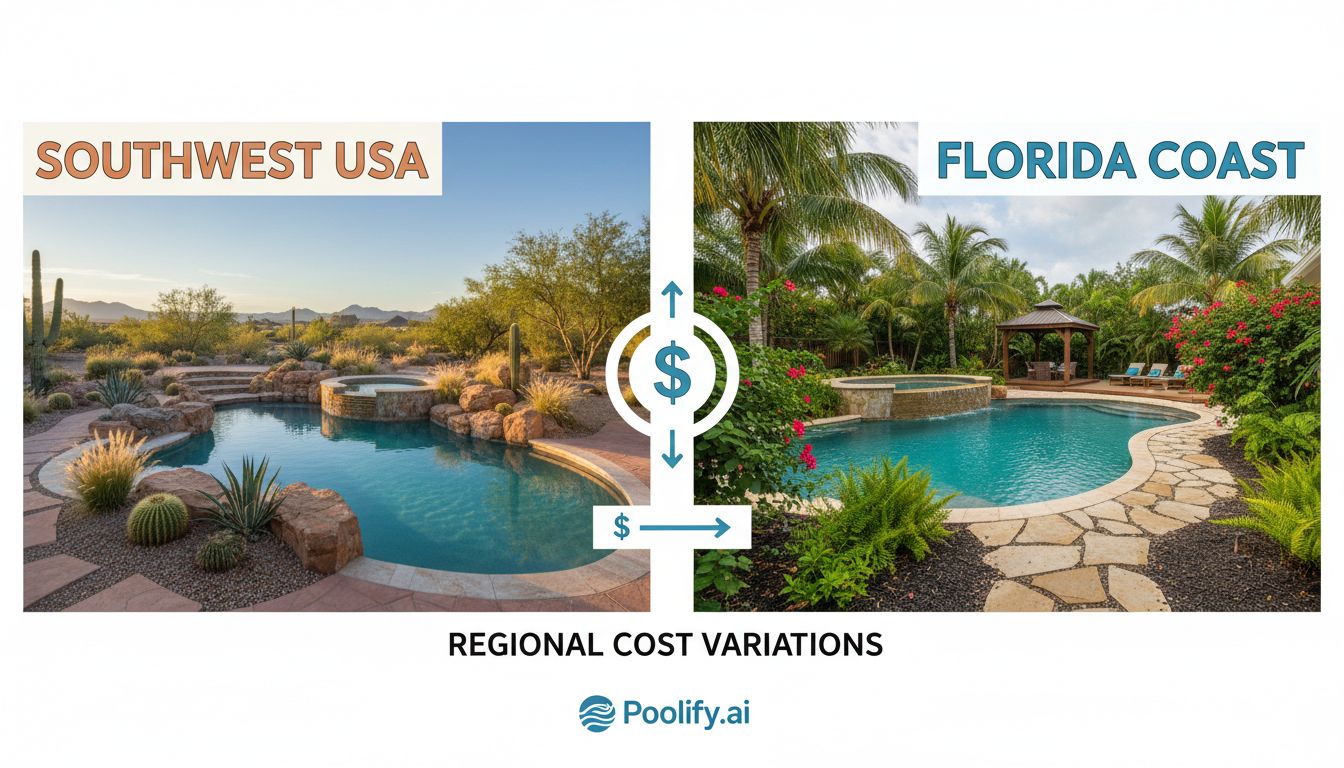
Geographic location significantly influences the pool landscaping cost through variations in labor rates, material availability, climate considerations, and local market conditions. Understanding regional factors helps set realistic budget expectations for your specific area.
Climate Impact on Design and Materials
Regional climate dictates appropriate plant selections, material durability requirements, and seasonal installation windows. Northern climates require freeze-thaw resistant materials and cold-hardy plants, while southern regions demand heat-tolerant species and materials that withstand intense UV exposure. Coastal areas need salt-resistant plantings and corrosion-resistant hardware. These climate-specific requirements influence material costs and plant availability, affecting overall pool landscaping cost.
Labor Rate Variations
Contractor labor rates vary substantially by region, with metropolitan areas typically charging 20-40% more than rural locations. Coastal markets and major cities often experience higher pool landscaping cost due to increased demand, higher living expenses, and premium property values. Conversely, areas with lower costs of living generally offer more competitive pricing for comparable services and materials.
Material Availability and Transportation
Local material availability affects pricing significantly. Regions with abundant natural stone quarries offer lower prices for stone products, while areas requiring long-distance transportation pay premium rates. Native plants cost less than exotic species requiring specialized nursery sourcing. Seasonal demand fluctuations also impact material costs, with peak construction seasons commanding higher prices that increase the pool landscaping cost.
Maximizing Long-Term Value from Your Pool Landscaping Investment
Beyond initial installation expenses, strategic planning ensures your pool landscaping cost delivers lasting value through enhanced property appeal, functional outdoor living space, and minimal maintenance requirements over time.
Focus on Timeless Design Elements
Trendy features may appeal initially but can appear dated within years, requiring expensive updates. Classic design principles emphasizing clean lines, balanced proportions, and quality materials maintain appeal across decades. Neutral color palettes with occasional accent colors allow easy updates without complete redesigns. Timeless approaches protect your pool landscaping cost investment by extending the relevant lifespan of your outdoor space.
Invest in Quality Infrastructure
While premium materials increase upfront pool landscaping cost, superior infrastructure reduces long-term expenses through enhanced durability and reduced maintenance. Quality pavers resist cracking and settling better than budget alternatives. Professional-grade irrigation components last longer and require fewer repairs. Properly installed drainage systems prevent water damage and foundation issues. These foundational investments pay dividends through decades of reliable performance.
Plan for Future Expansion
Design your initial installation to accommodate future additions without requiring expensive modifications. Install irrigation lines and electrical conduit to potential expansion areas even if you’re not immediately developing those spaces. Choose modular hardscaping patterns that allow seamless additions. This forward-thinking approach minimizes future pool landscaping cost when you’re ready to expand your outdoor living areas.
Implement Sustainable Practices
Environmentally conscious design reduces operating costs while supporting ecological health. Drought-tolerant plantings minimize irrigation requirements and water bills. Permeable paving materials reduce runoff and support groundwater recharge. LED lighting dramatically cuts energy consumption compared to traditional fixtures. Solar-powered features eliminate electrical costs entirely. These sustainable choices reduce the lifetime pool landscaping cost while benefiting the environment. Learn more about optimizing pool equipment efficiency to further reduce operating expenses.
Frequently Asked Questions About Pool Landscaping Cost
How much should I budget for pool landscaping as a percentage of my pool cost?
Industry professionals typically recommend allocating 25-50% of your pool installation cost for surrounding landscaping. For a $50,000 pool, plan $12,500 to $25,000 for landscaping. This ratio ensures your outdoor space receives adequate investment for cohesive design and functionality. However, the appropriate pool landscaping cost percentage varies based on your property’s existing conditions, desired features, and personal priorities.
What time of year offers the best pricing for pool landscaping projects?
Fall and winter months typically provide the most competitive pool landscaping cost in most regions. Contractors experience reduced demand during off-peak seasons and may offer discounts to maintain steady work. Material suppliers often reduce prices on seasonal inventory. However, weather limitations in northern climates may restrict winter work. Spring and summer represent peak seasons with higher prices but optimal growing conditions for plant establishment.
Can I finance pool landscaping projects?
Multiple financing options exist for managing pool landscaping cost. Home equity loans and lines of credit typically offer the lowest interest rates for homeowners with sufficient equity. Personal loans provide another option without using home equity as collateral. Some contractors offer financing programs through third-party lenders. Credit cards work for smaller projects but usually carry higher interest rates. Compare options carefully to identify the most cost-effective financing solution for your situation.
How long does a typical pool landscaping project take to complete?
Project duration varies based on scope and complexity. Basic landscaping installations typically require 1-2 weeks from start to finish. Mid-range projects with comprehensive hardscaping, planting, and irrigation generally take 2-4 weeks. Extensive luxury installations may span 6-8 weeks or longer. Weather delays, material availability, and permit processing can extend timelines. Discuss realistic schedules with contractors during planning to set appropriate expectations.
What maintenance costs should I expect after installation?
Ongoing maintenance represents a significant component of total pool landscaping cost over time. Professional maintenance services average $1,200 to $3,600 annually depending on property size and service frequency. DIY maintenance reduces costs but requires time investment for mowing, pruning, weeding, and seasonal tasks. Irrigation system water costs vary by region and system efficiency. Budget 5-10% of initial installation cost annually for maintenance, repairs, and periodic updates to preserve your investment.
Key Takeaways
- Plan comprehensively: Understanding all factors affecting pool landscaping cost enables realistic budgeting and prevents expensive surprises during project execution.
- Balance quality and affordability: Strategic material selection and phased implementation allow you to achieve professional results while managing expenses effectively over time.
- Consider long-term value: Initial pool landscaping cost represents only part of total ownership expenses—prioritize quality infrastructure and low-maintenance design for lasting value.
- Hire qualified professionals: Complex installations require expert skills and proper equipment to ensure safety, functionality, and durability that justify professional service costs.
- Adapt to regional conditions: Climate, local labor rates, and material availability significantly influence pool landscaping cost and appropriate design choices for your specific location.
See Your Dream Pool in Your Actual Backyard
Upload a photo and get an AI-designed pool visualization in 10 seconds. 3 free designs, no login required.
Try Poolify Free →Conclusion
Successfully managing pool landscaping cost in 2026 requires balancing aesthetic vision with financial reality through informed planning and strategic decision-making. By understanding the factors that influence pricing, anticipating hidden expenses, and implementing smart cost-control strategies, you can create a stunning pool environment that enhances your property value and lifestyle without exceeding your budget. Whether you’re planning a modest enhancement or an elaborate outdoor retreat, the investment in quality pool landscaping pays dividends through years of enjoyment, increased home value, and a beautiful outdoor space that becomes the centerpiece of your property. Start your planning process early, obtain multiple professional quotes, and prioritize elements that deliver the greatest long-term value for your specific needs and circumstances.
References
- U.S. Department of Energy – Landscaping for Energy Efficiency: https://www.energy.gov/energysaver/landscaping
- U.S. Environmental Protection Agency – WaterSense Program: https://www.epa.gov/watersense/watersense-products
