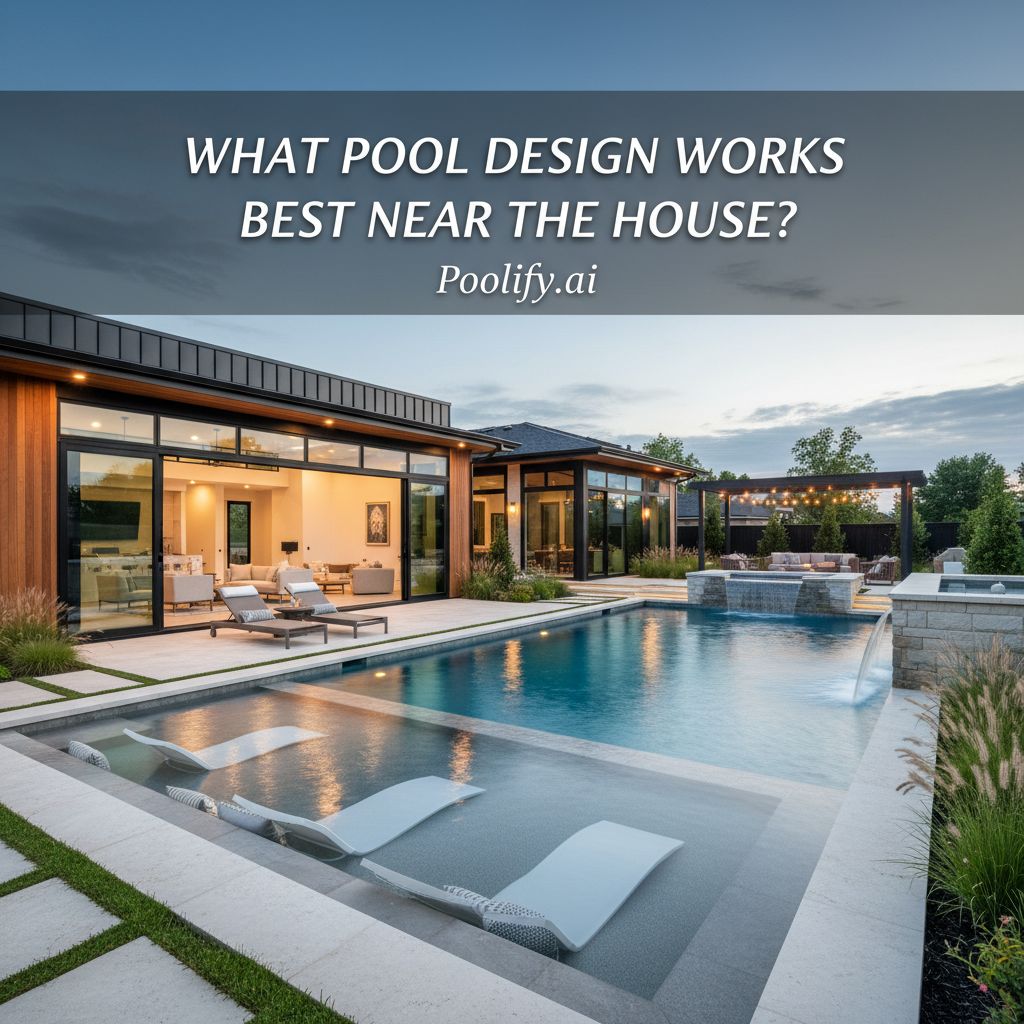
Placing a pool near the house can dramatically improve convenience, usability, and overall enjoyment — but only if it is designed thoughtfully. The best near-house pool designs feel intentional, safe, and integrated, rather than cramped or intrusive.
This guide explains what pool design works best near the house, how to balance proximity and comfort, and which mistakes to avoid during planning.
Why Pool Placement Near the House Matters
A pool close to the house changes how the space is used.
Benefits of near-house placement
- Easier access for daily use
- Better supervision from inside
- Strong connection to patios and living spaces
- More frequent, casual use
When done well, a near-house pool feels like an extension of the home.
Maintain Proper Scale and Proportion
The pool should complement the house, not overpower it.
Proportion guidelines
- Keep the pool visually secondary to the home
- Avoid oversized pools near doors or windows
- Maintain balanced spacing between walls and water
A well-scaled pool enhances architecture rather than competing with it.
Prioritize Clear Sightlines and Visibility
Visibility improves both safety and aesthetics.
Design strategies
- Keep pool visible from key interior rooms
- Avoid tall walls or obstructions between house and pool
- Align pool edges with architectural lines
Clear sightlines make the pool feel connected and intentional.
Design the Transition Space Carefully
The area between the house and pool is critical.
Transition considerations
- Adequate deck or patio width
- Non-slip surfaces
- Clear walking paths
- Space for furniture without crowding
This zone should feel comfortable and functional, not rushed.
Choose Pool Shapes That Work Near Structures
Certain shapes adapt better to close placement.
Effective shapes
- Rectangular pools aligned with the house
- Linear pools running parallel to walls
- Simple geometric layouts
Complex curves can feel awkward near straight architectural lines.
Manage Noise and Privacy
Pools near the house can amplify sound.
Noise and privacy strategies
- Place water features away from windows
- Use subtle water sounds instead of loud features
- Consider privacy screening for neighboring views
Design choices should protect indoor comfort.
Consider Drainage and Splash Control
Water management becomes more important near structures.
Key considerations
- Proper deck slopes away from the house
- Adequate drainage systems
- Controlled splash zones near entries
These details protect the home and reduce maintenance issues.
Balance Pool Access With Interior Flow
Near-house pools should support movement, not disrupt it.
Flow-focused design
- Align pool access with main doors
- Avoid blocking common pathways
- Maintain space for outdoor dining or lounging
Good flow keeps the space usable during gatherings.
Visualize the Pool in Relation to the House
Near-house placement benefits greatly from visualization.
Seeing the pool in context helps you:
- Confirm spacing and scale
- Evaluate sightlines
- Test furniture layouts
- Avoid feeling crowded
Visualization often reveals adjustments that improve comfort.
How AI Pool Design Helps With Near-House Planning
AI pool design tools allow homeowners to explore near-house layouts quickly and see how different placements interact with the home’s architecture.
Tools like Poolify help users visualize pools close to the house and refine designs before committing to construction.
Common Near-House Pool Design Mistakes
Oversizing the pool
This overwhelms the space and the home.
Poor drainage planning
Water should always flow away from the house.
See Your Dream Pool in Your Actual Backyard
Upload a photo and get an AI-designed pool visualization in 10 seconds. 3 free designs, no login required.
Try Poolify Free →Blocking doors or views
This reduces usability and comfort.
Key Takeaways
- Near-house pools improve convenience and usability
- Proper scale and spacing are critical
- Clear sightlines enhance safety and aesthetics
- Transition spaces must be well-designed
- Visualization helps refine near-house placement
A pool designed near the house should feel seamless, safe, and inviting — strengthening the connection between indoor and outdoor living rather than creating tension.
