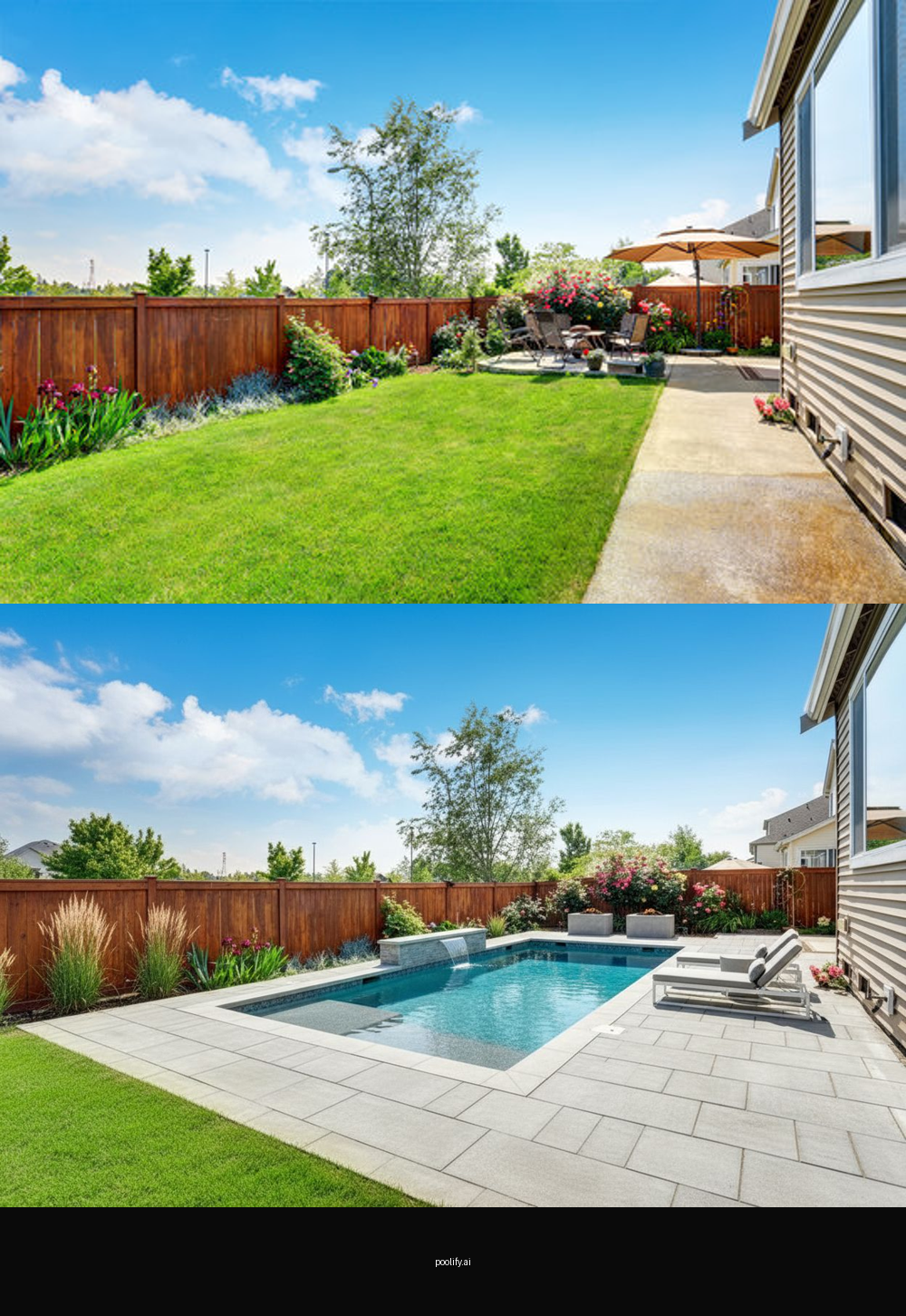
A concept image is a useful thing to have and an easy thing to misread. It shows an idea of what a backyard could become; it does not show a buildable plan, a cost, or a guarantee that the ground will cooperate.
This guide covers how to move from a concept you like to a conversation a builder can actually price and deliver.
What a Concept Image Is and Is Not
Concepts are for direction. They are extremely good at settling questions of style, placement and proportion, and they are not intended to resolve engineering, drainage or structural questions.
A concept can reliably tell you
- Roughly where the pool should sit
- Whether a shape suits the yard
- How the design reads from the house
- Which style direction you prefer
- Where seating and shade might go
Treating it as a direction-setting tool rather than a specification keeps expectations aligned when a professional gets involved.
Turn the Concept Into a Short Written Brief
Builders work from requirements, not images. A page of plain text describing what you want, alongside the concept, produces far more comparable proposals than an image on its own.
What the brief should state
- Primary use and who will swim
- Approximate position and orientation
- Must-have features and clear exclusions
- Materials or finishes you prefer
- Anything in the yard that cannot move
Writing exclusions is as valuable as writing requirements, because it prevents proposals diverging on assumptions you never made.
Questions Worth Asking Every Builder
Asking the same questions of each builder makes proposals comparable. Without that, differences in price usually reflect differences in scope rather than in value.
Ask consistently
- What site conditions could change the approach
- What is included and explicitly excluded
- How the schedule is sequenced
- Who handles permitting and inspections
- How changes are priced during the build
The answers to the site-conditions question are usually the most informative, because they reveal what has been assessed rather than assumed.
Expect the Concept to Change, and Know Which Parts Can
Almost every concept moves once a professional surveys the site. Knowing in advance which elements you are attached to makes those conversations productive rather than disappointing.
Worth ranking before you start
- Position in the yard
- Overall size and proportion
- Shape and geometry
- Specific materials and finishes
- Individual features such as spas
If you know that position matters more to you than finish, a builder can protect the thing you care about when something has to give.
Sequence the Project So Decisions Happen in Order
Many delays come from decisions made out of sequence. Choosing tile before the layout is settled, or furniture before decking is specified, tends to create rework.
A workable order
- Confirm site constraints and local requirements
- Fix position and overall footprint
- Settle shape, depth and structural approach
- Choose surfaces, coping and waterline
- Select lighting, furniture and planting
Following the order roughly is enough. The value is in not deciding late-stage items before early-stage ones are locked.
Keep a Single Source of Truth
Once several people are involved, a project drifts unless there is one document everyone works from. It does not need to be formal, only current.
Keep in one place
- The current brief and any revisions
- Agreed scope and exclusions
- Decisions made and dates
- Outstanding questions
- Reference images with notes
This is the least glamorous item on the list and reliably the one that prevents the most avoidable friction.
See Your Dream Pool in Your Actual Backyard
Upload a photo and get an AI-designed pool visualization in 10 seconds. 3 free designs, no login required.
Try Poolify Free →Use the concept to settle direction, write a short brief, ask every builder the same questions, and decide in sequence. That is what turns an image into a project.
