Introduction
Creating the perfect pool patio requires thoughtful planning and creative vision. The right pool patio ideas can transform your backyard from a simple swimming area into an outdoor living masterpiece that enhances your home’s value and your family’s lifestyle. Whether you’re building a new pool or renovating an existing space, the patio surrounding your pool serves as the foundation for relaxation, entertainment, and aesthetic appeal. In 2026, homeowners are prioritizing sustainable materials, multi-functional spaces, and seamless indoor-outdoor transitions that reflect contemporary design trends while maintaining timeless elegance.
Why Your Pool Patio Design Matters
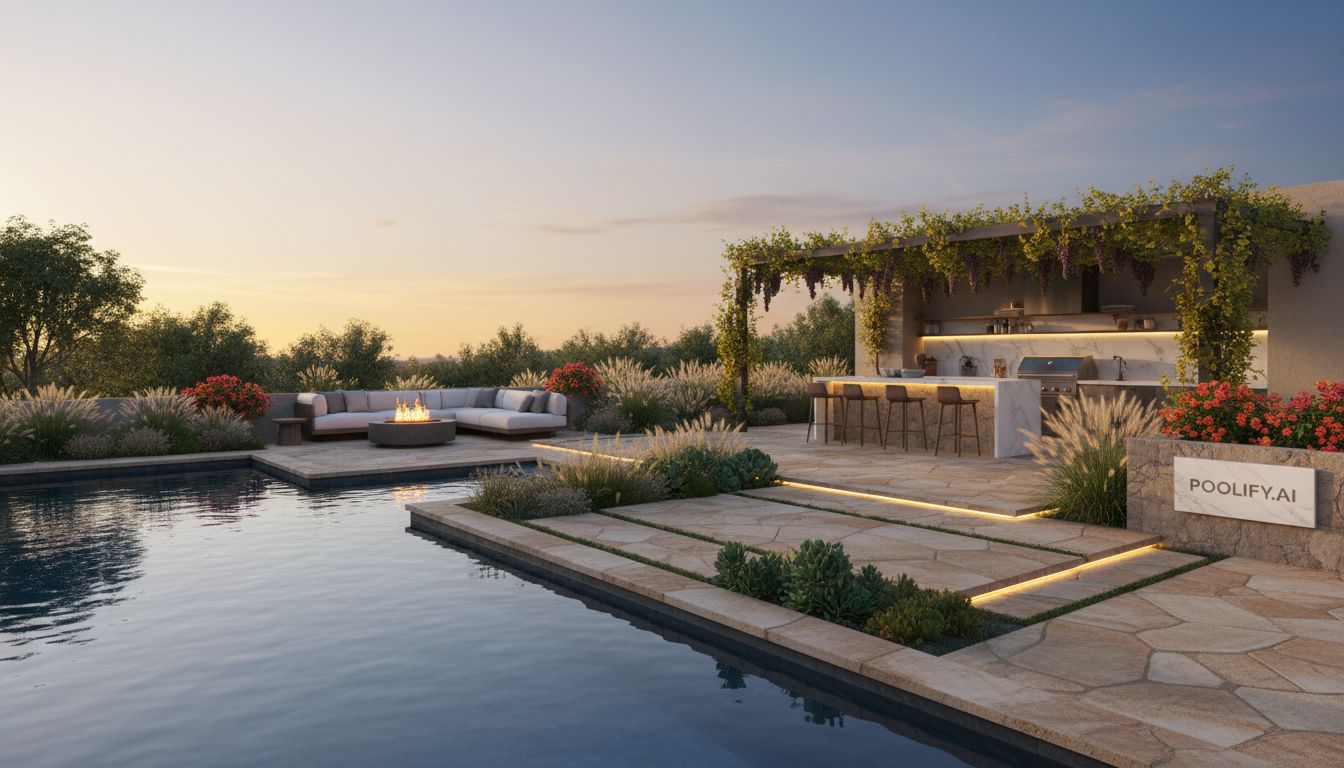
The patio surrounding your pool is far more than a decorative afterthought. It serves multiple critical functions that directly impact your pool’s usability, safety, and visual appeal. A well-designed pool patio provides stable, slip-resistant surfaces for wet feet, creates defined zones for lounging and dining, and establishes the aesthetic character of your entire backyard. According to the National Association of Realtors, outdoor improvements like pool patios can recover up to seventy percent of their cost in added home value.
Your patio choice affects maintenance requirements, heat absorption, durability against pool chemicals, and long-term cost considerations. The right materials and layout create comfortable temperatures underfoot during summer months while resisting cracking, fading, and deterioration from constant moisture exposure. Smart pool patio ideas balance immediate visual impact with practical considerations that ensure your investment remains beautiful and functional for decades.
Top Pool Patio Ideas for Modern Backyards
1. Travertine Elegance
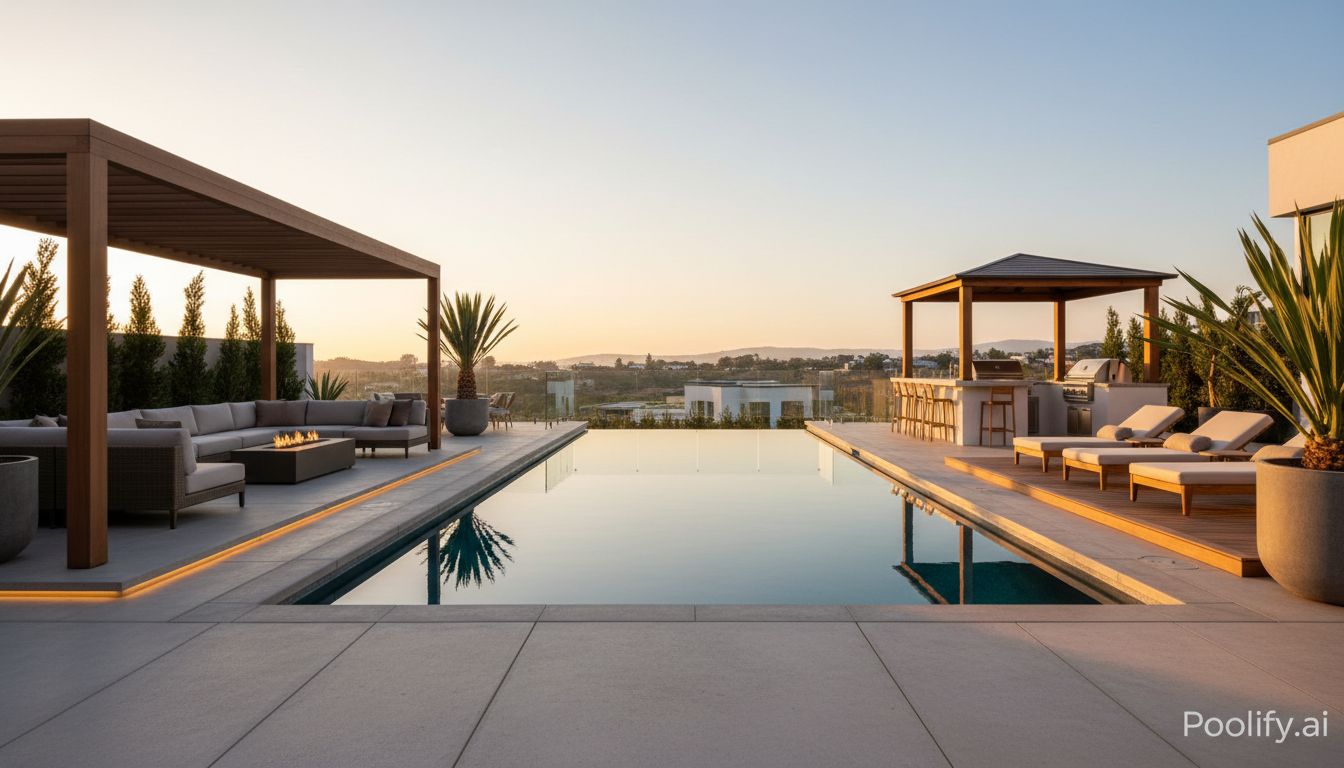
Travertine pavers remain one of the most sought-after pool patio ideas for homeowners seeking luxury and practicality. This natural stone stays remarkably cool underfoot even in direct sunlight, making it ideal for barefoot traffic around pools. The stone’s natural texture provides excellent slip resistance when wet, while its neutral color palette complements virtually any architectural style. Travertine’s porous nature allows water to drain quickly, reducing puddles and slippery surfaces.
Installation involves setting pavers in sand or mortar, with options for various patterns including French, Versailles, and running bond layouts. The material resists chlorine and salt water damage better than many alternatives, though it requires periodic sealing to maintain its appearance and protect against staining. For 2026 design trends, consider mixing travertine sizes to create visual interest or incorporating contrasting border treatments.
2. Stamped Concrete Versatility
Stamped concrete offers unlimited design possibilities among pool patio ideas, allowing you to replicate the appearance of natural stone, brick, or tile at a fraction of the cost. Modern stamping techniques create remarkably realistic textures and patterns that fool even discerning eyes. This option works particularly well for large patio areas where natural stone costs would prove prohibitive.
The concrete can be colored throughout or surface-stained to achieve custom hues that coordinate with your home’s exterior palette. Non-slip additives mixed into the surface layer ensure safety around wet areas. Proper installation includes control joints to manage cracking, adequate slope for drainage, and UV-resistant sealers that prevent fading. Stamped concrete typically costs between eight and eighteen dollars per square foot installed, depending on pattern complexity and color choices.
3. Natural Stone Mosaic Patterns
Creating mosaic patterns with natural stone represents one of the most artistic pool patio ideas available. Combining flagstone, slate, or bluestone in irregular patterns produces organic, one-of-a-kind designs that celebrate natural material variations. Each stone’s unique coloring and texture contributes to an overall composition that feels both sophisticated and grounded in nature.
This approach works exceptionally well for Mediterranean, cottage, or rustic design themes. The irregular joints between stones provide natural drainage channels, while the varied surface heights create subtle visual texture. Installation requires skilled craftsmanship to ensure stable, level surfaces despite irregular stone shapes. Consider incorporating smaller pebble mosaics within larger stone sections to add detail and visual interest to high-visibility areas near pool entries or outdoor kitchens.
4. Porcelain Tile Sophistication
Large-format porcelain tiles have emerged as premium pool patio ideas for contemporary homes. Modern manufacturing produces tiles that convincingly mimic natural stone, wood, or concrete while offering superior durability and minimal maintenance. Porcelain’s extremely low water absorption rate makes it ideal for pool environments, resisting freeze-thaw damage in colder climates and preventing staining from pool chemicals or outdoor debris.
The material’s hardness resists scratching and wear even in high-traffic areas. Textured finishes provide slip resistance without sacrificing the sleek appearance that defines contemporary design. Installation requires proper substrate preparation and specialized thin-set mortars designed for outdoor applications. The investment typically ranges from fifteen to thirty-five dollars per square foot, positioning porcelain as a premium option that delivers exceptional longevity.
5. Paver Perfection
Concrete pavers offer practical and budget-friendly pool patio ideas with tremendous design flexibility. Available in countless shapes, sizes, colors, and textures, pavers allow you to create everything from traditional brick patterns to modern geometric designs. Interlocking pavers provide structural stability while allowing individual unit replacement if damage occurs, unlike monolithic concrete that requires extensive repairs for cracks.
The joints between pavers permit water infiltration, reducing runoff and preventing puddle formation. Permeable paver systems take this concept further, incorporating aggregate-filled joints or porous paver materials that allow rainwater to percolate into the ground below. This approach addresses environmental concerns while potentially reducing local stormwater management fees. Explore our comprehensive guide to pool deck materials for detailed comparisons of paver options.
6. Wood Deck Warmth
Wood decking creates inviting, resort-style pool patio ideas that add warmth and natural beauty to outdoor spaces. Composite decking materials have revolutionized this category, offering wood’s aesthetic appeal without susceptibility to rot, splintering, or insect damage. Premium composites resist fading, staining, and mold growth while requiring minimal maintenance beyond occasional cleaning.
Natural wood options like ipe, teak, or cedar provide authentic grain patterns and rich colors that develop attractive patinas over time. These hardwoods contain natural oils that resist moisture and decay, though they require annual maintenance including cleaning, sanding, and sealing. Wood surfaces stay cooler than many stone options in direct sun, providing comfortable barefoot surfaces. Ensure proper ventilation beneath decking to prevent moisture accumulation and consider slip-resistant finishes for areas immediately adjacent to the pool.
7. Brick Classic Appeal
Traditional brick pavers deliver timeless pool patio ideas that complement historic and colonial architecture beautifully. Clay brick’s natural earth tones create warm, inviting surfaces that age gracefully, developing character rather than appearing worn. The material’s rough texture provides excellent traction when wet, addressing safety concerns around pools.
Brick installation allows for numerous classic patterns including herringbone, basket weave, running bond, and circular medallions that add visual sophistication. The material’s porosity requires sealing to prevent efflorescence and staining, particularly in areas exposed to pool water splash-out. Brick pavers typically cost between ten and twenty dollars per square foot installed, positioning them as a mid-range option that delivers distinctive character and proven durability.
8. Decomposed Granite Pathways
Incorporating decomposed granite pathways represents one of the more naturalistic pool patio ideas, particularly effective for connecting pool areas to gardens or creating transitional zones between formal patio spaces and landscape beds. This finely crushed stone compacts into stable, permeable surfaces that blend seamlessly with natural surroundings.
Decomposed granite comes in various earth tones from warm golds to cool grays, allowing coordination with existing landscape elements. The material provides excellent drainage while remaining comfortable underfoot. Stabilized versions incorporate binders that prevent erosion and migration while maintaining permeability. This economical option typically costs between one and three dollars per square foot, making it ideal for large areas or budget-conscious projects. Combine decomposed granite pathways with more formal paving materials near the pool edge for an attractive contrast.
9. Multi-Level Terracing
Creating multi-level terraces ranks among the most dramatic pool patio ideas for sloped properties. Terracing transforms challenging topography into design assets, establishing distinct zones for different activities while maximizing usable space. Upper levels might accommodate dining areas or fire features, while lower terraces provide sunbathing zones or hot tub placements.
Retaining walls constructed from natural stone, concrete blocks, or poured concrete define level changes while adding architectural interest. Incorporate wide steps between levels to create additional seating or display areas for container plantings. This approach requires careful engineering to ensure proper drainage and structural stability, but the resulting multi-dimensional space creates resort-quality ambiance. Consider integrating lighting into retaining walls and steps to enhance safety and highlight architectural features after dark.
10. Outdoor Kitchen Integration
Integrating outdoor kitchens into pool patio ideas transforms your backyard into a complete entertainment destination. Position cooking and dining areas adjacent to the pool to facilitate seamless entertaining, allowing hosts to prepare meals while remaining engaged with guests in the water. Built-in grills, refrigerators, and prep surfaces eliminate trips indoors, keeping the party centralized around the pool.
Design considerations include adequate clearance between cooking areas and pool edges for safety, durable countertop materials that resist weather and heat, and proper utilities including gas lines, electrical service, and water supply. Overhead structures like pergolas or pavilions provide shade for cooking and dining comfort. The patio materials in kitchen zones should resist grease staining and heat damage while coordinating with pool surround materials. For comprehensive planning guidance, review our article on outdoor kitchen design essentials.
11. Fire Feature Focal Points
Incorporating fire features creates compelling pool patio ideas that extend outdoor season usability and establish dramatic focal points. Fire pits, fireplaces, or fire bowls provide warmth for cool evenings while creating natural gathering spots separate from pool activities. The contrast between fire and water elements adds visual drama and sensory richness to outdoor spaces.
Position fire features at least ten feet from pool edges to prevent ash and smoke from affecting water quality and ensure comfortable clearance for circulation. Built-in seating around fire elements encourages conversation and relaxation after swimming. Modern options include propane or natural gas systems that ignite with switches or remote controls, eliminating wood smoke and ash cleanup. Consider fire feature placement carefully to avoid smoke blowing toward primary seating areas based on prevailing wind patterns in your location.
12. Shade Structure Integration
Thoughtful shade structures represent essential pool patio ideas for comfort and sun protection. Pergolas, pavilions, cabanas, and shade sails create relief from intense sun while defining distinct zones within larger patio areas. These structures establish outdoor rooms that feel intimate and purposeful rather than exposed and undefined.
Pergolas with retractable canopies offer flexibility, providing full sun exposure when desired and shade on demand. Solid-roof pavilions create true outdoor rooms suitable for furniture, televisions, and ceiling fans that would weather poorly under open sky. Cabanas positioned at pool ends provide changing areas and equipment storage while contributing architectural interest. When planning shade structures, consider sun angles throughout the day and across seasons to position coverage where it provides maximum benefit during peak usage times.
13. Tropical Paradise Landscaping
Surrounding your pool with lush tropical landscaping creates immersive pool patio ideas that transport you to resort destinations. Palm varieties, bird of paradise, hibiscus, and ornamental grasses soften hardscape edges while providing privacy screening and visual interest. Strategic planting creates microenvironments that feel secluded and intimate despite suburban settings.
Select plants based on your climate zone, choosing cold-hardy tropical-looking alternatives in regions with winter freezes. Container plantings allow you to incorporate tender tropical specimens that move indoors during cold months. Consider mature plant sizes to avoid overcrowding that blocks views or drops excessive debris into pool water. Integrate landscape lighting to illuminate dramatic foliage after dark, extending the visual impact beyond daylight hours. Balance planted areas with open patio space to maintain adequate room for furniture and circulation.
14. Infinity Edge Integration
Designing patios that complement infinity edge pools represents specialized pool patio ideas requiring careful coordination between pool and surrounding surfaces. The vanishing edge effect depends on unobstructed sightlines, so patio levels and materials must enhance rather than compete with this dramatic feature. Lower catch basin areas require access for maintenance while remaining visually discrete.
Material selections should complement the pool’s waterline tile and coping without creating visual clutter. Minimalist approaches with large-format pavers or continuous concrete surfaces allow the infinity edge to command attention. Furniture placement should take advantage of views beyond the vanishing edge rather than blocking these carefully planned sightlines. Consider how patio elevations relate to the infinity edge, ensuring comfortable viewing angles from seating areas while maintaining the illusion from primary vantage points.
15. Sustainable Permeable Systems
Environmentally conscious permeable paving systems represent forward-thinking pool patio ideas that address stormwater management while creating attractive surfaces. These systems allow rainwater to infiltrate through paving surfaces into aggregate base layers and eventually into native soil, reducing runoff and recharging groundwater supplies. The Environmental Protection Agency recognizes permeable pavement as an effective green infrastructure practice.
Options include permeable concrete, porous asphalt, permeable pavers with aggregate-filled joints, and grid systems filled with gravel or groundcover. These systems require proper base preparation and may need periodic maintenance to prevent joint clogging, but they offer environmental benefits that align with 2026 sustainability priorities. Some municipalities offer incentives or reduced stormwater fees for properties incorporating permeable surfaces, potentially offsetting higher initial installation costs.
Essential Design Principles for Pool Patios
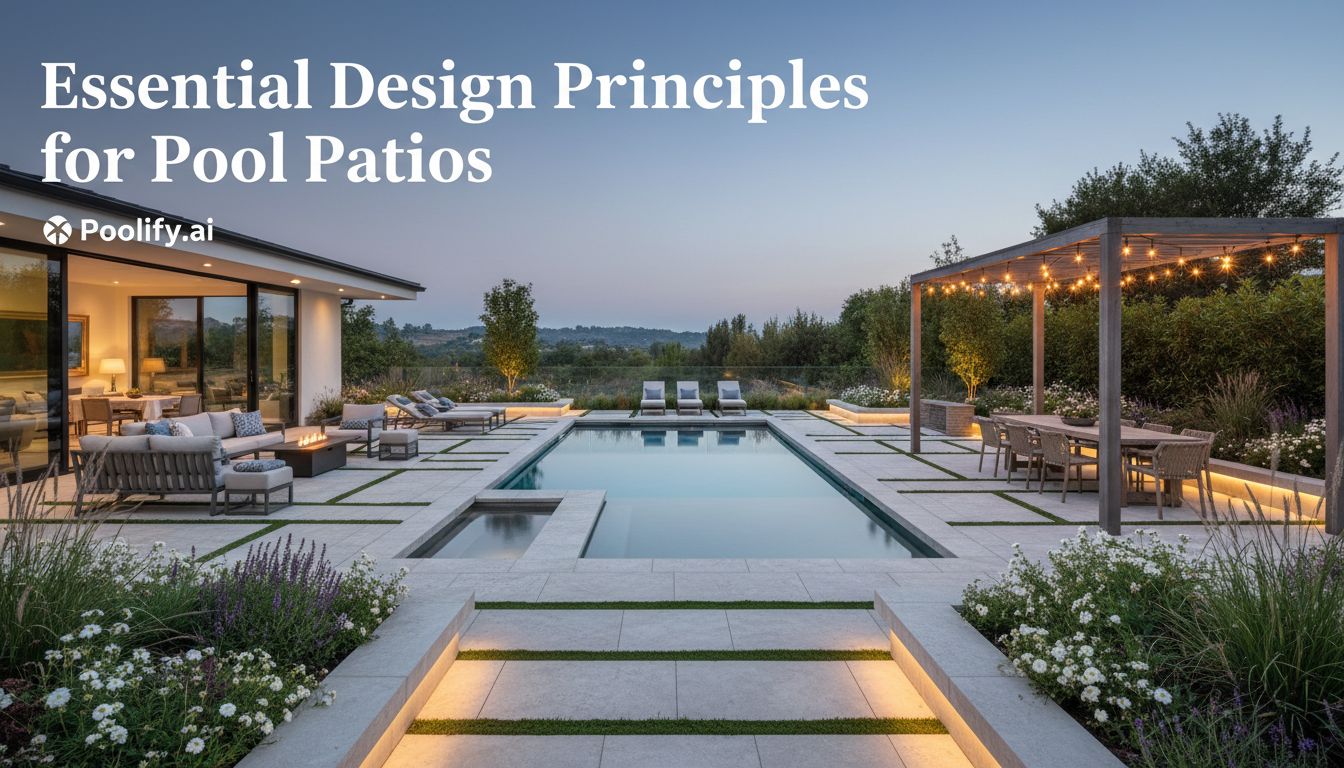
Successful pool patio ideas share fundamental design principles that ensure functionality regardless of specific material choices. Adequate space allocation remains paramount, with most designers recommending patio width of at least four feet on all pool sides, expanding to eight or twelve feet in primary use areas. This provides sufficient room for lounge chairs, circulation paths, and safety clearance from pool edges.
Proper drainage prevents water accumulation that creates slip hazards and accelerates material deterioration. Patios should slope away from pools at approximately one-quarter inch per foot to direct water toward landscape areas or drainage systems. Avoid sloping toward structures or creating low spots where water collects. In regions with heavy rainfall, consider integrating channel drains or area drains at strategic locations.
Material transitions require careful detailing to prevent tripping hazards and visual awkwardness. When combining multiple paving materials, ensure height differences don’t exceed one-quarter inch and use transition strips or carefully cut joints to create clean demarcations. Color and texture coordination between materials creates cohesive designs rather than disjointed collections of unrelated elements.
Lighting integration transforms pool patios from daytime-only spaces into evening entertainment venues. Incorporate multiple lighting layers including ambient illumination for general visibility, task lighting for cooking and dining areas, and accent lighting to highlight architectural features and landscaping. LED technology offers energy efficiency and longevity while providing excellent color rendering and dimming capabilities.
Material Selection Considerations
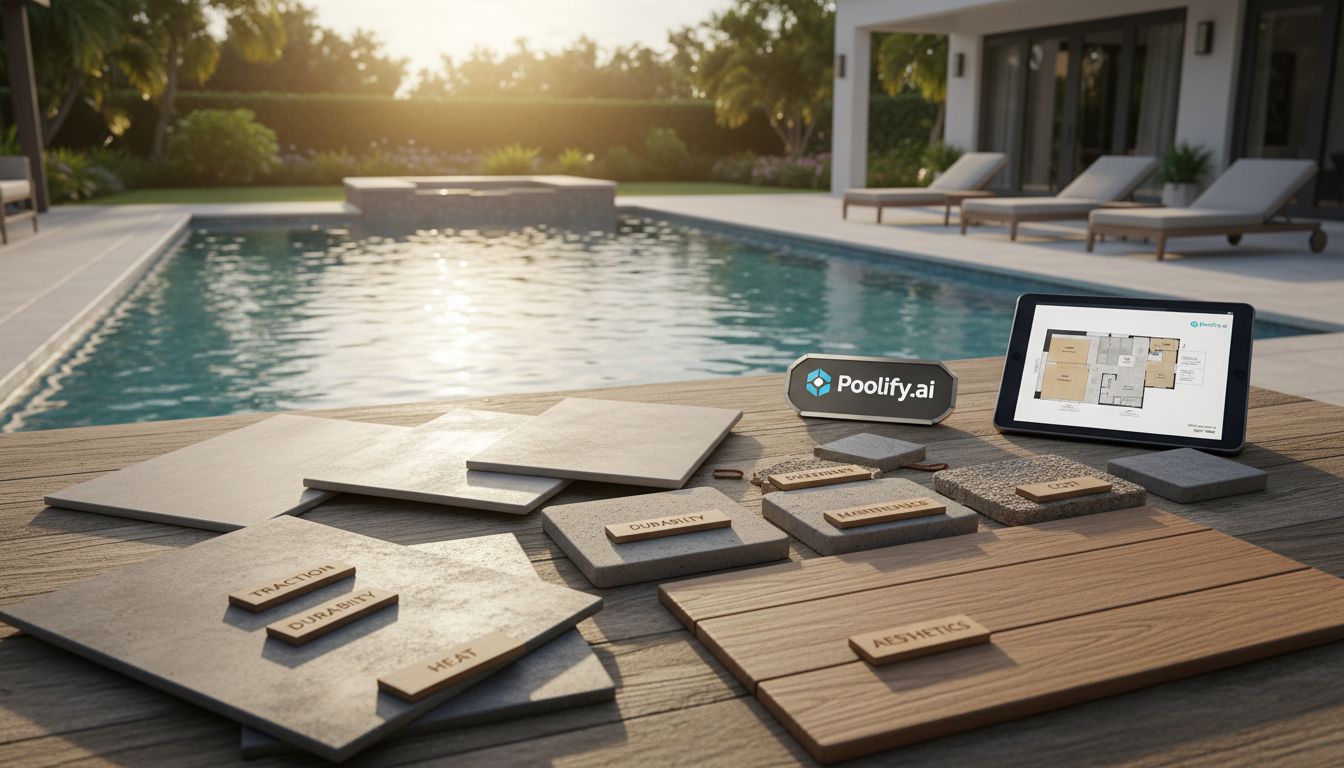
Choosing among various pool patio ideas requires evaluating multiple performance factors beyond initial appearance. Heat absorption characteristics dramatically affect comfort, with darker materials and dense stones absorbing more solar energy and becoming uncomfortably hot underfoot. Light-colored concrete, travertine, and certain composite decking materials remain cooler, providing more comfortable barefoot surfaces during peak summer temperatures.
Slip resistance becomes critical around pools where wet surfaces create fall hazards. Textured finishes, natural stone with inherent roughness, and specialized coatings provide traction even when saturated. Avoid polished or smooth surfaces immediately adjacent to pool edges, reserving these finishes for areas less likely to become wet. Many building codes specify minimum slip resistance ratings for pool decks, so verify local requirements before finalizing material selections.
Maintenance requirements vary significantly between materials, affecting long-term ownership costs and effort. Sealed natural stone requires periodic resealing to maintain appearance and stain resistance. Wood decking needs annual cleaning and refinishing. Concrete may require pressure washing and resealing every few years. Porcelain tile and quality composite decking require minimal maintenance beyond routine cleaning, making them attractive for busy homeowners.
Durability against freeze-thaw cycles matters in colder climates where water infiltration and subsequent freezing can crack or spall paving materials. Dense, low-porosity materials like porcelain and certain natural stones resist freeze damage better than more porous options. Proper installation with adequate base preparation and drainage further protects against frost heaving and cracking regardless of material choice.
Budget Planning for Pool Patio Projects
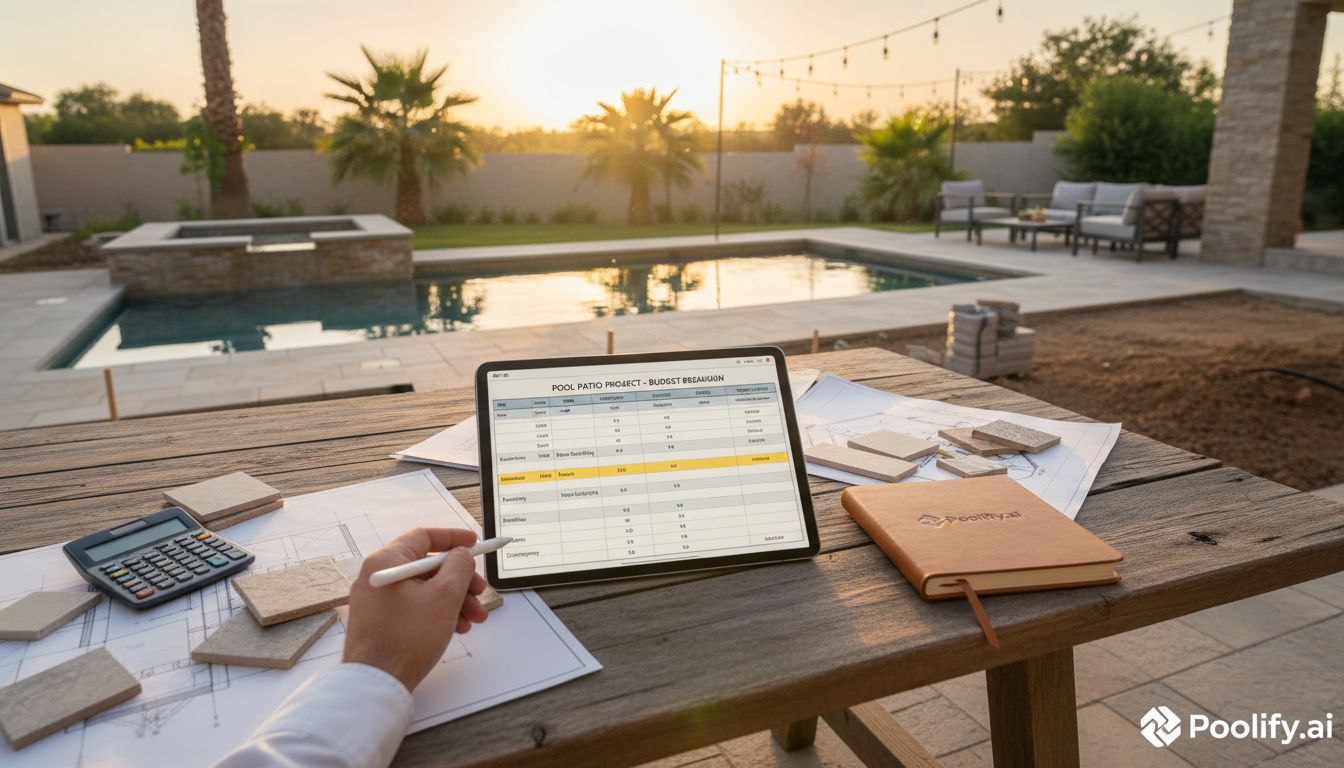
Realistic budget development ensures your pool patio ideas translate into completed projects rather than abandoned plans. Material costs represent only one component of total project expense, with site preparation, base construction, labor, and finishing details adding substantially to bottom-line investment. Basic concrete patios might cost between six and twelve dollars per square foot installed, while premium natural stone or porcelain installations can exceed thirty-five dollars per square foot.
Site conditions significantly impact costs, with sloped terrain requiring extensive grading and retaining walls, while level lots need minimal preparation. Existing landscaping removal, utility relocation, and access limitations for equipment increase labor hours and overall expense. Obtain multiple detailed quotes that specify material grades, installation methods, and warranty terms to make accurate comparisons between contractors.
Phased implementation allows homeowners to complete pool patio projects in stages aligned with budget availability. Initial phases might focus on essential paving immediately surrounding the pool, with subsequent phases adding outdoor kitchens, fire features, or expanded entertainment areas. This approach prevents construction debt while allowing you to refine design preferences based on how you actually use your pool area over time.
Value engineering identifies opportunities to reduce costs without compromising essential functionality or aesthetic appeal. Consider using premium materials in highly visible areas near the house or pool while selecting more economical options for secondary zones. Simplifying complex patterns or reducing custom details can significantly lower installation labor costs. Balance immediate budget constraints against long-term maintenance costs, as more durable materials often justify higher initial investment through reduced upkeep expenses.
Common Pool Patio Design Mistakes to Avoid
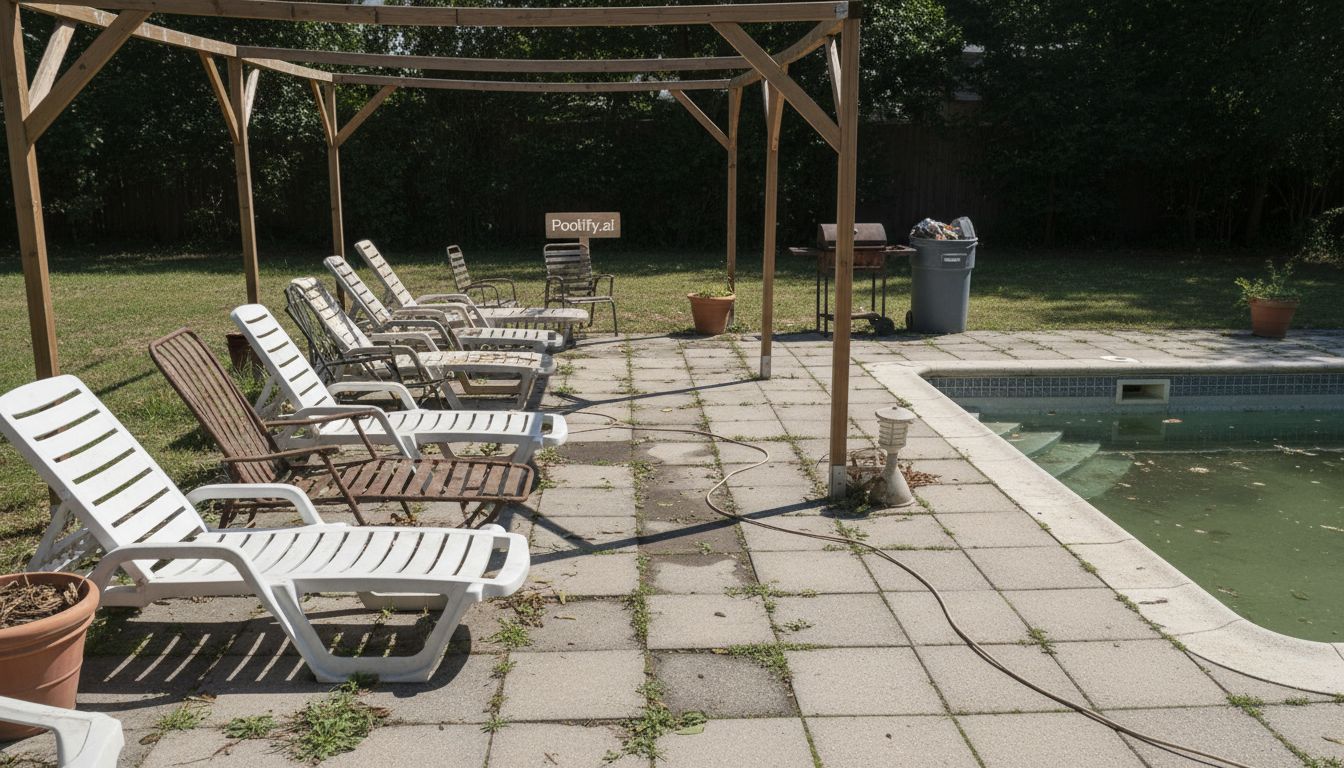
Learning from others’ missteps helps you implement pool patio ideas successfully on the first attempt. Inadequate size represents the most frequent error, with homeowners underestimating space requirements for furniture, circulation, and activities. Measure existing furniture and add clearance for movement before finalizing patio dimensions, then add an additional ten to twenty percent for comfortable spacing and future flexibility.
Neglecting drainage creates ongoing problems including standing water, material deterioration, and slip hazards. Every patio requires positive drainage away from the pool and structures, with slopes adequate to move water efficiently during heavy rainfall. In flat terrain, incorporate subtle grading or drainage systems rather than assuming water will naturally dissipate.
Ignoring sun angles and prevailing winds results in uncomfortable spaces that go unused during peak times. Observe your yard throughout the day and across seasons to understand where shade falls and which areas receive full sun exposure. Position shade structures, seating areas, and cooking zones based on these observations rather than arbitrary aesthetic preferences that prove impractical in daily use.
Choosing materials based solely on appearance without considering performance characteristics leads to disappointment and costly replacements. That beautiful dark slate may look stunning in the showroom but become painfully hot in direct summer sun. Smooth concrete might photograph beautifully but creates dangerous slip conditions when wet. Prioritize safety and functionality alongside aesthetics to create pool patios that perform as well as they look.
Failing to plan for utilities and future additions creates expensive retrofit situations. Run electrical conduit and plumbing stub-outs during initial construction even if you’re not immediately installing outdoor kitchens or water features. Adding these utilities after patio completion requires cutting into finished surfaces or running exposed conduit that compromises appearance. Think several years ahead when planning infrastructure to accommodate evolving needs.
Frequently Asked Questions
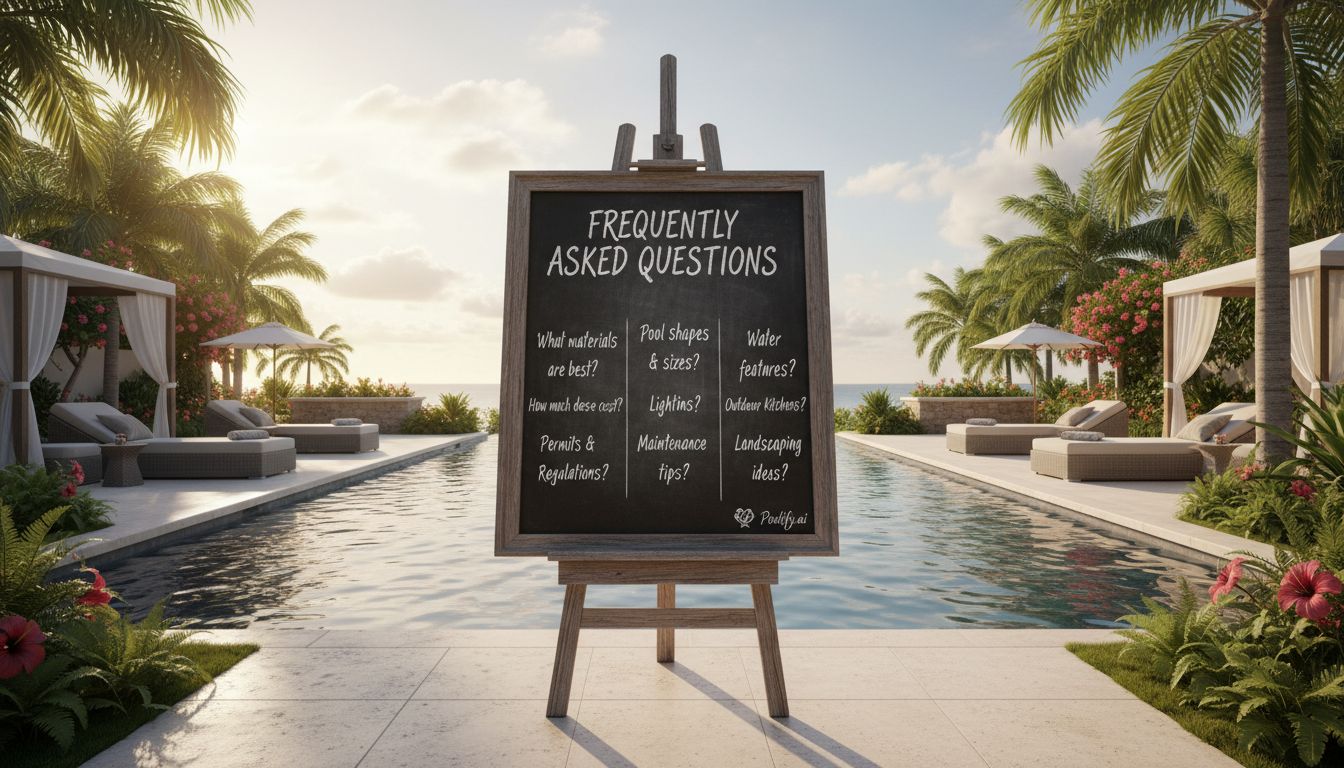
What is the best material for a pool patio in hot climates?
Travertine, light-colored concrete, and certain composite decking materials perform best in hot climates because they reflect rather than absorb solar energy. Travertine remains particularly comfortable underfoot even in direct desert sun due to its unique cellular structure and light coloring. Avoid dark-colored stone, concrete, or pavers that absorb heat and become uncomfortably hot. Textured finishes provide necessary slip resistance while maintaining cooler surface temperatures compared to smooth alternatives.
How much does a pool patio typically cost?
Pool patio costs range from six dollars per square foot for basic concrete to over thirty-five dollars per square foot for premium natural stone or porcelain tile installations. A typical four-hundred-square-foot pool patio might cost between three thousand and fourteen thousand dollars depending on material selection, site conditions, and design complexity. Stamped concrete and concrete pavers offer mid-range pricing between ten and twenty dollars per square foot. Factor in additional costs for site preparation, drainage systems, lighting, and landscape integration when budgeting for complete projects.
Do I need a permit for a pool patio?
Permit requirements vary by municipality, but many jurisdictions require permits for substantial patio construction, particularly when associated with pool installation or involving structural elements like retaining walls. Contact your local building department to determine specific requirements for your project. Permit processes typically involve submitting site plans showing patio dimensions, materials, drainage provisions, and setbacks from property lines. Working with licensed contractors often simplifies permit acquisition as they understand local requirements and maintain relationships with building officials.
How do I maintain different pool patio materials?
Maintenance requirements vary significantly by material type. Natural stone requires periodic sealing every one to three years to prevent staining and weather damage, plus regular sweeping and occasional pressure washing. Concrete patios need resealing every two to four years and prompt stain treatment. Porcelain tile requires minimal maintenance beyond routine cleaning with mild detergent and water. Wood decking demands annual cleaning, inspection, and refinishing to maintain appearance and prevent deterioration. Establish maintenance schedules appropriate to your specific materials to maximize longevity and preserve appearance.
Can I install a pool patio myself?
DIY pool patio installation is feasible for homeowners with construction experience, particularly for projects using concrete pavers or flagstone set in sand. However, proper base preparation, grading for drainage, and material cutting require specialized tools and knowledge. Poured concrete, large-format tile, and complex patterns typically warrant professional installation to ensure proper execution and avoid costly mistakes. Consider tackling simpler projects like decomposed granite pathways or small paver sections while hiring professionals for primary pool surround areas. Improper installation can create safety hazards, drainage problems, and premature material failure that exceed any labor cost savings.
Key Takeaways
- Material selection impacts comfort and safety: Choose materials that stay cool underfoot, provide slip resistance when wet, and withstand your climate’s specific challenges including freeze-thaw cycles or intense sun exposure.
- Adequate sizing prevents cramped spaces: Plan for minimum four-foot patio width around all pool sides, expanding to eight to twelve feet in primary use areas to accommodate furniture, circulation, and activities comfortably.
- Proper drainage is non-negotiable: Slope patios away from pools at one-quarter inch per foot minimum, directing water toward landscape areas or drainage systems to prevent standing water and material deterioration.
- Integrated design creates cohesive spaces: Coordinate patio materials, colors, and layouts with your home’s architecture, pool design, and landscape elements to create unified outdoor environments rather than disconnected features.
- Plan for future expansion: Install utility infrastructure including electrical conduit and plumbing stub-outs during initial construction to accommodate future additions like outdoor kitchens, lighting, or water features without disturbing finished surfaces.
See Your Dream Pool in Your Actual Backyard
Upload a photo and get an AI-designed pool visualization in 10 seconds. 3 free designs, no login required.
Try Poolify Free →Conclusion
Implementing thoughtful pool patio ideas transforms your backyard into a functional, beautiful outdoor living space that serves your family for decades. The fifteen design concepts presented here offer starting points for creating custom solutions tailored to your specific site conditions, aesthetic preferences, and budget parameters. Whether you prefer the timeless elegance of natural stone, the versatility of stamped concrete, or the contemporary sophistication of large-format porcelain, successful pool patios balance visual appeal with practical performance considerations including slip resistance, heat absorption, and maintenance requirements.
The most successful pool patio projects begin with careful planning that considers how you’ll actually use your outdoor space. Observe sun patterns, prevailing winds, and sight lines before finalizing layouts. Invest in proper base preparation and drainage infrastructure that protects your investment over the long term. Don’t hesitate to phase implementation if budget constraints require, focusing initial efforts on essential areas while planning for future expansion. Work with qualified professionals for complex installations, particularly those involving structural elements, utilities, or premium materials requiring specialized installation techniques.
Your pool patio represents a significant investment in your home’s value and your family’s quality of life. By applying the principles and ideas outlined here, you’ll create an outdoor environment that provides years of enjoyment while enhancing your property’s appeal and functionality. Start with clear goals, realistic budgets, and thorough planning, then watch as your backyard transforms into the resort-style retreat you’ve envisioned.
References
- National Association of Realtors – Research and Statistics on Home Improvement ROI
- Centers for Disease Control and Prevention – Healthy Swimming Guidelines
- Environmental Protection Agency – Permeable Pavement Information
