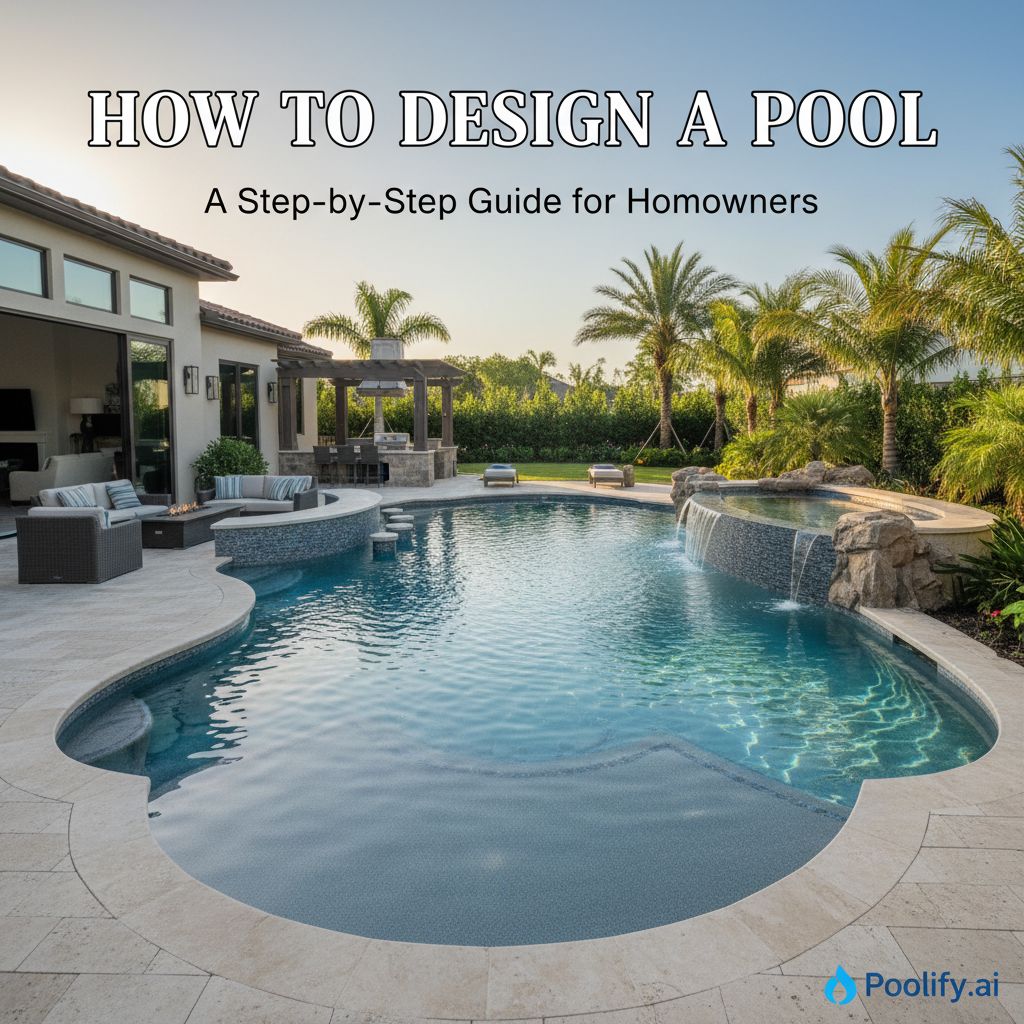
How to design a pool is one of the most common questions homeowners ask when considering a backyard upgrade. Designing a pool involves more than choosing a shape or browsing inspiration photos. It requires understanding your space, clarifying how the pool will be used, and making decisions that balance style, function, and budget.
This guide breaks down how to design a pool step by step, helping you move from early ideas to a clear, build-ready concept.
Step 1: Define How You Want to Use the Pool
Before focusing on layout or features, the first step in how to design a pool is defining its primary purpose. Pools are used differently depending on household needs.
Common use cases include:
- Relaxation and lounging
- Family recreation
- Entertaining guests
- Exercise or lap swimming
Knowing how you plan to use the pool guides nearly every design decision that follows.
Step 2: Evaluate Your Backyard Space
Understanding your backyard is critical when learning how to design a pool. Yard size, shape, and surroundings directly affect what’s realistic.
Key factors to evaluate include:
- Overall yard dimensions
- Distance from the house
- Slope or elevation changes
- Existing patios, decks, or landscaping
- Privacy from neighbors
Accurate measurements and photos provide a strong foundation for pool design.
Step 3: Choose a Pool Shape That Fits the Space
One of the most visible steps in how to design a pool is selecting a shape that works with your yard layout.
Rectangular pools work well in modern or narrow spaces, while freeform designs often suit larger or more natural settings. Plunge pools are popular for compact yards, and lap pools are ideal for exercise-focused use.
The right shape complements the yard rather than competing with it.
Step 4: Decide on Pool Placement
Pool placement plays a major role in usability and visual balance. When considering how to design a pool, placement should feel intentional and convenient.
Important placement considerations include:
- Access from the house
- Views from indoor living spaces
- Sun exposure throughout the day
- Clearance for walkways and furniture
Good placement improves both daily use and long-term satisfaction.
Step 5: Select Features That Support the Design
Features should enhance the pool design rather than complicate it. In the process of how to design a pool, features are best added after the layout is established.
Common pool features include:
- Steps and entry points
- Baja shelves
- Built-in seating
- Lighting
- Water features
Choosing features with purpose keeps the design clean and functional.
Step 6: Think About Budget Early
Budget is an unavoidable part of how to design a pool. Design decisions directly affect cost, so it’s important to set realistic expectations early.
Factors that influence pool cost include:
- Pool size and depth
- Shape complexity
- Materials
- Features and add-ons
- Site conditions
A clear budget helps prioritize design elements and avoid overextending.
Step 7: Visualize the Pool Design
One of the biggest challenges in how to design a pool is visualization. Many homeowners struggle to imagine how a pool will actually look in their yard.
Visualization tools allow you to:
- See scale and proportion accurately
- Compare multiple layouts
- Identify potential design issues early
Seeing the design in context makes it easier to refine ideas before construction.
Step 8: Refine and Simplify the Design
As you continue learning how to design a pool, refinement becomes key. Simplifying the design often leads to better results.
Look for:
- Unnecessary features that add complexity
- Tight spacing that reduces usability
- Elements that don’t align with the pool’s purpose
A refined design feels cohesive and intentional.
Step 9: Prepare to Communicate With Builders
A well-defined design makes conversations with builders more productive. Understanding how to design a pool allows you to communicate clearly and evaluate proposals confidently.
Builders can provide better guidance when you bring:
- A clear layout concept
- Feature priorities
- Visual references
- Budget expectations
Preparation reduces misalignment and delays.
See Your Dream Pool in Your Actual Backyard
Upload a photo and get an AI-designed pool visualization in 10 seconds. 3 free designs, no login required.
Try Poolify Free →Step 10: Use Technology to Improve the Process
Modern tools are changing how homeowners approach how to design a pool. AI-based design platforms can generate realistic pool concepts using real backyard photos.
These tools help:
- Reduce guesswork
- Speed up planning
- Improve design confidence
Technology makes pool design more accessible, even for first-time homeowners.
Final Thoughts on How to Design a Pool
Learning how to design a pool empowers homeowners to make informed, confident decisions. By understanding your space, clarifying goals, and visualizing ideas early, you can move through the design process with clarity.
Whether you’re exploring options or preparing for construction, knowing how to design a pool is the foundation of a successful backyard pool project.
