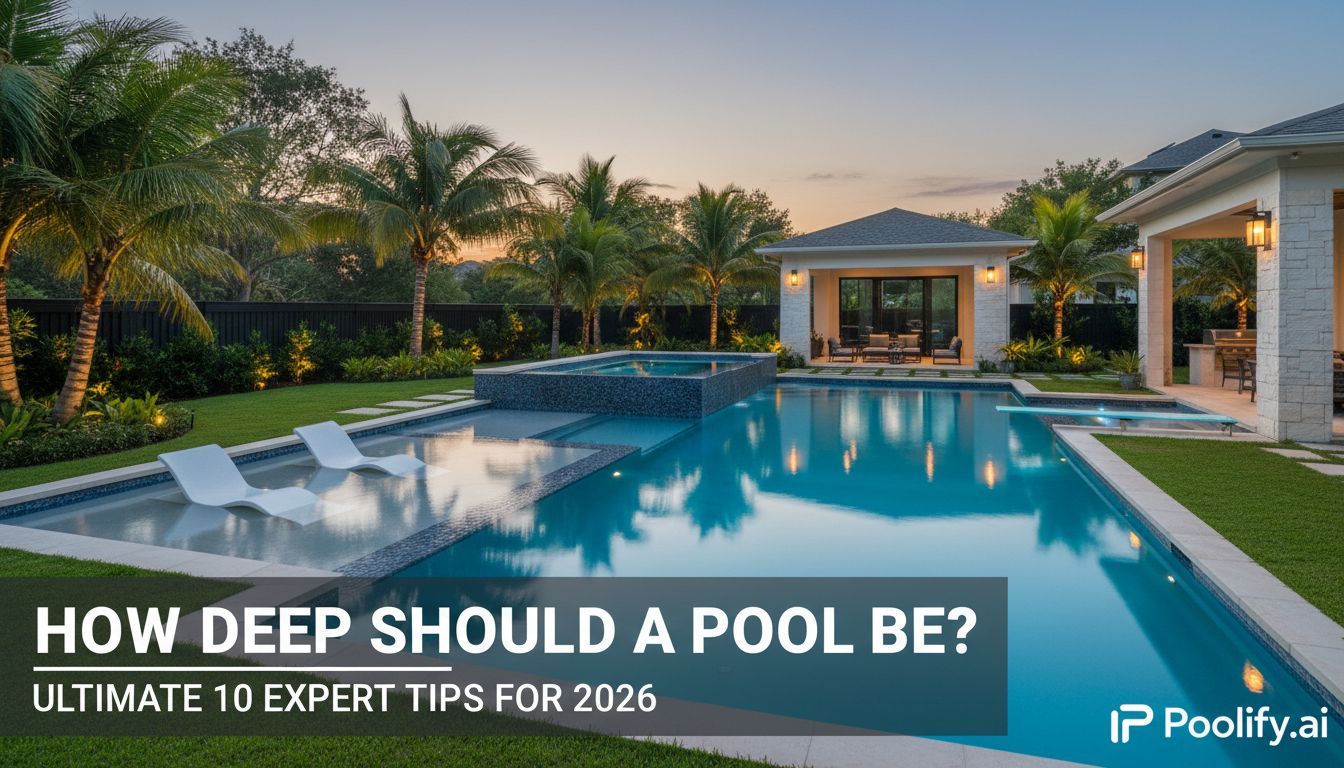
Introduction: Finding the Perfect Pool Depth for Your Needs
When planning a swimming pool installation in 2026, one of the most critical decisions you’ll face is determining how deep should a pool be. This seemingly simple question has far-reaching implications for safety, functionality, construction costs, and long-term enjoyment. The ideal pool depth depends on multiple factors including intended use, user demographics, available space, and budget constraints. Whether you’re envisioning a family-friendly recreation space, a lap swimming facility, or a diving paradise, understanding pool depth standards will help you make an informed decision that serves your household for decades to come.
Modern pool design in 2026 emphasizes versatility and safety, with many homeowners opting for variable-depth configurations that accommodate multiple activities. This comprehensive guide explores the essential considerations for determining how deep should a pool be, providing expert insights on depth requirements for different activities, safety regulations, cost implications, and design strategies that maximize your investment.
Standard Pool Depth Guidelines for 2026
Understanding industry standards provides a foundation for your pool depth decisions. In 2026, residential pools typically range from 3 feet to 8 feet deep, with most installations featuring variable depths to accommodate diverse activities and user groups.
Shallow End Specifications
The shallow end of a pool typically ranges from 3 to 4 feet deep. This depth is ideal for young children, non-swimmers, and adults who prefer standing in water while socializing. According to the Consumer Product Safety Commission’s Pool Safely campaign, shallow areas should be clearly marked and designed with gradual slopes to prevent unexpected depth changes that could compromise safety.
For families with small children, a dedicated wading area of 2 to 3 feet provides a safe play zone where parents can maintain close supervision. These shallow zones have become increasingly popular in 2026 residential designs, often incorporating built-in benches, splash features, or sun shelves that enhance functionality.
Deep End Considerations
When determining how deep should a pool be at its deepest point, consider your intended activities. Standard deep ends range from 5 to 6 feet for general swimming and recreation. This depth allows adults to tread water comfortably without touching bottom while remaining shallow enough to discourage dangerous diving attempts from the deck.
For pools without diving boards, a maximum depth of 6 feet typically suffices for most recreational activities including underwater swimming, pool games, and exercise routines. This moderate depth also reduces construction costs, heating expenses, and chemical requirements compared to deeper alternatives.
How Deep Should a Pool Be for Diving?
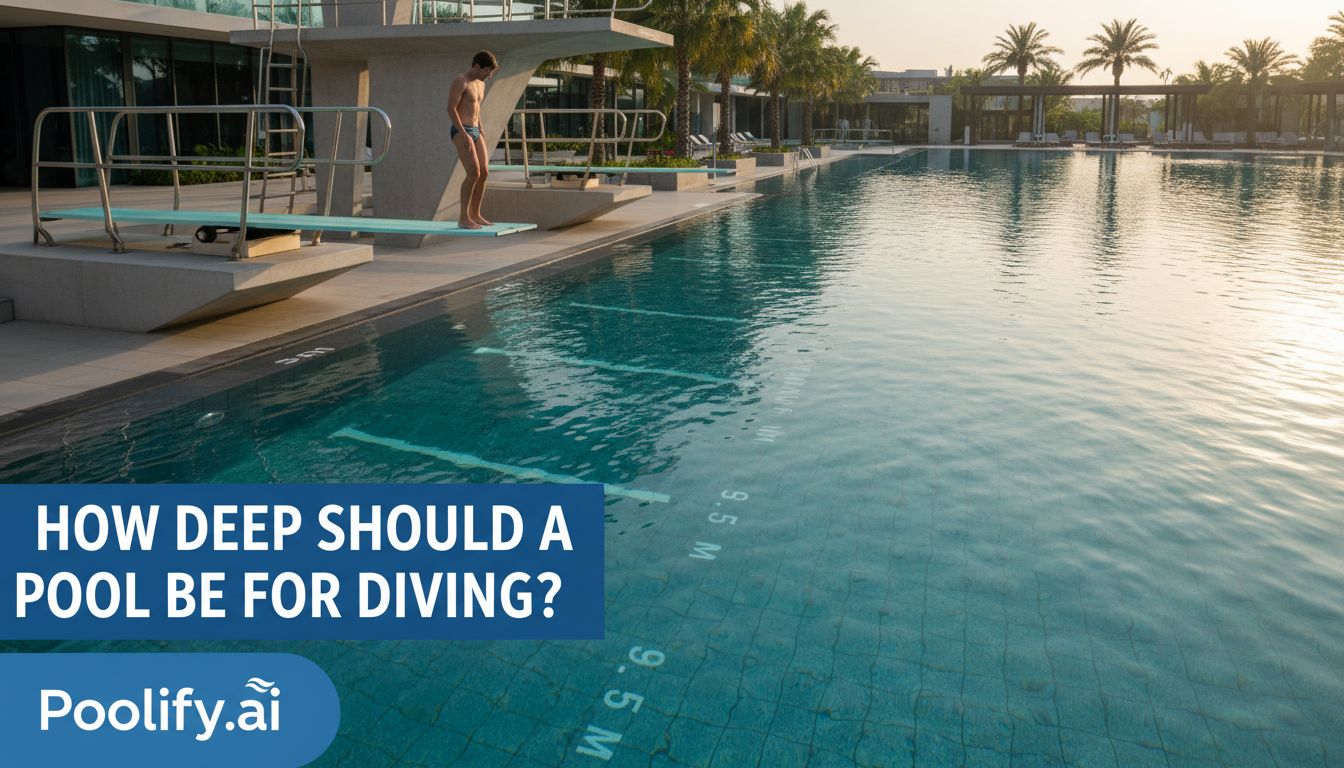
Diving capabilities significantly influence pool depth requirements. If you’re planning to install diving equipment, understanding minimum depth standards is crucial for preventing serious injuries.
Diving Board Depth Requirements
For a standard residential diving board, the pool should be at least 8 feet deep at the board’s location, extending this depth for a minimum of 8 to 10 feet in front of the board and 4 to 5 feet to each side. The USA Swimming organization recommends even greater depths for competitive diving facilities, but residential installations can safely accommodate recreational diving with these minimum specifications.
In 2026, many homeowners are reconsidering diving boards due to liability concerns and space constraints. The question of how deep should a pool be becomes more flexible when diving equipment is excluded, allowing for shallower, more cost-effective designs that still provide excellent recreational value.
Alternative Diving Solutions
If you desire diving capabilities without committing to an 8-foot depth, consider jump rocks or deck-level entries that accommodate safe jumping from lower heights. These features require only 6 to 7 feet of depth and provide exciting entry options for teenagers and adults while reducing construction costs and ongoing maintenance expenses.
Pool Depth for Different Activities and Users
The optimal answer to how deep should a pool be varies dramatically based on your household’s primary activities and the ages of regular users.
Family Recreation Pools
For families with children of various ages, a variable-depth design proves most practical. A typical family pool configuration features a shallow end of 3 to 4 feet transitioning gradually to a deep end of 5 to 6 feet. This arrangement accommodates young children in supervised shallow areas while providing sufficient depth for teenagers and adults to swim, play water volleyball, or enjoy floating activities.
The gradual slope between shallow and deep ends should span at least 10 to 15 feet, creating a comfortable transition that prevents sudden drop-offs. This design consideration addresses safety concerns while maximizing usable space for activities requiring intermediate depths.
Lap Swimming and Exercise
When determining how deep should a pool be for lap swimming, consistency matters more than absolute depth. Competitive swimmers and fitness enthusiasts typically prefer uniform depths of 4 to 5 feet throughout the pool, allowing them to touch bottom during rest intervals while providing adequate depth for efficient stroke mechanics.
For serious lap swimmers, a dedicated lap pool with consistent 4-foot depth offers optimal functionality. This depth accommodates flip turns, reduces water resistance compared to shallower pools, and maintains comfortable standing depth for interval training. Many 2026 designs incorporate lap lanes within larger recreational pools, using depth variations to define different activity zones.
Water Sports and Games
Pool games like volleyball, basketball, and water polo function best in depths of 4 to 5 feet, where players can touch bottom when needed but have sufficient depth for dynamic movement. If your primary interest involves competitive water sports, consider how deep should a pool be to accommodate equipment installation and player safety during vigorous activity.
Safety Considerations for Pool Depth
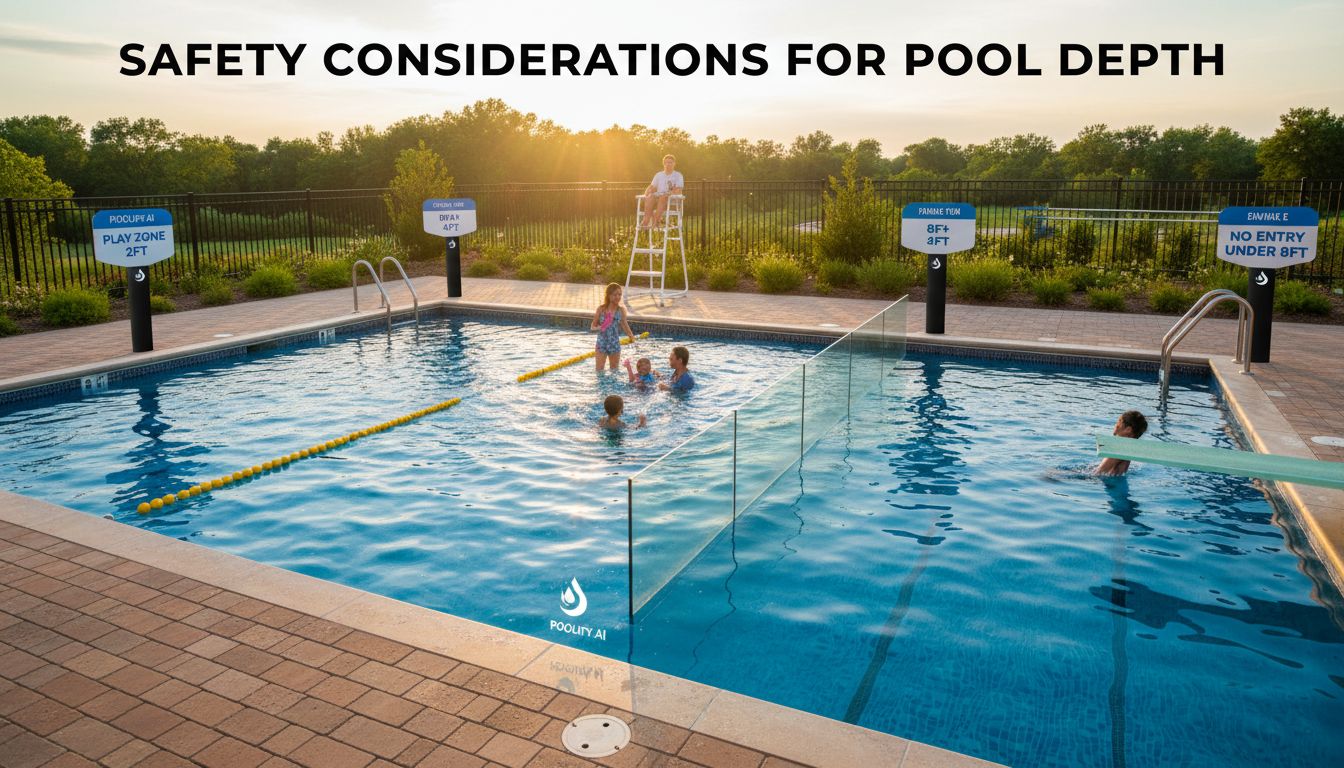
Safety should be the paramount concern when deciding how deep should a pool be for your property. Proper depth planning prevents accidents and creates an environment where all users can enjoy the water confidently.
Drowning Prevention
Contrary to common assumptions, drowning incidents occur in all depths, including shallow water. However, pools with clearly defined shallow areas allow non-swimmers and children to enjoy water activities in controlled environments. Installing depth markers at regular intervals, using contrasting colors to distinguish depth zones, and maintaining clear visibility to the pool bottom all contribute to safer swimming environments.
For households with young children, limiting maximum depth to 5 feet eliminates the temptation for unsupervised diving while providing adequate depth for family recreation. This approach to determining how deep should a pool be prioritizes safety without sacrificing functionality for most residential applications.
Diving Injury Prevention
Shallow water diving causes thousands of spinal cord injuries annually. If your pool lacks proper depth for diving (minimum 8 feet), clearly communicate this limitation through signage, deck markings, and household rules. Many 2026 pool designs intentionally avoid depths exceeding 6 feet to discourage diving attempts and reduce liability exposure.
Consider installing safety features like pool safety equipment including non-slip surfaces, grab rails, and adequate lighting to enhance safety across all depth zones. These additions complement smart depth planning to create a comprehensively safe swimming environment.
Cost Implications of Pool Depth
Understanding how pool depth affects construction and operational costs helps you make financially sound decisions that align with your budget and long-term ownership plans.
Construction Cost Factors
Pool depth directly impacts excavation requirements, structural engineering, and material quantities. Each additional foot of depth increases construction costs by approximately 10 to 15 percent due to increased concrete, reinforcement, and excavation expenses. When considering how deep should a pool be, balance desired functionality against budget realities.
A standard 6-foot deep end costs significantly less to construct than an 8-foot diving pool, potentially saving $5,000 to $15,000 on a typical residential installation. For many families, this cost difference justifies eliminating diving capabilities in favor of a shallower, more economical design that still accommodates swimming, games, and recreation.
Operational Cost Considerations
Deeper pools require more water to fill, more chemicals to maintain proper balance, and more energy to heat and circulate. A pool with a 6-foot maximum depth uses approximately 20 to 30 percent less water and chemicals than an 8-foot deep pool of similar surface area. These ongoing savings accumulate substantially over the pool’s lifetime, making moderate depths increasingly attractive in 2026’s cost-conscious market.
Heating costs particularly favor shallower designs, as each additional foot of depth increases the water volume requiring temperature maintenance. For year-round pool users or those in cooler climates, limiting depth to 5 or 6 feet can reduce annual heating expenses by hundreds of dollars compared to deeper alternatives.
Design Strategies for Optimal Pool Depth
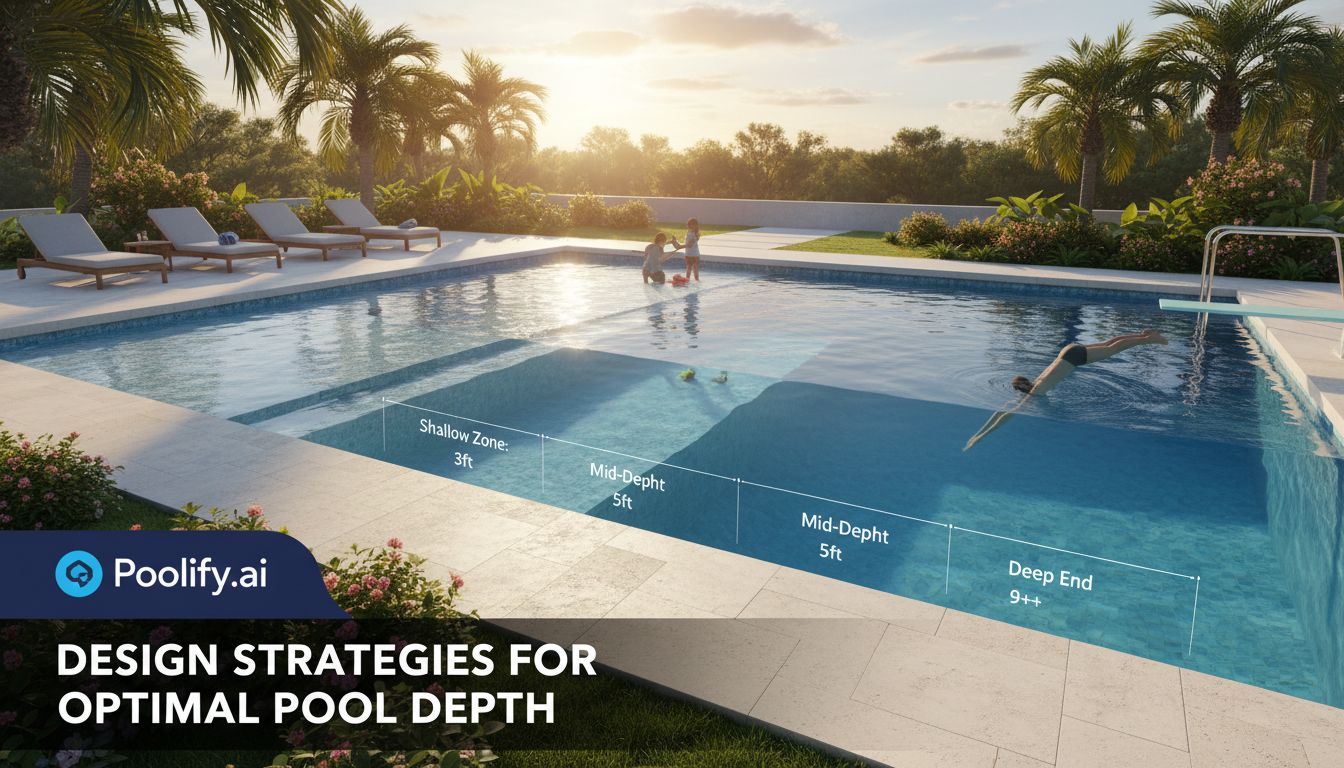
Creative design approaches allow you to maximize functionality while addressing the question of how deep should a pool be for your specific situation.
Variable Depth Configurations
Most residential pools in 2026 feature variable depths that accommodate multiple user groups and activities. The classic design transitions from a 3-foot shallow end to a 6-foot deep end over the pool’s length, creating distinct zones for different purposes. This configuration answers how deep should a pool be by providing options rather than committing to a single depth.
Advanced designs incorporate multiple depth zones, including beach entries that gradually slope from zero depth, dedicated play areas of 3 feet, general swimming zones of 4 to 5 feet, and deep areas of 6 feet for more advanced swimmers. This multi-zone approach maximizes versatility and ensures the pool serves diverse needs throughout its lifespan.
Space-Efficient Depth Planning
For smaller properties, determining how deep should a pool be involves balancing depth against surface area. A compact pool with 4 to 5 feet of consistent depth often provides better functionality than a larger pool with extreme depth variations that consume valuable yard space. Consider your lot dimensions, setback requirements, and desired deck space when planning depth configurations.
Vertical space sometimes substitutes for horizontal area in creative designs. A slightly deeper pool with a smaller footprint can accommodate swimming and recreation while preserving yard space for landscaping, entertaining areas, or future additions. Work with experienced designers to optimize the depth-to-area ratio for your specific property constraints.
Future-Proofing Your Depth Decision
When deciding how deep should a pool be, consider how your household will evolve over the coming decades. Young families might prioritize shallow play areas now but will eventually need deeper sections as children grow into teenagers and adults. Conversely, empty nesters might prefer moderate depths that accommodate exercise and recreation without the maintenance burden of excessive volume.
The most successful 2026 pool designs anticipate changing needs by incorporating flexible depth configurations that serve multiple life stages. A well-planned variable-depth pool remains functional and enjoyable whether your household includes toddlers, teenagers, or retirees, maximizing your long-term return on investment.
Regional Considerations and Climate Impact
Geographic location influences how deep should a pool be through climate factors, local regulations, and regional preferences that vary across different areas.
Climate and Seasonal Use
In warmer climates where pools see year-round use, deeper sections provide cooler water during hot summer months, offering relief from extreme temperatures. Conversely, in regions with shorter swimming seasons, shallower pools heat more quickly in spring and maintain comfortable temperatures more efficiently, extending the usable season without excessive heating costs.
Consider your local climate when determining pool depth. Shallow pools of 4 to 5 feet work excellently in moderate climates, while areas experiencing extreme heat might benefit from 6 to 7 foot depths that provide cooler deep water during peak summer temperatures.
Local Building Codes and Regulations
Municipal regulations sometimes dictate minimum and maximum depths, safety feature requirements, and barrier specifications based on pool depth. Before finalizing your decision on how deep should a pool be, consult local building departments to ensure compliance with applicable codes. Some jurisdictions require additional safety measures for pools exceeding certain depths, potentially affecting your project budget and timeline.
Zoning restrictions might also limit excavation depth based on property characteristics, water table levels, or utility line locations. Professional pool contractors familiar with local regulations can help you navigate these requirements while optimizing depth for your intended use.
Frequently Asked Questions About Pool Depth
What is the ideal depth for a backyard family pool?
For most families, a pool ranging from 3 to 4 feet in the shallow end to 5 to 6 feet in the deep end provides optimal versatility. This configuration accommodates young children in supervised shallow areas while offering sufficient depth for teenage and adult swimming, games, and recreation. The question of how deep should a pool be for families balances safety, functionality, and cost-effectiveness, with this range meeting most households’ needs without excessive construction or maintenance expenses.
Can you add a diving board to an existing pool?
Adding a diving board to an existing pool requires minimum depth specifications of 8 feet at the board location, extending this depth for adequate distance in front and to the sides. Most residential pools lack sufficient depth for safe diving board installation. If your existing pool doesn’t meet these requirements, consider alternative features like jump rocks or slide installations that provide excitement with lower depth requirements. Retrofitting a pool for diving depth is rarely cost-effective compared to incorporating diving capabilities during initial construction.
How does pool depth affect maintenance costs?
Deeper pools contain more water volume, requiring proportionally more chemicals for proper balance, more energy for circulation and heating, and longer filtration cycles to maintain water quality. A pool with 8-foot depth uses approximately 25 to 35 percent more chemicals and energy than a comparable pool with 5-foot maximum depth. When considering how deep should a pool be, factor these ongoing operational costs into your decision, as they accumulate significantly over the pool’s lifetime. Learn more about pool maintenance costs for comprehensive budget planning.
Is a uniform depth pool better than variable depth?
Uniform depth pools excel for specific purposes like lap swimming, water aerobics, or competitive training where consistent depth throughout enhances functionality. However, variable depth designs serve most residential applications better by accommodating diverse users and activities. Families benefit from shallow areas for young children and deeper sections for older swimmers, while uniform depth pools suit dedicated athletes or fitness enthusiasts. The answer to how deep should a pool be depends on your primary use case, with variable depth offering greater versatility for mixed-use scenarios.
What depth is safest for young children?
For young children under 8 years old, depths of 2 to 3 feet provide safe play areas where they can stand comfortably while developing water confidence under adult supervision. Dedicated wading areas or beach entries that gradually slope from zero depth offer the safest introduction to water activities for toddlers and early elementary-age children. When planning how deep should a pool be for families with young children, prioritize shallow zones with clear visual boundaries and easy adult access for constant supervision. Explore additional child pool safety tips for comprehensive protection strategies.
Key Takeaways: Determining How Deep Should a Pool Be
- Standard residential pools range from 3 to 6 feet deep, with variable depth configurations accommodating diverse activities and user groups more effectively than uniform depths for most family applications.
- Diving capabilities require minimum 8-foot depths with specific dimensional requirements, significantly increasing construction costs and ongoing maintenance expenses compared to shallower recreational designs.
- Safety considerations should drive depth decisions, with clearly marked depth zones, gradual transitions between shallow and deep areas, and appropriate safety equipment reducing accident risks across all pool depths.
- Deeper pools cost substantially more to build, fill, heat, and maintain, with each additional foot of depth increasing both construction expenses and ongoing operational costs by 10 to 15 percent or more.
- Variable depth designs maximize versatility, serving multiple life stages and activity types through dedicated shallow play areas, intermediate swimming zones, and deeper sections for advanced users, providing the best long-term value for most households.
See Your Dream Pool in Your Actual Backyard
Upload a photo and get an AI-designed pool visualization in 10 seconds. 3 free designs, no login required.
Try Poolify Free →Conclusion: Making the Right Depth Decision for Your Pool
Determining how deep should a pool be requires careful consideration of your household’s unique needs, budget constraints, safety priorities, and long-term plans. While industry standards provide helpful guidelines, the optimal depth for your pool depends on intended activities, user demographics, property characteristics, and regional factors that vary significantly across different situations.
For most residential applications in 2026, a variable-depth configuration ranging from 3 to 4 feet in shallow areas to 5 to 6 feet in deep sections offers the best balance of safety, functionality, and cost-effectiveness. This design accommodates family recreation, swimming, games, and exercise without the excessive construction costs and ongoing maintenance expenses associated with deeper diving pools that many households rarely utilize to their full potential.
Ultimately, the question of how deep should a pool be has no universal answer. Success comes from aligning depth specifications with your specific requirements, consulting experienced pool professionals who understand local conditions and regulations, and planning for how your needs might evolve over the decades you’ll enjoy your investment. By carefully weighing the factors outlined in this guide, you can confidently select a pool depth that serves your household excellently while maximizing safety, functionality, and long-term value.
Whether you’re planning a shallow play pool for young children, a moderate-depth recreation facility for family enjoyment, or a deeper design accommodating diving and advanced swimming, thoughtful depth planning ensures your pool becomes a cherished feature that enhances your property and lifestyle for years to come. For additional guidance on pool planning and installation, explore our comprehensive resources on pool design strategies and construction best practices.
References
- Consumer Product Safety Commission (CPSC) – Pool Safely Campaign: https://www.cpsc.gov/Safety-Education/Safety-Education-Centers/Pool-Safely
- USA Swimming – Facility Standards and Guidelines: https://www.usa-swimming.org/
