Finding the Perfect Pool Size for Your Family of Four
Determining what size pool for family of 4 requires balancing recreation needs, available space, and budget considerations. In 2026, families are making smarter decisions about pool investments by understanding how size impacts usability, maintenance costs, and long-term satisfaction. The right pool dimensions can transform your backyard into a recreational haven while avoiding the common pitfall of building too large or too small for your actual needs.
Most families of four find that pools between 300 and 600 square feet provide adequate space for swimming, playing, and relaxing together. However, the ideal size depends on multiple factors including your children’s ages, how you plan to use the pool, and your property dimensions. This comprehensive guide will help you navigate the decision-making process with confidence and clarity.
Understanding Standard Pool Dimensions for Four-Person Families
When considering what size pool for family of 4, you’ll encounter several standard configurations that work well for small to medium-sized families. The most popular options balance functionality with manageable maintenance requirements.
Small Family Pools: 300-400 Square Feet
Compact pools measuring 12×25 feet or 10×30 feet (300-375 square feet) work surprisingly well for families with younger children. These dimensions provide enough room for supervised play, basic swimming activities, and cooling off during hot weather. The smaller footprint means lower installation costs, reduced chemical usage, and easier maintenance schedules that busy families appreciate.
These pools typically cost 30-40% less to heat and maintain annually compared to larger options. For families prioritizing budget efficiency while still enjoying pool ownership, this size range represents an excellent entry point. According to the CDC’s residential pool guidelines, proper supervision remains essential regardless of pool size, making these compact designs perfectly safe for family use.
Medium Family Pools: 400-600 Square Feet
The sweet spot for what size pool for family of 4 often falls in the 15×30 feet or 16×32 feet range (450-512 square feet). These dimensions accommodate simultaneous activities—parents can relax in one area while children play in another. You’ll have sufficient space for pool games, floating devices, and comfortable swimming without feeling cramped.
Medium-sized pools offer versatility as your family grows and needs change. Teenagers can practice swimming strokes, younger children can play safely in designated shallow areas, and adults can exercise or unwind after work. This size category represents the most popular choice among four-person households in 2026.
Large Family Pools: 600-800 Square Feet
Families planning to entertain frequently or those with competitive swimmers might consider pools in the 18×36 feet or 20×40 feet range (648-800 square feet). While exceeding typical needs for daily family use, these larger pools provide space for pool parties, lap swimming, and water volleyball or basketball.
However, larger pools require proportionally more chemicals, energy for heating and filtration, and time for maintenance. Consider whether the additional space justifies these ongoing expenses based on your actual usage patterns rather than occasional entertaining needs.
Depth Considerations for Family Pool Safety and Functionality
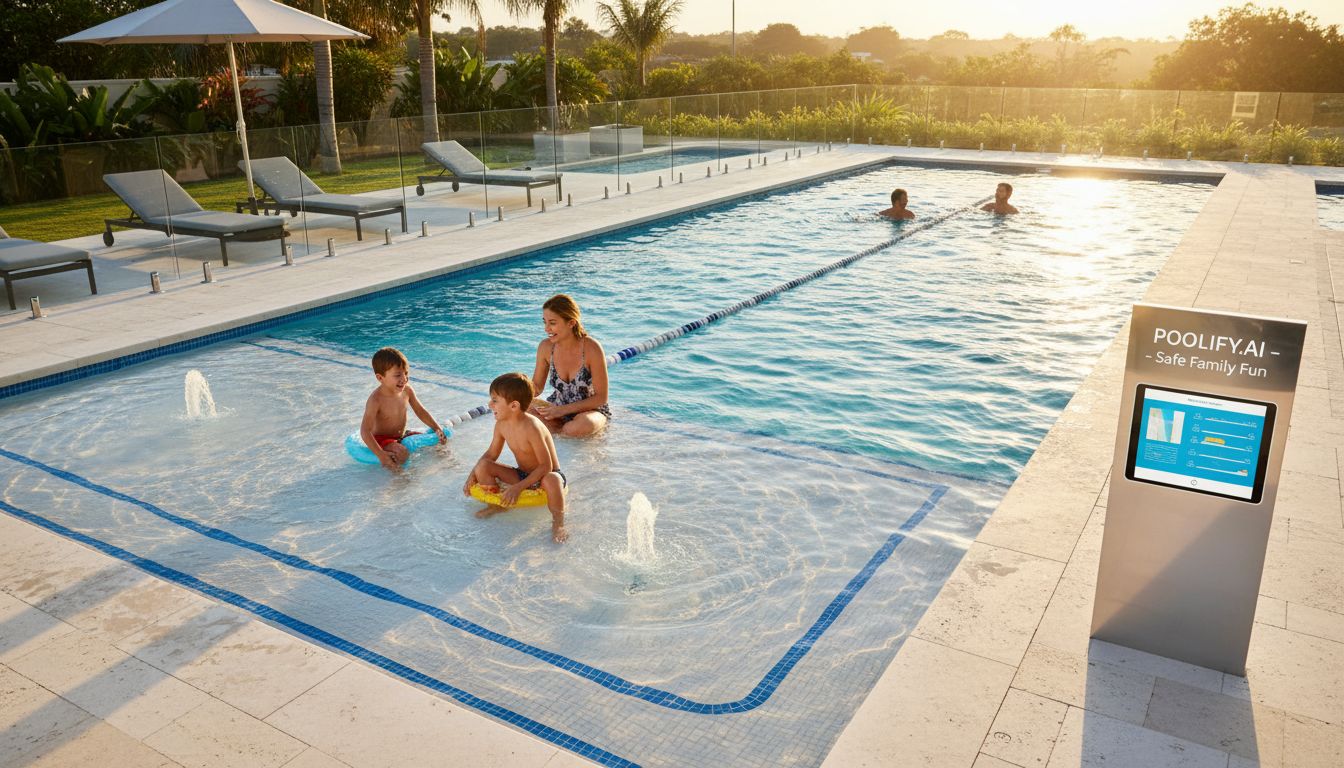
Pool depth matters as much as surface area when determining what size pool for family of 4 will work best. The right depth configuration ensures safety for younger children while providing adequate water for adults and older kids.
Shallow End Requirements
Family pools should include a shallow area between 3 and 4 feet deep. This depth allows younger children to stand comfortably while learning to swim and provides a safe zone for supervised play. Parents can stand easily while supervising, creating peace of mind during pool time.
Approximately 40-50% of your pool’s total area should consist of shallow water for optimal family functionality. This configuration supports the widest range of activities and age groups simultaneously.
Deep End Specifications
For families wanting diving capabilities, the deep end must reach at least 8-9 feet to meet safety standards. However, many family pools in 2026 skip diving boards entirely, opting instead for maximum depths of 5-6 feet. This approach reduces construction costs, lowers water volume (and associated heating costs), and maintains safety while still allowing adults to swim comfortably.
If your children are under 10 years old, consider whether a diving board will see enough use to justify the additional depth, excavation costs, and safety considerations. Many families find that slides, water features, or play structures provide more entertainment value for young children.
What Size Pool for Family of 4: Space Planning and Property Considerations
Your available yard space significantly influences what size pool for family of 4 you can realistically install. Proper planning ensures adequate room for the pool, required safety features, and comfortable outdoor living areas.
The 50% Rule for Backyard Planning
Pool professionals recommend dedicating no more than 50% of your total backyard space to the pool itself. This guideline ensures sufficient room for pool decking, landscaping, seating areas, and lawn space. A pool that dominates your entire yard can feel overwhelming and limit other outdoor activities your family enjoys.
For example, if your backyard measures 1,200 square feet, plan for a pool no larger than 600 square feet. This leaves 600 square feet for decking (typically 3-4 feet around the pool perimeter), furniture, grilling areas, and green space.
Required Setbacks and Safety Zones
Local building codes typically require pools to sit at least 5-10 feet from property lines and structures. Check your municipality’s specific requirements before finalizing size decisions. These setbacks ensure adequate access for maintenance, prevent water damage to structures, and maintain good neighbor relations.
Additionally, most jurisdictions require pool fencing with self-closing, self-latching gates. Factor in 3-4 feet beyond your pool perimeter for fencing installation when calculating total space requirements.
Access and Equipment Space
Reserve space for pool equipment including pumps, filters, and heaters. These systems typically require a 4×6 foot area with easy access for maintenance and repairs. Strategic placement keeps equipment noise away from primary living areas while maintaining operational efficiency.
Ensure adequate access width (minimum 4 feet) for construction equipment during installation and for future maintenance needs. Overlooking access considerations can complicate repairs and increase service costs down the road.
Budget Impact: How Pool Size Affects Overall Costs
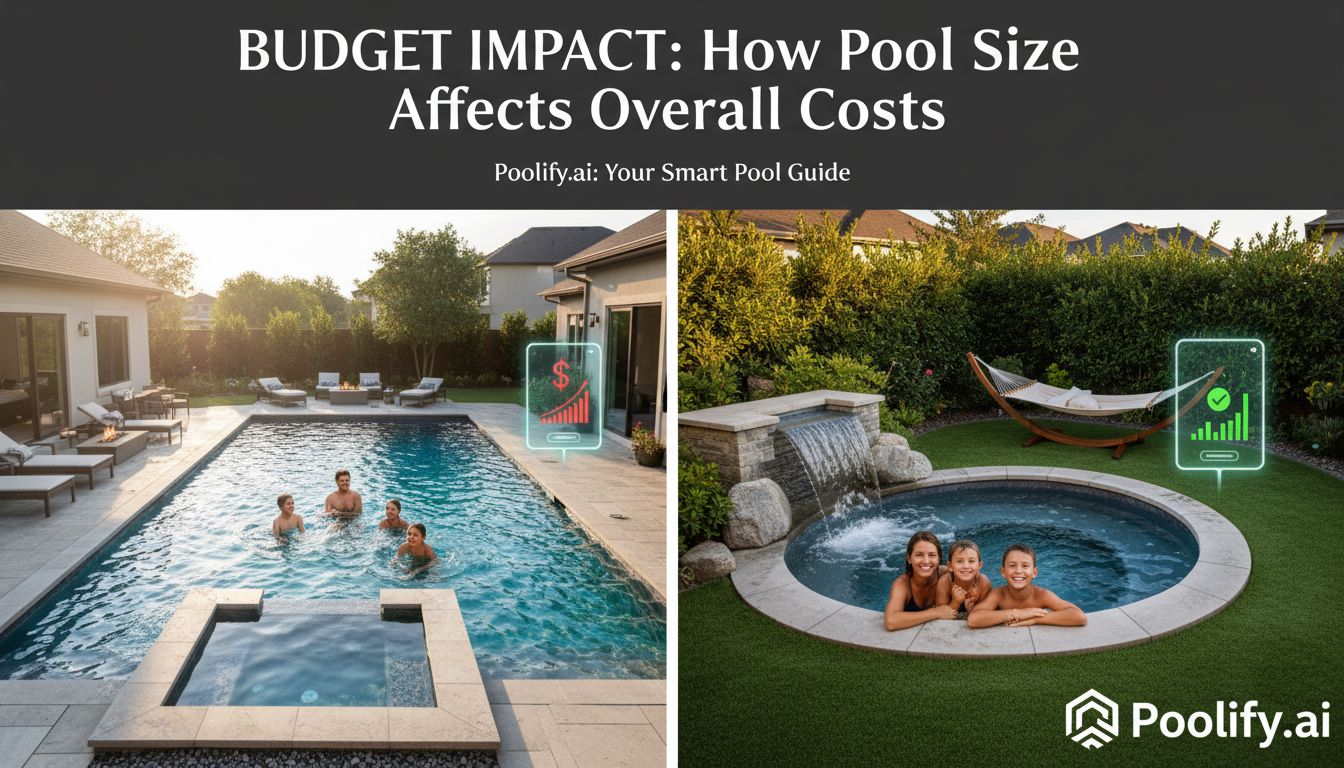
Understanding the financial implications of different pool sizes helps families make informed decisions about what size pool for family of 4 fits their budget both initially and long-term.
Installation Cost Variations
In 2026, inground pool installation costs range from $40,000 to $100,000+ depending on size, materials, and features. A 400-square-foot pool typically costs $45,000-$60,000 installed, while a 600-square-foot pool runs $65,000-$85,000. Each additional 100 square feet adds approximately $10,000-$15,000 to the base price.
These figures include excavation, materials, basic equipment, and standard finishes. Upgrading to premium finishes, adding water features, or installing heating systems increases costs proportionally. Families should budget an additional 10-20% beyond the base quote for unexpected site conditions or desired upgrades discovered during construction.
Annual Operating Expenses
Pool size directly impacts ongoing costs. A 400-square-foot pool averages $1,200-$1,800 annually for chemicals, electricity, water, and routine maintenance. A 600-square-foot pool increases these costs to $1,800-$2,500 yearly. Heating adds $500-$1,500 annually depending on your climate and usage patterns.
Larger pools require more chemicals to maintain proper water balance, more energy to circulate and filter water, and more time for cleaning and maintenance. These incremental costs accumulate significantly over the 20-30 year lifespan of a pool.
Long-Term Value Considerations
Right-sized pools enhance property value, while oversized pools can actually deter potential buyers. Real estate experts note that pools sized appropriately for the property and neighborhood typically return 50-70% of installation costs upon resale. Pools that dominate small yards or seem disproportionate to home size may return less or even reduce buyer interest.
Consider your long-term homeownership plans when deciding what size pool for family of 4 makes financial sense. If you plan to sell within 5-10 years, choose dimensions that appeal to the broadest buyer pool rather than highly customized configurations.
Activity-Based Pool Sizing for Family Recreation
How your family plans to use the pool should heavily influence size decisions. Different activities require different spatial configurations for optimal enjoyment and safety.
Recreational Swimming and Play
For general recreational use—floating, playing catch, using pool toys—a minimum of 75-100 square feet per person provides comfortable space. For a family of four, this translates to 300-400 square feet. This allows everyone to be in the pool simultaneously without feeling crowded, while still maintaining an intimate, manageable pool size.
Families with young children often prioritize shallow play areas with room for water toys, floating devices, and games. These activities don’t require extensive depth but benefit from adequate surface area to spread out safely.
Lap Swimming and Exercise
If fitness swimming factors into your decision about what size pool for family of 4, you’ll need different dimensions. Lap swimming requires length rather than width—minimum 30 feet for abbreviated laps, ideally 40-45 feet for more satisfying swim workouts.
A 12×40-foot or 14×42-foot pool (480-588 square feet) accommodates lap swimming while remaining appropriately sized for family use. Consider installing a swim jet or resistance system in shorter pools to enable stationary swimming workouts without requiring extensive length.
Entertainment and Social Gatherings
Families who frequently host pool parties might lean toward larger dimensions. However, remember that most guests congregate in shallow areas and on pool decking rather than swimming actively. Investing in expanded deck space, comfortable seating, and shade structures often provides better entertainment value than simply enlarging the pool.
A well-designed 450-500 square foot pool with generous decking accommodates parties more effectively than a 700-square-foot pool with minimal surrounding space. Learn more about creating functional pool deck spaces that enhance your entertainment areas.
Age-Appropriate Pool Sizing Strategies
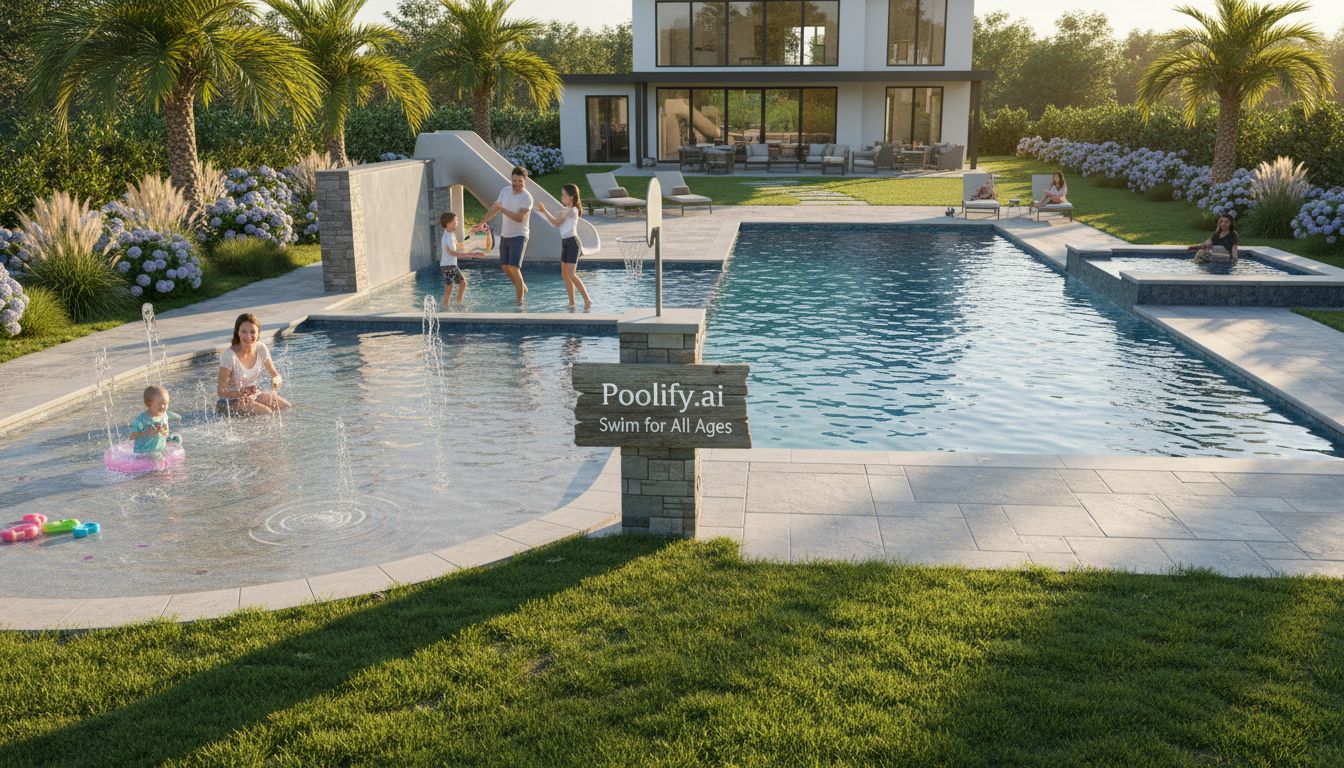
Your children’s current ages and how they’ll grow over the next decade should inform decisions about what size pool for family of 4 will serve your family best throughout different life stages.
Families with Young Children (Ages 2-8)
Parents with toddlers and young elementary-age children benefit most from pools emphasizing shallow areas and safety features. A 350-450 square foot pool with 50-60% shallow water (3-4 feet deep) provides ample space for supervised play while remaining manageable for constant monitoring.
Consider incorporating built-in steps, beach entries, or play shelves (6-12 inch depths) that allow the youngest family members to enjoy water safely. These features add more value than additional square footage for families in this stage.
Families with Tweens and Teens (Ages 9-17)
Older children want space for more active swimming, diving, and pool games. Families with tweens and teens often find that 450-600 square foot pools with varied depths accommodate evolving needs. These dimensions support water volleyball, basketball, diving competitions, and general horseplay that older kids enjoy.
Teenagers may also use pools for fitness training or competitive swim practice. If this applies to your family, prioritize length over width and consider deeper water in at least one section.
Planning for Future Needs
Children grow quickly, and pool preferences evolve. A 4-year-old content splashing in shallow water becomes a 14-year-old wanting to dive and swim laps. When determining what size pool for family of 4 makes sense, project forward 5-10 years to ensure your investment continues meeting family needs.
However, avoid the trap of building for a brief teenage phase if your children will leave for college within a few years. Balance future needs with realistic long-term usage patterns, including your post-empty-nest plans for the pool.
Regional Climate Considerations for Pool Sizing
Your geographic location and climate significantly impact how you’ll use your pool and therefore what size makes practical sense for your family of four.
Year-Round Swimming Climates
Families in warm climates like Florida, Southern California, Arizona, and Texas use pools 8-12 months annually. This extended usage justifies investing in larger pools since the cost-per-use remains reasonable. A 500-600 square foot pool provides variety and prevents boredom when you’re swimming nearly year-round.
Year-round swimmers should also consider heating costs carefully, as maintaining comfortable temperatures during cooler months adds significantly to operating expenses. According to Department of Energy guidelines, pool heating represents one of the largest energy expenses for pool owners in most climates.
Seasonal Swimming Regions
Families in areas with distinct seasons (Northeast, Midwest, Pacific Northwest) typically use pools only 3-5 months annually. In these regions, smaller pools (350-450 square feet) make more financial sense since the pool sits unused for much of the year. The reduced installation and maintenance costs better align with limited seasonal usage.
Seasonal pool owners should prioritize features that maximize enjoyment during the short swimming season—heating systems, lighting for evening swims, and comfortable surrounding spaces that extend usable hours per day.
Water Temperature and Comfort
Smaller pools heat more quickly and maintain temperature more efficiently than larger pools. If you live in a climate with cool evenings or plan to extend your swimming season with heating, a more compact pool (400-450 square feet) provides better temperature control and lower energy costs.
Larger water volumes take longer to heat initially and lose heat more rapidly overnight, requiring more energy input to maintain comfortable temperatures. For families planning to heat their pool, size decisions should factor in these ongoing operational considerations.
Shape and Configuration Options for Family Pools
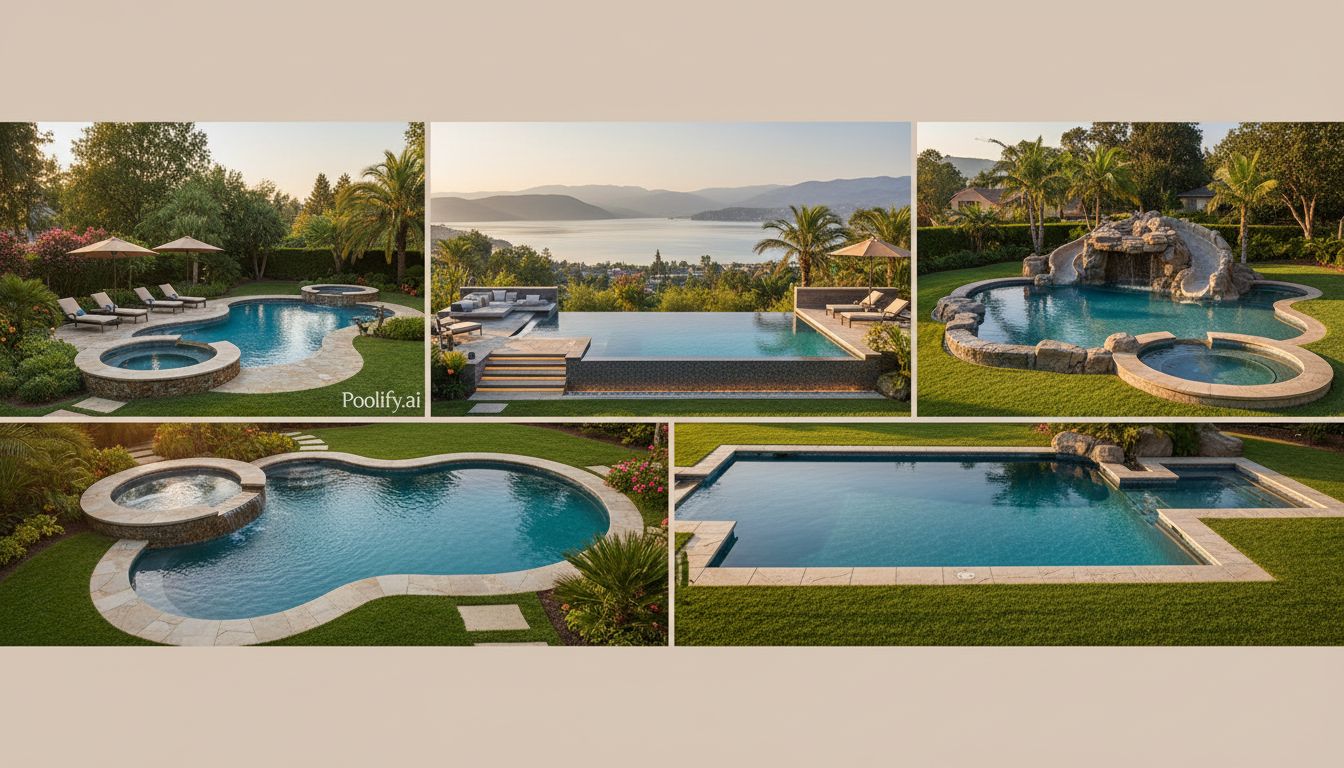
Pool shape affects how size translates into usable space. When evaluating what size pool for family of 4 works best, consider how different configurations optimize your available area and support intended activities.
Rectangular Pools
Classic rectangular designs maximize usable swimming space within a given footprint. A 15×30-foot rectangle (450 square feet) provides more actual swimming area than a freeform pool of similar square footage due to efficient space utilization. Rectangular pools work especially well for lap swimming, pool games, and properties with geometric landscaping.
These traditional shapes also tend to cost less to install and maintain since standardized dimensions simplify construction and cover options. For budget-conscious families, rectangular pools deliver maximum value per square foot.
Freeform and Kidney Shapes
Organic, curved pool shapes create visual interest and can fit irregularly shaped yards more gracefully than rectangles. However, freeform pools may sacrifice some functional swimming space to aesthetic curves. A 450-square-foot kidney-shaped pool might feel smaller during active use than a 400-square-foot rectangle.
Freeform designs excel at blending with natural landscaping and creating resort-like backyard atmospheres. If aesthetics and landscape integration rank high in your priorities, the slight reduction in functional space may prove worthwhile.
L-Shaped and Multi-Zone Designs
L-shaped pools naturally separate shallow and deep areas, creating distinct zones for different activities and age groups. This configuration works exceptionally well for families with varied needs—younger children play safely in one section while older kids and adults use the deeper area independently.
These designs typically require more total square footage (500-650 square feet) to feel comfortable but provide superior functionality for families with children spanning wide age ranges. The separated zones reduce conflicts and allow simultaneous activities without crowding.
Smart Design Features That Maximize Pool Functionality
Strategic design elements can make a moderately-sized pool feel more spacious and functional than a larger pool lacking thoughtful features. When planning what size pool for family of 4 fits your needs, consider these space-optimizing additions.
Built-In Seating and Lounging Areas
Incorporating built-in benches, sun shelves, and lounging ledges adds functionality without requiring additional swimming space. A sun shelf (also called a tanning ledge or baja shelf) provides shallow water where young children play safely while adults relax in lounge chairs partially submerged in 6-12 inches of water.
These features effectively expand your pool’s usable area by creating distinct zones for different activities within the same footprint. A 400-square-foot pool with well-designed built-in features often serves families better than a 500-square-foot pool lacking these thoughtful additions.
Swim Jets and Resistance Systems
Families wanting exercise capabilities in compact pools should consider swim jets or resistance systems. These devices create artificial current that allows stationary swimming, enabling effective workouts in pools as short as 12-15 feet. This technology lets you prioritize width for family play while still accommodating fitness swimming.
Swim jets range from $1,000 to $5,000 installed, representing a cost-effective alternative to building a significantly longer pool solely for lap swimming. Check out additional pool exercise equipment options that enhance fitness capabilities without requiring extra space.
Water Features and Play Elements
Waterfalls, bubblers, deck jets, and slides add entertainment value that keeps children engaged without requiring additional pool size. These features create visual interest and play opportunities that make moderately-sized pools feel more dynamic and exciting.
For families with young children, play features often provide more value than extra square footage. A 400-square-foot pool with a slide and water features typically sees more enthusiastic use than a plain 500-square-foot pool lacking these engaging elements.
Common Mistakes to Avoid When Sizing Family Pools
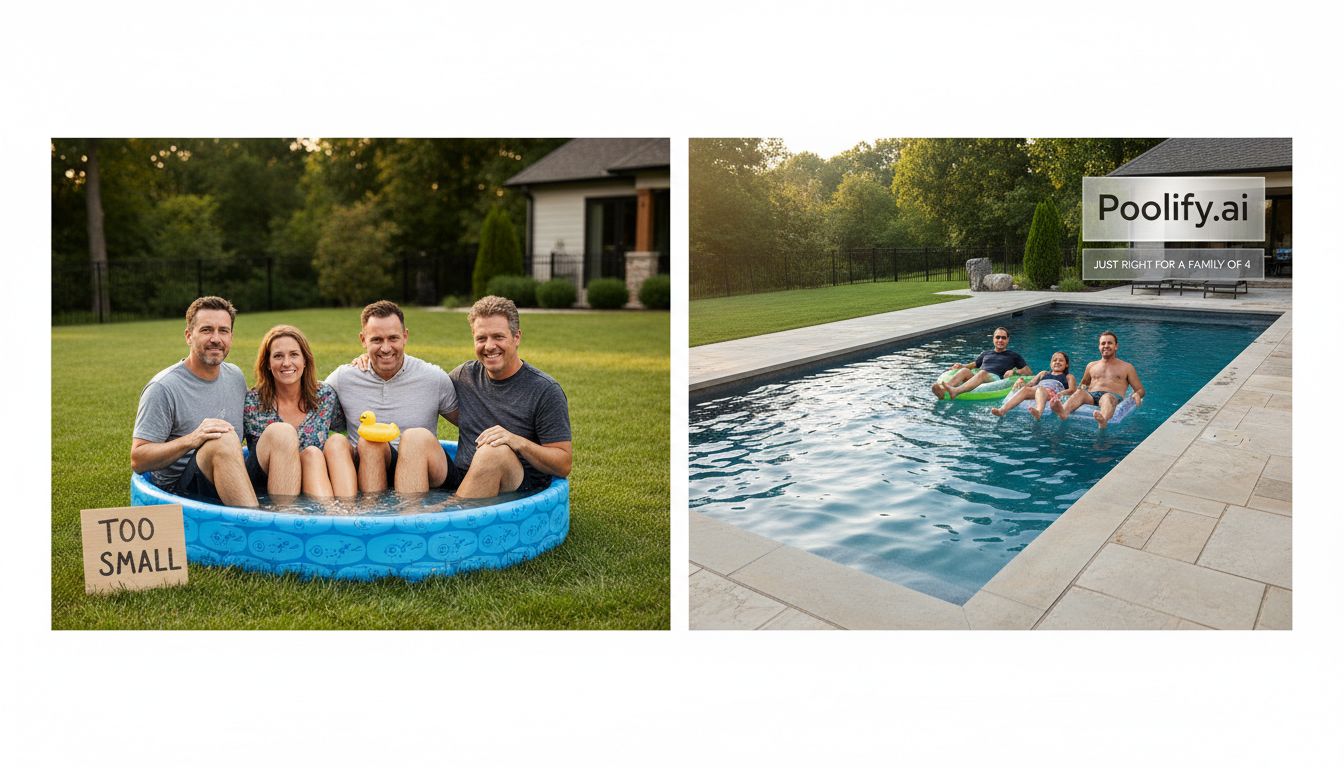
Understanding frequent errors helps families make better decisions about what size pool for family of 4 truly meets their needs without regret.
Building Too Large for Actual Usage
The most common mistake involves building a larger pool than the family will realistically use. Enthusiasm during planning often leads to overestimating how much space you’ll need. Remember that most pool time involves relatively stationary activities—floating, playing, relaxing—rather than active swimming that requires extensive space.
Oversized pools create unnecessary maintenance burdens, higher operating costs, and can overwhelm smaller properties. Right-sizing based on honest assessment of your family’s habits produces greater long-term satisfaction than building to maximum capacity.
Ignoring Maintenance Realities
Larger pools require proportionally more time for cleaning, chemical balancing, and upkeep. Families with busy schedules often underestimate the maintenance commitment. A pool that doesn’t get properly maintained quickly becomes a liability rather than an asset, regardless of how perfect the size seemed initially.
Consider your realistic availability for pool maintenance or budget for professional service when deciding on size. A well-maintained 400-square-foot pool provides infinitely more value than a neglected 600-square-foot pool.
Sacrificing Yard Space Completely
Pools that consume entire backyards eliminate space for other outdoor activities your family enjoys. Children need areas for running, playing catch, or setting up outdoor games. Adults appreciate space for gardening, grilling, or simply enjoying green space.
Maintain balance between pool size and overall yard functionality. A moderately-sized pool with adequate surrounding space creates a more versatile, enjoyable outdoor environment than a maximum-sized pool with minimal remaining yard.
Focusing Only on Initial Costs
Some families choose smaller pools solely to reduce installation costs without considering whether the size will adequately meet their needs. An undersized pool that doesn’t serve your family well represents poor value regardless of initial savings. Conversely, building larger than necessary to “maximize investment” backfires when ongoing costs strain your budget.
Balance initial and long-term costs against realistic usage expectations. The right size provides sufficient functionality without excess capacity that drives up lifetime expenses unnecessarily.
Frequently Asked Questions
What is the minimum pool size for a family of 4?
The minimum functional pool size for a family of 4 is approximately 300 square feet (such as 12×25 feet). This provides adequate space for recreational swimming, supervised play, and cooling off, though it may feel crowded when all four family members use the pool simultaneously for active play. Families with young children often find this size sufficient for their needs, especially when budget constraints are significant.
How deep should a family pool be?
Family pools should include a shallow area of 3-4 feet deep for young children and a deeper section of 5-6 feet for adults and older kids. If you want diving capabilities, the deep end must reach 8-9 feet minimum for safety. However, many families in 2026 skip diving boards and limit maximum depth to 5-6 feet, which reduces construction and heating costs while maintaining safety and functionality for most recreational activities.
Does pool size significantly affect resale value?
Yes, pool size impacts resale value, but bigger isn’t always better. Pools appropriately sized for the property and neighborhood typically return 50-70% of installation costs. Oversized pools that dominate small yards or seem disproportionate to home size may actually reduce buyer interest. The ideal pool occupies no more than 50% of backyard space, leaving room for other outdoor living areas that buyers value.
How much does pool size affect monthly operating costs?
Pool size directly impacts operating costs. A 400-square-foot pool costs approximately $100-$150 monthly for chemicals, electricity, and water during swimming season. A 600-square-foot pool increases these costs to $150-$210 monthly. Heating adds $40-$125 monthly depending on climate and desired temperature. Over a pool’s 20-30 year lifespan, these incremental costs accumulate to tens of thousands of dollars, making right-sizing important for long-term budget management.
Can I add onto my pool later if it’s too small?
While technically possible, expanding an existing pool is extremely expensive and disruptive, often costing 60-80% as much as installing a new pool. The process requires breaking through existing shell, matching materials, and extensive reconstruction. It’s far more cost-effective to build the right size initially than to expand later. However, if you’re uncertain, starting slightly smaller is generally wiser than building too large, as families adapt more easily to compact pools than to overwhelming maintenance burdens.
Key Takeaways
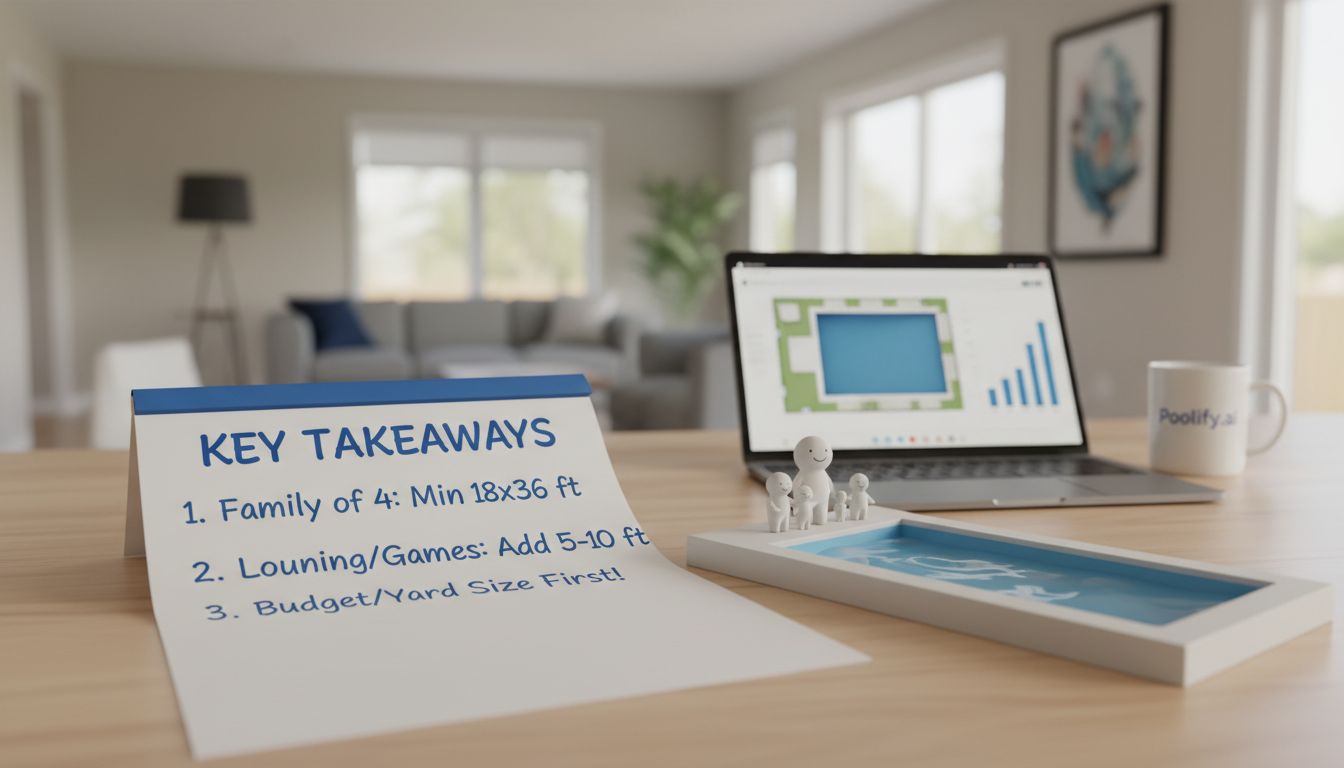
- Optimal size range: Most families of four find that pools between 400-600 square feet (such as 15×30 or 16×32 feet) provide the best balance of functionality, cost, and maintenance requirements for long-term satisfaction.
- Space planning matters: Dedicate no more than 50% of your backyard to the pool itself, ensuring adequate room for decking, landscaping, seating areas, and other outdoor activities your family enjoys.
- Depth configuration: Include 40-50% shallow water (3-4 feet deep) for young children and general play, with deeper sections (5-6 feet) for adults and older kids unless you specifically need diving capabilities.
- Lifetime costs add up: Larger pools cost significantly more to maintain over 20-30 years due to increased chemical usage, energy consumption, and maintenance time—factor these ongoing expenses into your sizing decision.
- Activity-based sizing: Choose dimensions based on how your family will actually use the pool rather than maximum capacity, as most pool time involves relatively stationary activities like floating and playing rather than active swimming requiring extensive space.
See Your Dream Pool in Your Actual Backyard
Upload a photo and get an AI-designed pool visualization in 10 seconds. 3 free designs, no login required.
Try Poolify Free →Conclusion
Determining what size pool for family of 4 works best requires balancing multiple considerations including available space, budget, intended activities, and your children’s ages. The 400-600 square foot range represents the sweet spot for most families, providing adequate space for simultaneous activities without creating overwhelming maintenance burdens or excessive operating costs.
Remember that pool enjoyment depends more on thoughtful design, useful features, and proper maintenance than on sheer size. A well-designed 450-square-foot pool with built-in seating, play features, and comfortable surrounding spaces will serve your family better than a 700-square-foot pool lacking these elements or proper upkeep.
Take time to honestly assess your family’s needs, usage patterns, and long-term plans before finalizing dimensions. Consult with experienced pool builders who can evaluate your specific property and provide guidance tailored to your situation. The right pool size creates years of family memories and recreational enjoyment without becoming a financial or maintenance burden that diminishes your investment.
In 2026, smart pool planning means building for your actual needs rather than maximum capacity, incorporating features that enhance functionality, and maintaining balance between pool space and overall backyard usability. By following the guidance in this article, you’ll make an informed decision about what size pool for family of 4 delivers optimal value and satisfaction for your unique circumstances.
References
- Centers for Disease Control and Prevention – Residential Pool Safety Guidelines: https://www.cdc.gov/healthywater/swimming/residential/pools.html
- U.S. Department of Energy – Swimming Pool Heating: https://betterbuildingssolutioncenter.energy.gov/sites/default/files/attachments/Pool%20efficiency_.pdf
- Poolify.ai – Pool Deck Design Ideas: https://content.poolify.ai/pool-deck-ideas/
- Poolify.ai – Pool Exercise Equipment: https://content.poolify.ai/pool-exercise-equipment/
