Understanding Fiberglass Pool Pros and Cons for Your 2026 Project
When planning a backyard pool installation in 2026, understanding the fiberglass pool pros and cons is essential for making an informed investment decision. Fiberglass pools have surged in popularity over the past decade, offering homeowners a compelling alternative to traditional concrete and vinyl liner options. This comprehensive guide examines every aspect of fiberglass pool ownership, from initial installation through long-term maintenance, helping you determine whether this pool type aligns with your budget, lifestyle, and property requirements.
The fiberglass pool market has evolved significantly, with manufacturers now offering improved gel coat technology, better structural warranties, and more diverse design options than ever before. However, like any major home improvement project, fiberglass pools come with both advantages and limitations that deserve careful consideration before you commit to this substantial investment.
The Major Advantages of Fiberglass Pools
Rapid Installation Timeline
One of the most compelling fiberglass pool pros and cons considerations is installation speed. Unlike concrete pools that require 8-12 weeks for construction, fiberglass pools typically install in just 3-7 days. The pool shell arrives at your property as a single manufactured unit, pre-formed at the factory with all the structural integrity already built in. Your contractor excavates the site, sets the shell with a crane, connects plumbing and electrical systems, and backfills around the structure.
This accelerated timeline means less disruption to your daily life, reduced labor costs, and the ability to enjoy your pool within the same week in many cases. For families eager to start swimming or homeowners with tight project schedules, this advantage often proves decisive. The quick installation also minimizes weather-related delays that can plague longer construction projects.
Low Maintenance Requirements
Fiberglass pools feature a smooth, non-porous gel coat surface that resists algae growth far better than concrete or vinyl alternatives. This surface characteristic significantly reduces the time and money you’ll spend on chemical treatments, scrubbing, and cleaning. According to the CDC’s pool chemical safety guidelines, proper chemical balance is essential for swimmer health, and fiberglass pools typically require 50-75% fewer chemicals than concrete pools to maintain optimal water quality.
The non-porous surface means algae cannot penetrate the material itself, making removal easier when it does occur. You’ll spend less time brushing walls and more time actually enjoying your pool. Many fiberglass pool owners report spending just 15-20 minutes per week on basic maintenance tasks, compared to 45-60 minutes for concrete pool owners.
Superior Durability and Flexibility
When evaluating fiberglass pool pros and cons, structural integrity ranks high on most homeowners’ priority lists. Fiberglass pools demonstrate exceptional durability, with the material flexing slightly with ground movement rather than cracking like concrete. This flexibility proves particularly valuable in regions with freeze-thaw cycles, unstable soil conditions, or seismic activity.
The gel coat surface, when properly maintained, resists staining, fading, and degradation from pool chemicals and UV exposure. Most manufacturers back their products with structural warranties extending 25-35 years, with some offering lifetime guarantees on the shell structure itself. This longevity translates to decades of swimming enjoyment without major renovation expenses.
Lower Long-Term Operating Costs
Beyond reduced chemical usage, fiberglass pools offer additional cost savings over their lifespan. The smooth surface creates less resistance for your pool’s circulation system, reducing pump runtime and energy consumption by approximately 20-30% compared to concrete pools. The superior insulation properties of fiberglass also help retain heat more effectively, lowering heating costs if you use a pool heater.
You won’t face the periodic resurfacing costs that concrete pool owners encounter every 10-15 years, typically costing $5,000-$10,000 per occurrence. Vinyl liner pools require replacement every 7-10 years at $3,000-$5,000 per replacement. Over a 30-year ownership period, these avoided expenses can total $15,000-$30,000 or more, making fiberglass pools considerably more economical despite potentially higher upfront costs.
Comfortable Swimming Surface
The smooth gel coat finish provides a comfortable surface that won’t scrape knees, elbows, or feet like rough concrete plaster can. This feature particularly appeals to families with young children who spend hours playing in shallow areas, or anyone who enjoys lounging on built-in benches and tanning ledges. The surface remains consistently smooth throughout the pool’s life, unlike concrete that becomes rougher over time as the plaster wears.
The Limitations and Drawbacks of Fiberglass Pools
Restricted Size and Shape Options
Perhaps the most significant consideration in the fiberglass pool pros and cons equation involves design limitations. Because fiberglass pools are manufactured in factories and transported as complete shells, their dimensions are constrained by road transportation regulations. Most fiberglass pools max out at 16 feet wide and 40 feet long, with some manufacturers offering slightly larger models requiring special transport permits.
If you envision an Olympic-sized pool, custom freeform shape, or truly unique design, fiberglass probably won’t accommodate your vision. You’ll need to select from the manufacturer’s existing mold catalog, which typically includes 30-50 different shapes ranging from simple rectangles to kidney shapes and contemporary geometric designs. While this selection satisfies most homeowners, it represents a constraint compared to the unlimited customization possible with concrete construction.
Higher Initial Purchase Price
Fiberglass pools typically cost $45,000-$85,000 installed, compared to $35,000-$65,000 for comparable vinyl liner pools. This 15-30% price premium can stretch budgets for cost-conscious homeowners. However, this comparison requires context: when you factor in long-term maintenance costs, chemical expenses, and the absence of resurfacing or liner replacement costs, fiberglass pools often prove more economical over 15-20 years of ownership.
The higher upfront investment also reflects superior manufacturing quality, longer warranties, and reduced lifetime costs. Still, if you’re working with a tight budget or planning to sell your home within 5-7 years, the initial cost difference represents a legitimate concern in your fiberglass pool pros and cons analysis.
Limited Depth Options
Most fiberglass pool models feature maximum depths of 6-8 feet, with only specialized models reaching deeper. This limitation stems from manufacturing and transportation constraints. If you’re an avid diver or want a pool specifically for diving, you’ll find limited options in the fiberglass category. Concrete pools can easily accommodate 10-12 foot deep ends with proper engineering and permitting.
For recreational swimming, water volleyball, and typical family use, 6-8 feet proves perfectly adequate. However, serious swimmers training for competition or homeowners wanting dramatic deep-end features should carefully consider whether available fiberglass options meet their requirements.
Delivery and Access Challenges
Transporting a 35-40 foot pool shell to your property requires careful planning and adequate access. The delivery truck and crane need clear pathways at least 10-12 feet wide, with overhead clearance for power lines and tree branches. Properties with narrow side yards, steep slopes, or limited street access may face significant delivery challenges or even impossibility.
Before committing to a fiberglass pool, schedule a site evaluation with your contractor to confirm delivery feasibility. In some cases, creative solutions like temporary fence removal or tree trimming can resolve access issues, but these add complexity and cost to your project. This logistical consideration represents an important factor in the fiberglass pool pros and cons equation that many homeowners overlook during initial planning.
Potential for Gel Coat Issues
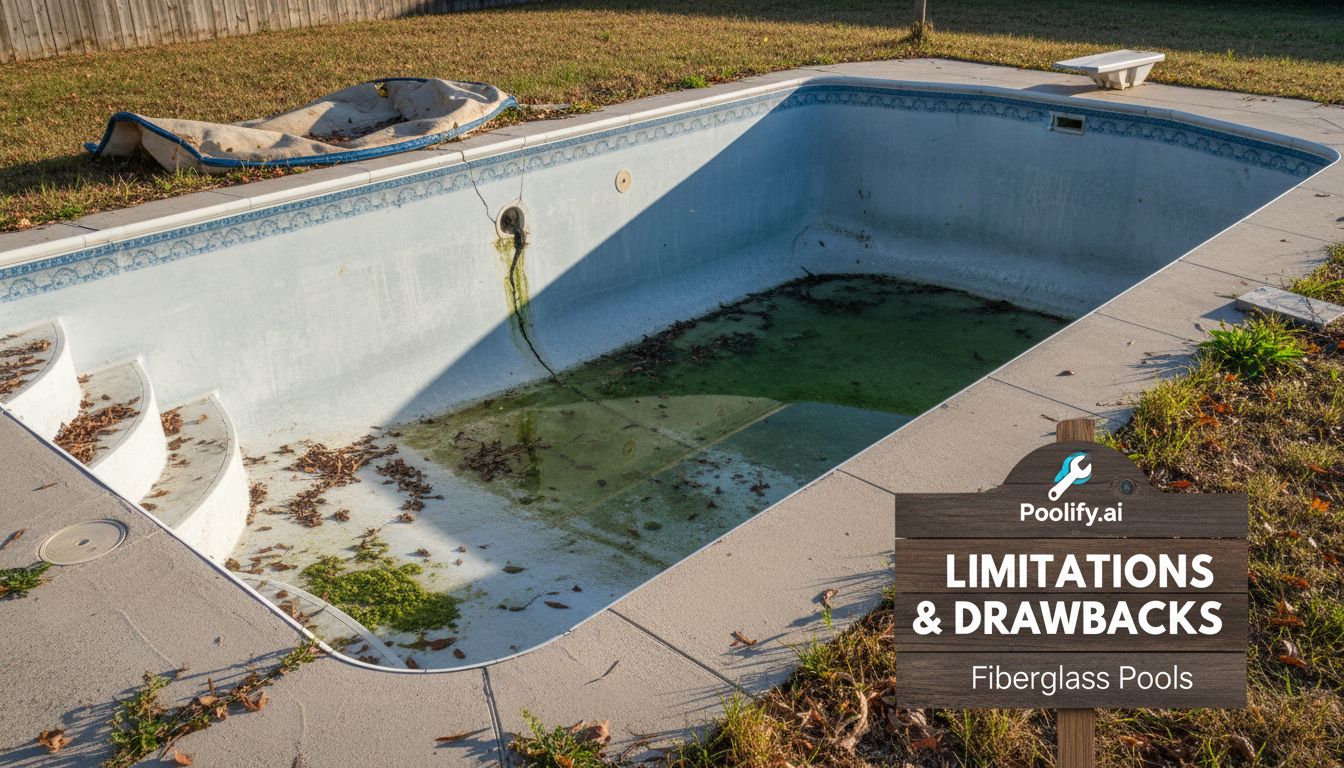
While generally durable, the gel coat surface can develop problems under certain conditions. Improper water chemistry, particularly low pH or high chlorine concentrations, can damage the gel coat over time, causing blistering, discoloration, or surface degradation. Fortunately, maintaining proper chemical balance prevents these issues in the vast majority of cases.
Some older fiberglass pools experienced gel coat delamination or spider cracking, though modern manufacturing processes and improved resin formulations have largely eliminated these problems. Still, if you purchase a lower-quality pool from an inexperienced manufacturer, you risk encountering these issues. Always research manufacturer reputation and warranty coverage as part of your due diligence.
Installation Process and Timeline Considerations
Understanding the installation process helps contextualize the fiberglass pool pros and cons from a practical standpoint. The typical installation follows this sequence: site excavation (1-2 days), shell delivery and placement (1 day), plumbing and electrical connections (1-2 days), backfilling and compaction (1 day), and decking preparation (varies by scope). While the pool itself installs quickly, surrounding work like decking, fencing, and landscaping extends the total project timeline.
Weather plays a smaller role in fiberglass installation compared to concrete construction, since you’re not waiting for material to cure. However, excessive rain can complicate excavation and backfilling. Most contractors prefer dry conditions but can work around brief weather interruptions without significant delays. This weather resilience represents another advantage for homeowners eager to complete their projects on schedule.
The factory-controlled manufacturing environment ensures consistent quality that on-site construction cannot match. Your pool shell undergoes quality inspections throughout production, with temperature and humidity controls optimizing the curing process. This controlled environment eliminates variables like temperature fluctuations, humidity changes, and contamination that can affect on-site concrete construction quality.
Maintenance and Long-Term Care Requirements
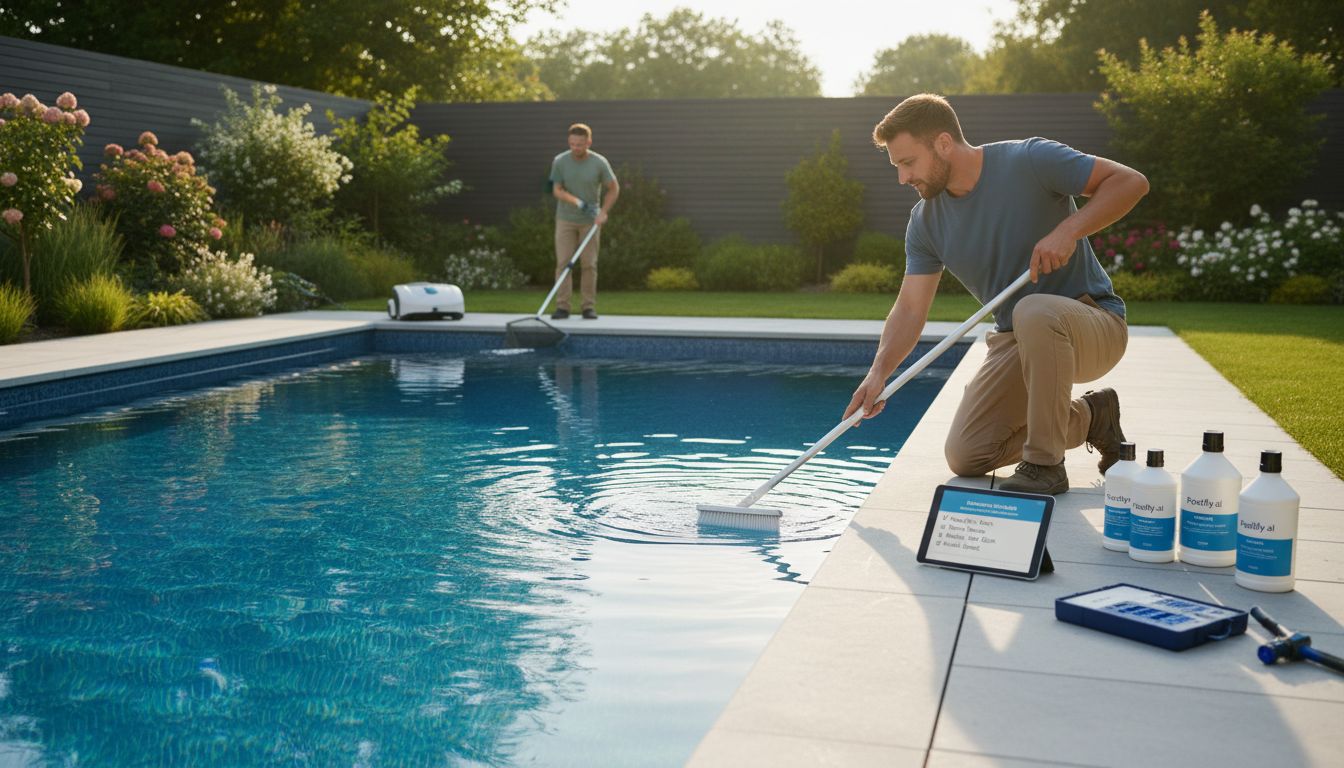
When weighing fiberglass pool pros and cons, ongoing maintenance requirements significantly impact your ownership experience. The smooth surface requires only light brushing weekly, compared to vigorous scrubbing needed for concrete pools. Your filtration system works more efficiently due to reduced debris and algae, potentially allowing you to run your pump fewer hours daily.
Chemical costs typically run $300-$500 annually for fiberglass pools, compared to $600-$900 for concrete pools of similar size. You’ll use less chlorine, fewer pH adjusters, and minimal algaecides. The gel coat’s resistance to staining means you won’t need specialty chemicals for stain removal that concrete pool owners frequently purchase. For guidance on comprehensive pool care, explore our complete pool maintenance guide.
Every 5-7 years, you may want to apply a gel coat polish to restore the surface shine, costing approximately $200-$400 for professional application or $50-$100 for DIY products. This optional maintenance preserves the aesthetic appeal but isn’t structurally necessary. Compare this to concrete resurfacing every 10-15 years at $5,000-$10,000, and the maintenance advantage becomes clear.
Cost Analysis and Return on Investment
A comprehensive fiberglass pool pros and cons evaluation must include detailed cost analysis. Initial installation costs break down approximately as follows: pool shell ($20,000-$35,000), excavation and installation labor ($10,000-$20,000), plumbing and electrical ($3,000-$6,000), decking and coping ($8,000-$15,000), and additional features like heating, lighting, or water features ($5,000-$15,000).
Over 20 years of ownership, consider these comparative costs: fiberglass pools average $500-$800 annually in maintenance and chemicals, while concrete pools average $1,200-$1,800 annually. Concrete pools also require 2-3 resurfacing projects at $5,000-$10,000 each during this period. The cumulative difference can reach $30,000-$50,000, effectively offsetting the higher initial fiberglass cost.
According to real estate professionals, pools typically return 40-60% of their installation cost in added home value, varying significantly by region and local market conditions. The return on investment depends heavily on your local climate, neighborhood pool prevalence, and whether you personally enjoy the pool during ownership. View your pool primarily as a lifestyle amenity rather than a pure financial investment.
Comparing Fiberglass to Alternative Pool Types
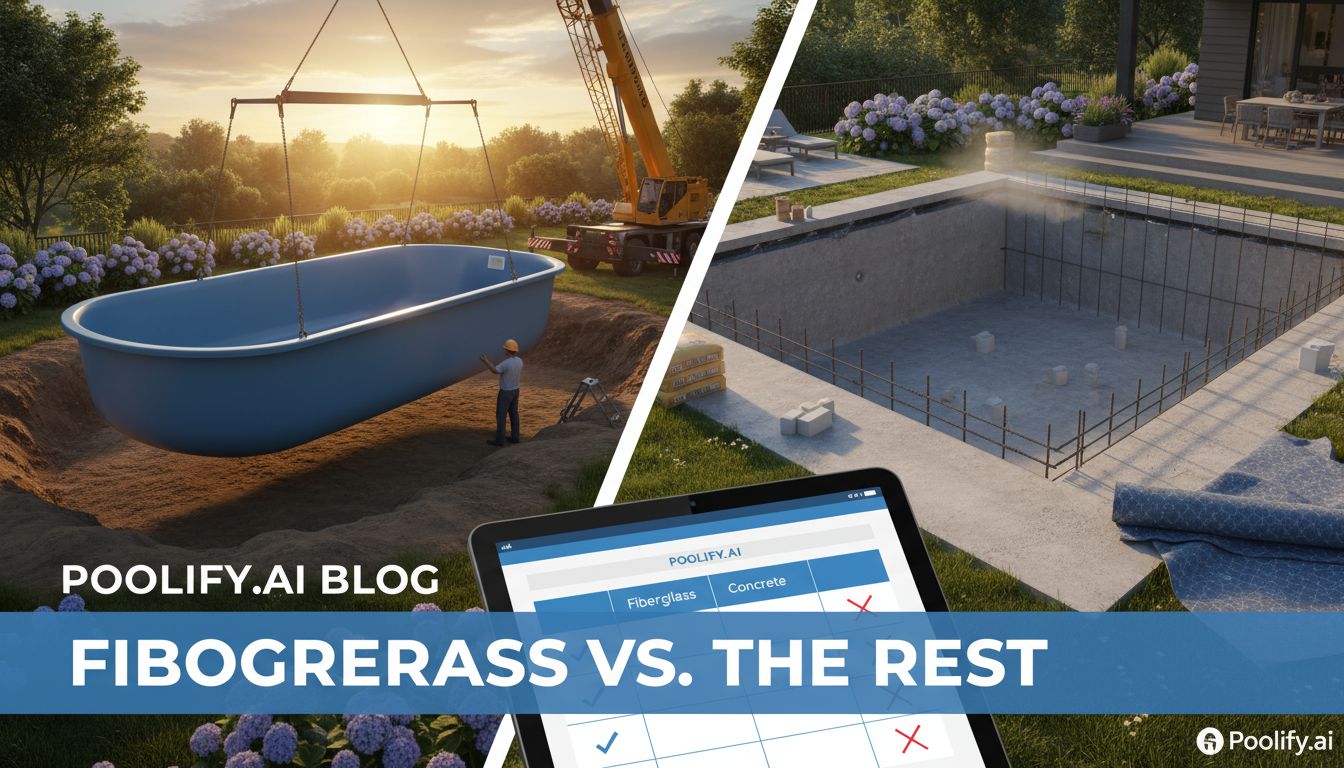
No discussion of fiberglass pool pros and cons is complete without comparing them to concrete and vinyl liner alternatives. Concrete pools offer unlimited customization, any size or shape imaginable, and the ability to create truly unique water features. However, they require 2-4 months for construction, cost more initially, demand higher maintenance, and need periodic resurfacing. They’re ideal for homeowners prioritizing custom design over convenience and cost efficiency.
Vinyl liner pools provide the lowest initial cost, typically $25,000-$45,000 installed, and allow more size flexibility than fiberglass. However, the liner requires replacement every 7-10 years at $3,000-$5,000 per occurrence, remains vulnerable to tears and punctures, and feels less substantial than fiberglass or concrete. The vinyl surface also promotes more algae growth than fiberglass, increasing chemical usage and maintenance time.
For most homeowners seeking a balance of affordability, durability, and low maintenance, fiberglass pools represent the optimal choice. They occupy the middle ground between vinyl’s economy and concrete’s customization, offering the best combination of benefits for typical residential applications. Learn more about different pool types in our comprehensive pool design guide.
Environmental and Energy Efficiency Considerations
Modern homeowners increasingly consider environmental impact when making major purchases, and the fiberglass pool pros and cons include important sustainability factors. Fiberglass pools require fewer chemicals throughout their lifespan, reducing the environmental impact of chemical production, transportation, and eventual water treatment plant processing. The reduced chemical usage also means fewer harsh substances entering groundwater through backwash discharge.
Energy efficiency represents another environmental advantage. The reduced pump runtime needed for fiberglass pools translates to 400-600 kWh less electricity annually compared to concrete pools, equivalent to taking a car off the road for 500-750 miles. The superior insulation properties mean less energy required for heating, further reducing your carbon footprint if you heat your pool.
The manufacturing process for fiberglass pools does require significant energy and produces some emissions. However, the one-time manufacturing impact typically balances out within 3-5 years compared to the ongoing higher resource consumption of concrete or vinyl pools. Over a 30-year lifespan, fiberglass pools demonstrate a smaller cumulative environmental footprint.
Frequently Asked Questions About Fiberglass Pool Pros and Cons
How long do fiberglass pools actually last?
Fiberglass pools typically last 25-35 years or longer with proper maintenance and care. The structural shell itself can last indefinitely, while the gel coat surface may show wear after 20-25 years but remains functional. Many fiberglass pools installed in the 1980s and 1990s still function perfectly today. The key to longevity involves maintaining proper water chemistry, avoiding abrasive cleaning tools, and addressing any issues promptly. Most manufacturers offer structural warranties of 25-35 years, reflecting confidence in their product’s durability.
Can fiberglass pools crack or develop structural problems?
While fiberglass pools are highly durable, they can develop issues under certain conditions. Improper installation, particularly inadequate backfilling or compaction, can create voids that allow the shell to flex excessively and potentially crack. Ground movement from earthquakes, sinkholes, or severe frost heaving can also cause damage. However, these scenarios are relatively rare when pools are properly installed by experienced contractors. The flexibility of fiberglass actually makes it more resistant to cracking than rigid concrete under normal conditions.
Are fiberglass pools worth the higher initial cost compared to vinyl?
For most homeowners planning to stay in their homes for 10+ years, fiberglass pools justify their higher initial cost through lower lifetime expenses. When you factor in vinyl liner replacements every 7-10 years, higher chemical costs, and increased maintenance time, fiberglass pools typically cost less over 15-20 years of ownership. If you’re on a very tight budget or planning to sell within 5-7 years, vinyl might make more financial sense. The decision ultimately depends on your timeline, budget, and priorities regarding maintenance convenience.
What happens if the gel coat gets damaged?
Minor gel coat damage like small scratches or chips can be repaired relatively easily with gel coat repair kits costing $50-$150. More extensive damage may require professional repair, typically costing $500-$2,000 depending on the affected area. In rare cases of severe gel coat failure, the entire surface can be refinished for $4,000-$8,000, still less expensive than concrete resurfacing. Prevention through proper water chemistry and avoiding abrasive cleaning tools is the best strategy. Most gel coat issues are cosmetic rather than structural and don’t compromise the pool’s functionality.
Can I install a fiberglass pool myself to save money?
While technically possible for experienced DIYers with proper equipment, self-installing a fiberglass pool is not recommended for most homeowners. The process requires a crane for shell placement, precise excavation and leveling, proper plumbing and electrical connections, and careful backfilling techniques. Mistakes during installation can void your warranty and create expensive problems. Most manufacturers require professional installation to maintain warranty coverage. If budget is a primary concern, consider financing options or scaling back on additional features rather than attempting DIY installation. For professional installation tips, visit our pool installation resource center.
Key Takeaways: Fiberglass Pool Pros and Cons
- Installation Speed: Fiberglass pools install in 3-7 days compared to 8-12 weeks for concrete, minimizing disruption and allowing faster enjoyment of your investment.
- Low Maintenance: The smooth, non-porous surface requires 50-75% fewer chemicals, less cleaning time, and no periodic resurfacing, saving thousands of dollars over the pool’s lifetime.
- Design Limitations: Size constraints (typically 16 feet wide maximum) and shape restrictions mean you must choose from existing manufacturer molds rather than creating fully custom designs.
- Higher Initial Cost: Expect to pay 15-30% more upfront compared to vinyl liner pools, though this premium is typically recovered through lower operating costs within 10-15 years.
- Superior Durability: With 25-35 year warranties and proven longevity, fiberglass pools offer excellent structural integrity and flexibility that resists cracking better than concrete alternatives.
See Your Dream Pool in Your Actual Backyard
Upload a photo and get an AI-designed pool visualization in 10 seconds. 3 free designs, no login required.
Try Poolify Free →Making Your Decision: Is a Fiberglass Pool Right for You?
After examining the comprehensive fiberglass pool pros and cons, you’re equipped to make an informed decision for your 2026 pool project. Fiberglass pools excel for homeowners who prioritize low maintenance, quick installation, durability, and long-term cost efficiency. They’re ideal for typical family recreation, standard residential lot sizes, and owners who value convenience over unlimited customization options.
Consider fiberglass if you want to minimize ongoing maintenance time and chemical costs, need your pool completed quickly, or plan to own your home for 10+ years to realize the lifetime cost advantages. The technology and manufacturing quality have improved dramatically over the past decade, making 2026 an excellent time to invest in a fiberglass pool with confidence in the product’s performance and longevity.
Alternatively, explore concrete options if you need a pool larger than 16 feet wide, want a completely custom shape, require depths exceeding 8 feet, or have unlimited budget for both installation and ongoing maintenance. Vinyl liner pools make sense if initial cost is your primary concern and you’re comfortable with periodic liner replacements and higher maintenance requirements.
Schedule consultations with multiple pool contractors in your area, request site evaluations to confirm delivery feasibility, and obtain detailed quotes that include all associated costs beyond just the pool shell. Ask to visit completed projects and speak with existing customers about their ownership experiences. The right pool choice depends on your unique circumstances, priorities, and long-term plans for your property.
References
Centers for Disease Control and Prevention. (2026). Pool Chemical Safety. Retrieved from https://www.cdc.gov/healthywater/swimming/residential/pool-chemical-safety.html
Poolify.ai. (2026). Pool Maintenance Guide. Retrieved from https://content.poolify.ai/diy-pool-maintenance-tips/
Poolify.ai. (2026). Pool Design Guide. Retrieved from https://content.poolify.ai/how-to-design-a-pool-a-step-by-step-guide-for-homeowners/
Poolify.ai. (2026). Pool Installation Guide. Retrieved from https://content.poolify.ai/pool-installation-cost-guide/
