Understanding the Average Cost of Inground Pool Installation in 2026
The average cost of inground pool installation in 2026 ranges between $40,000 and $100,000, with most homeowners spending approximately $65,000 for a standard installation. This significant investment transforms your backyard into a personal oasis, but understanding the pricing landscape helps you make informed decisions. Pool costs vary dramatically based on size, material, features, and regional factors that impact both construction and long-term maintenance.
Whether you’re dreaming of weekend pool parties or creating a fitness retreat, knowing what drives pool pricing empowers you to budget effectively. This comprehensive guide breaks down every cost component, from excavation to finishing touches, helping you navigate the investment with confidence and clarity.
Breaking Down Average Cost of Inground Pool by Material Type
The material you select fundamentally determines your pool’s price point, durability, and maintenance requirements. Each option presents distinct advantages and trade-offs that align with different budgets and lifestyle preferences.
Vinyl Liner Pools: Budget-Friendly Entry Point
Vinyl liner pools represent the most affordable option, with the average cost of inground pool installation ranging from $35,000 to $65,000. These pools feature a custom-made vinyl liner fitted over a steel, aluminum, or polymer frame. The initial savings make them attractive to first-time pool owners, though liner replacement every 7-10 years adds ongoing costs of $4,000-$6,500.
The smooth surface feels comfortable underfoot and resists algae growth better than concrete. However, the liner remains vulnerable to punctures from sharp objects, pets, or pool toys. Installation typically takes 4-6 weeks, making vinyl pools the fastest option from concept to completion.
Fiberglass Pools: Mid-Range Convenience
Fiberglass pools cost between $45,000 and $85,000, positioning them in the middle of the pricing spectrum. These pre-manufactured shells arrive in one piece and drop into the excavated hole, dramatically reducing installation time to just 2-3 weeks. The gel coat surface requires minimal maintenance and naturally inhibits algae growth.
Size limitations exist because shells must transport via truck, restricting most fiberglass pools to 16 feet wide and 40 feet long. The non-porous surface means lower chemical usage and easier cleaning, translating to long-term savings that offset the higher initial investment compared to vinyl options.
Concrete (Gunite/Shotcrete) Pools: Premium Customization
Concrete pools command the highest average cost of inground pool construction, ranging from $50,000 to $150,000 or more for elaborate designs. This method sprays concrete over a rebar framework, allowing complete customization of shape, depth, and features. No size restrictions exist, making concrete ideal for unique designs, beach entries, or integrated spas.
The porous surface requires more frequent chemical balancing and brushing to prevent algae. Resurfacing every 10-15 years costs $10,000-$20,000, representing a significant long-term expense. However, concrete pools last 50+ years with proper maintenance, making them true permanent structures that add substantial property value.
Size and Shape Impact on Average Cost of Inground Pool
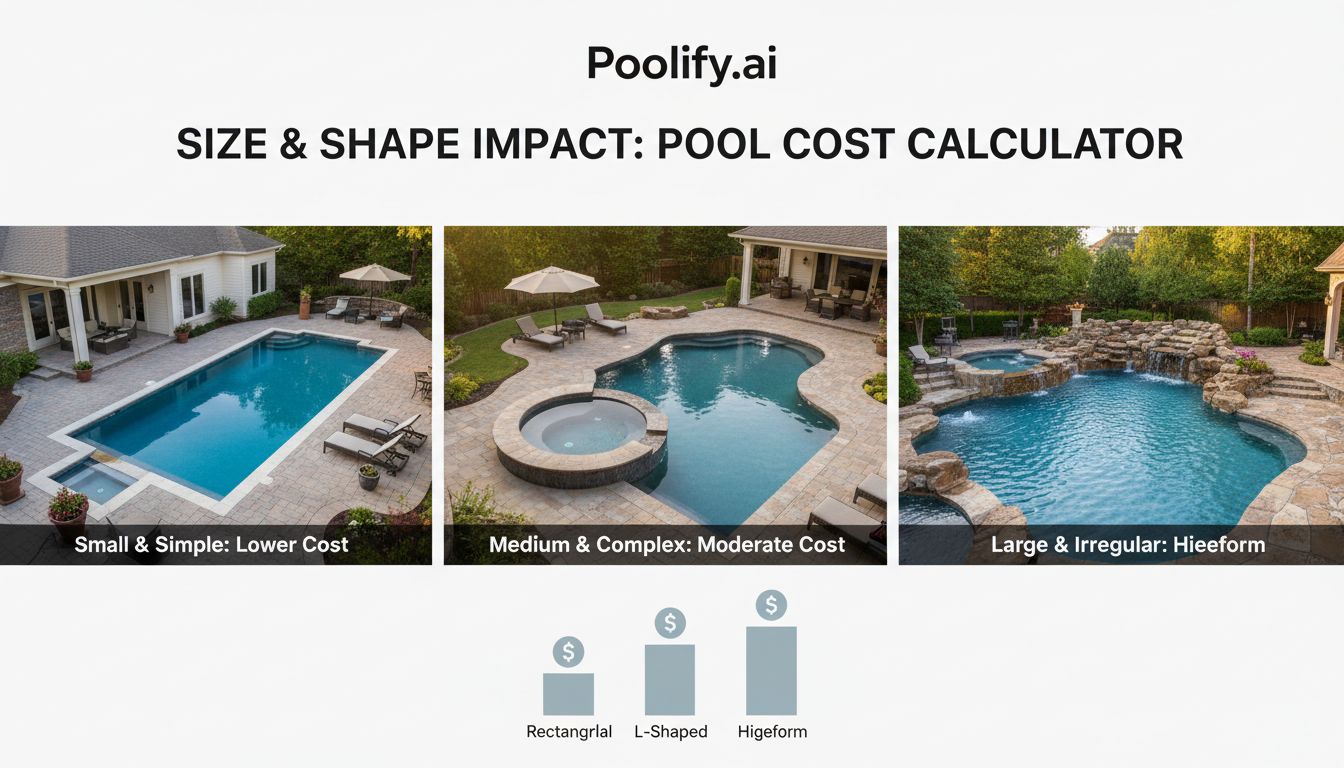
Pool dimensions directly correlate with excavation volume, material quantity, and labor hours. Understanding these relationships helps you optimize your budget while achieving your desired functionality.
Standard Size Categories
Small pools (10×20 to 12×24 feet) cost $30,000-$50,000 and suit compact yards or plunge pool applications. Medium pools (14×28 to 16×32 feet) represent the most popular choice, with the average cost of inground pool installation falling between $50,000-$75,000. Large pools (18×36 feet and beyond) start at $75,000 and easily exceed $100,000 with premium features.
Depth significantly affects pricing, with each additional foot of depth adding $5,000-$10,000 to excavation and material costs. Standard depths range from 3.5 feet in shallow ends to 8 feet in deep ends. Diving pools requiring 9-12 feet of depth increase costs substantially due to structural reinforcement requirements.
Shape Complexity and Custom Designs
Rectangular pools offer the lowest per-square-foot cost due to straightforward construction and minimal material waste. Kidney shapes, free-form designs, and geometric patterns add 10-20% to the base average cost of inground pool installation. Complex features like beach entries, tanning ledges, or integrated spas increase costs by $8,000-$25,000 per element.
According to the U.S. Census Bureau’s construction data, custom pool designs have increased 23% since 2022, reflecting homeowner preferences for unique outdoor spaces. Working with experienced pool designers helps balance aesthetic goals with budget realities.
Essential Features That Affect Average Cost of Inground Pool
Beyond the basic shell, numerous features and systems contribute to your total investment. These additions enhance functionality, aesthetics, and long-term enjoyment but require careful budget consideration.
Filtration and Circulation Systems
Quality filtration systems cost $1,500-$5,000 depending on pool size and technology. Sand filters represent the most economical option at $1,500-$2,500, while cartridge filters range from $2,000-$3,500. Diatomaceous earth (DE) filters provide superior filtration for $2,500-$5,000 but require more maintenance expertise.
Variable-speed pumps cost $800-$1,500 more than single-speed models but reduce energy consumption by 50-75%, saving $500-$1,000 annually on electricity. Most municipalities now mandate energy-efficient pumps, making this upgrade standard in the average cost of inground pool installations across most regions.
Heating Options and Temperature Control
Pool heaters extend your swimming season significantly but add both upfront and operational costs. Gas heaters cost $2,000-$4,000 and heat water quickly but carry higher monthly operating expenses of $200-$400 during use. Heat pumps range from $3,500-$6,000 with lower operating costs of $50-$150 monthly in moderate climates.
Solar heating systems require $3,000-$8,000 initially but cost almost nothing to operate, making them attractive in sunny regions. The payback period typically spans 3-7 years depending on usage patterns and local energy rates. Many homeowners combine multiple heating methods to optimize efficiency across different seasons.
Lighting and Aesthetic Enhancements
LED pool lighting costs $700-$2,000 for basic installations, while color-changing systems with smartphone controls range from $1,500-$4,000. Fiber optic lighting creates dramatic effects for $2,000-$5,000 but requires professional installation. Proper lighting extends usable hours and dramatically enhances nighttime ambiance and safety.
Water features like fountains, waterfalls, or deck jets add $1,500-$15,000 depending on complexity. Simple bubblers start around $1,500, while elaborate rock waterfalls with grottos exceed $20,000. These features increase the average cost of inground pool projects but create resort-style atmospheres that justify the investment for many homeowners.
Hidden Costs and Budget Considerations for Your Inground Pool
The quoted pool price rarely represents your total investment. Understanding additional expenses prevents budget surprises and ensures adequate financial preparation for your complete project.
Site Preparation and Excavation Challenges
Standard excavation includes $3,000-$6,000 in the base average cost of inground pool installation, but challenging site conditions increase expenses significantly. Rocky soil requiring specialized equipment adds $5,000-$15,000. High water tables necessitating drainage systems cost $3,000-$10,000. Sloped yards needing retaining walls increase costs by $8,000-$25,000.
Access limitations forcing hand-digging or crane work add $5,000-$12,000 to standard excavation costs. Underground utilities requiring relocation cost $2,000-$8,000 per line. Professional site assessments before finalizing contracts prevent expensive surprises during construction.
Permits, Inspections, and Compliance
Building permits cost $500-$2,000 depending on local jurisdiction requirements. Electrical permits for pump and lighting installations add $200-$500. Some municipalities require separate plumbing permits costing $150-$400. Fence requirements for safety compliance add $3,000-$12,000 for basic aluminum to premium wrought iron options.
Many areas mandate pool safety covers, alarms, or automatic gate closers adding $800-$3,000 to your budget. Insurance companies often require specific safety features, and homeowner’s insurance typically increases $50-$150 annually after pool installation. Consulting local building departments early clarifies all regulatory requirements affecting your total investment.
Decking and Surrounding Hardscape
Pool decking represents a substantial portion of the average cost of inground pool projects, ranging from $5,000-$25,000 depending on material and square footage. Concrete remains most economical at $6-$12 per square foot, while pavers cost $10-$25 per square foot. Natural stone like travertine or slate ranges from $15-$40 per square foot.
Most pools require 500-1,000 square feet of decking for adequate circulation and lounging space. Additional hardscape features like outdoor kitchens, fire pits, or pergolas add $5,000-$50,000 depending on scope. Coordinating these elements during initial construction saves money compared to phased additions later.
Regional Variations in Average Cost of Inground Pool Installation
Geographic location significantly impacts pool pricing through labor rates, material availability, climate considerations, and local market dynamics. Understanding regional factors helps set realistic budget expectations.
Climate and Season Length Impact
Northern climates with shorter swimming seasons see average cost of inground pool installations 10-20% lower than southern regions due to reduced demand and competitive pricing. However, winterization requirements add $300-$600 annually, and freeze-protection systems increase initial costs by $1,500-$3,000.
Southern and southwestern states experience higher base prices but year-round usability and minimal winterization needs. Desert regions require additional water features and shade structures adding $5,000-$15,000, while humid climates benefit from enhanced dehumidification systems costing $2,000-$5,000 for enclosed pool areas.
Labor and Material Cost Variations
Metropolitan areas command 20-40% higher labor rates than rural regions, significantly affecting the average cost of inground pool construction. Coastal markets like California, Florida, and the Northeast see premium pricing due to high demand and cost of living. Midwest and Southeast regions generally offer more competitive pricing with quality craftsmanship.
Material transportation costs impact pricing in remote areas, adding 5-15% to base material costs. Local competition among pool builders creates price variations of $10,000-$20,000 for identical projects in different markets. Obtaining multiple detailed quotes reveals local pricing norms and identifies outliers.
Financing Options for Your Inground Pool Investment
Most homeowners finance pool construction rather than paying cash, making financing terms crucial to overall affordability. Multiple options exist, each with distinct advantages and qualification requirements.
Home Equity Loans and Lines of Credit
Home equity loans provide lump sums at fixed interest rates typically ranging from 6-9% in 2026, with repayment terms of 5-15 years. Monthly payments remain consistent, simplifying budgeting. Home equity lines of credit (HELOCs) offer variable rates starting around 7-10% with draw periods allowing flexible access to funds as construction progresses.
Both options require sufficient home equity and good credit scores above 680 for favorable terms. Interest may be tax-deductible if the pool qualifies as a home improvement, though tax law changes have limited this benefit. The average cost of inground pool financed through home equity typically costs less in total interest than other options.
Personal Loans and Pool-Specific Financing
Unsecured personal loans require no collateral but carry higher interest rates of 8-15% depending on creditworthiness. Loan amounts typically max at $100,000 with repayment terms of 3-7 years. Approval processes move quickly, often within days, making personal loans attractive for time-sensitive projects.
Pool-specific financing through manufacturers or contractors offers promotional terms including deferred interest periods. Rates vary widely from 0% promotional periods to 12-18% standard APRs. Reading fine print prevents surprises, as deferred interest often applies retroactively if balances aren’t cleared during promotional periods.
Cash-Out Refinancing Considerations
Refinancing your mortgage to extract equity works when current rates favor refinancing your existing loan. This option rolls pool costs into your mortgage at lower rates of 6-8% over 15-30 years. Monthly payments increase minimally, but total interest paid over decades significantly exceeds shorter-term options.
Closing costs of 2-5% of the loan amount add $4,000-$10,000 to the transaction. This approach makes sense only when refinancing provides other benefits like lower rates or better terms on your existing mortgage. Consulting with financial advisors helps evaluate whether extending the average cost of inground pool over 30 years aligns with your financial goals.
Maximizing Value and Managing the Average Cost of Inground Pool
Strategic planning and informed decisions reduce costs without sacrificing quality. Smart homeowners balance immediate savings with long-term value and enjoyment.
Timing Your Pool Construction
Off-season construction during fall and winter yields 10-20% discounts in many markets as contractors seek to maintain crews during slower periods. However, weather delays in cold climates may extend timelines. Spring construction ensures completion before summer but commands premium pricing due to high demand.
Booking 6-12 months in advance secures preferred contractors and allows material procurement during sales periods. Flexibility with construction timing provides negotiating leverage that can reduce the average cost of inground pool installation by thousands of dollars.
Phasing Features and Upgrades
Installing the basic pool structure first and adding features later spreads costs across multiple years. However, some additions like integrated spas, beach entries, or plumbing for future water features cost significantly more when added after initial construction. Discussing your complete vision upfront helps contractors rough-in elements for future additions at minimal cost.
Landscaping, outdoor kitchens, and decorative elements phase easily without construction penalties. Starting with quality core infrastructure and filtration systems prevents costly replacements, while cosmetic elements can wait for budget availability. Prioritizing structural elements over aesthetics maximizes long-term value.
DIY Opportunities and Professional Requirements
Homeowners with construction experience can handle decking installation, landscaping, or fence construction, saving $5,000-$15,000 in labor costs. However, excavation, plumbing, electrical work, and pool shell installation require licensed professionals for safety, warranty protection, and code compliance.
Most municipalities require licensed contractors for permit approval, making DIY pool construction impractical for the complete project. Understanding which elements you can legally and safely handle helps reduce the average cost of inground pool without compromising quality or creating liability issues. Consulting with professional pool installers clarifies appropriate DIY opportunities.
Long-Term Costs and Maintenance Budgeting
The average cost of inground pool ownership extends far beyond initial construction. Annual maintenance, utilities, repairs, and eventual renovations require ongoing financial commitment throughout your pool’s lifetime.
Annual Operating Expenses
Chemical costs range from $400-$800 annually depending on pool size, usage, and water chemistry challenges. Electricity for pumps and heating adds $300-$1,200 yearly for standard pools, while heated pools increase costs to $1,000-$3,000 annually. Water costs vary regionally but typically add $100-$300 yearly for evaporation replacement and backwashing.
Professional maintenance services cost $80-$150 monthly if you prefer hands-off ownership. DIY maintenance reduces costs to chemical and equipment expenses only. Most homeowners spend $1,200-$2,500 annually on total operating costs, representing important considerations when budgeting for the average cost of inground pool ownership.
Repair and Replacement Reserves
Pool equipment lasts 7-15 years depending on quality and maintenance. Pump replacements cost $800-$2,000, while heaters require $2,000-$5,000 for replacement. Filter systems need replacement every 10-15 years at $1,500-$4,000. Setting aside $500-$1,000 annually creates reserves for inevitable equipment failures.
Surface refinishing represents the largest periodic expense. Vinyl liner replacement costs $4,000-$6,500 every 7-10 years. Fiberglass gel coat refinishing runs $5,000-$8,000 every 15-20 years. Concrete resurfacing costs $10,000-$20,000 every 10-15 years. Planning for these expenses prevents financial stress when maintenance becomes necessary.
Property Value and Return on Investment
Pools add 5-8% to home values in warm climates with long swimming seasons but may add nothing or decrease appeal in northern markets. The average cost of inground pool rarely returns dollar-for-dollar in resale value, with typical returns of 40-60% of installation costs. However, the lifestyle value and personal enjoyment often justify the investment beyond pure financial metrics.
Well-maintained pools in desirable markets attract buyers and reduce time on market. Neglected pools become liabilities, potentially decreasing property values and limiting buyer pools. Maintaining detailed service records and demonstrating proper care maximizes resale value when selling your home.
Selecting the Right Pool Contractor
Contractor selection dramatically impacts both the average cost of inground pool and long-term satisfaction. Quality builders deliver value through expertise, reliability, and craftsmanship that prevents costly problems.
Credentials and Verification
Verify contractor licensing through state regulatory boards and confirm active liability insurance and workers’ compensation coverage. Membership in professional associations like the Association of Pool & Spa Professionals (APSP) indicates commitment to industry standards and continuing education. Checking Better Business Bureau ratings and online reviews reveals patterns of customer satisfaction or complaints.
Requesting references from projects completed 3-5 years ago allows assessment of long-term quality and warranty support. Visiting completed projects in person reveals craftsmanship details that photos don’t capture. Taking time for thorough vetting prevents costly mistakes from unqualified or unreliable contractors.
Contract Details and Payment Terms
Detailed contracts specify materials, dimensions, features, timelines, and payment schedules. Avoiding contractors demanding large upfront deposits protects you from abandonment or bankruptcy. Standard payment schedules release 10-15% at contract signing, 25-30% at excavation, 25-30% at shell completion, 25-30% at equipment installation, and final 10% at completion and approval.
Contracts should include warranty terms covering structure, equipment, and workmanship. Most reputable builders provide 1-3 year workmanship warranties, while material warranties come from manufacturers. Understanding what’s covered and excluded prevents disputes. Change order procedures with pricing should be established upfront, as most projects involve at least minor modifications affecting the average cost of inground pool.
Communication and Project Management
Responsive contractors who communicate proactively about schedules, challenges, and decisions create positive experiences. Establishing single points of contact and preferred communication methods prevents miscommunication. Regular site meetings during construction ensure alignment on progress and address concerns before they become problems.
Quality contractors provide realistic timelines with contingencies for weather and unforeseen issues. Pressure to rush decisions or vague responses to questions signal potential problems. Trust your instincts when evaluating contractors, as you’ll work closely together for weeks or months. Investing time in contractor selection pays dividends throughout your pool ownership experience.
Key Takeaways
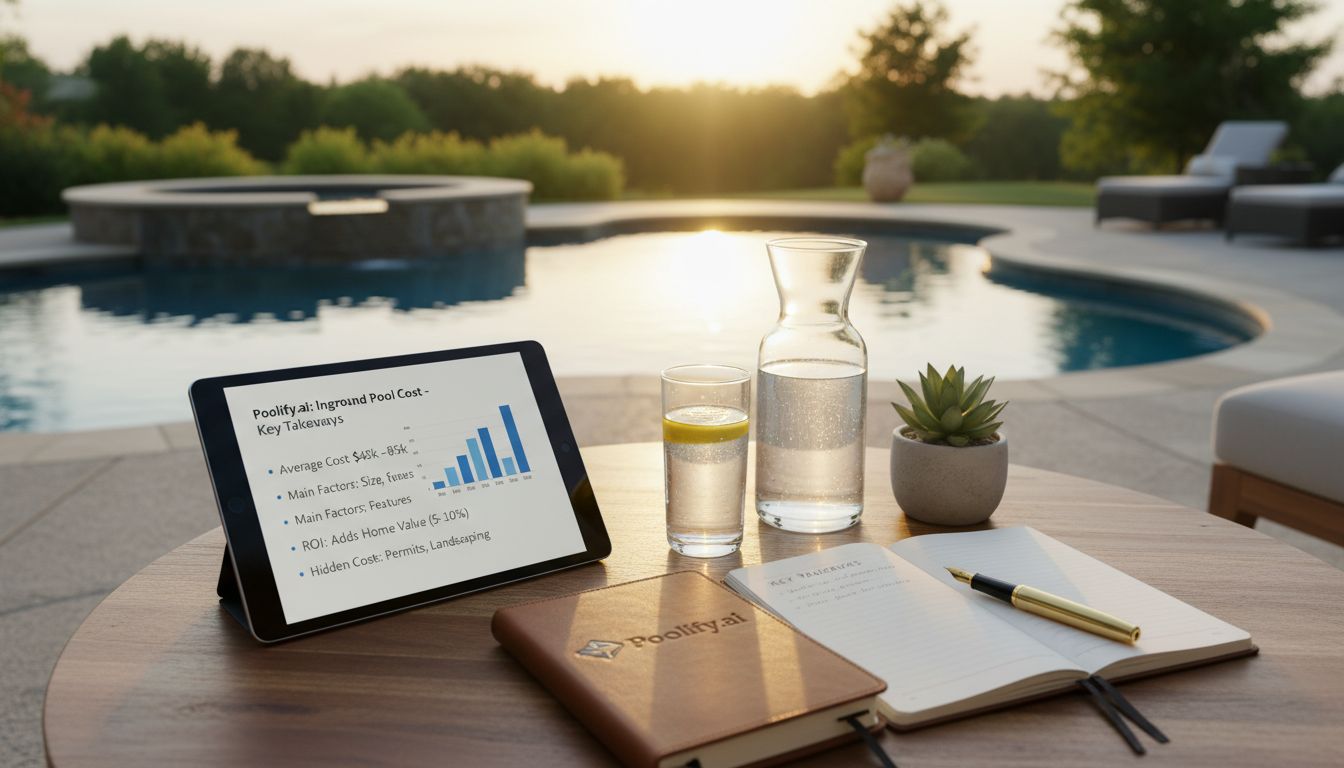
- Average cost of inground pool installation in 2026 ranges from $40,000-$100,000, with material choice (vinyl, fiberglass, or concrete) being the primary cost driver affecting both initial investment and long-term maintenance expenses.
- Size, shape, and features significantly impact total costs, with custom designs, heating systems, lighting, and water features adding $10,000-$50,000+ beyond basic pool shells depending on complexity and quality.
- Hidden costs including excavation challenges, permits, decking, and site preparation add $10,000-$30,000 to quoted prices, making comprehensive budgeting essential for avoiding financial surprises during construction.
- Regional variations create 20-40% price differences based on climate, labor markets, and local demand, with metropolitan and coastal areas commanding premium pricing compared to rural and midwest markets.
- Annual operating costs of $1,200-$2,500 plus periodic renovations every 7-15 years require ongoing financial commitment, making total lifetime ownership costs 2-3 times the initial average cost of inground pool installation.
Frequently Asked Questions
What is the cheapest type of inground pool?
Vinyl liner pools represent the most affordable option, with the average cost of inground pool installation starting around $35,000 for basic models. These pools feature vinyl liners over structural frames and offer quick installation times of 4-6 weeks. However, liner replacements every 7-10 years at $4,000-$6,500 add long-term costs that partially offset initial savings compared to other materials.
How much does pool size affect the average cost of inground pool?
Pool size directly impacts costs at approximately $50-$125 per square foot depending on material and features. A small 12×24 pool (288 square feet) costs $30,000-$50,000, while a large 18×36 pool (648 square feet) ranges from $75,000-$125,000. Depth increases costs by $5,000-$10,000 per additional foot due to excavation and structural requirements. Shape complexity adds 10-20% to rectangular pool costs.
Should I finance or pay cash for an inground pool?
The decision depends on your financial situation and opportunity costs. Cash payment avoids interest charges saving $10,000-$30,000 over typical loan terms, but depletes liquid reserves. Home equity loans at 6-9% interest provide affordable financing while preserving cash for emergencies or investments. Compare potential investment returns against financing costs, and ensure monthly payments fit comfortably within your budget without straining finances.
What ongoing costs should I budget after installation?
Annual operating expenses include chemicals ($400-$800), electricity ($300-$1,200 unheated, $1,000-$3,000 heated), water ($100-$300), and optional maintenance services ($960-$1,800). Equipment repairs and replacements average $500-$1,000 annually when amortized over equipment lifespans. Major renovations like liner or surface replacements occur every 7-15 years at $4,000-$20,000 depending on pool type. Total annual costs typically range from $1,200-$2,500 for DIY maintenance or $2,500-$4,000 with professional services.
Do pools increase home value enough to justify the average cost of inground pool?
Pools add 5-8% to property values in warm climates with year-round swimming potential but may add minimal value or limit buyer appeal in northern regions. Typical return on investment ranges from 40-60% of installation costs at resale. However, pools provide lifestyle value, family enjoyment, and health benefits that transcend pure financial returns. In competitive markets, pools differentiate properties and attract specific buyer demographics, potentially reducing time on market even if not increasing price proportionally.
See Your Dream Pool in Your Actual Backyard
Upload a photo and get an AI-designed pool visualization in 10 seconds. 3 free designs, no login required.
Try Poolify Free →Conclusion
Understanding the average cost of inground pool empowers you to make informed decisions that balance your budget with your backyard vision. The $40,000-$100,000 investment range accommodates various materials, sizes, and feature combinations, allowing customization to your specific needs and financial capacity. Beyond initial construction, planning for ongoing maintenance, utilities, and periodic renovations ensures long-term enjoyment without financial stress.
Successful pool projects begin with thorough research, multiple contractor quotes, and realistic budgeting that accounts for both obvious and hidden costs. Material selection between vinyl, fiberglass, and concrete establishes your baseline investment, while size, features, and site conditions refine your specific costs. Regional factors, timing strategies, and financing options provide opportunities to optimize your investment and manage the average cost of inground pool effectively.
The value of pool ownership extends beyond financial metrics to include family memories, health benefits, and lifestyle enhancement that justify the investment for millions of homeowners. By approaching your pool project with comprehensive knowledge of costs, options, and long-term commitments, you’ll create a backyard oasis that provides decades of enjoyment and becomes a centerpiece of your home life. For more guidance on maintaining your investment, explore our comprehensive pool maintenance resources.
References
- U.S. Census Bureau – Construction Data and Housing Statistics
- Association of Pool & Spa Professionals (APSP) – Industry Standards and Guidelines
- Department of Energy – Energy Efficiency Requirements for Pool Equipment
- Local Building Code Requirements – Permit and Safety Regulations
