Understanding How Much a Concrete Pool Costs in 2026
If you’re wondering how much is a concrete pool, you’re asking one of the most important questions before transforming your backyard. Concrete pools represent the premium tier of swimming pool construction, offering unmatched durability and customization options. In 2026, homeowners can expect to invest between $50,000 and $100,000 for a standard concrete pool installation, with luxury projects easily exceeding $150,000. Unlike prefabricated alternatives, concrete pools deliver lifetime value through superior structural integrity and endless design possibilities that adapt to your unique property.
The price variation stems from numerous factors including pool size, shape complexity, site conditions, regional labor costs, and finish materials. Understanding these cost drivers helps you make informed decisions and avoid budget surprises during construction. This comprehensive guide breaks down every expense category, reveals hidden costs contractors might not mention upfront, and provides actionable strategies to maximize your investment while achieving the backyard oasis you envision.
Base Construction Costs: How Much Is a Concrete Pool Installation?
The foundation of understanding how much is a concrete pool starts with base construction expenses. In 2026, the average cost per square foot for a complete concrete pool installation ranges from $125 to $250, depending on project complexity and regional market conditions. A standard 12×24 foot rectangular pool (288 square feet) typically costs between $36,000 and $72,000 for basic construction alone.
Excavation represents the first major expense, averaging $3,000 to $8,000 depending on soil conditions, accessibility, and depth requirements. Rocky terrain or high water tables can increase excavation costs by 50% or more. Steel reinforcement installation follows, costing $2,500 to $5,000 for standard residential pools. This rebar framework provides the structural skeleton that makes concrete pools exceptionally durable.
The shotcrete or gunite application forms the pool shell itself, representing roughly 30% of total construction costs. Professional crews spray concrete mixture over the steel framework, creating a monolithic structure that can last 50+ years with proper maintenance. This process alone costs $15,000 to $35,000 for average-sized pools, with pricing influenced by wall thickness and structural engineering requirements.
Plumbing installation adds another $3,000 to $6,000, including main drains, skimmers, return lines, and equipment connections. Electrical work for pumps, heaters, and lighting systems ranges from $2,000 to $5,000, though smart automation systems can push this higher. These mechanical systems must meet local building codes and safety standards, making professional installation essential.
Finishing Materials and Surface Options That Affect Pricing
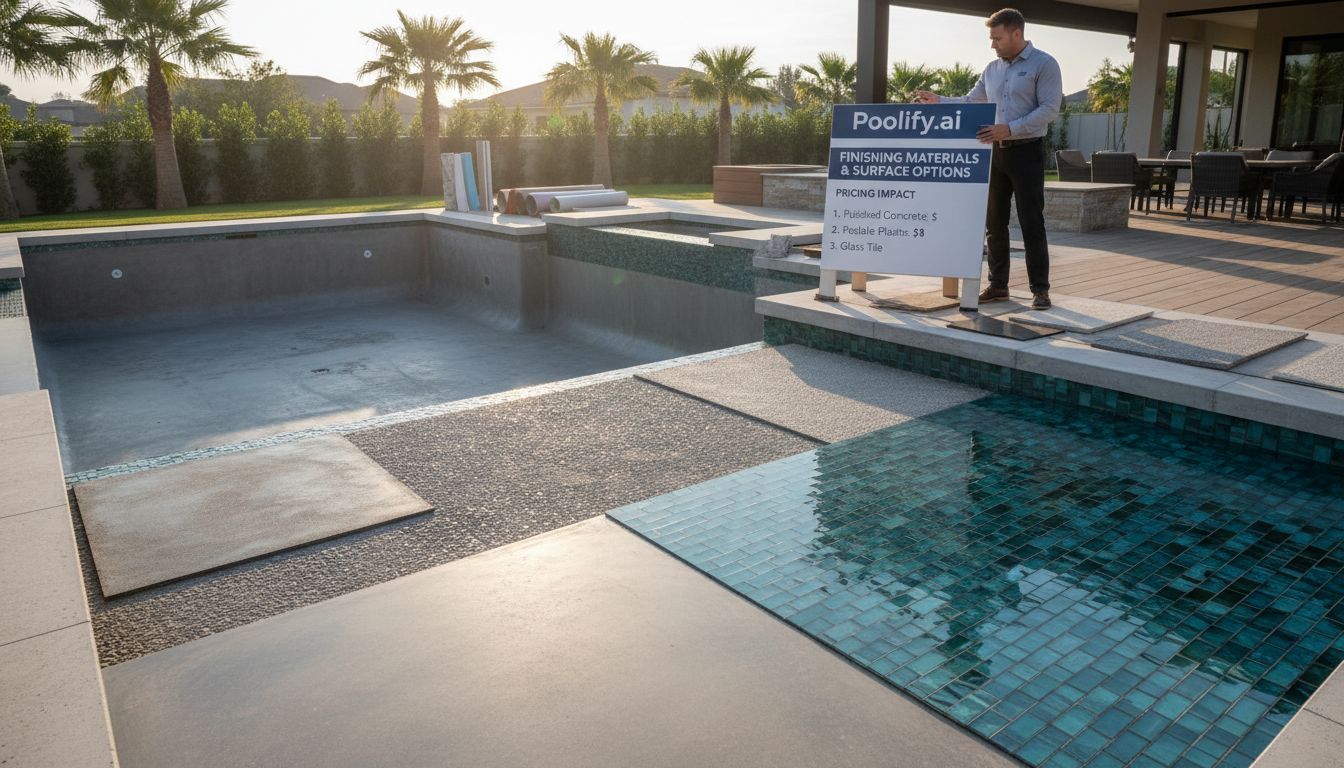
When calculating how much is a concrete pool, interior finish selection dramatically impacts final costs. The surface you choose affects both initial investment and long-term maintenance expenses. Standard plaster finishes represent the most economical option at $3,500 to $6,000 for average pools, providing smooth surfaces that last 7-10 years before requiring resurfacing.
Aggregate finishes containing quartz, pebbles, or glass beads offer enhanced durability and aesthetic appeal. Quartz finishes cost $5,000 to $9,000 and extend surface life to 10-15 years. Pebble finishes range from $8,000 to $15,000 but deliver 15-20 year lifespans with superior stain resistance. These premium surfaces feel more natural underfoot and better resist chemical damage and UV degradation.
Tile applications add significant expense but create stunning visual effects. Waterline tile installation costs $2,000 to $5,000 depending on tile quality and design complexity. Full-tile interiors represent the ultimate luxury, starting at $25,000 and climbing past $50,000 for custom mosaics or imported materials. Tile surfaces last 25+ years and offer the easiest maintenance, though initial investment is substantial.
Coping materials that cap the pool edge range from $3,000 to $10,000 based on material selection. Poured concrete coping offers the most affordable option, while natural stone like travertine or bluestone commands premium pricing. Deck surfaces surrounding the pool add $5,000 to $20,000 depending on square footage and material choices. According to the U.S. Census Bureau’s construction data, outdoor living space investments have increased 23% since 2023, reflecting growing homeowner prioritization of backyard amenities.
Equipment and Mechanical System Expenses
Understanding how much is a concrete pool requires accounting for essential equipment that keeps water clean, comfortable, and safe. Filtration systems represent the heart of pool operation, with sand filters costing $300 to $1,000, cartridge filters ranging $400 to $1,500, and diatomaceous earth (DE) filters priced at $500 to $2,000. Variable-speed pumps, now mandated in many jurisdictions for energy efficiency, cost $800 to $2,500 but reduce operating expenses by 60-80% compared to single-speed models.
Heating systems dramatically extend swimming seasons but add significant upfront costs. Gas heaters range from $2,000 to $4,500 and heat water quickly but carry higher operating costs. Heat pumps cost $3,500 to $7,500 upfront yet operate more efficiently in moderate climates. Solar heating systems require $3,000 to $8,000 initial investment but deliver virtually free heating after installation, making them increasingly popular in 2026 as energy costs rise.
Sanitation systems have evolved beyond traditional chlorine approaches. Salt chlorine generators cost $1,500 to $3,000 and produce chlorine from dissolved salt, reducing chemical handling and providing gentler water quality. UV and ozone systems range from $1,000 to $3,500 and work alongside primary sanitizers to reduce chemical consumption by 50-70%. Automated chemical controllers cost $500 to $2,000 but maintain perfect water balance with minimal manual intervention.
Lighting transforms pools into nighttime focal points while enhancing safety. LED pool lights cost $200 to $800 per fixture, with most pools requiring 2-4 lights for adequate illumination. Color-changing LED systems with smartphone control add $1,500 to $4,000 to projects but create dramatic ambiance. Landscape lighting around the pool area adds another $1,000 to $5,000 depending on design complexity and fixture quality.
Hidden Costs and Budget Considerations
When determining how much is a concrete pool, many homeowners overlook expenses beyond the pool shell itself. Permits and inspections typically cost $500 to $2,000 depending on local requirements, with some municipalities charging fees based on project value. Engineering reports for challenging sites add $1,000 to $3,000 but ensure structural integrity on slopes or in areas with soil stability concerns.
Fencing represents a significant expense often underestimated in initial budgets. Most jurisdictions require pool barriers meeting specific safety standards, with costs ranging from $2,000 for basic chain-link to $15,000+ for decorative wrought iron or glass panel systems. Self-closing, self-latching gates are mandatory in most areas, adding $300 to $1,000 per gate to fencing costs.
Landscaping restoration after construction surprises many homeowners. Heavy equipment damages existing lawns, gardens, and hardscapes, requiring $3,000 to $10,000 for restoration depending on yard size and desired finishes. Many homeowners choose to upgrade their entire backyard simultaneously, integrating outdoor kitchens, fire features, and entertainment areas that can double or triple total project costs.
Insurance premiums typically increase $50 to $200 annually after pool installation, though rates vary by carrier and location. Some insurers require additional liability coverage for pools, particularly those with diving boards or slides. Property taxes may also increase based on the added home value, though pools rarely return 100% of investment at resale in most markets.
Ongoing maintenance costs deserve consideration when budgeting. Professional pool service runs $100 to $200 monthly, while DIY maintenance requires $50 to $100 monthly for chemicals and supplies. Energy costs for pumps and heaters add $30 to $150 monthly depending on usage patterns and equipment efficiency. Water costs for filling and compensating evaporation average $20 to $60 monthly in most regions. For more detailed maintenance guidance, explore our comprehensive pool maintenance guide.
Regional Price Variations: Location Impact on Concrete Pool Costs
Geography significantly influences how much a concrete pool costs due to labor costs, material availability, climate considerations, and market competition. Coastal markets like California, Florida, and the Northeast typically see prices 20-40% higher than Midwest or Southeast regions. Metropolitan areas command premium pricing compared to rural locations due to higher labor rates and permitting complexities.
California represents one of the most expensive markets, with average concrete pool costs ranging $65,000 to $120,000 for standard installations. Stringent building codes, earthquake engineering requirements, and high labor costs drive prices upward. Water conservation mandates also influence design choices, with many California pools incorporating covers and efficient circulation systems to minimize water loss.
Florida’s competitive market and year-round construction season create more moderate pricing despite high demand. Average costs range $50,000 to $95,000, with the state’s sandy soil often simplifying excavation. However, hurricane-resistant construction standards and saltwater corrosion considerations require specific engineering approaches that can add costs in coastal areas.
Texas offers some of the nation’s most competitive pricing, with average concrete pools costing $45,000 to $85,000. The state’s business-friendly environment, lower labor costs, and robust construction industry create favorable conditions for homeowners. However, expansive clay soils in areas like Dallas-Fort Worth require special structural considerations that can add $5,000 to $15,000 to projects.
Northern states face unique challenges affecting pricing. Shorter construction seasons concentrate demand into 6-8 month windows, sometimes increasing labor costs. Deeper excavation for frost protection and specialized winterization systems add expenses. However, lower overall demand in cold climates can make contractors more competitive on pricing, with average costs ranging $48,000 to $90,000 depending on specific location.
Design Complexity and Customization Costs
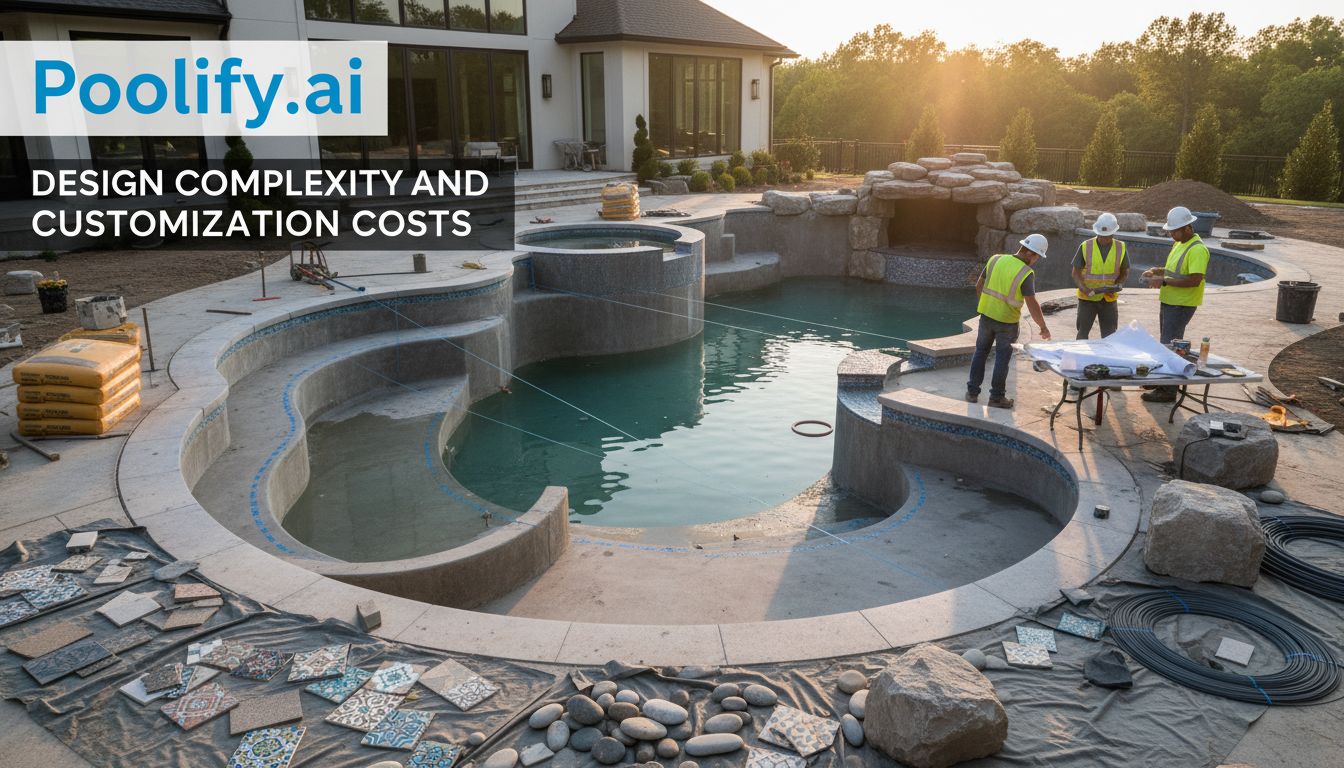
The primary advantage of concrete pools is unlimited customization, but understanding how much is a concrete pool requires recognizing how design choices affect pricing. Simple rectangular or oval shapes represent the most economical options, while geometric designs with multiple angles add 10-20% to construction costs due to increased formwork and finishing complexity.
Freeform organic shapes that mimic natural water bodies command 20-30% premiums over basic rectangles. These designs require skilled craftsmen to create smooth, flowing lines and often involve more extensive shotcrete application. Beach entries with gradually sloping zero-depth areas add $5,000 to $15,000 but create resort-style aesthetics and improve accessibility for children and those with mobility limitations.
Depth variations significantly impact costs. Standard pools with shallow ends (3-4 feet) transitioning to deep ends (6-8 feet) represent baseline pricing. Diving pools requiring 8-10 foot depths need additional excavation, steel reinforcement, and concrete volume, adding $8,000 to $20,000. Conversely, sports pools with consistent shallow depths for volleyball or basketball may reduce costs slightly while maximizing usable swimming area.
Integrated water features transform pools into backyard focal points but add substantial expense. Raised spas connected to the main pool cost $10,000 to $25,000 depending on size and complexity. Waterfalls range from $2,500 for simple spillovers to $20,000+ for naturalistic rock formations with multiple cascades. Deck jets, bubblers, and laminar streams add $500 to $2,000 per feature, creating dynamic visual and auditory interest.
Tanning ledges or baja shelves have become increasingly popular in 2026, providing shallow lounging areas perfect for chairs or sunbathing. These features add $3,000 to $8,000 depending on size but significantly enhance pool functionality. Swim-up bars, grottos, and caves represent luxury additions starting at $15,000 and climbing past $50,000 for elaborate designs.
Financing Options and Budget Strategies
Given the substantial investment required, understanding how much is a concrete pool includes exploring financing strategies. Home equity loans and lines of credit (HELOCs) represent the most common financing methods, offering tax-deductible interest in many cases. Interest rates in 2026 range from 6.5% to 9.5% depending on creditworthiness and loan-to-value ratios.
Cash-out refinancing allows homeowners to access equity while potentially securing lower interest rates than their current mortgage. This approach works best when overall interest rates are favorable and homeowners plan to stay in their homes long-term. Personal loans offer another option, though higher interest rates (8-15%) make them less attractive for large projects.
Many pool contractors offer financing programs through partnerships with lending institutions. These arrangements provide convenient one-stop shopping but may carry higher interest rates than traditional home equity products. Always compare multiple financing options before committing, as rate differences of 1-2% translate to thousands of dollars over typical 10-15 year loan terms.
Phased construction represents a strategic approach to managing costs. Installing the basic pool structure initially, then adding features like spas, waterfalls, and premium decking in subsequent years spreads expenses while allowing homeowners to enjoy their pool sooner. This approach requires upfront planning to ensure later additions integrate seamlessly with initial construction.
Seasonal timing can impact how much a concrete pool costs through contractor availability and pricing flexibility. Fall and winter bookings in most markets face less competition, potentially yielding 5-15% discounts as contractors fill schedules during slower periods. However, weather delays in cold climates may extend project timelines, so weigh cost savings against convenience factors.
Value Engineering: Maximizing Quality While Controlling Costs
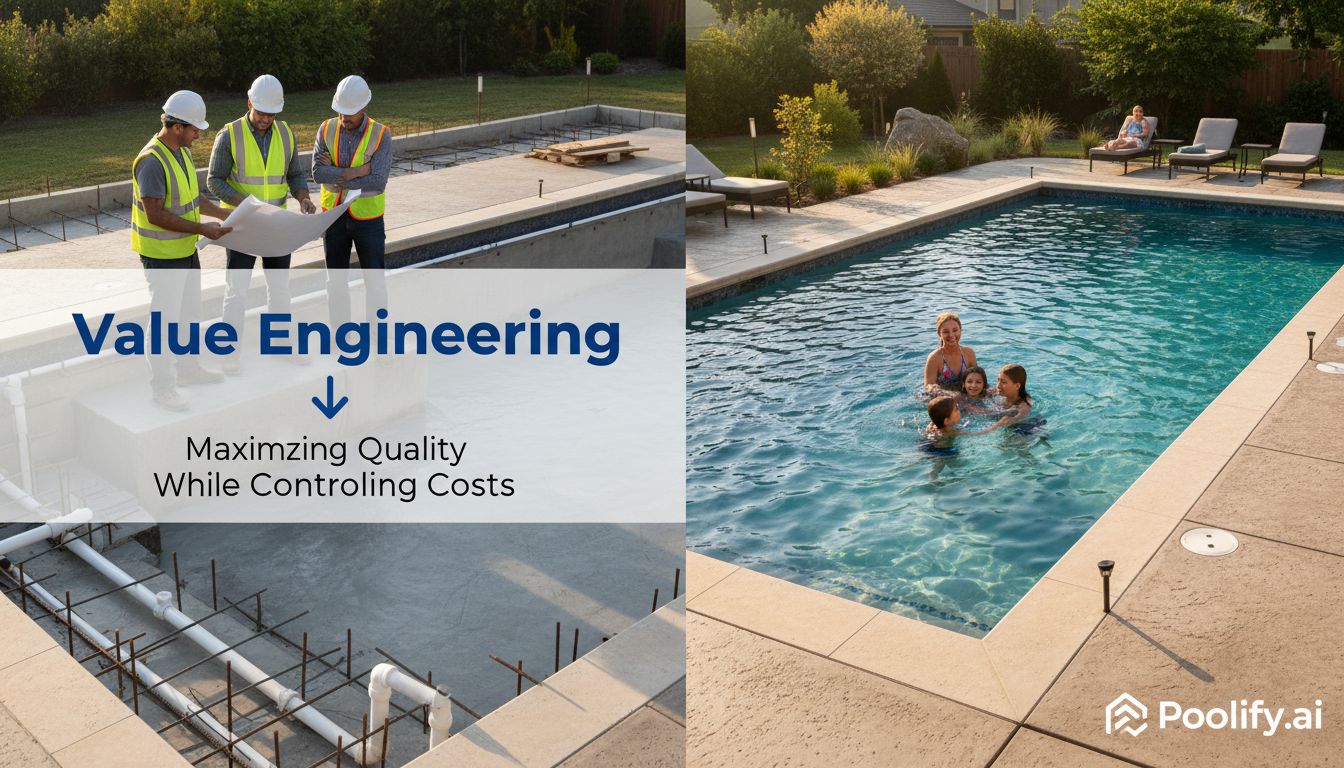
Smart homeowners asking how much is a concrete pool also seek strategies to optimize value without compromising quality. Prioritizing structural elements over cosmetic features ensures long-term satisfaction. Investing in proper steel reinforcement, adequate concrete thickness, and quality plumbing creates a solid foundation that lasts decades, while finish materials can be upgraded during future renovations.
Standard shapes and sizes leverage contractor efficiency and reduce labor hours. Rectangular pools between 12×24 and 16×32 feet represent sweet spots where material costs and construction time optimize value. These dimensions accommodate most family needs while avoiding premium pricing for unusual configurations.
Equipment selection significantly impacts both initial costs and long-term expenses. Variable-speed pumps cost more upfront but save $500-$1,000 annually in energy costs compared to single-speed models. Salt chlorine generators reduce ongoing chemical expenses by $300-$500 yearly. These efficiency investments typically pay for themselves within 3-5 years while providing superior convenience and performance.
Finish material choices offer another value engineering opportunity. Starting with quality plaster finishes and upgrading to aggregate surfaces during the first resurfacing (typically 7-10 years) spreads costs while ensuring immediate pool enjoyment. This approach allows homeowners to allocate more budget to structural quality and essential equipment during initial construction.
DIY-friendly tasks can reduce labor costs without compromising quality. Homeowners might handle landscaping restoration, fence installation, or deck furniture selection independently. However, leave structural work, plumbing, and electrical systems to licensed professionals—cutting corners on critical elements creates safety hazards and expensive future repairs. Check out our pool installation tips for guidance on what to DIY and what requires professionals.
Comparing Concrete Pools to Alternative Construction Methods
Understanding how much is a concrete pool requires context relative to alternative construction methods. Fiberglass pools cost $40,000 to $85,000 installed, offering faster installation (1-2 weeks versus 8-12 weeks for concrete) and lower maintenance requirements. However, fiberglass pools come in predetermined shapes and sizes, limiting customization. Their smooth gel-coat surfaces resist algae growth but can fade or crack over time, requiring expensive repairs.
Vinyl liner pools represent the most economical option at $25,000 to $50,000 installed. These pools use steel, aluminum, or polymer wall panels with vinyl liners creating the water barrier. While initial costs attract budget-conscious buyers, liner replacements every 7-10 years cost $3,000 to $5,000, and the material feels less substantial than concrete or fiberglass. Vinyl pools also limit design options and can’t accommodate infinity edges or perimeter overflow systems.
Concrete pools command premium pricing but deliver unmatched longevity and customization. The structural shell lasts 50+ years, with only surface finishes requiring periodic renewal. Concrete accommodates any imaginable shape, depth, or feature, allowing truly custom designs that complement architectural styles and landscape themes. For homeowners planning to stay in their homes long-term and prioritizing unique design, concrete pools offer superior value despite higher initial investment.
Resale value considerations favor concrete pools in luxury markets where buyers expect premium amenities. According to the National Association of Realtors, concrete pools in appropriate markets return 40-60% of installation costs at resale, compared to 30-40% for fiberglass and vinyl alternatives. However, in markets where pools are less common or climates limit swimming seasons, returns diminish across all pool types.
Long-Term Ownership Costs and Maintenance
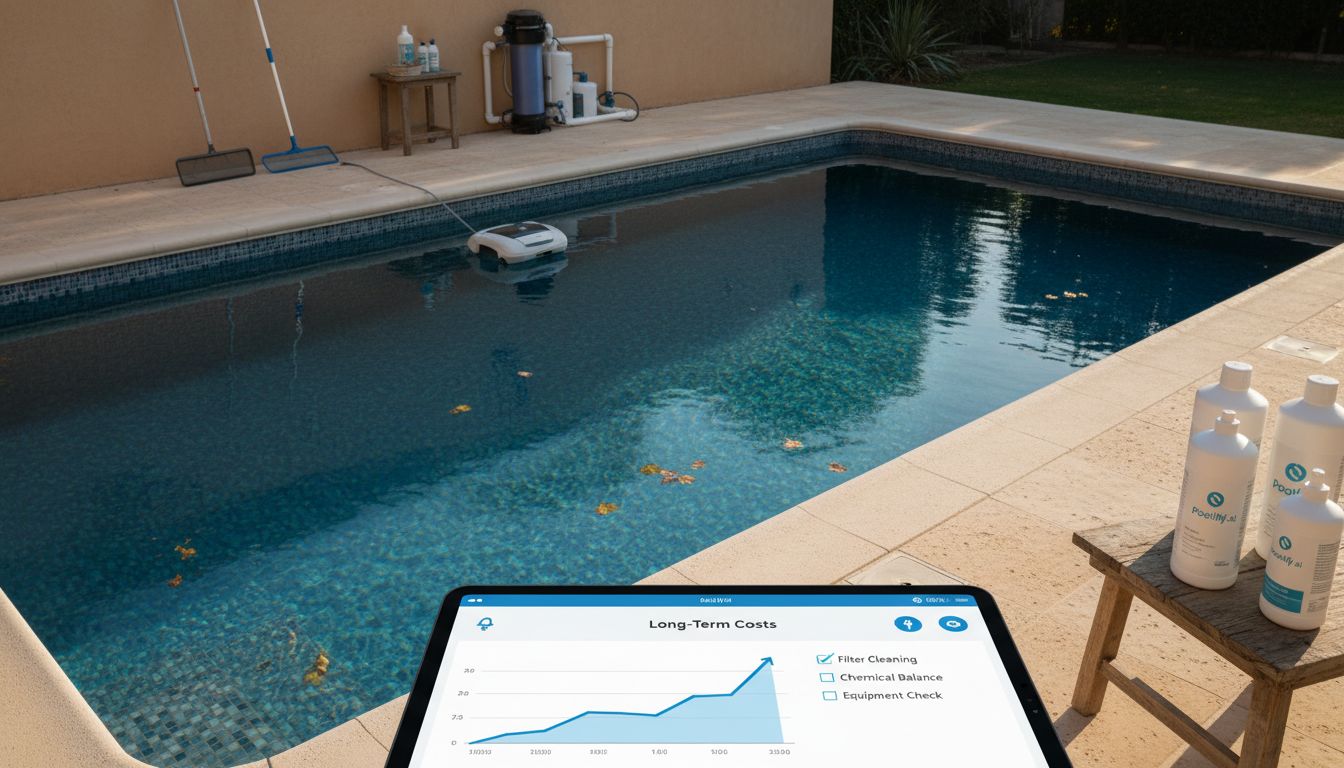
Calculating how much is a concrete pool extends beyond initial construction to lifetime ownership expenses. Concrete pools require more maintenance than fiberglass alternatives but less than vinyl liner pools. Weekly maintenance tasks include skimming debris, vacuuming, testing water chemistry, and adjusting chemicals—activities requiring 1-2 hours weekly or $100-$200 monthly for professional service.
Chemical costs average $50-$100 monthly depending on pool size, usage intensity, and water source quality. Saltwater systems reduce this expense by 30-50% while providing gentler water quality. Proper chemical balance prevents surface damage and extends equipment life, making consistent maintenance essential for protecting your investment.
Energy costs vary dramatically based on equipment efficiency, climate, and usage patterns. Variable-speed pumps operating 8 hours daily cost $20-$40 monthly in most regions, while older single-speed pumps can exceed $100 monthly. Heaters add $50-$200 monthly during use, with gas heaters costing more to operate but heat pumps requiring milder temperatures to function efficiently. Solar covers reduce heating costs by 50-70% while minimizing water evaporation.
Resurfacing represents the largest periodic maintenance expense. Plaster surfaces require renewal every 7-10 years at $3,500-$6,000, while aggregate finishes last 10-20 years at $5,000-$15,000 per application. Tile surfaces last 25+ years but cost $25,000-$50,000+ for full interior installations. Factoring resurfacing into long-term budgets prevents surprises and ensures proper pool maintenance.
Equipment replacement follows predictable cycles. Pumps last 8-12 years, heaters 10-15 years, and filters 7-15 years depending on type and maintenance quality. Setting aside $500-$1,000 annually for equipment reserves ensures funds are available when components reach end-of-life. Proactive replacement before complete failure prevents damage to other system components and maintains optimal efficiency.
Frequently Asked Questions
How much is a concrete pool compared to fiberglass or vinyl options?
Concrete pools cost $50,000-$100,000+ installed, while fiberglass pools range $40,000-$85,000 and vinyl liner pools cost $25,000-$50,000. Concrete commands premium pricing but offers unlimited customization and longest structural lifespan. Fiberglass provides faster installation and lower maintenance, while vinyl represents the most economical initial investment but requires liner replacements every 7-10 years.
What factors most significantly impact how much a concrete pool costs?
Pool size, shape complexity, finish materials, equipment selection, and regional labor costs most significantly affect pricing. A simple rectangular pool with standard plaster finish costs substantially less than freeform designs with aggregate surfaces, integrated spas, and water features. Site conditions like rocky soil or poor access can increase excavation costs by 50% or more.
How long does concrete pool construction take in 2026?
Typical concrete pool construction requires 8-12 weeks from excavation to completion, though complex projects may extend to 16 weeks. Weather delays, permit processing times, and contractor schedules affect timelines. This compares to 1-2 weeks for fiberglass pool installation and 3-6 weeks for vinyl liner pools.
Can I reduce costs by doing some work myself?
Homeowners can handle landscaping restoration, fence installation, and some deck work to reduce costs by $5,000-$15,000. However, excavation, steel installation, shotcrete application, plumbing, and electrical work require licensed professionals. Attempting DIY on structural or mechanical elements creates safety hazards and may violate building codes, potentially voiding warranties and insurance coverage.
Do concrete pools increase home value enough to justify the investment?
Concrete pools typically return 40-60% of installation costs at resale in appropriate markets with warm climates and strong pool culture. Returns vary significantly by location, with minimal value added in cold climates or areas where pools are uncommon. Pools primarily benefit current homeowners through lifestyle enhancement rather than serving as pure financial investments.
Key Takeaways
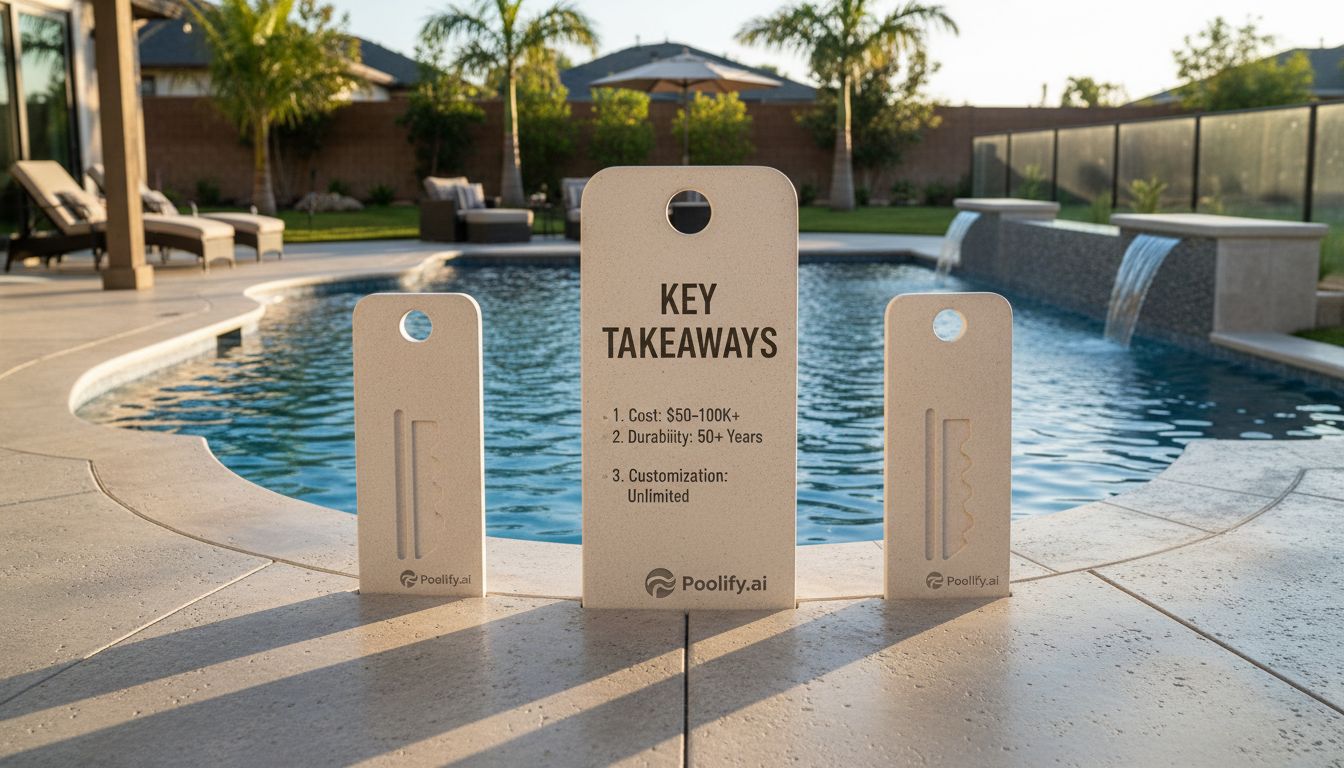
- Base Investment Range: Expect to invest $50,000-$100,000 for standard concrete pools in 2026, with luxury projects exceeding $150,000. Size, complexity, finishes, and regional factors create significant price variations.
- Hidden Costs Matter: Permits, fencing, landscaping restoration, insurance increases, and ongoing maintenance add $10,000-$30,000 beyond basic construction costs. Budget comprehensively to avoid financial surprises mid-project.
- Customization Commands Premium: Concrete pools cost more than alternatives but deliver unlimited design flexibility and 50+ year structural lifespans. Freeform shapes, water features, and premium finishes significantly increase costs but create truly unique backyard environments.
- Equipment Efficiency Pays: Variable-speed pumps, salt chlorine generators, and efficient heaters cost more initially but reduce operating expenses by 50-70% over equipment lifespans, typically paying for themselves within 3-5 years.
- Long-Term Planning Essential: Factor resurfacing every 7-20 years (depending on finish), equipment replacements, and ongoing maintenance into lifetime ownership costs. Setting aside $1,500-$3,000 annually for maintenance reserves ensures your pool remains beautiful and functional for decades.
See Your Dream Pool in Your Actual Backyard
Upload a photo and get an AI-designed pool visualization in 10 seconds. 3 free designs, no login required.
Try Poolify Free →Conclusion
Understanding how much is a concrete pool requires examining numerous factors beyond basic construction costs. While the $50,000-$100,000 typical investment range provides a starting point, your specific project costs depend on size, design complexity, finish selections, equipment choices, and regional market conditions. Hidden expenses like permits, fencing, landscaping, and ongoing maintenance significantly impact total ownership costs over your pool’s lifetime.
Concrete pools represent premium investments that deliver unmatched customization, durability, and aesthetic possibilities. Unlike prefabricated alternatives, concrete accommodates any imaginable design, from simple rectangles to elaborate resort-style environments with integrated spas, waterfalls, and beach entries. The structural shell lasts 50+ years, making concrete pools sound long-term investments for homeowners planning extended stays in their properties.
Smart budgeting strategies help maximize value without compromising quality. Prioritizing structural integrity, investing in efficient equipment, and selecting appropriate finish materials for your budget creates pools that provide decades of enjoyment. Whether you’re planning a modest family pool or an elaborate outdoor entertainment complex, understanding true costs empowers informed decisions that align with your financial capabilities and lifestyle goals.
The question of how much is a concrete pool ultimately depends on your unique vision, property characteristics, and quality expectations. Working with experienced contractors, comparing multiple quotes, and planning comprehensively ensures your investment delivers the backyard oasis you envision while avoiding costly surprises during construction and ownership.
References
- U.S. Census Bureau – Construction Characteristics: https://www.census.gov/construction/chars/index.html
- National Association of Realtors – Research and Statistics: https://www.nar.realtor/research-and-statistics
