If you’re dreaming of a backyard oasis, one of your first questions is likely: how long does pool installation take? The answer depends on several factors, including pool type, weather conditions, permit requirements, and contractor availability. In 2026, most pool installations take between 8 to 12 weeks from contract signing to your first swim, though this timeline can vary significantly. Understanding the installation process helps you plan accordingly and set realistic expectations for your project.
Pool installation involves multiple phases, each with its own timeline and potential delays. From initial excavation to final landscaping, every step requires careful coordination between contractors, inspectors, and suppliers. This guide breaks down the entire process, helping you understand what to expect at each stage and how to keep your project on track.
Understanding the Pool Installation Timeline in 2026
The question of how long does pool installation take requires examining each construction phase individually. Modern pool installation has become more efficient thanks to advanced equipment and streamlined processes, but quality work still requires adequate time. The total duration depends heavily on your pool type, with fiberglass pools typically completing fastest, followed by vinyl liner pools, and concrete pools taking the longest.
In 2026, the average timeline for different pool types breaks down as follows: fiberglass pools generally take 3 to 6 weeks, vinyl liner pools require 4 to 8 weeks, and concrete or gunite pools need 8 to 12 weeks or longer. These estimates assume normal weather conditions and no significant permitting delays. According to the Pool & Hot Tub Alliance, proper planning and selecting experienced contractors can significantly reduce installation time while maintaining quality standards.
Weather plays a crucial role in determining how long does pool installation take. Rain, extreme temperatures, and frozen ground can halt construction for days or weeks. Spring and fall typically offer the most predictable weather patterns, while summer heat can actually complicate concrete curing. Winter installations in warmer climates may proceed smoothly, but northern regions face significant seasonal limitations.
Pre-Construction Phase: Permits and Planning
Before any digging begins, understanding how long does pool installation take means accounting for the pre-construction phase. This critical period typically spans 2 to 4 weeks and involves obtaining necessary permits, finalizing designs, and scheduling contractors. Many homeowners underestimate this phase, but proper planning prevents costly delays later.
Permit acquisition varies dramatically by location. Some municipalities issue pool permits within days, while others require weeks of review, especially if your property has special zoning considerations or homeowner association requirements. In 2026, many jurisdictions have digitized their permitting processes, potentially speeding approval times. However, you should still budget at least 1 to 3 weeks for permit processing.
During this phase, your contractor will conduct a site survey, mark utility lines, and finalize engineering plans. The local government requirements for setbacks, fencing, and safety features must be incorporated into your design. Soil testing may also be necessary to determine ground stability and drainage needs, adding several days to the timeline.
Design finalization is another component affecting how long does pool installation take. Changes to pool shape, depth, features, or materials during this phase cause minimal delays. However, design changes after construction begins can add weeks to your project and increase costs significantly. Take time to review every detail before signing off on final plans.
Factors That Extend Pre-Construction Time
Several issues can prolong the planning phase beyond typical estimates. Properties with easements, underground utilities, or drainage concerns require additional engineering work. Historic districts or properties near protected wetlands face stricter permitting requirements. If your property has any unique characteristics, add an extra 1 to 2 weeks to your timeline.
Homeowner association approval represents another potential delay. Some HOAs meet monthly, meaning you might wait 4 to 6 weeks just to get on their agenda. Review your HOA covenants early and submit applications well before you hope to begin construction. For more guidance on preparing your property, check out our comprehensive pool planning guide.
Excavation and Site Preparation Phase
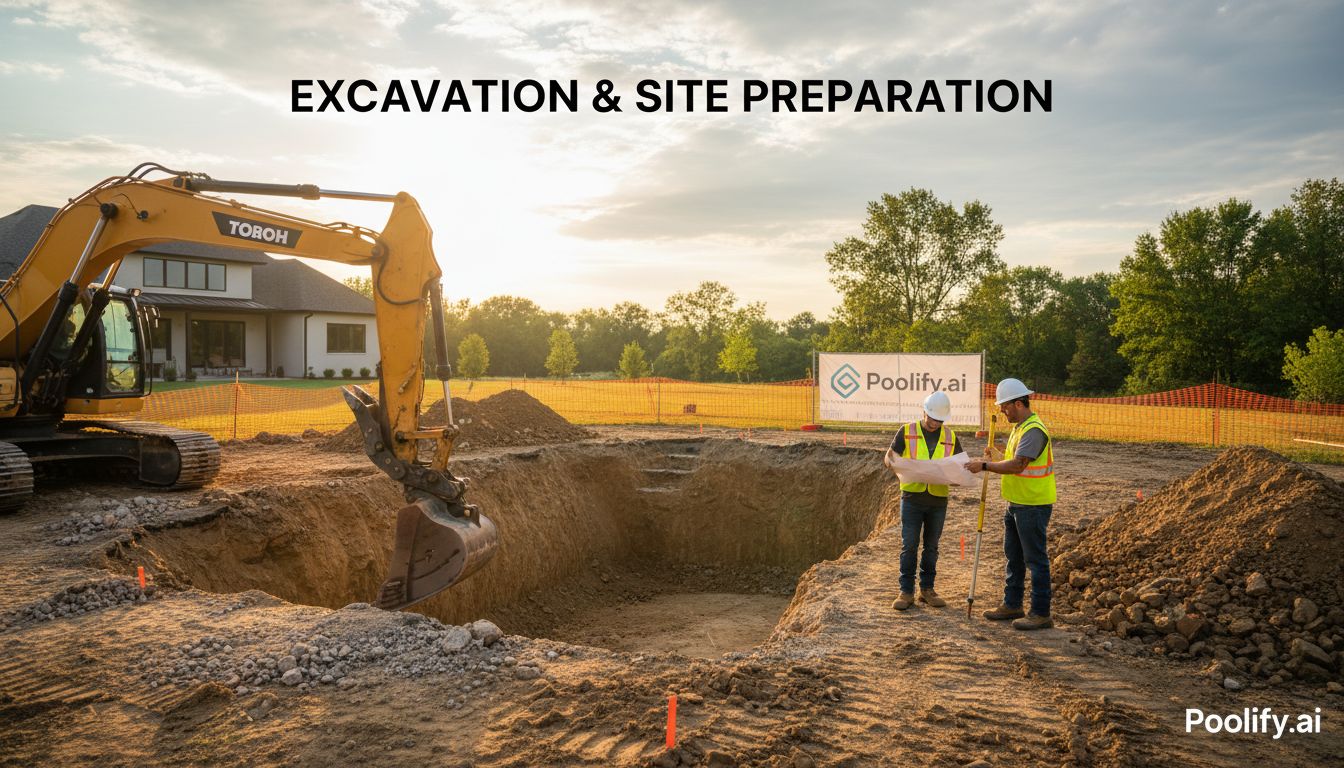
Once permits are secured, the physical work begins. When considering how long does pool installation take, excavation typically requires 1 to 3 days for most residential pools. This phase moves quickly when conditions are favorable, but complications can extend the timeline significantly.
Professional excavators use machinery to dig the pool hole according to engineering specifications. The process creates substantial disruption to your yard, with heavy equipment accessing your property and removing tons of soil. Most contractors complete excavation in a single day for standard-sized pools, though larger or complex designs may require additional time.
Soil conditions dramatically impact excavation duration. Rocky terrain, high water tables, or unexpected underground obstacles slow progress considerably. If excavators encounter bedrock, they may need specialized equipment for rock removal, adding several days to the schedule. Clay-heavy soil requires careful handling to prevent cave-ins, while sandy soil may need additional structural support.
After excavation, the site requires grading and preparation for the pool structure. This includes creating a level base, installing drainage systems, and positioning plumbing lines. Proper site preparation is essential for long-term pool stability, so rushing this phase creates future problems. Budget 1 to 2 days for thorough site preparation following excavation.
Managing Excavation Challenges
Weather conditions significantly affect excavation timing. Heavy rain turns excavation sites into muddy hazards, forcing delays until soil dries adequately. Frozen ground in colder months makes excavation impossible without specialized equipment. Schedule excavation during dry periods when possible, and maintain flexibility in your timeline.
Utility line complications occasionally arise despite pre-construction surveys. If unmarked lines are discovered, work must stop immediately while utility companies assess the situation. This can add days or weeks to your project. Always ensure proper utility marking before excavation begins to minimize this risk.
Pool Structure Installation: The Core Construction Phase
The structure installation phase is where pool types diverge significantly in terms of how long does pool installation take. This phase represents the bulk of construction time and involves the most specialized labor. Understanding your chosen pool type’s installation process helps you anticipate the timeline accurately.
Fiberglass Pool Installation Timeline
Fiberglass pools offer the fastest installation among pool types. The pre-manufactured shell arrives on-site ready for placement, dramatically reducing construction time. Once excavation is complete, fiberglass pool installation typically takes just 1 to 2 weeks to reach a swimmable state.
The actual shell placement occurs in a single day, using a crane to lower the fiberglass unit into the prepared excavation. This process is remarkably quick but requires precise positioning to ensure proper leveling and alignment. After placement, contractors backfill around the shell, install plumbing connections, and complete electrical work over the following days.
Fiberglass pools require minimal curing time compared to concrete alternatives. Once the shell is set, plumbing connected, and backfilling complete, you can typically fill and balance the pool within days. This makes fiberglass an excellent choice when wondering how long does pool installation take and wanting the shortest possible timeline.
Vinyl Liner Pool Installation Timeline
Vinyl liner pools fall in the middle range for installation duration, typically requiring 3 to 6 weeks for the structure phase. These pools involve building a frame structure, installing the liner, and connecting all systems. The process is more complex than fiberglass but faster than concrete construction.
Installation begins with assembling the pool’s wall structure, usually made from steel, aluminum, or polymer panels. This framework installation takes 3 to 5 days, depending on pool size and complexity. Workers must ensure perfect alignment and stability before proceeding to the next phase.
After the frame is secure, contractors install the pool floor, typically consisting of sand, vermiculite, or grout. Floor preparation requires 1 to 2 days and must be perfectly smooth to prevent liner damage. Once the floor is ready, the vinyl liner is carefully positioned and secured, a process taking 1 to 2 days for proper installation.
Plumbing and electrical work proceeds alongside or immediately after liner installation. These systems require careful integration with the pool structure and typically add 3 to 5 days to the timeline. Inspections may be required at various stages, potentially adding time if issues are identified.
Concrete and Gunite Pool Installation Timeline
Concrete pools, including gunite and shotcrete varieties, require the longest installation period but offer maximum customization. When asking how long does pool installation take for concrete pools, expect 6 to 10 weeks for the structure phase alone. This extended timeline reflects the complex, multi-step construction process.
Steel reinforcement installation is the first major step, typically requiring 2 to 3 days. Workers create a rebar framework that provides structural integrity for the concrete shell. This framework must meet engineering specifications and pass inspection before concrete application begins.
Gunite or shotcrete application happens next, usually completed in 1 to 2 days. Specialized crews spray concrete mixture onto the rebar framework, building up the pool shell to the specified thickness. This process requires skilled applicators and ideal weather conditions for proper application.
The critical curing period follows concrete application, typically lasting 28 days for full strength development. While some work can proceed during curing, the pool cannot be finished until concrete reaches adequate strength. This curing period is the primary reason concrete pools take significantly longer than other types.
After initial curing, surface finishing begins. Options include plaster, tile, aggregate, or other finishes, each with different application timelines. Standard plaster application takes 1 to 2 days, while more elaborate finishes may require a week or more. The finish must then cure before the pool can be filled.
Plumbing, Electrical, and Equipment Installation
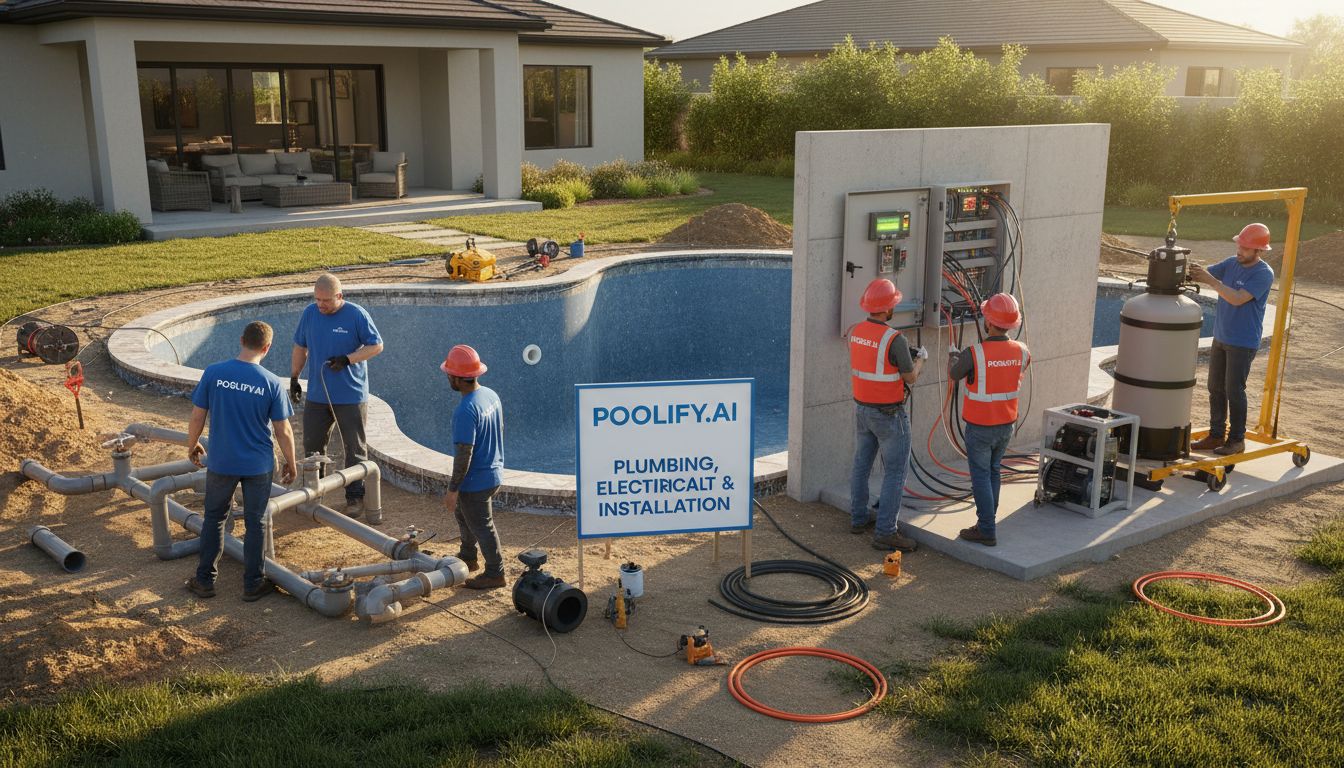
Regardless of pool type, mechanical systems installation is a crucial phase affecting how long does pool installation take. This work typically requires 1 to 2 weeks and involves multiple specialized contractors. Proper installation of these systems ensures your pool operates efficiently and safely for years to come.
Plumbing installation includes main drains, return lines, skimmers, and any water features. Contractors must route pipes from the pool to the equipment pad, ensuring proper slope for drainage and circulation. Underground plumbing work must be completed and inspected before backfilling, making this phase time-sensitive.
Electrical work requires licensed electricians to install pool lighting, pump circuits, heater connections, and control systems. In 2026, many pools incorporate smart automation systems, adding complexity to electrical installation. All electrical work must meet strict safety codes and undergo inspection before activation.
Equipment installation involves positioning and connecting pumps, filters, heaters, and automation systems. The equipment pad must be properly prepared with adequate drainage and access. Quality contractors ensure all equipment is correctly sized and configured for your specific pool, optimizing performance and efficiency. Learn more about equipment selection in our pool equipment selection guide.
Inspection and Testing Phase
Municipal inspections occur at various construction stages, each potentially affecting how long does pool installation take. Plumbing and electrical systems typically require separate inspections before being covered or activated. Schedule inspections promptly to avoid delays, and ensure all work meets code before inspection day.
Failed inspections can add significant time to your project. If work doesn’t meet code requirements, contractors must make corrections and schedule re-inspection. This can add days or weeks depending on the severity of issues and inspector availability. Hiring experienced, licensed contractors minimizes inspection failure risk.
Decking, Coping, and Finishing Touches
The final construction phase involves installing pool coping, decking, and landscaping elements. This phase typically requires 2 to 4 weeks and transforms your pool from a construction site into a finished backyard retreat. When calculating how long does pool installation take, don’t overlook this important finishing period.
Coping installation happens first, creating the finished edge around your pool perimeter. Material choices include natural stone, pavers, concrete, or brick, each with different installation timelines. Stone and paver coping typically takes 2 to 3 days for standard-sized pools, while poured concrete coping may require additional curing time.
Decking installation timeline varies dramatically based on material selection. Concrete decking requires pouring, finishing, and curing, typically taking 1 to 2 weeks. Paver decking installs more quickly, usually completing within 3 to 5 days. Wood or composite decking requires frame construction and may take 1 to 2 weeks depending on design complexity.
Tile work, if included in your design, adds beauty but also time to the project. Waterline tile installation typically takes 2 to 3 days, while more extensive tile features require additional time. Tile work must be completed carefully to ensure proper adhesion and alignment, so rushing this phase compromises quality.
Landscaping and Final Grading
Restoring your yard after pool construction involves final grading, soil placement, and landscaping installation. This work typically requires 3 to 5 days but can extend longer for elaborate landscape designs. Proper grading ensures water drains away from your pool, preventing future problems.
Fencing installation is often required by local codes and adds time to the finishing phase. Fence installation typically takes 1 to 3 days depending on perimeter length and material choice. Some jurisdictions won’t issue final approval until safety fencing is complete, so schedule this work promptly.
Factors That Can Delay Your Pool Installation
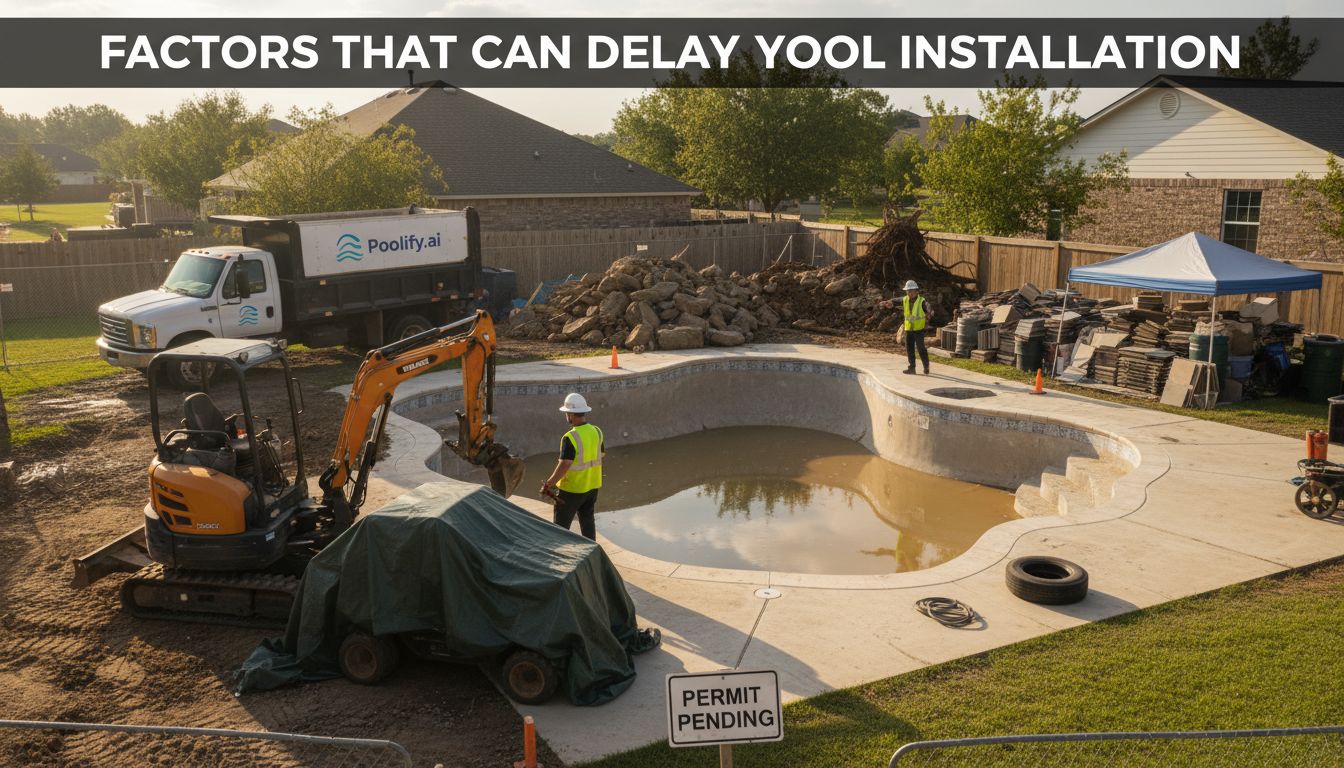
Understanding how long does pool installation take requires acknowledging potential delays. Even well-planned projects encounter unexpected issues that extend timelines. Being aware of common delay factors helps you maintain realistic expectations and plan accordingly.
Weather represents the most unpredictable delay factor. Extended rain periods, extreme heat, or cold snaps can halt work for days or weeks. Concrete work is particularly weather-sensitive, requiring specific temperature ranges for proper curing. Spring and fall generally offer the most favorable conditions, while summer and winter present more challenges.
Material and equipment shortages occasionally impact project timelines. In 2026, supply chain improvements have reduced these issues compared to previous years, but delays still occur. Custom materials, specialized equipment, or unique finishes may have extended lead times. Order materials early and maintain flexibility in your timeline.
Contractor scheduling conflicts can extend how long does pool installation take, especially during peak construction season. Reputable contractors often book months in advance, and coordinating multiple specialized subcontractors requires careful scheduling. Weather delays or problems with other projects can create cascading schedule impacts.
Unexpected site conditions discovered during construction sometimes require design modifications or additional work. Rock formations, underground springs, poor soil stability, or unmarked utilities can necessitate engineering solutions that add time to your project. Thorough site assessment during planning minimizes these surprises.
Permit and Inspection Delays
Government processes don’t always move on your preferred timeline. Permit processing delays, inspector availability, or failed inspections can add weeks to your project. Maintain open communication with your contractor about inspection schedules and requirements to minimize these delays.
Some jurisdictions experience seasonal backlogs during peak construction periods. If you’re building during busy season, factor additional time for permitting and inspections. Working with contractors familiar with local processes helps navigate bureaucratic requirements efficiently.
How to Minimize Installation Time
While some factors affecting how long does pool installation take are beyond your control, proactive steps can minimize delays. Strategic planning and contractor selection significantly impact project duration without compromising quality.
Choose your contractor carefully, prioritizing experience and reputation over the lowest bid. Established contractors have refined processes, reliable subcontractor networks, and strong relationships with suppliers and inspectors. These advantages translate to smoother projects with fewer delays. Request references and verify licensing before committing.
Schedule your project during optimal seasons for your climate. In most regions, spring and early summer offer the best balance of favorable weather and contractor availability. Avoid scheduling during peak season when contractors are overbooked and materials may be scarce. Off-season construction sometimes proceeds faster despite weather challenges.
Make all design decisions before construction begins. Changes mid-project invariably cause delays and increase costs. Work closely with your contractor during planning to finalize every detail, from pool shape to finish materials to equipment selection. Once construction starts, resist the temptation to make modifications.
Prepare your property in advance by clearing the construction area, ensuring equipment access, and addressing any known site issues. Remove obstacles like trees, structures, or landscaping that might interfere with construction. Clear access routes allow equipment to move efficiently, preventing delays.
Communication and Flexibility
Maintain regular communication with your contractor throughout the project. Weekly updates help you stay informed about progress, upcoming phases, and potential issues. Address questions or concerns promptly to prevent small problems from becoming major delays.
Build flexibility into your timeline expectations. If you’re planning a specific event or deadline, aim to complete construction at least 2 to 4 weeks earlier than necessary. This buffer accommodates unexpected delays without creating stress or forcing contractors to rush work and compromise quality.
Frequently Asked Questions
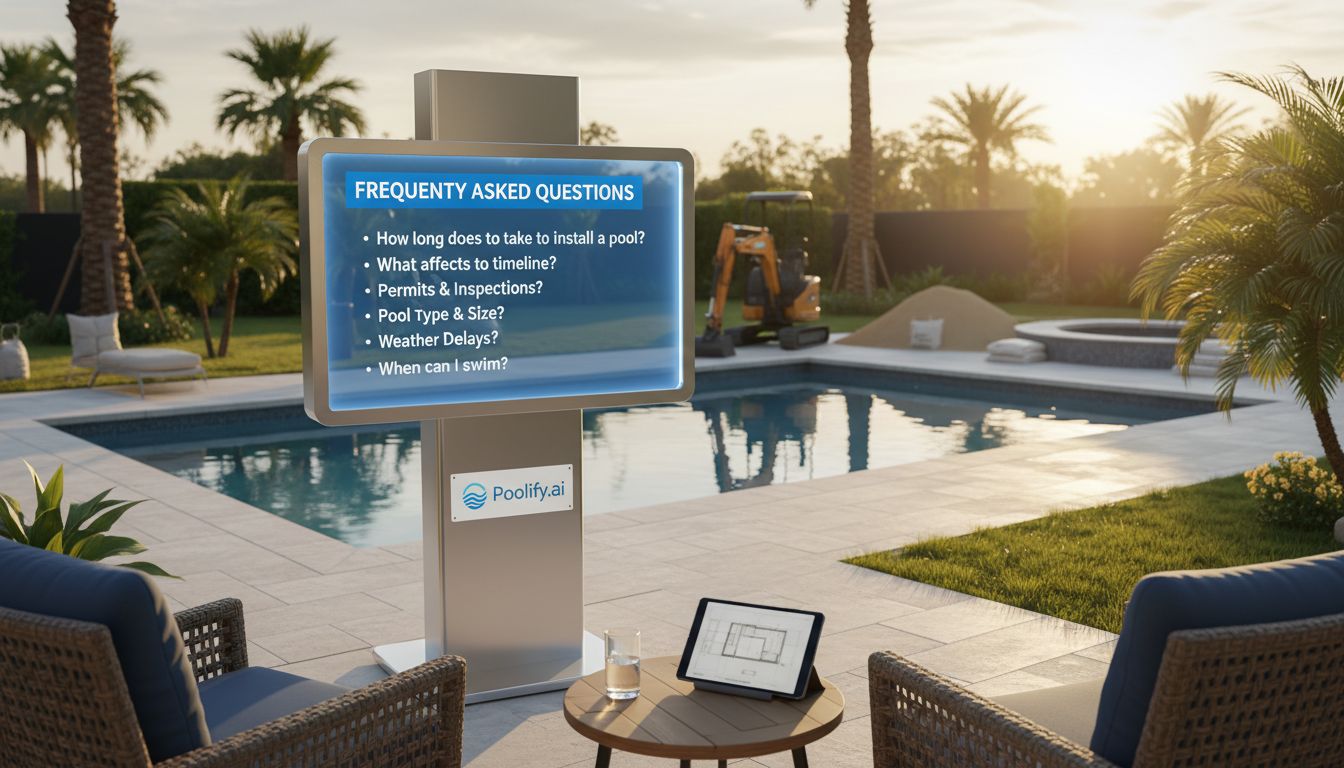
How long does pool installation take for an average-sized inground pool?
For a standard inground pool, installation typically takes 8 to 12 weeks from permit approval to completion. Fiberglass pools can be ready in as little as 3 to 6 weeks, while concrete pools often require 10 to 12 weeks or longer. The timeline depends on pool type, weather conditions, and site-specific factors.
Can pool installation be completed faster if I pay extra?
While premium pricing might improve contractor availability, certain phases simply require time regardless of budget. Concrete must cure for 28 days, permits need processing time, and inspections follow municipal schedules. Rushing critical phases like excavation or plumbing installation compromises quality and creates future problems. Focus on hiring experienced contractors who work efficiently rather than trying to accelerate timelines unnaturally.
What time of year is fastest for pool installation?
Spring typically offers the best combination of favorable weather and reasonable contractor availability. Fall can also work well in many climates, with the added benefit of less competition for contractor time. Summer heat can complicate concrete work, while winter installations face weather challenges in most regions. The optimal timing depends on your specific climate and local construction patterns.
How much of the installation time requires me to be home?
Most installation phases don’t require homeowner presence, though you should be available for initial meetings, design reviews, and final walkthroughs. Key decision points like equipment startup and pool school typically require 1 to 2 hours of your time. Discuss scheduling preferences with your contractor to coordinate around your availability while keeping the project moving forward.
Does pool size significantly affect installation time?
Pool size does impact timeline, but not as dramatically as you might expect. A larger pool requires more excavation, materials, and finishing work, potentially adding 1 to 3 weeks to the overall timeline. However, the fundamental processes remain the same regardless of size. Complex shapes, extensive water features, or elaborate finishes affect duration more than simple size increases.
Key Takeaways
- Average installation timelines: Fiberglass pools take 3 to 6 weeks, vinyl liner pools require 4 to 8 weeks, and concrete pools need 8 to 12 weeks or longer from permit to completion.
- Pre-construction planning: Permits, design finalization, and site preparation typically require 2 to 4 weeks before physical construction begins, with variations based on local requirements.
- Weather and seasons matter: Weather conditions significantly impact construction timelines, with spring and fall generally offering the most predictable schedules in most climates.
- Concrete curing is non-negotiable: Concrete pools require 28 days for proper curing, representing the primary reason they take longer than fiberglass or vinyl alternatives.
- Quality contractors minimize delays: Experienced contractors with established processes, reliable subcontractor networks, and local knowledge complete projects more efficiently while maintaining high quality standards.
See Your Dream Pool in Your Actual Backyard
Upload a photo and get an AI-designed pool visualization in 10 seconds. 3 free designs, no login required.
Try Poolify Free →Conclusion
Understanding how long does pool installation take helps you plan effectively and set realistic expectations for your backyard transformation. While the process requires patience, the result is a valuable addition to your home that provides years of enjoyment. Most residential pool installations complete within 8 to 12 weeks, though your specific timeline depends on pool type, site conditions, weather, and contractor efficiency.
The key to a smooth installation is thorough planning, selecting experienced contractors, and maintaining flexibility when unexpected delays occur. Make all design decisions before construction begins, prepare your property adequately, and communicate regularly with your contractor throughout the process. By understanding each construction phase and potential delay factors, you can navigate the installation process confidently.
Whether you choose a quick-installing fiberglass pool or a custom concrete design requiring more time, the investment in proper installation pays dividends in pool longevity and performance. Don’t rush critical phases or pressure contractors to compromise quality for speed. A well-installed pool completed on a reasonable timeline will provide far more satisfaction than a rushed project plagued by future problems. Start planning your pool project today with realistic timeline expectations, and you’ll be swimming in your backyard oasis before you know it.
References
- Pool & Hot Tub Alliance – https://www.phta.org/
- USA.gov Local Governments – https://www.usa.gov/local-governments
