Introduction: The Reality of DIY Pool Installation
Can I install a pool myself? This question crosses the mind of countless homeowners dreaming of backyard oasis without the hefty professional installation costs. The short answer is yes, but the complete answer requires understanding the complexity, commitment, and careful planning involved. In 2026, DIY pool installation has become more accessible than ever, with improved materials, comprehensive resources, and supportive online communities. However, the project demands significant physical labor, technical knowledge, and strict adherence to local regulations. This comprehensive guide walks you through everything you need to know about installing a pool yourself, from initial planning to final touches.
Understanding Your DIY Pool Installation Options
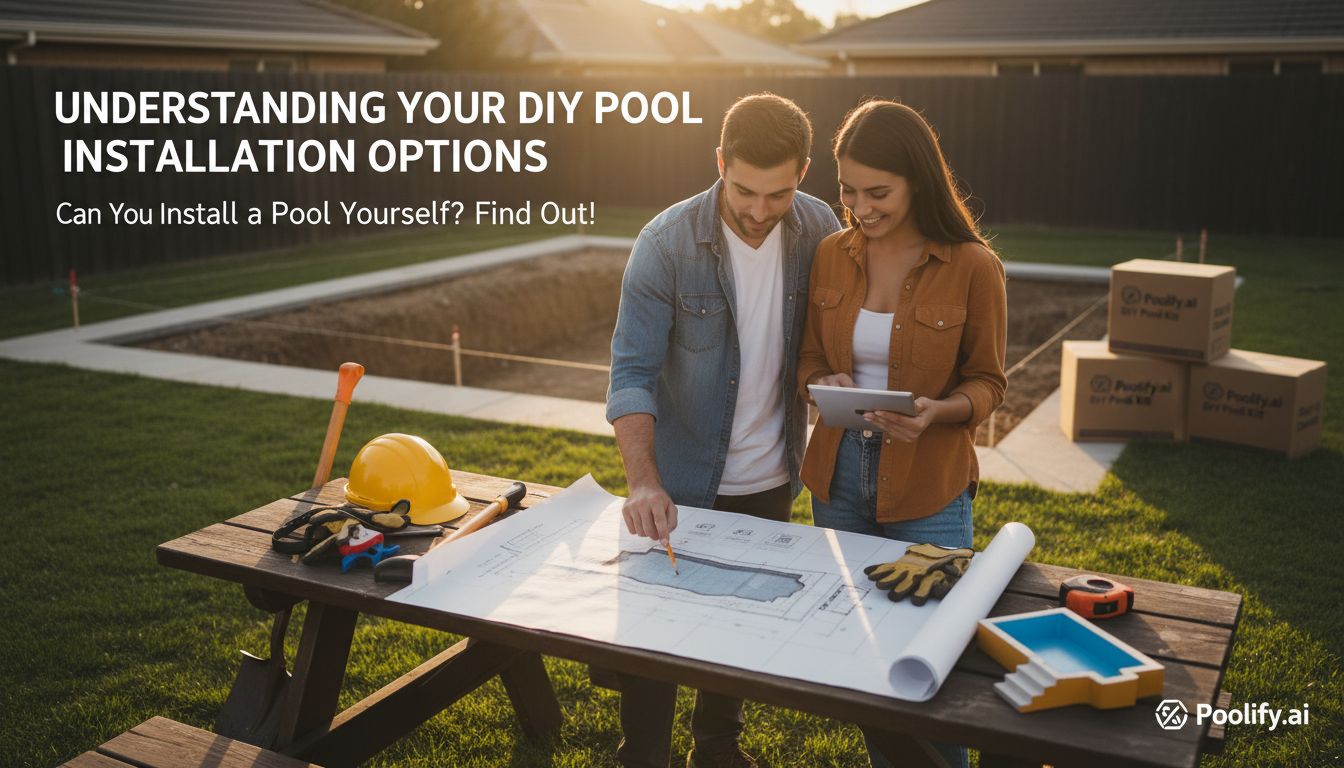
Before asking can I install a pool myself, you need to understand which pool types are actually feasible for DIY installation. Not all pools are created equal when it comes to self-installation difficulty.
Above-Ground Pools: The Most DIY-Friendly Option
Above-ground pools represent the most accessible entry point for DIY enthusiasts. These pools typically cost between $1,500 and $5,000 for materials, and most homeowners can complete installation in one to three days with two to four helpers. The process involves leveling ground, assembling the pool wall structure, installing the liner, and connecting filtration systems. Above-ground pools require minimal excavation and no concrete work, making them ideal for first-time installers.
Semi-Inground Pools: Moderate Difficulty
Semi-inground pools offer a compromise between above-ground simplicity and inground aesthetics. When considering can I install a pool myself with this option, expect to invest $6,000 to $12,000 in materials and one to two weeks of labor. You’ll need equipment for partial excavation, proper drainage systems, and backfilling techniques. These pools work exceptionally well on sloped properties and provide better visual integration with landscaping.
Vinyl Liner Inground Pools: Advanced DIY Project
Vinyl liner inground pools represent the most challenging yet still achievable DIY option. Material costs range from $10,000 to $20,000, with installation taking three to six weeks. This project requires excavation equipment rental, understanding of plumbing and electrical systems, and precise construction of polymer or steel wall panels. Many homeowners successfully complete these installations by breaking the project into manageable phases.
Fiberglass and Concrete Pools: Professional Territory
While technically possible, fiberglass shell installation and concrete pool construction fall outside practical DIY scope for most homeowners. Fiberglass shells require crane delivery and precise placement, while concrete pools demand specialized gunite application skills. For these options, the answer to can I install a pool myself is generally no, unless you possess professional construction experience.
Cost Analysis: DIY vs Professional Installation
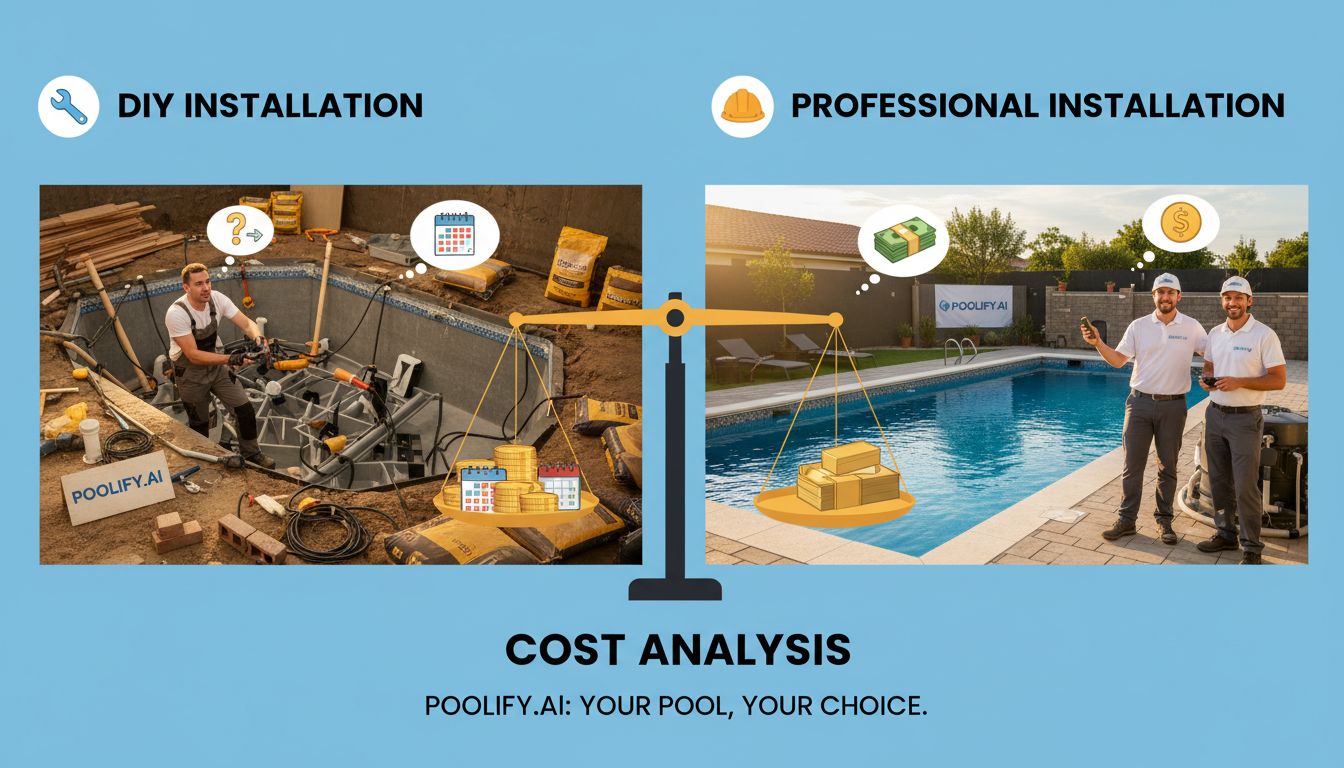
Understanding the financial implications helps you make an informed decision about whether to tackle pool installation yourself. The cost difference between DIY and professional installation can be substantial, but hidden expenses often surprise first-time installers.
Material Costs Breakdown
For an above-ground pool, expect to spend $1,500 to $5,000 on the pool kit, pump, filter, ladder, and chemicals. Semi-inground pools require $6,000 to $12,000 for materials including excavation support, drainage systems, and finishing materials. Vinyl liner inground pools demand $10,000 to $20,000 for wall panels, liner, plumbing, electrical components, and filtration systems. These figures represent base material costs before equipment rental or unexpected expenses.
Equipment Rental and Tool Expenses
When evaluating can I install a pool myself from a cost perspective, factor in equipment rentals. Excavation equipment like mini excavators or backhoes cost $200 to $400 daily or $800 to $1,500 weekly. Compaction equipment, concrete mixers, and specialized tools add another $300 to $600 to your budget. Many homeowners overlook these expenses, which can add 15-25% to total project costs.
Permit and Inspection Fees
Building permits for pool installation typically range from $200 to $800 depending on location and pool type. Electrical permits for pump and lighting installation add $100 to $300. Some municipalities require multiple inspections throughout the process, each potentially costing $50 to $150. According to the Consumer Product Safety Commission’s Pool Safely campaign, proper permitting ensures compliance with safety regulations and protects your investment.
Potential Savings vs Hidden Costs
DIY installation can save 40-60% compared to professional installation costs. A professionally installed above-ground pool costing $5,000 to $8,000 might only require $2,000 to $3,500 in DIY materials. However, mistakes can be expensive. Improper leveling may require complete reinstallation, costing thousands in wasted materials and time. Plumbing errors can lead to leaks requiring excavation and repair. Calculate a 20% contingency buffer for unexpected issues when budgeting your DIY pool project.
Legal Requirements and Permit Navigation
Successfully answering can I install a pool myself requires navigating the complex landscape of permits, codes, and regulations. Skipping this step can result in fines, required removal, or insurance complications.
Building Permits and Zoning Compliance
Most jurisdictions require building permits for permanent pool installations, including many above-ground pools. Visit your local building department early in the planning phase to understand specific requirements. Zoning regulations typically dictate setback distances from property lines, usually 5 to 10 feet, and may restrict pool placement near septic systems or utility easements. Some homeowner associations impose additional restrictions on pool type, size, and appearance.
Electrical and Plumbing Codes
Pool electrical systems must comply with National Electrical Code Article 680, which mandates specific grounding requirements, GFCI protection, and bonding of metal components. Many jurisdictions require licensed electricians for these connections, even in DIY projects. Plumbing installations must meet local codes for drainage, waste water disposal, and backflow prevention. When considering can I install a pool myself, understand which tasks legally require professional licensing in your area.
Safety Barrier Requirements
Most states mandate safety barriers around pools to prevent child drowning. Requirements typically include four-foot minimum fence height, self-closing and self-latching gates, and barriers on all sides. Some jurisdictions accept pool covers or alarms as partial compliance. The CPSC safety barrier guidelines provide comprehensive standards that often inform local codes. Failure to install proper barriers can result in fines and liability issues.
Inspection Process and Timeline
Expect multiple inspections throughout your DIY installation. Initial inspections verify excavation and footer placement. Electrical and plumbing inspections occur before backfilling. Final inspections confirm overall compliance and safety barrier installation. Schedule inspections promptly to avoid project delays, as inspection departments often require several days notice. Keep detailed documentation of all work, materials, and inspection approvals for future reference and property value verification.
Step-by-Step DIY Pool Installation Process
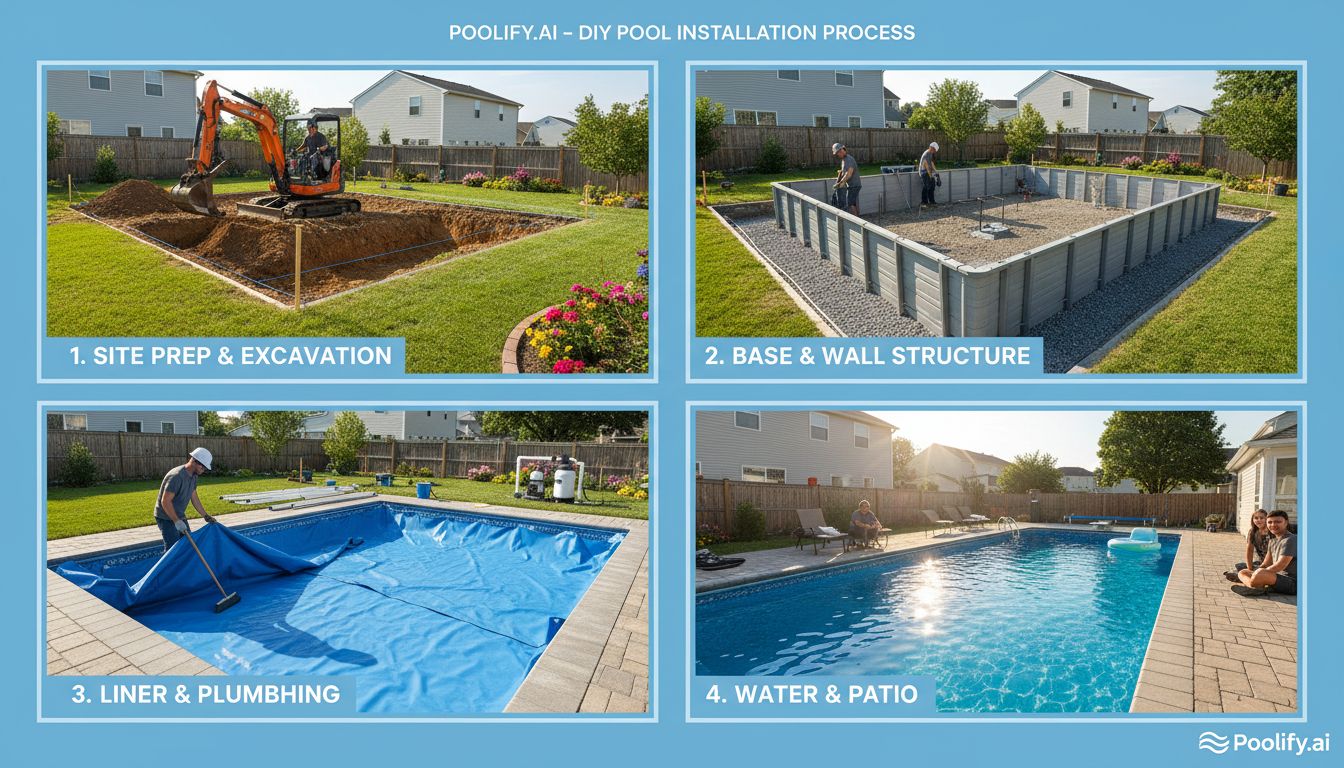
Understanding the complete installation process helps you realistically assess whether you can install a pool yourself. This section covers the essential steps for above-ground and semi-inground pools, the most practical DIY options.
Phase One: Site Preparation and Planning
Begin by marking your pool location with stakes and string, verifying setback compliance and avoiding underground utilities. Call 811 for free utility location services at least three days before digging. Remove grass, rocks, and debris from the area, extending three feet beyond the pool perimeter. Check for proper drainage to prevent water accumulation around the pool. Level the ground using a long straight board and level, as even one-inch variations can cause structural problems. This phase typically requires one to two days for above-ground pools.
Phase Two: Base Construction and Leveling
For above-ground pools, create a two to three inch sand base over compacted soil. Use masonry sand rather than play sand for better compaction and drainage. Wet and compact the sand thoroughly, then recheck level in multiple directions. For semi-inground installations, excavate to required depth plus six inches for gravel base. Install drainage systems around the perimeter to manage groundwater. Proper base preparation is critical when asking can I install a pool myself, as this foundation determines long-term structural integrity. Rushing this phase causes 60% of DIY pool failures.
Phase Three: Pool Structure Assembly
Follow manufacturer instructions precisely for wall panel assembly. Above-ground pools typically use interlocking panels secured with rails and plates. Work with helpers to position panels vertically while connecting sections. For semi-inground pools, install wall bracing before backfilling to prevent collapse under soil pressure. Install bottom rails and verify the structure is perfectly round or properly shaped before proceeding. This phase requires two to four people and takes four to eight hours for above-ground pools, two to three days for semi-inground installations.
Phase Four: Plumbing and Electrical Installation
Install skimmer and return fittings according to specifications, ensuring watertight seals with gaskets and sealants. Run plumbing lines to pump and filter location, maintaining proper slope for drainage. Use schedule 40 PVC pipe and primer plus cement for permanent joints. Electrical work should connect pumps, lights, and controls according to code requirements. Many DIYers hire licensed electricians for this phase while handling other tasks themselves. When evaluating can I install a pool myself, consider whether you have electrical skills or budget for professional assistance. Check out our pool equipment installation guide for detailed plumbing and electrical tips.
Phase Five: Liner Installation and Filling
Install the liner on a warm day when vinyl is flexible. Spread the liner inside the pool structure, working from center outward to eliminate wrinkles. Use a shop vacuum to create suction between liner and wall, holding it in place while you begin filling. Add water slowly, smoothing wrinkles as the pool fills. Once water covers the liner bottom, remove the vacuum and continue filling. This process takes four to six hours and requires constant attention to achieve a wrinkle-free result.
Phase Six: Backfilling and Finishing
For semi-inground pools, backfill around the structure as water level rises, maintaining equal pressure on both sides. Use gravel or sand rather than excavated soil for better drainage and stability. Compact backfill in six-inch layers to prevent settling. Install coping, decking, or landscaping materials around the pool perimeter. Connect and test all equipment, adjusting water chemistry to proper levels. Final cleanup and landscaping complete your DIY installation, typically requiring three to five additional days.
Essential Tools and Equipment for DIY Pool Installation
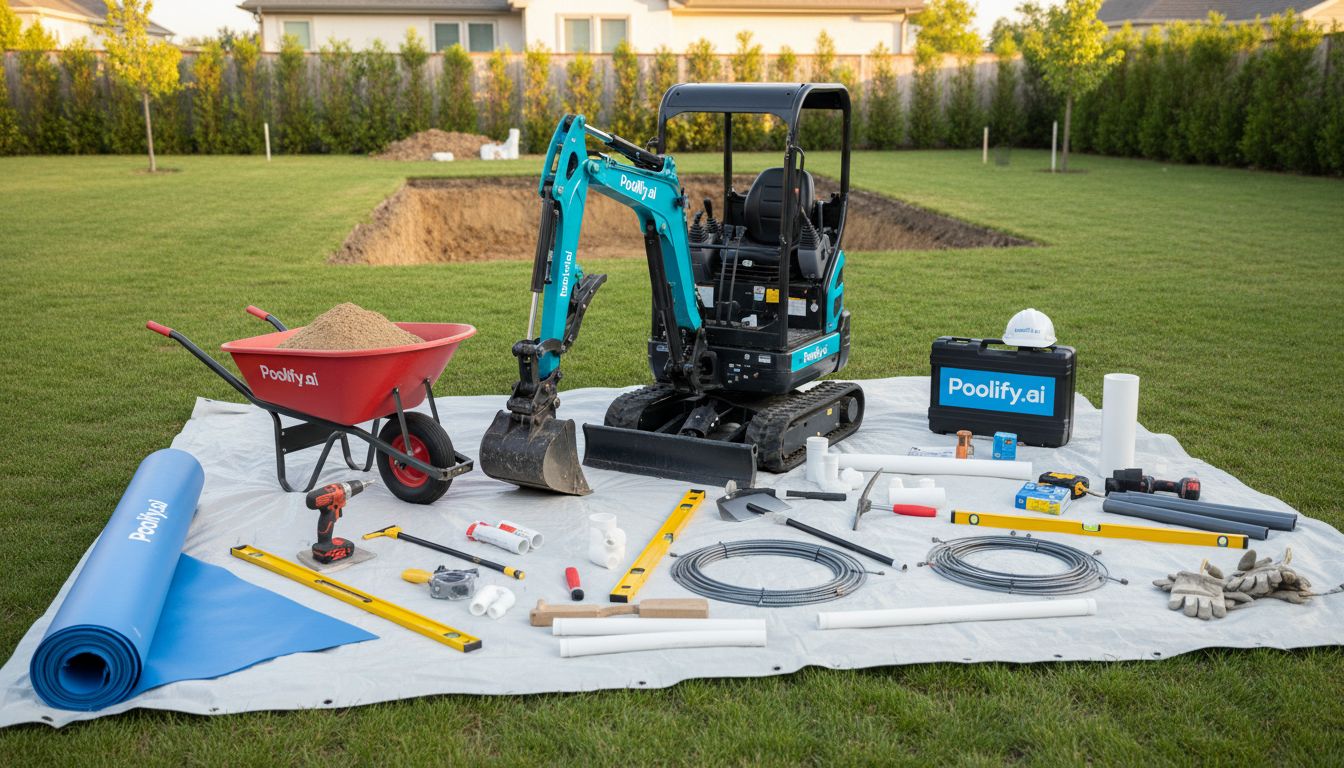
Having the right tools dramatically impacts your success when you install a pool yourself. This section covers must-have equipment and helpful additions for efficient installation.
Basic Hand Tools
Every DIY pool installer needs quality levels including a four-foot and eight-foot level for accurate ground preparation. Invest in a good shovel, rake, and wheelbarrow for excavation and material movement. Socket wrench sets, screwdrivers, and pliers handle hardware assembly. A utility knife cuts liner material and packaging. Measuring tapes, string lines, and marking paint ensure accurate layout. These basic tools cost $200 to $400 total and serve multiple future projects.
Power Equipment and Rentals
Rent a plate compactor for $60 to $100 daily to properly compact base materials. For semi-inground installations, rent a mini excavator for $200 to $300 daily or hire an operator for $500 to $800. A shop vacuum creates suction for liner installation. Circular saws and drills with appropriate bits handle decking and finishing work. Can I install a pool myself without power equipment? Technically yes for small above-ground pools, but equipment dramatically reduces labor time and improves results.
Safety Equipment
Protect yourself with work gloves, safety glasses, and steel-toed boots. Knee pads reduce discomfort during extended ground-level work. Hard hats are essential when working near excavations or with helpers overhead. First aid kits should be readily accessible. For electrical work, use insulated tools and voltage testers. Sun protection including hats and sunscreen prevents heat-related illness during multi-day installations.
Specialized Pool Installation Tools
Pool-specific tools include liner installation pads that protect vinyl from sharp objects. Duct seal putty creates watertight seals around fittings. PVC primer and cement, along with appropriate applicators, ensure leak-free plumbing connections. Water testing kits verify proper chemistry after filling. Some manufacturers provide specialized tools with pool kits, while others require separate purchase. Budget $100 to $300 for pool-specific tools and materials.
Common Mistakes and How to Avoid Them
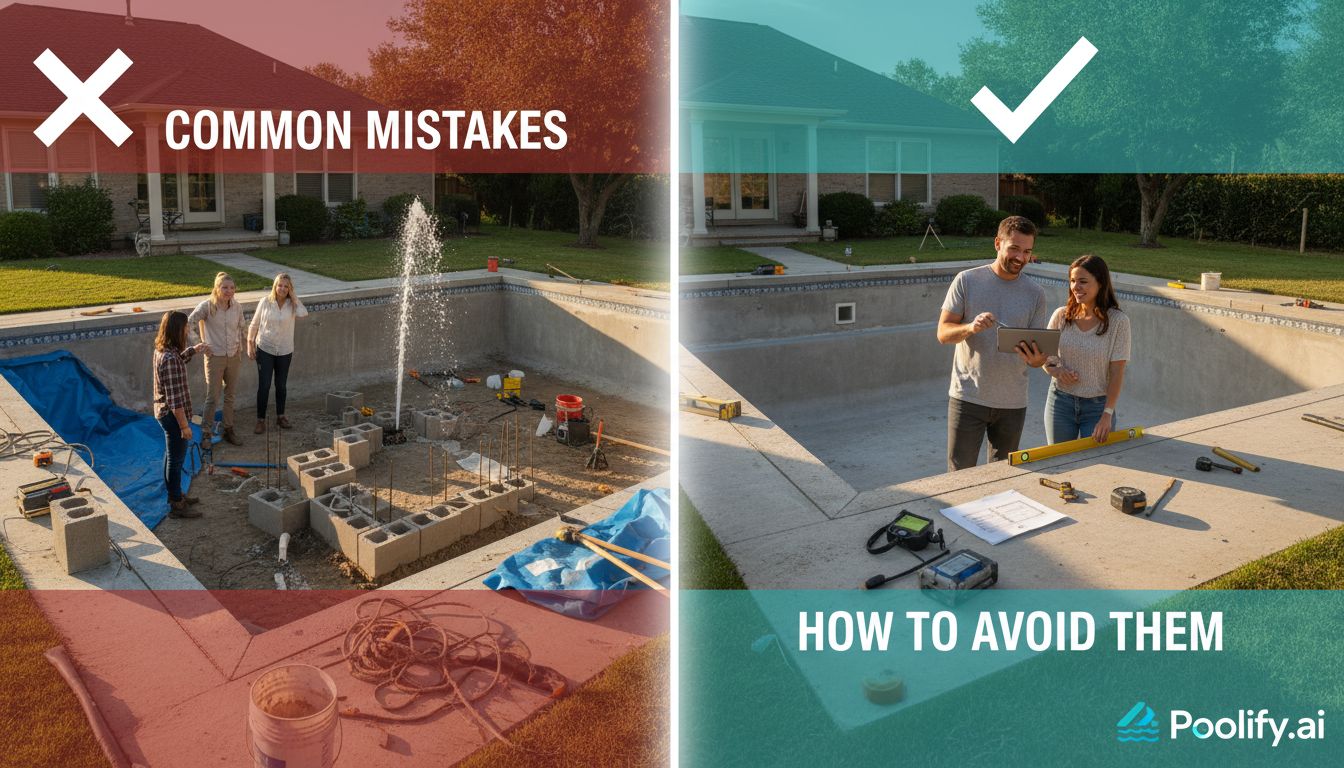
Learning from others’ errors helps you successfully install a pool yourself. These common mistakes account for most DIY pool installation failures and frustrations.
Inadequate Ground Preparation
The most frequent error involves rushing ground leveling and base preparation. Even small variations cause uneven water distribution, stressing pool walls and creating structural failure points. Take extra time ensuring perfect level across the entire base. Remove all rocks, roots, and sharp objects that could puncture liners. Proper compaction prevents settling that creates voids under the pool. Spending an extra day on ground prep prevents weeks of problems later.
Ignoring Drainage Requirements
Poor drainage around pools causes numerous problems including structural damage, liner deterioration, and equipment failure. Install proper drainage systems directing water away from the pool area. For semi-inground pools, perimeter drains prevent groundwater pressure against walls. Grade surrounding areas with minimum two percent slope away from the pool. When asking can I install a pool myself, understand that drainage planning is as important as the pool itself.
Skipping Permits and Inspections
Some DIYers skip permitting to save money and avoid inspections, creating serious long-term problems. Unpermitted pools complicate property sales, void insurance coverage, and may require expensive removal or retrofitting. Inspections catch dangerous electrical issues and code violations before they cause injuries. Always obtain required permits and schedule inspections. The few hundred dollars spent on permits prevents thousands in future complications.
Underestimating Time and Help Requirements
DIY pool installation requires significantly more time than most homeowners expect. Above-ground pools need minimum two to three full days with helpers. Semi-inground installations require two to three weeks of part-time work or one to two weeks full-time. Attempting installation alone or with insufficient help leads to injuries, mistakes, and frustration. Recruit adequate helpers and clear your schedule for the entire project duration. For more insights on planning your pool project timeline, visit our pool installation timeline guide.
Poor Water Chemistry Management
New pool owners often struggle with water chemistry, leading to algae growth, equipment damage, and uncomfortable swimming conditions. Test water daily during the first week, adjusting pH, alkalinity, and sanitizer levels according to manufacturer guidelines. Invest in quality test kits or strips. Learn proper chemical handling and storage procedures. Can I install a pool myself and maintain it successfully? Yes, but commit to learning water chemistry basics before filling your pool.
When to Call Professionals: Knowing Your Limits
Understanding when to seek professional help ensures safety and quality results. Even committed DIYers should recognize situations requiring expert assistance.
Electrical Work and Code Compliance
Most jurisdictions require licensed electricians for pool electrical installations. These systems involve specific grounding and bonding requirements that, if done incorrectly, create electrocution hazards. Professional electricians understand local codes, carry proper insurance, and provide warranties on their work. Budget $500 to $1,500 for professional electrical installation even in DIY projects. This investment ensures safety and code compliance while maintaining your DIY cost savings on other project aspects.
Major Excavation and Site Work
Significant excavation for semi-inground or inground pools often justifies professional assistance. Experienced operators complete in hours what takes DIYers days, and they understand proper techniques for different soil types. They carry insurance covering underground utility damage and property issues. Consider hiring professionals for excavation while handling other installation aspects yourself. This hybrid approach balances cost savings with efficiency and risk management.
Concrete Work and Permanent Structures
Concrete pool decks, equipment pads, and permanent structures require specific skills for proper mixing, forming, and finishing. Poorly executed concrete work looks bad, functions poorly, and costs significantly to repair or replace. Unless you have concrete experience, hire professionals for these permanent features. When evaluating can I install a pool myself, separate the pool installation from surrounding hardscape, potentially DIYing one while outsourcing the other.
Complex Plumbing Systems
While basic PVC plumbing is DIY-friendly, complex systems with multiple returns, in-floor cleaning, water features, or spa integration benefit from professional design and installation. Professionals understand proper pipe sizing, pump requirements, and hydraulic principles ensuring efficient operation. They also handle code compliance for backflow prevention and drainage systems. For simple filtration loops, DIY is feasible. For elaborate systems, professional assistance prevents expensive mistakes.
Maintenance Preparation and Long-Term Success
Successfully installing a pool yourself is just the beginning. Proper maintenance ensures your investment provides years of enjoyment and maintains property value.
Essential Maintenance Equipment
Invest in quality maintenance tools from day one. Pool vacuums, either manual or automatic, keep water clean and reduce chemical demands. Skimmer nets remove debris before it sinks and decomposes. Brush attachments clean walls and prevent algae buildup. Test kits or digital testers monitor water chemistry. Budget $300 to $800 for basic maintenance equipment, or $1,500 to $3,000 for automated systems including robotic cleaners and chemical controllers.
Seasonal Opening and Closing Procedures
In climates with winter freezing, proper closing prevents damage to pool structure and equipment. This involves lowering water levels, winterizing plumbing lines, adding winter chemicals, and installing covers. Spring opening reverses the process, including thorough cleaning and equipment inspection. Learn these procedures during your first season, taking detailed notes for future reference. Many DIY installers successfully handle their own seasonal maintenance after initial professional guidance.
Chemical Management Systems
Establish a consistent water testing and chemical adjustment routine. Test pH, chlorine, alkalinity, and calcium hardness at least twice weekly during swim season. Keep detailed records tracking chemical additions and test results. This data helps you understand your pool’s patterns and anticipate needs. Consider salt chlorine generators or mineral systems that reduce manual chemical handling. When you install a pool yourself, commit to learning proper chemical management for safe, clear water.
Equipment Maintenance and Winterization
Regular equipment maintenance extends lifespan and prevents expensive repairs. Clean pump strainer baskets weekly during swim season. Backwash or clean filters according to manufacturer schedules. Inspect o-rings and gaskets annually, replacing as needed. Lubricate moving parts and check for unusual noises indicating problems. Before winter, drain equipment, remove drain plugs, and store removable components indoors. Proper maintenance ensures equipment lasts 10-15 years rather than failing after 5-7 years.
Frequently Asked Questions
Can I install a pool myself without any construction experience?
Yes, above-ground pools are suitable for beginners with no construction experience, provided you follow instructions carefully and recruit adequate helpers. These installations primarily require attention to detail, patience, and basic hand tool skills. Semi-inground and inground vinyl liner pools require more construction knowledge including understanding of grading, drainage, and structural principles. Start with an above-ground pool if you lack experience, then consider more complex projects after gaining confidence and skills.
How long does it take to install a pool yourself?
Above-ground pools typically require two to three full days with two to four helpers, including site preparation, assembly, and filling. Semi-inground pools need one to two weeks of full-time work or two to three weeks working evenings and weekends. Vinyl liner inground pools demand three to six weeks depending on complexity and your available time. These estimates assume proper planning, adequate helpers, and no major complications. Weather delays, permit issues, or mistakes can extend timelines significantly.
What permits do I need to install a pool myself?
Requirements vary by jurisdiction, but most areas require building permits for permanent pool installations including many above-ground pools. Electrical permits are necessary for pump and lighting installation. Some locations require separate plumbing permits for drainage systems. Fence permits may be needed for safety barriers. Contact your local building department early in planning to understand specific requirements. Permit costs typically range from $300 to $1,200 total depending on location and pool type.
Can I install an inground pool myself to save money?
Vinyl liner inground pools are the only inground type practical for DIY installation, potentially saving 40-60% compared to professional installation. However, these projects require significant skills including excavation, plumbing, electrical work, and structural assembly. Most successful DIY inground installers have construction backgrounds or hire professionals for specific phases like excavation and electrical work. Fiberglass and concrete inground pools are not practical DIY projects due to specialized equipment and expertise requirements.
What is the biggest challenge when installing a pool yourself?
Ground preparation and leveling represent the biggest challenge for most DIY installers. Perfect level across the entire pool base is critical for structural integrity and proper function, yet difficult to achieve without experience and proper equipment. Many installers underestimate this phase, rushing through preparation and creating problems that emerge only after the pool is filled. Taking extra time on ground prep, using quality leveling tools, and verifying level multiple times prevents most common DIY pool installation failures.
Key Takeaways
- Pool Type Matters: Above-ground pools offer the most realistic DIY option for beginners, while vinyl liner inground pools are possible for experienced DIYers. Fiberglass and concrete pools require professional installation.
- Permits Are Non-Negotiable: Always obtain required permits and schedule inspections. Skipping this step creates liability issues, complicates property sales, and may require expensive removal or retrofitting.
- Ground Preparation Is Critical: Perfect leveling and proper base preparation prevent 60% of DIY pool failures. Invest extra time and attention in this foundational phase before proceeding with assembly.
- Budget for Hidden Costs: Equipment rentals, permits, and unexpected issues add 20-30% to base material costs. DIY installation can save 40-60% compared to professional installation, but requires realistic budgeting including contingencies.
- Know When to Hire Professionals: Electrical work, major excavation, and complex plumbing often justify professional assistance even in DIY projects. This hybrid approach balances cost savings with safety and quality results.
See Your Dream Pool in Your Actual Backyard
Upload a photo and get an AI-designed pool visualization in 10 seconds. 3 free designs, no login required.
Try Poolify Free →Conclusion: Making Your DIY Pool Dream Reality
So, can I install a pool myself? The answer depends on your skills, available time, budget, and chosen pool type. Above-ground pools are absolutely achievable for motivated homeowners willing to follow instructions carefully and recruit adequate help. Semi-inground and vinyl liner inground pools are possible for those with construction experience or willingness to learn through careful research and planning. The key to success lies in honest self-assessment, thorough planning, proper permitting, and knowing when to seek professional assistance for specific tasks.
DIY pool installation offers significant cost savings and the satisfaction of creating your own backyard oasis. However, it demands physical labor, time commitment, and attention to detail throughout the process. Start by carefully evaluating your situation, researching local requirements, and creating a realistic budget including contingencies. Connect with online DIY pool communities for advice and support. Consider starting with a simpler above-ground installation to gain experience before tackling more complex projects.
Whether you choose full DIY installation, a hybrid approach with professional assistance for specific phases, or complete professional installation, the goal remains the same: a safe, beautiful pool providing years of family enjoyment. Take time to plan properly, work safely, and don’t rush critical phases like ground preparation and permitting. With proper preparation and realistic expectations, installing a pool yourself in 2026 is an achievable goal that transforms your backyard into a personal paradise.
References
- Consumer Product Safety Commission – Pool Safely Campaign: https://www.cpsc.gov/Safety-Education/Safety-Education-Centers/Pool-Safely
- CPSC Safety Barrier Guidelines for Pools: https://www.cpsc.gov/s3fs-public/362%20Safety%20Barrier%20Guidelines%20for%20Pools.pdf
