Introduction to Solar Pool Heating
Solar pool heating represents one of the smartest investments pool owners can make in 2026. With energy costs continuing to rise and environmental consciousness becoming increasingly important, solar pool heating offers a sustainable solution that pays for itself while extending your swimming season. This comprehensive guide explores everything you need to know about solar pool heating systems, from basic operation principles to installation considerations and long-term savings.
Whether you’re building a new pool or looking to upgrade your existing heating system, understanding solar pool heating technology helps you make informed decisions. The technology has matured significantly, offering reliable performance and impressive return on investment that makes solar pool heating an attractive option for residential and commercial pool owners alike.
How Solar Pool Heating Systems Work
Solar pool heating systems operate on elegantly simple principles that harness the sun’s energy to warm your pool water. The basic solar pool heating system consists of four main components: solar collectors, a filter, a pump, and a flow control valve. Pool water circulates through your existing filtration system, then gets diverted through solar collectors mounted on your roof or ground-mounted racks.
Inside the solar collectors, water flows through tubes or channels where it absorbs heat from the sun. The warmed water then returns to your pool, gradually raising the overall temperature. Modern solar pool heating systems include automated controls that monitor pool temperature and solar availability, optimizing performance without manual intervention.
The efficiency of solar pool heating depends on several factors including collector size, orientation, tilt angle, and local climate conditions. Most systems use unglazed collectors made from heavy-duty rubber or plastic treated with UV inhibitors. These collectors are cost-effective and work well for outdoor pools in moderate climates. For indoor pools or cooler climates, glazed collectors with glass covers provide better heat retention despite higher costs.
Types of Solar Pool Heating Collectors
Unglazed collectors remain the most popular choice for solar pool heating in residential applications. These flat panels contain no glass covering, making them lighter and more affordable. The exposed design allows for excellent heat transfer during warm months, though efficiency drops in cooler conditions. Unglazed collectors typically last 10-20 years and handle pool chemicals well.
Glazed collectors feature glass or polymer covers that trap heat more effectively. While more expensive, glazed solar pool heating systems perform better in cooler weather and can heat water to higher temperatures. These systems work year-round in most climates and often serve dual purposes, providing domestic hot water alongside pool heating.
Evacuated tube collectors represent the premium tier of solar pool heating technology. These high-efficiency systems use vacuum-sealed glass tubes to minimize heat loss. Though rarely necessary for pool heating alone, evacuated tubes make sense when integrating solar pool heating with whole-home solar thermal systems.
Solar Pool Heating Cost Analysis for 2026
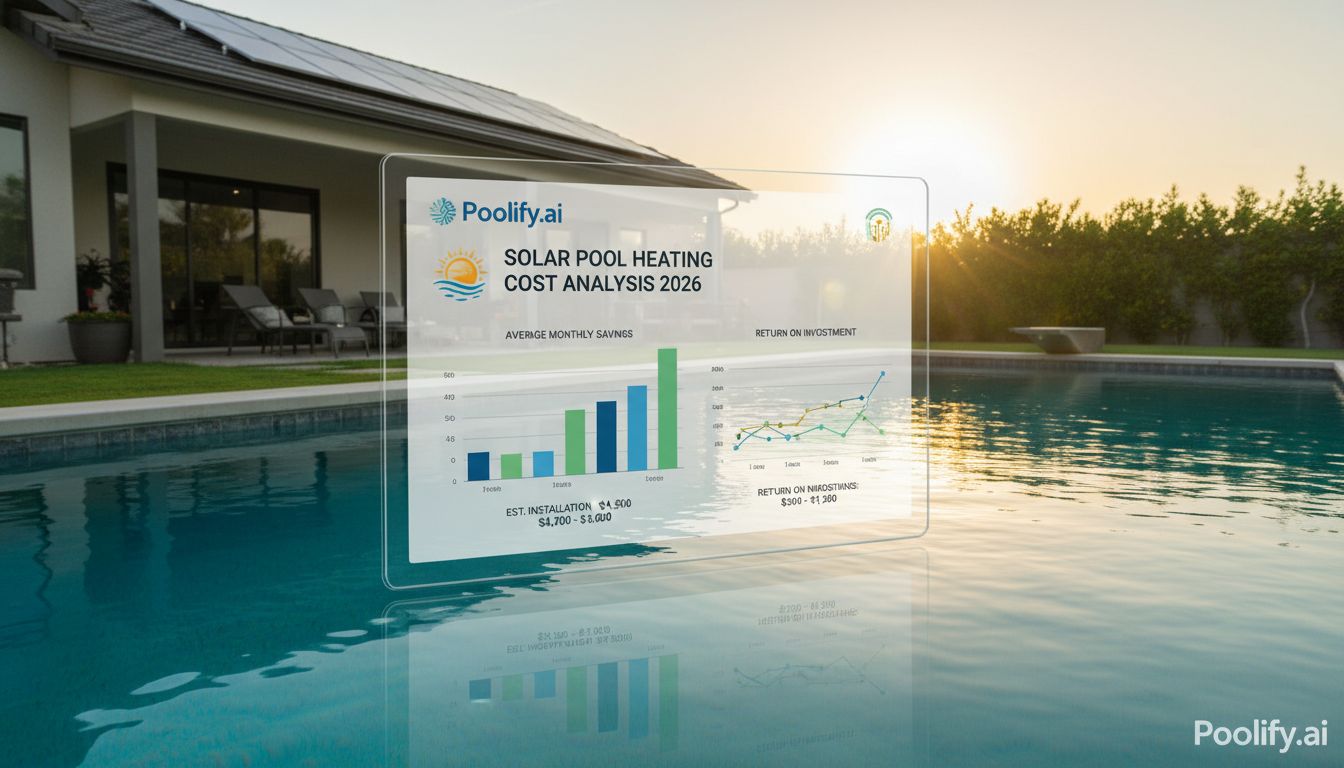
Understanding the financial investment required for solar pool heating helps you evaluate whether this technology makes sense for your situation. In 2026, typical solar pool heating system costs range from $3,000 to $7,000 for an average residential pool, depending on system size, collector type, and installation complexity.
The collector area needed for effective solar pool heating typically equals 50-100% of your pool’s surface area. Larger pools naturally require more extensive collector arrays, increasing costs proportionally. Ground-mounted systems may cost less for installation but consume valuable yard space, while roof-mounted solar pool heating systems integrate seamlessly but may require additional structural support.
Installation labor represents a significant portion of total solar pool heating costs. Professional installation typically runs $1,000-$2,500 depending on system complexity and local labor rates. DIY installation can reduce costs substantially for handy homeowners, though proper sizing and integration with existing pool equipment requires careful planning.
Return on Investment and Payback Period
Solar pool heating systems typically pay for themselves within 3-7 years through reduced energy bills. Traditional gas pool heaters cost $300-$600 monthly to operate during swimming season, while electric heat pumps run $100-$300 monthly. Solar pool heating eliminates these recurring costs after the initial investment, delivering free heating for decades.
The payback period for solar pool heating varies based on several factors. Pools in sunny climates with long swimming seasons recoup costs faster. Higher conventional energy rates also accelerate payback. According to the U.S. Department of Energy, solar pool heating systems offer the most cost-effective use of solar energy in many climates.
Beyond direct energy savings, solar pool heating adds property value. Homes with solar pool heating systems often command premium prices, as buyers recognize the long-term value. The system’s 15-20 year lifespan means new homeowners inherit years of free pool heating.
Benefits of Solar Pool Heating Beyond Cost Savings
While financial savings drive many solar pool heating decisions, the benefits extend far beyond reduced utility bills. Solar pool heating systems operate silently, unlike noisy gas heaters or heat pumps. This quiet operation enhances the peaceful ambiance around your pool area, making relaxation more enjoyable.
Environmental impact represents another compelling advantage of solar pool heating. By eliminating fossil fuel combustion or reducing electricity consumption, solar pool heating dramatically reduces your carbon footprint. A typical solar pool heating system offsets 3-5 tons of CO2 emissions annually compared to gas heating, equivalent to planting 75-125 trees each year.
Extended swimming seasons make solar pool heating particularly valuable. In moderate climates, solar pool heating can extend comfortable swimming by 2-4 months annually. This increased usability maximizes your pool investment, providing more enjoyment and justifying the initial cost of pool ownership.
Reliability and Low Maintenance
Solar pool heating systems feature remarkably simple designs with few moving parts, translating to exceptional reliability. Unlike complex gas heaters or heat pumps with compressors and electronics, solar pool heating collectors contain no mechanical components to fail. This simplicity means fewer service calls and lower long-term maintenance costs.
Maintenance requirements for solar pool heating remain minimal. Annual inspections ensure collectors stay clear of debris and connections remain secure. Most systems require only occasional cleaning and checking for leaks. The robust construction of modern solar pool heating collectors withstands harsh weather conditions, including hail, high winds, and temperature extremes.
Many manufacturers back solar pool heating systems with warranties ranging from 10-15 years, reflecting confidence in product longevity. Real-world performance often exceeds warranty periods, with properly maintained solar pool heating systems delivering 20+ years of service.
Installation Considerations for Solar Pool Heating
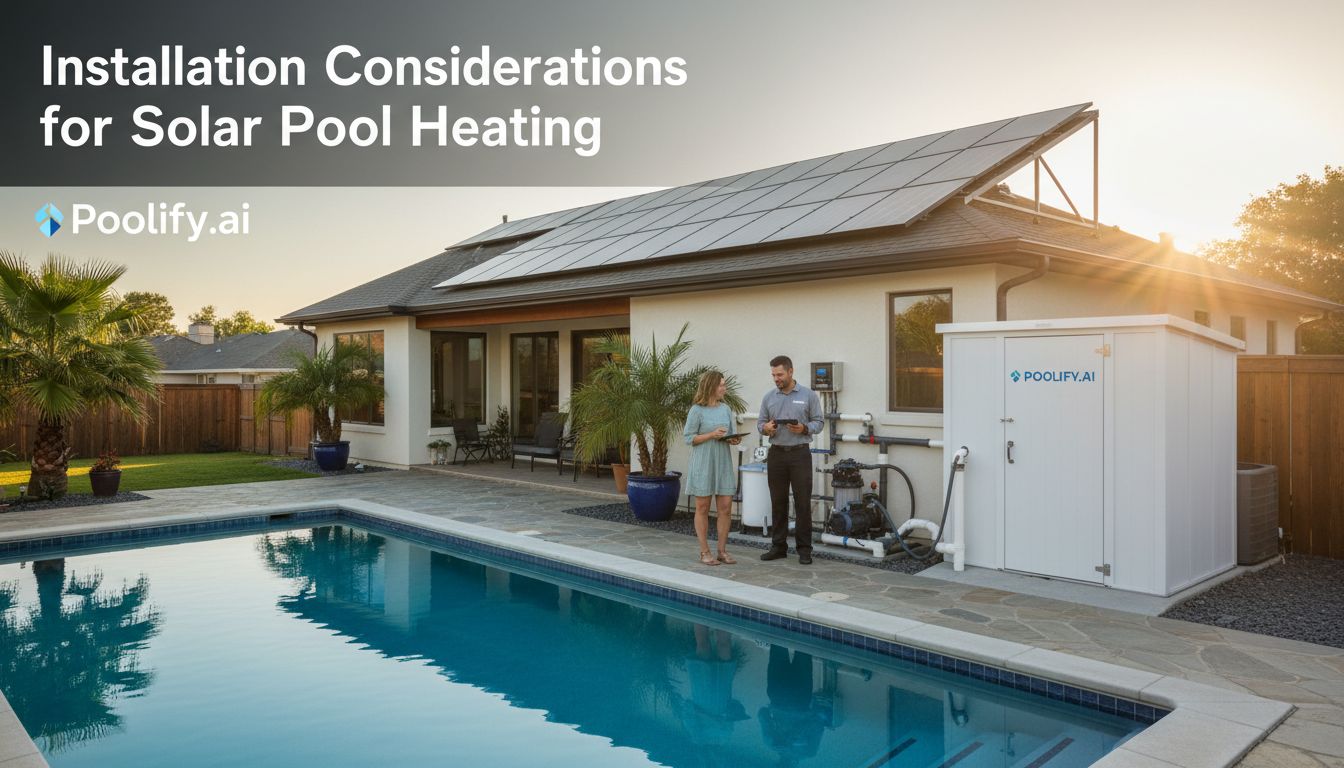
Successful solar pool heating installation begins with proper system sizing. Undersized systems struggle to maintain comfortable temperatures, while oversized arrays waste money without proportional benefits. Professional solar pool heating installers assess your pool size, desired temperature, swimming season length, and local climate to determine optimal collector area.
Roof orientation and shading significantly impact solar pool heating performance. South-facing roofs in the Northern Hemisphere receive maximum sun exposure, though southeast or southwest orientations work nearly as well. Shading from trees, chimneys, or neighboring buildings reduces efficiency, sometimes necessitating ground-mounted solar pool heating arrays instead.
Your existing pool equipment must integrate seamlessly with solar pool heating systems. The pool pump needs sufficient power to push water through collectors, typically requiring 1-1.5 horsepower minimum. Automated controls optimize performance by routing water through collectors only when solar heating provides benefit, preventing nighttime heat loss.
Roof vs. Ground-Mounted Solar Pool Heating
Roof-mounted solar pool heating systems offer several advantages. They utilize otherwise unused space, leaving yards available for activities. Elevated positioning minimizes shading issues and often provides ideal angles for sun exposure. However, roof mounting requires adequate structural support and may complicate roof repairs or replacement.
Ground-mounted solar pool heating arrays provide easier access for maintenance and installation. They work well when roof space is limited or poorly oriented. Ground systems allow precise angle adjustment for optimal performance. The tradeoff involves consuming yard space and potential shading from landscaping or structures.
Some homeowners choose hybrid approaches, combining roof and ground-mounted collectors to achieve required heating capacity. This flexibility makes solar pool heating adaptable to virtually any property configuration. Consulting with experienced installers helps identify the best configuration for your specific situation.
Optimizing Solar Pool Heating Performance
Maximizing solar pool heating efficiency involves more than just installing collectors. Pool covers play a crucial role by preventing heat loss overnight and on cloudy days. Using a pool cover can reduce heating requirements by 50-70%, allowing smaller solar pool heating systems to maintain comfortable temperatures. For comprehensive pool care strategies, explore our pool maintenance tips guide.
Proper pool orientation and landscaping enhance solar pool heating effectiveness. Minimizing shade over both the pool and collectors ensures maximum heat gain. Strategic landscaping provides windbreaks that reduce evaporative cooling, helping your solar pool heating system work more efficiently.
Water chemistry affects solar pool heating performance indirectly by influencing collector longevity. Maintaining proper pH and chlorine levels prevents corrosion in collector tubes and connections. Well-balanced water extends system life and maintains optimal heat transfer efficiency.
Seasonal Adjustments and Controls
Advanced controllers maximize solar pool heating benefits by automatically adjusting operation based on conditions. Temperature sensors in collectors and pool signal when solar heating is available. The system activates only when collectors are warmer than pool water, preventing reverse heat loss.
Manual adjustments help optimize solar pool heating seasonally. In spring and fall, increasing flow rates through collectors captures available heat during shorter days. Summer may require throttling flow to prevent overheating in exceptionally sunny climates. Understanding these adjustments helps you extract maximum value from your solar pool heating investment.
Some solar pool heating systems integrate with smart home platforms, enabling remote monitoring and control. These features let you adjust settings from anywhere, ensuring optimal comfort when you arrive home. Data logging helps track performance and identify maintenance needs before problems develop.
Solar Pool Heating vs. Alternative Heating Methods
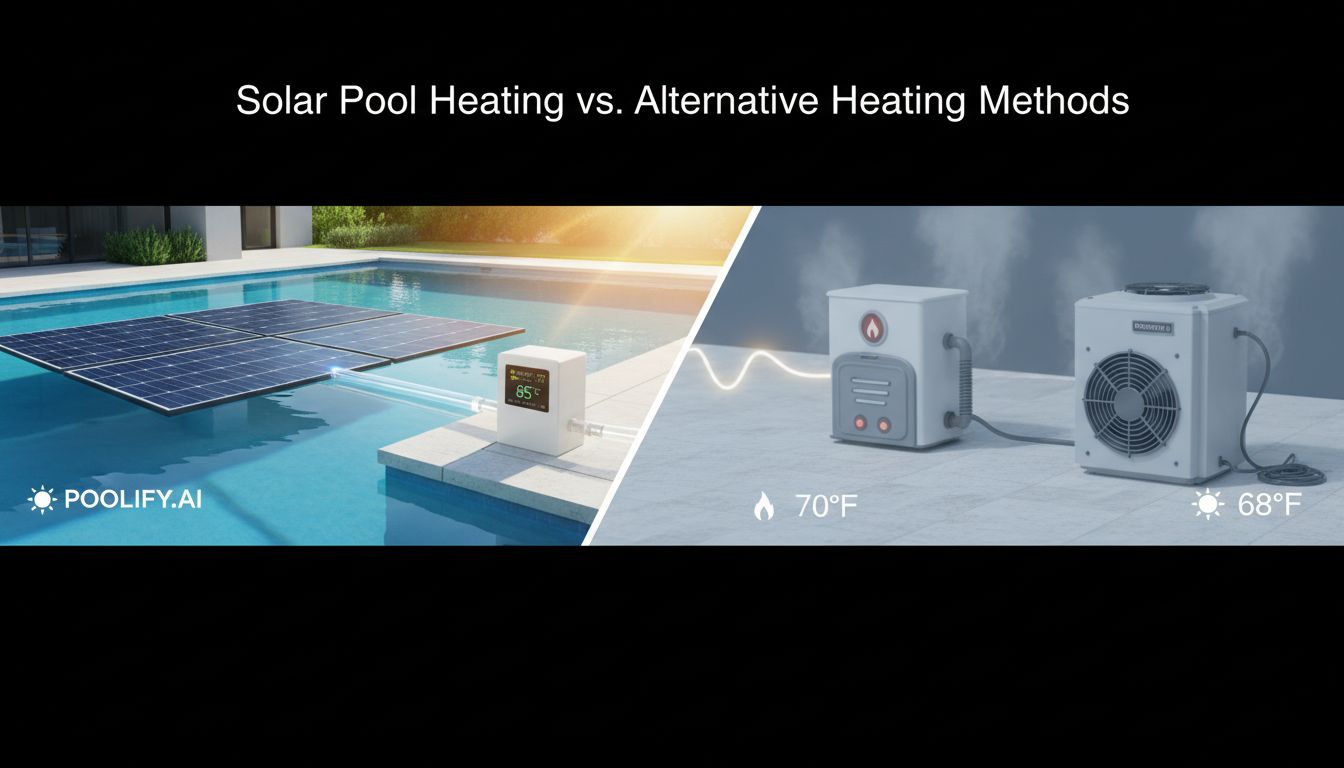
Comparing solar pool heating against alternatives helps clarify the best choice for your needs. Gas heaters heat pools quickly, making them ideal for occasional use or rapid temperature boosts. However, operating costs of $300-$600 monthly during swimming season make gas heating expensive long-term. Gas heaters also require natural gas lines or propane tanks, adding installation complexity.
Electric heat pumps offer a middle ground between solar pool heating and gas heaters. They cost less to operate than gas but more than solar, typically running $100-$300 monthly. Heat pumps work efficiently in moderate temperatures but struggle when ambient air drops below 50°F. Their 10-15 year lifespan is shorter than solar pool heating systems.
Many pool owners choose hybrid approaches, combining solar pool heating with backup gas or electric systems. Solar handles primary heating during sunny periods, while conventional systems provide supplemental heat during extended cloudy weather or for rapid temperature increases. This combination maximizes efficiency while ensuring reliable comfort.
Environmental Impact Comparison
Solar pool heating dramatically outperforms conventional heating methods environmentally. Gas heaters emit significant CO2, contributing to climate change. A typical gas pool heater produces 3-5 tons of carbon dioxide annually. Electric heat pumps reduce emissions compared to gas but still rely on grid electricity, which may come from fossil fuels.
Solar pool heating produces zero direct emissions during operation. Manufacturing and installation involve some environmental impact, but this gets offset within 1-2 years of operation. Over a 20-year lifespan, solar pool heating prevents 60-100 tons of CO2 emissions compared to gas heating.
Water conservation represents another environmental benefit of solar pool heating. By maintaining comfortable temperatures, solar systems reduce the temptation to drain and refill pools with warmer water. This conserves thousands of gallons annually in regions where water scarcity poses challenges.
Common Solar Pool Heating Myths and Misconceptions
Several misconceptions about solar pool heating persist despite the technology’s maturity. One common myth suggests solar pool heating only works in tropical climates. In reality, solar pool heating performs effectively anywhere with adequate sunshine. Even northern regions receive sufficient solar radiation during swimming season to make solar pool heating viable.
Another misconception claims solar pool heating systems are fragile and require constant maintenance. Modern solar pool heating collectors withstand harsh conditions including freezing temperatures, hail, and high winds. Quality systems require minimal maintenance beyond occasional cleaning and annual inspections.
Some people believe solar pool heating cannot maintain consistent temperatures. While solar heating responds to weather conditions, properly sized systems with pool covers maintain comfortable temperatures throughout swimming season. Automated controls and optional backup heating ensure reliability even during cloudy periods.
Addressing Performance Concerns
Questions about nighttime heating often arise when discussing solar pool heating. While collectors obviously don’t heat water at night, proper system design accounts for this. Pool covers prevent heat loss overnight, maintaining temperatures gained during daylight hours. Thermal mass of pool water provides natural heat storage, with large pools retaining warmth for extended periods.
Concerns about roof damage from solar pool heating installation are generally unfounded when professionals handle mounting. Proper installation techniques protect roof integrity, and removal for roof repairs or replacement is straightforward. Many roofing contractors now routinely work with solar pool heating systems during roof projects.
The perception that solar pool heating looks unattractive has changed as designs have evolved. Modern low-profile collectors blend with rooflines, and some products are specifically designed for aesthetic appeal. Ground-mounted systems can be positioned discreetly or integrated into landscaping for minimal visual impact.
Frequently Asked Questions About Solar Pool Heating
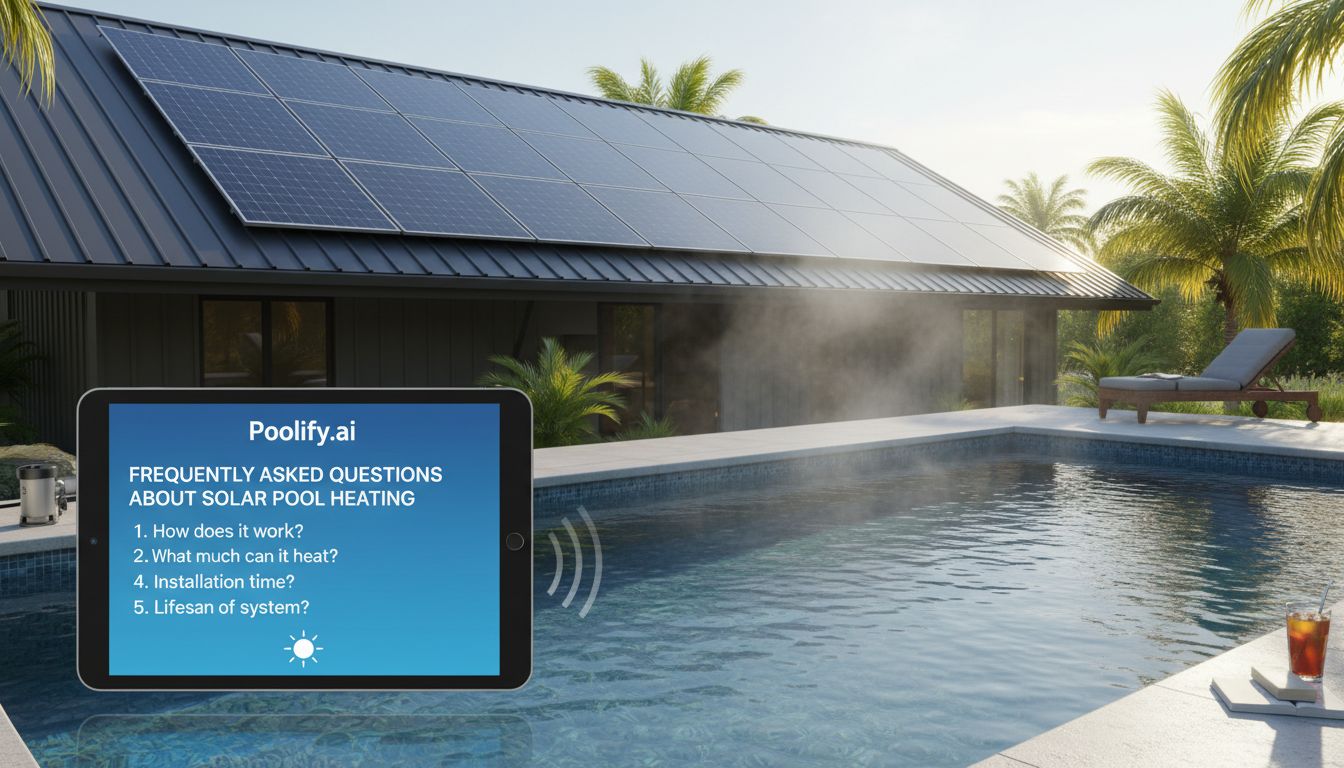
How long does solar pool heating take to warm a pool?
Solar pool heating typically raises pool temperature 1-2°F per day under good conditions. Initial heating from cold takes 3-5 days, after which the system maintains temperature. This gradual heating differs from gas heaters but proves more energy-efficient. Using a pool cover accelerates heating by preventing overnight heat loss.
Can solar pool heating work in cloudy climates?
Yes, solar pool heating functions effectively in partly cloudy climates. Collectors capture diffuse solar radiation even on overcast days, though at reduced efficiency. Properly sized solar pool heating systems in cloudier regions use larger collector arrays to compensate. Many Pacific Northwest and Northern European pool owners successfully use solar pool heating.
What maintenance does solar pool heating require?
Solar pool heating maintenance involves annual inspections, occasional cleaning, and checking connections for leaks. Remove debris from collectors and ensure proper water flow. Most systems require professional service every 3-5 years for thorough inspection. This minimal maintenance makes solar pool heating far less demanding than gas heaters or heat pumps.
How does solar pool heating affect my existing pool equipment?
Solar pool heating integrates with existing filtration systems, using your current pump to circulate water through collectors. A flow control valve directs water through the solar loop when heating is beneficial. Pump runtime may increase slightly, but energy costs remain far below conventional heating. Most standard pool pumps handle solar pool heating without upgrades.
Is solar pool heating worth it for above-ground pools?
Absolutely. Solar pool heating works excellently for above-ground pools, often with simpler installation than in-ground systems. Smaller above-ground pools require fewer collectors, reducing costs. The same principles apply, with proper sizing ensuring comfortable temperatures throughout swimming season. Many above-ground pool owners achieve full payback within 2-3 years.
Key Takeaways
- Solar pool heating slashes operating costs by 50-80% compared to gas or electric heating, typically paying for itself within 3-7 years through energy savings.
- Properly sized solar pool heating systems extend swimming seasons by 2-4 months in most climates while operating silently and requiring minimal maintenance.
- Installation costs for solar pool heating range from $3,000-$7,000 for typical residential pools, with collector area equaling 50-100% of pool surface area.
- Solar pool heating performs effectively in diverse climates, not just tropical regions, capturing both direct and diffuse solar radiation to maintain comfortable water temperatures.
- Combining solar pool heating with pool covers maximizes efficiency, reducing heat loss by 50-70% and allowing smaller, more affordable systems to meet heating needs.
See Your Dream Pool in Your Actual Backyard
Upload a photo and get an AI-designed pool visualization in 10 seconds. 3 free designs, no login required.
Try Poolify Free →Conclusion
Solar pool heating represents a mature, proven technology that delivers exceptional value for pool owners in 2026. The combination of eliminated operating costs, environmental benefits, extended swimming seasons, and minimal maintenance makes solar pool heating an intelligent investment. While initial costs exceed conventional heaters, the long-term savings and reliability provide compelling financial returns.
Whether you’re planning a new pool or upgrading existing heating, solar pool heating deserves serious consideration. The technology has evolved to offer reliable performance across diverse climates and pool types. With proper sizing, quality installation, and basic maintenance, solar pool heating systems deliver decades of comfortable swimming at minimal cost.
As energy prices continue rising and environmental consciousness grows, solar pool heating positions you ahead of trends while reducing your carbon footprint. The decision to invest in solar pool heating pays dividends financially, environmentally, and in enhanced pool enjoyment for years to come. For more information on keeping your pool in optimal condition, visit our pool care basics resource.
References
- U.S. Department of Energy – Solar Swimming Pool Heaters: https://betterbuildingssolutioncenter.energy.gov/sites/default/files/attachments/Pool%20efficiency_.pdf
