Introduction to Pool Water Chemistry Basics
Understanding pool water chemistry basics is the foundation of successful pool ownership in 2026. Whether you’re a first-time pool owner or looking to refine your maintenance routine, mastering these fundamental principles ensures your pool remains safe, sparkling, and inviting throughout the swimming season. Pool water chemistry basics encompass the delicate balance of chemicals that keep water clean, prevent algae growth, and protect swimmers from harmful bacteria. This comprehensive guide walks you through everything you need to know about maintaining proper water balance, from pH levels to sanitizer concentrations.
The good news is that pool water chemistry basics aren’t as complicated as they might seem at first glance. With the right knowledge and consistent testing, you’ll develop an intuitive understanding of how different chemical components interact. Modern pool care has evolved significantly, with digital testing tools and automated systems making it easier than ever to maintain optimal water conditions. However, the fundamental principles remain the same, and understanding these core concepts empowers you to troubleshoot problems quickly and maintain a healthy swimming environment for your family and guests.
Why Pool Water Chemistry Basics Matter for Your Health and Investment
Mastering pool water chemistry basics directly impacts both swimmer safety and the longevity of your pool investment. Improperly balanced water can cause skin irritation, eye redness, and respiratory discomfort for swimmers. According to the CDC’s guidelines on pool water quality, maintaining proper chemical balance is essential for preventing recreational water illnesses. Beyond health concerns, poor water chemistry accelerates equipment deterioration, damages pool surfaces, and leads to costly repairs that could easily be prevented with proper maintenance.
Pool water chemistry basics also affect water clarity and overall swimming experience. Cloudy water, algae blooms, and unpleasant odors all stem from chemical imbalances that could have been avoided with regular testing and adjustment. When you understand these fundamentals, you’ll spend less time troubleshooting problems and more time enjoying your pool. The investment in learning pool water chemistry basics pays dividends in reduced chemical costs, fewer emergency treatments, and extended equipment lifespan.
The Five Essential Components of Pool Water Chemistry Basics
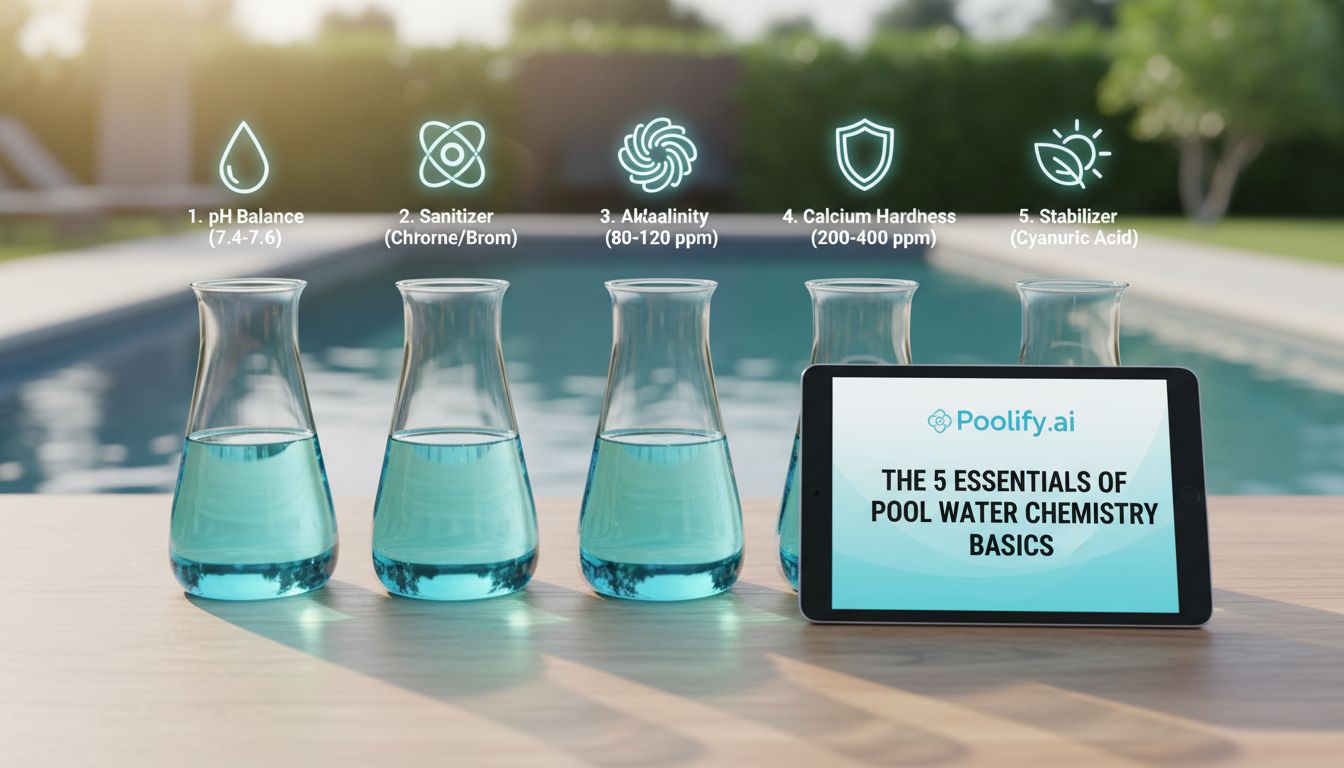
Pool water chemistry basics revolve around five primary measurements that work together to create balanced, safe water. Each component influences the others, creating a dynamic system that requires regular monitoring and adjustment. Understanding how these elements interact is crucial for maintaining optimal water conditions throughout the swimming season.
pH Levels: The Foundation of Pool Water Chemistry Basics
pH measures water acidity or alkalinity on a scale from zero to fourteen, with seven being neutral. For pools, the ideal pH range is 7.4 to 7.6, closely matching the pH of human eyes and mucous membranes. This aspect of pool water chemistry basics is critical because pH affects chlorine effectiveness, swimmer comfort, and equipment longevity. When pH drifts too low (acidic), water becomes corrosive, damaging metal components, pool surfaces, and causing skin irritation. High pH (alkaline) reduces sanitizer efficiency and leads to cloudy water and scale formation.
Testing pH should be part of your daily pool water chemistry basics routine during peak swimming season. Use reliable test strips or a digital meter for accurate readings. To raise pH, add soda ash (sodium carbonate), while muriatic acid or sodium bisulfate lowers pH effectively. Make adjustments gradually, testing again after several hours of circulation before adding more chemicals. Understanding pH management is perhaps the most fundamental aspect of pool water chemistry basics that every pool owner must master.
Total Alkalinity: The pH Buffer in Pool Water Chemistry Basics
Total alkalinity (TA) measures the water’s ability to resist pH changes, acting as a buffer that stabilizes pH levels. This component of pool water chemistry basics should be maintained between 80 and 120 parts per million (ppm) for most pools. Proper alkalinity prevents pH bounce, where levels swing dramatically between acidic and alkaline. Low alkalinity makes pH unstable and difficult to maintain, while high alkalinity causes pH to drift upward and creates cloudy water conditions.
When addressing pool water chemistry basics, always adjust total alkalinity before correcting pH, since alkalinity directly influences pH stability. Sodium bicarbonate (baking soda) raises alkalinity, while muriatic acid lowers both alkalinity and pH simultaneously. This interconnection between alkalinity and pH demonstrates why pool water chemistry basics require a systematic approach rather than treating individual parameters in isolation.
Chlorine and Sanitizer Levels in Pool Water Chemistry Basics
Sanitizer concentration is the most critical safety component of pool water chemistry basics. Chlorine remains the most popular sanitizer, with ideal levels between 1.0 and 3.0 ppm for most residential pools. Free available chlorine (FAC) actively kills bacteria, viruses, and algae, while combined chlorine (chloramines) represents spent chlorine that has bonded with contaminants. Understanding this distinction is essential to pool water chemistry basics because chloramines cause the characteristic “chlorine smell” and eye irritation that people mistakenly attribute to too much chlorine.
Pool water chemistry basics require maintaining adequate free chlorine while minimizing combined chlorine. When combined chlorine exceeds 0.5 ppm, shock treatment is necessary to break down chloramines and restore sanitizer effectiveness. Regular chlorine testing should occur at least twice weekly, with more frequent checks during heavy use periods or after rainstorms. Alternative sanitizers like bromine, salt systems, or mineral sanitizers follow similar principles but with different target ranges specific to each system.
Calcium Hardness: Protecting Surfaces Through Pool Water Chemistry Basics
Calcium hardness measures dissolved calcium in pool water, with optimal levels between 200 and 400 ppm for most pools. This often-overlooked aspect of pool water chemistry basics protects pool surfaces and equipment from damage. Low calcium hardness creates aggressive water that etches plaster, corrodes metal components, and dissolves grout. Conversely, high calcium levels cause scaling, cloudy water, and rough deposits on pool surfaces and equipment.
Pool water chemistry basics dictate testing calcium hardness monthly during swimming season and adjusting as needed. Calcium chloride raises hardness levels, while dilution with fresh water or specialized sequestering agents addresses high calcium. Geographic location significantly impacts calcium hardness, with areas having naturally hard water requiring different management strategies than regions with soft water supplies.
Cyanuric Acid: The Chlorine Stabilizer in Pool Water Chemistry Basics
Cyanuric acid (CYA) protects chlorine from ultraviolet degradation, making it an essential component of outdoor pool water chemistry basics. Ideal CYA levels range from 30 to 50 ppm, creating a protective shield around chlorine molecules without significantly reducing sanitizer effectiveness. Without adequate stabilizer, sunlight rapidly depletes free chlorine, requiring constant replenishment and increasing chemical costs substantially.
However, pool water chemistry basics also warn against excessive cyanuric acid, which reduces chlorine’s sanitizing power and creates a condition called chlorine lock. Once CYA exceeds 100 ppm, the only solution is partial water replacement, as no chemical reduces stabilizer levels. Many chlorine products contain built-in stabilizer, so understanding this relationship is crucial to maintaining proper pool water chemistry basics throughout the season.
Testing Methods for Accurate Pool Water Chemistry Basics
Accurate testing forms the backbone of effective pool water chemistry basics management. Without reliable measurements, you’re essentially guessing at chemical adjustments, which often leads to overcorrection and water balance problems. Modern pool owners have several testing options, each with distinct advantages for monitoring pool water chemistry basics.
Test Strips for Quick Pool Water Chemistry Basics Checks
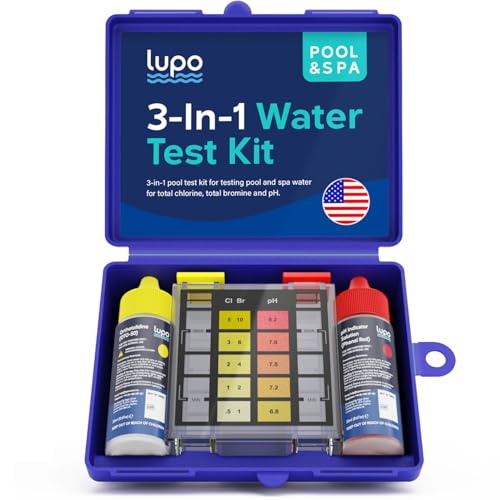
Test strips offer convenient, fast results for basic pool water chemistry monitoring. These multi-parameter strips test pH, chlorine, alkalinity, and sometimes hardness or stabilizer simultaneously within seconds. While not laboratory-precise, quality test strips provide sufficient accuracy for routine pool water chemistry basics maintenance when used correctly. Always store strips in a cool, dry location, ensure hands are dry when handling them, and compare results immediately under good lighting for best accuracy.
Liquid Test Kits for Detailed Pool Water Chemistry Basics Analysis
Liquid reagent test kits, particularly DPD (diethyl-p-phenylenediamine) and OTO (orthotolidine) kits, deliver more precise measurements than test strips. These kits are essential for serious pool water chemistry basics management, especially when troubleshooting water balance issues. The Taylor K-2006 kit is considered the gold standard among pool professionals, testing all critical parameters with laboratory-grade accuracy. While requiring more time than test strips, liquid kits provide the precision necessary for fine-tuning pool water chemistry basics.
Digital Testers for Advanced Pool Water Chemistry Basics Monitoring
Digital water testing devices represent the cutting edge of pool water chemistry basics technology in 2026. These electronic testers eliminate color-matching guesswork and provide numerical readings for multiple parameters. Some advanced models connect to smartphone apps, tracking water chemistry trends over time and recommending specific chemical additions based on your pool volume. While representing a larger initial investment, digital testers simplify pool water chemistry basics for those who prefer technology-assisted maintenance.
Common Pool Water Chemistry Basics Problems and Solutions
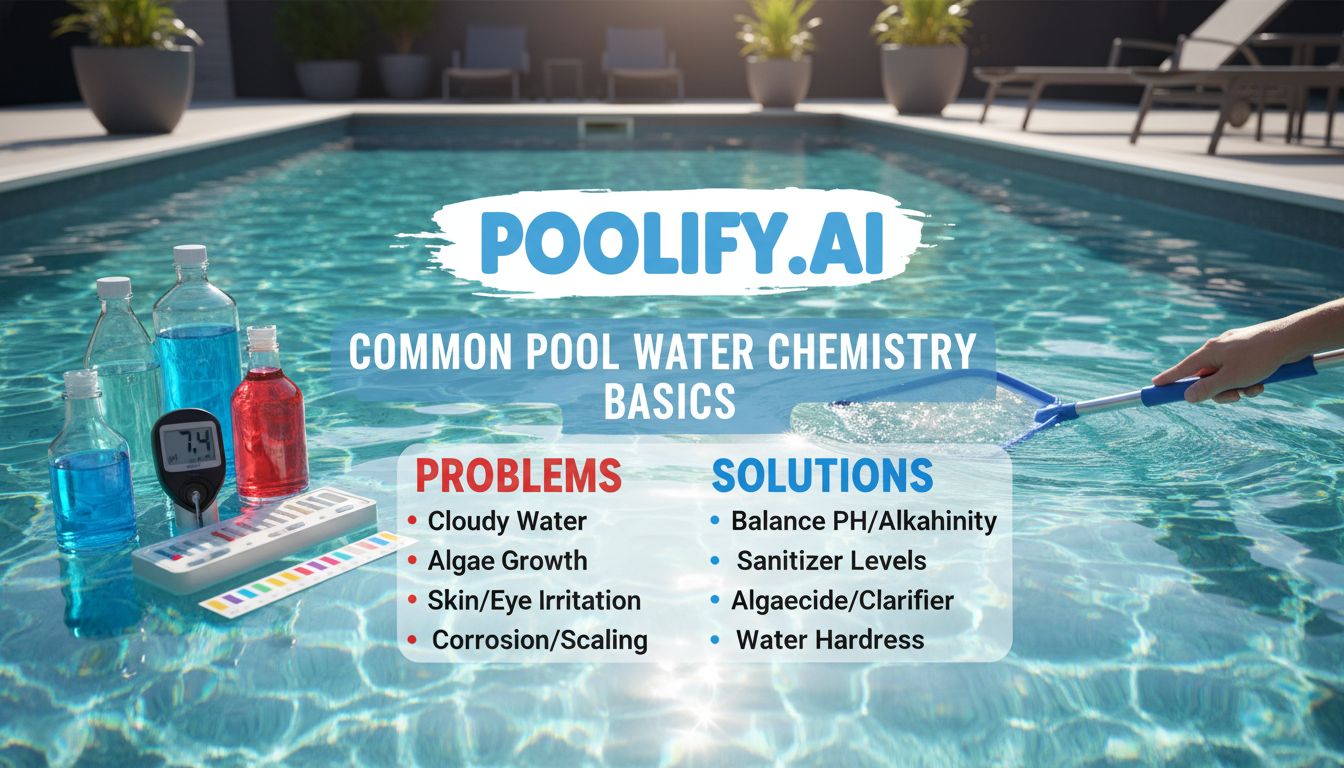
Even with diligent attention to pool water chemistry basics, problems occasionally arise. Recognizing symptoms and understanding their causes enables quick correction before minor issues escalate into major headaches.
Cloudy Water and Pool Water Chemistry Basics
Cloudy water typically indicates filtration problems or chemical imbalance, both relating to pool water chemistry basics. High pH, low chlorine, or elevated calcium hardness commonly cause cloudiness. Check and balance all parameters, ensure adequate filtration runtime (at least eight hours daily), and consider shock treatment if free chlorine is low. Sometimes cloudiness results from inadequate filtration despite proper pool water chemistry basics, requiring filter cleaning or replacement.
Algae Growth Despite Following Pool Water Chemistry Basics
Algae blooms suggest inadequate sanitizer levels or poor circulation, even when pool water chemistry basics appear correct. Green algae is most common, while yellow and black varieties are more stubborn. Address algae by brushing pool surfaces thoroughly, shocking with triple the normal chlorine dose, and running the filter continuously until water clears. Verify that cyanuric acid hasn’t reached excessive levels, as this prevents chlorine from effectively sanitizing despite showing adequate test readings in your pool water chemistry basics routine.
Scaling and Staining Related to Pool Water Chemistry Basics
Scale deposits and metal staining indicate mineral imbalances in your pool water chemistry basics. High calcium hardness or pH causes white, crusty scale formation on surfaces and equipment. Metal staining appears as brown, green, or black discoloration, typically from copper, iron, or manganese in source water. Prevent scaling by maintaining proper pool water chemistry basics, particularly calcium hardness and pH. Address metal staining with sequestering agents that bind minerals, preventing them from depositing on pool surfaces.
Seasonal Adjustments to Pool Water Chemistry Basics
Pool water chemistry basics vary throughout the year, requiring different approaches for different seasons. Understanding these variations helps you maintain optimal water conditions regardless of weather or usage patterns.
Spring Opening and Pool Water Chemistry Basics
Spring pool opening requires comprehensive attention to pool water chemistry basics after months of dormancy. Begin by removing winter covers, cleaning debris, and filling the pool to proper levels. Test all parameters thoroughly, as winter conditions often cause significant chemical drift. Balance alkalinity first, then pH, followed by calcium hardness and sanitizer. Shock the pool heavily during opening to eliminate any bacteria or algae that developed during winter, establishing a solid foundation for the season’s pool water chemistry basics maintenance.
Summer Maintenance of Pool Water Chemistry Basics
Summer represents peak demand for vigilant pool water chemistry basics management. Higher temperatures accelerate chemical reactions, increase evaporation, and promote algae growth. Heavy bather loads introduce contaminants that consume sanitizer rapidly. Test pool water chemistry basics daily during summer, checking chlorine and pH at minimum. Increase shock treatment frequency to weekly or after pool parties. Monitor cyanuric acid monthly, as stabilized chlorine products gradually increase CYA levels throughout the season.
Fall Closing and Pool Water Chemistry Basics
Proper winterization protects your pool investment and simplifies spring opening. Balance all pool water chemistry basics parameters before closing, with slightly elevated chlorine levels (3-5 ppm) providing protection during dormancy. Add winterizing chemicals specifically formulated to prevent algae growth and scale formation during cold months. Don’t drain the pool completely, as proper water level and chemistry protect surfaces from freeze damage. Following these pool water chemistry basics guidelines ensures your pool emerges from winter in excellent condition.
Advanced Pool Water Chemistry Basics Concepts
Once you’ve mastered fundamental pool water chemistry basics, understanding advanced concepts enables even more precise water management and problem prevention.
Saturation Index and Pool Water Chemistry Basics
The Langelier Saturation Index (LSI) calculates water’s tendency toward corrosion or scaling based on the interaction of pH, alkalinity, calcium hardness, and temperature. This advanced pool water chemistry basics calculation predicts whether water is balanced, corrosive, or scale-forming. Target LSI values between -0.3 and +0.3 indicate properly balanced water that won’t damage surfaces or equipment. While not necessary for basic maintenance, understanding LSI helps troubleshoot persistent water balance issues that simple parameter adjustment doesn’t resolve.
Oxidation-Reduction Potential in Pool Water Chemistry Basics
Oxidation-reduction potential (ORP) measures water’s ability to oxidize contaminants, providing a more complete picture of sanitizer effectiveness than simple chlorine testing. ORP readings between 650 and 750 millivolts indicate properly sanitized water. This aspect of pool water chemistry basics is particularly valuable for commercial pools or those using alternative sanitizers. ORP meters provide real-time sanitization status, complementing traditional pool water chemistry basics testing methods.
Salt Systems and Modified Pool Water Chemistry Basics
Salt chlorine generators have gained popularity, requiring modified pool water chemistry basics approaches. These systems produce chlorine through electrolysis of dissolved salt, maintaining consistent sanitizer levels automatically. However, salt pools still require attention to pH, alkalinity, calcium hardness, and stabilizer. Salt systems tend to increase pH over time, requiring more frequent acid additions than traditional chlorine pools. Understanding these differences ensures successful pool water chemistry basics management with salt systems.
Money-Saving Tips for Pool Water Chemistry Basics
Maintaining proper pool water chemistry basics doesn’t require breaking the bank. Smart strategies reduce chemical costs while maintaining excellent water quality throughout the swimming season.
Purchase chemicals in bulk during off-season sales, storing them properly in cool, dry locations away from direct sunlight. Generic pool chemicals containing identical active ingredients as name brands often cost significantly less. Consider liquid chlorine rather than tablets for routine sanitization, as it’s typically more economical and doesn’t add cyanuric acid to your pool water chemistry basics equation. Learn more about managing pool maintenance costs effectively throughout the year.
Consistent attention to pool water chemistry basics prevents expensive problems. Regular testing and minor adjustments cost far less than correcting major imbalances or treating severe algae blooms. Proper water balance extends equipment life, reducing replacement costs for pumps, heaters, and filters. Using a pool cover when not swimming reduces evaporation, conserves chemicals, and maintains more stable pool water chemistry basics with less intervention required.
Technology Tools for Managing Pool Water Chemistry Basics
The pool industry has embraced technology in 2026, offering innovative tools that simplify pool water chemistry basics management for busy homeowners. Smart pool monitors continuously test water parameters, sending alerts to your smartphone when adjustments are needed. These devices track pool water chemistry basics trends over time, helping you identify patterns and prevent recurring problems.
Automated chemical dosing systems represent the ultimate convenience for pool water chemistry basics maintenance. These systems test water continuously and dispense precise chemical amounts to maintain target parameters automatically. While representing a significant investment, automated systems ensure consistently balanced water with minimal owner intervention. For those seeking a middle ground, check out our guide on pool automation systems to find the right technology level for your needs.
Mobile apps help track testing schedules, log chemical additions, and calculate dosing amounts based on your pool volume. Many apps provide educational resources about pool water chemistry basics, helping you understand the “why” behind recommendations. Some even integrate with smart home systems, coordinating pool equipment operation with water chemistry needs for optimal efficiency.
Professional Help with Pool Water Chemistry Basics
While understanding pool water chemistry basics empowers DIY maintenance, professional assistance offers value in certain situations. Pool service companies provide regular testing, chemical balancing, and equipment maintenance, freeing your time for pool enjoyment rather than upkeep. Professionals bring experience recognizing subtle problems before they escalate, potentially saving money on major repairs.
Consider professional water analysis annually, even if you handle routine pool water chemistry basics yourself. Many pool supply stores offer free computerized water testing that measures parameters beyond typical home test kit capabilities. These comprehensive analyses identify issues that might escape notice during routine testing, ensuring your pool water chemistry basics remain optimal.
Professional consultation proves especially valuable when troubleshooting persistent water quality problems. Experienced pool technicians understand the complex interactions within pool water chemistry basics and can quickly identify root causes of recurring issues. The investment in professional expertise often pays for itself by preventing trial-and-error chemical additions that waste money without solving problems.
Frequently Asked Questions About Pool Water Chemistry Basics
How often should I test my pool water chemistry basics?
Test pH and chlorine levels at least twice weekly during swimming season, with daily testing during heavy use periods or extreme weather. Check alkalinity, calcium hardness, and cyanuric acid weekly during peak season and monthly during shoulder seasons. Consistent testing is the cornerstone of effective pool water chemistry basics management, allowing you to catch and correct imbalances before they cause problems.
Can I swim immediately after adding chemicals for pool water chemistry basics?
Wait times depend on which chemicals you’ve added. After routine chlorine additions, wait at least 30 minutes with the pump running before swimming. Following shock treatment, wait until chlorine drops below 5 ppm, typically 8-24 hours depending on dosage. After adjusting pH, alkalinity, or calcium hardness, wait 20-30 minutes for circulation before swimming. Always follow product label instructions specific to the chemicals you’re using in your pool water chemistry basics routine.
Why does my pool smell strongly of chlorine despite proper pool water chemistry basics?
Strong chlorine odor paradoxically indicates insufficient free chlorine and excessive chloramines (combined chlorine). This common misconception about pool water chemistry basics surprises many pool owners. The solution is shock treatment to break down chloramines and restore effective sanitizer levels. Regular shocking prevents chloramine buildup, eliminating odor problems while maintaining proper pool water chemistry basics.
What’s the most important aspect of pool water chemistry basics for beginners?
pH balance is the most critical starting point for pool water chemistry basics. Proper pH affects sanitizer effectiveness, equipment longevity, and swimmer comfort. Master pH testing and adjustment before worrying about advanced parameters. Once you understand pH management within pool water chemistry basics, other aspects become much easier to control and maintain throughout the swimming season.
How does weather affect pool water chemistry basics?
Weather significantly impacts pool water chemistry basics. Heavy rain dilutes chemicals and introduces contaminants, requiring testing and rebalancing afterward. Hot, sunny weather accelerates chlorine consumption and increases evaporation, concentrating other chemicals. Wind introduces debris that consumes sanitizer. Adjust your pool water chemistry basics maintenance schedule based on weather patterns, testing more frequently during extreme conditions.
Key Takeaways: Mastering Pool Water Chemistry Basics
- Balance is interconnected: Pool water chemistry basics involve five primary parameters—pH, alkalinity, chlorine, calcium hardness, and cyanuric acid—that influence each other. Adjust alkalinity before pH, and understand how each change affects the overall system.
- Consistent testing prevents problems: Regular testing is the foundation of successful pool water chemistry basics. Test pH and chlorine twice weekly minimum, with more frequent checks during heavy use or extreme weather conditions.
- Proper pH is paramount: Maintaining pH between 7.4 and 7.6 optimizes chlorine effectiveness, protects equipment, and ensures swimmer comfort. This single aspect of pool water chemistry basics affects nearly every other parameter.
- Prevention costs less than correction: Minor, regular adjustments to pool water chemistry basics are far less expensive than treating major imbalances, algae blooms, or equipment damage caused by neglected water chemistry.
- Education empowers better maintenance: Understanding the “why” behind pool water chemistry basics helps you troubleshoot problems independently, make informed decisions about chemical purchases, and maintain optimal water quality with confidence.
See Your Dream Pool in Your Actual Backyard
Upload a photo and get an AI-designed pool visualization in 10 seconds. 3 free designs, no login required.
Try Poolify Free →Conclusion: Your Journey with Pool Water Chemistry Basics
Mastering pool water chemistry basics transforms pool ownership from a chore into a rewarding responsibility. The knowledge you’ve gained through this comprehensive guide provides the foundation for maintaining crystal-clear, safe water throughout 2026 and beyond. Remember that pool water chemistry basics aren’t about achieving perfection but rather maintaining balance within acceptable ranges. Your pool is a dynamic system influenced by weather, usage, and environmental factors, requiring regular attention and adjustment.
Start with the fundamentals—consistent testing, proper pH management, and adequate sanitizer levels—before worrying about advanced concepts. As you gain experience with pool water chemistry basics, you’ll develop an intuitive sense for your pool’s needs and patterns. Track your testing results and chemical additions to identify trends specific to your pool, climate, and usage patterns. This historical data becomes invaluable for predicting and preventing problems before they occur.
Don’t hesitate to seek help when needed, whether from pool supply professionals, online communities, or service technicians. The pool industry continues evolving with new products and technologies that simplify pool water chemistry basics management. Stay informed about innovations that might benefit your specific situation, but remember that fundamental principles remain constant regardless of new gadgets or chemical formulations.
Your commitment to understanding pool water chemistry basics protects your investment, ensures family safety, and maximizes swimming enjoyment. With the knowledge and strategies outlined in this guide, you’re well-equipped to maintain beautiful, balanced pool water throughout the swimming season. For additional guidance on overall pool care, explore our complete pool maintenance guide covering all aspects of pool ownership. The effort you invest in mastering pool water chemistry basics pays dividends in reduced maintenance costs, extended equipment life, and countless hours of worry-free swimming pleasure.


References
Centers for Disease Control and Prevention. (2026). Disinfection and Testing of Residential Pools. CDC Healthy Swimming Program.
