
Introduction to Pool Stain Removal
Pool stain removal ranks among the most common challenges homeowners face when maintaining their swimming pools. Whether you’re dealing with stubborn rust marks, mysterious organic discoloration, or mineral deposits that refuse to budge, understanding the right approach makes all the difference. This comprehensive guide walks you through everything you need to know about pool stain removal in 2026, from identifying the source of stains to implementing proven treatment methods that restore your pool’s pristine appearance.
The good news is that most pool stains respond well to proper treatment when you understand their underlying causes. Pool stain removal success depends on accurate identification, selecting appropriate cleaning agents, and following systematic procedures that address the root problem rather than just masking symptoms.
Understanding Different Types of Pool Stains
Effective pool stain removal begins with proper stain identification. Different stain types require distinct treatment approaches, and misidentifying the problem can waste time and money while potentially damaging your pool surface.
Metal-Based Stains
Metal stains represent the most prevalent category in pool stain removal scenarios. These discolorations occur when metallic minerals in your water source oxidize and deposit on pool surfaces. Iron creates reddish-brown or rust-colored stains, copper produces blue-green or turquoise marks, and manganese leaves purple or black discoloration. According to the CDC’s pool water quality guidelines, maintaining proper chemical balance helps prevent metal oxidation that leads to staining.
Metal-based pool stain removal typically requires ascorbic acid treatments or specialized metal sequestrants. The key is addressing both the visible stain and the dissolved metals in your water to prevent recurrence. Testing your source water for metal content provides valuable insight into whether metal stains will be an ongoing challenge.
Organic Stains
Organic stains develop from leaves, algae, berries, worms, or other biological materials that settle on pool surfaces. These stains usually appear brown, green, or yellowish and concentrate in areas where debris accumulates. Pool stain removal for organic discoloration generally proves easier than treating metal stains because organic matter responds well to oxidation.
Chlorine shock treatments work effectively for organic pool stain removal. The oxidizing power of chlorine breaks down organic compounds, lifting stains from pool surfaces. Regular maintenance and prompt debris removal prevent most organic staining issues before they become severe.
Mineral Scale and Calcium Deposits
Hard water creates calcium carbonate deposits that appear as white, gray, or chalky stains. These mineral buildups differ from typical stains because they create textured, raised deposits rather than flat discoloration. Pool stain removal for calcium deposits requires acidic treatments that dissolve mineral scale without damaging pool surfaces.
Maintaining proper calcium hardness levels between 200-400 ppm prevents most scaling issues. When pool stain removal becomes necessary for mineral deposits, muriatic acid or specialized descaling products restore smooth surfaces effectively.
Essential Pool Stain Removal Tools and Products
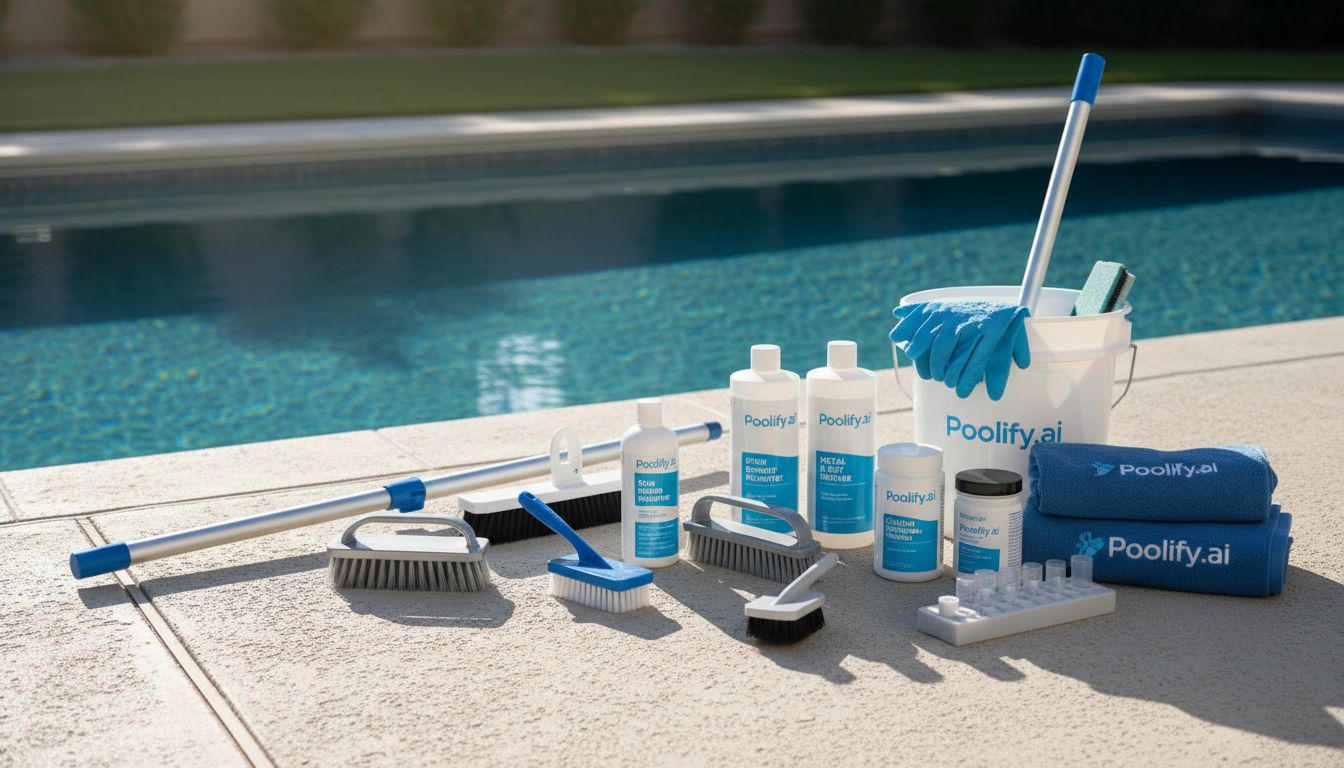
Successful pool stain removal requires the right equipment and chemical products. Building a proper toolkit ensures you’re prepared to tackle stains as soon as they appear, preventing them from setting permanently into pool surfaces.
Chemical Treatments for Pool Stain Removal
Ascorbic acid (vitamin C) serves as the gold standard for metal-based pool stain removal. This gentle yet effective treatment lifts iron and copper stains without harsh scrubbing. Sodium bisulfate offers another option for certain stain types, while enzyme-based cleaners excel at organic pool stain removal. For comprehensive pool maintenance strategies, combining chemical treatments with preventive care delivers optimal results.
Chlorine remains essential for organic pool stain removal through shock treatments. Granular chlorine or liquid chlorine at elevated concentrations oxidizes organic materials effectively. Sequestering agents prevent metal stains by binding dissolved minerals, keeping them suspended in water rather than depositing on surfaces.
Physical Tools and Equipment
Stain erasers and magic sponges provide mechanical assistance for pool stain removal without scratching delicate surfaces. Nylon brushes work better than wire brushes for most pool types, as metal bristles can introduce additional iron that causes new stains. Pumice stones effectively remove calcium deposits on concrete pools but should never be used on vinyl or fiberglass.
Submersible pumps help with draining for intensive pool stain removal projects. Test kits that identify metal content and pH levels guide treatment decisions. Protective equipment including gloves, goggles, and appropriate clothing ensures safety during chemical pool stain removal procedures.
Step-by-Step Pool Stain Removal Methods
Systematic approaches to pool stain removal produce better results than random experimentation. Following proven procedures saves time, money, and frustration while protecting your pool investment.
The Vitamin C Method for Metal Stains
This pool stain removal technique works exceptionally well for iron and copper stains. Begin by testing a small area with a vitamin C tablet held against the stain for 30 seconds. If the stain lightens, you’ve confirmed metal-based discoloration. For whole-pool treatment, lower water level if treating waterline stains, or work with full water for submerged stains.
Dissolve one pound of ascorbic acid per 10,000 gallons of water. Broadcast the solution across the pool surface, brushing stained areas thoroughly. This pool stain removal process typically shows results within hours. After stains lift, run your filtration system continuously for 24-48 hours, then rebalance water chemistry. Add a metal sequestrant to prevent stain recurrence.
Shock Treatment for Organic Pool Stain Removal
Organic pool stain removal through oxidation requires elevated chlorine levels. Calculate the amount of shock needed based on your pool volume, typically 2-3 pounds per 10,000 gallons for stain treatment. Apply shock treatment in the evening to prevent sunlight from degrading chlorine before it works on stains.
Brush stained areas vigorously after adding shock to help chlorine penetrate organic deposits. Allow the pool to circulate overnight with the pump running continuously. This pool stain removal approach often requires repeating the process for stubborn stains. Monitor chlorine levels and wait until they return to safe swimming ranges before pool use.
Acid Washing for Severe Stains
When other pool stain removal methods fail, acid washing provides a more aggressive solution for concrete and plaster pools. This process involves draining the pool completely and applying diluted muriatic acid to strip a thin layer of surface material along with embedded stains. Professional pool stain removal services typically handle acid washing due to safety concerns and technical requirements.
Acid washing removes approximately 1/32 inch of pool surface, so it should be reserved for severe staining that doesn’t respond to gentler pool stain removal techniques. The process effectively eliminates years of accumulated stains but shortens overall pool surface lifespan if performed too frequently.
Preventing Future Pool Stains
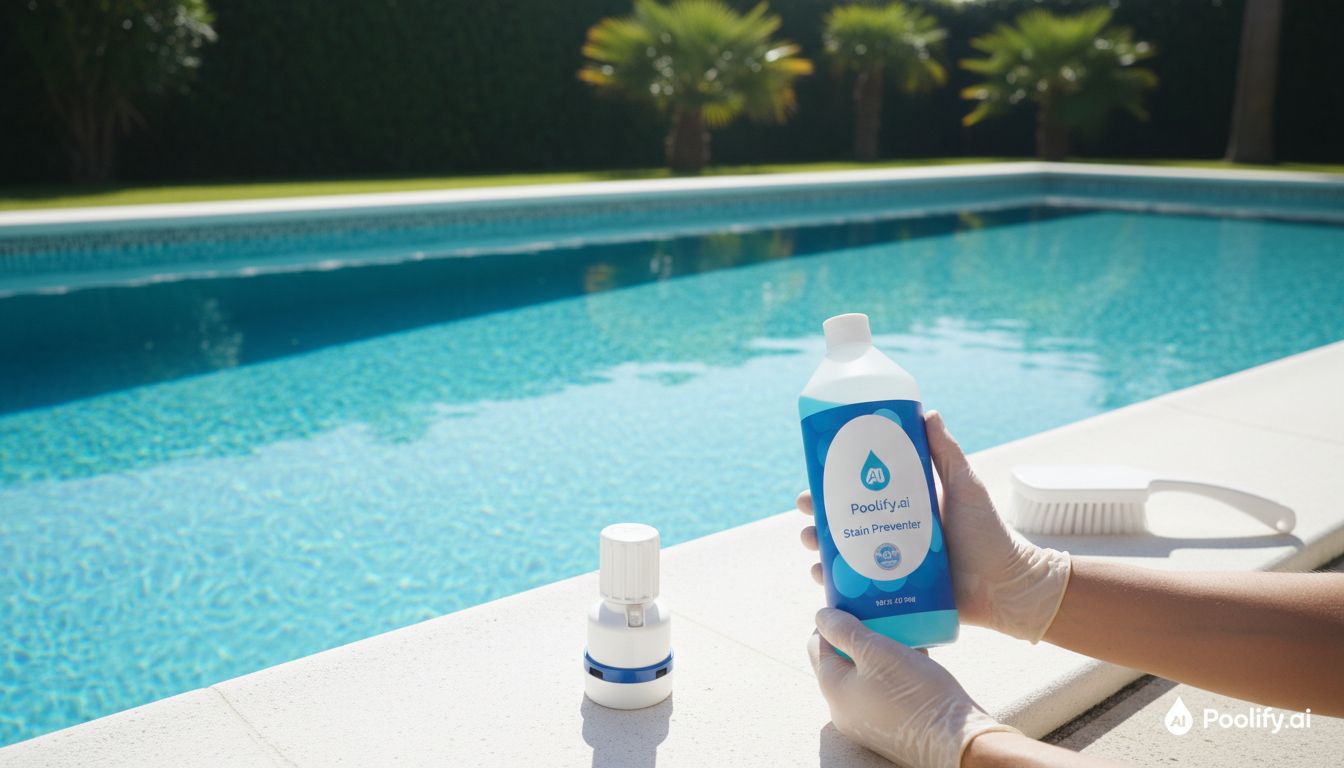
The best pool stain removal strategy is preventing stains from forming initially. Proactive maintenance costs less and requires less effort than treating established stains.
Water Chemistry Management
Balanced water chemistry forms the foundation of pool stain removal prevention. Test water weekly, maintaining pH between 7.4-7.6, alkalinity at 80-120 ppm, and calcium hardness at 200-400 ppm. These ranges minimize conditions that promote staining. The EPA’s water quality standards provide additional guidance on safe mineral levels in water systems.
Metal sequestrants added monthly bind dissolved minerals, preventing the oxidation that causes metal stains. This preventive pool stain removal approach proves especially valuable for pools filled with well water or in areas with high mineral content in municipal water supplies.
Regular Maintenance Routines
Consistent pool care prevents most staining issues before pool stain removal becomes necessary. Skim debris daily to prevent organic materials from settling and staining surfaces. Brush pool walls and floors weekly to prevent algae attachment and mineral buildup. Vacuum regularly to remove fine particles that can discolor surfaces over time.
Clean or backwash filters according to manufacturer recommendations. Poor filtration allows stain-causing particles to circulate and deposit on surfaces. For more detailed guidance, explore our pool cleaning tips that complement pool stain removal efforts.
Source Water Treatment
If your fill water contains high metal content, treat it during the filling process to prevent future pool stain removal needs. Attach a hose filter designed to remove metals and minerals, or add sequestrants while filling. Testing source water before adding it to your pool identifies potential problems before they manifest as stains.
For pools in areas with particularly problematic water, installing a whole-pool metal removal system provides ongoing protection. These systems continuously filter out metals, dramatically reducing pool stain removal requirements over the pool’s lifetime.
Common Pool Stain Removal Mistakes to Avoid
Understanding what not to do during pool stain removal proves as important as knowing correct procedures. These common errors can worsen staining, damage pool surfaces, or create safety hazards.
Using Wrong Products for Stain Type
Attempting pool stain removal with inappropriate chemicals wastes resources and may intensify problems. Acid treatments worsen metal stains by lowering pH and promoting further oxidation. Chlorine shock doesn’t effectively treat metal-based discoloration. Always identify stain type before beginning pool stain removal treatments.
Mixing incompatible chemicals creates dangerous reactions. Never combine different pool stain removal products without understanding their chemical interactions. Follow product instructions precisely, respecting recommended dilution ratios and application methods.
Aggressive Scrubbing and Abrasive Tools
Harsh scrubbing during pool stain removal can damage pool surfaces, especially vinyl liners and fiberglass. Wire brushes introduce iron particles that create new rust stains. Pressure washers at high settings can pit concrete or tear vinyl. Gentle, persistent treatment with appropriate chemicals typically outperforms aggressive mechanical pool stain removal attempts.
Patience yields better pool stain removal results than force. Chemical treatments need time to work. Rushing the process or applying excessive physical effort often causes more problems than it solves.
Neglecting Water Balance After Treatment
Successful pool stain removal doesn’t end when stains disappear. Failing to rebalance water chemistry after treatment allows stains to return quickly. Test and adjust pH, alkalinity, and sanitizer levels after any pool stain removal procedure. Add sequestrants to bind any remaining dissolved metals.
Skipping this step means the conditions that caused original staining persist, requiring repeated pool stain removal efforts. Proper post-treatment care ensures long-lasting results from your stain removal work.
Professional vs. DIY Pool Stain Removal
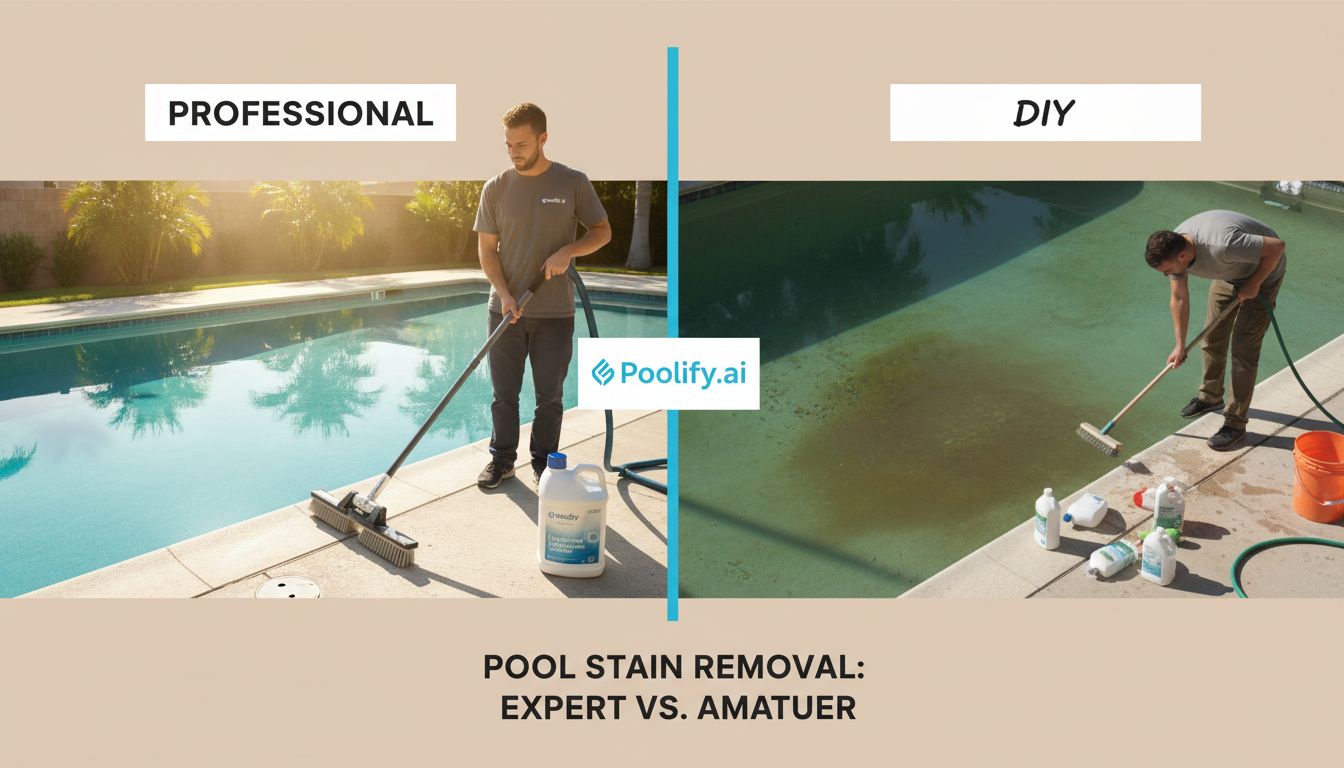
Deciding between professional services and DIY pool stain removal depends on stain severity, pool type, and your comfort level with pool chemistry and maintenance procedures.
When to Handle Pool Stain Removal Yourself
Minor surface stains respond well to DIY pool stain removal efforts. If stains appeared recently, haven’t penetrated deeply, and you’ve identified the stain type confidently, homeowner treatment usually succeeds. Small localized stains from leaves or minor metal discoloration make good DIY pool stain removal projects.
Basic pool stain removal supplies cost relatively little, making DIY approaches economical for simple cases. Online resources and product instructions provide sufficient guidance for straightforward stain problems. Success with minor pool stain removal builds confidence and skills for future maintenance.
When to Call Pool Stain Removal Professionals
Extensive staining covering large pool areas justifies professional pool stain removal services. Professionals bring specialized equipment, industrial-strength products, and experience diagnosing complex stain issues. If you’ve attempted DIY pool stain removal without success, professional assessment identifies what you might have missed.
Severe staining requiring acid washing or draining demands professional expertise. The safety risks and technical requirements of aggressive pool stain removal procedures exceed most homeowners’ capabilities. Professionals also carry insurance protecting against accidental damage during intensive treatments.
Unusual or mysterious stains that don’t fit typical patterns benefit from professional diagnosis. Experienced technicians recognize rare pool stain removal scenarios that might puzzle homeowners. The investment in professional services often costs less than repeated failed DIY attempts.
Pool Stain Removal for Different Surface Types
Pool surface material significantly impacts appropriate pool stain removal methods. Techniques safe for concrete might damage vinyl, while products effective on fiberglass could harm plaster.
Concrete and Plaster Pool Stain Removal
Concrete and plaster pools tolerate the most aggressive pool stain removal treatments. Acid washing works on these surfaces, as does intensive scrubbing with nylon brushes. Pumice stones remove calcium deposits effectively without damage. However, plaster’s porous nature means stains penetrate deeper, sometimes requiring multiple pool stain removal treatments.
These surfaces benefit from regular acid washing every 3-5 years to maintain appearance. Between major treatments, standard pool stain removal methods using ascorbic acid or chlorine shock handle most issues. Sealing plaster after pool stain removal helps prevent future staining by reducing porosity.
Vinyl Liner Pool Stain Removal
Vinyl requires gentle pool stain removal approaches. Never use abrasive tools, pumice stones, or undiluted acids on vinyl liners. Stain erasers and soft brushes provide mechanical cleaning without damage. Chemical pool stain removal using properly diluted ascorbic acid or enzyme cleaners works well for vinyl.
Vinyl stains sometimes indicate liner degradation rather than surface deposits. If pool stain removal attempts don’t improve appearance, the discoloration might be permanent liner damage requiring replacement. Test treatments in inconspicuous areas before applying to visible surfaces.
Fiberglass Pool Stain Removal
Fiberglass pools feature smooth, non-porous surfaces that resist staining better than other materials. When stains do occur, pool stain removal typically proceeds easily because stains can’t penetrate the gel coat. Gentle cleaners and soft cloths usually suffice for fiberglass pool stain removal.
Avoid abrasive scrubbing that might scratch the gel coat, creating rough spots where future stains adhere more readily. Fiberglass pool stain removal rarely requires harsh chemicals. Most discoloration responds to mild treatments, making fiberglass one of the easiest surfaces to maintain stain-free.
Seasonal Considerations for Pool Stain Removal
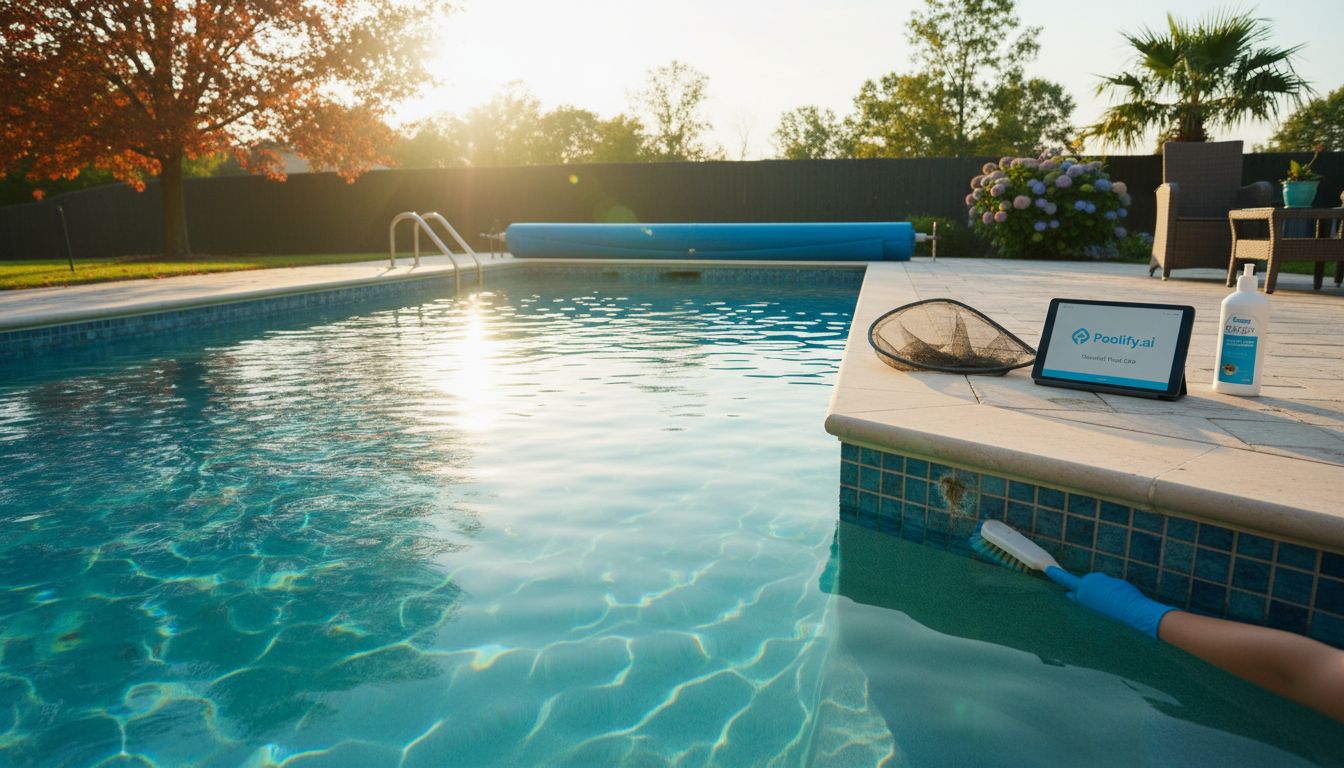
Timing affects pool stain removal success and prevention strategies. Understanding seasonal factors helps you plan maintenance for optimal results.
Spring Pool Opening and Stain Assessment
Spring pool opening reveals stains that developed during winter closure. Organic debris accumulated under winter covers often creates staining that requires immediate pool stain removal attention. Address these stains before regular swimming season begins, as fresh stains respond better to treatment than those allowed to set for months.
Spring represents an ideal time for intensive pool stain removal projects like acid washing. Cooler temperatures make draining and refilling more manageable, and completing work before peak season ensures your pool looks pristine when you’re ready to swim.
Summer Maintenance and Prevention
Heavy pool use during summer increases staining risks from sunscreen, body oils, and increased debris. Vigilant maintenance prevents stains that would require pool stain removal later. Shower before swimming to reduce organic contaminants. Maintain consistent chlorine levels to oxidize organic materials before they stain surfaces.
Summer’s warm water temperatures accelerate chemical reactions, making pool stain removal treatments work faster. However, high temperatures also mean you can’t swim during treatment, so time pool stain removal projects for periods when pool unavailability causes minimal inconvenience.
Fall Preparation and Winter Protection
Complete any necessary pool stain removal before closing for winter. Stains left untreated all winter set more permanently, requiring more aggressive removal methods in spring. Balance water chemistry carefully before closing to prevent staining during dormant months.
Winter pool covers prevent organic debris accumulation that causes staining. Quality covers represent preventive pool stain removal investments that pay dividends by reducing spring cleanup requirements. For winterized pools, maintaining some chemical treatment prevents algae and mineral staining during closure.
Advanced Pool Stain Removal Techniques
Complex staining scenarios sometimes require specialized pool stain removal approaches beyond standard treatments. These advanced methods address stubborn problems that resist conventional solutions.
Chelation Therapy for Metal Stains
Severe metal staining benefits from chelation treatments using EDTA (ethylenediaminetetraacetic acid) or similar compounds. These powerful sequestrants bind metals more effectively than standard products, facilitating pool stain removal for extreme cases. Chelation works by forming stable complexes with metal ions, preventing them from oxidizing and depositing on surfaces.
This pool stain removal technique requires precise dosing based on metal concentration and pool volume. Professional testing identifies specific metals present, allowing targeted treatment. After chelation, metals remain suspended in water where filtration removes them, preventing stain recurrence.
Electrolytic Pool Stain Removal
Emerging technologies use electrolysis for pool stain removal, applying electrical current to reverse metal oxidation. Specialized equipment creates conditions where oxidized metals revert to dissolved forms that can be filtered out. This innovative pool stain removal approach shows promise for treating stubborn metal stains without harsh chemicals.
While still relatively uncommon in residential applications, electrolytic pool stain removal offers advantages for pools with persistent metal staining issues. The technology works particularly well for copper stains resistant to conventional treatments.
Enzyme Treatments for Organic Stains
Advanced enzyme formulations target specific organic compounds for pool stain removal. Different enzymes break down oils, proteins, and plant materials that cause staining. These biological pool stain removal products work slowly but effectively, digesting organic deposits without harsh chemicals.
Regular enzyme treatments prevent organic stain buildup, reducing the need for aggressive pool stain removal procedures. Enzymes complement chlorine sanitation by breaking down non-living organic materials that chlorine doesn’t fully oxidize.
Frequently Asked Questions About Pool Stain Removal
How long does pool stain removal typically take?
Pool stain removal timelines vary by stain type and severity. Metal stains treated with ascorbic acid often lighten within hours, though complete pool stain removal might require 24-48 hours. Organic stains respond to chlorine shock treatments overnight in many cases. Severe staining requiring acid washing takes several days including draining, treatment, and refilling. Most DIY pool stain removal projects show noticeable improvement within one to three days of beginning treatment.
Can I swim during pool stain removal treatments?
Swimming during pool stain removal depends on the treatment method. Ascorbic acid treatments at recommended concentrations allow swimming once the product fully disperses, typically after a few hours of circulation. Chlorine shock treatments require waiting until chlorine levels drop to safe ranges, usually 12-24 hours. Acid washing requires complete pool draining, making swimming impossible until refilling and rebalancing complete. Always test water chemistry before swimming after any pool stain removal procedure.
Why do stains return after pool stain removal?
Recurring stains after pool stain removal indicate underlying water chemistry issues weren’t addressed. Metal stains return when dissolved metals remain in water without sequestration. Organic stains recur if sanitizer levels stay too low to prevent algae and debris accumulation. Mineral stains come back when calcium hardness and pH remain unbalanced. Successful long-term pool stain removal requires correcting the root cause, not just treating visible symptoms. Test source water for metals, maintain proper chemistry, and use preventive treatments to stop stain recurrence.
Are natural pool stain removal methods effective?
Natural pool stain removal approaches using vitamin C (ascorbic acid) work excellently for metal stains. This gentle, natural treatment rivals commercial products for effectiveness. Enzyme-based pool stain removal products derived from natural sources effectively break down organic stains. However, some natural methods lack the power of conventional treatments for severe staining. Baking soda and vinegar, popular natural cleaners, provide limited pool stain removal effectiveness and can disrupt water chemistry. Natural options work best for mild staining and preventive maintenance rather than severe pool stain removal challenges.
Does pool stain removal damage pool surfaces?
Proper pool stain removal techniques don’t damage surfaces when applied correctly. Gentle chemical treatments like ascorbic acid and appropriate chlorine levels pose no risk to any pool surface type. Aggressive methods like acid washing remove a thin surface layer by design, but professional application prevents excessive damage. Problems occur when wrong products contact incompatible surfaces—acids on vinyl, abrasives on fiberglass, or metal brushes on any surface. Following manufacturer guidelines and matching pool stain removal methods to surface type ensures safe, effective treatment without damage.
Key Takeaways
- Accurate stain identification drives successful pool stain removal – Metal, organic, and mineral stains each require specific treatment approaches for optimal results.
- Prevention costs less than treatment – Maintaining balanced water chemistry, using sequestrants, and performing regular maintenance prevents most pool stain removal needs.
- Match methods to pool surface type – Concrete tolerates aggressive pool stain removal techniques that would damage vinyl or fiberglass surfaces.
- Address root causes, not just symptoms – Effective pool stain removal includes correcting water chemistry issues and treating source water to prevent recurrence.
- Professional help benefits severe cases – Complex or extensive staining justifies professional pool stain removal services with specialized equipment and expertise.
See Your Dream Pool in Your Actual Backyard
Upload a photo and get an AI-designed pool visualization in 10 seconds. 3 free designs, no login required.
Try Poolify Free →Conclusion
Pool stain removal represents a manageable challenge when approached with proper knowledge and techniques. By identifying stain types accurately, selecting appropriate treatments, and addressing underlying water chemistry issues, homeowners successfully restore their pools’ pristine appearance. The key to long-term pool stain removal success lies in prevention through consistent maintenance and proactive water management.
Whether tackling minor discoloration with DIY pool stain removal methods or engaging professionals for severe staining, understanding the principles outlined in this guide empowers you to make informed decisions. Regular attention to water balance, prompt treatment of emerging stains, and appropriate seasonal maintenance minimize pool stain removal requirements while maximizing your swimming enjoyment throughout 2026 and beyond. Remember that patience and persistence yield better pool stain removal results than aggressive approaches that risk surface damage.
References
- Centers for Disease Control and Prevention (CDC) – Pool Water Quality and Disinfection: https://www.cdc.gov/healthywater/swimming/residential/disinfection-testing.html
- Environmental Protection Agency (EPA) – Water Quality Standards: https://www.epa.gov/ground-water-and-drinking-water/basic-information-about-lead-drinking-water
- Poolify.ai – Pool Maintenance Guide: https://content.poolify.ai/diy-pool-maintenance-tips/
- Poolify.ai – Pool Cleaning Tips: https://content.poolify.ai/pool-cleaning-schedule/
