Introduction to Pool Filter Maintenance
Maintaining a pristine swimming pool requires more than just skimming leaves and adding chlorine. At the heart of every sparkling pool lies a properly functioning filter system. This comprehensive pool filter cleaning guide walks you through everything you need to know about keeping your filter in peak condition throughout 2026 and beyond. Whether you’re dealing with a cartridge, sand, or diatomaceous earth (DE) filter, understanding proper cleaning techniques saves you money, extends equipment life, and ensures your pool water remains crystal clear for swimmers.
Pool filters work tirelessly to remove debris, dirt, and contaminants from your water, processing thousands of gallons daily. Without regular maintenance, even the best filtration systems become inefficient, leading to cloudy water, increased chemical usage, and potential equipment failure. This pool filter cleaning guide provides actionable steps that transform filter maintenance from a dreaded chore into a straightforward routine.
Understanding Your Pool Filter Type
Before diving into cleaning procedures, identifying your specific filter type is essential. Each filter design requires different maintenance approaches, and using the wrong technique can damage your equipment or reduce efficiency. This section of our pool filter cleaning guide breaks down the three main filter categories and their unique characteristics.
Cartridge Filters
Cartridge filters use pleated polyester fabric to trap particles as small as 10-15 microns. These filters have gained popularity in residential pools due to their ease of maintenance and energy efficiency. The cartridge element sits inside a tank, capturing debris while allowing clean water to pass through. Most cartridge filters require cleaning every 2-4 weeks during peak swimming season, though frequency depends on pool usage and environmental factors like nearby trees or construction.
According to the CDC’s residential pool guidelines, proper filtration is crucial for maintaining safe swimming conditions. Cartridge filters excel at fine particle removal without requiring backwashing, making them water-efficient options for environmentally conscious pool owners.
Sand Filters
Sand filters represent the most common filtration system, using specially graded silica sand to capture particles down to 20-40 microns. Water flows through the sand bed, where debris becomes trapped between sand grains. These robust systems require less frequent deep cleaning but need regular backwashing to maintain efficiency. This pool filter cleaning guide recommends backwashing when your pressure gauge reads 8-10 PSI above the normal operating pressure.
Sand filters typically require complete sand replacement every 5-7 years, though proper maintenance extends this timeline. The sand bed becomes less effective as sharp edges wear smooth, reducing filtration capacity over time.
Diatomaceous Earth (DE) Filters
DE filters provide the finest filtration, capturing particles as small as 2-5 microns using fossilized diatom skeletons. These microscopic organisms create a porous coating on filter grids, delivering exceptional water clarity. DE filters demand more attention than other types, requiring both backwashing and fresh DE powder application after each cleaning cycle. This pool filter cleaning guide emphasizes that while DE filters offer superior performance, they require commitment to regular maintenance schedules.
Essential Tools and Supplies for Filter Cleaning
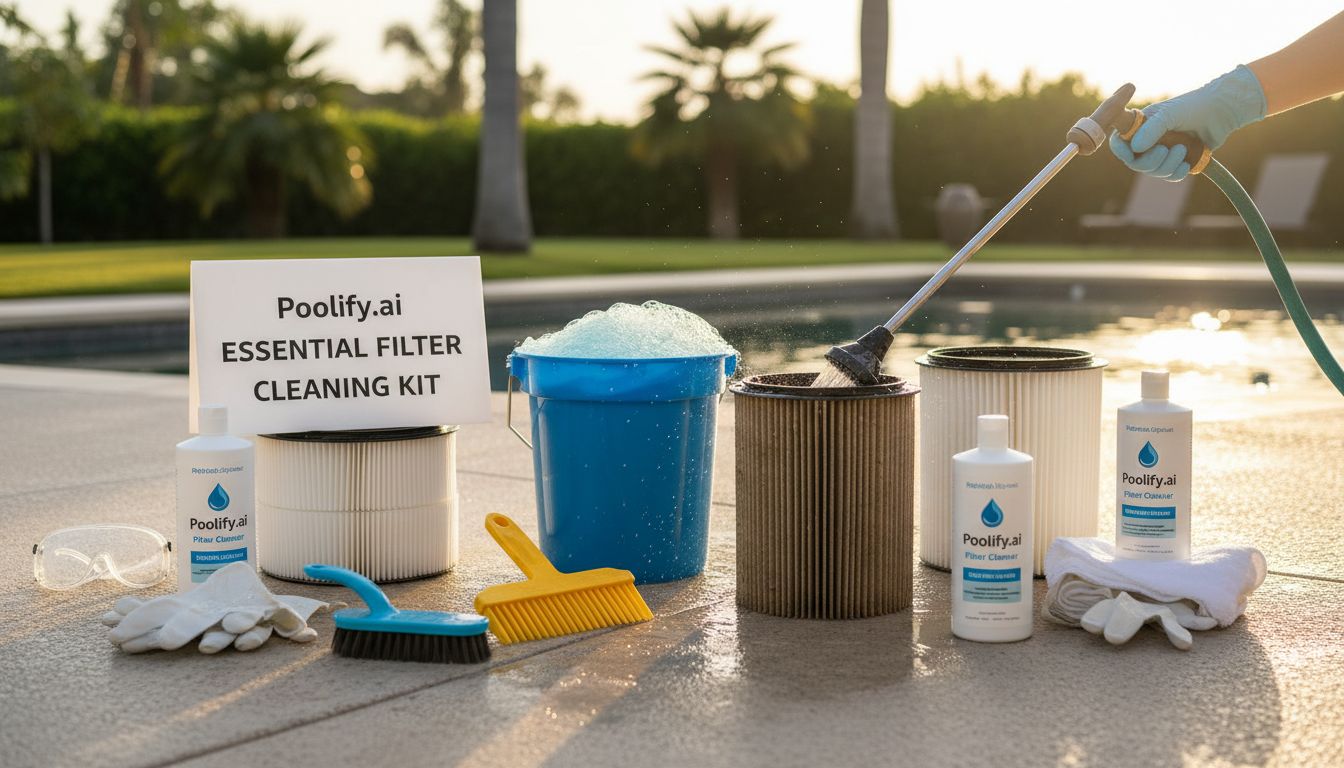
Proper equipment makes filter maintenance efficient and effective. This pool filter cleaning guide recommends assembling these essential items before beginning any cleaning project. Having everything ready prevents mid-project trips to the pool supply store and ensures thorough cleaning results.
For cartridge filter maintenance, you’ll need a garden hose with adjustable nozzle, filter cleaning solution or degreaser, a large plastic tub or trash can for soaking cartridges, and a soft brush for stubborn deposits. Avoid pressure washers, as excessive force damages delicate filter pleats and reduces effectiveness. Some pool professionals recommend specialized cartridge cleaning wands that attach to standard garden hoses, providing optimal water pressure without damaging the filter media.
Sand and DE filter maintenance requires different supplies. Keep a pressure gauge wrench handy for checking system pressure, backwash hose for directing wastewater away from the pool area, and DE powder or replacement sand as needed. A filter grid cleaning tool helps remove stubborn buildup from DE filter grids during deep cleaning sessions. This pool filter cleaning guide suggests maintaining a dedicated storage area for all filter maintenance supplies, ensuring quick access when needed.
Step-by-Step Cartridge Filter Cleaning Process
Cartridge filters require regular attention to maintain optimal performance. This detailed section of our pool filter cleaning guide provides a systematic approach to cartridge maintenance that ensures thorough cleaning without damaging delicate filter media.
Initial Preparation and Removal
Begin by turning off your pool pump and closing all relevant valves to prevent water flow during maintenance. Release pressure from the filter tank by opening the air relief valve located on top of the filter housing. Most cartridge filters feature a clamp or locking ring securing the tank lid—consult your owner’s manual for specific instructions. Carefully remove the lid and set it aside on a clean surface to prevent dirt contamination.
Lift the cartridge element straight up and out of the tank, noting its orientation for proper reinstallation. Inspect the cartridge for obvious damage like tears, crushed pleats, or deteriorated end caps. Damaged cartridges compromise filtration efficiency and require immediate replacement. This pool filter cleaning guide recommends keeping a spare cartridge on hand, allowing you to swap in a clean filter while thoroughly cleaning the dirty one.
Cleaning Techniques That Work
Start with a thorough rinse using a garden hose, working from top to bottom between each pleat. Hold the nozzle at a 45-degree angle approximately six inches from the cartridge surface, allowing water pressure to dislodge trapped debris. Rotate the cartridge systematically, ensuring every pleat receives attention. This initial rinse removes 70-80% of accumulated dirt and debris.
For deeper cleaning, prepare a soaking solution using a specialized filter cleaner or cartridge degreaser. Follow manufacturer dilution instructions carefully—too concentrated solutions can damage filter media while too diluted mixtures prove ineffective. Submerge the cartridge completely in the cleaning solution for 8-12 hours or overnight. This pool filter cleaning guide emphasizes that patience during soaking yields better results than aggressive scrubbing, which damages filter pleats.
After soaking, rinse the cartridge again thoroughly, ensuring all cleaning solution is removed. Chemical residue affects water chemistry and can cause foaming issues. Allow the cartridge to air dry completely before reinstallation, as wet filters are more susceptible to damage during handling. For more information on maintaining your entire pool system, check out our comprehensive pool maintenance schedule.
Sand Filter Maintenance and Backwashing
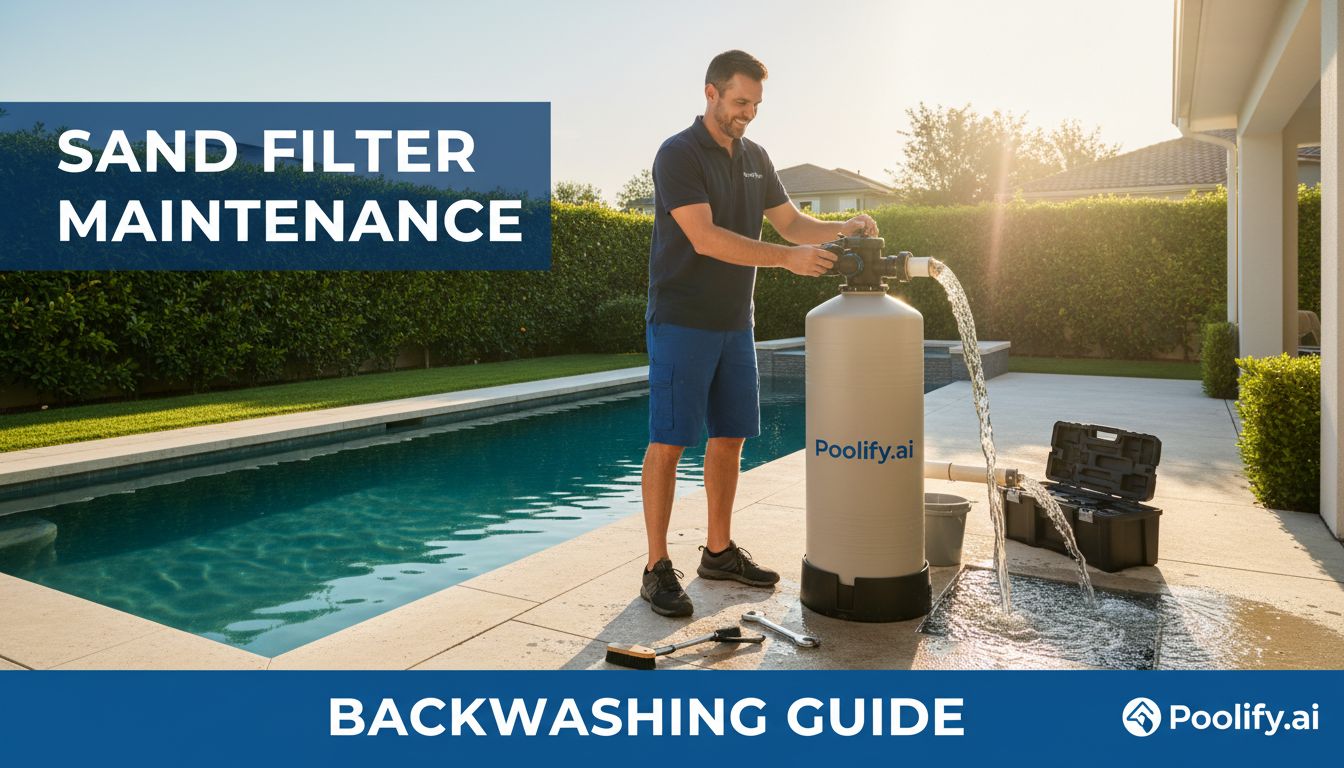
Sand filters require different maintenance approaches than cartridge systems. This section of our pool filter cleaning guide focuses on proper backwashing techniques and long-term sand bed maintenance for optimal filtration performance throughout 2026.
When to Backwash Your Sand Filter
Monitor your filter’s pressure gauge regularly—it’s your primary indicator for backwashing needs. Normal operating pressure varies by system but typically ranges from 10-20 PSI when the filter is clean. When pressure rises 8-10 PSI above your baseline reading, it’s time to backwash. This pool filter cleaning guide warns against backwashing too frequently, as a slightly dirty filter actually improves filtration efficiency by capturing smaller particles.
Other backwashing indicators include reduced water flow from return jets, cloudy pool water despite proper chemistry, or difficulty maintaining suction at skimmers. Environmental factors like heavy storms, nearby construction, or excessive swimmer load may require more frequent backwashing regardless of pressure readings.
Proper Backwashing Procedure
Turn off your pool pump before adjusting the multiport valve to prevent damage to internal components. Connect a backwash hose to the waste port, directing it to an appropriate drainage area away from the pool and landscaping. Check local regulations regarding pool backwash water disposal—some municipalities restrict where this water can be discharged.
Set the multiport valve to “Backwash” position and restart the pump. Water flows backward through the sand bed, lifting trapped debris and flushing it out through the waste line. Watch the sight glass on the multiport valve—initially cloudy water gradually clears as debris is removed. Continue backwashing for 2-3 minutes or until water runs clear. This pool filter cleaning guide recommends timing your backwash sessions to ensure consistency and thoroughness.
After backwashing, turn off the pump and switch the valve to “Rinse” position. Run the pump for 30-60 seconds to resettle the sand bed and flush any remaining debris from the system. Finally, return the valve to “Filter” position and resume normal operation. Check the pressure gauge—it should read close to your baseline operating pressure. Learn more about coordinating filter maintenance with other pool care tasks in our expert pool cleaning tips.
DE Filter Cleaning and Maintenance
Diatomaceous earth filters deliver exceptional water clarity but require meticulous maintenance. This pool filter cleaning guide section addresses both routine backwashing and periodic deep cleaning procedures specific to DE filtration systems.
Backwashing and Recharging DE Filters
DE filters require backwashing when pressure rises 8-10 PSI above normal operating levels, similar to sand filters. Follow the same basic backwashing procedure, but remember that DE filters need fresh diatomaceous earth powder added after each backwash cycle. This recharging process restores the filter coating on grids, ensuring continued fine particle removal.
Calculate the correct amount of DE powder based on your filter’s square footage—typically 1 pound of DE per 10 square feet of filter area. After backwashing and rinsing, return the valve to filter mode and start the pump. Mix the appropriate amount of DE powder with water in a bucket, creating a slurry consistency. Slowly pour this mixture into the skimmer while the pump runs, allowing it to circulate through the system and coat the filter grids evenly. This pool filter cleaning guide stresses the importance of accurate DE measurements—too little reduces filtration efficiency while excess powder can return to the pool.
Deep Cleaning DE Filter Grids
Every 6-12 months, DE filters require complete disassembly and thorough grid cleaning. This intensive maintenance removes accumulated oils, minerals, and debris that backwashing alone cannot eliminate. Turn off the pump, release system pressure, and remove the filter tank lid. Carefully extract the grid assembly, noting its orientation and any specific alignment features for proper reassembly.
Rinse the grids thoroughly with a garden hose, removing all visible DE powder and debris. Inspect each grid for tears, holes, or deteriorated fabric—damaged grids allow DE powder to escape into the pool, causing cloudy water and potential equipment damage. Soak grids overnight in a specialized DE filter cleaner to dissolve stubborn oils and mineral deposits. This pool filter cleaning guide recommends replacing filter grids every 3-5 years or sooner if damage is evident.
Common Filter Problems and Troubleshooting
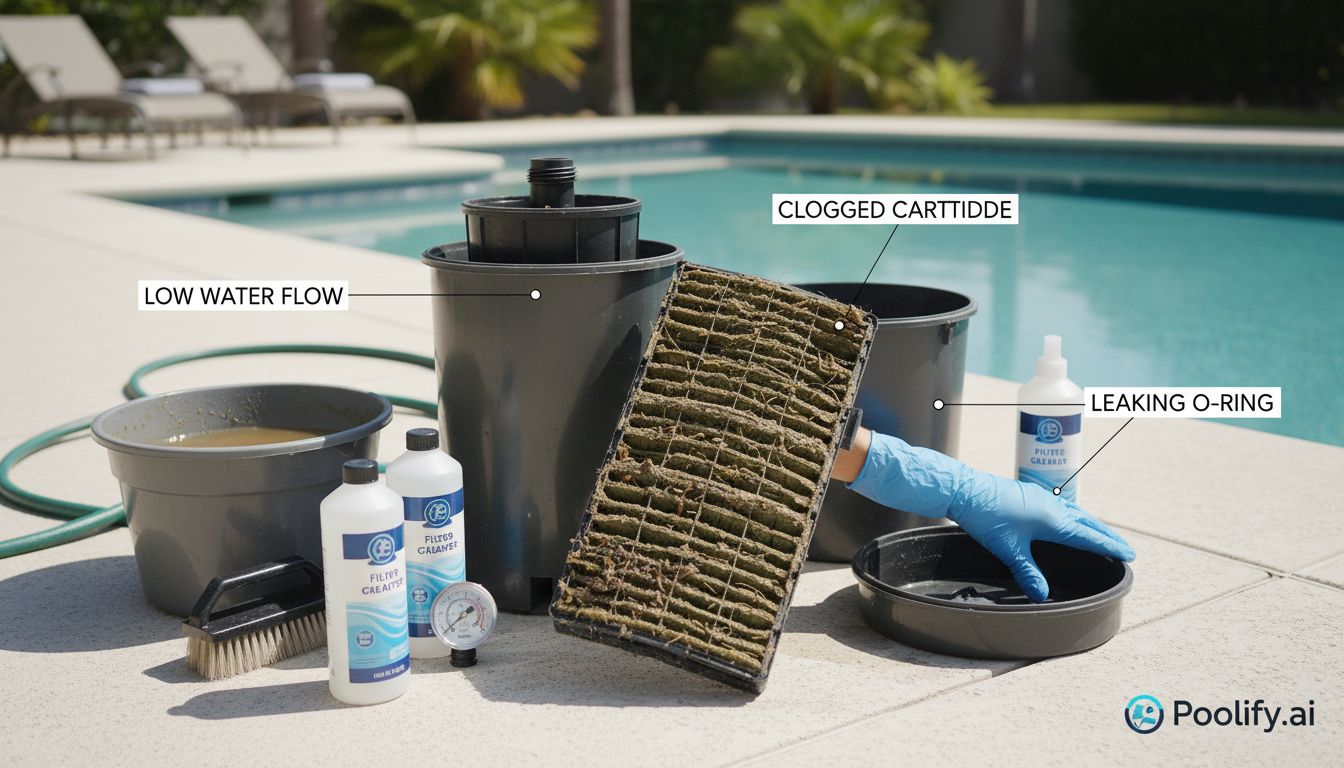
Even with regular maintenance, pool filters occasionally develop issues requiring attention. This troubleshooting section of our pool filter cleaning guide helps you identify and resolve common problems before they escalate into expensive repairs.
High Pressure Readings
Persistently high pressure despite recent cleaning indicates several possible issues. Clogged cartridge pleats, compacted sand beds, or torn DE filter grids all cause pressure buildup. For cartridge filters, ensure thorough cleaning between all pleats and consider replacing cartridges older than 2-3 years. Sand filters may require complete sand replacement if backwashing no longer reduces pressure effectively. This pool filter cleaning guide suggests checking for closed valves or obstructed return lines, which also cause elevated pressure readings.
Low Pressure or Poor Flow
Unusually low pressure readings combined with weak water flow suggest problems before the filter rather than within it. Check pump strainer baskets for debris accumulation, inspect skimmer baskets for blockages, and verify that all suction-side valves are fully open. Air leaks in pump seals or plumbing connections also reduce system pressure. This pool filter cleaning guide reminds pool owners that filter problems often originate elsewhere in the circulation system.
Cloudy Water Despite Clean Filter
When water remains cloudy after thorough filter cleaning, water chemistry issues are likely culprits. Test and adjust pH, alkalinity, and sanitizer levels according to recommended ranges. Insufficient filtration time also contributes to cloudy water—most pools require 8-12 hours of daily circulation during swimming season. Consider running your pump longer or upgrading to a more efficient filter if cloudiness persists. This pool filter cleaning guide emphasizes that filtration and chemistry work together to maintain water clarity.
Seasonal Maintenance and Filter Care Schedule
Effective filter maintenance follows a consistent schedule adapted to seasonal demands. This pool filter cleaning guide provides a comprehensive timeline for routine maintenance tasks throughout 2026, ensuring your filter operates efficiently year-round.
Spring Opening and Preparation
As swimming season approaches, conduct thorough filter inspection and cleaning. For cartridge filters, replace elements that show wear from the previous season or perform deep cleaning with specialized solutions. Sand filters benefit from backwashing followed by a sand filter cleaner treatment to remove accumulated oils and minerals. DE filters require complete grid cleaning and fresh DE powder application. This pool filter cleaning guide recommends documenting your baseline pressure reading after spring cleaning—this reference point helps you monitor filter performance throughout the season.
Summer Peak Season Maintenance
Increased pool usage during summer months demands more frequent filter attention. Cartridge filters typically require cleaning every 2-3 weeks, while sand and DE filters need backwashing when pressure rises 8-10 PSI above baseline. Monitor pressure gauges weekly and adjust maintenance frequency based on environmental factors like storms, nearby pollen, or construction dust. This pool filter cleaning guide suggests keeping detailed maintenance logs, noting cleaning dates, pressure readings, and any unusual observations.
Fall and Winter Considerations
As swimming season ends, prepare your filter for reduced operation or winterization. Clean filters thoroughly before reducing circulation time or closing the pool completely. In moderate climates where pools remain open year-round, reduce cleaning frequency to match decreased usage and debris accumulation. For pools that close for winter, follow proper winterization procedures including thorough cleaning, complete drainage of filter tanks, and protection from freezing temperatures. This pool filter cleaning guide emphasizes that proper fall preparation prevents spring startup problems and extends equipment lifespan.
Extending Filter Lifespan and Maximizing Efficiency
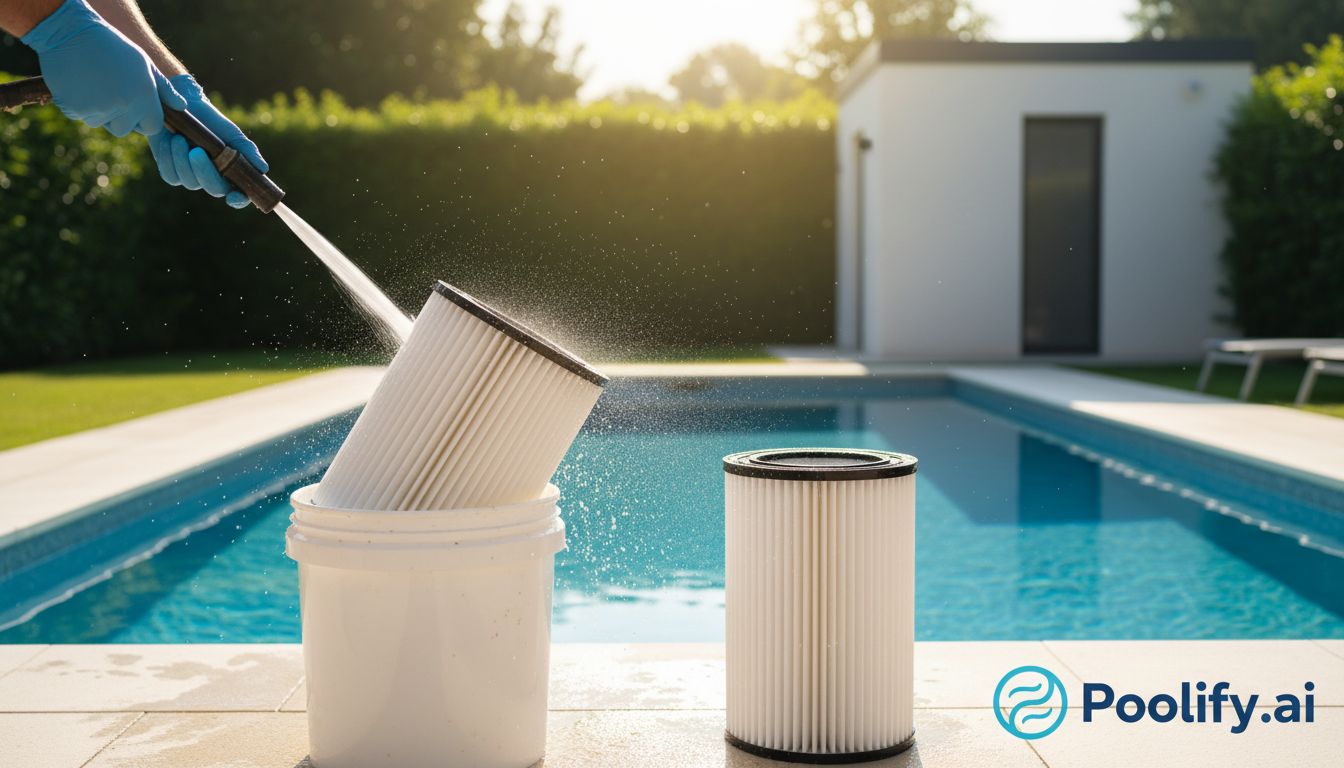
Strategic maintenance practices significantly extend filter life while optimizing performance. This section of our pool filter cleaning guide shares proven techniques that reduce replacement costs and maintain superior water quality throughout your filter’s service life.
Pre-Filtration Strategies
Reducing debris load before water reaches your main filter dramatically decreases cleaning frequency and extends filter media lifespan. Ensure skimmer baskets and pump strainer baskets are emptied regularly—these simple tasks prevent larger debris from reaching your filter. Consider installing a secondary pre-filter or leaf canister on the suction line if your pool is surrounded by trees. This pool filter cleaning guide notes that every particle removed before the main filter represents less wear on expensive filter media.
Proper Chemical Balance
Maintaining correct water chemistry protects filter media from premature degradation. High calcium hardness causes scale buildup on cartridge pleats and sand grains, reducing filtration efficiency. Extremely low pH levels deteriorate cartridge fabric and damage DE filter grids. According to EPA water quality guidelines, balanced water chemistry is essential for equipment longevity. This pool filter cleaning guide recommends weekly water testing during swimming season and monthly testing during off-season periods.
Optimal Run Times and Settings
Running your filtration system for adequate duration ensures proper water turnover without excessive wear. Most residential pools require 8-12 hours of daily circulation during peak season, though specific needs vary based on pool volume, bather load, and environmental factors. Variable speed pumps allow you to optimize energy efficiency while maintaining adequate filtration. This pool filter cleaning guide suggests consulting with pool professionals to determine ideal run times for your specific situation.
Cost Considerations and Replacement Guidelines
Understanding when to repair versus replace filter components helps you make informed financial decisions. This pool filter cleaning guide examines cost factors and replacement timelines for different filter types, helping you budget for ongoing maintenance expenses in 2026.
Cartridge Filter Economics
Replacement cartridges typically cost between $40-$150 depending on size and quality. With proper maintenance, cartridges last 2-3 years before requiring replacement. This pool filter cleaning guide recommends keeping a spare cartridge on hand, allowing you to rotate between two cartridges and extend their combined lifespan. Complete filter tank replacement becomes necessary when tank integrity is compromised, though quality tanks often last 10-15 years with proper care.
Sand Filter Replacement Costs
Filter sand costs approximately $10-$20 per 50-pound bag, with most residential filters requiring 150-300 pounds for complete replacement. Professional sand replacement services typically charge $200-$400 including labor and materials. This pool filter cleaning guide notes that sand replacement every 5-7 years represents a modest ongoing expense compared to other pool maintenance costs. Multiport valves occasionally require rebuilding or replacement, adding $100-$300 to maintenance budgets.
DE Filter Maintenance Expenses
DE powder costs roughly $20-$40 per 10-pound container, with each backwash cycle consuming several pounds depending on filter size. Filter grids require replacement every 3-5 years at costs ranging from $200-$600 for complete grid assemblies. This pool filter cleaning guide emphasizes that while DE filters deliver superior water clarity, they carry higher ongoing maintenance costs than cartridge or sand alternatives. Budget approximately $100-$200 annually for DE powder and periodic grid replacement expenses.
Environmental Considerations and Water Conservation
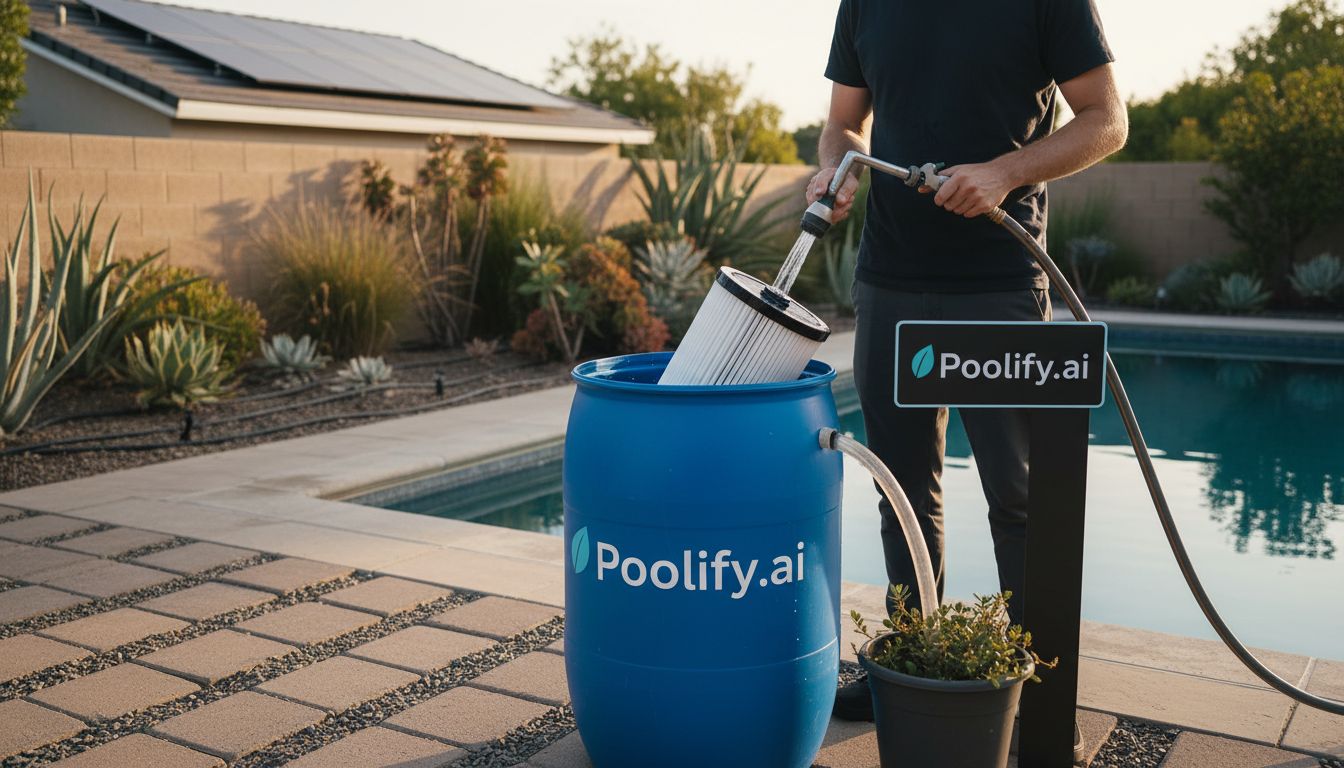
Modern pool owners increasingly prioritize environmental responsibility alongside water quality. This pool filter cleaning guide explores eco-friendly maintenance practices that reduce water waste, minimize chemical usage, and lower energy consumption while maintaining pristine pool conditions.
Cartridge filters excel in water conservation since they require no backwashing. A single backwash cycle on sand or DE filters consumes 200-500 gallons of water—significant waste in drought-prone regions. This pool filter cleaning guide suggests that environmentally conscious pool owners consider cartridge systems when replacing aging filters. If you currently operate sand or DE filters, minimize backwashing frequency by monitoring pressure gauges carefully and backwashing only when necessary rather than on arbitrary schedules.
Variable speed pumps paired with properly maintained filters reduce energy consumption by 50-75% compared to single-speed models. These pumps allow you to run longer filtration cycles at lower speeds, improving water quality while decreasing electricity costs. Many utility companies offer rebates for variable speed pump installations, making upgrades more affordable. This pool filter cleaning guide notes that efficient filtration reduces chemical demand by maintaining consistent water quality, creating additional environmental and financial benefits.
Proper disposal of filter cleaning chemicals, backwash water, and spent filter media protects local water supplies and ecosystems. Never discharge filter cleaning solutions directly into storm drains or natural water bodies. Check local regulations regarding backwash water disposal—some jurisdictions require specific drainage locations or treatment before discharge. This pool filter cleaning guide recommends contacting your municipal water authority for guidance on compliant disposal practices in your area.
Key Takeaways
- Regular maintenance prevents problems: Following a consistent cleaning schedule based on pressure readings and visual inspection keeps filters operating efficiently and extends equipment lifespan significantly beyond manufacturer estimates.
- Filter type determines maintenance approach: Cartridge, sand, and DE filters each require specific cleaning techniques—using incorrect methods damages equipment and reduces filtration effectiveness, so always follow this pool filter cleaning guide’s type-specific instructions.
- Proper tools ensure thorough cleaning: Investing in appropriate cleaning supplies like specialized solutions, soft brushes, and pressure gauges makes maintenance easier and more effective while protecting delicate filter components from damage.
- Monitor pressure gauges consistently: Pressure readings provide the most reliable indicator for cleaning needs—establish baseline readings after cleaning and backwash or clean when pressure rises 8-10 PSI above normal operating levels.
- Balance prevention with intervention: Pre-filtration strategies, proper water chemistry, and adequate circulation time reduce filter workload and cleaning frequency, ultimately saving time, water, and money throughout the swimming season.
Frequently Asked Questions
How often should I clean my pool filter?
Cleaning frequency depends on your filter type and pool conditions. This pool filter cleaning guide recommends cleaning cartridge filters every 2-4 weeks during peak season, backwashing sand and DE filters when pressure rises 8-10 PSI above baseline, and performing deep cleaning on all filter types at season opening and closing. Environmental factors like nearby trees, heavy pool usage, or storms may require more frequent attention. Monitor your pressure gauge weekly and clean based on actual performance rather than arbitrary schedules.
Can I use a pressure washer to clean my cartridge filter?
No, pressure washers deliver excessive force that damages delicate cartridge pleats, reducing filtration efficiency and shortening filter lifespan. This pool filter cleaning guide strongly recommends using a standard garden hose with adjustable nozzle, maintaining approximately 6 inches distance from the cartridge surface. The goal is removing debris without damaging filter media—patience and thorough rinsing produce better results than aggressive high-pressure washing.
Why is my pool still cloudy after cleaning the filter?
Cloudy water despite a clean filter typically indicates water chemistry imbalances rather than filtration problems. Test and adjust pH, alkalinity, chlorine, and calcium hardness to recommended ranges. Insufficient circulation time also contributes to cloudiness—most pools require 8-12 hours of daily filtration during swimming season. This pool filter cleaning guide suggests running your pump longer before assuming filter problems. If cloudiness persists after addressing chemistry and circulation, consider whether your filter is properly sized for your pool volume.
When should I replace my filter media instead of cleaning it?
Replace cartridge filters when pleats show tears, fabric deterioration, or crushed sections, typically after 2-3 years of regular use. Sand requires replacement every 5-7 years when backwashing no longer effectively reduces pressure or water clarity declines despite proper chemistry. DE filter grids need replacement every 3-5 years or immediately if tears or holes develop. This pool filter cleaning guide emphasizes that attempting to extend filter media beyond its effective lifespan costs more in chemicals and water quality problems than timely replacement.
Is it worth upgrading from sand to cartridge or DE filters?
Filter upgrades depend on your priorities and budget. Cartridge filters offer superior convenience and water conservation, making them ideal for environmentally conscious owners or drought-prone regions. DE filters deliver the finest filtration and clearest water but require more maintenance commitment. Sand filters provide reliable, low-maintenance performance at the lowest initial cost. This pool filter cleaning guide suggests evaluating your specific needs, available maintenance time, and water conservation priorities before upgrading existing functional equipment.
See Your Dream Pool in Your Actual Backyard
Upload a photo and get an AI-designed pool visualization in 10 seconds. 3 free designs, no login required.
Try Poolify Free →Conclusion
Mastering pool filter maintenance transforms your swimming experience from frustrating water quality battles to effortless enjoyment of crystal-clear water. This comprehensive pool filter cleaning guide has equipped you with the knowledge, techniques, and troubleshooting skills necessary to maintain any filter type throughout 2026 and beyond. Whether you operate a cartridge, sand, or DE filtration system, consistent attention to pressure readings, appropriate cleaning methods, and seasonal maintenance schedules ensure optimal performance and extended equipment lifespan.
Remember that effective filtration represents just one component of overall pool care—proper water chemistry, adequate circulation time, and regular inspection of all system components work together to create the pristine swimming environment you desire. By implementing the strategies outlined in this pool filter cleaning guide, you’ll reduce chemical consumption, minimize water waste, prevent expensive repairs, and enjoy more time swimming rather than maintaining your pool.
The investment of time in regular filter maintenance pays dividends through lower operating costs, extended equipment life, and superior water quality. Start by establishing baseline pressure readings, creating a maintenance schedule appropriate for your filter type, and assembling the necessary cleaning supplies. With practice, filter maintenance becomes a straightforward routine rather than a daunting chore. Your commitment to following this pool filter cleaning guide ensures your pool remains the backyard oasis you envisioned—ready for family fun, exercise, and relaxation whenever you desire.
References
- Centers for Disease Control and Prevention (CDC) – Residential Pool Disinfection and Testing Guidelines
- Environmental Protection Agency (EPA) – Basic Information About Water Quality
- Poolify.ai – Comprehensive Pool Maintenance Schedule
- Poolify.ai – Expert Pool Cleaning Tips
