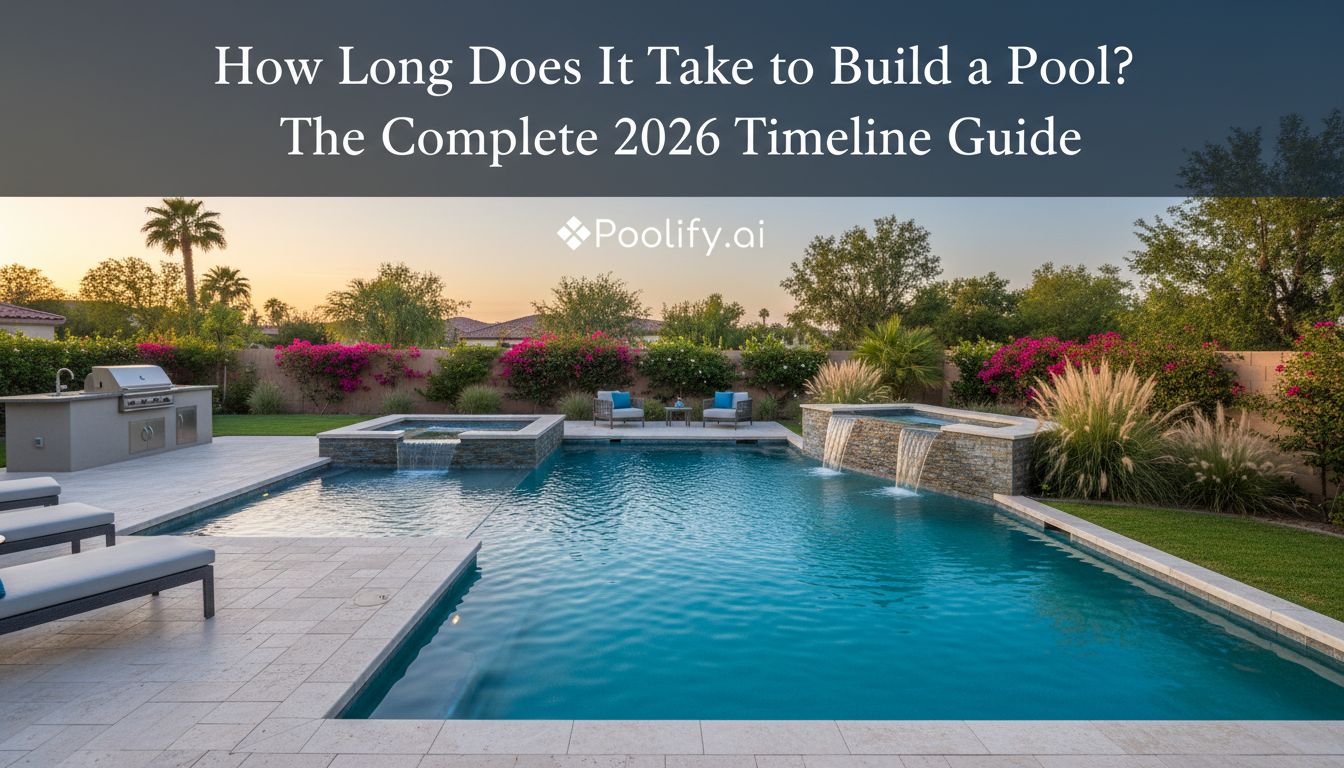
If you’re considering adding a swimming pool to your backyard, one of the first questions you’ll ask is: how long does it take to build a pool? The answer isn’t straightforward, as construction timelines vary based on pool type, design complexity, weather conditions, and local regulations. In 2026, most residential pool projects take between 8 to 16 weeks from permit approval to completion. Understanding the factors that influence how long it takes to build a pool helps you set realistic expectations and plan accordingly.
This comprehensive guide breaks down every phase of pool construction, explains what affects your timeline, and provides actionable strategies to keep your project on schedule. Whether you’re building an inground concrete pool or considering a fiberglass option, you’ll learn exactly what to expect during each stage of the process.
Understanding Pool Construction Timelines by Type
The type of pool you choose dramatically affects how long it takes to build a pool. Each construction method has distinct advantages, challenges, and timeframes that homeowners should understand before making a decision.
Concrete and Gunite Pools
Concrete pools, including gunite and shotcrete varieties, typically require the longest construction period. When homeowners ask how long it takes to build a pool made from concrete, the answer is usually 10 to 16 weeks. This extended timeline reflects the complexity of the process, which involves excavation, steel reinforcement installation, gunite application, curing time, plumbing, electrical work, tile setting, and finishing.
The curing process alone adds significant time to the schedule. Concrete must cure properly to achieve maximum strength and durability, which cannot be rushed without compromising structural integrity. According to the Portland Cement Association, proper curing is essential for long-term pool performance.
Fiberglass Pool Installation
Fiberglass pools offer the fastest installation timeline. How long does it take to build a pool using fiberglass? Typically just 3 to 6 weeks from excavation to completion. The shell arrives pre-manufactured, eliminating the need for forming, steel work, and concrete curing. Once the excavation is complete, the fiberglass shell can be set in place within a single day.
However, the shorter construction time doesn’t mean less preparation. Site preparation, plumbing, electrical work, and backfilling still require careful attention. The speed advantage comes from eliminating the most time-consuming construction phases associated with concrete pools.
Vinyl Liner Pools
Vinyl liner pools fall in the middle range when considering how long it takes to build a pool. Most vinyl liner projects complete in 6 to 10 weeks. The process involves excavation, installing wall panels, setting the floor, plumbing and electrical work, and finally installing the vinyl liner.
While faster than concrete, vinyl liner pools require more time than fiberglass because the structure must be built on-site. The liner installation itself is relatively quick, but the preparatory work determines the overall timeline.
The Complete Phase-by-Phase Construction Timeline
Understanding how long it takes to build a pool requires breaking down the project into distinct phases. Each phase has specific tasks, typical durations, and potential delay factors that affect the overall schedule.
Phase 1: Design and Permitting (2-6 Weeks)
Before any digging begins, the design and permitting phase establishes the foundation for your project. This phase significantly impacts how long it takes to build a pool, yet many homeowners underestimate its importance. During this period, you’ll finalize your pool design, obtain necessary permits, and ensure compliance with local building codes.
Permitting timelines vary dramatically by location. Some municipalities process pool permits within two weeks, while others require six weeks or more. Complex designs, properties in historic districts, or locations with strict zoning regulations may face additional review time. Starting this process early prevents delays in the construction schedule.
Phase 2: Excavation and Site Preparation (1-2 Weeks)
Excavation marks the visible beginning of construction. For most projects, excavation and site preparation take one to two weeks, though this phase directly affects how long it takes to build a pool overall. Contractors must remove soil, grade the area, and prepare for utility installation.
Unexpected underground obstacles like rock formations, high water tables, or existing utilities can extend excavation time. Soil conditions also matter—clay-heavy soil requires more effort to remove and properly compact than sandy soil. Weather conditions during this phase can cause significant delays, particularly in regions with heavy rainfall.
Phase 3: Steel and Plumbing Installation (1-2 Weeks)
For concrete pools, steel reinforcement installation is critical for structural integrity. This phase, along with plumbing installation, typically requires one to two weeks and influences how long it takes to build a pool that will last for decades. Contractors install rebar cages, set plumbing lines, and prepare for the gunite application.
Precision matters during this phase. Plumbing lines must be positioned correctly because corrections after concrete application are expensive and time-consuming. Inspections often occur at this stage, and any issues identified must be resolved before proceeding.
Phase 4: Shell Construction (1-4 Weeks)
The shell construction phase varies most dramatically by pool type, significantly affecting how long it takes to build a pool. For fiberglass pools, shell installation happens in a single day. For vinyl liner pools, wall panel installation takes about one week. For concrete pools, this phase includes gunite application and curing, requiring three to four weeks.
Concrete pools cannot rush this phase. After gunite application, the concrete must cure for at least 28 days to reach full strength. During this period, the shell is kept moist to ensure proper curing. Temperature and humidity affect curing time, with cooler weather extending the necessary curing period.
Phase 5: Tile, Coping, and Decking (2-3 Weeks)
Once the shell is complete, contractors install tile, coping, and decking. This phase typically takes two to three weeks and affects both aesthetics and how long it takes to build a pool completely. Tile work requires precision and adequate drying time between steps.
Custom tile patterns, intricate coping designs, or extensive decking areas extend this phase. Material availability also matters—specialty tiles or natural stone may require longer lead times. Weather conditions affect outdoor work, particularly when installing concrete decking that needs proper curing conditions.
Phase 6: Equipment Installation and Startup (1-2 Weeks)
The final phase involves installing pool equipment, filling the pool, and balancing the water chemistry. This phase typically takes one to two weeks and completes the answer to how long it takes to build a pool. Contractors install pumps, filters, heaters, and automation systems, then test all components.
Water filling alone can take 12 to 24 hours depending on your water source and pool size. Once filled, the water must be balanced and circulated for several days before the pool is ready for use. This startup period ensures all systems function properly and the water is safe for swimming.
Key Factors That Affect How Long It Takes to Build a Pool
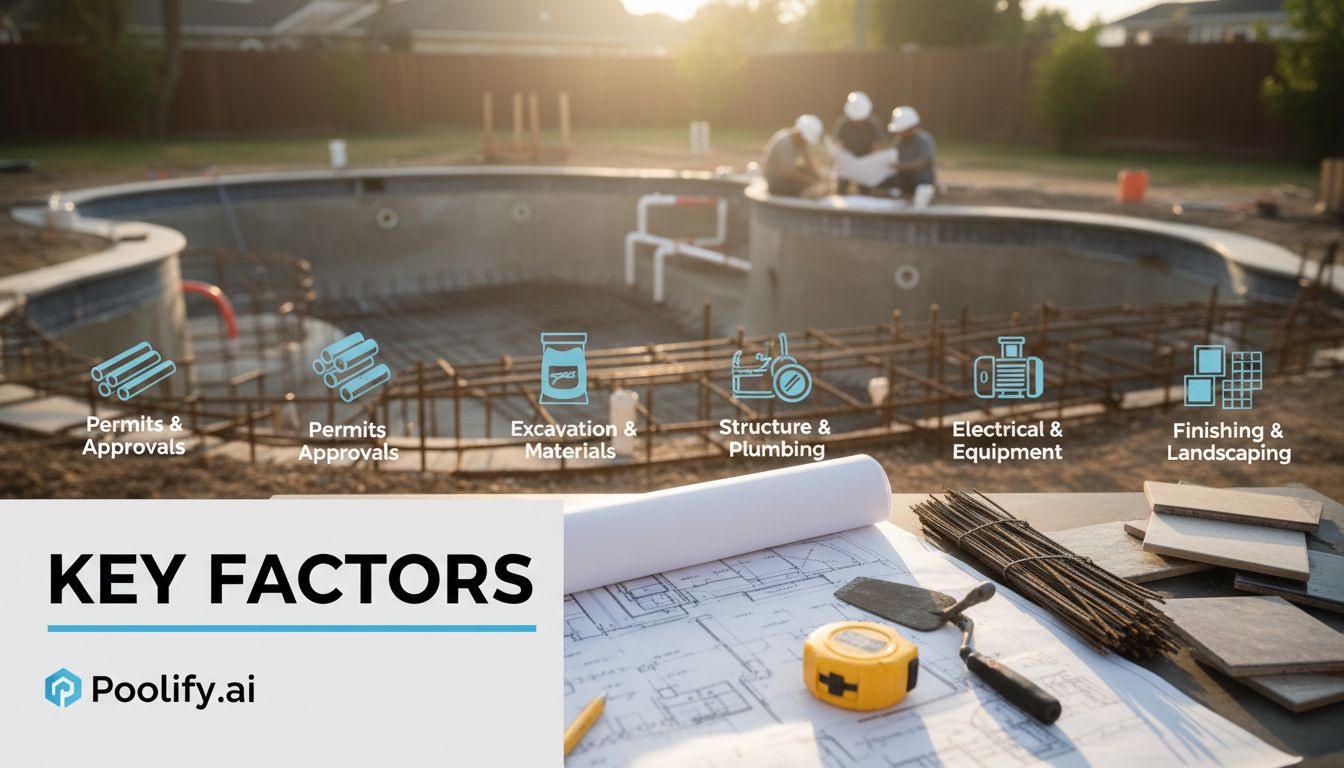
Multiple variables influence construction timelines beyond the basic pool type. Understanding these factors helps you anticipate potential delays and plan more effectively when considering how long it takes to build a pool in your specific situation.
Weather and Seasonal Considerations
Weather is the most unpredictable factor affecting how long it takes to build a pool. Rain delays excavation and concrete work, while freezing temperatures halt construction entirely in many regions. In 2026, climate variability has made weather-related delays more common, with contractors building buffer time into schedules.
Seasonal demand also impacts timelines. Spring and early summer represent peak construction seasons, when contractors’ schedules fill quickly. Building during off-peak seasons like fall or early spring may result in faster completion because contractors have more availability and face fewer weather-related delays.
Design Complexity and Customization
Simple rectangular pools with standard features complete faster than custom designs with complex shapes, multiple levels, or integrated water features. Each customization adds time to the construction process, directly affecting how long it takes to build a pool that matches your vision.
Features like vanishing edges, beach entries, integrated spas, grottos, or custom lighting systems require additional planning, specialized labor, and more construction time. While these features create stunning results, they can extend the timeline by two to six weeks depending on complexity.
Contractor Availability and Experience
The contractor you choose significantly impacts how long it takes to build a pool. Experienced contractors with established crews typically complete projects more efficiently than less experienced builders. However, highly sought-after contractors may have longer wait times before starting your project.
Contractor scheduling affects the overall timeline even more than construction speed. A contractor who can start immediately but works slowly may not complete your pool faster than a highly efficient contractor with a two-month wait list. Consider both factors when selecting your builder.
Local Regulations and Inspection Requirements
Municipal requirements vary widely and affect how long it takes to build a pool in different locations. Some jurisdictions require multiple inspections at various construction stages, each potentially causing delays if inspectors aren’t available promptly or if corrections are needed.
Homeowners associations may add another layer of approval. HOA architectural review processes can take weeks or months, particularly if your design requires variances or special approval. Starting this process early, even before engaging a contractor, prevents unnecessary delays. For more information on navigating local requirements, check out our pool permit requirements guide.
How to Minimize Delays in Your Pool Construction
While some factors affecting how long it takes to build a pool are beyond your control, proactive planning and communication can minimize delays and keep your project on schedule.
Start Planning During Off-Season
Beginning your planning process during fall or winter positions you for spring construction. This timing allows you to complete design work and permitting during slower periods, so construction can begin immediately when weather permits. Early planning also gives you first access to contractors’ spring schedules.
Off-season planning provides time to research contractors thoroughly, compare multiple bids, and make thoughtful design decisions without rushing. This preparation reduces the likelihood of mid-project changes that extend timelines and increase costs.
Obtain Permits Before Scheduling Construction
Never schedule construction to begin before permits are approved. This mistake is common and significantly affects how long it takes to build a pool. Contractors cannot legally begin work without proper permits, and permit delays can leave your yard excavated but idle for weeks.
Work with your contractor to submit complete, accurate permit applications. Incomplete applications get rejected, restarting the review process. Some contractors handle permitting as part of their service, while others expect homeowners to manage this process. Clarify responsibilities upfront to avoid confusion.
Prepare Your Property in Advance
Site preparation before construction begins can reduce how long it takes to build a pool. Clear the construction area of furniture, landscaping, and obstacles. Ensure contractors have adequate access to your backyard—narrow side yards may require removing fence sections or gates.
Mark underground utilities before excavation begins. Most regions offer free utility marking services that identify electric, gas, water, and communication lines. This service prevents dangerous accidents and costly delays from accidentally damaging underground infrastructure.
Maintain Clear Communication with Your Contractor
Regular communication with your contractor helps identify and resolve issues quickly, minimizing their impact on how long it takes to build a pool. Establish expectations for progress updates—weekly check-ins work well for most projects.
Respond promptly when contractors need decisions or approvals. Delays in selecting tile, approving change orders, or making design decisions halt progress. Making yourself available for quick decisions keeps the project moving forward on schedule.
Budget for Contingencies
Unexpected issues arise in most construction projects. Rock removal, additional drainage work, or utility relocation can extend timelines. Building a 10-15% contingency into your budget and timeline expectations provides flexibility to address these issues without derailing the entire project.
Contractors appreciate realistic expectations. Understanding that how long it takes to build a pool involves some unpredictability demonstrates that you’re a reasonable client, which often results in better service and problem-solving when challenges arise.
Common Delays and How to Avoid Them
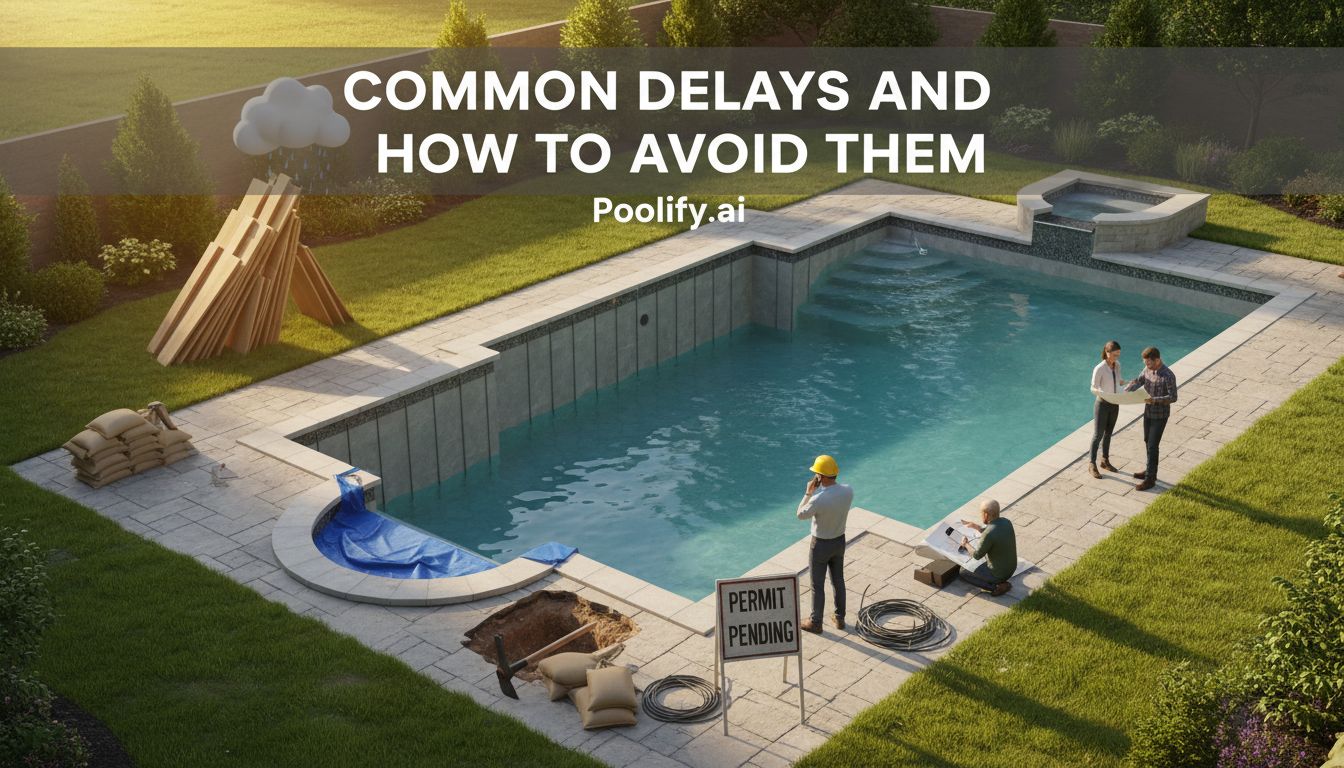
Certain delays occur frequently in pool construction projects. Awareness of these common issues helps you understand how long it takes to build a pool and take preventive action.
Permit and Inspection Delays
Permitting issues rank among the most common causes of delays affecting how long it takes to build a pool. Submit complete applications with all required documentation, site plans, and engineering reports. Incomplete submissions return to you for revision, adding weeks to the timeline.
Schedule inspections proactively rather than waiting until the last minute. Some municipalities have limited inspector availability, particularly during peak construction season. Your contractor should manage inspection scheduling, but verify this responsibility is clearly assigned.
Material Delivery Issues
Supply chain disruptions remain a concern in 2026, though conditions have improved from previous years. Custom materials, specialty equipment, or unique finishes may face longer lead times. Order materials early in the process to prevent delivery delays from extending how long it takes to build a pool.
Discuss material availability with your contractor during the planning phase. If your heart is set on specific imported tile or custom equipment, understand the lead time and build it into your project schedule. Alternative materials with shorter lead times may be worth considering if timeline is your priority.
Weather-Related Setbacks
Weather delays are inevitable in outdoor construction. While you cannot control weather, you can plan around it. Avoid scheduling critical construction phases during your region’s rainy season if possible. Building during traditionally drier months reduces weather-related delays that extend how long it takes to build a pool.
Experienced contractors build weather contingencies into their schedules. Ask potential contractors how they handle weather delays and what buffer time they include in their estimates. Contractors who provide overly optimistic timelines without weather contingencies often disappoint clients with unexpected delays.
Realistic Expectations for Your Pool Project
Setting realistic expectations about how long it takes to build a pool prevents frustration and disappointment. Understanding that construction timelines are estimates, not guarantees, helps you maintain perspective throughout the process.
The timeline from initial consultation to swimming typically spans 3 to 6 months, including design, permitting, and construction. Rushing this process often results in mistakes, cost overruns, or quality issues. Patience during the planning and construction phases pays dividends in the form of a pool that meets your expectations and provides decades of enjoyment.
Document your project timeline expectations in writing with your contractor. A detailed contract should specify estimated start and completion dates, identify what factors might extend the timeline, and explain how delays will be communicated. This documentation protects both parties and establishes clear accountability. For ongoing maintenance after construction, explore our pool maintenance schedule resources.
Frequently Asked Questions
What is the fastest type of pool to install?
Fiberglass pools are the fastest to install, typically completing in 3 to 6 weeks. The pre-manufactured shell eliminates the time-consuming concrete curing process, significantly reducing how long it takes to build a pool compared to concrete or vinyl liner options.
Can pool construction happen during winter?
Pool construction during winter is possible in mild climates but not recommended in regions with freezing temperatures. Concrete curing requires temperatures above 40°F, and ground freezing prevents proper excavation. Winter construction affects how long it takes to build a pool due to shorter workdays and weather interruptions.
How much does rushing construction affect pool quality?
Rushing construction significantly compromises pool quality. Concrete that doesn’t cure properly develops cracks and structural issues. Rushed plumbing installations may leak. While everyone wants to know how long it takes to build a pool and hopes for faster completion, quality should never be sacrificed for speed.
What happens if it rains during construction?
Rain delays excavation, concrete work, and finishing phases. Light rain may not stop all work, but heavy rain halts most outdoor construction activities. Rain extends how long it takes to build a pool by days or weeks depending on severity and frequency. Contractors typically include weather contingencies in their timeline estimates.
Should I build my pool during peak or off-season?
Off-season construction (fall through early spring) often proceeds faster because contractors have more availability and face less competition for materials and inspectors. However, weather conditions may be less favorable. Peak season offers better weather but longer contractor wait times, affecting how long it takes to build a pool overall.
Key Takeaways
- Pool type dramatically affects construction time: Fiberglass pools take 3-6 weeks, vinyl liner pools require 6-10 weeks, and concrete pools need 10-16 weeks from start to finish.
- Permitting and design add significant time: Allow 2-6 weeks for design finalization and permit approval before construction begins, as this phase critically impacts how long it takes to build a pool.
- Weather is the biggest unpredictable factor: Rain, extreme temperatures, and seasonal conditions can extend timelines by days or weeks, making weather contingencies essential in project planning.
- Customization extends construction timelines: Complex designs with water features, custom shapes, or integrated spas add 2-6 weeks compared to standard rectangular pools with basic features.
- Proactive planning minimizes delays: Starting design work during off-season, obtaining permits before scheduling construction, and maintaining clear contractor communication keeps projects on schedule.
See Your Dream Pool in Your Actual Backyard
Upload a photo and get an AI-designed pool visualization in 10 seconds. 3 free designs, no login required.
Try Poolify Free →Conclusion
Understanding how long it takes to build a pool empowers you to plan effectively and set realistic expectations for your project. While the construction phase typically spans 8 to 16 weeks depending on pool type, the complete process from initial planning to taking your first swim usually requires 3 to 6 months. This timeline accounts for design decisions, permit approval, construction, and startup.
The key to a successful pool project isn’t rushing through construction but rather planning thoroughly, choosing the right contractor, and maintaining realistic expectations. Weather delays, permit processing times, and material availability all influence how long it takes to build a pool, but proactive planning minimizes their impact.
By understanding each construction phase, recognizing common delay factors, and implementing the strategies outlined in this guide, you’ll navigate your pool project with confidence. The result will be a beautiful backyard oasis that provides enjoyment for years to come—well worth the time invested in doing it right.
References
- Portland Cement Association – https://www.portlandcement.org/publications
