
Understanding Pool Liability in Today’s Legal Landscape
Pool liability represents one of the most significant financial and legal responsibilities facing homeowners in 2026. As swimming pools become increasingly popular in residential properties, understanding your exposure to potential claims has never been more critical. Pool liability encompasses the legal and financial responsibility you bear as a pool owner for injuries, accidents, or damages that occur on your property. Whether you’re installing a new pool or maintaining an existing one, comprehensive knowledge of pool liability protections can prevent devastating financial consequences and ensure your family’s safety.
The landscape of pool liability has evolved considerably, with courts increasingly holding property owners to higher standards of care. Recent statistics show that drowning remains the leading cause of unintentional death for children aged 1-4, and residential pools account for a substantial portion of these tragedies. Beyond drowning risks, slip-and-fall accidents, diving injuries, and chemical exposure incidents create additional pool liability concerns that every homeowner must address proactively.
Legal Responsibilities and Pool Liability Fundamentals
Your pool liability obligations begin the moment your pool becomes operational. As a property owner, you assume what legal experts call “premises liability”—the duty to maintain a reasonably safe environment for anyone who enters your property. This responsibility extends to invited guests, children who may wander onto your property, and even trespassers in certain circumstances, making pool liability protection essential for comprehensive risk management.
The Consumer Product Safety Commission’s Pool Safely campaign emphasizes that pool owners must implement multiple layers of protection to reduce liability exposure. These requirements vary by state and municipality, but common elements include proper fencing, self-latching gates, pool covers, and alarm systems. Failure to meet these standards can dramatically increase your pool liability risk and potentially void insurance coverage when accidents occur.
Attractive Nuisance Doctrine and Pool Liability
The attractive nuisance doctrine significantly impacts pool liability for homeowners. This legal principle holds that property owners can be liable for injuries to children who trespass if the property contains something likely to attract children who cannot appreciate the danger. Swimming pools clearly fall under this category, meaning your pool liability extends even to uninvited children who enter your property. Courts have consistently ruled that pool owners must take reasonable precautions to prevent access by young children, regardless of whether they have permission to be on the property.
Understanding this doctrine is crucial for managing pool liability effectively. Even with “No Trespassing” signs posted, you cannot simply assume you’re protected from claims. The law recognizes that children lack the judgment to understand danger and may be irresistibly drawn to water. Proper barriers, locked gates, and security measures become not just safety features but legal necessities that directly impact your pool liability exposure.
Insurance Coverage for Pool Liability Protection
Standard homeowners insurance policies typically include some pool liability coverage, but the limits may prove inadequate for serious incidents. Most basic policies provide $100,000 to $300,000 in liability protection, which sounds substantial until you consider that a single drowning or catastrophic injury claim can easily exceed several million dollars. Evaluating your pool liability insurance coverage should be an annual priority, with many experts recommending minimum coverage of $500,000 for pool owners.
Many homeowners opt for umbrella liability policies to supplement their basic coverage and provide enhanced pool liability protection. These policies typically offer $1 million to $5 million in additional coverage and cost between $200 and $500 annually—a small investment compared to the financial devastation of an uninsured claim. When shopping for pool liability insurance, ensure your policy explicitly covers pool-related incidents, as some insurers exclude or limit aquatic facility coverage.
What Pool Liability Insurance Actually Covers
Your pool liability insurance typically covers medical expenses for injured parties, legal defense costs, settlements, and court-awarded judgments up to your policy limits. This protection extends to incidents occurring in or around your pool, including slip-and-fall accidents on wet decking, diving board injuries, chemical burns from improper chlorine handling, and drowning incidents. Understanding these coverage parameters helps you assess whether your current pool liability protection meets your risk profile.
However, pool liability insurance contains important exclusions that every homeowner must understand. Most policies won’t cover injuries to household members, intentional acts, or incidents resulting from gross negligence like operating a pool without proper safety equipment. Some insurers also exclude coverage for certain pool features like diving boards or slides, requiring separate riders for complete pool liability protection. Review your policy carefully and discuss any gaps with your insurance agent to ensure comprehensive coverage.
Essential Safety Measures to Reduce Pool Liability Risk
Implementing robust safety measures serves dual purposes: protecting lives and reducing your pool liability exposure. The four-sided isolation fence remains the gold standard for pool safety, creating a barrier that separates the pool from your house and yard. This fence should stand at least four feet tall, feature self-closing and self-latching gates, and have vertical slats spaced no more than four inches apart to prevent children from squeezing through. These specifications aren’t merely recommendations—they’re often legal requirements that directly impact your pool liability status.
Beyond fencing, multiple safety layers significantly reduce pool liability risk. Pool alarms that sound when the water surface is disturbed provide an additional warning system. Safety covers designed to support the weight of a child or pet prevent accidental falls into the water when the pool isn’t in use. According to the Centers for Disease Control and Prevention, these barriers reduce drowning risk by up to 83% when properly implemented, directly correlating with reduced pool liability claims.
Supervision and Pool Liability Management
Active supervision represents your most powerful tool for managing pool liability. Designating a “water watcher”—an adult who maintains constant, undistracted attention on swimmers—dramatically reduces accident risk. This person should avoid phone use, reading, or other distractions during their watch period. For pool parties or gatherings, implementing a rotating water watcher system ensures continuous supervision and strengthens your pool liability defense if an incident occurs.
Establishing and enforcing pool rules further protects against pool liability claims. Post clear rules prohibiting running, diving in shallow areas, swimming alone, and pool use without adult supervision. Require life jackets for weak swimmers and maintain readily accessible rescue equipment including a reaching pole and life ring. Documenting these safety protocols and consistently enforcing them demonstrates reasonable care—a critical factor in defending against pool liability claims.
Pool Liability and Guest Safety Protocols
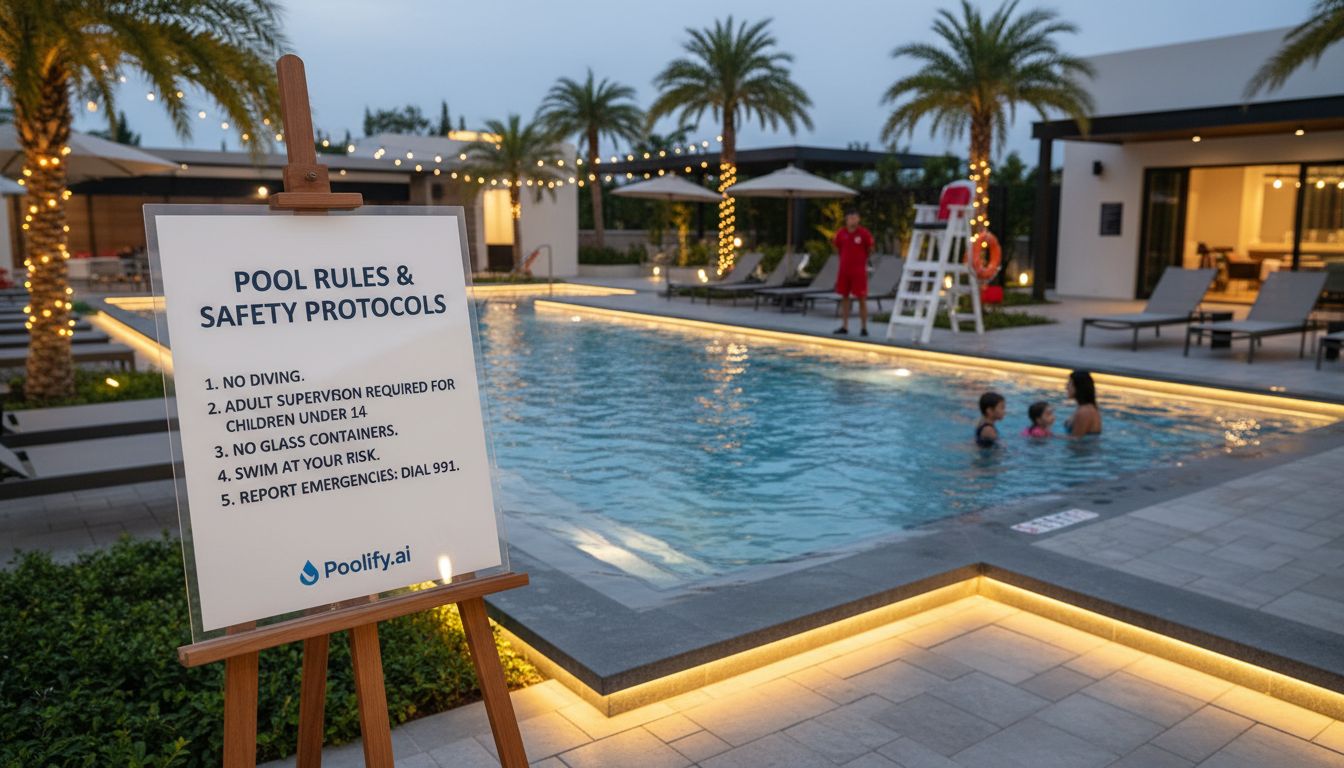
When hosting guests, your pool liability concerns intensify. Before allowing anyone into your pool, consider implementing a simple liability waiver system, though recognize that waivers provide limited protection, especially regarding children or gross negligence. More importantly, communicate pool rules clearly to all guests and ensure they understand depth markers, designated diving areas, and emergency procedures. This communication creates a documented record of your reasonable efforts to maintain safety, strengthening your pool liability defense.
Alcohol consumption around pools creates significant pool liability issues. As the host, you can be held liable for accidents involving intoxicated guests, particularly if you served the alcohol. Consider implementing a strict no-diving policy during parties where alcohol is served, and designate a sober adult as the dedicated water watcher. These precautions demonstrate responsible hosting and help mitigate pool liability exposure during social gatherings.
Pool Maintenance and Liability Considerations
Proper pool maintenance directly impacts your pool liability risk profile. Slippery surfaces, broken equipment, inadequate lighting, and improper chemical balance all create hazardous conditions that increase accident likelihood. Regular inspections should identify and address loose handrails, cracked decking, malfunctioning lights, and worn ladders before they cause injuries. Maintaining detailed maintenance records proves you exercised reasonable care—a powerful defense against pool liability claims.
Chemical safety represents another critical pool liability concern. Improperly stored or handled pool chemicals can cause severe burns, respiratory problems, and other injuries. Store all chemicals in locked, ventilated areas away from children and pets. Follow manufacturer guidelines precisely for mixing and application, and never combine different chemicals. Chemical-related injuries often involve claims of negligence, making proper handling essential for pool liability protection.
Legal Consequences of Pool Liability Incidents
When accidents occur despite precautions, understanding potential legal consequences helps you respond appropriately. Pool liability claims typically fall into three categories: medical expenses for minor injuries, substantial settlements for serious injuries, and wrongful death claims for fatal incidents. Minor slip-and-fall cases might settle for $10,000 to $50,000, while catastrophic injuries or drownings can result in multi-million dollar judgments that exceed standard insurance coverage.
Beyond financial consequences, pool liability incidents can result in criminal charges in cases of gross negligence. If authorities determine you failed to implement basic safety measures required by law, you could face criminal prosecution in addition to civil liability. Some jurisdictions have enacted strict pool safety laws with criminal penalties for non-compliance, making legal awareness essential for pool owners concerned about comprehensive pool liability protection.
Responding to Pool Liability Incidents
Your response to a pool accident significantly impacts subsequent pool liability claims. First, ensure the victim receives immediate medical attention—calling 911 for serious injuries. Document the incident thoroughly with photographs, witness statements, and detailed notes about conditions at the time. Notify your insurance carrier immediately, even for seemingly minor incidents, as delayed reporting can jeopardize coverage. Avoid admitting fault or making statements about responsibility, as these can be used against you in pool liability proceedings.
After addressing immediate concerns, consult with an attorney experienced in premises liability before making any statements to investigators or opposing counsel. Your pool liability insurance typically provides legal representation, but understanding your rights and obligations independently ensures your interests receive proper protection. Cooperate fully with your insurance company’s investigation while maintaining appropriate legal boundaries regarding fault admissions.
State-Specific Pool Liability Requirements
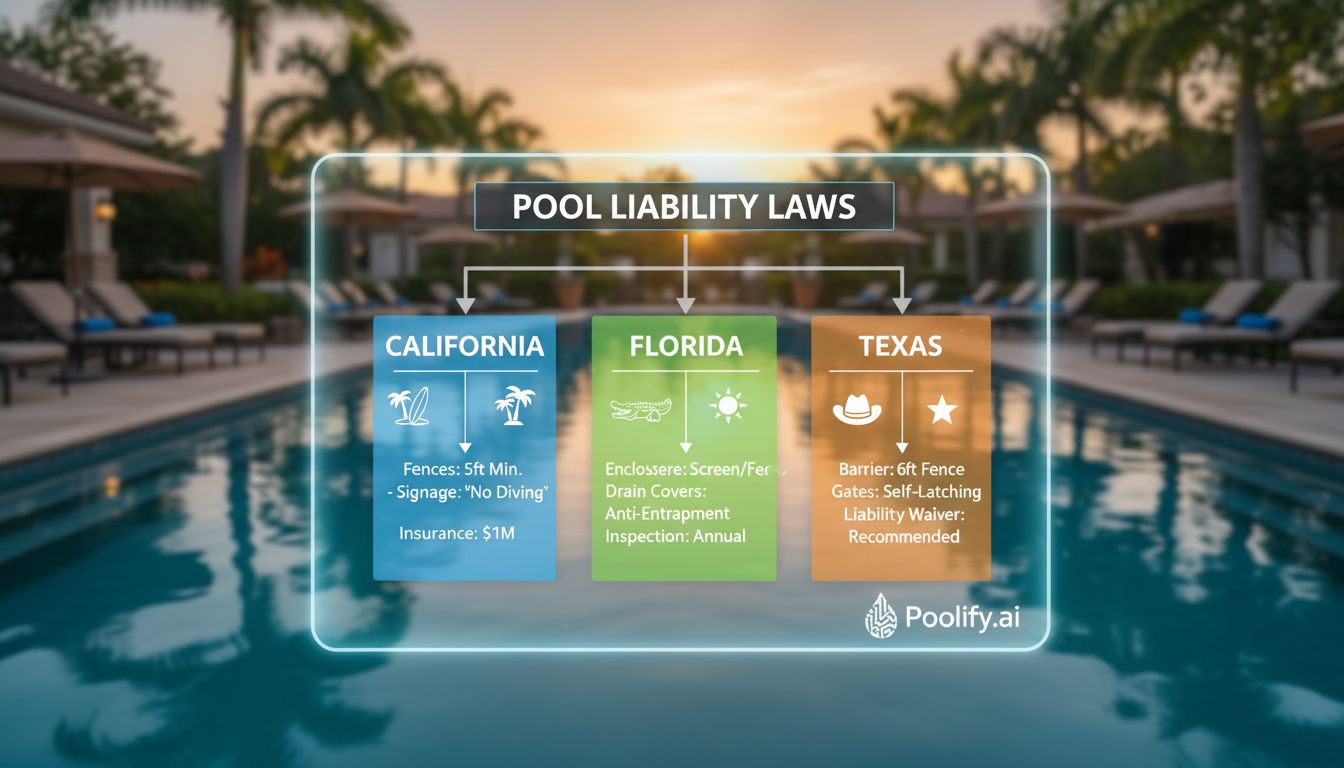
Pool liability regulations vary significantly by state and even by municipality, making local compliance essential. Some states mandate specific fencing heights, gate mechanisms, and alarm systems, while others provide general safety guidelines without specific requirements. California, Florida, and Arizona—states with high pool ownership rates—have particularly detailed pool safety statutes that directly impact pool liability exposure. Researching your local requirements and exceeding minimum standards provides the best protection.
Many jurisdictions require permits and inspections before pool installation, with ongoing inspections for commercial pools and some residential properties. These regulatory requirements exist specifically to reduce pool liability incidents, and non-compliance can void insurance coverage or establish negligence per se in legal proceedings. Work with licensed contractors familiar with local pool liability requirements and maintain all permits and inspection records as evidence of compliance.
HOA Rules and Pool Liability
Homeowners association rules add another layer to pool liability management. Many HOAs impose requirements beyond legal minimums, including specific fencing styles, pool cover requirements, and operational restrictions. While these rules may seem burdensome, they often provide additional pool liability protection by establishing community-wide safety standards. Violating HOA pool rules can result in fines and potentially impact your pool liability defense if an incident occurs, as it demonstrates failure to follow established safety protocols.
Pool Liability for Different Pool Types
Your pool liability concerns vary depending on pool type. In-ground pools typically carry higher liability risk due to greater depth and permanence, but they also allow for more comprehensive safety features. Above-ground pools, while often perceived as safer, still present significant pool liability issues, particularly regarding ladder access and deck stability. Removable ladders should be stored when the pool isn’t in use to prevent unsupervised access by children.
Hot tubs and spas create unique pool liability concerns, including temperature-related injuries, entrapment hazards from drains and filters, and increased drowning risk for impaired users. Locking covers are essential for hot tub pool liability protection, as are temperature controls preventing scalding and clearly posted warning signs about health risks. The same attractive nuisance doctrine applies to hot tubs, requiring similar barrier protections as full-sized pools.
Key Takeaways
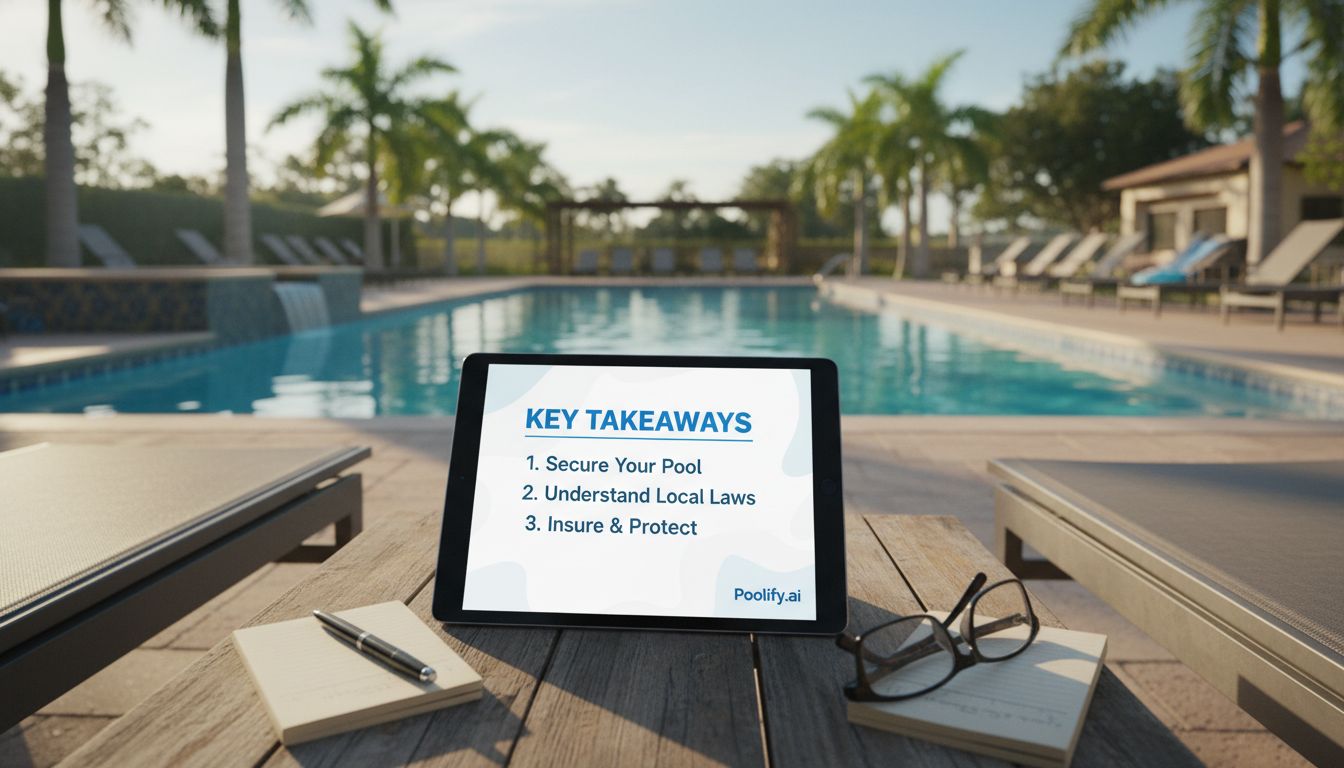
- Pool liability extends beyond invited guests to include trespassers and children attracted to your property, making comprehensive safety measures legally required and financially essential for all pool owners.
- Standard homeowners insurance often provides inadequate pool liability coverage; consider umbrella policies offering $1-5 million in additional protection to safeguard against catastrophic claims that could exceed basic policy limits.
- Four-sided isolation fencing with self-closing, self-latching gates represents the minimum safety standard, with pool alarms, safety covers, and active supervision providing critical additional layers of pool liability protection.
- Proper maintenance, chemical handling, and documented safety protocols demonstrate reasonable care that strengthens your pool liability defense while reducing actual accident risk for family and guests.
- State and local pool liability requirements vary significantly; exceeding minimum standards and maintaining detailed compliance records provides optimal legal and financial protection for homeowners in 2026.
Frequently Asked Questions About Pool Liability
Am I liable if a neighbor’s child drowns in my pool?
Yes, pool liability typically extends to neighborhood children under the attractive nuisance doctrine. Even if the child trespassed, you can be held liable if you failed to implement reasonable safety measures like proper fencing and locked gates. Courts recognize that pools attract children who cannot appreciate the danger, placing the burden on pool owners to prevent access. Comprehensive barriers and security measures are essential for protecting against pool liability claims involving trespassing children.
Does my homeowners insurance automatically cover pool liability?
Most homeowners policies include some pool liability coverage, but you should verify this explicitly with your insurer. Some companies exclude pools entirely or require separate riders for coverage. Additionally, standard policy limits of $100,000-$300,000 may prove inadequate for serious pool liability claims. Review your policy carefully, consider increasing liability limits, and explore umbrella policies for comprehensive pool liability protection that addresses the full range of potential claims.
What pool safety features are legally required to reduce liability?
Legal requirements vary by jurisdiction, but most areas mandate four-sided isolation fencing at least four feet tall with self-closing, self-latching gates. Many states require pool alarms, safety covers, or both. Some jurisdictions mandate specific drain covers to prevent entrapment and require rescue equipment be readily accessible. Check your local building codes and HOA regulations for specific pool liability requirements, as non-compliance can establish negligence in legal proceedings and void insurance coverage.
Can I be held liable for injuries to adult guests who were drinking?
Yes, pool liability can extend to injuries involving intoxicated adult guests, particularly if you served the alcohol. While adults assume some responsibility for their own safety, you still owe a duty of care to maintain reasonably safe premises. Courts may reduce your liability based on the guest’s contributory negligence, but you’re not automatically absolved of responsibility. Implementing safety rules, providing adequate lighting, and designating sober water watchers help manage pool liability risk during parties where alcohol is served.
How much does pool liability insurance typically cost?
Pool ownership may increase homeowners insurance premiums by $25-$75 monthly, depending on pool type, size, and safety features. Umbrella liability policies providing additional pool liability protection typically cost $200-$500 annually for $1-2 million in coverage. These costs vary based on your location, claims history, and specific pool features. While this represents a significant expense, it’s minimal compared to potential out-of-pocket costs from a single uninsured pool liability claim, which could easily exceed millions of dollars for catastrophic injuries.
See Your Dream Pool in Your Actual Backyard
Upload a photo and get an AI-designed pool visualization in 10 seconds. 3 free designs, no login required.
Try Poolify Free →Protecting Your Family and Financial Future
Managing pool liability effectively requires a multi-faceted approach combining legal compliance, comprehensive insurance coverage, rigorous safety measures, and consistent vigilance. While the responsibilities may seem overwhelming, they’re essential for protecting both lives and your financial security. The investment in proper barriers, insurance coverage, and safety equipment pales in comparison to the devastating consequences of a preventable pool accident.
As we move through 2026, pool liability awareness continues growing among homeowners, insurers, and legal professionals. Courts increasingly hold pool owners to higher standards of care, making proactive risk management more critical than ever. By implementing the strategies outlined in this guide, you create multiple layers of protection that dramatically reduce both accident likelihood and your pool liability exposure should an incident occur.
Remember that pool liability protection isn’t a one-time effort but an ongoing commitment. Regularly inspect your safety equipment, update your insurance coverage as needed, refresh your knowledge of local requirements, and maintain constant vigilance when anyone uses your pool. For more information on maintaining a safe pool environment, explore our comprehensive guide on essential pool safety equipment and check out our seasonal pool maintenance checklist to ensure your pool remains both safe and compliant throughout the year.
The peace of mind that comes from comprehensive pool liability protection allows you to enjoy your pool without constant worry about potential legal and financial consequences. Take action today to assess your current pool liability situation, identify gaps in your protection, and implement the necessary improvements. Your family’s safety and your financial security depend on the proactive measures you take now to address pool liability concerns before accidents occur.
References
- Consumer Product Safety Commission – Pool Safely Campaign: https://www.cpsc.gov/Safety-Education/Safety-Education-Centers/Pool-Safely
- Centers for Disease Control and Prevention – Drowning Prevention: https://www.cdc.gov/drowning/prevention/index.html
