Pool liner problems represent one of the most frustrating challenges pool owners face, with the average vinyl liner lasting only 7-12 years before requiring replacement. Whether you’re dealing with unexpected leaks, stubborn wrinkles, or premature fading, understanding these issues can save you thousands of dollars in repairs and replacement costs. This comprehensive guide walks you through the most common pool liner problems homeowners encounter in 2026, along with proven solutions and prevention strategies that actually work.
Understanding the Most Common Pool Liner Problems
Pool liner problems come in many forms, each with distinct causes and solutions. Vinyl pool liners, while cost-effective and popular, are susceptible to various issues that can compromise both aesthetics and functionality. According to the CDC’s swimming pool guidelines, proper maintenance is essential for preventing many common pool liner problems before they start.
The most frequently reported pool liner problems include tears and punctures, wrinkles and stretching, fading and discoloration, leaks around fittings, bead slippage, and brittle or cracking material. Each of these pool liner problems has specific warning signs that allow homeowners to address issues early, preventing minor concerns from escalating into expensive replacements.
Tears and Punctures: The Most Visible Pool Liner Problems
Tears and punctures rank among the most obvious pool liner problems homeowners encounter. Sharp objects, pet claws, pool toys, and even rough horseplay can create holes ranging from pinprick size to several inches long. These pool liner problems typically occur along the pool floor where debris accumulates or near steps and ladders where traffic is highest.
Small tears under three inches can often be repaired with vinyl patch kits available at most pool supply stores. For larger pool liner problems involving tears exceeding six inches, professional assessment is recommended. The key is addressing these pool liner problems immediately, as water pressure can rapidly expand small tears into major damage requiring full liner replacement.
Wrinkles: Persistent Pool Liner Problems
Wrinkles represent some of the most common pool liner problems, particularly in newly installed liners or after winter opening. These pool liner problems occur when liners lose proper tension due to improper installation, ground water pressure, or chemical imbalances that affect liner elasticity. While minor wrinkles may seem purely cosmetic, they create pockets where algae thrives and can eventually lead to more serious pool liner problems.
Addressing wrinkle-related pool liner problems requires identifying the root cause. New liner wrinkles often resolve naturally as water temperature rises and the vinyl becomes more pliable. Persistent pool liner problems with wrinkles may require draining the pool partially and manually smoothing the liner, though this approach carries risks and should involve professional guidance.
Chemical-Related Pool Liner Problems and Prevention
Chemical imbalances cause some of the most preventable pool liner problems homeowners face. Improper pH levels, excessive chlorine, and incorrect chemical application methods accelerate liner degradation, creating pool liner problems that shorten lifespan significantly. Understanding proper chemical management is essential for avoiding these pool liner problems entirely.
Fading and Discoloration Pool Liner Problems
Fading represents one of the most visible pool liner problems caused by chemical exposure and UV radiation. Pool liner problems related to discoloration typically manifest as bleached patterns, yellowing, or overall color loss that makes pools look aged and uninviting. These pool liner problems accelerate when chlorine levels consistently exceed 3 ppm or when stabilizer levels drop too low, leaving liners vulnerable to sun damage.
Preventing fading-related pool liner problems requires maintaining chlorine between 1-3 ppm and cyanuric acid (stabilizer) between 30-50 ppm. Using a proper chemical dispensing system rather than throwing tablets directly onto the liner prevents localized bleaching, one of the most common pool liner problems in 2026.
Brittleness and Cracking Pool Liner Problems
Brittleness ranks among the most serious pool liner problems because it signals the liner is approaching end of life. These pool liner problems occur when vinyl loses plasticizers due to age, chemical exposure, or extreme temperature fluctuations. Pool liner problems involving brittleness typically appear first along the waterline and in areas with maximum sun exposure.
Once brittleness develops, these pool liner problems cannot be reversed. However, maintaining balanced water chemistry and using UV protectant products can slow progression. Pool liner problems related to premature brittleness often result from sustained high chlorine levels above 5 ppm or pH levels consistently below 7.0 or above 7.8.
Structural Pool Liner Problems: Leaks and Bead Issues
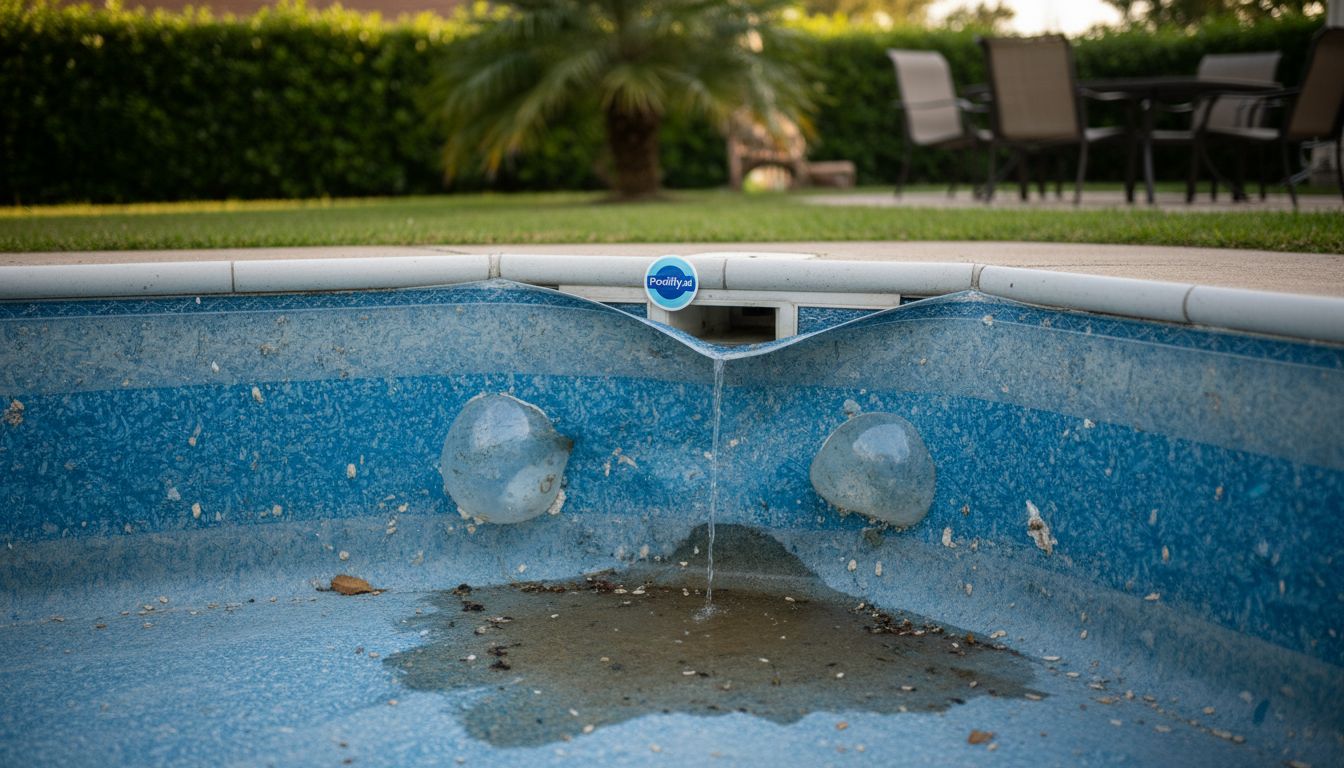
Structural pool liner problems involve the liner’s attachment and integrity rather than surface damage. These pool liner problems often prove more challenging to diagnose and repair than visible tears or cosmetic issues. Understanding common structural pool liner problems helps homeowners recognize warning signs before catastrophic failure occurs.
Leak Detection in Pool Liner Problems
Leaks represent the most concerning pool liner problems because they waste water, increase chemical costs, and can damage pool structure. Pool liner problems involving leaks may originate from tears, fitting failures, or bead separation. Identifying the source of leak-related pool liner problems requires systematic testing, starting with the bucket test to confirm actual water loss versus evaporation.
For pool liner problems involving suspected leaks, dye testing near fittings, returns, and visible damage helps pinpoint exact locations. Professional leak detection services use specialized equipment for pool liner problems where the source remains elusive. Addressing leak-related pool liner problems promptly prevents ground erosion and structural damage that exponentially increases repair costs.
Bead Slippage Pool Liner Problems
Bead slippage creates pool liner problems where the liner edge pulls away from the track, causing sagging and potential complete detachment. These pool liner problems typically result from improper installation, degraded bead material, or extreme water level fluctuations. Pool liner problems involving bead slippage require immediate attention as they can lead to complete liner failure.
Repairing bead-related pool liner problems involves draining water below the affected area, cleaning the track thoroughly, and reseating the bead. For extensive pool liner problems with bead damage, replacement bead strips or professional reinstallation may be necessary. Preventing these pool liner problems requires maintaining consistent water levels and inspecting bead attachment annually.
Installation-Related Pool Liner Problems
Many pool liner problems trace back to improper installation, making professional installation a worthwhile investment. Installation-related pool liner problems include inadequate stretching, improper measurements, poor bottom preparation, and rushed installation during suboptimal temperatures. These pool liner problems often don’t manifest immediately but appear within the first season.
Bottom Preparation and Pool Liner Problems
The pool bottom condition directly impacts long-term pool liner problems. Rough surfaces, rocks, roots, and uneven grading create pool liner problems including punctures, uneven wear, and premature failure. Professional installers address potential pool liner problems by using foam padding or vermiculite base coatings that cushion the liner and prevent abrasion-related pool liner problems.
For existing pools experiencing bottom-related pool liner problems, options include installing protective padding during replacement or addressing structural issues before new liner installation. Ignoring these underlying pool liner problems guarantees repeated failures regardless of liner quality.
Seasonal Pool Liner Problems and Winterization
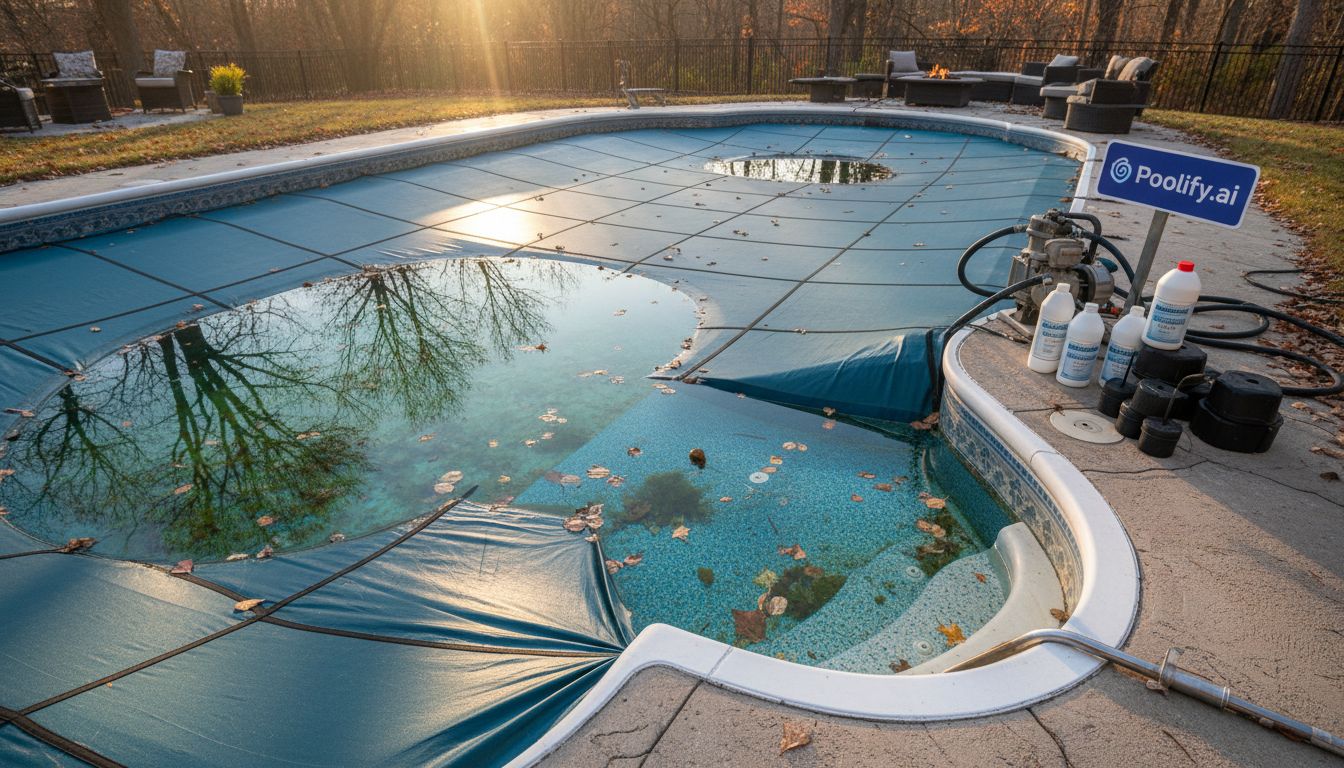
Seasonal changes create specific pool liner problems that vary by climate. Winter-related pool liner problems include ice damage, improper winterization, and spring opening issues. Understanding seasonal pool liner problems helps homeowners prepare appropriately and avoid preventable damage during off-season months.
Winter Pool Liner Problems
Cold weather introduces unique pool liner problems for in-ground pools. Ice expansion can cause pool liner problems including tears, bead separation, and structural damage if water levels drop too low. These pool liner problems occur when insufficient water remains to counteract ground pressure, or when ice forms and expands against liner surfaces.
Preventing winter pool liner problems requires maintaining water level at recommended heights, using winter covers properly, and adding air pillows for above-ground pools. Pool liner problems from winter damage often don’t become apparent until spring opening, making prevention critical. For comprehensive winterization guidance, review our complete pool winterization strategies.
Spring Opening Pool Liner Problems
Spring reveals pool liner problems that developed during winter or from improper opening procedures. Common spring pool liner problems include wrinkles from winter shrinkage, tears from ice damage, and staining from organic debris. These pool liner problems require systematic assessment before filling and starting equipment.
Addressing spring pool liner problems begins with careful inspection before adding water. Minor pool liner problems can be repaired before filling, while major pool liner problems may require professional evaluation. Rushing spring opening often exacerbates existing pool liner problems and creates new issues.
Preventing Pool Liner Problems: Proactive Strategies
Prevention remains the most cost-effective approach to pool liner problems. While all liners eventually require replacement, proper care extends lifespan from the typical 7-10 years to 12-15 years or more. Implementing preventive strategies addresses potential pool liner problems before they develop into expensive repairs.
Water Chemistry Management for Pool Liner Problems
Consistent water chemistry prevents the majority of chemical-related pool liner problems. Testing water 2-3 times weekly during swimming season and adjusting parameters prevents pool liner problems from pH extremes, chlorine damage, and mineral scaling. Pool liner problems decrease dramatically when pH stays between 7.2-7.6, alkalinity between 80-120 ppm, and calcium hardness between 200-400 ppm.
Using test strips or digital testers helps identify potential pool liner problems before visible damage occurs. For detailed chemical management that prevents pool liner problems, consult our pool water chemistry guide.
Physical Maintenance to Avoid Pool Liner Problems
Regular physical maintenance prevents many mechanical pool liner problems. Brushing walls and floors weekly removes debris that can abrade liners and cause pool liner problems. Trimming nearby vegetation prevents root intrusion and reduces organic debris that creates staining-related pool liner problems.
Inspecting fittings, returns, and step areas monthly identifies early pool liner problems before they worsen. Addressing minor pool liner problems immediately prevents escalation into major repairs or premature replacement.
When to Repair vs. Replace: Evaluating Pool Liner Problems
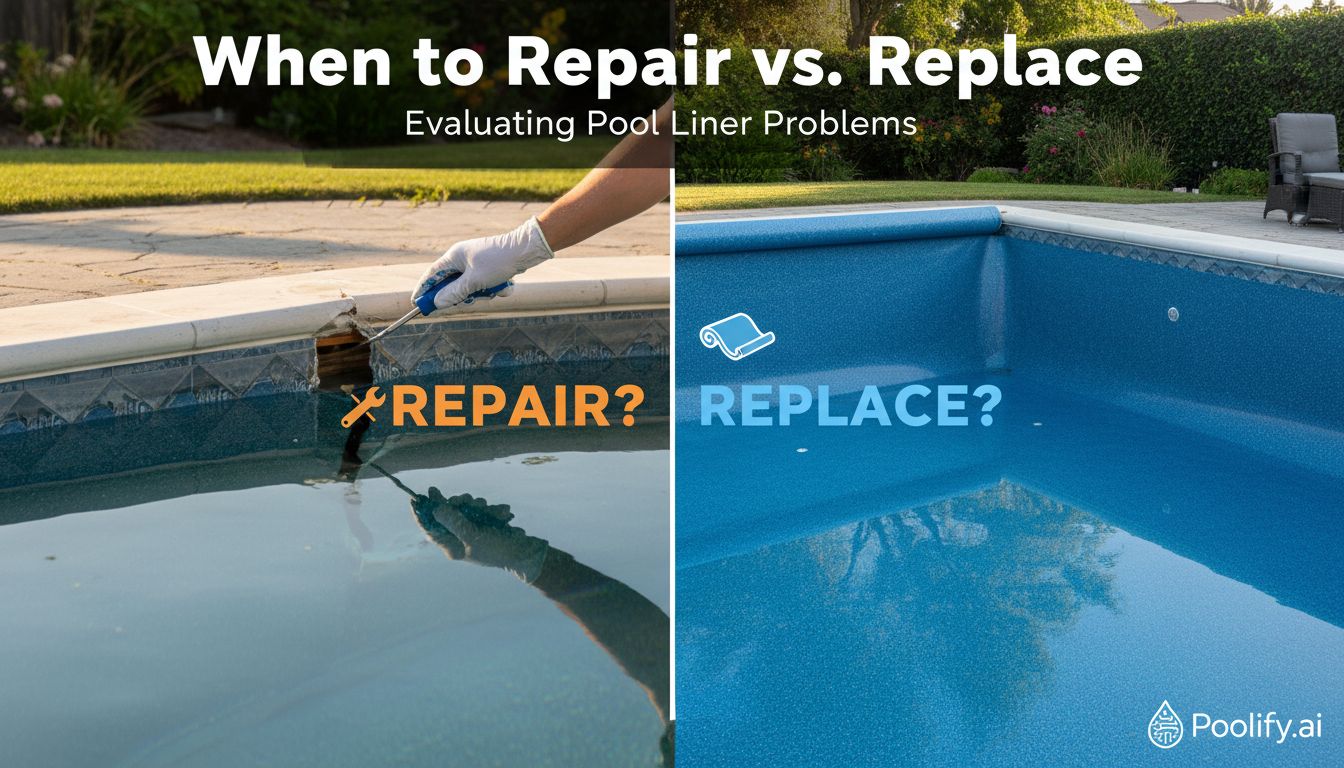
Not all pool liner problems warrant immediate replacement. Understanding when pool liner problems can be repaired versus requiring full replacement saves money and extends liner life. Several factors determine the appropriate response to pool liner problems, including liner age, damage extent, and overall condition.
Repairable Pool Liner Problems
Many pool liner problems respond well to repair when caught early. Small tears under 3 inches, minor wrinkles, localized fading, and single fitting leaks represent pool liner problems typically worth repairing. Repair costs for these pool liner problems range from $50-300, making them economical solutions when liners have substantial remaining lifespan.
Pool liner problems suitable for repair occur on liners under 8 years old without widespread deterioration. Multiple simultaneous pool liner problems or repairs on older liners often indicate replacement is more cost-effective than continued patching.
Pool Liner Problems Requiring Replacement
Certain pool liner problems signal that replacement is inevitable. Widespread brittleness, multiple large tears, extensive fading, chronic leaking, and bead failure represent pool liner problems where repair is impractical. Pool liner problems on liners exceeding 10 years typically warrant replacement rather than continued repair attempts.
Replacement costs for addressing major pool liner problems range from $2,500-7,000 depending on pool size and liner quality. While significant, replacement resolves multiple pool liner problems simultaneously and provides 10-15 years of trouble-free use when properly maintained.
Frequently Asked Questions About Pool Liner Problems
What are the first signs of pool liner problems?
Early pool liner problems include small wrinkles, minor fading, reduced flexibility, and unexplained water loss. These pool liner problems often appear gradually, making regular inspection essential. Catching pool liner problems early allows for repairs before major damage occurs.
Can pool liner problems be prevented entirely?
While all liners eventually age, proper maintenance prevents premature pool liner problems. Balanced chemistry, appropriate water levels, and careful physical handling minimize pool liner problems significantly. Most avoidable pool liner problems result from chemical imbalances or physical damage.
How long should a pool liner last without major problems?
Quality liners with proper maintenance should last 10-15 years before experiencing serious pool liner problems. Budget liners may develop pool liner problems within 5-7 years. Liner thickness, UV exposure, and chemical management most significantly impact when pool liner problems develop.
Are pool liner problems covered by warranty?
Most pool liner problems resulting from manufacturing defects are covered, but damage from improper maintenance, chemicals, or physical abuse is not. Warranty coverage for pool liner problems typically prorates after the first few years, covering only material costs for replacement.
What pool liner problems require professional help?
Complex pool liner problems including large tears exceeding 6 inches, bead replacement, persistent leaks, and full liner replacement require professional expertise. DIY approaches to major pool liner problems often worsen damage and void warranties.
Key Takeaways: Managing Pool Liner Problems
- Early detection prevents escalation: Regular inspection identifies pool liner problems before they require expensive repairs or replacement, extending liner life significantly.
- Chemistry matters most: Balanced water chemistry prevents the majority of premature pool liner problems, including fading, brittleness, and chemical damage that shortens lifespan.
- Not all problems warrant replacement: Many pool liner problems can be repaired cost-effectively when caught early, particularly on liners under 8 years old.
- Prevention costs less than repair: Investing in proper maintenance, quality chemicals, and protective measures prevents most common pool liner problems entirely.
- Professional help saves money long-term: Complex pool liner problems benefit from professional diagnosis and repair, preventing DIY mistakes that worsen damage and increase costs.
See Your Dream Pool in Your Actual Backyard
Upload a photo and get an AI-designed pool visualization in 10 seconds. 3 free designs, no login required.
Try Poolify Free →Conclusion: Taking Control of Pool Liner Problems
Pool liner problems affect virtually every vinyl pool owner eventually, but understanding common issues and their solutions transforms frustrating surprises into manageable maintenance tasks. By implementing preventive strategies, maintaining proper water chemistry, and addressing pool liner problems promptly when they arise, you can extend your liner’s lifespan well beyond industry averages. Whether dealing with minor wrinkles or considering full replacement, informed decisions about pool liner problems protect your investment and ensure years of swimming enjoyment. Remember that most pool liner problems develop gradually, making regular inspection and proactive maintenance your best defense against unexpected failures and costly emergency repairs.
References
- Centers for Disease Control and Prevention – Swimming Pool Disinfection and Testing: https://www.cdc.gov/healthywater/swimming/residential/disinfection-testing.html
- Poolify.ai – Pool Chemical Safety Guide: https://content.poolify.ai/pool-chemical-safety/
- Poolify.ai – Pool Winterization Guide: https://content.poolify.ai/pool-winterization-guide/
- Poolify.ai – Pool Water Chemistry Guide: https://content.poolify.ai/pool-water-chemistry-basics/
