Understanding the Pool Heat Pump vs Gas Heater Decision
Deciding between a pool heat pump vs gas heater represents one of the most significant investments you’ll make for your swimming pool. The choice impacts your monthly energy expenses, environmental footprint, and swimming season length. In 2026, homeowners face more heating options than ever, but the pool heat pump vs gas heater debate remains central to pool ownership decisions.
This comprehensive guide examines every aspect of the pool heat pump vs gas heater comparison. You’ll discover operational costs, installation requirements, maintenance needs, and performance characteristics that determine which system suits your specific situation. Whether you’re installing a new pool or replacing aging equipment, understanding these heating technologies ensures you make an informed decision that aligns with your budget and lifestyle.
How Pool Heat Pumps Work: The Efficiency Champion
Pool heat pumps operate on a fundamentally different principle than traditional heating systems. Rather than generating heat through combustion, heat pumps extract thermal energy from ambient air and transfer it to your pool water. This process mirrors how air conditioners work, except in reverse.
The pool heat pump vs gas heater efficiency comparison starts with understanding coefficient of performance (COP). Modern heat pumps achieve COP ratings between 5.0 and 6.5, meaning they generate five to six units of heat energy for every unit of electricity consumed. This remarkable efficiency stems from moving existing heat rather than creating it.
According to the U.S. Department of Energy, heat pump pool heaters typically cost more upfront but deliver substantially lower operating costs over their lifespan. The technology requires ambient temperatures above 45-50°F to function effectively, making them ideal for moderate climates and extended swimming seasons.
Heat Pump Performance Factors
Several variables affect heat pump efficiency in the pool heat pump vs gas heater analysis. Ambient air temperature directly impacts performance—warmer air enables faster heating and better energy efficiency. Humidity levels also play a role, as heat pumps extract moisture along with thermal energy from surrounding air.
Installation location matters significantly. Placing your heat pump in a sunny, sheltered area with good airflow maximizes efficiency. Avoid enclosed spaces or areas with restricted air circulation, as heat pumps require substantial airflow to operate effectively. Most units need at least two feet of clearance on all sides.
Gas Heater Technology: Rapid Heat Delivery
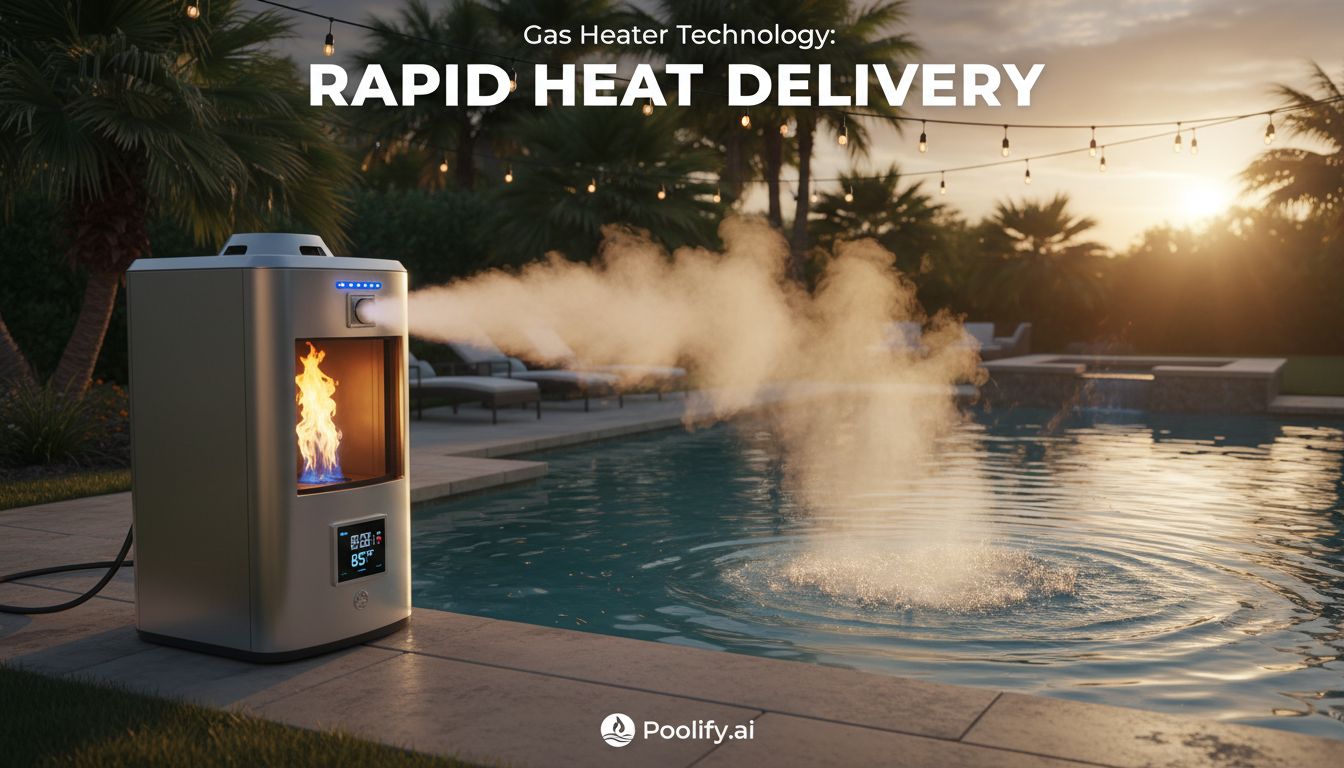
Gas heaters generate heat through natural gas or propane combustion, offering the fastest temperature increases available. When comparing pool heat pump vs gas heater heating speed, gas systems win decisively. A properly sized gas heater can raise pool temperature by 30 degrees in just a few hours.
Modern gas heaters feature electronic ignition, digital controls, and improved heat exchangers that boost efficiency beyond older models. Current high-efficiency gas heaters achieve 84-95% thermal efficiency, converting most fuel energy directly into usable heat. However, the pool heat pump vs gas heater efficiency debate favors heat pumps because gas heaters create heat rather than transferring it.
Gas heaters excel in specific scenarios. Cold climate pool owners benefit from reliable performance regardless of ambient temperature. Weekend pool users appreciate the ability to heat water quickly for occasional use. The pool heat pump vs gas heater decision often hinges on usage patterns—frequent swimmers typically save money with heat pumps, while occasional users may prefer gas heater speed.
Gas Heater Considerations
Fuel availability determines whether natural gas or propane makes sense for your situation. Natural gas connections offer convenience and typically lower fuel costs, but require existing gas line infrastructure. Propane systems provide flexibility for properties without natural gas access, though fuel delivery and storage add complexity.
Ventilation requirements affect installation costs and location options. Gas heaters produce combustion byproducts requiring proper venting to prevent carbon monoxide accumulation. Professional installation ensures compliance with local building codes and safety standards. When evaluating pool heat pump vs gas heater installation, gas systems often involve more extensive site preparation.
Operating Cost Analysis: Pool Heat Pump vs Gas Heater Economics
The pool heat pump vs gas heater cost comparison extends far beyond purchase price. Operating expenses over a system’s 10-15 year lifespan typically dwarf initial investment, making efficiency the primary economic consideration.
Heat pump operating costs depend on electricity rates and ambient temperature. In 2026, with average U.S. electricity costs around $0.14 per kWh, heating a 20,000-gallon pool costs approximately $50-100 monthly during swimming season. Regional electricity prices create significant variation—areas with cheap power see even greater heat pump advantages in the pool heat pump vs gas heater equation.
Gas heater operating costs fluctuate with natural gas and propane prices. Natural gas heaters typically cost $200-400 monthly for the same 20,000-gallon pool, while propane systems may reach $400-600 monthly. The pool heat pump vs gas heater monthly expense difference compounds dramatically over years of operation.
Real-World Cost Examples
Consider a typical scenario: maintaining an 80°F pool temperature for six months annually in a moderate climate. A heat pump might consume 3,000-4,000 kWh per season, costing $420-560 annually. The equivalent gas heater could burn 300-400 therms of natural gas, costing $900-1,600 annually at current rates.
Over ten years, the pool heat pump vs gas heater cost differential reaches $5,000-10,000 in the heat pump’s favor. This savings often exceeds the higher upfront investment for heat pump technology, delivering positive return on investment within 3-5 years for frequent pool users.
Installation Requirements: Pool Heat Pump vs Gas Heater Setup
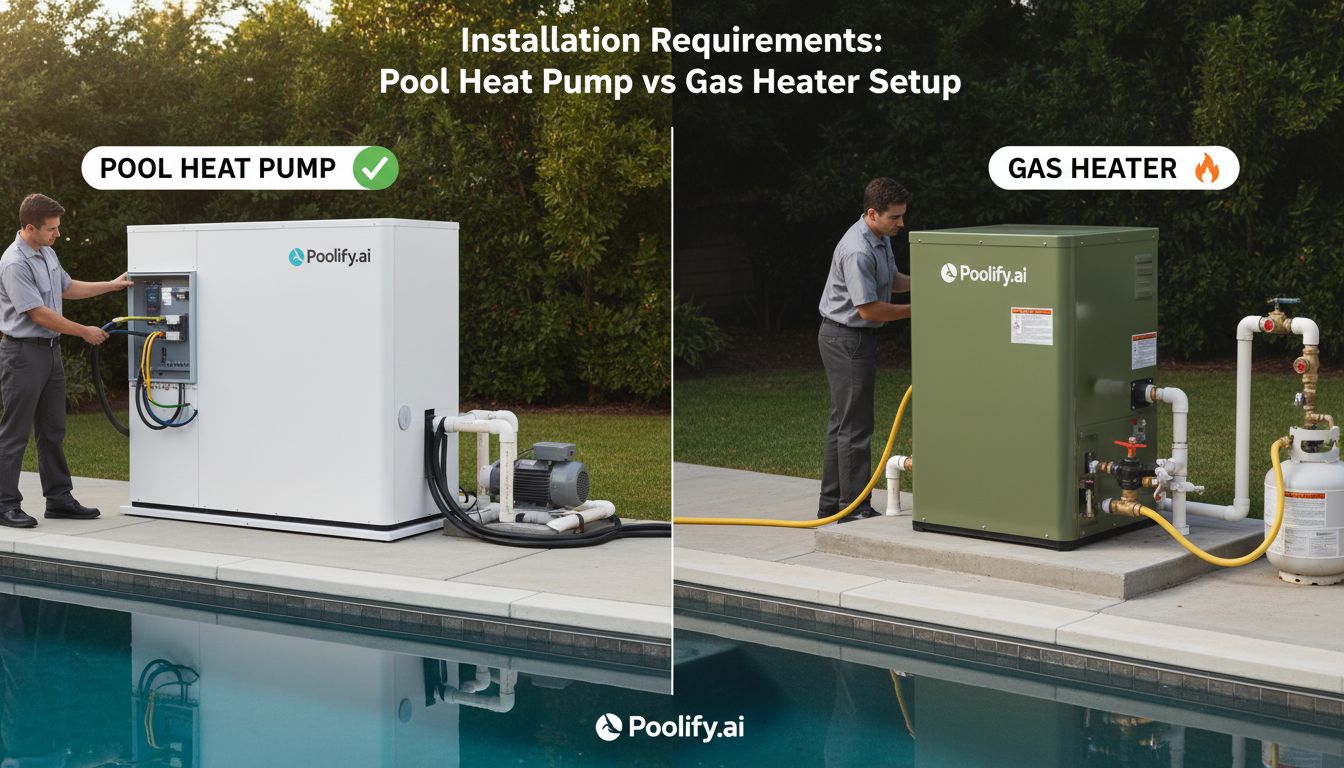
Installation complexity and costs differ substantially when comparing pool heat pump vs gas heater systems. Heat pumps require electrical connections, typically 220-240V circuits with 50-60 amp capacity. Most properties need dedicated circuit installation, adding $500-1,500 to setup costs depending on electrical panel proximity.
The pool heat pump vs gas heater installation process for heat pumps emphasizes proper placement. Units need firm, level pads with adequate drainage. Vibration isolation prevents noise transmission to living areas. Positioning at least 10 feet from the pool minimizes chlorine exposure that can corrode components.
Gas heater installation involves more complex permitting and safety requirements. Natural gas connections require licensed plumbers and utility company coordination. Propane systems need tank installation and regular fuel delivery arrangements. Venting requirements mandate proper combustion air supply and exhaust routing.
Professional Installation Costs
Professional installation for the pool heat pump vs gas heater comparison typically ranges from $1,000-3,000 for heat pumps and $1,500-4,000 for gas heaters. Gas system costs escalate when natural gas lines require extension or propane tanks need installation. Always obtain multiple quotes from licensed contractors with pool heating experience.
Permit fees and inspection requirements vary by jurisdiction. Some areas mandate specific setback distances, noise level compliance, or energy efficiency standards. Research local regulations early in your pool heat pump vs gas heater decision process to avoid unexpected complications.
Climate Considerations: Which System Fits Your Location?
Geographic location dramatically influences the pool heat pump vs gas heater performance comparison. Heat pumps excel in warm, humid climates where ambient air temperatures remain above 50°F throughout the swimming season. Southern states, coastal regions, and areas with mild winters see maximum heat pump efficiency.
The pool heat pump vs gas heater decision in cold climates often favors gas systems. When ambient temperatures drop below 45°F, heat pump efficiency plummets and heating capacity diminishes. Northern pool owners extending their season into spring and fall may find gas heaters provide more reliable performance.
Moderate climate zones present the most interesting pool heat pump vs gas heater scenarios. These regions benefit from heat pump efficiency during summer months while potentially needing supplemental heating for shoulder seasons. Some homeowners install both systems, using heat pumps as primary heaters and gas as backup for cold snaps.
Regional Performance Patterns
Southwestern pools enjoy nearly year-round heat pump viability. Low humidity reduces efficiency slightly, but abundant sunshine and warm temperatures maintain strong performance. The pool heat pump vs gas heater calculation in Arizona, Southern California, or Texas typically favors heat pumps by substantial margins.
Southeastern pools benefit from high humidity that enhances heat pump operation. However, occasional cold fronts may temporarily reduce efficiency. The pool heat pump vs gas heater decision in Florida, Georgia, or the Carolinas generally supports heat pumps with occasional gas heater backup for extreme cold.
Maintenance and Longevity: Pool Heat Pump vs Gas Heater Durability
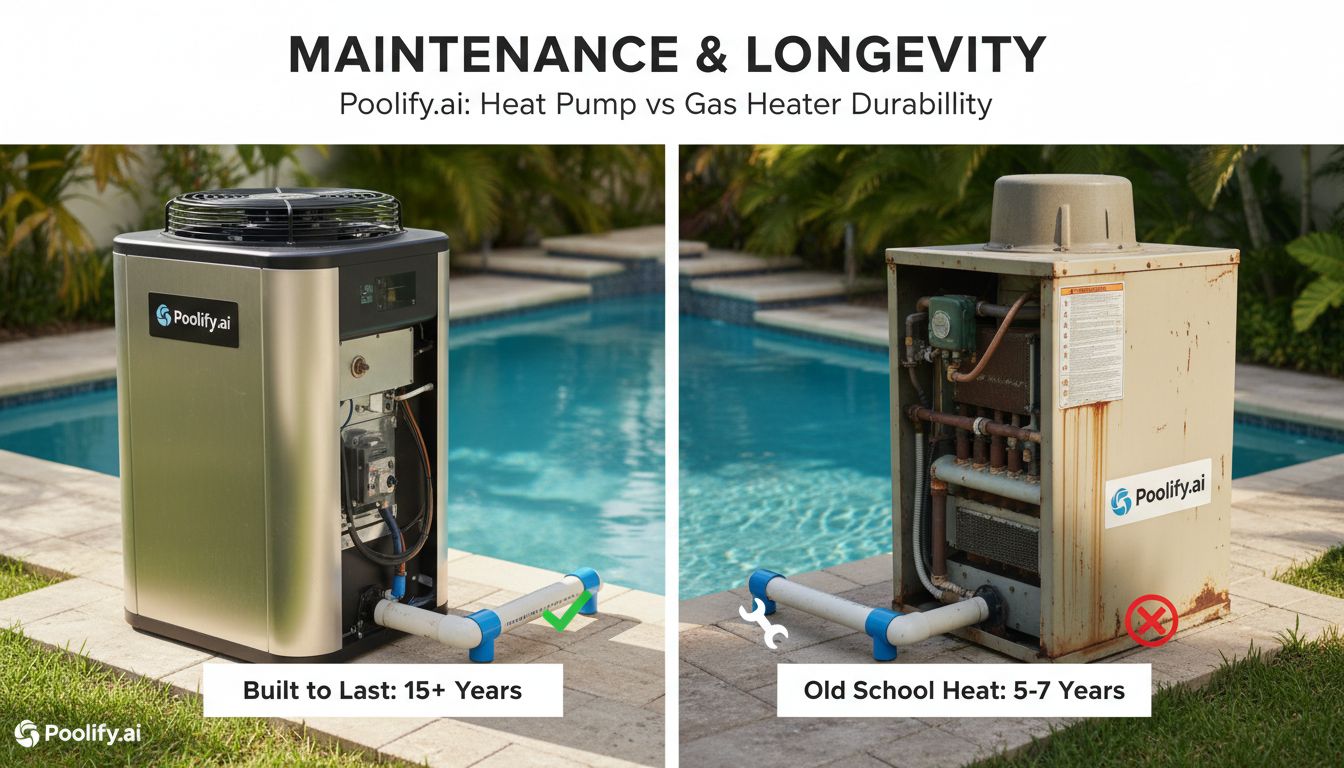
Maintenance requirements and equipment lifespan factor significantly into the pool heat pump vs gas heater value proposition. Heat pumps contain fewer moving parts than gas heaters and avoid combustion-related wear, typically lasting 10-15 years with proper care.
Annual heat pump maintenance includes cleaning coils, checking refrigerant levels, inspecting electrical connections, and verifying proper airflow. Many homeowners handle basic cleaning tasks themselves, scheduling professional service every 2-3 years. The pool heat pump vs gas heater maintenance comparison generally favors heat pumps for simplicity and cost.
Gas heaters require more frequent attention due to combustion byproducts. Annual professional service should include burner cleaning, heat exchanger inspection, gas pressure verification, and safety control testing. Neglecting maintenance accelerates corrosion and reduces efficiency. The pool heat pump vs gas heater maintenance expense typically runs $150-300 annually for gas systems versus $100-200 for heat pumps.
Common Repair Issues
Heat pump repairs often involve refrigerant leaks, compressor failures, or fan motor replacement. Quality units from reputable manufacturers minimize these issues. Proper installation and regular maintenance extend lifespan significantly. When evaluating pool heat pump vs gas heater reliability, heat pumps generally require fewer emergency repairs.
Gas heater problems frequently stem from burner corrosion, heat exchanger cracks, or ignition system failures. Chemical exposure from pool water accelerates deterioration if units are installed too close to the pool. The pool heat pump vs gas heater repair cost comparison varies, but gas heater heat exchanger replacement can exceed $1,000-2,000.
Environmental Impact: Pool Heat Pump vs Gas Heater Sustainability
Environmental considerations increasingly influence the pool heat pump vs gas heater choice. Heat pumps powered by renewable electricity sources offer the lowest carbon footprint. Even with conventional grid power, their superior efficiency reduces greenhouse gas emissions compared to fossil fuel combustion.
The pool heat pump vs gas heater environmental analysis depends partly on your electricity source. Regions with high renewable energy penetration see dramatic sustainability advantages for heat pumps. Areas relying on coal-fired power plants narrow the environmental gap, though heat pump efficiency still typically wins.
Natural gas heaters produce direct carbon dioxide emissions from combustion. While natural gas burns cleaner than coal or oil, it remains a fossil fuel contributing to climate change. Propane heaters generate similar emissions. The pool heat pump vs gas heater carbon footprint comparison consistently favors heat pumps by 30-50% or more.
Future-Proofing Your Investment
Regulatory trends favor efficient, low-emission technologies. Some jurisdictions already restrict or prohibit new gas heater installations for pools. The pool heat pump vs gas heater regulatory landscape in 2026 increasingly supports heat pumps through rebates, tax credits, and building code preferences.
Federal and state incentive programs often subsidize heat pump installations. Check the Database of State Incentives for Renewables & Efficiency for current programs in your area. These incentives can offset 10-30% of heat pump costs, improving the pool heat pump vs gas heater financial comparison.
Hybrid Systems: Combining Pool Heat Pump vs Gas Heater Technologies
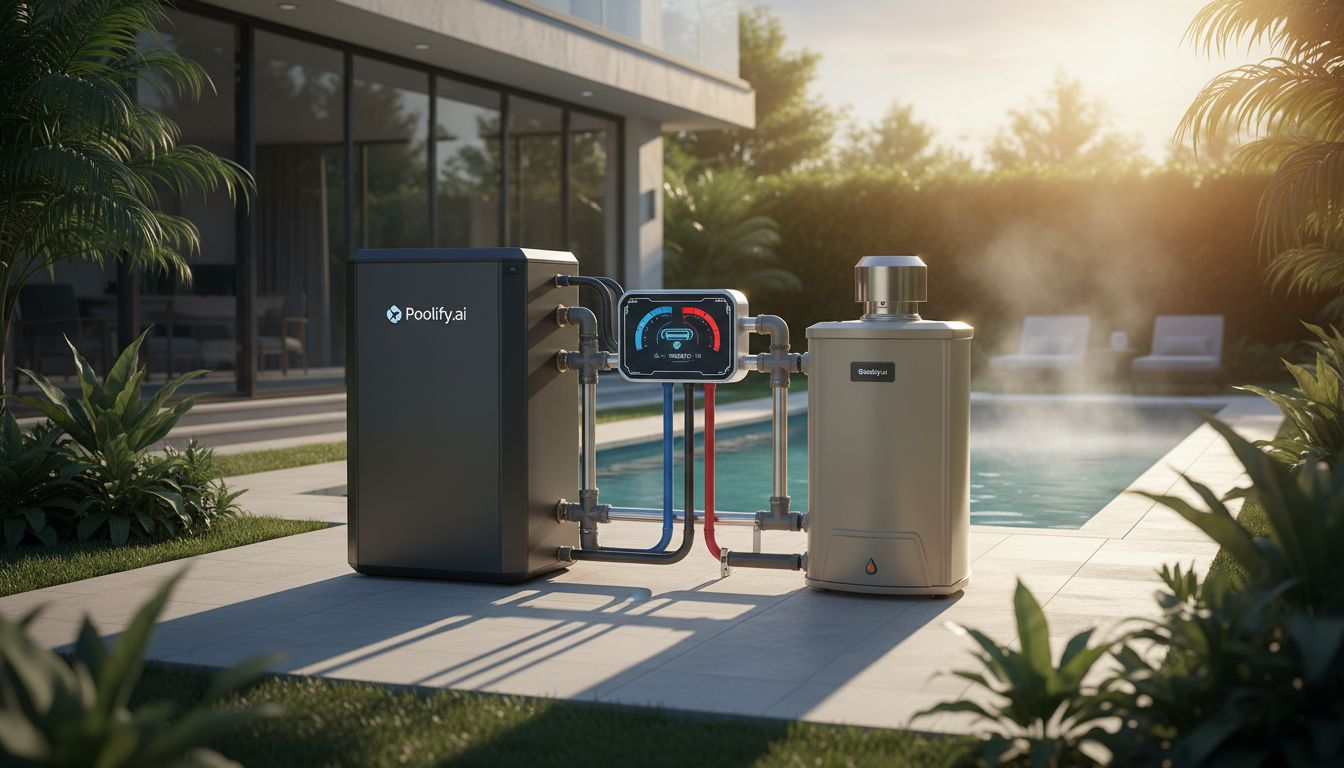
Some pool owners avoid choosing between pool heat pump vs gas heater systems by installing both. Hybrid configurations use heat pumps for primary heating and gas heaters for rapid temperature boosts or cold weather backup. This approach maximizes efficiency while maintaining heating flexibility.
The pool heat pump vs gas heater hybrid strategy works particularly well for pools used year-round in moderate climates. Heat pumps handle routine heating during warm months, while gas heaters activate only when needed for quick heating or during cold snaps. Sophisticated control systems automate switching between heat sources based on ambient temperature and desired heating speed.
Hybrid installation costs exceed single-system approaches, but the pool heat pump vs gas heater combination delivers unmatched versatility. You’ll pay for two heaters, additional plumbing, and more complex controls. However, operational savings from heat pump efficiency during most of the season can justify the investment for serious pool enthusiasts.
Making Your Pool Heat Pump vs Gas Heater Decision
Selecting between pool heat pump vs gas heater systems requires evaluating your specific circumstances. Start by assessing your climate—heat pumps excel in warm regions, while gas heaters suit cold climates better. Consider your usage patterns—daily swimmers benefit most from heat pump efficiency, while occasional users may prefer gas heater speed.
Calculate total ownership costs for the pool heat pump vs gas heater comparison. Include purchase price, installation, projected operating costs, and maintenance expenses over 10-15 years. Don’t focus solely on upfront costs—operating expenses typically dominate long-term economics.
Evaluate your property’s infrastructure. Existing natural gas service simplifies gas heater installation, while adequate electrical capacity supports heat pump systems. The pool heat pump vs gas heater decision sometimes hinges on which utility connection is more practical and affordable to implement.
Decision Framework
Choose heat pumps if you live in warm climates, use your pool frequently, prioritize operating cost savings, and want environmentally friendly heating. The pool heat pump vs gas heater analysis favors heat pumps for most residential pool applications in 2026.
Select gas heaters if you experience cold weather during swimming season, use your pool occasionally, need rapid heating capability, or lack adequate electrical service. The pool heat pump vs gas heater decision supports gas systems for specific scenarios despite higher operating costs.
For more information on maintaining your pool heating system, check out our comprehensive pool maintenance guide that covers seasonal care and equipment optimization.
Frequently Asked Questions About Pool Heat Pump vs Gas Heater
How long does it take for a heat pump to pay for itself compared to a gas heater?
The pool heat pump vs gas heater payback period typically ranges from 3-5 years for frequent pool users in warm climates. Operating cost savings of $500-1,000 annually offset the $1,000-2,000 higher upfront investment relatively quickly. Cold climate pools with shorter seasons may see extended payback periods of 7-10 years.
Can I use a pool heat pump in winter?
Heat pump performance in the pool heat pump vs gas heater comparison declines significantly below 50°F ambient temperature. Most units continue operating down to 45°F but with reduced efficiency and heating capacity. For winter pool heating in cold climates, gas heaters provide more reliable performance.
Which system heats a pool faster?
Gas heaters heat pools 3-5 times faster than heat pumps in the pool heat pump vs gas heater speed comparison. A properly sized gas heater can raise pool temperature 30 degrees in 4-6 hours, while a heat pump might require 24-48 hours for the same temperature increase. This speed advantage makes gas heaters popular for occasional use.
Do heat pumps work in humid climates?
Humidity actually improves heat pump performance in the pool heat pump vs gas heater efficiency analysis. Warm, humid air contains more thermal energy for heat pumps to extract. Southeastern and coastal regions provide ideal conditions for heat pump operation, often achieving peak efficiency ratings.
What size heater do I need for my pool?
Proper sizing in the pool heat pump vs gas heater selection process depends on pool volume, desired temperature rise, and climate. Calculate surface area in square feet and multiply by your desired temperature increase. Heat pumps typically need 50,000-150,000 BTU capacity for residential pools, while gas heaters range from 100,000-400,000 BTU. Consult with professionals for precise sizing recommendations.
Key Takeaways: Pool Heat Pump vs Gas Heater Comparison
- Operating costs favor heat pumps: Heat pumps cost 50-70% less to operate than gas heaters in most climates, delivering substantial long-term savings despite higher upfront investment in the pool heat pump vs gas heater economic comparison.
- Climate determines optimal choice: Warm regions benefit most from heat pump efficiency, while cold climate pools often require gas heater reliability for consistent performance throughout extended swimming seasons.
- Gas heaters heat faster: When speed matters for occasional pool use, gas heaters deliver temperature increases 3-5 times faster than heat pumps in the pool heat pump vs gas heater performance comparison.
- Heat pumps offer environmental advantages: Superior efficiency and compatibility with renewable electricity make heat pumps the more sustainable choice, reducing carbon emissions by 30-50% compared to fossil fuel combustion.
- Hybrid systems provide maximum flexibility: Installing both technologies allows you to optimize the pool heat pump vs gas heater decision for different scenarios, using heat pumps for routine heating and gas for rapid temperature boosts.
If you’re planning a new pool installation, explore our detailed pool design guide to understand how heating system selection integrates with overall pool planning.
See Your Dream Pool in Your Actual Backyard
Upload a photo and get an AI-designed pool visualization in 10 seconds. 3 free designs, no login required.
Try Poolify Free →Conclusion
The pool heat pump vs gas heater decision represents a significant investment in your pool’s comfort and usability. Heat pumps deliver unmatched efficiency and lower operating costs for frequent swimmers in warm climates, while gas heaters provide rapid heating and cold-weather reliability for occasional use or northern locations.
Most homeowners in 2026 find heat pumps offer the best long-term value in the pool heat pump vs gas heater comparison. Operating cost savings, environmental benefits, and improving technology make heat pumps increasingly attractive. However, your specific climate, usage patterns, and infrastructure determine the optimal choice for your situation.
Evaluate total ownership costs over 10-15 years rather than focusing solely on purchase price. Consider future energy costs, potential regulatory changes, and available incentives. The pool heat pump vs gas heater decision impacts your monthly expenses and swimming enjoyment for years to come—invest time in thorough research and professional consultation to make the choice that best serves your needs.
For additional guidance on pool equipment selection and maintenance, visit our comprehensive pool equipment guide covering pumps, filters, and automation systems.


References
- U.S. Department of Energy – Heat Pump Swimming Pool Heaters: https://betterbuildingssolutioncenter.energy.gov/sites/default/files/attachments/Pool%20efficiency_.pdf
- Database of State Incentives for Renewables & Efficiency (DSIRE): https://www.dsireusa.org/
