Introduction: Why a Pool Cleaning Schedule Matters in 2026
Maintaining a sparkling clean pool requires more than occasional attention—it demands a systematic approach. A well-structured pool cleaning schedule ensures your swimming pool remains safe, inviting, and properly maintained throughout the year. Without a consistent pool cleaning schedule, you risk algae growth, equipment damage, and costly repairs that could easily be prevented with regular maintenance.
In 2026, pool owners are discovering that following a comprehensive pool cleaning schedule saves both time and money while extending the lifespan of pool equipment. This guide breaks down exactly what tasks to perform daily, weekly, monthly, and seasonally to keep your pool in optimal condition year-round.
Understanding the Basics of Your Pool Cleaning Schedule
Before diving into specific tasks, it’s essential to understand why a pool cleaning schedule is crucial for pool health. Your pool is a complex ecosystem that requires balanced chemistry, proper circulation, and regular debris removal. According to the CDC’s guidelines on pool water quality, maintaining proper chemical balance prevents waterborne illnesses and ensures safe swimming conditions.
A proper pool cleaning schedule addresses three critical areas: water chemistry, physical cleaning, and equipment maintenance. Each component plays a vital role in pool health. Water chemistry keeps bacteria and algae at bay, physical cleaning removes debris and prevents staining, and equipment maintenance ensures your filtration and circulation systems operate efficiently.
The frequency of tasks in your pool cleaning schedule depends on several factors including pool usage, surrounding environment, weather conditions, and pool type. Heavily used pools require more frequent attention, while pools surrounded by trees need more debris removal. Your pool cleaning schedule should adapt to these unique circumstances.
Daily Pool Cleaning Schedule Tasks
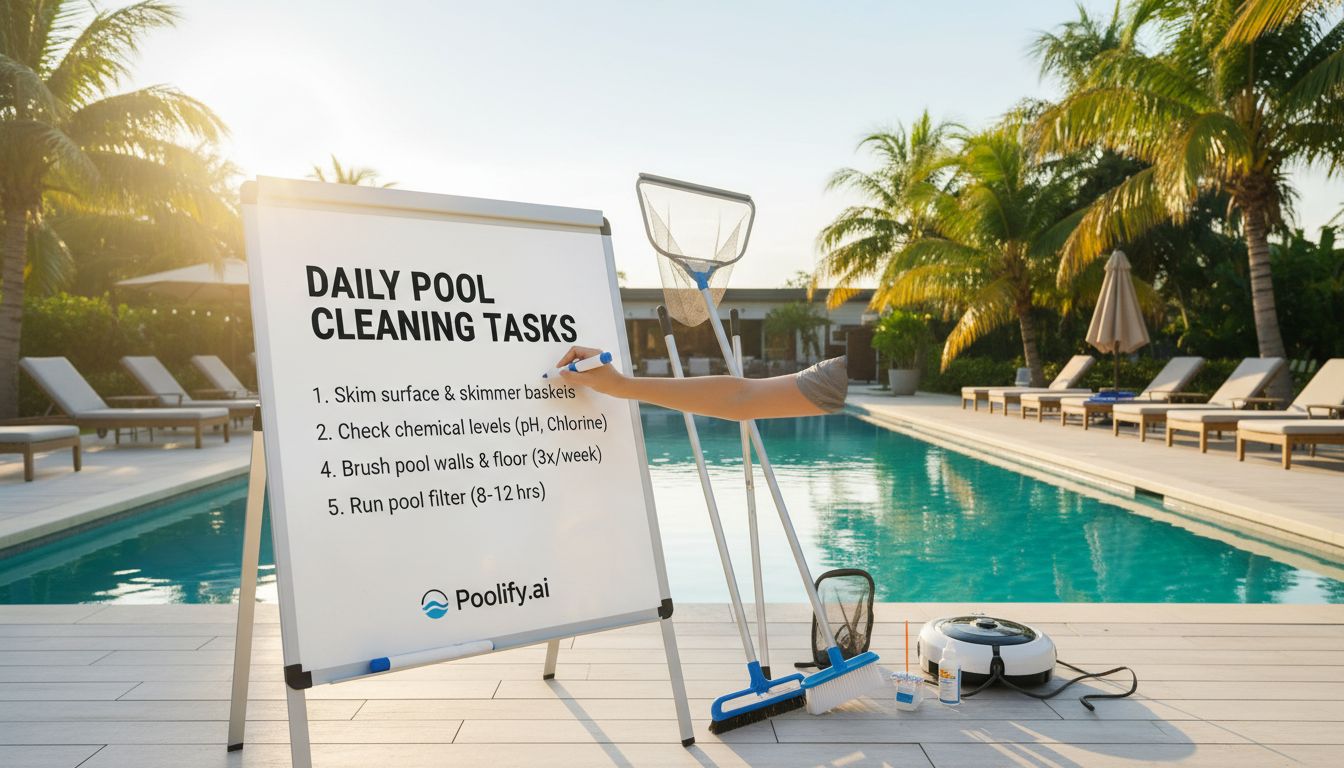
Your daily pool cleaning schedule forms the foundation of proper pool maintenance. These quick tasks take only 10-15 minutes but prevent major problems from developing. Consistency with daily tasks makes weekly and monthly maintenance significantly easier.
Skimming and Surface Cleaning
Start your daily pool cleaning schedule by skimming the surface to remove leaves, insects, and floating debris. Surface debris that sits overnight sinks to the bottom, making removal more difficult. Use a flat skimmer net and make several passes across the entire pool surface. This simple task prevents organic matter from decomposing in your water and consuming chlorine.
Checking Water Level
Include water level checks in your daily pool cleaning schedule. The water level should reach the middle of your skimmer opening. Evaporation, splashing, and backwashing lower water levels, which affects skimmer efficiency and can damage your pump. Add water as needed to maintain proper levels.
Emptying Skimmer Baskets
Your daily pool cleaning schedule must include emptying skimmer and pump baskets. Full baskets restrict water flow, reducing filtration efficiency and straining your pump motor. Remove baskets, dump debris, rinse them clean, and replace them securely. This two-minute task protects expensive equipment from damage.
Visual Inspection
Complete your daily pool cleaning schedule with a visual inspection. Check for cloudy water, algae spots, equipment leaks, or unusual sounds from the pump. Early detection prevents minor issues from becoming expensive repairs. Note any concerns to address during your weekly maintenance.
Weekly Pool Cleaning Schedule Essentials
Your weekly pool cleaning schedule involves more thorough maintenance tasks that keep water chemistry balanced and surfaces clean. Set aside 1-2 hours each week for these essential activities. Many pool owners designate a specific day for their weekly pool cleaning schedule to establish consistency.
Testing and Balancing Water Chemistry
Water testing is the cornerstone of your weekly pool cleaning schedule. Test pH, chlorine, alkalinity, and calcium hardness using reliable test strips or a liquid test kit. Proper chemical balance prevents algae growth, protects equipment, and ensures swimmer comfort. The ideal ranges are: pH 7.4-7.6, free chlorine 2-4 ppm, alkalinity 80-120 ppm, and calcium hardness 200-400 ppm.
Adjust chemicals based on test results as part of your weekly pool cleaning schedule. Add chemicals one at a time, allowing several hours between additions for proper distribution. Never mix chemicals directly, and always follow manufacturer instructions. Keep detailed records of chemical additions to track trends in your pool cleaning schedule.
Brushing Pool Walls and Floor
Include thorough brushing in your weekly pool cleaning schedule. Use a pool brush appropriate for your surface type—nylon bristles for vinyl, fiberglass, or painted surfaces, and stainless steel for concrete or plaster. Brush walls from top to bottom, paying special attention to corners, steps, and behind ladders where algae commonly develops.
Brushing dislodges algae spores, removes biofilm, and prevents calcium buildup. This task in your pool cleaning schedule keeps surfaces smooth and makes chemical treatments more effective. Brush toward the main drain so your filtration system captures loosened debris.

Vacuuming the Pool
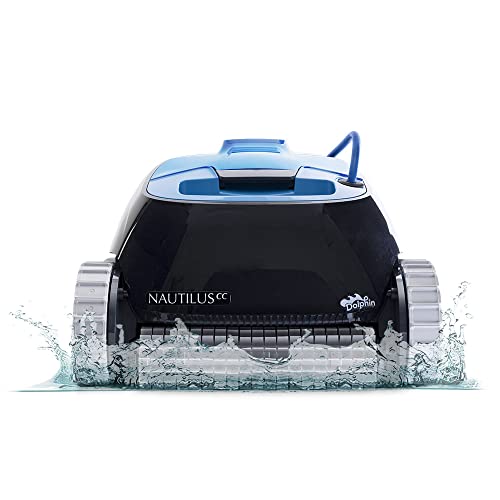
Your weekly pool cleaning schedule should include comprehensive vacuuming. Whether using a manual vacuum, automatic cleaner, or robotic vacuum, remove all settled debris from the pool floor. Manual vacuuming provides the most thorough cleaning and allows you to target problem areas. Move slowly to avoid stirring up debris, and overlap passes to ensure complete coverage.

Cleaning the Filter
Filter maintenance belongs in your weekly pool cleaning schedule, though frequency depends on pool usage and debris levels. Backwash sand and DE filters when pressure gauges read 8-10 psi above normal operating pressure. Clean cartridge filters by removing and hosing them down. A clean filter is essential for crystal-clear water and efficient circulation.
Monthly Pool Cleaning Schedule Deep Maintenance
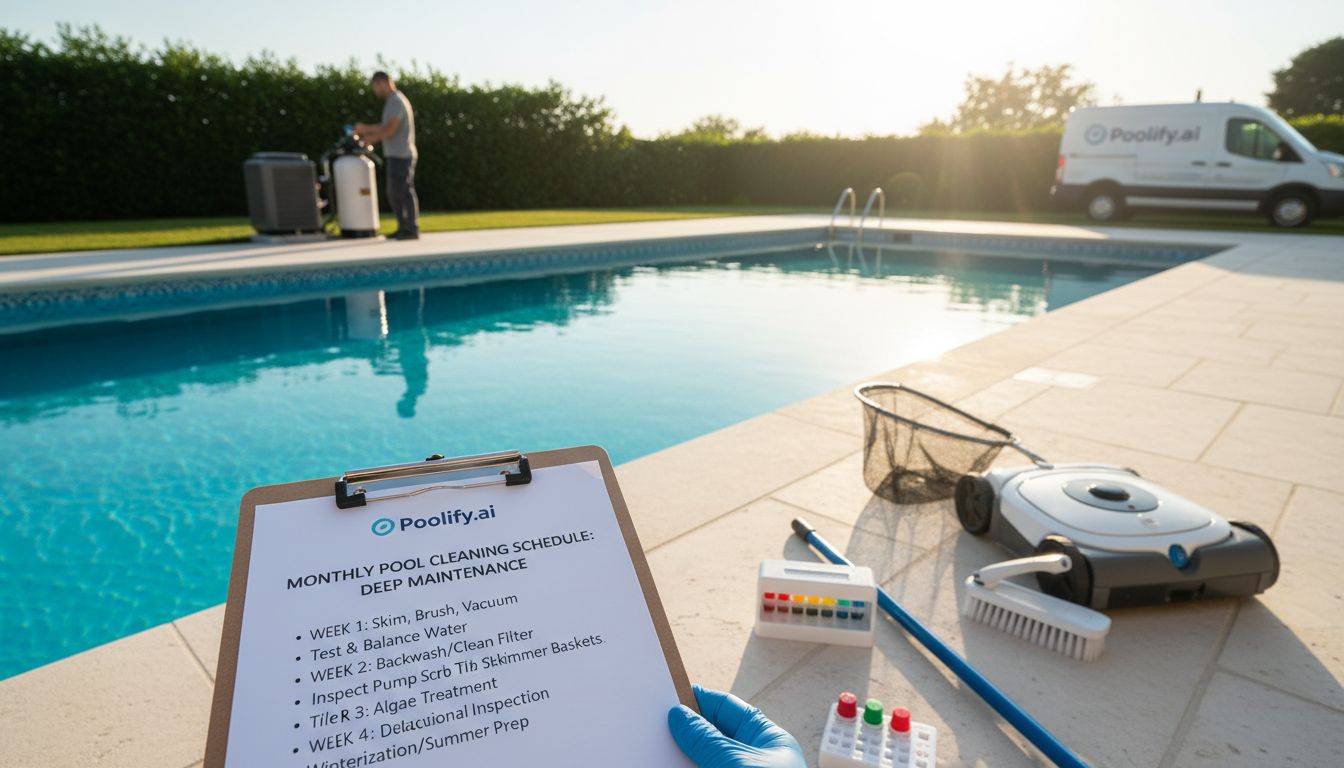
Your monthly pool cleaning schedule addresses tasks that don’t require weekly attention but remain crucial for long-term pool health. These deeper maintenance activities prevent buildup and keep equipment running efficiently. Schedule a few hours once monthly for these comprehensive tasks.
Shocking the Pool
Include pool shocking in your monthly pool cleaning schedule, or more frequently for heavily used pools. Shocking oxidizes organic contaminants, kills bacteria, and restores chlorine effectiveness. Choose evening hours for shocking since sunlight degrades chlorine. Add shock treatment directly to the pool with the pump running, and wait until chlorine levels drop below 5 ppm before swimming.
Deep Cleaning Pool Equipment
Your monthly pool cleaning schedule should include thorough equipment cleaning. Remove and soak pump and skimmer baskets in filter cleaner solution. Inspect o-rings and gaskets for wear, applying silicone lubricant as needed. Check pump strainer for debris and clean thoroughly. These preventive measures extend equipment life and maintain optimal performance.
Inspecting Pool Accessories
Add accessory inspection to your monthly pool cleaning schedule. Check ladders, diving boards, slides, and pool covers for damage or wear. Tighten loose bolts, repair minor damage, and replace worn components. Clean pool toys and store them properly to prevent mold growth. Well-maintained accessories enhance safety and pool enjoyment.
Testing for Metals and Phosphates
Expand your monthly pool cleaning schedule to include testing for metals and phosphates. These contaminants cause staining and promote algae growth. Use specialized test kits to check levels, and treat with metal sequestrants or phosphate removers as needed. This proactive approach prevents stubborn problems that require expensive professional treatment.
Seasonal Pool Cleaning Schedule Adjustments
Your pool cleaning schedule must adapt to seasonal changes. Temperature fluctuations, usage patterns, and environmental factors require different maintenance approaches throughout the year. Understanding seasonal needs ensures your pool remains pristine regardless of weather conditions.
Spring Pool Opening Schedule
Spring pool opening represents a critical phase in your annual pool cleaning schedule. Remove and clean the pool cover, storing it properly for next season. Remove winterizing plugs and reinstall equipment. Fill the pool to proper levels and start up your filtration system. Test and balance water chemistry, shocking heavily if needed. Brush and vacuum thoroughly, running the filter continuously for several days. Your spring pool cleaning schedule sets the foundation for the entire swimming season.
Summer Maintenance Intensification
Summer demands the most rigorous pool cleaning schedule due to increased usage, higher temperatures, and longer daylight hours. Increase testing frequency to 2-3 times weekly during peak season. Run your filtration system longer—12-14 hours daily in hot weather. Empty skimmer baskets twice daily if needed, and shock weekly rather than monthly. Adjust your summer pool cleaning schedule based on actual usage and weather conditions.
Fall Transition Schedule
Your fall pool cleaning schedule gradually reduces maintenance as temperatures cool and usage decreases. Continue regular cleaning but reduce chemical additions as needed. Remove leaves promptly to prevent staining and excessive organic buildup. Consider using a leaf net to simplify debris removal. Adjust filtration run times as water temperature drops, and monitor chemistry carefully during this transition period.
Winter Pool Closing or Maintenance
Your winter pool cleaning schedule depends on your climate. In freezing regions, properly winterize your pool by balancing chemistry, lowering water levels, draining equipment, and installing a winter cover. For warmer climates maintaining year-round pools, reduce your pool cleaning schedule frequency but continue basic maintenance. Run the pump a few hours daily, test chemistry weekly, and clean as needed. Learn more about winterizing your pool properly to protect your investment.
Creating Your Personalized Pool Cleaning Schedule
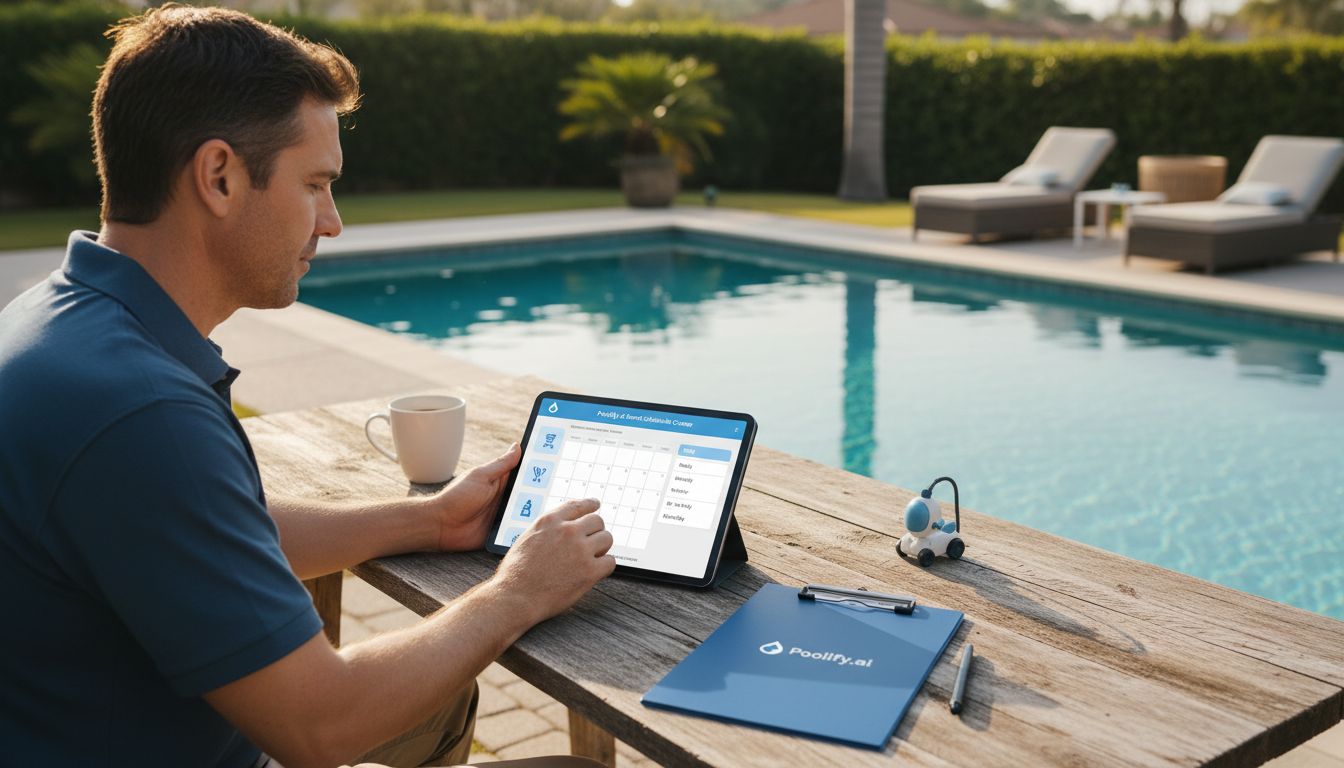
While general guidelines provide a framework, your optimal pool cleaning schedule depends on specific factors unique to your situation. Customize your pool cleaning schedule by considering pool size, usage patterns, surrounding environment, climate, and equipment type.
Assessing Your Pool’s Unique Needs
Start building your personalized pool cleaning schedule by evaluating your pool’s characteristics. Larger pools require more time for each task but may need less frequent shocking. Pools surrounded by trees need more frequent skimming and vacuuming. Heavy bather loads demand more frequent testing and chemical additions. Observe your pool for several weeks, noting which tasks need more attention.
Using Technology to Track Your Schedule
Modern pool owners enhance their pool cleaning schedule with technology. Pool management apps send reminders for testing and maintenance tasks, track chemical additions, and maintain historical records. Smart pool monitors continuously test water chemistry and alert you to imbalances. Robotic cleaners automate vacuuming on programmable schedules. Integrate these tools into your pool cleaning schedule for easier, more consistent maintenance.
Adjusting Your Schedule Based on Results
Your pool cleaning schedule should evolve based on results. If algae appears despite following your schedule, increase brushing frequency or shock more often. Consistently clear water might allow slightly reduced maintenance. Keep records of tasks performed and water conditions to identify patterns. A flexible pool cleaning schedule that responds to your pool’s actual needs proves most effective.
Common Pool Cleaning Schedule Mistakes to Avoid
Even well-intentioned pool owners make mistakes that undermine their pool cleaning schedule effectiveness. Understanding these common errors helps you maintain a more successful maintenance routine and avoid costly problems.
Inconsistent Task Completion
The biggest pool cleaning schedule mistake is inconsistency. Skipping tasks or performing them irregularly allows problems to develop. Missing one week of testing can lead to algae blooms requiring extensive treatment. Establish your pool cleaning schedule as a non-negotiable routine, like brushing your teeth. Consistency prevents problems rather than reacting to them.
Neglecting Equipment Maintenance
Many pool cleaning schedules focus solely on water and surfaces while neglecting equipment. Your pump, filter, heater, and automation systems require regular attention. Ignoring equipment maintenance in your pool cleaning schedule leads to premature failures and expensive replacements. Check out our guide on maintaining pool equipment for detailed information.
Over-Relying on Automatic Systems
While robotic cleaners and automatic chemical feeders help maintain your pool cleaning schedule, they don’t eliminate the need for manual oversight. Automatic systems can malfunction, miss problem areas, or provide false security. Your pool cleaning schedule must include regular manual inspections and testing regardless of automation. Use technology to assist, not replace, proper maintenance.
Ignoring Seasonal Adjustments
A static pool cleaning schedule that doesn’t adapt to seasons proves ineffective. Summer pools need more attention than fall pools. Failing to adjust your pool cleaning schedule wastes time, chemicals, and money while potentially leaving your pool under-maintained during peak season. Review and modify your pool cleaning schedule quarterly to match current conditions.
Professional Help vs. DIY Pool Cleaning Schedule
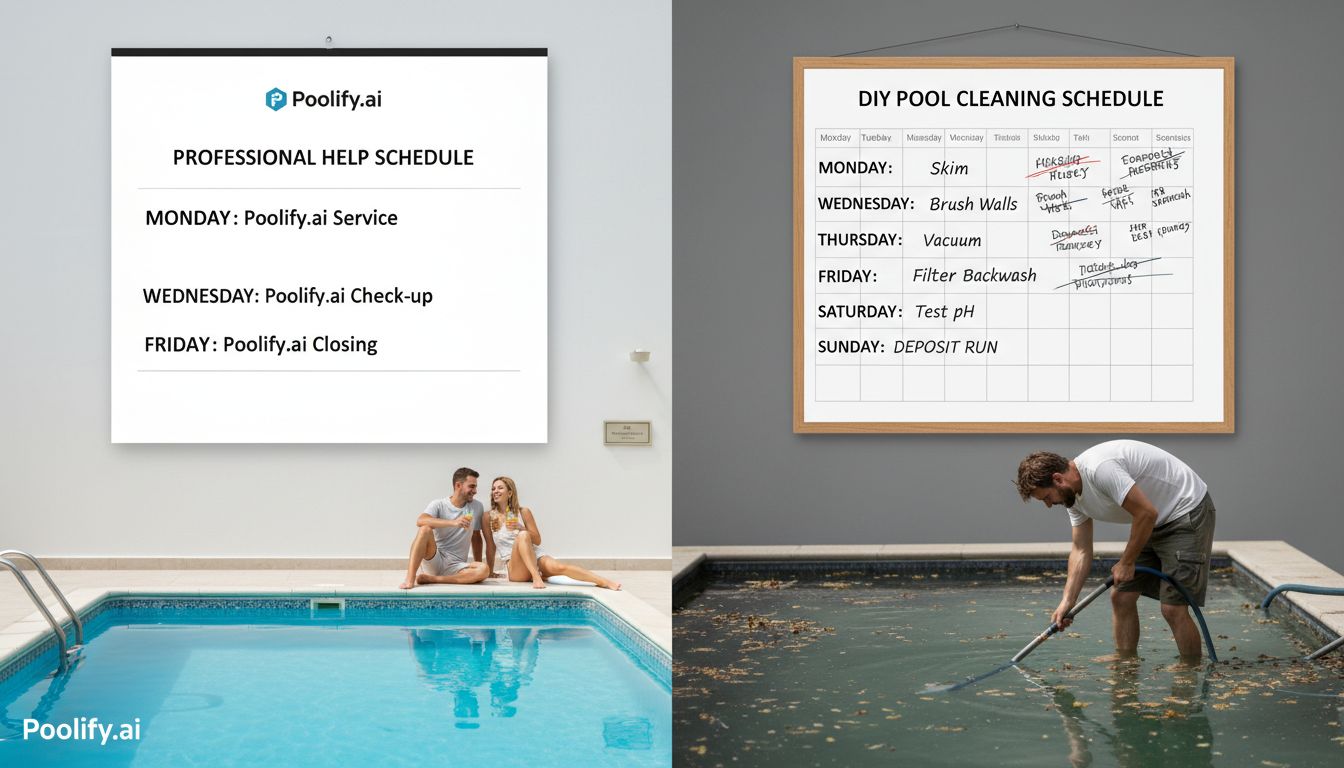
Pool owners must decide whether to handle their pool cleaning schedule personally or hire professional services. Both approaches have merits depending on your situation, budget, and preferences.
Benefits of DIY Pool Maintenance
Managing your own pool cleaning schedule offers several advantages. You save significant money on service fees, maintain complete control over products used, and develop intimate knowledge of your pool’s quirks. DIY maintenance allows flexible scheduling and immediate response to problems. Many pool owners find satisfaction in mastering their pool cleaning schedule and maintaining their investment personally.
When to Consider Professional Services
Professional pool services make sense for certain situations. Complex equipment repairs, persistent water quality problems, or time constraints might warrant professional help. Some owners prefer professional management of their entire pool cleaning schedule, while others use services seasonally or for specific tasks. Professionals bring expertise, specialized equipment, and liability insurance that provide peace of mind.
Hybrid Approach Options
Many pool owners adopt a hybrid pool cleaning schedule, handling routine tasks personally while hiring professionals for complex maintenance. You might manage daily and weekly tasks but hire professionals for opening, closing, equipment repairs, or quarterly deep cleaning. This balanced approach maximizes cost savings while ensuring proper maintenance of challenging aspects.
Frequently Asked Questions About Pool Cleaning Schedules
How often should I actually clean my pool?
A comprehensive pool cleaning schedule includes daily skimming and basket emptying (10 minutes), weekly testing, brushing, and vacuuming (1-2 hours), and monthly deep maintenance tasks (2-3 hours). Adjust frequency based on usage, weather, and debris levels. Consistency matters more than perfection—a regular pool cleaning schedule prevents most problems.
Can I reduce my pool cleaning schedule during low-use periods?
Yes, your pool cleaning schedule can be reduced during off-season or low-use periods, but never eliminated entirely. Continue testing chemistry weekly, running the pump several hours daily, and cleaning as needed. A minimal pool cleaning schedule prevents problems that would require extensive correction when you resume regular use.
What happens if I skip parts of my pool cleaning schedule?
Skipping tasks in your pool cleaning schedule allows problems to compound. Missing chemical testing risks algae blooms, cloudy water, or equipment damage. Neglecting brushing allows algae to establish, requiring intensive treatment. One missed task rarely causes disaster, but consistently ignoring your pool cleaning schedule leads to expensive repairs and potential health hazards.
How do I maintain my pool cleaning schedule while traveling?
Maintain your pool cleaning schedule during travel by preparing before departure. Balance chemistry, shock the pool, clean thoroughly, and ensure equipment operates properly. For trips under a week, a well-prepared pool typically remains stable. Longer absences require hiring a pool service or asking a trusted neighbor to perform basic pool cleaning schedule tasks like emptying baskets and checking equipment.
Should my pool cleaning schedule change for saltwater pools?
Saltwater pools require a modified pool cleaning schedule. While salt generators produce chlorine automatically, you still must test chemistry weekly, brush surfaces, vacuum, and maintain equipment. Your pool cleaning schedule should include monthly salt level testing and quarterly salt cell cleaning. Saltwater systems simplify but don’t eliminate the need for a consistent pool cleaning schedule.
Key Takeaways for Your Pool Cleaning Schedule
- Consistency is crucial: A regular pool cleaning schedule prevents problems more effectively than reactive maintenance, saving time and money while extending equipment life.
- Adapt to your pool’s needs: Customize your pool cleaning schedule based on size, usage, environment, and season rather than following rigid generic guidelines.
- Balance all three areas: Effective pool cleaning schedules address water chemistry, physical cleaning, and equipment maintenance equally—neglecting any area undermines overall pool health.
- Use technology wisely: Incorporate apps, monitors, and automatic cleaners into your pool cleaning schedule to simplify tasks, but maintain manual oversight and testing.
- Invest time upfront: Following a comprehensive pool cleaning schedule requires commitment, but the payoff is crystal-clear water, safe swimming conditions, and avoided costly repairs throughout the season.
See Your Dream Pool in Your Actual Backyard
Upload a photo and get an AI-designed pool visualization in 10 seconds. 3 free designs, no login required.
Try Poolify Free →Conclusion: Mastering Your Pool Cleaning Schedule in 2026
A well-executed pool cleaning schedule transforms pool ownership from a stressful chore into an enjoyable routine. By following daily, weekly, monthly, and seasonal tasks consistently, you maintain sparkling water, protect your investment, and create a safe environment for family and friends. Your pool cleaning schedule doesn’t need to be perfect—it needs to be consistent and adapted to your pool’s unique requirements.
Start implementing your pool cleaning schedule today, beginning with simple daily tasks and gradually incorporating more comprehensive maintenance. Track your progress, adjust based on results, and don’t hesitate to seek professional help when needed. With a solid pool cleaning schedule in place, you’ll spend less time worrying about maintenance and more time enjoying your beautiful pool. For additional guidance on maintaining your pool investment, explore our comprehensive pool maintenance resources.
References
Centers for Disease Control and Prevention. (2026). “Disinfection and Testing.” Healthy Swimming. https://www.cdc.gov/healthywater/swimming/residential/disinfection-testing.html
