Understanding Cloudy Pool Water Causes: The 2026 Guide
Cloudy pool water causes frustration for millions of pool owners every year. When you step outside expecting crystal-clear water and instead find a murky, uninviting pool, it’s more than just an aesthetic problem. Understanding cloudy pool water causes helps you diagnose issues quickly and restore your pool to its sparkling condition. In 2026, pool chemistry and maintenance have become more accessible than ever, but the fundamental cloudy pool water causes remain consistent. This comprehensive guide explores every major factor that creates cloudy conditions and provides actionable solutions you can implement immediately.
The clarity of your pool water depends on a delicate balance of chemical levels, filtration efficiency, and proper maintenance practices. When any of these factors falls out of alignment, cloudiness develops rapidly. Most cloudy pool water causes are preventable with regular monitoring and proactive care. Whether you’re dealing with a slightly hazy appearance or water so cloudy you can’t see the bottom, identifying the specific cloudy pool water causes affecting your pool is the first step toward resolution.
Primary Chemical Imbalances Among Cloudy Pool Water Causes
Chemical imbalances represent the most common cloudy pool water causes that pool owners encounter. Your pool water contains multiple chemical components that must maintain specific ranges for optimal clarity. When these levels drift outside acceptable parameters, cloudiness develops as a visible symptom of the underlying imbalance.
pH Levels and Alkalinity Issues
Improper pH levels rank among the top cloudy pool water causes in residential pools. The ideal pH range falls between 7.4 and 7.6, creating a neutral environment that prevents both corrosion and scaling. When pH climbs above 7.8, the water becomes too alkaline, causing calcium and other minerals to precipitate out of solution and create cloudiness. According to the CDC’s swimming pool water quality guidelines, maintaining proper pH is essential for both water clarity and swimmer safety.
Total alkalinity acts as a pH buffer, preventing rapid fluctuations that contribute to cloudy pool water causes. The recommended alkalinity range is 80-120 parts per million (ppm). When alkalinity drops too low, pH becomes unstable and bounces erratically, creating conditions where cloudiness develops. High alkalinity above 150 ppm makes pH difficult to adjust and often correlates with calcium scaling, another common contributor to cloudy pool water causes.
Chlorine and Sanitizer Problems
Inadequate sanitizer levels create perfect conditions for cloudy pool water causes related to organic contamination. Free chlorine should maintain 1-3 ppm in residential pools, with higher levels needed after heavy use or contamination events. When chlorine drops below 1 ppm, bacteria and algae begin multiplying rapidly, releasing organic compounds that cloud the water within hours.
Chlorine lock or chlorine demand represents a frustrating scenario among cloudy pool water causes where your pool contains chlorine but it remains ineffective. This occurs when combined chlorine (chloramines) builds up from insufficient shocking, creating a cloudy appearance and strong chemical odor. Breaking chlorine lock requires shock treatment to eliminate chloramines and restore effective sanitization.
Filtration System Failures as Cloudy Pool Water Causes
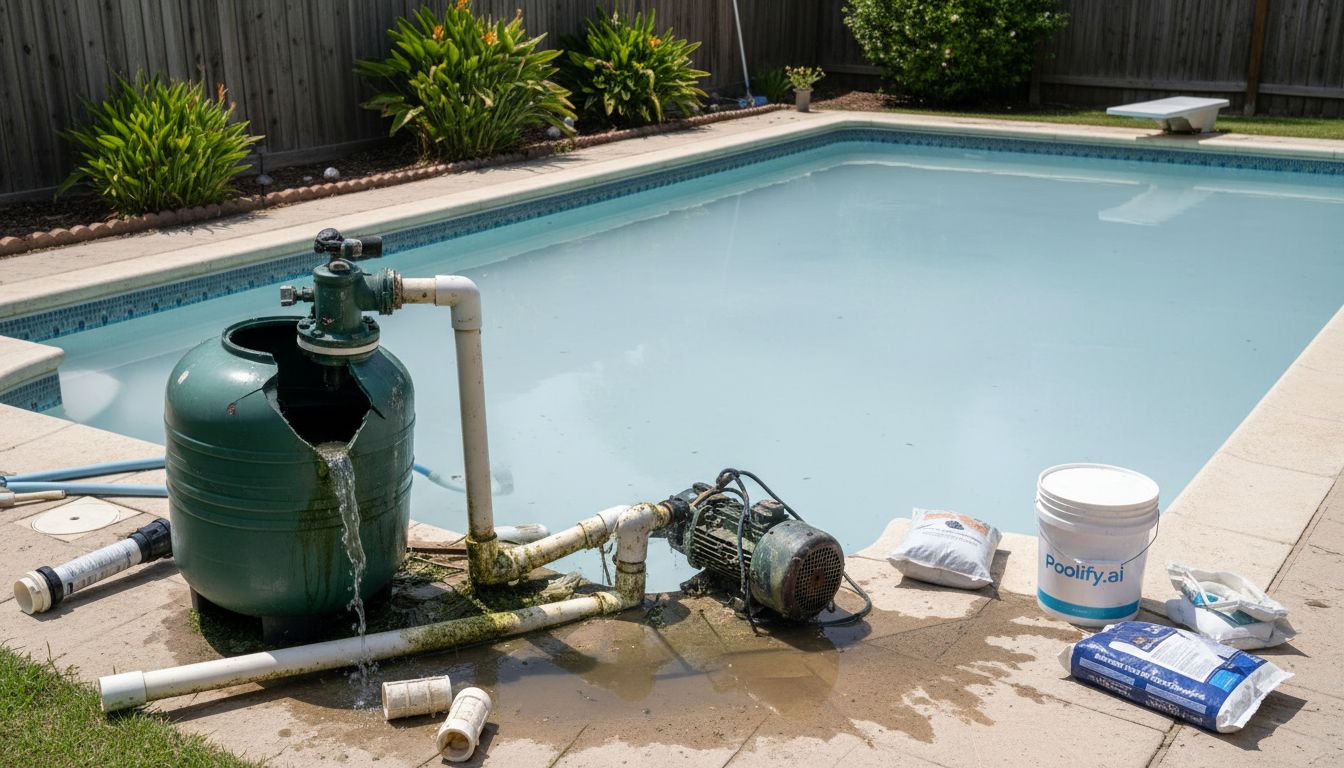
Your filtration system serves as the primary defense against many cloudy pool water causes by continuously removing particles and contaminants. When filtration fails or operates inefficiently, even perfect water chemistry cannot maintain clarity. Understanding how your filter contributes to cloudy pool water causes helps you maintain this critical equipment properly.
Inadequate Filter Runtime
Insufficient circulation time ranks among the most overlooked cloudy pool water causes. Most residential pools require 8-12 hours of daily filtration during swimming season, with runtime adjusted based on pool size, bather load, and environmental factors. Running your filter for only 4-6 hours daily allows particles to settle and accumulate, creating the cloudy conditions you’re trying to prevent.
The turnover rate—how long it takes to filter your entire pool volume—directly impacts your ability to address cloudy pool water causes. A typical residential pool should complete at least one full turnover daily, with two turnovers preferred during peak season. Calculate your turnover time by dividing pool volume by your pump’s flow rate to ensure adequate circulation.
Dirty or Damaged Filter Media
Clogged filter media represents one of the most common mechanical cloudy pool water causes. Sand filters require backwashing when pressure rises 8-10 psi above the clean baseline, typically every 1-2 weeks during swimming season. Cartridge filters need thorough cleaning or replacement every 1-2 years, depending on usage. Diatomaceous earth (DE) filters offer superior clarity but require regular backwashing and fresh DE powder to prevent cloudy pool water causes from developing.
Damaged filter components allow unfiltered water to bypass the media, creating persistent cloudy pool water causes that chemical adjustments cannot resolve. Broken laterals in sand filters, torn cartridge pleats, or cracked DE grids allow particles to recirculate continuously. If your pool remains cloudy despite proper chemistry and adequate runtime, inspect your filter media for damage. Learn more about maintaining your pool filter system for optimal performance.
Environmental and Organic Cloudy Pool Water Causes
External factors introduce numerous cloudy pool water causes that even diligent maintenance cannot always prevent. Understanding these environmental contributors helps you respond appropriately when clarity issues develop suddenly after storms or heavy pool usage.
Heavy Rainfall and Weather Events
Rainwater introduces multiple cloudy pool water causes simultaneously, including diluted chemical levels, increased debris, and altered pH. A single heavy rainstorm can add hundreds of gallons of water with a pH around 5.5-6.0, significantly lowering your pool’s pH and alkalinity. This sudden chemical shift causes minerals to precipitate, creating immediate cloudiness.
Dust, pollen, and atmospheric pollutants carried by rain represent additional cloudy pool water causes that overwhelm your filtration system. After significant rainfall, test and rebalance all chemical parameters, run your filter continuously for 24-48 hours, and consider adding a clarifier to help your filter capture fine particles contributing to cloudiness.
Algae Growth and Organic Contamination
Algae represents one of the most visible cloudy pool water causes, turning water green, yellow, or even black depending on the algae species. Early-stage algae growth creates a subtle cloudiness before color becomes apparent. Dead algae following shock treatment also contributes to cloudy pool water causes as billions of dead cells remain suspended until your filter removes them.
Organic contamination from swimmers introduces oils, lotions, cosmetics, and body waste that create cloudy pool water causes. Each swimmer adds approximately 1 billion bacteria and 50 milliliters of perspiration, urine, and other organic compounds. Heavy bather loads quickly overwhelm chlorine and filtration capacity, resulting in cloudy conditions within hours. Check out our guide on effective pool shock treatments to eliminate organic contaminants.
Water Balance Issues Contributing to Cloudy Pool Water Causes
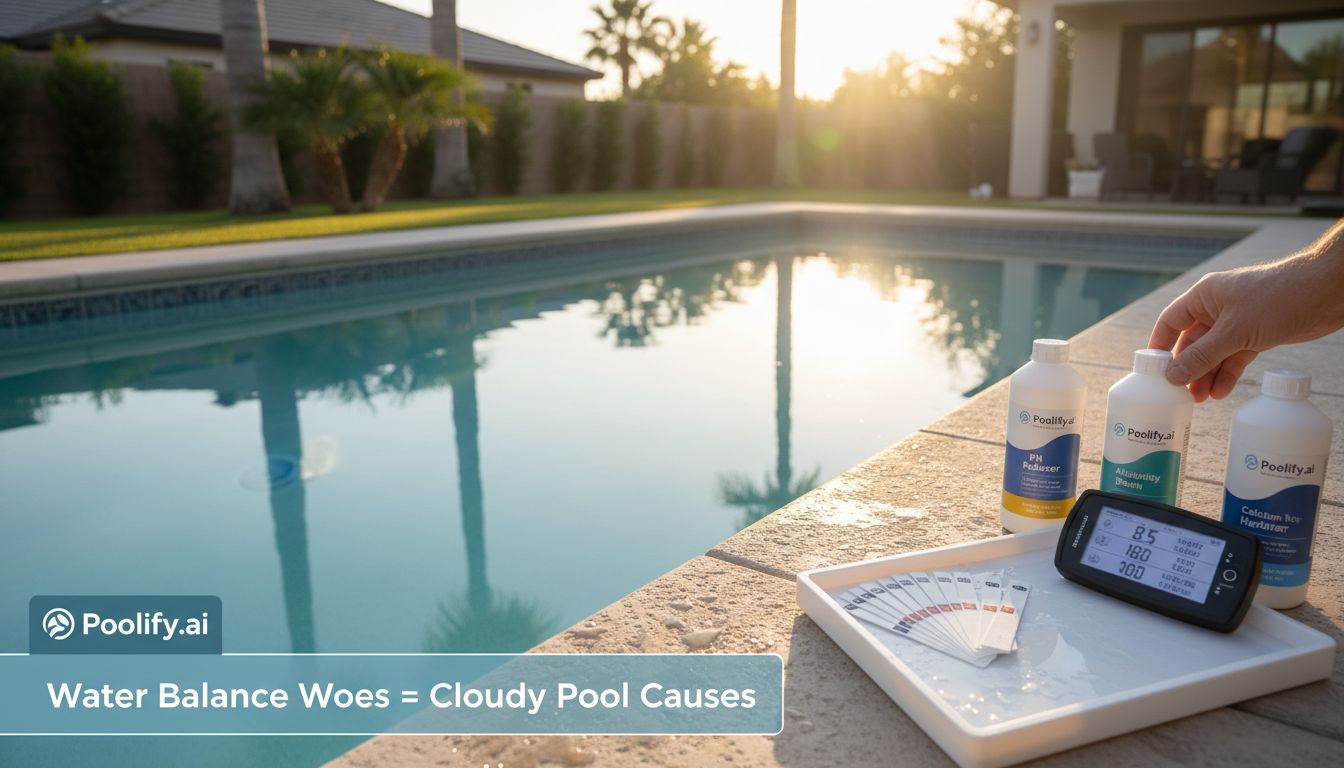
Beyond basic pH and chlorine levels, several water balance parameters create cloudy pool water causes when they drift outside optimal ranges. These factors interact in complex ways, making comprehensive testing essential for diagnosing persistent clarity problems.
Calcium Hardness Problems
Calcium hardness levels outside the ideal range of 200-400 ppm create significant cloudy pool water causes. Low calcium hardness below 150 ppm causes water to become corrosive, leaching calcium from plaster, grout, and concrete surfaces. This dissolved calcium creates a temporary cloudiness as it saturates the water before precipitating out.
Excessive calcium hardness above 500 ppm represents a more common contributor to cloudy pool water causes, particularly in areas with hard water. High calcium levels cause scaling, where calcium carbonate precipitates out of solution and creates a milky cloudiness. This condition worsens when pH rises above 7.6, as higher pH reduces calcium solubility and accelerates precipitation.
Total Dissolved Solids Accumulation
Total dissolved solids (TDS) accumulate gradually as you add chemicals, and water evaporates, concentrating minerals and salts. When TDS exceeds 2,000-2,500 ppm above your fill water baseline, it becomes a contributing factor among cloudy pool water causes. High TDS makes water feel heavy, reduces chlorine effectiveness, and creates a persistent haze that clarifiers cannot eliminate.
The only solution for TDS-related cloudy pool water causes is partial or complete water replacement. Draining 25-50% of your pool volume and refilling with fresh water reduces TDS concentration and often resolves chronic cloudiness that resists other treatment methods. Plan water replacement during spring opening or fall closing to minimize chemical waste.
Equipment and Operational Cloudy Pool Water Causes
Proper equipment operation and maintenance prevent many common cloudy pool water causes before they develop. Understanding how your pool systems work together helps you identify operational issues that compromise water clarity.
Pump and Circulation Issues
Inadequate water circulation creates dead zones where particles settle and algae grows, contributing to localized cloudy pool water causes. Your pump must generate sufficient flow to circulate water effectively throughout the entire pool, including stairs, benches, and corners. Undersized pumps or restricted flow from clogged skimmer baskets and pump strainers reduce circulation and allow cloudy pool water causes to develop.
Air leaks in the suction side of your plumbing system introduce bubbles that create a cloudy appearance and reduce filtration efficiency. Check pump lid o-rings, valve seals, and pipe connections for air infiltration if you notice excessive bubbles returning through jets. Eliminating air leaks improves filtration performance and resolves bubble-related cloudy pool water causes.
Incorrect Chemical Application Methods
How you add chemicals significantly impacts whether they become cloudy pool water causes themselves. Adding calcium chloride or calcium hypochlorite shock directly to the pool without pre-dissolving creates localized high-calcium zones where precipitation occurs instantly. These calcium clouds take hours or days for your filter to remove completely.
Broadcasting chemicals across the pool surface while the pump runs prevents chemical clouds and ensures rapid mixing. For chemicals prone to causing cloudy pool water causes like calcium-based products, pre-dissolve them in a bucket of pool water before adding to the pool. Never add chemicals directly to the skimmer, as concentrated chemical solutions can damage equipment and create unnecessary cloudiness.
Preventing and Resolving Cloudy Pool Water Causes
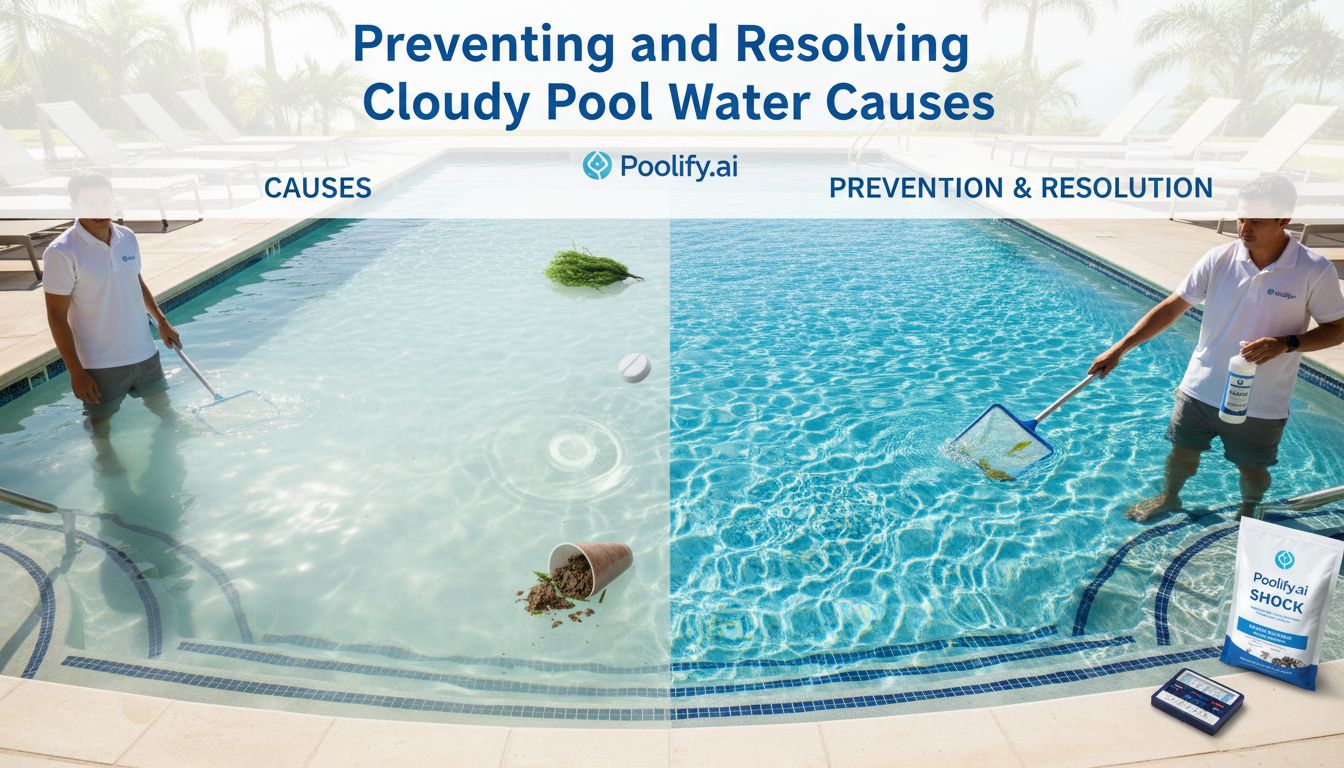
Prevention remains far easier than correction when addressing cloudy pool water causes. Implementing a consistent maintenance routine eliminates most clarity issues before they become visible problems requiring extensive treatment.
Regular Testing and Chemical Maintenance
Test your pool water 2-3 times weekly during swimming season to catch developing cloudy pool water causes early. Use a reliable test kit or test strips that measure chlorine, pH, alkalinity, and calcium hardness at minimum. Monthly testing for TDS, cyanuric acid, and phosphates provides additional data for preventing chronic cloudy pool water causes.
Maintain a chemical log tracking test results and adjustments. This historical data helps you identify patterns and predict when cloudy pool water causes might develop based on weather, usage, or seasonal factors. Proactive chemical adjustments based on trends prevent problems rather than reacting to existing cloudiness.
Proper Filtration and Cleaning Protocols
Run your filter long enough to turn over your entire pool volume at least once daily, preferably twice during peak season. This consistent circulation prevents most particle-related cloudy pool water causes from developing. Schedule filtration during daytime hours when sunlight promotes algae growth and swimming activity introduces contaminants.
Establish a regular filter maintenance schedule based on your filter type. Backwash sand and DE filters when pressure rises 8-10 psi, clean cartridge filters monthly during swimming season, and replace filter media according to manufacturer recommendations. Neglected filter maintenance represents one of the most persistent cloudy pool water causes that chemical treatments cannot overcome.
Clarifier and Flocculant Solutions
Pool clarifiers help your filter capture fine particles that contribute to cloudy pool water causes. Clarifiers contain polymers that bind microscopic particles together into larger clumps your filter can remove. Add clarifier weekly during swimming season or immediately after events that introduce cloudy pool water causes like rainstorms or pool parties.
Flocculants provide a more aggressive solution for severe cloudy pool water causes. Floc causes particles to clump and sink to the pool floor where you vacuum them to waste. This process requires 24-48 hours of downtime and wastes water, but it resolves stubborn cloudiness that clarifiers and normal filtration cannot eliminate. Reserve flocculant treatment for severe cloudy pool water causes that resist other correction methods.
Troubleshooting Persistent Cloudy Pool Water Causes
When standard treatments fail to resolve cloudiness, systematic troubleshooting identifies the specific cloudy pool water causes affecting your pool. Start with comprehensive water testing including all parameters, not just basic chlorine and pH.
Step-by-Step Diagnostic Process
Begin troubleshooting persistent cloudy pool water causes by testing and balancing alkalinity first, then pH, then chlorine. This sequence prevents chemical interactions that can worsen cloudiness. If chemistry tests perfect but cloudiness persists, focus on filtration by checking runtime, flow rate, and filter condition.
Inspect your filter media by performing a filter inspection or replacing cartridges if they’re more than two years old. Sand filters older than 5-7 years often develop channeling where water bypasses the sand, creating ongoing cloudy pool water causes. DE filters with cracked grids or damaged manifolds allow unfiltered water to return to the pool.
When to Seek Professional Help
Certain cloudy pool water causes require professional diagnosis and treatment. If your pool remains cloudy after balancing all chemicals, running the filter continuously for 48 hours, and adding clarifier, consult a pool professional. Persistent cloudiness may indicate equipment problems, plumbing issues, or water quality problems requiring specialized testing.
Professional water analysis includes tests for metals like iron and copper that create cloudy pool water causes invisible to standard test kits. Metal contamination from well water, corroded equipment, or algaecides creates stubborn cloudiness and staining that requires sequestering agents or partial water replacement to resolve.
Frequently Asked Questions About Cloudy Pool Water Causes
Why does my pool get cloudy after adding chemicals?
Chemical-induced cloudiness occurs when you add calcium-based products like calcium hypochlorite shock or calcium chloride without proper dilution. These concentrated chemicals create localized high-calcium zones where precipitation occurs instantly. The cloudiness typically clears within 24 hours as your filter removes the precipitate. Prevent this by pre-dissolving chemicals in a bucket before adding them to your pool, and always broadcast chemicals across the surface while the pump runs.
Can I swim in a cloudy pool?
Swimming in a cloudy pool is unsafe because you cannot see the bottom, making it impossible to spot swimmers in distress. Cloudiness also indicates water quality problems like inadequate sanitizer levels, creating potential health risks. The CDC recommends avoiding pools where you cannot see the main drain clearly. Address cloudy pool water causes and restore clarity before allowing swimming to ensure safety and proper sanitation.
How long does it take to clear a cloudy pool?
Clearing time depends on the specific cloudy pool water causes affecting your pool. Minor cloudiness from chemical imbalances typically clears within 24-48 hours after correction with proper filtration. Moderate cloudiness may require 2-4 days of continuous filtration and clarifier treatment. Severe cloudiness from algae blooms or high TDS may take a week or more to resolve, potentially requiring shock treatment, flocculant, or partial water replacement.
What’s the difference between cloudy and milky pool water?
Cloudy water appears hazy with reduced visibility but maintains some transparency. Milky water appears completely opaque with a white or gray tint, indicating more severe cloudy pool water causes. Milky appearance typically results from high calcium hardness, recent shock treatment, or filter problems allowing DE powder to enter the pool. Both conditions require similar treatments, but milky water generally takes longer to clear and may indicate more serious water balance issues.
Does shocking a pool clear cloudy water?
Shocking addresses cloudy pool water causes related to organic contamination, chloramines, and early algae growth. A proper shock treatment raises free chlorine to 10-20 ppm, oxidizing organic compounds and killing algae that contribute to cloudiness. However, shocking worsens cloudiness temporarily as dead algae and oxidized organics remain suspended until your filter removes them. Run your filter continuously for 24-48 hours after shocking to clear the water completely.
Key Takeaways: Understanding Cloudy Pool Water Causes
- Chemical imbalances represent the most common cloudy pool water causes, particularly improper pH, low chlorine, and calcium precipitation. Test water 2-3 times weekly and maintain proper chemical ranges to prevent cloudiness from developing.
- Filtration problems create persistent cloudy pool water causes that chemical treatments cannot resolve. Run your filter 8-12 hours daily, maintain clean filter media, and ensure proper circulation throughout your entire pool.
- Environmental factors introduce sudden cloudy pool water causes including rainfall, heavy bather loads, and organic contamination. Respond promptly to weather events and high usage with extended filtration and chemical adjustments.
- Prevention through consistent maintenance eliminates most cloudy pool water causes before they become visible. Establish regular testing, cleaning, and chemical adjustment routines rather than reacting to existing problems.
- Systematic troubleshooting identifies specific cloudy pool water causes when standard treatments fail. Balance alkalinity first, then pH, then chlorine, and inspect filtration equipment if chemistry tests perfect but cloudiness persists.
See Your Dream Pool in Your Actual Backyard
Upload a photo and get an AI-designed pool visualization in 10 seconds. 3 free designs, no login required.
Try Poolify Free →Conclusion: Mastering Cloudy Pool Water Causes in 2026
Understanding cloudy pool water causes empowers you to maintain crystal-clear water throughout the swimming season. While multiple factors contribute to cloudiness, most issues stem from chemical imbalances, inadequate filtration, or environmental contamination. By implementing consistent testing and maintenance routines, you prevent the majority of cloudy pool water causes before they affect water clarity.
When cloudiness develops despite your best efforts, systematic troubleshooting identifies the specific cloudy pool water causes affecting your pool. Start with comprehensive water testing, verify proper filtration operation, and address issues in the correct sequence to restore clarity efficiently. Remember that prevention remains far easier than correction—invest time in regular maintenance to enjoy consistently clear water all season.
The key to overcoming cloudy pool water causes lies in understanding the complex interactions between chemistry, filtration, and environmental factors. With the knowledge and strategies outlined in this guide, you can diagnose any clarity issue, implement effective solutions, and maintain the sparkling pool you deserve. Stay proactive with testing and maintenance, respond promptly to developing problems, and your pool will remain clear and inviting throughout 2026 and beyond. For more comprehensive maintenance strategies, explore our complete pool care schedule to keep your water perfect year-round.
References
- Centers for Disease Control and Prevention – Swimming Pool Water Quality Guidelines
- Centers for Disease Control and Prevention – Steps for Healthy Swimming
