Discovering green, yellow, or black patches in your pool can be frustrating, but effective pool algae treatment is within reach for every pool owner. Algae growth remains one of the most common challenges facing pool owners in 2026, affecting water quality, aesthetics, and swimmer safety. This comprehensive guide walks you through everything you need to know about pool algae treatment, from identification to prevention, ensuring your pool stays crystal-clear throughout the swimming season.
Understanding Pool Algae: What You’re Fighting Against
Before implementing any pool algae treatment strategy, understanding what causes algae growth helps you prevent future outbreaks. Algae are microscopic aquatic organisms that thrive in warm, stagnant water with inadequate sanitization. These organisms photosynthesize using sunlight, multiplying rapidly when conditions favor their growth.
Pool algae typically appears when chlorine levels drop below 1-3 ppm, water circulation becomes poor, or pH balance shifts outside the ideal 7.2-7.6 range. Environmental factors like heavy rainfall, windblown debris, and warm temperatures accelerate algae development. According to the CDC’s guidelines on pool water quality, maintaining proper chemical balance is essential for preventing algae and protecting swimmer health.
Pool algae treatment becomes necessary when prevention measures fail, but recognizing the type of algae you’re dealing with determines the most effective approach. Different algae species require varying treatment intensities, from simple shock treatments to aggressive scrubbing and chemical applications.
Types of Pool Algae and Identification Methods
Successful pool algae treatment starts with accurate identification. The three primary algae types affecting pools each present distinct characteristics and require tailored treatment approaches.
Green Algae: The Most Common Culprit
Green algae represents approximately 85% of pool algae problems. This free-floating organism turns pool water cloudy or creates slimy patches on walls and floors. Green algae typically responds well to standard pool algae treatment methods, including shock chlorination and thorough brushing. Early detection makes removal significantly easier, as established colonies become more resistant to treatment.
Yellow (Mustard) Algae: The Stubborn Variety
Yellow algae appears as yellowish-brown patches, often mistaken for sand or dirt. This chlorine-resistant strain prefers shaded areas and requires more aggressive pool algae treatment protocols. Mustard algae can survive on pool equipment, toys, and swimsuits, making comprehensive treatment essential to prevent recontamination.
Black Algae: The Toughest Challenge
Black algae forms dark blue-green spots with protective layers that shield it from standard pool algae treatment. This variety develops deep roots into pool surfaces, particularly porous materials like plaster and concrete. Black algae requires the most intensive treatment approach, often involving specialized algaecides and aggressive surface preparation.
Essential Pool Algae Treatment Steps for 2026
Effective pool algae treatment follows a systematic approach that addresses both visible algae and microscopic spores. These proven steps work for most algae situations, though severe infestations may require professional intervention.
Step 1: Test and Balance Water Chemistry
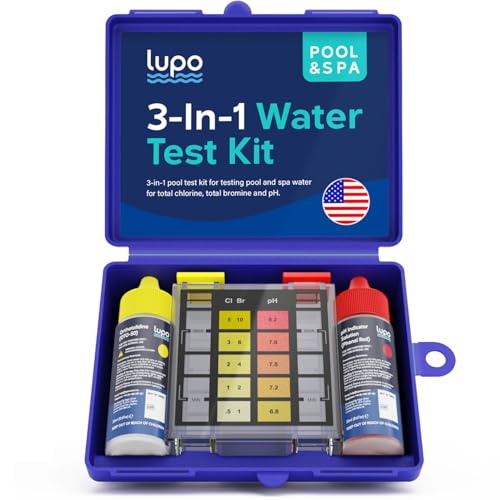
Begin your pool algae treatment by testing current water parameters. Use a reliable test kit to measure pH, alkalinity, calcium hardness, and sanitizer levels. Adjust pH to 7.2-7.4 before proceeding, as this range optimizes chlorine effectiveness. Balanced water chemistry ensures your pool algae treatment chemicals work at maximum efficiency.


Step 2: Brush All Pool Surfaces Thoroughly
Vigorous brushing breaks up algae colonies and exposes them to sanitizers. Focus on corners, steps, behind ladders, and other areas with poor circulation. For black algae, use a stainless steel brush to penetrate the protective layers. This mechanical pool algae treatment step significantly improves chemical effectiveness.
Step 3: Shock Treatment Application
Shock chlorination forms the cornerstone of most pool algae treatment protocols. Apply 2-4 times the normal shock dose depending on algae severity. Green algae typically requires double-shock, yellow algae needs triple-shock, and black algae demands quadruple-shock treatment. Run your pump continuously for 24 hours to circulate the shock throughout the entire system.
Step 4: Apply Specialized Algaecide
Following shock treatment, add an appropriate algaecide to your pool algae treatment regimen. Choose copper-based algaecides for stubborn yellow and black algae, or quaternary ammonium compounds for general prevention. Follow manufacturer dosing instructions carefully to avoid staining or foaming issues.
Step 5: Filter and Vacuum Dead Algae
As your pool algae treatment takes effect, dead algae will cloud the water. Run your filter continuously, backwashing or cleaning cartridges frequently. Vacuum dead algae to waste when possible to prevent filter clogging. This step may require multiple sessions over several days as algae continues dying off.
Advanced Pool Algae Treatment Techniques
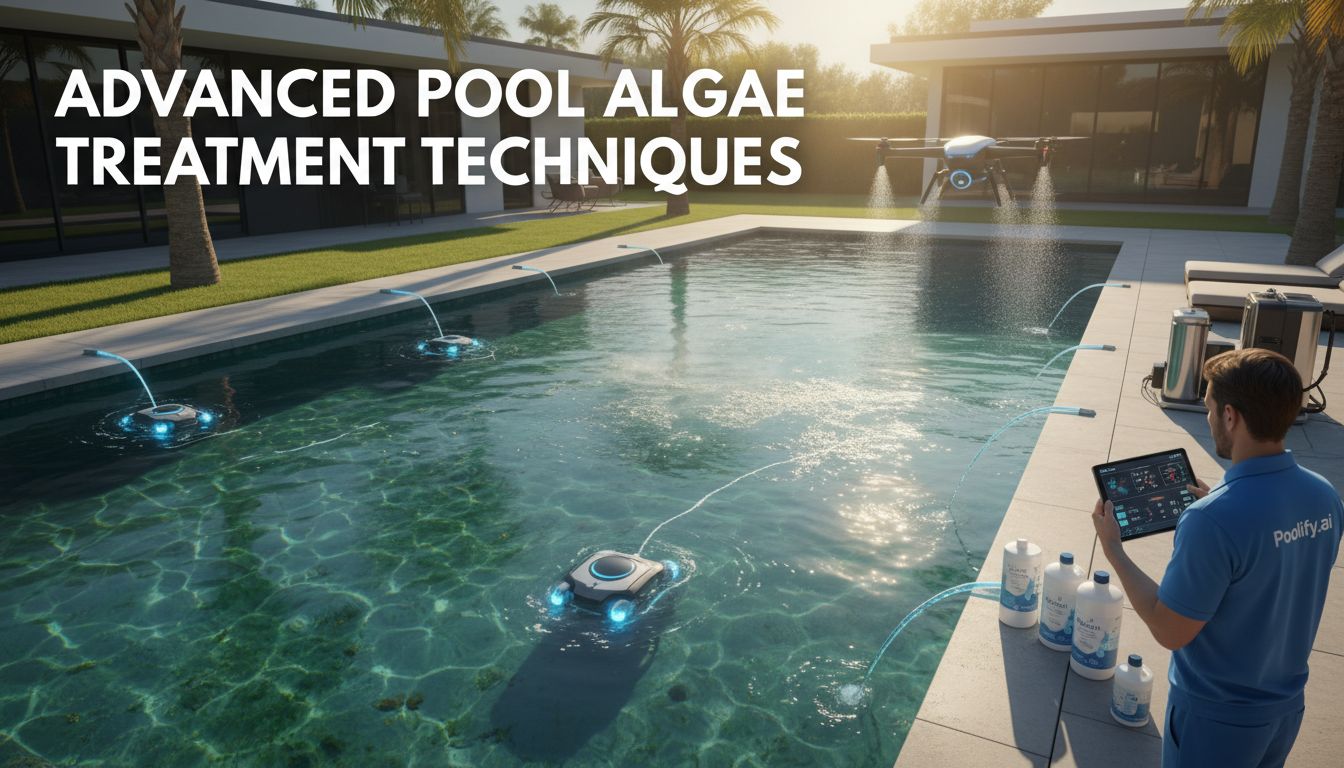
Some situations demand more sophisticated pool algae treatment approaches beyond standard protocols. These advanced methods address persistent problems and severe infestations.
SLAM Method: Shock, Level, and Maintain
The SLAM process represents an intensive pool algae treatment protocol that maintains shock-level chlorine concentrations until algae completely disappears. This method requires testing chlorine levels multiple times daily and adding chlorine to maintain 10-30 ppm depending on stabilizer levels. SLAM typically takes 3-7 days but provides thorough algae elimination.
Flocculation for Severe Cloudiness
When pool algae treatment results in extremely cloudy water, flocculants bind microscopic particles together, causing them to settle on the pool floor. This technique requires turning off your filter and vacuuming settled material to waste. Flocculation speeds recovery time but demands careful execution to avoid wasting excessive water.
Enzyme Treatments for Organic Matter
Enzyme-based products complement traditional pool algae treatment by breaking down organic materials that feed algae growth. Regular enzyme application reduces chlorine demand and prevents the nutrient buildup that supports algae development. This preventive approach minimizes future treatment needs.
Pool Algae Treatment Prevention Strategies
Preventing algae growth proves far easier than treating established infestations. Implementing these strategies reduces your need for intensive pool algae treatment throughout the season.
Maintain Consistent Chemical Balance
Test your pool water 2-3 times weekly during swimming season, adjusting chemicals as needed. Keep chlorine at 1-3 ppm, pH between 7.2-7.6, and alkalinity at 80-120 ppm. Consistent chemistry prevents the conditions that trigger algae growth, making pool algae treatment unnecessary.
Optimize Circulation and Filtration
Run your pool pump 8-12 hours daily, longer during hot weather or heavy use. Proper circulation prevents stagnant areas where algae colonies establish. Clean or backwash filters regularly to maintain optimal flow rates. Good circulation represents your first defense against algae, reducing reliance on chemical pool algae treatment.
Weekly Brushing and Maintenance
Brush pool surfaces weekly even when water appears clear. This preventive maintenance disrupts algae spores before visible colonies form. Pay special attention to areas with reduced circulation, as these spots become algae breeding grounds requiring eventual pool algae treatment.
Shock Treatment Schedule
Regular shock treatments oxidize organic contaminants and kill algae spores before they multiply. Shock your pool weekly during peak season, after heavy use, or following rainstorms. Preventive shocking proves more cost-effective than reactive pool algae treatment for established infestations.
Chemical Options for Pool Algae Treatment
Understanding available chemicals helps you select the most effective pool algae treatment products for your specific situation. Each chemical type offers distinct advantages and limitations.
Chlorine-Based Shock Products
Calcium hypochlorite, sodium hypochlorite, and dichlor represent common shock options for pool algae treatment. Calcium hypochlorite provides the highest available chlorine percentage but raises calcium hardness. Liquid sodium hypochlorite works quickly without affecting other parameters. Choose based on your pool’s specific chemistry needs.
Algaecide Categories
Quaternary ammonium algaecides prevent general algae growth and work well for routine maintenance. Copper-based algaecides deliver powerful pool algae treatment for stubborn infestations but may stain surfaces if misused. Polyquat algaecides offer non-staining alternatives with moderate effectiveness. Match algaecide type to your algae problem severity.
Alternative Sanitizers
Salt chlorine generators, mineral systems, and ozone generators provide ongoing sanitization that reduces algae risk. While these systems don’t eliminate the need for pool algae treatment during outbreaks, they maintain more consistent sanitizer levels that prevent algae establishment. Consider these systems as long-term prevention investments.
Common Pool Algae Treatment Mistakes to Avoid
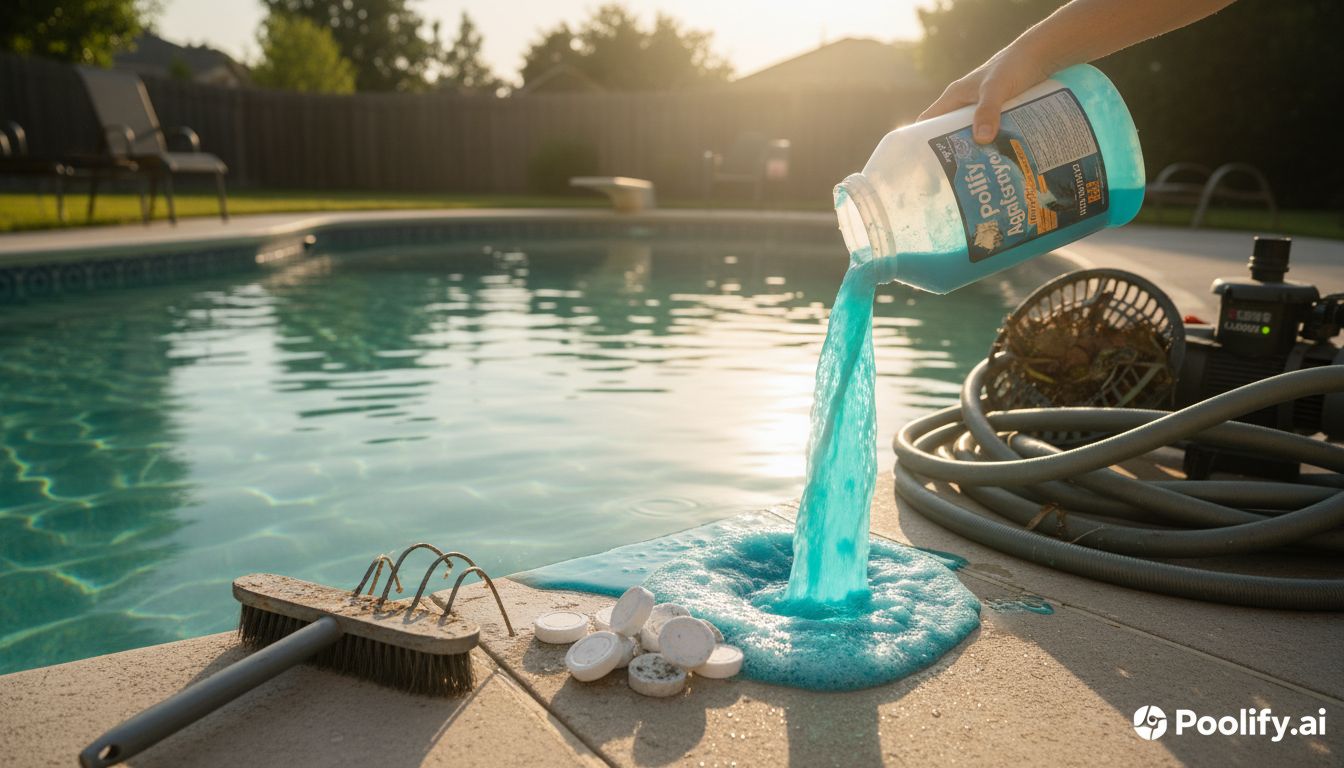
Even experienced pool owners make errors that compromise pool algae treatment effectiveness. Avoiding these common mistakes saves time, money, and frustration.
Never skip water testing before treatment. Applying pool algae treatment chemicals to unbalanced water reduces effectiveness and may create additional problems. Always test and adjust pH first, as improper pH levels can render chlorine nearly ineffective regardless of concentration.
Insufficient shock dosing represents another frequent mistake. Using too little chlorine allows algae to survive and rebound quickly. When conducting pool algae treatment, err on the side of higher doses rather than underdosing. The temporary inconvenience of waiting for chlorine levels to drop beats repeating the entire treatment process.
Inadequate brushing before chemical application limits treatment success. Algae colonies develop protective layers that shield them from sanitizers. Thorough brushing before pool algae treatment exposes algae cells to chemicals, dramatically improving kill rates.
Premature filter cleaning wastes resources and extends treatment time. Allow your filter to capture dead algae for 24-48 hours before cleaning, maximizing its capacity. Cleaning too frequently during pool algae treatment simply returns dead algae to the pool.
Cost-Effective Pool Algae Treatment Approaches
Managing pool algae treatment costs while maintaining effectiveness requires smart product selection and strategic timing. These budget-conscious approaches deliver results without breaking the bank.
Purchase chlorine shock in bulk during off-season sales, as this essential pool algae treatment chemical stores well when kept dry and cool. Generic calcium hypochlorite performs identically to name brands at significantly lower costs. Consider joining pool owner groups that organize bulk chemical purchases for additional savings.
Invest in quality test kits rather than test strips for more accurate readings. Precise testing prevents chemical waste and ensures your pool algae treatment protocols use appropriate dosages. Digital testers provide excellent accuracy and pay for themselves through reduced chemical waste.
Maintain consistent preventive care to minimize expensive reactive pool algae treatment needs. Weekly maintenance costs far less than treating severe infestations. The small investment in regular testing, shocking, and brushing prevents the larger expense of intensive algae removal.
For detailed guidance on maintaining optimal water chemistry year-round, explore our comprehensive pool water chemistry guide that complements effective pool algae treatment strategies.
When to Call Professionals for Pool Algae Treatment
While most pool algae treatment situations respond to DIY approaches, certain circumstances warrant professional intervention. Recognizing these situations prevents wasted effort and potential pool damage.
Persistent black algae that returns despite multiple pool algae treatment attempts often requires professional-grade equipment and chemicals. Pool service technicians access stronger formulations and specialized tools like acid washing that effectively eliminate stubborn infestations.
Severe green algae turning your pool into a swamp may exceed DIY capabilities. When you cannot see the pool floor and algae covers all surfaces, professionals can restore water quality more quickly and safely than attempting extended DIY pool algae treatment.
Recurring algae problems despite proper maintenance indicate underlying issues requiring professional diagnosis. Equipment malfunctions, structural problems, or water source contamination may sabotage your pool algae treatment efforts. Professionals identify and address these root causes.
If you’re interested in upgrading your pool equipment to prevent future algae issues, check out our guide on modern pool equipment upgrades that enhance water quality and reduce maintenance demands.
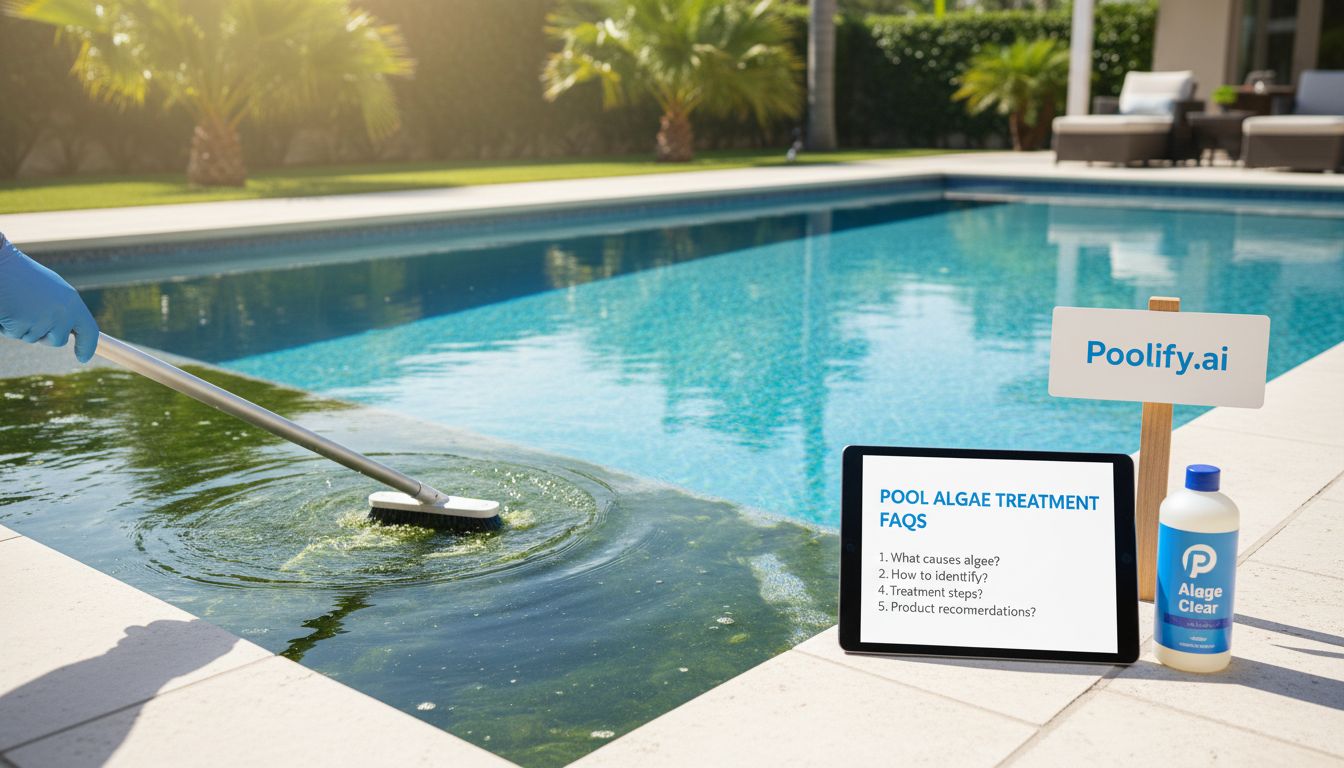
Pool Algae Treatment FAQs
How long does pool algae treatment typically take?
Most pool algae treatment protocols require 3-7 days for complete algae elimination. Light green algae may clear within 24-48 hours with proper shock treatment, while stubborn black algae can take up to two weeks. Treatment duration depends on algae type, severity, and how consistently you maintain chemical levels throughout the process.
Can I swim during pool algae treatment?
Avoid swimming during active pool algae treatment when chlorine levels exceed safe ranges. Wait until chlorine drops below 5 ppm and water clarity improves before allowing swimmers. Swimming in algae-contaminated water poses health risks including skin irritation, eye problems, and potential infections from bacteria that often accompany algae growth.
Why does algae keep returning after treatment?
Recurring algae following pool algae treatment typically indicates incomplete eradication, inadequate prevention, or contamination sources. Algae spores may survive in pool equipment, toys, or swimsuits, reintroducing the problem. Insufficient circulation, poor filtration, or inconsistent chemical maintenance allows new algae growth. Address these underlying issues to prevent repeated infestations.
Is pool algae treatment safe for all pool surfaces?
Most pool algae treatment methods work safely on standard pool surfaces when used correctly. However, aggressive brushing with steel brushes can damage vinyl liners and fiberglass surfaces. Copper-based algaecides may stain certain materials if water chemistry isn’t properly balanced. Always verify product compatibility with your specific pool surface before application.
What’s the difference between algae and other pool discoloration?
Algae feels slippery when touched and appears as cloudy water or distinct patches on surfaces. Metal staining from copper or iron creates discoloration without sliminess and doesn’t respond to standard pool algae treatment. Dirt and debris settle on the bottom and vacuum away easily, while algae clings to surfaces and requires chemical treatment for removal.
Key Takeaways
- Identification drives treatment: Accurately identifying algae type (green, yellow, or black) determines the most effective pool algae treatment approach and chemical dosages required for successful elimination.
- Prevention beats reaction: Maintaining consistent water chemistry, proper circulation, and regular brushing prevents algae growth, eliminating the need for intensive pool algae treatment and saving significant time and money.
- Systematic approach works best: Successful pool algae treatment follows a specific sequence: balance water chemistry, brush surfaces thoroughly, shock appropriately, apply algaecide, and filter continuously until water clears completely.
- Chemical balance matters: Proper pH levels between 7.2-7.4 optimize chlorine effectiveness during pool algae treatment, while imbalanced water reduces sanitizer efficiency and prolongs treatment duration regardless of chemical amounts used.
- Persistence ensures success: Complete pool algae treatment requires maintaining shock-level chlorine and continuing filtration for several days, even after water appears clear, to eliminate microscopic spores that cause rapid reinfestation.
See Your Dream Pool in Your Actual Backyard
Upload a photo and get an AI-designed pool visualization in 10 seconds. 3 free designs, no login required.
Try Poolify Free →Conclusion
Mastering pool algae treatment transforms a frustrating problem into a manageable maintenance task. By understanding algae types, implementing systematic treatment protocols, and maintaining consistent prevention strategies, you’ll keep your pool crystal-clear throughout 2026 and beyond. Remember that successful pool algae treatment combines proper chemical application, mechanical cleaning, and ongoing vigilance against conditions that promote algae growth.
The investment in quality testing equipment, appropriate chemicals, and regular maintenance pays dividends through reduced treatment needs and extended swimming season enjoyment. Whether you’re tackling your first algae outbreak or refining your prevention strategy, these proven pool algae treatment methods deliver reliable results. For additional support in maintaining pristine pool conditions, explore our seasonal pool maintenance checklist that addresses year-round care requirements.
Take action today by testing your water chemistry, establishing a consistent maintenance schedule, and implementing the pool algae treatment strategies outlined in this guide. Your reward will be sparkling, inviting water that’s ready for swimming whenever you are, without the frustration and expense of battling recurring algae problems.
References
- Centers for Disease Control and Prevention (CDC) – Residential Pool Disinfection and Testing: https://www.cdc.gov/healthywater/swimming/residential/disinfection-testing.html
