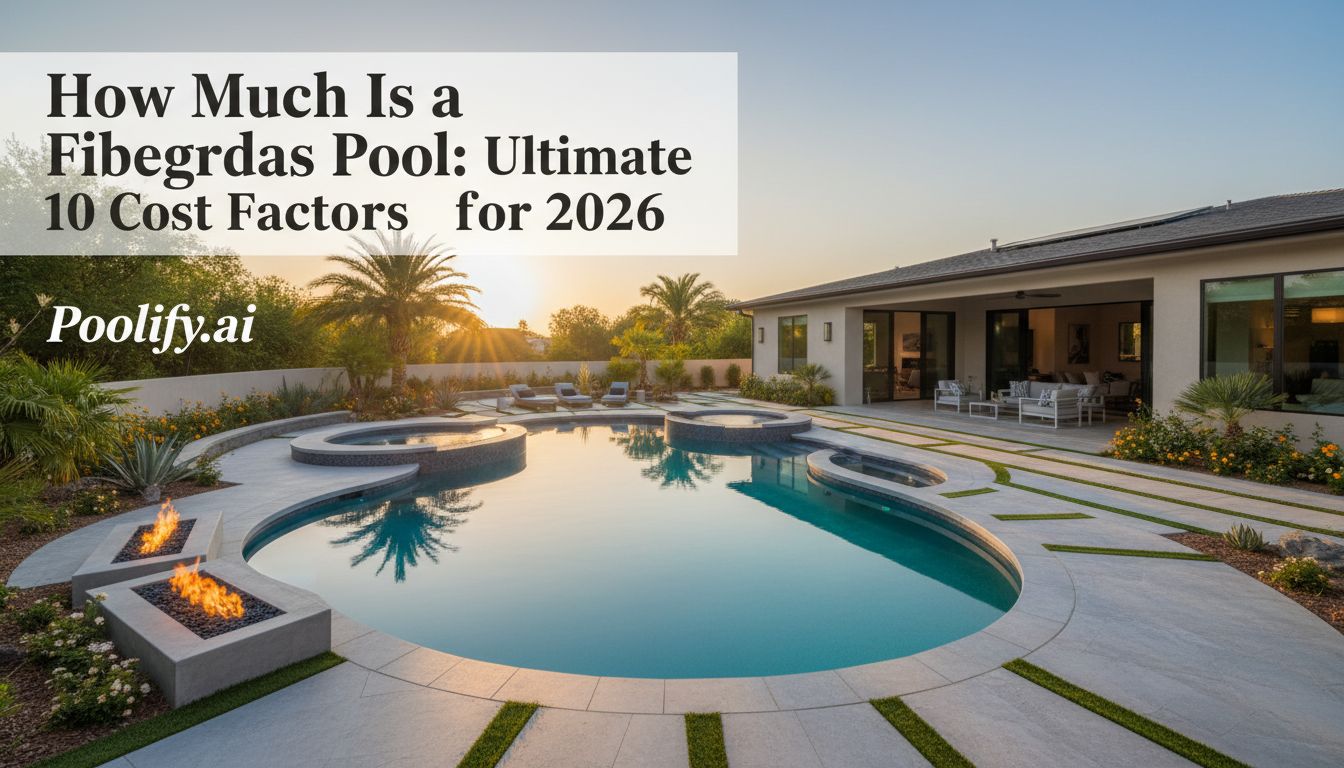
Understanding how much is a fiberglass pool is essential before you invest in transforming your backyard into a personal oasis. In 2026, fiberglass pools typically range from $45,000 to $85,000 or more, depending on size, features, and installation complexity. Unlike concrete or vinyl liner pools, fiberglass pools offer a streamlined installation process and lower long-term maintenance costs, making them an increasingly popular choice for homeowners. This comprehensive guide breaks down every cost factor, hidden expense, and money-saving strategy to help you budget accurately for your fiberglass pool investment.
What Determines How Much a Fiberglass Pool Costs?
The total cost of a fiberglass pool depends on multiple interconnected factors that can significantly impact your final investment. Understanding these variables helps you make informed decisions and avoid budget surprises during your pool project.
Pool Size and Shape
The dimensions of your fiberglass pool directly influence the price. Small pools measuring 10×20 feet typically start around $45,000, while medium-sized pools at 14×28 feet range from $55,000 to $65,000. Large pools exceeding 16×40 feet can cost $75,000 to $85,000 or more. Custom shapes like kidney, L-shaped, or freeform designs often command premium pricing compared to simple rectangular models due to manufacturing complexity.
Manufacturing Quality and Brand
Not all fiberglass pools are created equal. Premium manufacturers use advanced resin technology, superior gelcoat finishes, and reinforced structural designs that justify higher upfront costs. When evaluating how much is a fiberglass pool, consider that quality brands typically offer 25-35 year structural warranties, while budget options may provide only 10-15 years of coverage. The difference in longevity and performance often outweighs initial savings.
Installation Complexity
Site preparation significantly affects your total investment. Level yards with good soil conditions require minimal excavation, keeping costs lower. However, sloped terrain, rocky soil, high water tables, or limited equipment access can increase installation expenses by $5,000 to $15,000. Your contractor must assess drainage requirements, soil stability, and underground utility locations before providing an accurate estimate.
Breaking Down the Base Cost of Fiberglass Pools
When determining how much is a fiberglass pool, the base package typically includes the shell, basic plumbing, standard filtration equipment, and installation labor. In 2026, expect these foundational elements to comprise 60-70% of your total project cost.
The Fiberglass Shell
The pool shell itself represents the largest single expense, ranging from $20,000 to $45,000 depending on size and quality. This price includes factory manufacturing, quality control testing, transportation to your property, and crane rental for placement. Modern fiberglass shells feature integrated steps, benches, and tanning ledges that were once considered upgrades, adding value to contemporary designs.
Standard Installation Services
Professional installation encompasses excavation, backfilling, plumbing connections, electrical work, and equipment setup. Labor costs vary by region but typically range from $15,000 to $25,000 for standard installations. This investment ensures proper leveling, adequate drainage, and compliance with local building codes. Experienced installers complete most projects within 2-4 weeks, weather permitting.
Essential Equipment Package
Every fiberglass pool requires a filtration system, pump, and basic sanitization equipment. Standard packages cost $3,000 to $6,000 and include a single-speed pump, sand or cartridge filter, and manual cleaning tools. According to the U.S. Department of Energy, upgrading to variable-speed pumps can reduce energy costs by 70-90%, making them worthwhile investments despite higher upfront costs.
Additional Costs That Impact Your Investment
Beyond the base package, numerous enhancements and necessities affect how much a fiberglass pool costs for your specific project. These additions transform a basic installation into a fully functional outdoor living space.
Decking and Hardscaping
Pool decking provides safety, functionality, and aesthetic appeal. Concrete decking starts around $6 to $12 per square foot, while premium materials like travertine, bluestone, or pavers range from $15 to $40 per square foot. Most pools require 300-600 square feet of decking, adding $3,000 to $15,000 to your project. Consider extending your budget for creative pool deck designs that enhance your outdoor space.
Heating Systems
Extending your swimming season requires proper heating. Gas heaters cost $2,500 to $4,500 and heat water quickly but have higher operating expenses. Heat pumps range from $3,500 to $6,500, offering energy efficiency for moderate climates. Solar heating systems represent the most economical long-term option at $3,000 to $8,000 installed, with minimal ongoing costs and environmental benefits.
Water Features and Lighting
Waterfalls, fountains, and deck jets add visual interest and relaxation elements, costing $1,500 to $8,000 depending on complexity. LED lighting systems enhance safety and ambiance, with basic packages starting at $800 and elaborate color-changing systems reaching $3,000 or more. These features significantly enhance your pool experience and property value.
Hidden Expenses When Calculating How Much Is a Fiberglass Pool
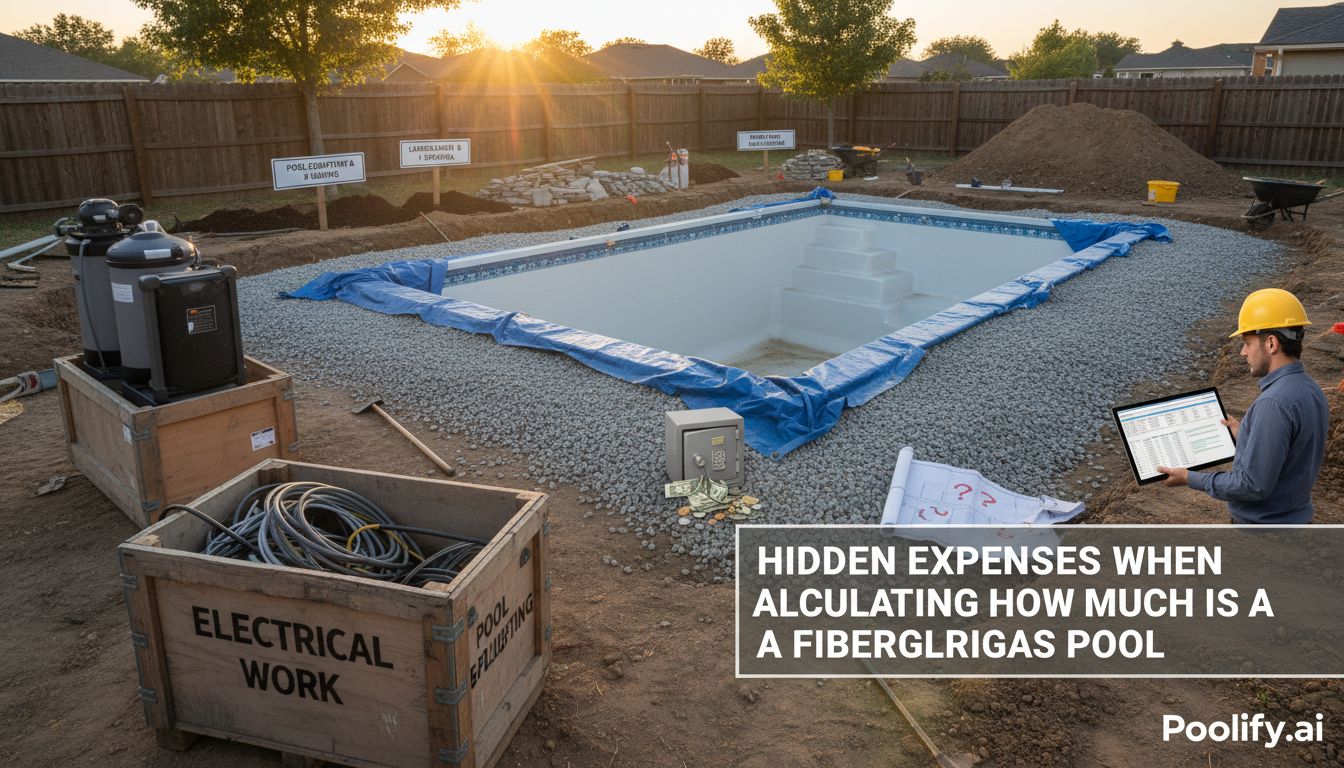
Many homeowners underestimate the full scope of pool ownership costs. Understanding these often-overlooked expenses prevents budget shortfalls and project delays.
Permits and Inspections
Building permits typically cost $500 to $2,000 depending on your municipality. Some jurisdictions require multiple inspections throughout construction, engineering certifications for retaining walls, and final approval before use. Fence requirements for safety compliance add $2,000 to $10,000, with specific height and gate specifications mandated by local codes.
Utility Modifications
Electrical service upgrades often accompany pool installations. Running dedicated circuits for pumps, heaters, and lighting costs $1,000 to $3,000. If your property lacks adequate electrical capacity, panel upgrades add another $1,500 to $4,000. Water line extensions for convenient fill stations range from $500 to $2,000 depending on distance from your main supply.
Landscaping Restoration
Heavy equipment damages existing landscaping during installation. Budget $2,000 to $5,000 for lawn restoration, plant replacement, and grading corrections around your pool area. Strategic landscaping also provides privacy, shade, and aesthetic integration with your home’s architecture.
Long-Term Ownership Costs to Consider
Understanding how much is a fiberglass pool extends beyond installation to ongoing maintenance and operational expenses. Fortunately, fiberglass pools offer significant advantages over concrete alternatives.
Annual Maintenance Requirements
Fiberglass pools require less maintenance than concrete pools due to their non-porous surfaces that resist algae growth. Annual chemical costs typically range from $300 to $800, while electricity for pumps and heating adds $500 to $1,500 yearly. Professional opening and closing services cost $300 to $600 per season in regions with winter closures. Learn more about establishing an effective pool maintenance schedule to minimize long-term costs.
Equipment Replacement Timeline
Pool equipment has finite lifespans requiring periodic replacement. Pumps last 8-12 years and cost $800 to $2,500 to replace. Heaters function for 10-15 years with replacement costs of $2,500 to $6,500. Salt chlorine generators, if installed, need new cells every 3-7 years at $600 to $1,200. Planning for these expenses prevents financial surprises.
Surface Refinishing
Quality fiberglass pools maintain their gelcoat finish for 15-25 years before requiring refinishing. This process costs $5,000 to $10,000 but remains far less expensive than concrete pool resurfacing, which occurs every 10-15 years at $10,000 to $20,000. This long-term advantage makes fiberglass pools economically attractive over their lifetime.
Regional Variations in Fiberglass Pool Costs
Geographic location significantly influences how much a fiberglass pool costs due to labor rates, material transportation, climate considerations, and local market competition.
Climate Impact on Design
Northern climates require deeper excavation below frost lines, adding $2,000 to $5,000 to installation costs. Southern regions benefit from year-round construction availability but may need enhanced cooling features and UV-resistant materials. Coastal areas require corrosion-resistant equipment and additional structural reinforcement for soil stability, increasing expenses by 10-15%.
Labor and Material Costs
Urban markets with higher costs of living see premium labor rates, with installation costs 20-40% higher than rural areas. Transportation expenses for fiberglass shells increase proportionally with distance from manufacturing facilities. States with robust pool industries like Florida, Texas, Arizona, and California often offer more competitive pricing due to market saturation and installer availability.
Local Regulations and Requirements
Building codes vary dramatically by jurisdiction, affecting project costs. Some municipalities mandate specific safety features, setback requirements, or environmental protections that add expenses. Homeowner association rules may dictate design restrictions, screening requirements, or approval processes that extend timelines and increase professional fees.
Cost Comparison: Fiberglass vs. Other Pool Types
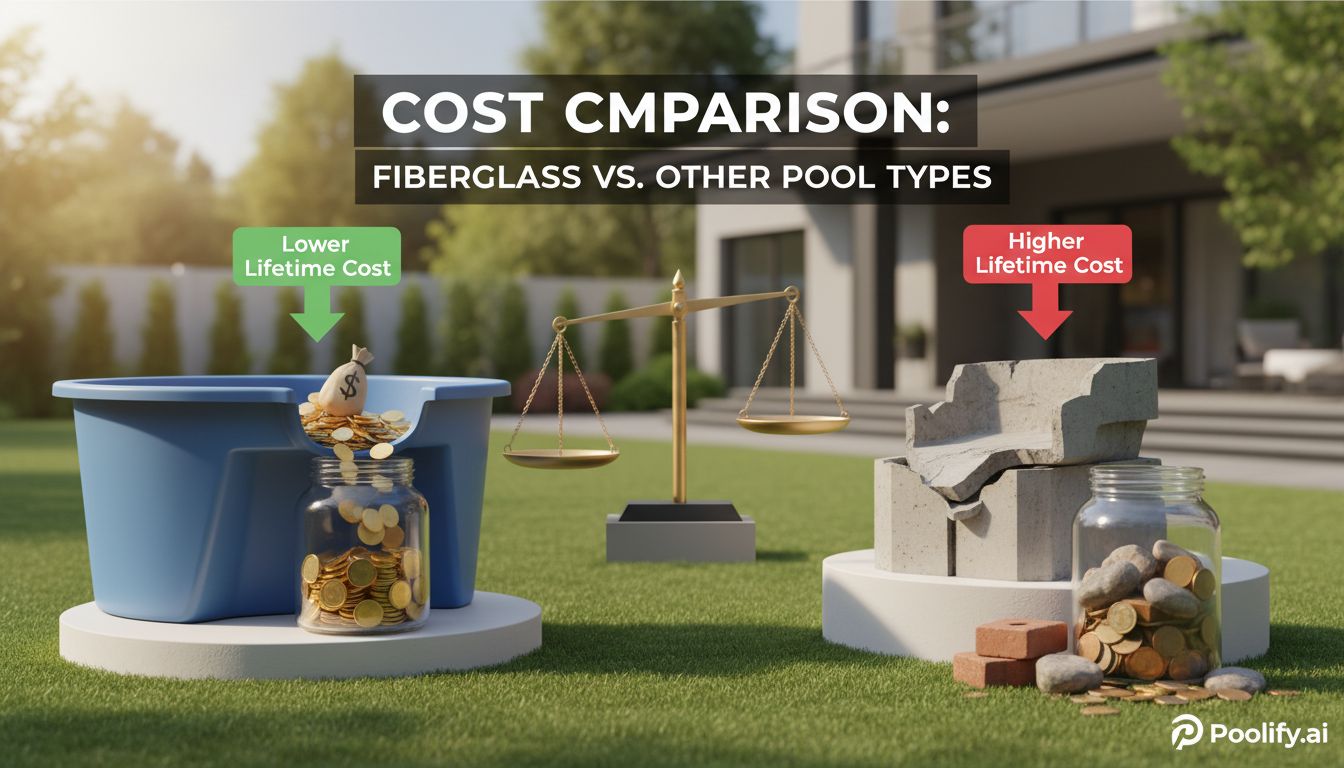
When evaluating how much is a fiberglass pool, comparing it to alternative construction methods provides valuable context for your investment decision.
Fiberglass vs. Vinyl Liner Pools
Vinyl liner pools initially cost $35,000 to $65,000, appearing less expensive than fiberglass options. However, liners require replacement every 7-10 years at $4,000 to $7,000, significantly increasing lifetime costs. Vinyl surfaces feel less durable, puncture more easily, and provide less aesthetic appeal than smooth fiberglass finishes.
Fiberglass vs. Concrete Pools
Concrete pools offer unlimited customization but cost $60,000 to $150,000 or more. Construction takes 3-6 months compared to 2-4 weeks for fiberglass installation. Concrete requires resurfacing every 10-15 years, intensive chemical maintenance, and higher energy costs due to rough surfaces. While concrete suits complex designs, fiberglass provides superior value for standard residential applications.
Total Cost of Ownership Analysis
Over 20 years, fiberglass pools typically cost $20,000 to $40,000 less than concrete pools when factoring in maintenance, resurfacing, and chemical expenses. The smooth, non-porous surface reduces cleaning time by 30-50% and chemical usage by 20-30%. These operational savings make fiberglass pools the most economical choice for most homeowners despite comparable initial investments.
Money-Saving Strategies for Your Fiberglass Pool
Strategic planning reduces the cost of a fiberglass pool without compromising quality or long-term satisfaction. These proven approaches help maximize value while controlling costs.
Optimal Timing for Purchase
Off-season installations during fall and winter often yield 10-20% discounts as contractors seek to maintain year-round workflow. Manufacturers occasionally offer promotional pricing on specific models or colors. Planning your project 6-12 months in advance allows time to compare quotes, negotiate terms, and avoid rushed decisions that increase costs.
Phased Installation Approach
Installing your pool with basic features initially and adding enhancements later spreads costs over multiple years. Start with essential equipment and standard decking, then add heating, advanced lighting, or water features as budget allows. This approach provides immediate pool enjoyment while managing cash flow effectively.
DIY Opportunities
While professional installation ensures quality, homeowners can handle certain tasks to reduce costs. Landscaping, basic decking installation, fence construction, and ongoing maintenance represent viable DIY projects for skilled individuals. However, excavation, plumbing, electrical work, and shell placement require professional expertise to avoid costly mistakes and ensure warranty compliance.
Financing Options for Your Pool Investment
Understanding how much is a fiberglass pool includes exploring payment methods that align with your financial situation and goals.
Home Equity Financing
Home equity loans and lines of credit offer competitive interest rates for pool financing, with terms extending 5-15 years. Interest may be tax-deductible if the pool qualifies as a home improvement. These options work well for homeowners with substantial equity and strong credit profiles.
Pool-Specific Loans
Many lenders offer specialized pool financing with approval amounts up to $100,000. Terms range from 5-20 years with fixed or variable rates depending on creditworthiness. Some contractors partner with financing companies to streamline the application process, though comparing multiple lenders ensures optimal terms.
Cash Payment Considerations
Paying cash eliminates interest expenses and may qualify you for contractor discounts of 3-5%. However, depleting savings for a pool installation could leave you financially vulnerable to emergencies. Balance the appeal of interest-free ownership against maintaining adequate liquidity for other needs and opportunities.
Frequently Asked Questions
How much is a fiberglass pool compared to maintaining a concrete pool annually?
Fiberglass pools cost $800 to $2,300 annually for maintenance, chemicals, and utilities, while concrete pools typically require $1,500 to $3,500 yearly due to higher chemical demands, increased energy consumption, and more intensive cleaning requirements. Over a decade, this difference amounts to $7,000 to $12,000 in savings for fiberglass pool owners.
Can I install a fiberglass pool myself to save money?
While technically possible, DIY fiberglass pool installation is strongly discouraged. Professional installation ensures proper leveling, adequate structural support, correct plumbing connections, and warranty compliance. Installation errors can cause cracking, leaking, or structural failure costing more to repair than professional installation. Most manufacturers void warranties for non-professional installations.
Do fiberglass pools increase home value?
Fiberglass pools typically increase home value by $20,000 to $40,000, recovering 40-60% of installation costs upon resale. Value addition depends on local market conditions, neighborhood norms, climate, and overall property appeal. Pools attract buyers in warm climates but may limit buyer pools in regions with short swimming seasons.
How long does a fiberglass pool last?
Quality fiberglass pools last 25-35 years or longer with proper maintenance. The gelcoat surface maintains its appearance for 15-25 years before potentially requiring refinishing. The structural integrity of the fiberglass shell often exceeds 50 years, making these pools excellent long-term investments compared to vinyl liner pools requiring replacement every 7-10 years.
What ongoing costs should I budget for after installation?
Annual costs include chemicals ($300-$800), electricity ($500-$1,500), water ($50-$150), professional maintenance if desired ($800-$2,000), and periodic equipment replacement reserves ($500-$1,000 annually). Total ongoing costs typically range from $2,150 to $5,450 yearly, though energy-efficient equipment and diligent maintenance reduce these expenses significantly.
Key Takeaways
- Base Investment Range: How much is a fiberglass pool in 2026 typically ranges from $45,000 to $85,000 installed, with size, quality, and features driving the final cost.
- Hidden Costs Matter: Permits, electrical upgrades, decking, landscaping, and fencing add $10,000 to $30,000 beyond the base pool package, requiring comprehensive budget planning.
- Long-Term Value: Fiberglass pools cost 30-50% less to maintain than concrete alternatives over their lifetime, with lower chemical usage, reduced cleaning time, and less frequent resurfacing needs.
- Regional Variations: Geographic location affects costs by 20-40% due to labor rates, transportation expenses, climate requirements, and local building regulations.
- Strategic Savings: Off-season installation, phased feature additions, and competitive bidding can reduce total project costs by 15-25% without sacrificing quality or satisfaction.
See Your Dream Pool in Your Actual Backyard
Upload a photo and get an AI-designed pool visualization in 10 seconds. 3 free designs, no login required.
Try Poolify Free →Conclusion
Determining how much is a fiberglass pool requires evaluating numerous factors beyond the initial price tag. In 2026, expect to invest $45,000 to $85,000 or more for a complete installation, with size, features, and site conditions influencing your final cost. While this represents a significant investment, fiberglass pools deliver exceptional value through reduced maintenance requirements, lower long-term costs, and decades of reliable performance. By understanding all cost components, planning strategically, and choosing quality materials, you’ll create a backyard oasis that provides enjoyment and value for years to come. Start by obtaining multiple quotes from reputable installers, verifying their credentials and warranty offerings, and ensuring your budget accommodates both installation and ongoing ownership expenses. With proper planning and realistic expectations, your fiberglass pool investment will enhance your lifestyle and property value for generations.
References
- U.S. Department of Energy – Swimming Pool Pumps Energy Efficiency: https://betterbuildingssolutioncenter.energy.gov/sites/default/files/attachments/Pool%20efficiency_.pdf
