Understanding Concrete Pool Costs in 2026
When homeowners ask “how much is a concrete pool,” the answer isn’t straightforward. In 2026, concrete pool installations typically range from $50,000 to $150,000 or more, depending on numerous factors including size, design complexity, location, and additional features. Unlike prefabricated pool options, concrete pools offer unmatched customization and longevity, making them a premium investment that can transform your property and lifestyle. This comprehensive guide breaks down every cost component you need to understand before embarking on your concrete pool project.
Concrete pools, also known as gunite or shotcrete pools, represent the gold standard in residential swimming pool construction. Their durability and design flexibility justify the higher price point compared to fiberglass or vinyl liner alternatives. Understanding the full financial picture helps you budget appropriately and avoid unexpected expenses during construction.
Base Construction Costs: How Much Is a Concrete Pool Without Extras?
The baseline answer to the cost of a concrete pool starts with the shell construction itself. In 2026, expect to pay between $50 and $100 per square foot for the pool shell alone. A standard 12×24-foot pool (288 square feet) would cost approximately $14,400 to $28,800 for just the shell. Shell-only rates sit well below the complete-installation rates quoted later in this guide, which also carry excavation, equipment, permits and finishes. However, this represents only a fraction of your total investment.
The construction process involves excavation, steel reinforcement installation, concrete application, and initial curing. Professional pool builders typically quote projects as complete packages rather than itemizing the shell separately. According to the U.S. Census Bureau’s construction data, residential pool construction costs have increased approximately 8-12% since 2024 due to material and labor cost inflation.
Size and Depth Considerations
Pool dimensions dramatically impact how much a concrete pool costs. Small pools (10×20 feet) might start around $40,000 for complete installation, while large pools (20×40 feet or larger) can easily exceed $100,000. Depth adds complexity and cost—shallow pools (4-5 feet) cost less than those with diving areas requiring 8-10 feet of depth.
Custom shapes with curves, beach entries, or irregular designs require additional formwork and skilled labor, increasing costs by 15-30% compared to simple rectangular designs. The excavation alone for a large, deep pool can cost $5,000 to $15,000 depending on soil conditions and site accessibility.
Material and Finish Quality Impact on Pricing
When determining how much is a concrete pool, the interior finish significantly affects your budget. Basic plaster finishes start around $3,000 to $5,000 for an average-sized pool, lasting 7-10 years before requiring resurfacing. Premium finishes dramatically increase both initial costs and aesthetic appeal.
Aggregate finishes combining plaster with pebbles, quartz, or glass beads range from $8,000 to $15,000 but offer superior durability and visual interest. These finishes typically last 12-20 years. Tile finishes represent the luxury option, costing $15,000 to $40,000 or more depending on tile quality and coverage area, but they provide exceptional longevity and stunning appearance.
Concrete Quality and Reinforcement
The concrete mixture itself varies in quality and price. Standard gunite works for most applications, but some builders offer enhanced formulations with additives for improved strength, flexibility, and crack resistance. Premium concrete mixes might add $2,000 to $5,000 to your project but provide better long-term performance.
Steel reinforcement density and quality also matter. While all concrete pools require rebar reinforcement, spacing and steel gauge affect structural integrity. Pools in areas with soil movement or seismic activity need additional reinforcement, potentially adding $3,000 to $8,000 to construction costs.
Essential Equipment and Systems Costs
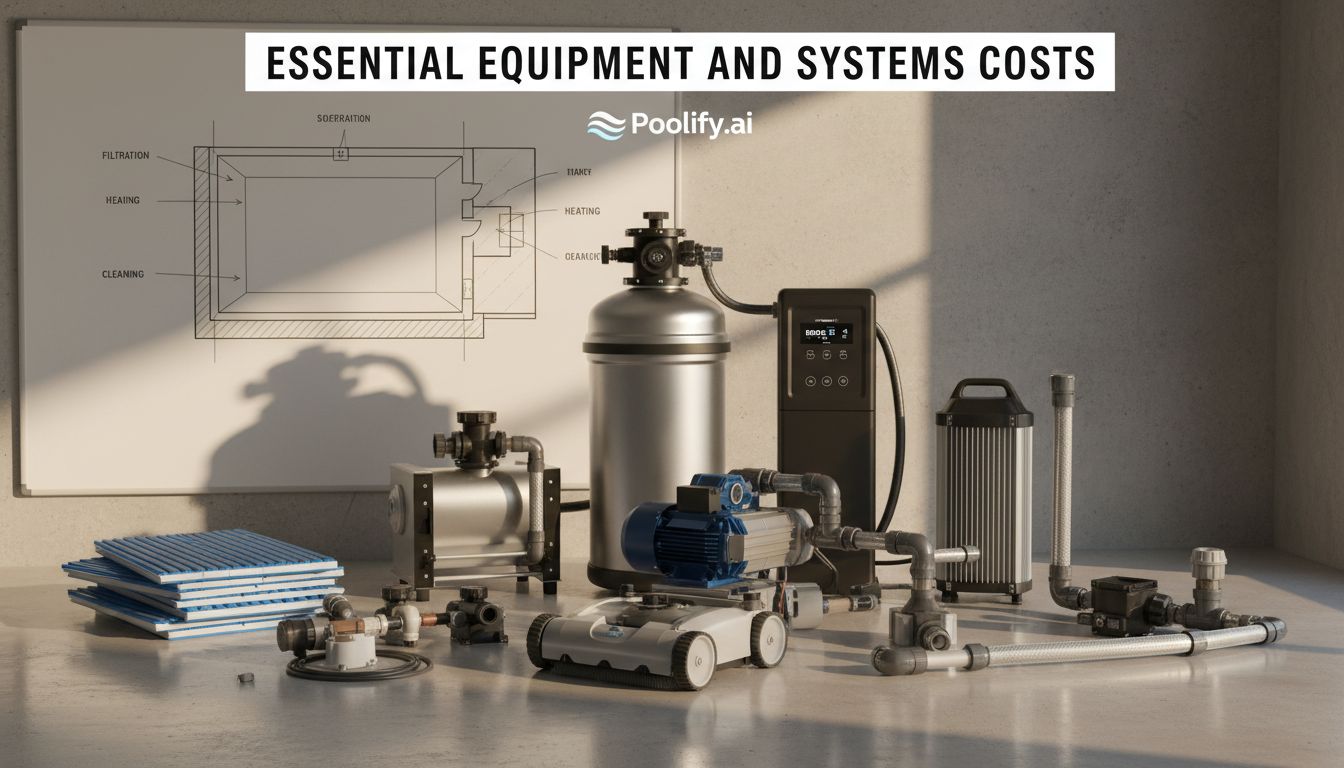
Understanding how much is a concrete pool requires accounting for all necessary equipment. The filtration system represents your pool’s circulatory system, with costs ranging from $1,500 for basic sand filters to $3,500 for advanced cartridge or DE (diatomaceous earth) systems. Variable-speed pumps, now required by law in many jurisdictions due to energy efficiency standards, cost $800 to $2,500.
Heating systems substantially increase both installation costs and ongoing expenses. Gas heaters cost $2,000 to $4,000 installed, while heat pumps range from $3,500 to $6,000. Solar heating systems require $3,000 to $8,000 initially but offer minimal operating costs. For year-round swimming in most climates, heating is essential and significantly impacts how much a concrete pool costs over its lifetime.
Sanitization and Automation
Modern pools increasingly incorporate salt chlorination systems ($1,500 to $2,500) that generate chlorine from salt, reducing chemical handling and providing softer water. UV or ozone sanitization systems add $1,000 to $3,000 but reduce chemical dependency further.
Automation systems controlling pumps, heaters, lights, and cleaners range from $1,500 for basic timers to $5,000+ for sophisticated smartphone-controlled systems. While optional, automation improves convenience and can optimize energy usage, potentially offsetting costs through reduced utility bills.
Additional Features That Increase Investment
When calculating how much is a concrete pool, many homeowners underestimate the appeal and cost of additional features. Waterfalls and rock features range from $3,000 for simple spillways to $25,000+ for elaborate natural-looking grottos. These features add visual drama and soothing sounds but require additional plumbing and structural support.
Lighting transforms pools for evening use and ambiance. Basic incandescent lights cost $500 to $1,000 per fixture installed, while LED color-changing systems run $1,000 to $2,000 per light. Most pools include 2-4 lights minimum. Fiber optic lighting systems for dramatic effects can add $5,000 to $15,000 to your project.
Attached Spas and Water Features
Attached spas sharing equipment with your pool cost $10,000 to $25,000 depending on size and jet configuration. Separate spa systems require dedicated equipment, increasing costs to $15,000 to $35,000. The integrated design of concrete construction makes attached spas relatively cost-effective compared to standalone installations.
Deck jets, bubblers, sheer descents, and laminar jets add playful or elegant water effects. Individual features range from $500 to $3,000 each, with complete water feature packages potentially adding $5,000 to $20,000 to answer how much is a concrete pool with all the bells and whistles.
Decking and Surrounding Hardscape Expenses
Pool decking represents a substantial portion of how much is a concrete pool project costs. Concrete decking starts around $6 to $15 per square foot for basic brushed or stamped finishes. A 600-square-foot deck area would cost $3,600 to $9,000. Pavers range from $15 to $30 per square foot installed, while natural stone can exceed $40 per square foot.
The deck must extend at least 3-4 feet around the pool perimeter for safety and functionality. Many homeowners create larger entertainment areas with 8-12 feet of decking, significantly increasing square footage and costs. Proper drainage, underlayment, and slope add to installation complexity and expense.
Outdoor Living Integration
Complete backyard transformations incorporating outdoor kitchens, fire features, pergolas, and landscaping can double or triple the pool construction budget. An outdoor kitchen costs $5,000 to $30,000, while fire pits and fireplaces range from $2,000 to $15,000. These additions create cohesive outdoor living spaces but substantially impact how much a concrete pool project ultimately costs.
Fencing requirements vary by location but typically add $3,000 to $10,000 depending on materials and perimeter length. Most jurisdictions require barriers meeting specific height and gate requirements for safety compliance. Landscaping around the pool area ranges from $2,000 for basic plantings to $20,000+ for comprehensive designs with mature plants and irrigation systems.
Permit, Engineering, and Professional Service Costs
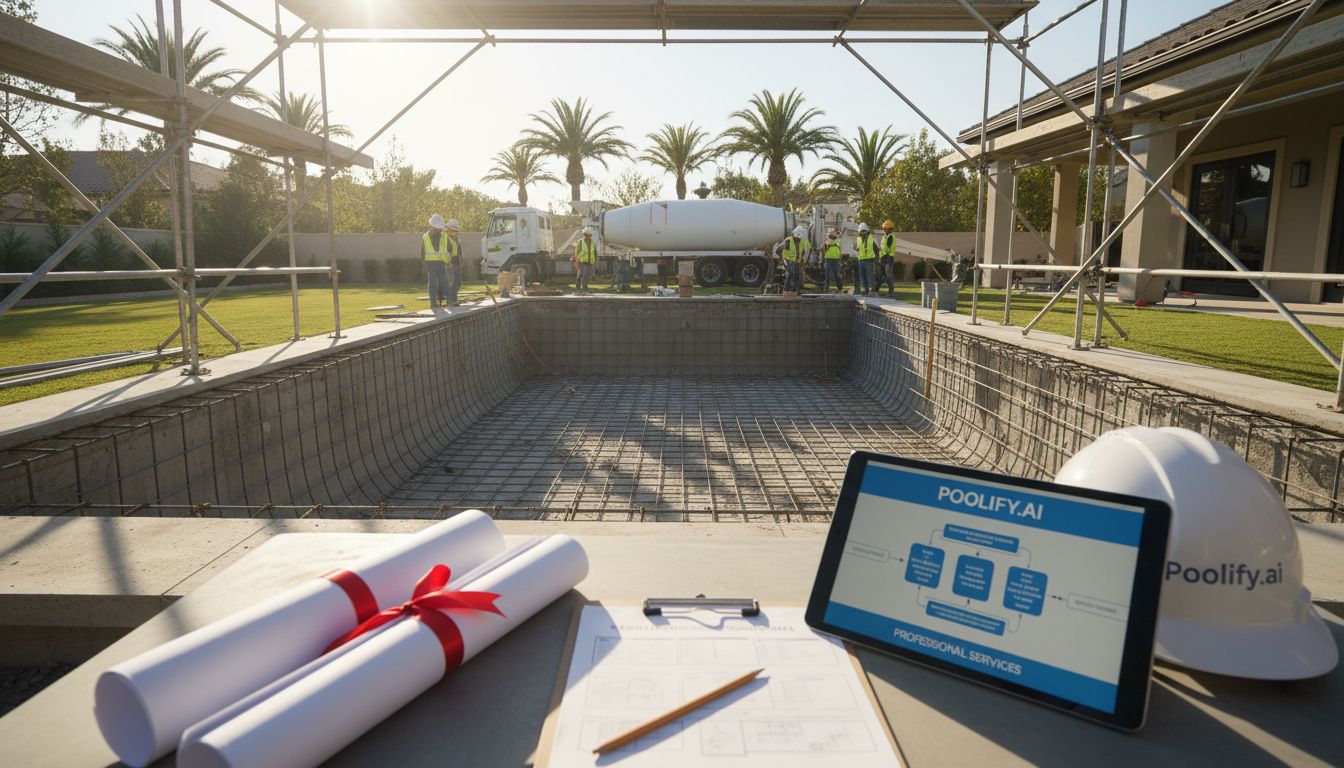
When determining how much is a concrete pool, don’t overlook administrative and professional costs. Building permits typically range from $500 to $2,000 depending on your municipality and project scope. Some jurisdictions require separate electrical, plumbing, and structural permits, each with associated fees.
Engineering services may be necessary for complex sites, soil conditions, or local requirements. Structural engineering costs $1,000 to $3,000, while soil testing and reports add $500 to $1,500. Properties with challenging topography, high water tables, or poor soil conditions may require additional engineering consultation and specialized construction techniques.
Design and Planning Services
Professional pool design services range from included in builder packages to $2,000 to $5,000 for custom architectural designs. Detailed 3D renderings and comprehensive plans help visualize the finished project and prevent costly changes during construction. For complex projects integrating with existing landscaping and structures, professional design services prove invaluable.
Some builders offer design-build services bundling all aspects, while others work from architect or designer plans. Understanding what’s included in your builder’s quote helps accurately assess how much is a concrete pool for your specific project.
Geographic Location and Site Factors
Location dramatically influences how much a concrete pool costs. Urban areas with higher labor costs, strict regulations, and difficult site access command premium prices. Rural areas might offer lower labor rates but face higher material transportation costs. Regional differences create 20-40% cost variations across the country.
Site conditions significantly impact excavation and construction costs. Rocky soil requiring jackhammering or blasting adds $5,000 to $20,000. High water tables necessitate dewatering systems and specialized construction techniques, increasing costs by $3,000 to $10,000. Sloped lots might require retaining walls costing $5,000 to $30,000 depending on height and length.
Access and Logistics
Limited site access complicating equipment and material delivery increases labor costs. Properties requiring hand-digging, smaller equipment, or material transport through homes can add 15-25% to construction costs. Crane services for placing equipment or materials in difficult-to-reach areas cost $1,000 to $3,000 per day.
According to Bureau of Labor Statistics data, construction labor costs vary significantly by region, with coastal and metropolitan areas typically 30-50% higher than rural Midwest locations. These regional variations substantially affect how much a concrete pool costs in your specific area.
Long-Term Ownership Costs Beyond Installation
Evaluating how much is a concrete pool requires considering ongoing expenses. Annual maintenance costs typically range from $1,200 to $2,500 for professional service, or $500 to $1,000 if self-maintained. Chemical costs average $300 to $800 annually depending on pool size and usage.
Energy costs for pumps, heaters, and other equipment vary widely based on climate, equipment efficiency, and usage patterns. Expect $30 to $150 monthly for electricity, with heating adding $100 to $500 monthly during use. Variable-speed pumps reduce energy consumption by 50-75% compared to older single-speed models.
Resurfacing and Major Repairs
Concrete pools require resurfacing every 10-15 years at costs of $5,000 to $15,000 depending on finish type. This represents a significant long-term expense when calculating true ownership costs. Equipment replacement follows predictable schedules—pumps last 8-12 years ($800-$2,500), heaters 10-15 years ($2,000-$6,000), and automation systems 10-20 years ($1,500-$5,000).
Setting aside $100 to $200 monthly for future repairs and resurfacing helps avoid financial surprises. These ongoing costs are essential context when initially asking how much is a concrete pool, as the total 20-year ownership cost might be 150-200% of the initial installation expense.
Financing Options and Budget Planning Strategies
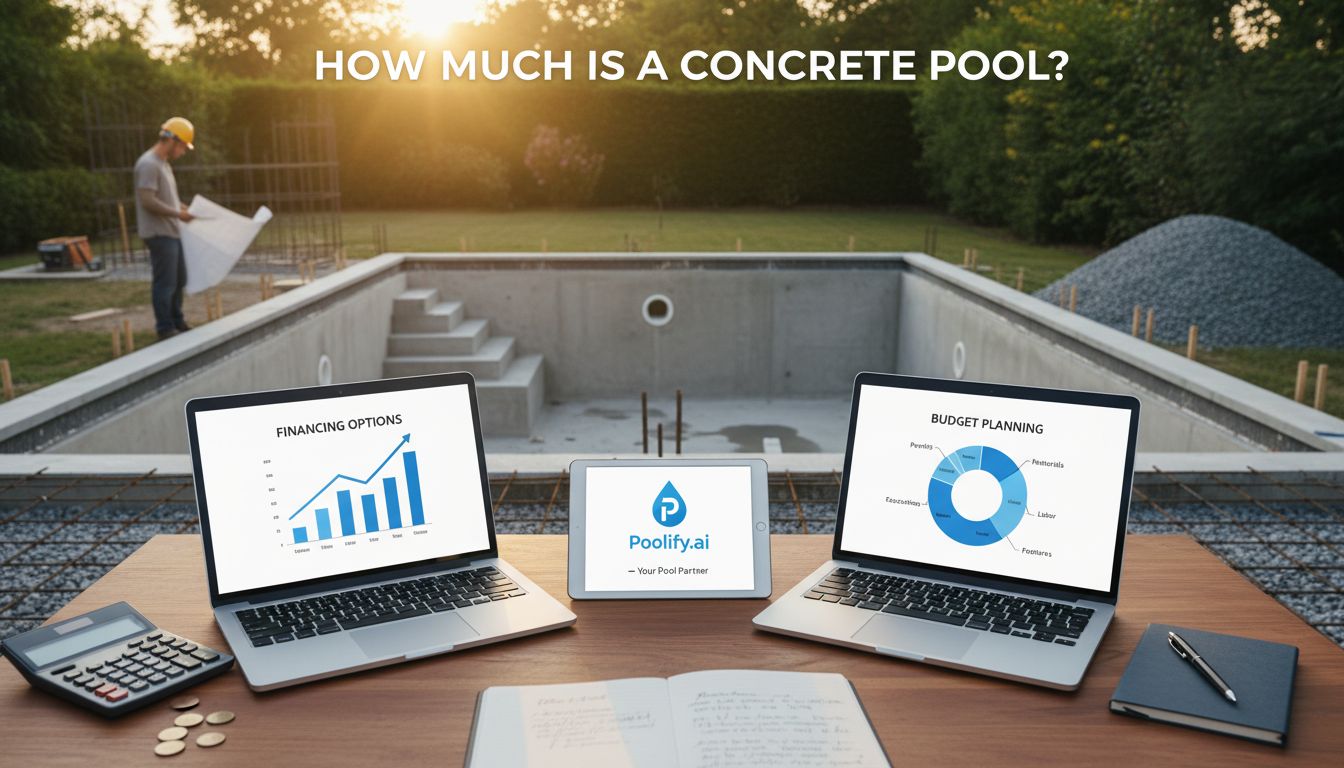
Understanding how much is a concrete pool helps you explore appropriate financing. Home equity loans and lines of credit offer favorable interest rates, typically 6-9% in 2026, with terms up to 15-20 years. Pool-specific financing through builders or third-party lenders provides alternatives, though often at higher rates of 8-15%.
Personal loans work for smaller projects or buyers without home equity, with rates ranging from 7-18% depending on creditworthiness. Some homeowners refinance mortgages to access equity at lower rates, though closing costs must be factored into the decision.
Phased Construction Approaches
Budget-conscious homeowners can phase construction by initially building a basic pool and adding features over time. Install the pool shell and essential equipment first ($40,000-$70,000), then add heating, automation, water features, and upgraded decking in subsequent years as finances allow.
This approach spreads costs but may increase total expenses by 10-15% due to mobilization for multiple projects. However, it makes concrete pool ownership accessible to more homeowners and allows you to prioritize features based on actual usage patterns rather than pre-construction assumptions.
Maximizing Value: Getting the Most for Your Investment
When considering how much is a concrete pool, focus on value rather than just cost. Obtaining 3-5 detailed quotes from licensed, insured builders ensures competitive pricing and helps identify outliers. Verify builder credentials, references, and previous work quality before making decisions based solely on price.
Timing construction during off-season (fall and winter in most regions) may yield 5-15% discounts as builders seek to maintain crews during slower periods. However, weather delays might extend timelines, and some regions can’t perform concrete work in freezing temperatures.
Energy Efficiency and Sustainability
Investing in energy-efficient equipment increases initial costs but reduces long-term expenses. Variable-speed pumps cost $1,000 more than single-speed models but save $300-$800 annually in electricity. LED lighting costs double that of incandescent but lasts 10 times longer while using 75% less energy.
Solar heating systems have higher upfront costs but eliminate heating fuel expenses. In sunny climates, solar pays for itself within 3-7 years. Pool covers ($200-$2,000) reduce heating costs by 50-70%, minimize chemical usage, and decrease water evaporation—a simple addition with significant long-term value.
Frequently Asked Questions
How much is a concrete pool compared to fiberglass or vinyl liner pools?
Concrete pools cost 30-50% more than fiberglass and 50-100% more than vinyl liner pools initially. However, concrete pools offer superior customization, larger size options, and longer lifespan. While a fiberglass pool might cost $45,000 and vinyl $35,000, concrete pools starting at $50,000 provide design flexibility impossible with prefabricated options. Over 20-30 years, considering resurfacing versus liner replacements, total ownership costs become more comparable.
What hidden costs should I budget for when planning a concrete pool?
Common overlooked expenses include utility line relocation ($1,000-$5,000), tree removal ($500-$3,000 per tree), soil disposal ($500-$2,000), permit fees ($500-$2,000), initial chemical startup ($200-$500), and insurance increases ($200-$500 annually). Budget an additional 10-15% contingency for unexpected site conditions or design changes during construction. These extras can add $5,000-$15,000 to your project.
How does pool size affect the cost per square foot?
Larger pools benefit from economies of scale, with per-square-foot costs decreasing as size increases. Measured across the complete installation rather than the shell alone, small pools (200-300 square feet) might cost $100-$150 per square foot, while large pools (500+ square feet) average $70-$100 per square foot. Fixed costs like permits, equipment, and mobilization spread across larger areas, reducing per-unit costs. However, total project costs obviously increase with size.
Can I reduce costs by doing some work myself?
Concrete pool construction requires specialized skills and equipment, limiting DIY opportunities. However, you can save $3,000-$10,000 by handling landscaping, basic decking preparation, or finishing work yourself. Some builders allow owner-supplied materials like tile or decking, potentially saving 10-20% on those components. Never attempt structural work, plumbing, or electrical without proper licensing, as mistakes create safety hazards and void warranties.
How long does concrete pool construction take and how does that affect costs?
Typical concrete pool construction takes 8-12 weeks from excavation to completion, though complex projects or weather delays can extend timelines to 16 weeks. Some builders charge storage fees if projects extend beyond contracted timelines. Planning construction during favorable weather and maintaining clear communication with your builder helps avoid delays and associated costs. Rushed construction to meet deadlines often compromises quality, so allow adequate time in your planning.
Key Takeaways
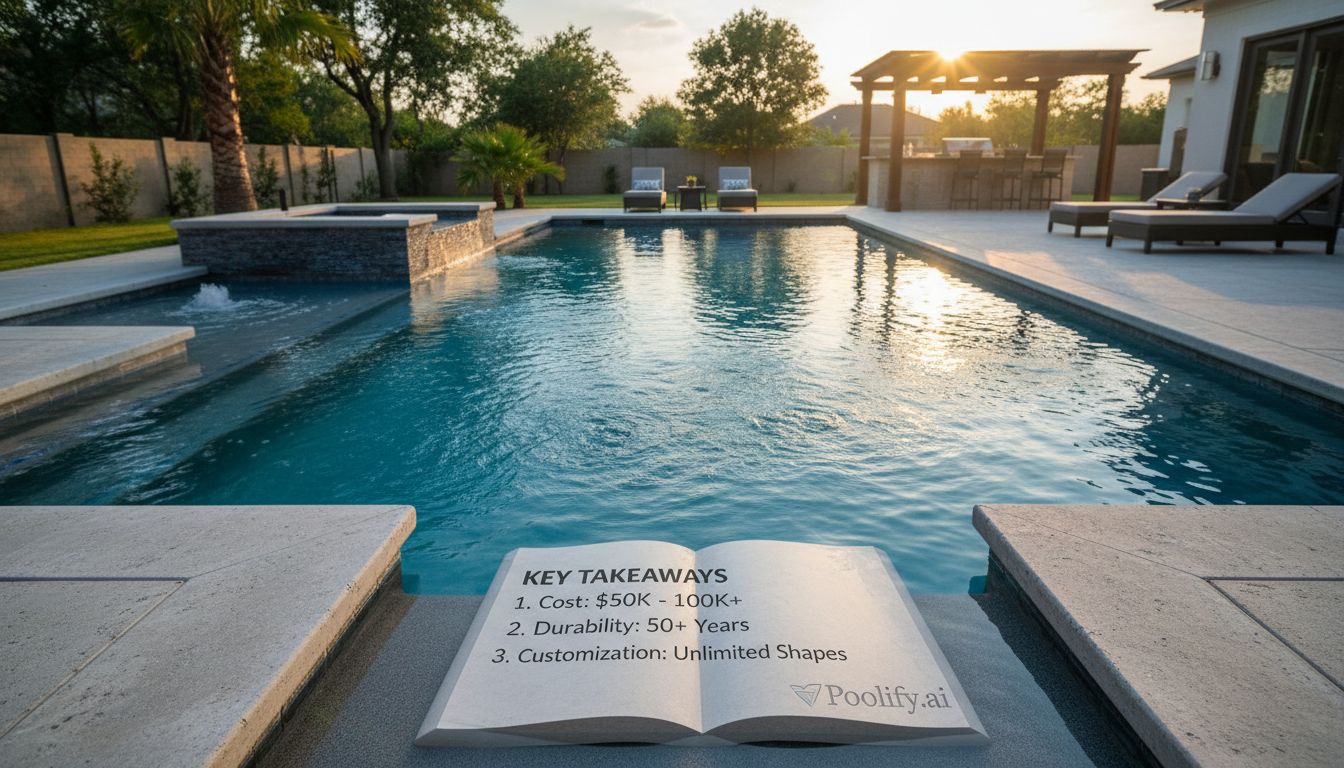
- Budget comprehensively: How much is a concrete pool depends on far more than the shell—expect total costs between $50,000 and $150,000+ including all features, equipment, and surrounding hardscape for most residential projects in 2026.
- Prioritize quality over bargains: Choosing experienced, licensed builders and quality materials prevents costly repairs and ensures your investment lasts decades. The cheapest quote often leads to the most expensive outcome.
- Plan for ongoing costs: Annual maintenance, utilities, and eventual resurfacing add significantly to lifetime ownership costs. Budget $1,500-$3,500 annually for operation and maintenance, plus $5,000-$15,000 for resurfacing every 10-15 years.
- Customize strategically: Concrete pools offer unlimited design possibilities, but each customization increases costs. Focus on features that genuinely enhance your lifestyle rather than adding everything possible.
- Consider long-term value: Energy-efficient equipment, quality finishes, and proper construction techniques cost more initially but provide superior performance and lower operating costs over the pool’s 30-50 year lifespan.
See Your Dream Pool in Your Actual Backyard
Upload a photo and get an AI-designed pool visualization in 10 seconds. 3 free designs, no login required.
Try Poolify Free →Conclusion
Understanding how much is a concrete pool requires examining numerous interconnected factors from basic construction through long-term ownership. In 2026, expect to invest $50,000 to $150,000 or more for a complete project, with costs varying based on size, features, location, and quality choices. While concrete pools represent a significant financial commitment, they offer unmatched customization, durability, and property value enhancement.
Successful pool projects begin with thorough research, realistic budgeting, and careful builder selection. By understanding all cost components and planning comprehensively, you can create a stunning backyard oasis that provides decades of enjoyment and represents a sound investment in your property and lifestyle. Take time to explore your options, obtain multiple quotes, and make informed decisions aligned with both your vision and financial capacity.
For more information on maintaining your investment, check out our comprehensive guide on pool maintenance best practices. If you’re still deciding between pool types, our article comparing concrete versus fiberglass pools provides additional insights to inform your decision.
References
- U.S. Census Bureau – Construction Characteristics Data: https://www.census.gov/construction/chars/
- Bureau of Labor Statistics – Occupational Employment Statistics: https://www.bls.gov/oes/
