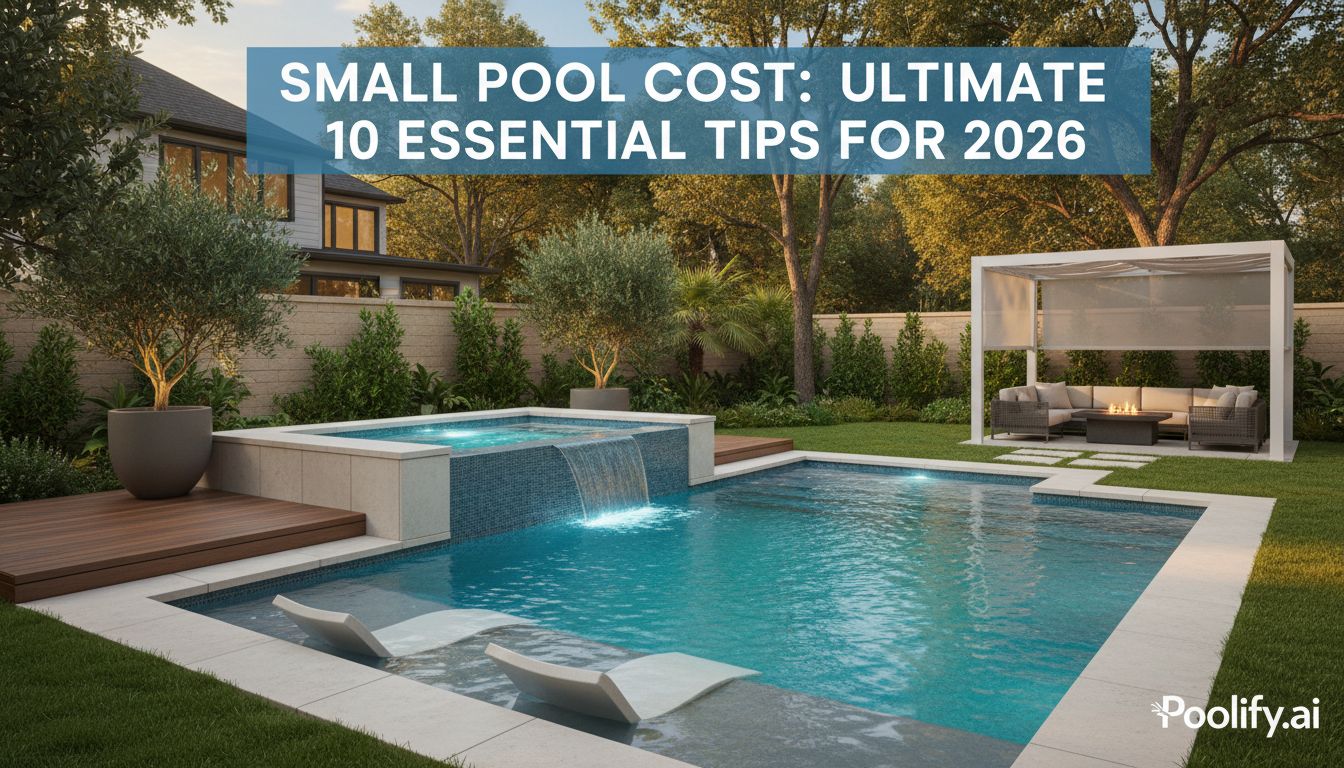
Understanding the small pool cost is essential for homeowners looking to add a backyard oasis without breaking the bank in 2026. Small pools have surged in popularity as more families seek affordable ways to enjoy swimming, relaxation, and property value enhancement. Whether you’re considering a plunge pool, cocktail pool, or compact inground option, knowing what to expect financially helps you make informed decisions and avoid budget surprises.
The average small pool cost ranges from $10,000 to $50,000 depending on materials, size, features, and installation complexity. This guide breaks down every expense factor, from excavation to finishing touches, helping you plan a realistic budget that aligns with your backyard goals and financial capacity.
What Defines a Small Pool and Its Cost Range
Small pools typically measure between 10 to 20 feet in length and 200 to 400 square feet in total area. These compact designs prioritize functionality over lap swimming, making them perfect for cooling off, entertaining, or hydrotherapy. The small pool cost varies significantly based on pool type, with above-ground models starting around $3,000 to $10,000, while inground fiberglass or concrete options range from $20,000 to $50,000.
Plunge pools represent the smallest category, usually measuring 8 by 12 feet or less, with costs between $10,000 and $25,000 for basic installations. Cocktail pools, slightly larger at 10 by 14 feet, typically cost $15,000 to $35,000. Spool combinations (spa-pool hybrids) can reach $25,000 to $45,000 when including heating and jet systems. Understanding these categories helps you match your budget to realistic expectations.
Size Impact on Overall Budget
Every additional square foot increases material requirements, excavation time, and chemical needs. A 200-square-foot pool might cost $25,000 installed, while a 400-square-foot version could reach $40,000 with identical materials and features. The small pool cost per square foot generally decreases slightly with size, but total expense still climbs proportionally.
Depth also affects pricing. Standard small pools range from 4 to 6 feet deep, but adding diving capability (8+ feet) increases excavation, structural reinforcement, and safety requirements. Each additional foot of depth can add $2,000 to $5,000 to your project total.
Small Pool Cost Breakdown by Material Type
Material selection represents the single largest factor influencing small pool cost in 2026. Each option offers distinct advantages in durability, aesthetics, installation speed, and long-term maintenance expenses. Choosing the right material requires balancing upfront investment against lifecycle costs and personal preferences.
Fiberglass Pools
Fiberglass pools dominate the small pool market, with costs ranging from $20,000 to $40,000 for complete installation. These pre-manufactured shells arrive ready to install, reducing construction time to 1-3 weeks compared to months for concrete alternatives. The smooth, non-porous surface resists algae growth and requires fewer chemicals, saving $300 to $500 annually on maintenance.
The small pool cost for fiberglass includes the shell ($8,000-$15,000), excavation ($3,000-$6,000), installation labor ($4,000-$8,000), and finishing work like decking and landscaping ($5,000-$11,000). Limited size and shape options represent the main drawback, though manufacturers now offer dozens of small pool designs specifically for compact yards.
Vinyl Liner Pools
Vinyl liner pools offer the most budget-friendly inground option, with total costs between $15,000 and $30,000 for small installations. The flexible liner fits custom-shaped frames, providing design versatility at lower prices. However, liners require replacement every 7-10 years at $3,000 to $5,000 per replacement, increasing long-term ownership costs.
Initial small pool cost for vinyl includes excavation ($3,000-$5,000), steel or polymer wall panels ($4,000-$7,000), liner material ($2,000-$4,000), plumbing and equipment ($3,000-$6,000), and decking ($3,000-$8,000). The liner’s susceptibility to punctures and fading requires careful maintenance and periodic upgrades.
Concrete and Gunite Pools
Concrete pools represent the premium option, with small pool cost ranging from $30,000 to $50,000 or higher for elaborate designs. This method allows complete customization in shape, depth, features, and finishes. Construction takes 8-12 weeks, and the porous surface requires more chemicals and regular resurfacing every 10-15 years at $5,000 to $10,000.
Despite higher costs, concrete pools offer unmatched durability and design freedom. According to the U.S. Census Bureau’s construction data, concrete pools maintain property value better than other types, often returning 50-75% of investment upon home sale.
Above-Ground Pools
Above-ground pools provide the most affordable entry point, with small pool cost between $3,000 and $10,000 for quality models. Modern designs feature attractive finishes, integrated decking, and improved durability compared to older versions. Installation takes just 1-3 days, and relocation remains possible if you move.
These pools work best for temporary solutions or extreme budget constraints. Expect 7-15 year lifespans depending on quality and maintenance. Annual operating costs run $500 to $1,200 lower than inground alternatives due to smaller water volumes and simpler equipment needs.
Installation and Labor Expenses
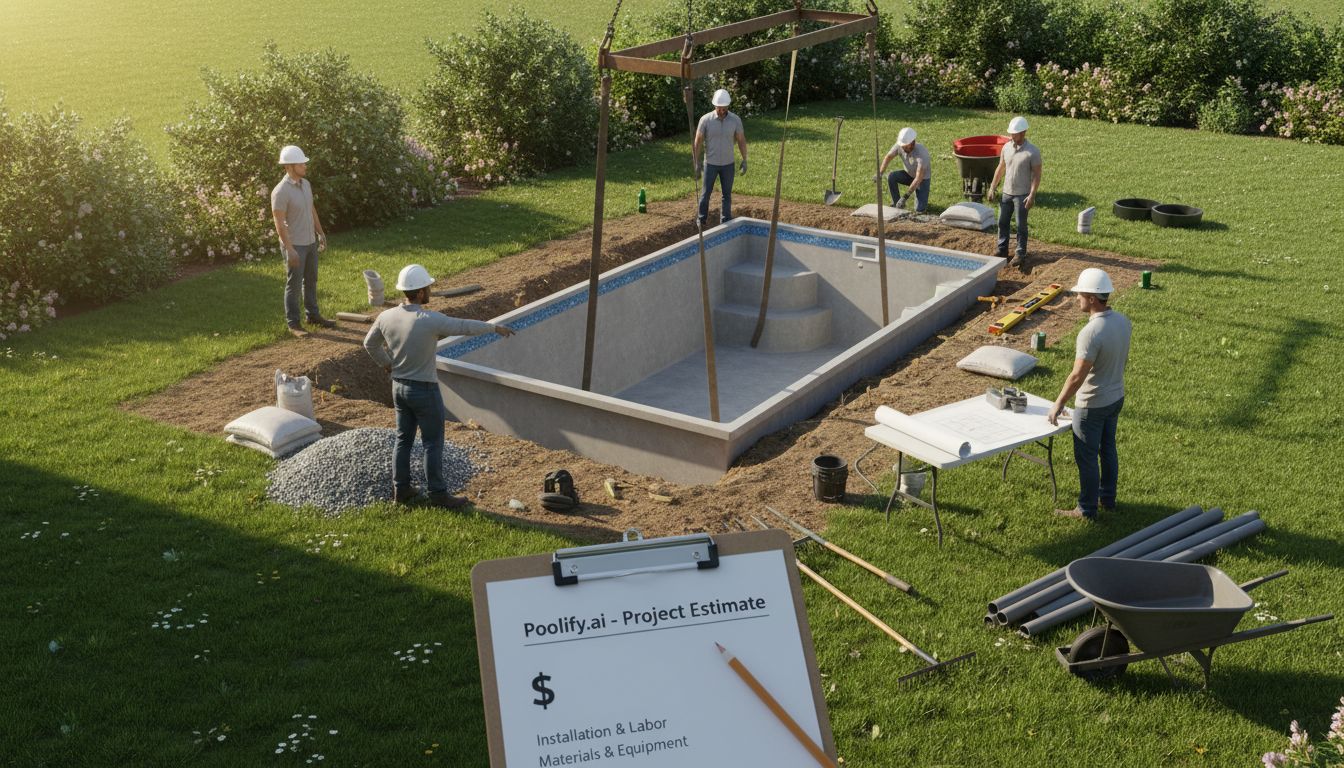
Labor represents 30-50% of total small pool cost in 2026, varying by region, pool complexity, and site conditions. Professional installation ensures proper drainage, structural integrity, and code compliance, preventing costly repairs later. Understanding labor components helps you evaluate contractor quotes and identify potential savings.
Excavation costs $50 to $200 per cubic yard depending on soil type, accessibility, and disposal requirements. Rocky terrain or tight access requiring hand digging can double excavation expenses. Most small pools need 20-40 cubic yards removed, totaling $1,000 to $8,000 for this phase alone.
Permits and Inspections
Building permits cost $200 to $500 in most jurisdictions, with inspections adding another $100 to $300. Some municipalities require engineering stamps for pools over certain sizes or depths, adding $500 to $1,500. Skipping permits risks fines, insurance complications, and forced removal, making compliance essential despite the added small pool cost.
Fence requirements vary by location but typically mandate 4-6 foot barriers with self-closing gates around pool perimeters. Fencing adds $1,500 to $10,000 depending on materials and perimeter length. Check local codes early in planning to budget accurately for these mandatory safety features.
Plumbing and Electrical Work
Professional plumbing installation costs $1,500 to $4,000, covering water supply lines, drainage systems, and equipment connections. Electrical work runs $1,000 to $3,000 for pump circuits, lighting, and safety systems. Both trades require licensed professionals in most areas, and attempting DIY work voids warranties and creates liability risks.
Running utilities from your home to the pool site increases costs based on distance. Each additional 50 feet of trenching adds $500 to $1,000 to your small pool cost. Planning pool placement near existing utility access minimizes these expenses significantly.
Equipment and System Costs
Essential pool equipment represents $3,000 to $8,000 of your small pool cost, with quality directly impacting performance and longevity. Choosing reliable systems prevents frustration and reduces long-term operating expenses through improved efficiency and durability.
Filtration Systems
Filtration systems cost $500 to $2,000 depending on type and capacity. Sand filters offer the most affordable option at $300 to $600 but require more frequent backwashing. Cartridge filters ($500-$1,200) provide better filtration with easier maintenance. Diatomaceous earth (DE) filters ($800-$2,000) deliver superior water clarity but need more intensive upkeep.
Pumps range from $400 to $1,500, with variable-speed models costing more upfront but saving $300 to $500 annually in electricity. For small pools, a 0.75 to 1.5 horsepower pump typically suffices. The Department of Energy recommends variable-speed pumps for optimal efficiency and lower operating costs.
Heating Options
Heaters extend swimming seasons but increase both initial small pool cost and operating expenses. Gas heaters ($1,500-$3,000) heat water quickly but cost $300-$600 monthly during use. Electric heat pumps ($2,500-$5,000) operate more efficiently, running $100-$200 monthly in moderate climates. Solar heating systems ($3,000-$7,000) eliminate operating costs after installation but depend on climate and sun exposure.
Small pools heat faster and cheaper than large ones due to reduced water volume. A 300-square-foot pool might cost 40% less to heat than a 600-square-foot version, making heating more practical for compact designs.
Automation and Controls
Automation systems ($500-$2,500) allow smartphone control of pumps, heaters, lights, and chemical feeders. While optional, these systems improve convenience and can optimize equipment operation for energy savings. Basic timers ($50-$200) provide affordable automation for pumps and lighting without smart features.
Saltwater chlorination systems ($800-$2,500) convert salt to chlorine automatically, reducing chemical handling and providing gentler water. The small pool cost increase pays back through lower chemical expenses and improved swimmer comfort over 3-5 years.
Finishing Touches and Aesthetic Features
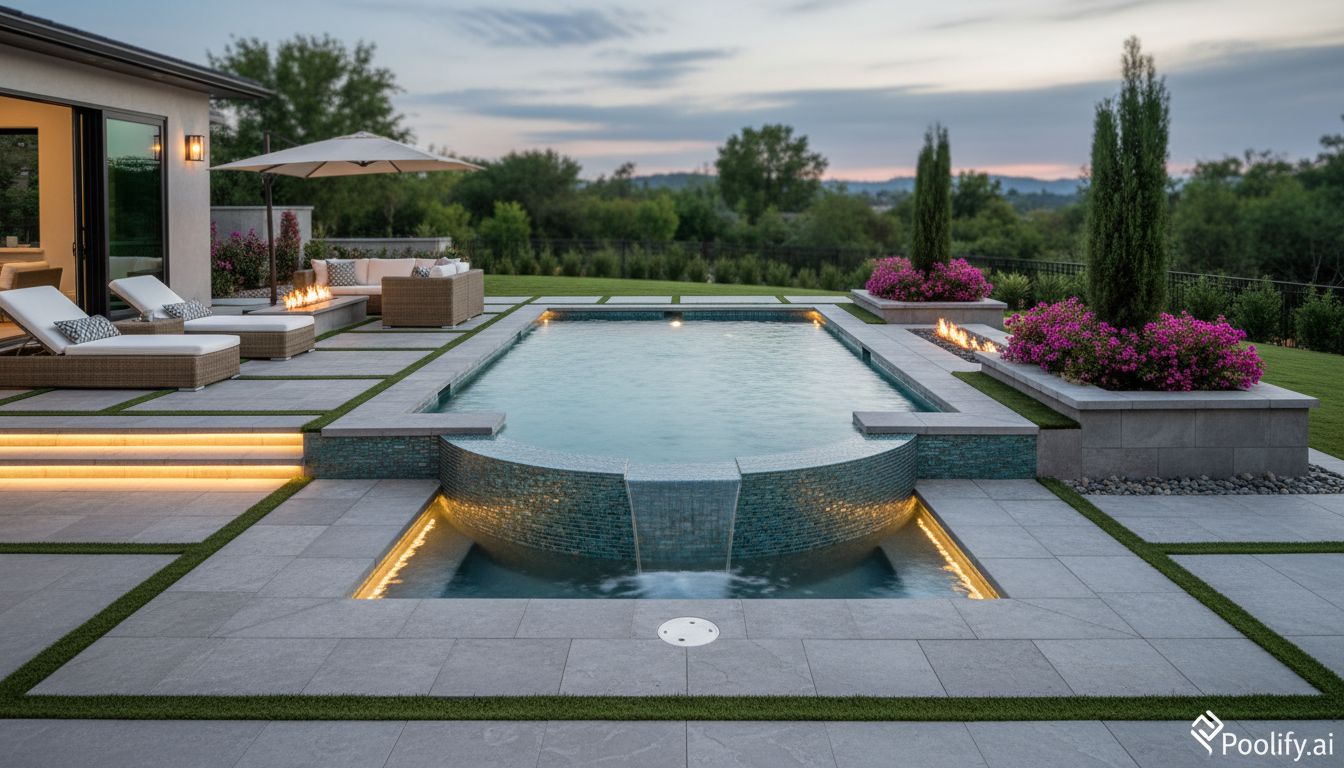
Decking, coping, and landscaping transform functional pools into backyard retreats. These finishing elements add $5,000 to $20,000 to small pool cost but dramatically affect usability and visual appeal. Strategic choices balance aesthetics with budget constraints.
Decking Materials
Concrete decking costs $6 to $15 per square foot for basic finishes, with stamped or colored options reaching $15 to $30 per square foot. Pavers run $10 to $35 per square foot depending on material quality and pattern complexity. Wood decking ($15-$35 per square foot) creates warm aesthetics but requires more maintenance in pool environments.
Small pools typically need 200-400 square feet of decking, totaling $2,000 to $14,000 for this component. Allocating 15-25% of your total small pool cost to decking ensures adequate space for furniture, walking paths, and safe pool access.
Lighting Systems
LED pool lights ($200-$800 each) provide energy-efficient illumination with color-changing options for ambiance. Most small pools use 1-2 underwater lights plus 3-6 landscape lights around the perimeter, totaling $1,000 to $4,000 installed. Lighting extends usability into evening hours and enhances safety around water features.
Low-voltage landscape lighting costs less to install and operate than line-voltage systems. Solar pathway lights ($20-$100 each) offer the most economical option for basic perimeter illumination without electrical work.
Water Features
Waterfalls, fountains, and deck jets add $1,000 to $10,000 to small pool cost depending on complexity. Simple spillways start around $1,000, while elaborate rock formations with multiple cascades reach $8,000 or more. These features create soothing sounds and visual interest but require additional plumbing and pump capacity.
For budget-conscious projects, consider adding water feature plumbing during initial construction even if installing the actual feature later. Retrofitting costs 2-3 times more than including plumbing upfront, and the small pool cost increase of $300-$800 for future-ready plumbing provides valuable flexibility.
Ongoing Maintenance and Operating Costs
Annual operating expenses range from $1,200 to $3,000 for small pools, significantly less than larger alternatives. Understanding these recurring costs helps you budget accurately for long-term ownership and avoid financial surprises after installation excitement fades.
Chemical and Cleaning Supplies
Chemical costs run $300 to $800 annually for small pools, covering chlorine, pH adjusters, algaecides, and shock treatments. Smaller water volumes require proportionally less chemicals, making maintenance more affordable. Saltwater systems reduce chemical costs by 30-50% after the initial equipment investment.
Cleaning supplies and equipment ($200-$500 initially, $100-$200 annually for replacements) include brushes, nets, vacuum systems, and test kits. Robotic cleaners ($400-$1,200) automate this chore and pay for themselves through time savings and improved cleaning efficiency. Learn more about maintaining your pool year-round for detailed maintenance strategies.
Energy Expenses
Pump operation costs $20 to $60 monthly for small pools using variable-speed pumps, or $40 to $100 with single-speed models. Heating adds significantly to bills when used, but small pools heat faster and cheaper than large ones. Running pumps during off-peak hours reduces electricity costs in areas with time-of-use rates.
Covering your pool when not in use reduces heating costs by 50-70% and minimizes evaporation and chemical loss. Quality covers cost $100 to $800 depending on type and size, paying for themselves within one season through reduced heating and chemical expenses.
Professional Service
Weekly professional maintenance costs $80 to $150 monthly, totaling $960 to $1,800 annually. Many small pool owners handle maintenance themselves, investing 2-4 hours weekly to save these costs. The small pool cost advantage becomes more apparent with DIY maintenance, as smaller water volumes simplify chemical balancing and cleaning tasks.
Opening and closing services cost $150 to $400 each in seasonal climates, totaling $300 to $800 annually. These services ensure proper winterization and spring startup, preventing damage from freezing or stagnant water during off-seasons.
Cost-Saving Strategies for Small Pool Projects
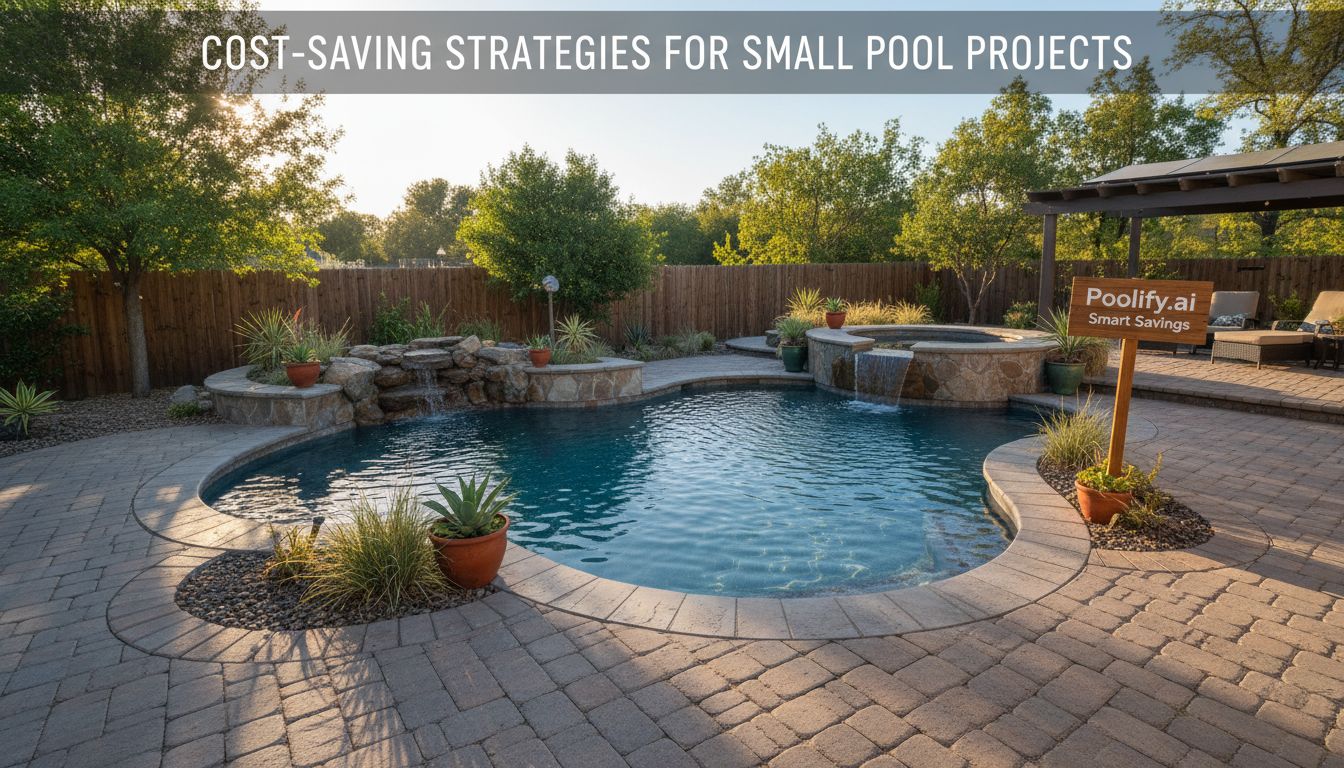
Strategic planning reduces small pool cost without sacrificing quality or longevity. These proven strategies help maximize value while staying within budget constraints, making pool ownership accessible to more families in 2026.
Timing Your Installation
Installing during off-season (late fall through early spring) can save 10-20% on labor costs as contractors offer discounts to maintain steady work. However, weather delays may extend construction timelines in cold climates. Getting quotes from multiple contractors during their slow periods yields the best negotiating leverage.
Ordering materials during manufacturer promotions or end-of-season sales reduces equipment costs by 15-30%. Planning ahead allows you to capitalize on these opportunities without delaying your project timeline.
Simplifying Design
Rectangular or simple geometric shapes cost less than elaborate curves or custom designs. Standard sizes that match prefabricated components eliminate custom fabrication charges. Reducing depth by one foot can save $2,000 to $4,000 while still providing enjoyable swimming for most users.
Postponing non-essential features like waterfalls, elaborate lighting, or premium finishes allows you to complete the basic pool within budget, then add enhancements later as finances allow. This phased approach spreads costs over time without compromising the core swimming experience.
DIY Opportunities
Handling demolition, basic landscaping, and finishing work yourself can save $3,000 to $8,000 on small pool cost. However, leave specialized tasks like excavation, plumbing, electrical work, and structural installation to licensed professionals to ensure safety and code compliance.
Installing your own decking, fencing, or landscaping after pool completion allows you to work at your own pace and shop for materials during sales. These tasks require fewer specialized skills and pose less risk than core pool construction. Check out our pool installation tips for guidance on DIY-friendly tasks.
Financing Options
Home equity loans offer the lowest interest rates for pool financing, typically 5-8% in 2026. Personal loans (8-15%) provide faster approval without using home equity as collateral. Some pool contractors offer financing programs with promotional rates, though reading fine print for deferred interest terms remains essential.
Saving and paying cash eliminates interest charges entirely, reducing total small pool cost by 10-30% compared to financed projects. Setting aside $500 to $1,000 monthly for 2-3 years makes pool ownership achievable without debt burden.
Small Pool Cost vs. Long-Term Value
Small pools typically return 40-60% of installation costs in home value appreciation, varying by region and housing market conditions. In warm climates where pools are expected amenities, returns reach the higher end of this range. Properties with well-maintained pools sell 20-30% faster than comparable homes without pools.
Beyond resale value, pools provide intangible benefits including family recreation, exercise opportunities, and entertainment space. Calculating cost-per-use over a pool’s 25-40 year lifespan often reveals surprisingly low per-swim costs, especially for families who use pools regularly throughout warm months.
Comparing to Alternative Recreation
Annual gym memberships for a family of four cost $1,200 to $3,600, matching or exceeding small pool operating costs. Country club pool access runs $2,000 to $8,000 annually with no equity building. Over a 20-year period, owning a small pool often costs less than these alternatives while providing private, convenient access.
Public pool visits ($5-$15 per person) add up quickly for frequent swimmers. A family visiting twice weekly spends $2,000 to $6,000 annually, making small pool cost amortization competitive within 5-10 years of ownership.
Regional Cost Variations
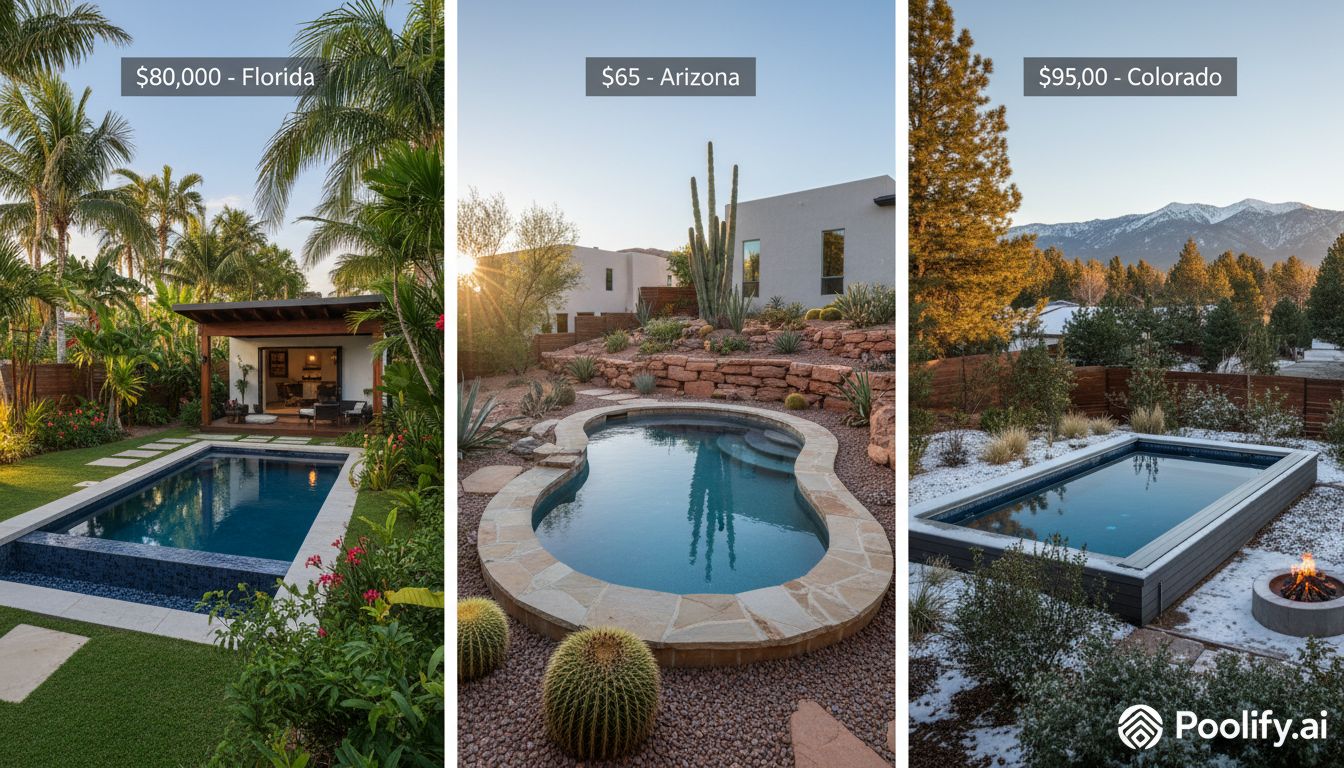
Small pool cost varies significantly by geographic location due to labor rates, material availability, climate requirements, and local regulations. Understanding regional factors helps set realistic budget expectations for your specific area.
Southern states with year-round swimming seasons see higher pool density and more competitive contractor pricing, often 10-20% below national averages. Northern regions with shorter seasons have fewer pool contractors, potentially increasing costs by 15-25% while requiring winterization systems and equipment.
Urban areas typically charge 20-40% more for installation than rural locations due to higher labor costs, permit fees, and site access challenges. However, contractor availability and competition may be greater in cities, potentially offsetting some premium through competitive bidding.
Coastal regions often require additional structural reinforcement for salt air corrosion resistance and wind loads, adding 5-15% to small pool cost. Desert climates need enhanced evaporation control and may require deeper excavation through hard soil, similarly increasing expenses.
Frequently Asked Questions About Small Pool Cost
What is the cheapest type of small pool to install in 2026?
Above-ground pools represent the most affordable option at $3,000 to $10,000 total cost. For inground alternatives, vinyl liner pools offer the lowest entry point at $15,000 to $30,000 for complete installation. While initial small pool cost is lower, consider long-term maintenance and replacement expenses when comparing options. Fiberglass pools cost more initially but often prove more economical over 20+ year ownership periods.
How much does a small inground pool cost compared to above-ground?
Small inground pools cost $15,000 to $50,000 depending on materials and features, while above-ground models range from $3,000 to $10,000. The price difference reflects excavation, structural work, and permanent installation. Inground pools add more property value and last longer (25-40 years vs. 7-15 years), but above-ground options work well for budget-conscious buyers or temporary situations.
Can I install a small pool for under $20,000?
Yes, several options fit under $20,000 including quality above-ground pools ($3,000-$10,000), basic vinyl liner inground pools ($15,000-$20,000), and simple plunge pools ($10,000-$18,000). Keeping designs simple, handling some tasks yourself, and shopping during off-season helps maximize value within this budget. Expect to prioritize function over luxury features at this price point.
What ongoing costs should I budget for small pool ownership?
Annual operating costs range from $1,200 to $3,000 for small pools, covering chemicals ($300-$800), electricity ($240-$720), water ($100-$300), and supplies ($100-$200). Professional maintenance adds $960 to $1,800 if desired. Heating increases costs significantly when used. Small pools cost 40-60% less to maintain than standard-sized pools due to reduced water volume and chemical requirements.
How does small pool cost affect home value?
Small pools typically return 40-60% of installation costs in home value appreciation, varying by location and market conditions. In warm climates where pools are expected amenities, returns reach higher percentages. Homes with pools sell 20-30% faster than comparable properties without pools. Well-maintained small pools appeal to buyers seeking low-maintenance outdoor recreation options.
Key Takeaways
- Small pool cost ranges from $10,000 to $50,000 depending on type, materials, and features, with above-ground options starting as low as $3,000 and premium inground installations reaching the upper end of this spectrum.
- Material selection dramatically impacts both initial and long-term costs, with fiberglass offering the best balance of durability and maintenance savings, vinyl providing budget-friendly entry points, and concrete delivering maximum customization at premium prices.
- Installation labor represents 30-50% of total project cost, making contractor selection and timing crucial for budget management. Off-season installation and competitive bidding can save 10-20% on labor expenses.
- Annual operating costs of $1,200 to $3,000 make small pools affordable to maintain compared to larger alternatives, with DIY maintenance and energy-efficient equipment further reducing ongoing expenses.
- Strategic planning and phased implementation allow budget-conscious buyers to install quality pools by simplifying initial designs, handling appropriate tasks themselves, and adding luxury features over time as finances allow.
See Your Dream Pool in Your Actual Backyard
Upload a photo and get an AI-designed pool visualization in 10 seconds. 3 free designs, no login required.
Try Poolify Free →Conclusion
Understanding small pool cost empowers you to make informed decisions that balance budget constraints with backyard dreams. The $10,000 to $50,000 investment range accommodates diverse financial situations, from basic above-ground models to luxurious inground installations with premium features. By carefully evaluating material options, timing your project strategically, and prioritizing essential features, you can create an affordable backyard oasis that provides decades of enjoyment.
Small pools offer the perfect compromise between full-sized installations and no pool at all, delivering 70-80% of the recreation value at 40-60% of the cost. The compact footprint suits modern lots while reducing maintenance time and operating expenses. Whether you choose fiberglass for low maintenance, vinyl for budget-friendliness, or concrete for customization, proper planning ensures your investment delivers maximum value and satisfaction.
Start your pool journey by obtaining quotes from multiple contractors, exploring financing options, and creating a realistic budget that includes both installation and ongoing costs. With careful planning and informed decision-making, your small pool project can transform your backyard into a personal retreat without overwhelming your finances. For more guidance on pool planning, visit our pool design ideas to explore options that fit your space and budget perfectly.
References
- U.S. Census Bureau – Construction Characteristics: https://www.census.gov/construction/chars/
- U.S. Department of Energy – Pool Heater Efficiency: https://betterbuildingssolutioncenter.energy.gov/sites/default/files/attachments/Pool%20efficiency_.pdf
