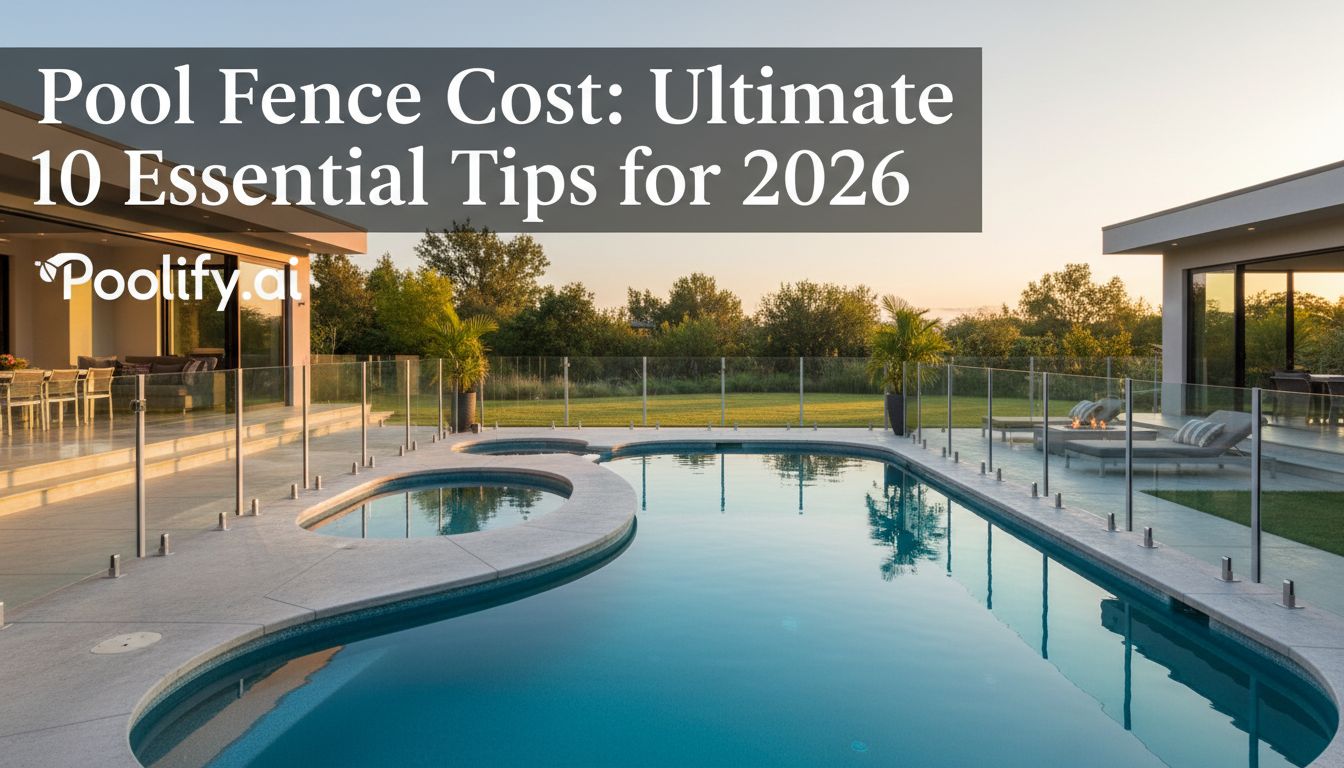
Understanding Pool Fence Cost in 2026
The pool fence cost represents one of the most important safety investments for any pool owner. In 2026, homeowners can expect to spend anywhere from $1,500 to $10,000 or more depending on materials, size, and installation complexity. Understanding these costs upfront helps you budget appropriately while ensuring your pool meets safety regulations and protects your family.
Pool fencing isn’t just a legal requirement in most jurisdictions—it’s a critical safety barrier that prevents accidental drownings and provides peace of mind. The Consumer Product Safety Commission’s Pool Safely campaign emphasizes that proper barriers are essential layers of protection around residential pools. This comprehensive guide breaks down every factor affecting pool fence cost so you can make informed decisions for your property.
Average Pool Fence Cost Breakdown by Material
Material selection dramatically impacts your total pool fence cost. Each option offers distinct advantages in terms of durability, aesthetics, maintenance requirements, and price points. Understanding these differences helps you balance your budget with long-term value.
Aluminum Pool Fencing
Aluminum remains the most popular choice for pool fencing in 2026, with costs ranging from $25 to $40 per linear foot installed. For a typical 150-foot perimeter, expect to pay between $3,750 and $6,000. Aluminum offers excellent corrosion resistance, requires minimal maintenance, and provides clear sightlines to monitor pool activity. The material doesn’t rust in chlorinated environments, making it ideal for pool applications.
Premium powder-coated aluminum options with decorative elements can increase costs to $50-60 per linear foot, but they offer enhanced aesthetic appeal and longer warranties. Most aluminum pool fences come with 15-20 year manufacturer warranties, providing excellent long-term value despite higher initial pool fence cost.
Vinyl and PVC Fencing
Vinyl fencing costs between $20 and $35 per linear foot installed, making it a budget-friendly option for pool enclosures. A 150-foot vinyl pool fence typically costs $3,000 to $5,250. Vinyl offers privacy, requires no painting or staining, and resists moisture damage effectively. However, it provides less visibility for supervising swimmers compared to aluminum or glass options.
Modern vinyl formulations in 2026 include UV inhibitors that prevent yellowing and cracking, addressing earlier concerns about longevity. Quality vinyl fencing can last 20-30 years with minimal maintenance, making the pool fence cost competitive over time.
Glass Pool Fencing
Glass fencing represents the premium end of pool fence cost, ranging from $150 to $300 per linear foot installed. For a 150-foot perimeter, budget $22,500 to $45,000. Frameless glass panels provide unobstructed views, modern aesthetics, and maximum supervision capability. Tempered safety glass withstands impacts and weather exposure while maintaining clarity.
Semi-frameless glass options with aluminum posts reduce costs to $100-150 per linear foot while maintaining the sleek appearance. Despite the high initial pool fence cost, glass fencing adds significant property value and requires only periodic cleaning for maintenance.
Mesh Pool Fencing
Removable mesh fencing offers the most economical pool fence cost at $10 to $20 per linear foot installed. A complete 150-foot installation costs $1,500 to $3,000. Mesh fencing provides temporary or seasonal protection, works well for rental properties, and can be removed when not needed. The material is durable, see-through, and child-resistant when properly installed.
While mesh fencing meets safety codes in most areas, it offers less permanence and visual appeal than solid materials. For homeowners seeking flexibility or working with tight budgets, mesh represents an effective solution that significantly reduces pool fence cost without compromising safety.
Wood Pool Fencing
Wood fencing costs $15 to $30 per linear foot installed, totaling $2,250 to $4,500 for 150 feet. Cedar and redwood offer natural rot resistance and attractive aesthetics. Wood provides complete privacy and traditional appeal but requires regular maintenance including staining or sealing every 2-3 years.
Pressure-treated pine reduces initial pool fence cost but needs more frequent maintenance. Wood’s susceptibility to moisture damage in pool environments makes it less ideal than synthetic alternatives, though many homeowners appreciate its natural warmth and customization options.
Installation Costs and Labor Factors
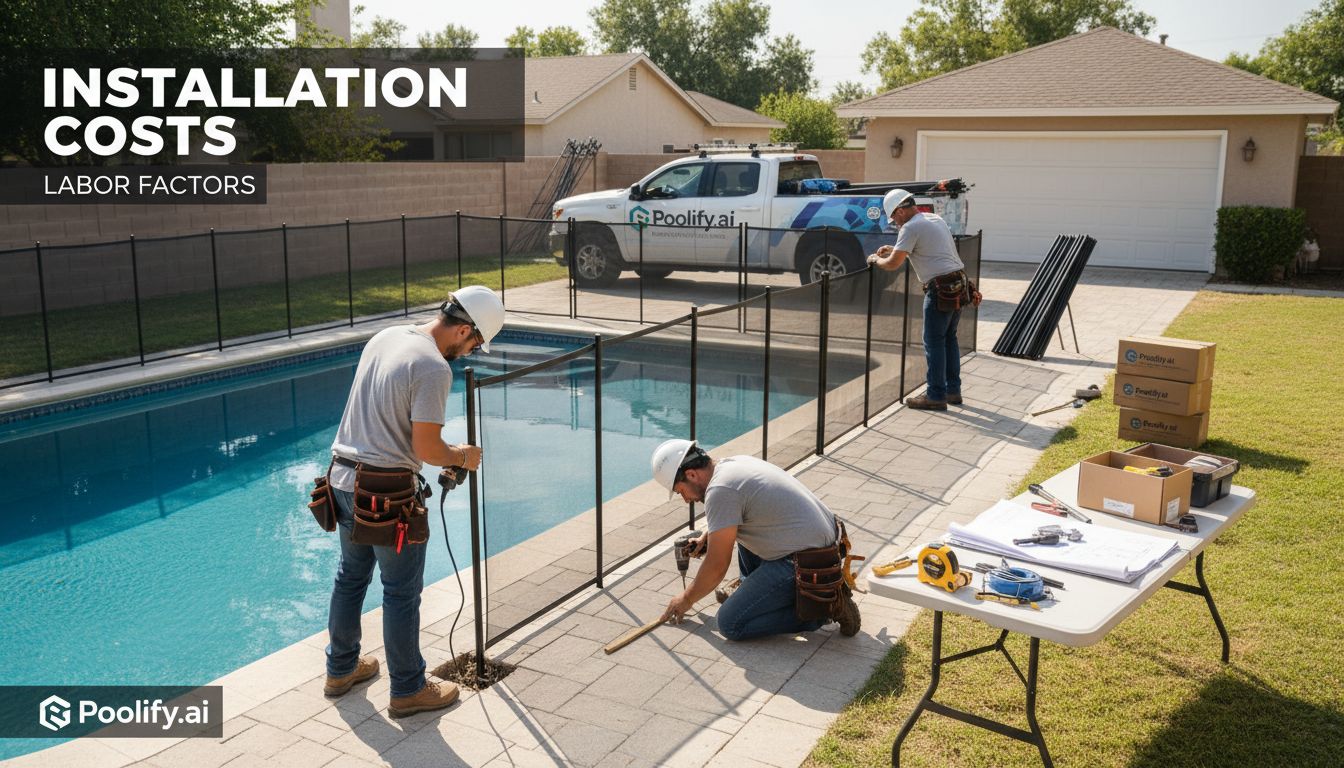
Labor typically represents 40-50% of total pool fence cost. Professional installation ensures code compliance, proper gate function, and structural integrity. In 2026, installation labor ranges from $30 to $80 per hour depending on location, contractor experience, and project complexity.
Simple installations on level ground with easy access cost less than projects requiring excavation, concrete work, or navigation around landscaping features. Most contractors charge $8 to $20 per linear foot for labor alone, separate from materials. For a 150-foot fence, expect labor costs between $1,200 and $3,000.
DIY Installation Considerations
Homeowners with construction experience can reduce pool fence cost by 30-50% through DIY installation. However, this approach requires proper tools, time commitment, and understanding of local codes. Mistakes in installation can compromise safety and lead to expensive corrections or code violations.
Mesh fencing offers the most DIY-friendly option, with manufacturers providing detailed instructions and support. Aluminum and vinyl systems with pre-drilled posts also accommodate skilled DIYers. Glass fencing should always be professionally installed due to weight, precision requirements, and safety concerns.
Permit Fees and Code Compliance Costs
Building permits add $50 to $500 to your pool fence cost depending on jurisdiction. Most municipalities require permits for permanent pool fencing to ensure compliance with safety codes. Permit fees typically cover plan review, inspections, and administrative processing.
Pool fence codes mandate specific requirements including minimum height (typically 48 inches), maximum gap between vertical bars (4 inches), self-closing and self-latching gates, and gate latch positioning at least 54 inches above ground. Non-compliance can result in fines, insurance issues, and liability concerns.
Some areas require engineering stamps or professional drawings for certain fence types, adding $200-500 to pool fence cost. Research local requirements early in planning to avoid surprises and budget accurately for all regulatory expenses.
Additional Pool Fence Cost Factors
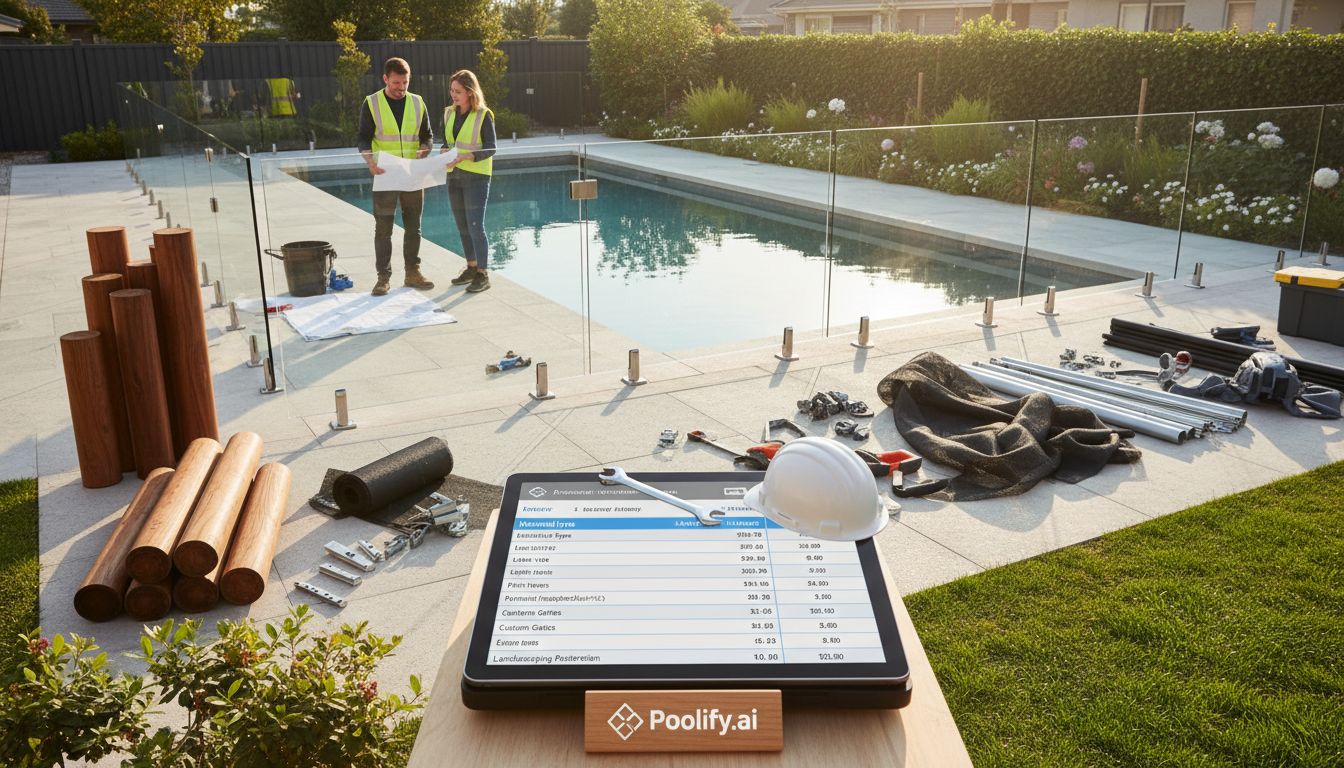
Beyond basic materials and installation, several factors influence final pool fence cost. Understanding these variables helps create realistic budgets and prevents unexpected expenses during your project.
Gate Requirements
Self-closing, self-latching gates cost $150 to $800 each depending on size and material. Most installations require at least one gate, with larger properties needing multiple access points. Premium gates with magnetic locks, alarms, or decorative elements increase costs but enhance security and convenience.
Double gates for equipment access cost $300-1,500 per set. Ensure all gates meet code requirements for latch height, closing force, and opening direction. Gate hardware represents 10-15% of total pool fence cost but plays a crucial role in safety effectiveness.
Terrain and Site Preparation
Sloped yards, rocky soil, or existing landscaping increase installation complexity and pool fence cost. Excavation for difficult terrain adds $5-15 per linear foot. Concrete footings for permanent installations cost $10-25 per post, adding $300-750 for typical installations.
Removing existing fencing or structures costs $3-8 per linear foot. Tree removal, stump grinding, or landscape modification can add $500-2,000 to projects. Site assessment during the estimate phase identifies these potential costs before work begins.
Property Size and Perimeter Length
Larger pool areas require more materials and labor, directly increasing pool fence cost. Measure your pool perimeter accurately, adding 4-6 feet of clearance on all sides per most codes. Irregular shapes or obstacles require additional materials and cutting, increasing waste and labor time.
Contractors often offer per-foot discounts on larger projects, but total costs still rise with perimeter length. A small 100-foot perimeter costs less overall than a 200-foot installation, though per-foot pricing may be higher for smaller projects.
Customization and Aesthetic Upgrades
Decorative elements, custom colors, ornamental posts, and unique designs increase pool fence cost by 20-50%. Powder coating in custom colors adds $5-10 per linear foot. Decorative post caps cost $15-75 each. Integrated lighting systems add $200-1,000 depending on complexity.
While these upgrades increase initial costs, they enhance property value and visual appeal. Balance aesthetic preferences with budget constraints, prioritizing safety features over purely decorative elements when necessary.
Money-Saving Strategies for Pool Fence Cost
Strategic planning and smart choices can significantly reduce pool fence cost without compromising safety or quality. Implement these proven strategies to maximize value while staying within budget.
Compare Multiple Quotes
Obtain at least three detailed estimates from licensed contractors. Quotes can vary by 30% or more for identical projects. Ensure estimates include all costs: materials, labor, permits, site preparation, and warranties. Beware of significantly low bids that may indicate substandard materials or unlicensed work.
Request references and verify licensing, insurance, and code knowledge. The lowest pool fence cost doesn’t always represent the best value if installation quality suffers or warranty support proves inadequate.
Consider Alternative Materials
If glass fencing exceeds your budget, aluminum provides excellent visibility at one-quarter the pool fence cost. Mesh fencing offers code-compliant safety at minimal expense. Vinyl delivers privacy and durability at mid-range pricing. Match material selection to your specific needs rather than following trends.
Mixing materials strategically reduces costs while achieving desired results. Use premium materials for highly visible front sections and economical options for less prominent areas. This approach balances aesthetics with budget constraints effectively.
Time Your Installation
Schedule installation during off-peak seasons (late fall through early spring) when contractors offer discounts to maintain steady work. Some companies reduce rates by 10-20% during slower periods. However, weather delays may extend project timelines in some regions.
Order materials during manufacturer promotions or end-of-season sales. Some suppliers offer significant discounts on discontinued colors or styles that still meet all safety requirements and quality standards.
Handle Site Preparation Yourself
Reduce labor costs by clearing the fence line, removing obstacles, and marking utility lines before contractors arrive. These tasks can save $200-500 on pool fence cost while ensuring work proceeds efficiently. Always call 811 for professional utility location before any digging.
Coordinate with landscaping projects to minimize disruption and potentially share equipment rental costs. However, leave actual fence installation to professionals to ensure code compliance and warranty coverage.
Invest in Quality for Long-Term Savings
While premium materials increase initial pool fence cost, they reduce lifetime expenses through lower maintenance and longer service life. Aluminum and vinyl require virtually no maintenance compared to wood’s regular staining requirements. Quality hardware prevents premature gate failures and replacement costs.
Extended warranties on premium products provide peace of mind and protection against defects. Calculate total cost of ownership over 15-20 years rather than focusing solely on initial installation expenses. Learn more about maintaining your pool area to protect your investment.
Pool Fence Cost by Fence Height
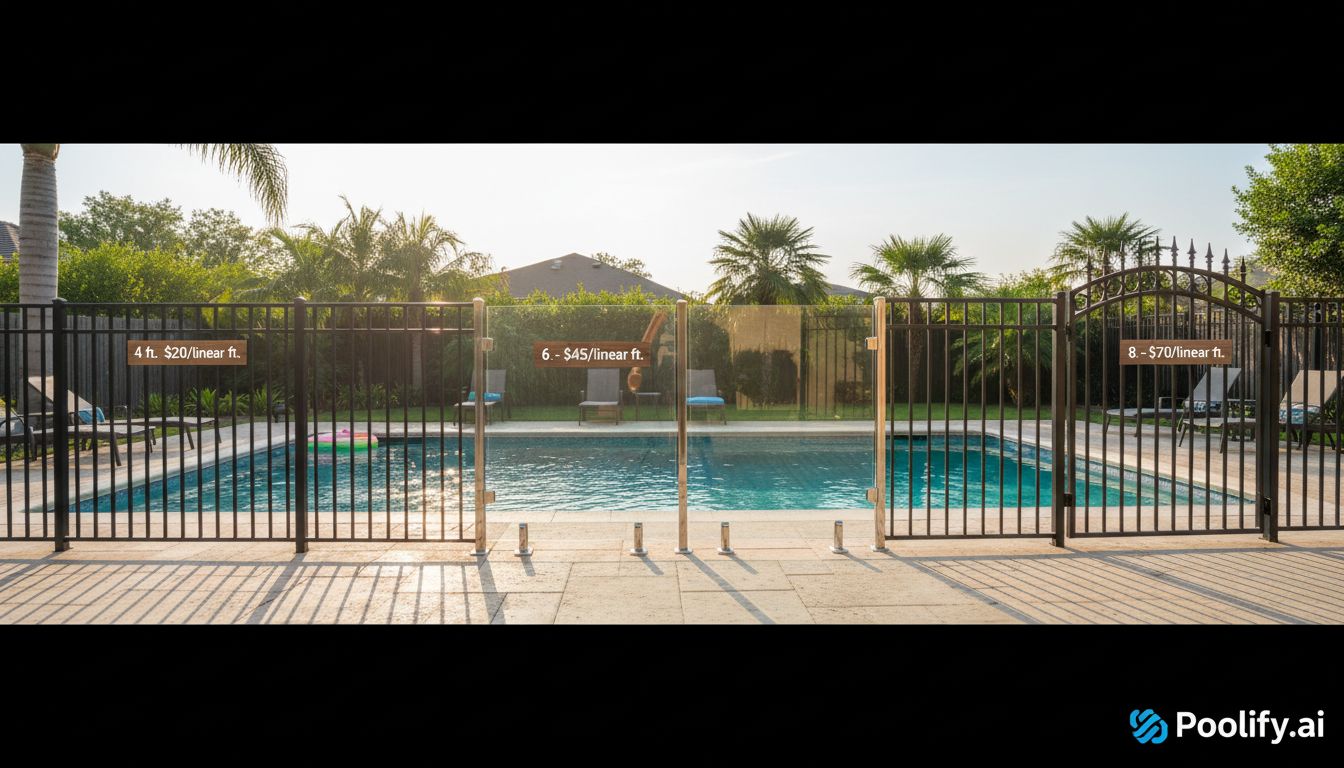
Most codes require minimum 48-inch height, but taller fences provide enhanced security and privacy. Standard 48-inch fencing represents baseline pool fence cost. Upgrading to 60-inch height adds 15-25% to material costs, while 72-inch fencing increases costs by 30-40%.
Taller fences require stronger posts and additional bracing, increasing both material and labor expenses. However, they prevent climbing by older children and provide better privacy screening. Balance code requirements with your specific security needs and budget constraints.
Some premium neighborhoods or HOAs mandate specific heights or styles, potentially increasing pool fence cost beyond code minimums. Review all applicable regulations before finalizing design and budget decisions.
Ongoing Maintenance Costs
Factor ongoing maintenance into total pool fence cost calculations. Aluminum and vinyl require only periodic washing, costing virtually nothing annually. Wood fencing needs staining every 2-3 years at $1-3 per square foot, adding $300-900 per treatment for typical installations.
Gate hardware may need adjustment or replacement every 5-10 years, costing $50-200 per gate. Glass panels require regular cleaning to maintain clarity, using standard glass cleaners at minimal expense. Mesh fencing may need replacement every 5-8 years depending on quality and exposure.
Budget 1-3% of initial pool fence cost annually for maintenance and repairs. This ensures your safety barrier remains effective and attractive throughout its service life. For more tips on pool area upkeep, check out our pool safety equipment guide.
Insurance and Liability Considerations
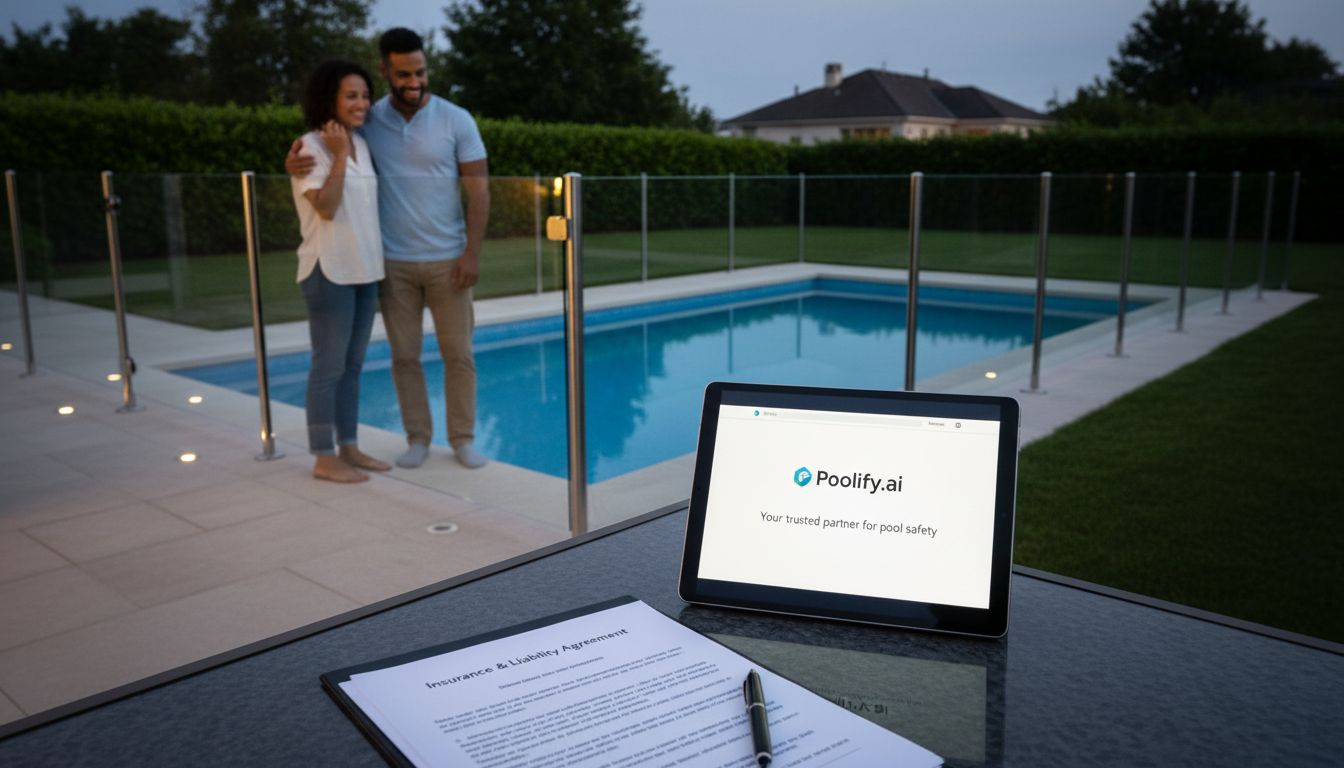
Proper pool fencing may reduce homeowners insurance premiums by 10-20%, partially offsetting pool fence cost over time. Many insurers require code-compliant barriers as conditions of coverage. Inadequate fencing can void policies or result in denied claims after accidents.
The liability protection provided by proper fencing far exceeds installation costs. Drowning lawsuits can result in million-dollar judgments against property owners. Code-compliant fencing demonstrates reasonable care and significantly reduces legal exposure.
Document your fence installation with photos, permits, and inspection certificates. Maintain records of maintenance and repairs. This documentation proves due diligence and supports insurance claims or legal defenses if needed.
Frequently Asked Questions About Pool Fence Cost
What is the cheapest pool fence option?
Mesh fencing offers the lowest pool fence cost at $10-20 per linear foot installed, totaling $1,500-3,000 for typical installations. While economical, mesh provides temporary rather than permanent solutions. For permanent installations, vinyl fencing at $20-35 per linear foot represents the most affordable solid barrier option that meets all safety codes.
How much does it cost to fence a 20×40 pool?
A 20×40 pool requires approximately 150-160 linear feet of fencing (including required clearance). Pool fence cost ranges from $1,500 for basic mesh to $48,000 for premium glass, with most homeowners spending $3,000-6,000 for aluminum or vinyl installations. The specific cost depends on material selection, terrain, and local labor rates.
Do I need a permit for pool fencing?
Most jurisdictions require building permits for permanent pool fencing to ensure code compliance. Permit costs typically range from $50-500 depending on location. Temporary mesh fencing sometimes qualifies for exemptions, but check local requirements before installation. Working without required permits can result in fines, removal orders, and insurance complications.
How long does pool fence installation take?
Professional installation typically takes 1-3 days for standard residential projects. Simple mesh installations may be completed in 4-8 hours, while complex glass fencing projects can require a week or more. Weather, site conditions, and material availability affect timelines. Schedule installation well before pool opening season to avoid delays.
Can I install a pool fence myself?
DIY installation can reduce pool fence cost by 30-50% for homeowners with construction skills. Mesh and some aluminum systems accommodate DIY installation with proper tools and code knowledge. However, glass fencing requires professional installation for safety and warranty purposes. Improper installation compromises safety and may violate codes, so assess your capabilities honestly before attempting DIY projects.
Key Takeaways
- Pool fence cost ranges from $1,500 to $45,000 depending on materials, with aluminum ($3,750-6,000) and vinyl ($3,000-5,250) offering the best value for most homeowners in 2026.
- Material selection dramatically impacts costs—mesh provides economical temporary solutions, while glass delivers premium aesthetics at significantly higher prices.
- Installation labor represents 40-50% of total costs, with professional installation ensuring code compliance and proper safety function.
- Permits, gates, and site preparation add $500-2,000 to basic material and labor costs, requiring careful budget planning.
- Strategic timing, material selection, and comparison shopping can reduce pool fence cost by 20-30% without compromising safety or quality.
See Your Dream Pool in Your Actual Backyard
Upload a photo and get an AI-designed pool visualization in 10 seconds. 3 free designs, no login required.
Try Poolify Free →Conclusion
Understanding pool fence cost empowers you to make informed decisions that protect your family while respecting your budget. The investment in proper pool fencing extends far beyond dollars—it provides peace of mind, liability protection, and potentially life-saving barriers around your pool.
In 2026, homeowners have more material options and competitive pricing than ever before. Whether you select economical mesh fencing at $1,500 or premium glass barriers at $45,000, prioritize safety compliance and quality installation. The true cost of inadequate fencing—measured in potential tragedy or legal liability—far exceeds any installation expense.
Start by obtaining multiple quotes from licensed contractors, verifying all requirements with local building departments, and selecting materials that balance your aesthetic preferences with long-term value. Proper planning and informed decision-making ensure your pool fence cost delivers maximum safety and satisfaction for years to come. For additional guidance on creating a safe pool environment, explore our pool design ideas to integrate fencing seamlessly with your overall backyard vision.
References
- Consumer Product Safety Commission – Pool Safely Campaign
