Understanding pool heater cost is essential for any pool owner looking to extend their swimming season while managing their budget effectively. In 2026, the landscape of pool heating has evolved significantly, with new energy-efficient technologies offering substantial savings alongside traditional options. Whether you’re installing a new heater or replacing an existing unit, knowing the complete financial picture—from initial investment to ongoing operating expenses—empowers you to make the smartest decision for your situation.
The pool heater cost equation involves multiple factors beyond the sticker price. Installation expenses, monthly energy bills, maintenance requirements, and the lifespan of your chosen system all contribute to the total investment. This comprehensive guide breaks down every aspect of pool heating expenses, helping you navigate the options and identify strategies that can reduce your costs by up to 50% while keeping your pool comfortably warm.
Understanding Pool Heater Cost: The Complete Breakdown
The pool heater cost varies dramatically depending on the type of system you choose. In 2026, three primary heating technologies dominate the residential market, each with distinct pricing structures and operational characteristics. Gas heaters typically range from $1,500 to $4,000 for the unit itself, while heat pumps cost between $2,500 and $6,500. Solar heating systems represent the highest upfront investment at $3,000 to $9,000, but offer the lowest operating costs over time.
Installation expenses add another layer to the pool heater cost equation. Professional installation for gas heaters typically runs $500 to $1,500, depending on whether you already have gas lines in place. Heat pump installations generally cost $800 to $2,000, while solar system installations are the most labor-intensive, ranging from $1,000 to $3,000 due to roof mounting and plumbing requirements. These figures assume standard installations; complex situations involving long pipe runs, electrical upgrades, or structural modifications can increase costs significantly.
Beyond the initial purchase and installation, operating costs represent the ongoing pool heater cost that impacts your budget month after month. Gas heaters typically cost $300 to $600 monthly during active use, depending on natural gas or propane prices in your area. Heat pumps are considerably more efficient, with monthly costs ranging from $80 to $200. Solar heaters have minimal operating costs—essentially just the electricity to run a small pump—making them the most economical long-term option despite higher upfront expenses.
Gas Pool Heaters: Fast Heating with Higher Operating Costs
Gas pool heaters remain popular in 2026 for their ability to heat water quickly regardless of weather conditions. These systems burn natural gas or propane to generate heat, making them ideal for pools that need rapid temperature increases or are used sporadically. The pool heater cost for gas units starts at approximately $1,500 for basic models suitable for smaller pools, while high-efficiency units for larger pools can exceed $4,000.
The operational efficiency of gas heaters is measured by their thermal efficiency rating, which in 2026 ranges from 82% to 95% for modern units. According to the U.S. Department of Energy’s pool heating guidelines, higher efficiency ratings directly translate to lower fuel consumption and reduced monthly expenses. However, even the most efficient gas heaters cost significantly more to operate than electric heat pumps or solar systems.
Natural gas heaters generally offer lower operating costs compared to propane models, but availability depends on your location. In areas without natural gas service, propane becomes the only option, typically costing 2 to 3 times more per BTU. This substantially increases the pool heater cost over time. A typical 400,000 BTU gas heater running 8 hours daily during a 6-month season can consume $2,000 to $4,000 in fuel annually, making operational expenses a critical consideration.
When Gas Heaters Make Financial Sense
Despite higher operating costs, gas heaters prove economical in specific situations. If you use your pool infrequently or only during occasional cold snaps, the lower upfront pool heater cost and ability to heat quickly make gas an attractive option. Spa owners particularly benefit from gas heating, as the rapid temperature increase allows for spontaneous use without hours of advance planning. Additionally, in regions with extremely cold winters where heat pumps lose efficiency, gas heaters provide reliable performance year-round.
Heat Pump Pool Heaters: The Energy-Efficient Middle Ground
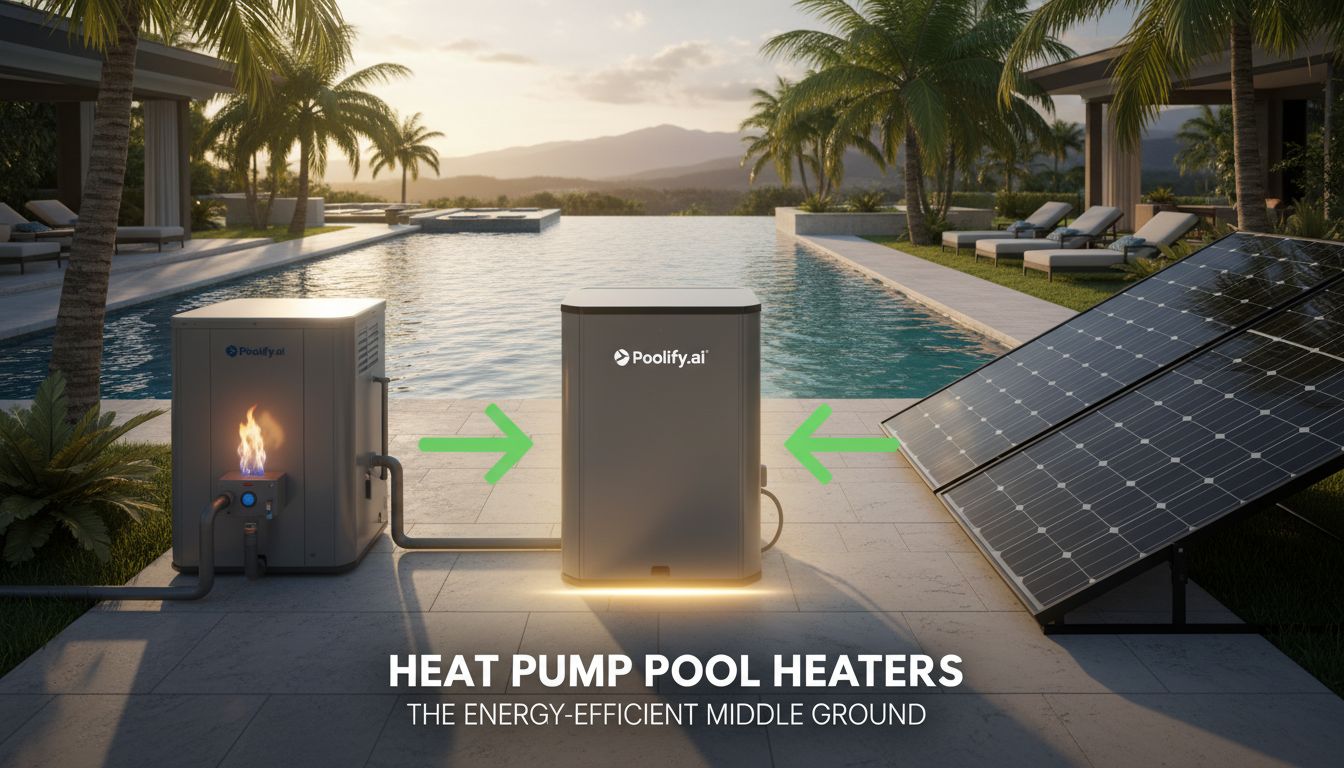
Heat pump technology has advanced significantly, making these systems the most popular choice for cost-conscious pool owners in 2026. Rather than generating heat directly, heat pumps extract warmth from ambient air and transfer it to pool water, achieving efficiency ratings of 500% to 600%. This means for every dollar spent on electricity, you receive five to six dollars worth of heating—dramatically reducing the pool heater cost compared to gas systems.
The initial investment for heat pumps falls in the mid-range, with quality units costing $2,500 to $6,500 depending on pool size and desired features. Installation adds another $800 to $2,000, bringing total upfront pool heater cost to approximately $3,300 to $8,500. While higher than gas heaters, this investment typically pays for itself within 2 to 4 years through reduced operating expenses, especially in moderate climates where heat pumps operate most efficiently.
Operating costs represent the primary advantage of heat pumps. In 2026, with average electricity rates around $0.14 per kWh nationally, a properly sized heat pump costs approximately $80 to $200 monthly during active heating season. This represents savings of 60% to 75% compared to gas heating. For year-round pool use in warm climates, annual operating expenses typically range from $800 to $1,800—a fraction of gas heating costs for the same application.
Climate Considerations for Heat Pump Efficiency
Heat pump performance directly correlates with ambient air temperature, which impacts the effective pool heater cost in different regions. These systems operate most efficiently when air temperatures exceed 50°F, with optimal performance above 60°F. In consistently warm climates like the southern United States, heat pumps provide excellent year-round performance. However, in regions where temperatures regularly drop below 50°F during the swimming season, efficiency decreases and operating costs rise, potentially making gas heaters more economical for those specific periods.
Solar Pool Heaters: Maximum Savings for Long-Term Thinking
Solar pool heating represents the highest upfront pool heater cost but delivers the lowest operating expenses over the system’s 15 to 20-year lifespan. In 2026, complete solar heating systems range from $3,000 to $9,000 installed, depending on pool size, geographic location, and roof characteristics. This investment includes solar collectors (typically mounted on a roof or ground rack), a pump, flow control valve, and necessary plumbing modifications.
The remarkable advantage of solar heating lies in its virtually nonexistent operating costs. After installation, your only expense is the electricity to run the circulation pump, which you’re already operating for filtration. This typically adds just $10 to $30 monthly to your electric bill. Over a 20-year lifespan, the total pool heater cost for solar systems often proves lowest among all options, despite the higher initial investment. In sunny climates, payback periods range from 3 to 7 years compared to gas heating.
Federal and state incentives further reduce the effective pool heater cost for solar systems. The federal solar tax credit, extended through 2026, allows homeowners to deduct 30% of installation costs from their federal taxes. Many states and utilities offer additional rebates ranging from $500 to $2,000. These incentives can reduce your net investment by 30% to 40%, significantly improving the financial equation and shortening payback periods.
Maximizing Solar Heating Performance
Solar heating effectiveness depends on proper system sizing and orientation. As a general rule, solar collector area should equal 50% to 100% of your pool’s surface area, with larger percentages needed in cooler climates or for year-round heating. South-facing roof sections with minimal shade provide optimal performance. When evaluating the pool heater cost for solar systems, consider that undersized installations save money upfront but deliver disappointing results, while properly sized systems provide comfortable water temperatures throughout the swimming season with zero fuel costs.
Factors That Significantly Impact Pool Heater Cost
Pool size represents the primary driver of both equipment and operating pool heater cost. Heating capacity is measured in BTUs (British Thermal Units), with larger pools requiring proportionally larger heaters. A small 10,000-gallon pool might need only a 75,000 BTU heater, while a large 30,000-gallon pool requires 300,000 BTUs or more. Each step up in heater capacity increases both purchase price and operating expenses, making accurate sizing essential for cost control.
Climate and desired water temperature create the second major impact on pool heater cost. Maintaining 82°F water in a cool climate requires substantially more energy than achieving the same temperature in a warm region. Additionally, each degree of desired temperature increase adds approximately 10% to 15% to heating costs. Pool owners who accept slightly cooler water temperatures—say 78°F instead of 82°F—can reduce their annual heating expenses by 30% to 40% without significantly impacting comfort for most swimmers.
Pool cover usage dramatically affects operating pool heater cost regardless of heater type. An uncovered pool loses heat continuously through evaporation, radiation, and convection. According to research from the Department of Energy, pool covers can reduce heating costs by 50% to 70% by preventing heat loss. A quality solar cover costing $100 to $300 represents one of the most cost-effective investments any pool owner can make, often paying for itself within a single season through reduced heating expenses.
Wind Exposure and Heat Loss
Wind significantly accelerates heat loss from pool surfaces, increasing the pool heater cost required to maintain comfortable temperatures. Pools in exposed locations with consistent wind may require 25% to 50% more heating capacity than sheltered pools of identical size. Strategic landscaping, fencing, or windscreens can reduce wind exposure and lower heating costs. When planning a new pool or evaluating heating options, consider wind patterns and potential mitigation strategies as part of your overall cost analysis.
Installation Costs and Hidden Expenses to Anticipate
Professional installation represents a significant component of total pool heater cost, but attempting DIY installation rarely proves economical. Gas heater installations require licensed plumbers and often gas company inspections, with costs ranging from $500 to $1,500 depending on the complexity of gas line routing. If your property lacks existing gas service, extending lines from the street can add $1,000 to $3,000 or more to your project budget.
Electrical requirements frequently add unexpected expenses to pool heater cost calculations. Heat pumps typically require dedicated 220-volt circuits with 30 to 60 amp capacity. If your existing electrical panel lacks capacity or appropriate circuits don’t exist near the pool equipment pad, electrical upgrades costing $500 to $2,000 may be necessary. Consulting with an electrician during the planning phase helps avoid budget surprises and ensures code-compliant installation.
Permit fees and inspections add another layer to the pool heater cost equation. Most jurisdictions require permits for gas line work, electrical modifications, and sometimes for the heater installation itself. Permit costs typically range from $50 to $300 depending on local requirements. While these fees seem minor compared to equipment costs, they’re legally required and skipping the permitting process can create liability issues and complications when selling your home.
Structural Considerations for Solar Installations
Solar pool heating installations may require roof structural evaluations, particularly for older homes. Solar collectors add 3 to 5 pounds per square foot to roof loading. If your roof structure cannot support this additional weight, reinforcement costs can add $1,000 to $5,000 to the project. Ground-mounted solar systems avoid roof concerns but require adequate yard space and may need concrete pads or mounting racks, adding $500 to $1,500 to installation expenses. These factors should be evaluated early when calculating total pool heater cost for solar systems.
Reducing Your Pool Heater Cost: Proven Money-Saving Strategies
Optimizing your pool heating system starts with proper sizing. Oversized heaters cost more to purchase and often cycle on and off inefficiently, while undersized units run continuously without achieving desired temperatures. Working with a qualified pool professional to calculate your specific heating load—considering pool volume, surface area, climate, wind exposure, and desired temperature rise—ensures you purchase appropriately sized equipment. This precision can reduce your pool heater cost by 15% to 25% compared to guessing or using generic sizing charts.
Investing in a quality pool cover delivers the highest return of any heating-related purchase. Solar covers not only reduce heat loss by 70% but also add heat through solar gain on sunny days. For maximum benefit, choose covers with UV-resistant materials rated for your climate. Automatic cover systems, while expensive at $5,000 to $15,000, make cover use convenient enough that owners actually use them consistently. The resulting energy savings can reduce annual pool heater cost by $1,000 to $2,000 or more, providing payback within 5 to 10 years.
Strategic heating schedules significantly impact operating pool heater cost. Rather than maintaining constant temperature 24/7, program your heater to warm the pool several hours before use and allow temperatures to drift down during non-use periods. For heat pumps, which work slowly, start heating 4 to 8 hours before swimming. Gas heaters can begin just 1 to 2 hours in advance. This approach can reduce heating costs by 30% to 40% compared to continuous operation while maintaining comfortable swimming conditions when you actually use the pool.
Combining Heating Technologies for Optimal Efficiency
Hybrid heating systems that combine multiple technologies can optimize pool heater cost across varying conditions. A common approach pairs solar heating as the primary system with a gas or heat pump backup for cloudy periods or rapid temperature boosts. The solar system handles 60% to 80% of annual heating needs at virtually no operating cost, while the backup system provides reliability when needed. Though upfront investment is higher, this strategy delivers excellent long-term economics and performance flexibility that single-system approaches cannot match.
Maintenance Costs and Long-Term Ownership Expenses
Annual maintenance represents an often-overlooked component of total pool heater cost over the system’s lifespan. Gas heaters require the most attention, with annual professional servicing costing $150 to $300. This service includes cleaning burners, checking gas pressure, inspecting heat exchangers, and verifying safe operation. Neglecting maintenance reduces efficiency, increases operating costs, and shortens equipment life, ultimately costing far more than the service itself.
Heat pump maintenance is less intensive but still necessary for optimal performance and longevity. Annual service typically costs $100 to $200 and includes cleaning coils, checking refrigerant levels, inspecting electrical connections, and verifying compressor operation. Dirty coils alone can reduce efficiency by 20% to 30%, directly increasing your pool heater cost through higher electricity consumption. Regular maintenance preserves the efficiency advantages that make heat pumps economical.
Solar heating systems require minimal maintenance, contributing to their excellent long-term economics. Annual inspections costing $75 to $150 verify proper water flow, check for leaks, and ensure valves operate correctly. The simplicity of solar systems—no burners, compressors, or complex controls—means fewer components that can fail. Expected lifespan of 15 to 20 years with minimal maintenance makes the lifetime pool heater cost for solar systems highly competitive despite higher initial investment.
Replacement and Repair Cost Planning
Understanding typical equipment lifespan helps with long-term pool heater cost planning. Gas heaters typically last 5 to 10 years with proper maintenance, heat pumps endure 10 to 15 years, and solar systems often exceed 20 years. Major repairs—such as heat exchanger replacement in gas heaters or compressor replacement in heat pumps—often cost 50% to 70% of new equipment prices. When facing major repairs on aging equipment, replacement with more efficient modern technology frequently proves more economical than repair, especially when considering ongoing operating cost savings.
Comparing Pool Heater Cost Across Different Scenarios
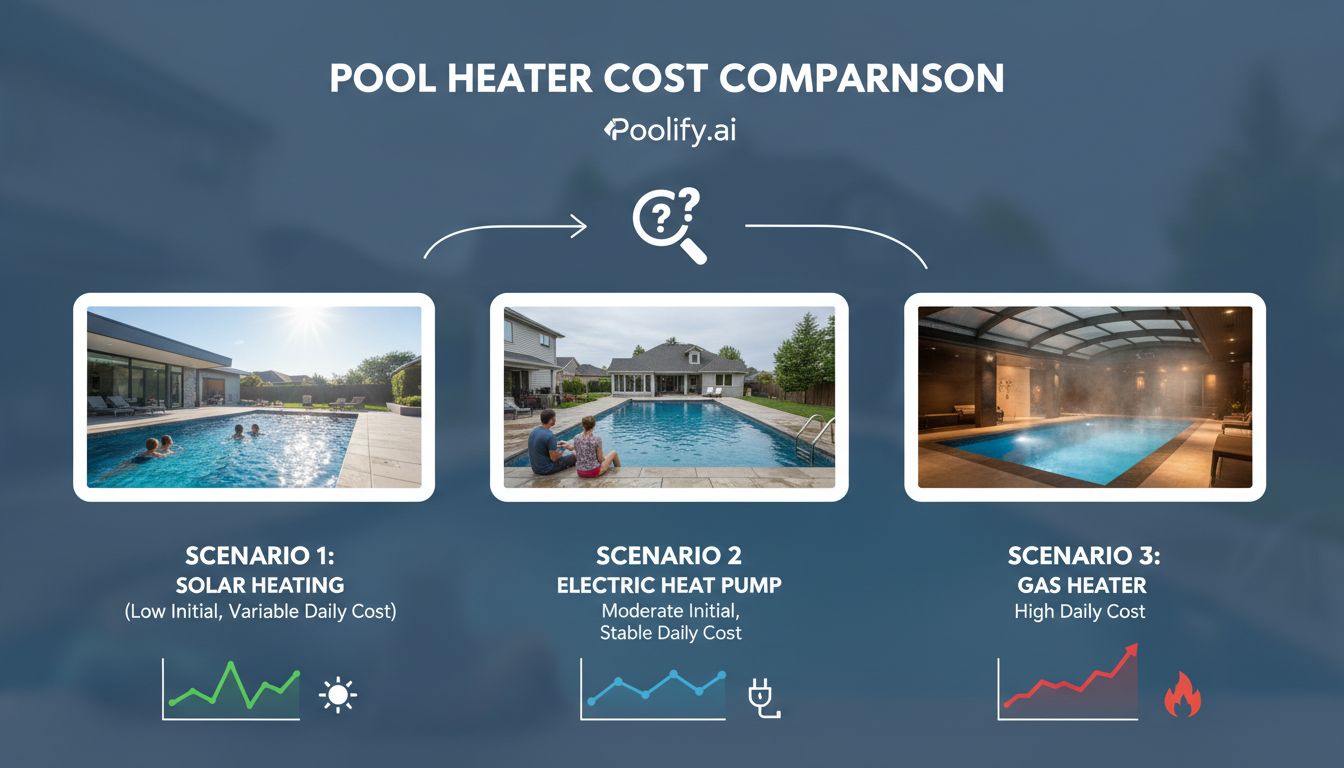
For a typical 20,000-gallon pool in a moderate climate with a 6-month heating season, let’s examine the 10-year total pool heater cost for each technology. A gas heater with $2,500 initial cost plus installation ($3,500 total) and $3,000 annual operating expenses totals approximately $33,500 over 10 years, including one replacement around year 7. A heat pump at $4,500 installed with $1,200 annual operating costs totals $16,500 over the same period. A solar system at $6,500 installed with $200 annual operating costs totals just $8,500 over 10 years.
These comparisons shift dramatically based on usage patterns and climate. In warm climates with year-round swimming, the pool heater cost advantage of solar systems becomes even more pronounced, with 10-year costs potentially reaching $50,000 for gas, $25,000 for heat pumps, and $8,000 for solar. Conversely, in cool climates with short seasons and occasional use, gas heating may prove most economical despite higher per-use costs, since you’re not maintaining temperatures continuously.
For spa heating specifically, the pool heater cost equation favors gas systems despite their higher operating expenses. Spas require rapid heating from ambient temperature to 102°F to 104°F, often on short notice. Gas heaters accomplish this in 30 to 60 minutes, while heat pumps require 4 to 8 hours. The convenience factor and lower upfront cost make gas the preferred choice for dedicated spa heating, even though per-session energy costs are higher.
Smart Technology and Pool Heater Cost Optimization
Modern pool automation systems offer sophisticated control over heating schedules, potentially reducing pool heater cost by 20% to 35% through optimized operation. Smart controllers learn your usage patterns and can automatically adjust heating schedules, integrate weather forecasts to avoid heating before rainstorms, and allow remote control via smartphone apps. While these systems add $500 to $2,000 to initial costs, the operational savings and convenience often justify the investment for pools with regular use.
Variable-speed pool pumps complement heating systems by reducing circulation costs while maintaining optimal water flow through heaters. In 2026, these pumps are standard in new pool installations and highly recommended for retrofits. By matching pump speed to actual needs rather than running at full speed continuously, variable-speed pumps reduce electricity consumption by 50% to 75%. This doesn’t directly reduce pool heater cost, but it significantly lowers total pool operating expenses, making heated pool ownership more affordable overall.
Energy monitoring systems provide real-time visibility into pool heater cost, helping owners understand the financial impact of their heating choices. These devices track energy consumption and calculate costs based on your utility rates, making the invisible expense of pool heating tangible. Many owners find that simply seeing their daily heating costs motivates behavioral changes—using covers consistently, accepting slightly lower temperatures, or adjusting heating schedules—that reduce expenses by 15% to 25% without any equipment changes.
Frequently Asked Questions About Pool Heater Cost
How much does it cost to heat a pool for a month?
Monthly pool heater cost varies significantly by heater type and usage. Gas heaters typically cost $300 to $600 monthly during active use, depending on pool size and local fuel prices. Heat pumps are more economical at $80 to $200 monthly. Solar heaters have minimal operating costs beyond the standard pool pump electricity, adding just $10 to $30 monthly. These figures assume maintaining comfortable swimming temperatures throughout the month in moderate climates.
What is the most cost-effective way to heat a pool?
Solar heating provides the lowest long-term pool heater cost in most situations, with minimal operating expenses after the initial investment. For maximum cost-effectiveness, combine solar heating with a quality pool cover to retain heat. In climates with limited sunshine or for pools with occasional use, a heat pump offers the best balance of reasonable upfront cost and efficient operation. Gas heaters, while expensive to operate, prove most cost-effective for infrequent use or rapid heating needs.
How long does a pool heater last?
Pool heater lifespan directly impacts long-term pool heater cost considerations. Gas heaters typically last 5 to 10 years with proper maintenance. Heat pumps endure 10 to 15 years under normal conditions. Solar heating systems often exceed 20 years, with some installations performing well after 25 years. Regular professional maintenance extends lifespan for all heater types and preserves efficiency, reducing both operating costs and replacement frequency.
Can I install a pool heater myself to save money?
DIY installation rarely reduces total pool heater cost as much as expected and can create safety hazards or code violations. Gas heater installations require licensed professionals for gas line work and typically need inspections. Heat pumps need proper electrical connections and refrigerant handling. Solar systems require roof work and precise plumbing. Professional installation ensures warranty coverage, code compliance, and optimal performance. Installation costs represent just 15% to 25% of total project expenses, making professional installation worthwhile for most homeowners.
How much does a pool heater increase electric bills?
The impact on electric bills depends entirely on heater type. Heat pumps typically add $80 to $200 monthly during heating season. Solar heaters add minimal costs—just $10 to $30 for increased pump operation. Gas heaters don’t affect electric bills significantly but create substantial gas or propane expenses. Using a pool cover, optimizing heating schedules, and accepting slightly lower water temperatures can reduce these costs by 30% to 50% regardless of heater type.
Key Takeaways: Making Smart Decisions About Pool Heater Cost
- Total cost extends far beyond purchase price: When evaluating pool heater cost, consider installation expenses, ongoing operating costs, maintenance requirements, and expected lifespan. A comprehensive 10-year cost analysis reveals that higher upfront investments often deliver superior long-term value through reduced operating expenses.
- Heater type should match your specific situation: Solar heating offers the lowest long-term pool heater cost for regular use in sunny climates. Heat pumps provide excellent efficiency for moderate climates and consistent use. Gas heaters excel for occasional use, rapid heating needs, or cold climates where heat pumps lose efficiency. Choose based on your usage patterns, climate, and budget priorities.
- Pool covers deliver exceptional return on investment: A quality pool cover costing $100 to $500 can reduce heating expenses by 50% to 70%, often saving $500 to $2,000 annually. This makes covers the single most cost-effective investment for reducing pool heater cost, with payback periods measured in months rather than years.
- Proper sizing and professional installation are essential: Correctly sized equipment operates efficiently and provides adequate heating capacity without waste. Professional installation ensures safety, code compliance, warranty coverage, and optimal performance. The modest additional expense of professional service prevents costly mistakes and maximizes long-term value.
- Operating costs typically exceed purchase price over time: For most heater types, lifetime operating expenses dwarf initial purchase and installation costs. When calculating pool heater cost, prioritize operating efficiency even if upfront investment is higher. Energy-efficient equipment and smart operating practices can save thousands of dollars over your heater’s lifespan while maintaining comfortable swimming conditions.
See Your Dream Pool in Your Actual Backyard
Upload a photo and get an AI-designed pool visualization in 10 seconds. 3 free designs, no login required.
Try Poolify Free →Conclusion: Investing Wisely in Pool Heating
Understanding pool heater cost in all its dimensions—from initial purchase through years of operation—empowers you to make informed decisions that balance comfort, convenience, and budget. In 2026, pool owners have access to more efficient heating technologies and better control systems than ever before, making heated pool ownership more affordable and environmentally responsible. Whether you choose gas, heat pump, or solar heating, focusing on total lifetime costs rather than just purchase price leads to better outcomes and greater satisfaction.
The most successful approach to managing pool heater cost combines appropriate technology selection with smart operating practices. Invest in quality equipment sized correctly for your specific situation, use a pool cover religiously, optimize heating schedules around actual usage, and maintain your system properly. These strategies work synergistically to minimize expenses while maximizing your enjoyment of comfortable swimming temperatures throughout the season. For more information on maintaining your pool equipment efficiently, explore our guide on pool equipment maintenance best practices.
As you evaluate options and plan your pool heating investment, remember that the least expensive choice upfront rarely proves most economical over time. Calculate 10-year total costs including all operating expenses to identify the true value proposition. Consider available incentives and rebates that can substantially reduce your net investment in efficient technologies. With thoughtful planning and informed decision-making, you can enjoy a comfortably heated pool without breaking your budget, extending your swimming season and maximizing your return on your pool investment for years to come. Learn more about improving your pool’s energy efficiency to further reduce operating costs.
References
- U.S. Department of Energy – Heat Pump Swimming Pool Heaters: https://betterbuildingssolutioncenter.energy.gov/sites/default/files/attachments/Pool%20efficiency_.pdf
- U.S. Department of Energy – Swimming Pool Covers: https://betterbuildingssolutioncenter.energy.gov/sites/default/files/attachments/Pool%20efficiency_.pdf
