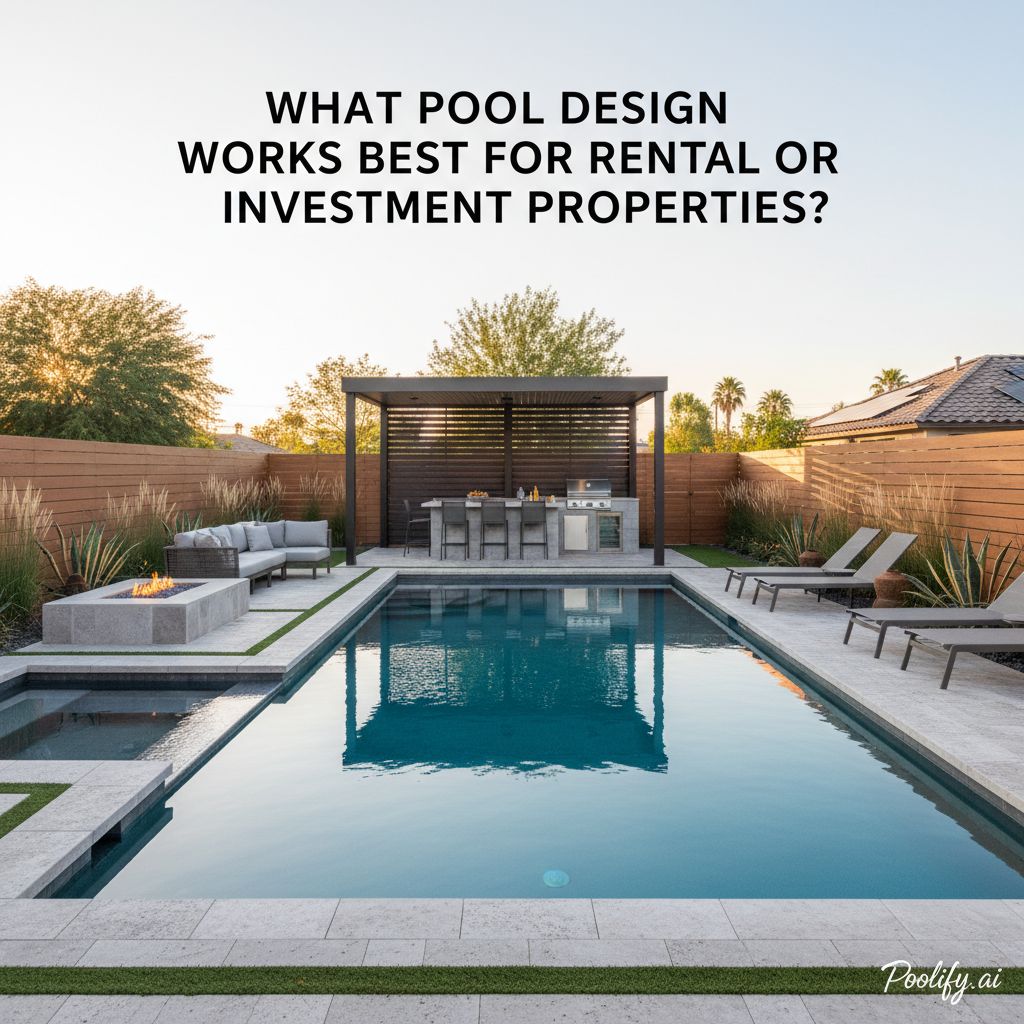
Designing a pool for a rental or investment property requires a different mindset than designing a personal backyard retreat. The goal is not personalization — it is broad appeal, durability, safety, and return on investment. The best designs attract renters, minimize maintenance, and reduce long-term risk.
This guide explains what pool design works best for rental and investment properties, which features add value without increasing headaches, and what to avoid.
Prioritize Broad Appeal Over Customization
Rental pools should appeal to as many users as possible.
Design principles for rentals
- Simple, familiar layouts
- Easy-to-understand entry points
- Clear visibility and sightlines
- Minimal learning curve for guests
Avoid designs that require explanation or special use.
Choose Simple, Durable Pool Shapes
Simple shapes are easier to build, maintain, and repair.
Best shapes for rental properties
- Rectangular pools
- Basic geometric designs
- Straightforward depth profiles
These shapes are intuitive and cost-effective.
Keep Pool Size Moderate
Oversized pools increase cost without proportional returns.
Why moderate sizes work best
- Lower construction cost
- Reduced maintenance and heating expenses
- Easier supervision
- Less perceived liability
A well-proportioned pool often feels more inviting than a massive one.
Include Shallow, Multi-Use Areas
Shallow areas increase usability for a wider range of guests.
Valuable features for rentals
- Shallow entry steps
- Small tanning ledges
- Built-in benches
These features improve comfort without adding complexity.
Avoid High-Maintenance Features
Maintenance-heavy features reduce profitability.
Features to avoid or limit
- Large waterfalls
- Complex water features
- Highly specialized finishes
- Custom automation systems that require training
Simplicity keeps operating costs predictable.
Focus on Safety and Visibility
Safety is especially important in rental properties.
Safety-oriented design choices
- Clear sightlines across the pool
- Gradual depth transitions
- Non-slip surfaces
- Defined shallow and deep zones
Good design reduces risk and improves guest confidence.
Design the Surrounding Space for Easy Use
The pool area should feel intuitive.
Layout considerations
- Clear walking paths
- Adequate deck space for seating
- Minimal elevation changes
- Easy access from the house
Confusing layouts lead to misuse and wear.
Think About Long-Term Maintenance
Every design choice affects upkeep.
Low-maintenance design strategies
- Durable, neutral finishes
- Standard equipment configurations
- Minimal custom elements
- Easy access to equipment areas
Lower maintenance improves long-term ROI.
Visualize the Pool as a Guest
Viewing the pool from a renter’s perspective reveals issues early.
Visualization helps you:
- Identify confusing layouts
- Confirm safe circulation
- Balance pool and seating areas
- Avoid overdesigning
Early clarity reduces post-build corrections.
How AI Pool Design Supports Investment Planning
AI pool design tools allow property owners to compare layouts quickly and choose designs that balance appeal, cost, and simplicity.
Tools like Poolify help investors visualize rental-friendly pool designs and make ROI-focused decisions before committing to construction.
Common Rental Pool Design Mistakes
Over-customization
Unique designs can limit appeal.
Overspending on features
Luxury upgrades rarely increase rental income proportionally.
See Your Dream Pool in Your Actual Backyard
Upload a photo and get an AI-designed pool visualization in 10 seconds. 3 free designs, no login required.
Try Poolify Free →Ignoring maintenance realities
Designs that look great can be expensive to operate.
Key Takeaways
- Rental pools should prioritize simplicity and durability
- Moderate sizes deliver better ROI
- Shallow, intuitive layouts appeal to more guests
- Low-maintenance features protect profitability
- Visualization helps spot issues from a renter’s perspective
A well-designed pool for a rental or investment property should feel easy, safe, and broadly appealing — delivering value without unnecessary complexity.
