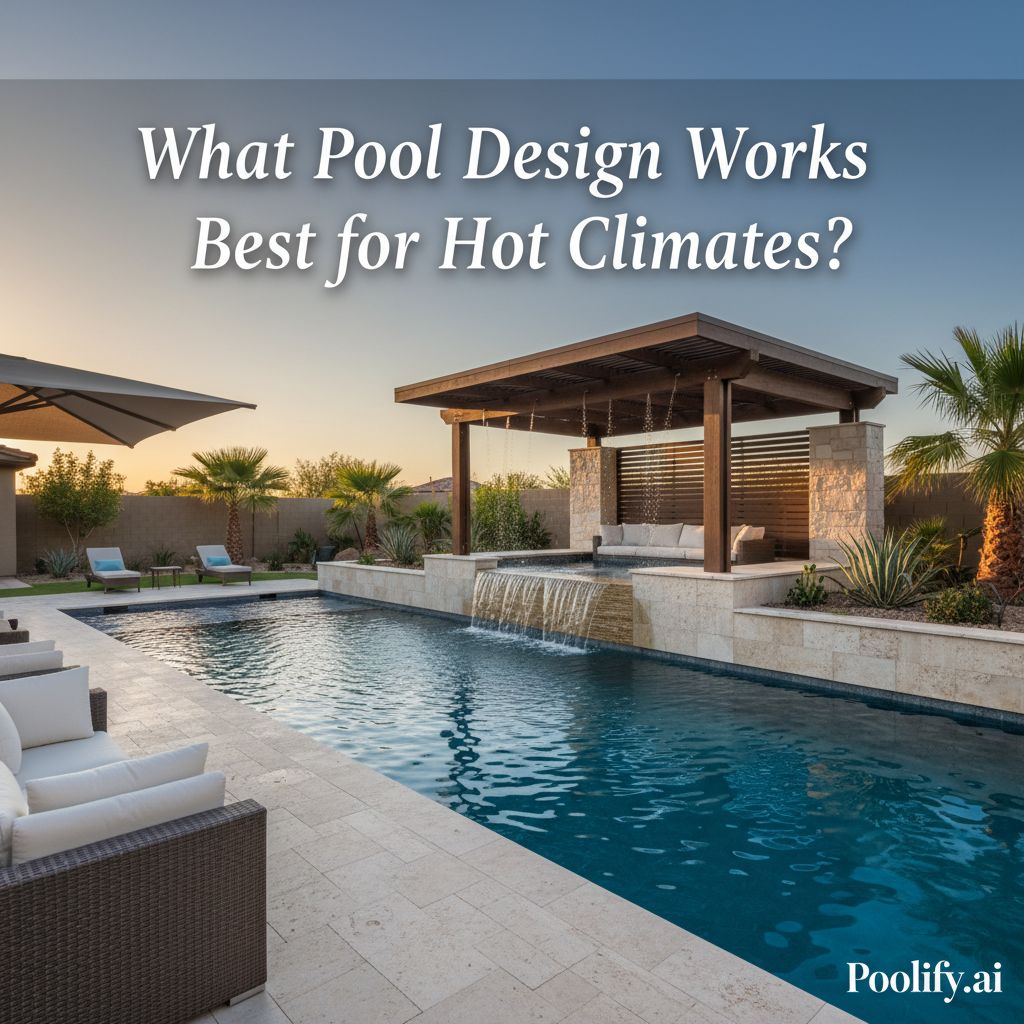
In hot climates, pool design should focus on cooling effectiveness, comfort, and efficient use during extreme heat. The best designs reduce heat buildup, support frequent use, and remain comfortable even during peak summer temperatures.
This guide explains what pool design works best for hot climates, which features improve comfort, and how to avoid designs that become uncomfortable or inefficient in high heat.
Design for Cooling, Not Just Swimming
In hot climates, pools are used primarily to cool down.
Cooling-focused priorities
- Easy entry and exit for frequent dips
- Shallow areas for lounging in cooler water
- Shade integration around the pool
- Materials that do not retain excessive heat
Design should support quick, comfortable use throughout the day.
Include Shallow Lounging Areas
Shallow water stays more comfortable for extended use.
Tanning ledges and sun shelves
These areas allow people to cool off without full immersion.
Why they work in hot climates
- Comfortable for long periods
- Social and family-friendly
- Encourage frequent use
Shallow zones are especially valuable in extreme heat.
Choose Pool Shapes That Promote Circulation
Good circulation helps maintain consistent water temperature.
Effective shapes
- Rectangular or simple geometric pools
- Clear, unobstructed swim paths
- Minimal dead zones
Complex shapes can create stagnant areas that warm unevenly.
Use Light, Heat-Reflective Materials
Material selection has a major impact on comfort.
Smart material choices
- Light-colored pool finishes
- Heat-reflective decking materials
- Natural stone or light porcelain pavers
Dark materials absorb heat and can become uncomfortable to walk on.
Prioritize Shade Around the Pool
Shade is critical in hot climates.
Shade strategies
- Strategic placement near the house
- Integrated pergolas or shade structures
- Landscaping that provides filtered shade
- Umbrella-friendly deck layouts
Designing shade into the layout improves comfort without blocking airflow.
Balance Sun and Shade in Pool Placement
Pools should not be fully shaded or fully exposed.
Ideal balance
- Sun exposure for warming water when needed
- Shade for lounging and resting
- Clear sightlines for supervision
Balanced placement increases usability throughout the day.
Avoid Overheating the Surrounding Space
The area around the pool should remain comfortable.
Design considerations
- Limit large expanses of dark hardscape
- Use materials that stay cool underfoot
- Maintain airflow between structures
Overheated decks reduce how often the pool is used.
Think About Water Depth and Temperature
Depth influences water temperature.
Hot-climate depth considerations
- Moderate depths stay cooler longer
- Avoid overly shallow pools that heat quickly
- Balance shallow lounging with cooler swim areas
A mix of depths improves comfort during long heat waves.
Visualize Pool Use During Peak Heat
Designing for hot climates benefits greatly from visualization.
Seeing the pool in context helps you:
- Identify shade opportunities
- Balance sun exposure
- Evaluate deck comfort
- Adjust placement before construction
Visualization prevents designs that look good but feel uncomfortable in practice.
How AI Pool Design Helps Hot-Climate Planning
AI pool design tools allow homeowners to explore layouts with heat and comfort in mind. By visualizing different placements and features, it becomes easier to choose designs that stay comfortable in extreme temperatures.
Tools like Poolify help users plan pools for hot climates by testing layouts and identifying shade and comfort opportunities early.
Common Hot-Climate Pool Design Mistakes
Too much exposed hardscape
This creates uncomfortable heat buildup.
Lack of shade
Pools become unpleasant during peak hours.
See Your Dream Pool in Your Actual Backyard
Upload a photo and get an AI-designed pool visualization in 10 seconds. 3 free designs, no login required.
Try Poolify Free →Overly shallow designs
Water heats too quickly.
Key Takeaways
- Hot-climate pool design should prioritize cooling and comfort
- Shallow lounging areas increase usability
- Light materials reduce heat retention
- Shade integration is essential
- Visualization helps identify comfort issues early
A pool designed for hot climates should feel refreshing, comfortable, and usable throughout the day — even during the hottest months of the year.
