
Deciding between an above ground pool vs inground pool represents one of the most significant investments you’ll make for your home in 2026. With pool ownership surging across the United States and new technologies making both options more attractive than ever, understanding the key differences helps you choose the right fit for your budget, property, and lifestyle. This comprehensive guide breaks down everything you need to know about above ground pool vs inground options, from initial costs to long-term maintenance, so you can make an informed decision that you’ll enjoy for years to come.
Understanding the Basics: Above Ground Pool vs Inground Pools
The fundamental difference between above ground pool vs inground pools lies in their installation method and structural design. Above ground pools sit on top of your yard’s surface, with walls that rise above ground level and are typically made from steel, aluminum, or resin materials. These pools offer quick installation and portability, making them an attractive option for homeowners seeking immediate gratification without extensive construction.
Inground pools, conversely, are excavated into the earth and built with concrete, fiberglass, or vinyl liner construction. They become permanent fixtures of your property, integrated seamlessly into your landscape design. According to the U.S. Census Bureau’s housing data, inground pools can add significant value to residential properties, though this varies by region and market conditions.
When comparing above ground pool vs inground options in 2026, you’ll find that technological advances have narrowed some traditional gaps. Modern above ground pools now feature sophisticated filtration systems, attractive designs, and durable materials that challenge older perceptions. Meanwhile, inground pools have become more cost-effective with prefabricated fiberglass options and streamlined installation processes.
Cost Comparison: Above Ground Pool vs Inground Investment
The financial aspect of above ground pool vs inground selection often becomes the deciding factor for most homeowners. In 2026, above ground pools typically range from $1,500 to $15,000 for complete installation, depending on size, materials, and features. Basic models start around $1,500 for a simple 24-foot round pool, while premium resin pools with decking and accessories can reach $15,000 or more.
Inground pools require substantially higher initial investment, with costs ranging from $35,000 to $100,000 or beyond. Vinyl liner inground pools represent the most affordable option at $35,000-$65,000, while concrete gunite pools can exceed $100,000 for custom designs. Fiberglass pools fall in the middle range at $45,000-$85,000, offering a balance between cost and durability.
Beyond initial purchase price, the above ground pool vs inground debate extends to installation costs. Above ground pools can often be installed in 1-3 days with minimal site preparation, sometimes even as DIY projects. Inground pools require professional excavation, plumbing, electrical work, and typically 6-12 weeks for completion, adding $10,000-$30,000 in labor costs alone.
Long-Term Financial Considerations
When evaluating above ground pool vs inground economics, consider the total cost of ownership over 10-15 years. Above ground pools generally have shorter lifespans of 7-15 years, requiring eventual replacement. Quality inground pools can last 25-50 years with proper maintenance, though vinyl liners need replacement every 7-10 years at $4,000-$6,000 per replacement.
Insurance and property taxes also factor into the above ground pool vs inground equation. Inground pools typically increase property taxes by $500-$1,500 annually and may raise homeowner’s insurance premiums by 10-20%. Above ground pools usually have minimal impact on property taxes and smaller insurance increases, as they’re considered temporary structures in most jurisdictions.
Installation and Setup: Above Ground Pool vs Inground Process
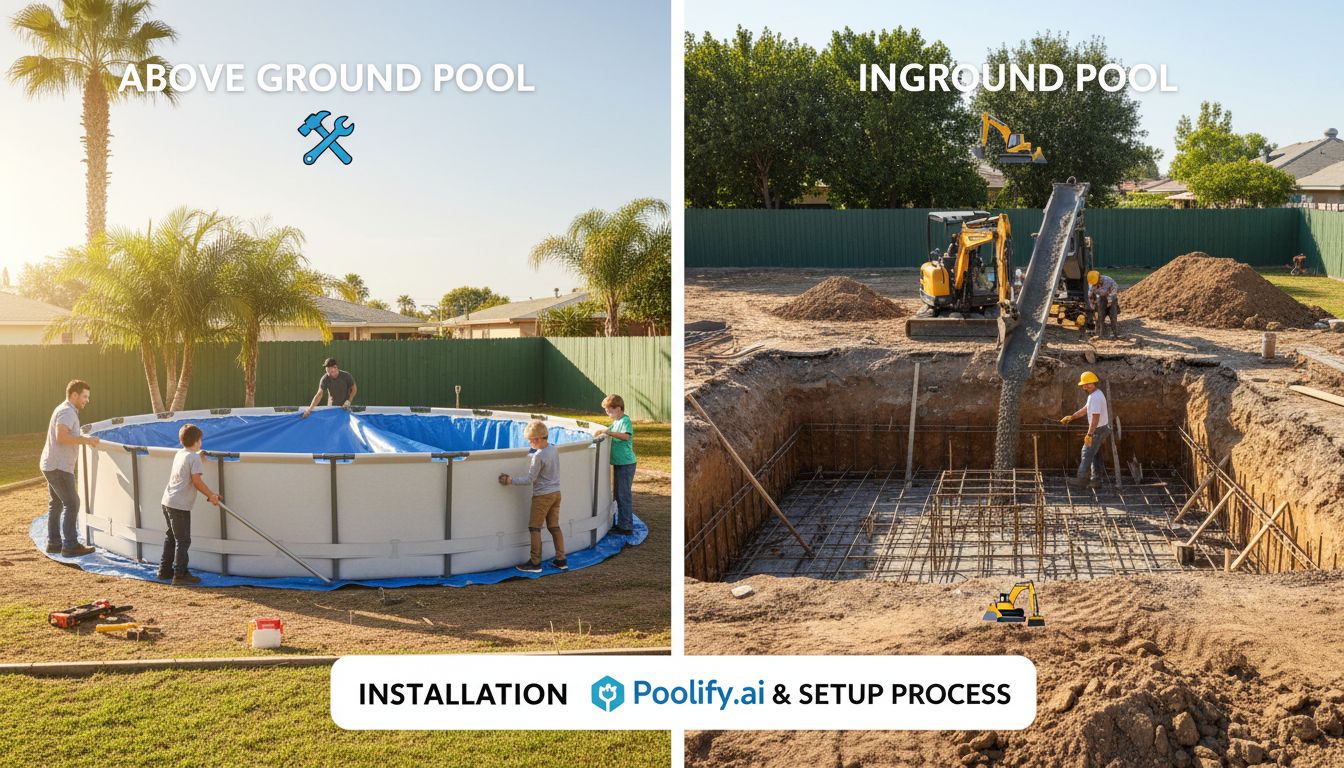
The installation timeline dramatically differs in the above ground pool vs inground comparison. Above ground pools offer immediate gratification, with most installations completed in one weekend. The process involves leveling a ground area, laying sand or foam padding, assembling the pool walls, installing the liner, and connecting filtration equipment. Many homeowners successfully complete this as a DIY project, though professional installation ensures proper leveling and warranty compliance.
Inground pool installation represents a major construction project requiring permits, inspections, and professional expertise. The process begins with excavation, followed by plumbing and electrical infrastructure, structural installation (concrete pouring, fiberglass shell placement, or vinyl liner frame), decking construction, and final landscaping. Weather delays, permit processing, and contractor scheduling can extend timelines significantly in 2026’s busy construction market.
Site requirements also distinguish above ground pool vs inground options. Above ground pools need relatively flat, well-drained areas but can adapt to many yard configurations. They’re ideal for properties with challenging soil conditions, high water tables, or limited access for heavy equipment. Inground pools require extensive site evaluation, including soil testing, utility location, and drainage assessment. Rocky terrain, high water tables, or limited equipment access can substantially increase inground pool costs.
Maintenance and Operating Costs: Above Ground Pool vs Inground Reality
Daily maintenance requirements are surprisingly similar in the above ground pool vs inground comparison. Both pool types need regular chemical balancing, filtration system operation, skimming, and vacuuming. However, above ground pools typically have smaller water volumes (10,000-15,000 gallons vs. 20,000-30,000+ gallons for inground), reducing chemical costs by 30-50%.
Energy consumption favors above ground pools in the above ground pool vs inground debate. Smaller pumps and heaters for above ground pools consume less electricity, saving $300-$600 annually compared to inground systems. In 2026, many homeowners are installing variable-speed pumps and solar heating for both pool types, narrowing this gap while improving environmental sustainability.
Winter maintenance differs significantly between above ground pool vs inground pools in colder climates. Above ground pools require careful winterization, including complete water drainage or specialized winter covers to prevent structural damage from freezing. Some owners even disassemble above ground pools for winter storage. Inground pools typically remain filled year-round with proper winterization chemicals and safety covers, simplifying seasonal transitions.
Repair and Replacement Costs
Repair costs factor heavily into long-term above ground pool vs inground economics. Above ground pool liners cost $300-$800 to replace, while structural components like walls or frames may cost $500-$2,000. However, catastrophic failure often means complete pool replacement rather than repair. For guidance on maintaining your pool investment, check out our comprehensive pool maintenance guide.
Inground pool repairs tend to be more expensive but less frequent. Vinyl liner replacement runs $4,000-$6,000, concrete resurfacing costs $10,000-$20,000 every 10-15 years, and fiberglass gel coat repairs range from $1,000-$5,000. Plumbing and equipment repairs apply to both pool types, with similar costs of $200-$1,500 for common issues like pump or filter replacement.
Aesthetic Appeal and Property Value: Above Ground Pool vs Inground Impact
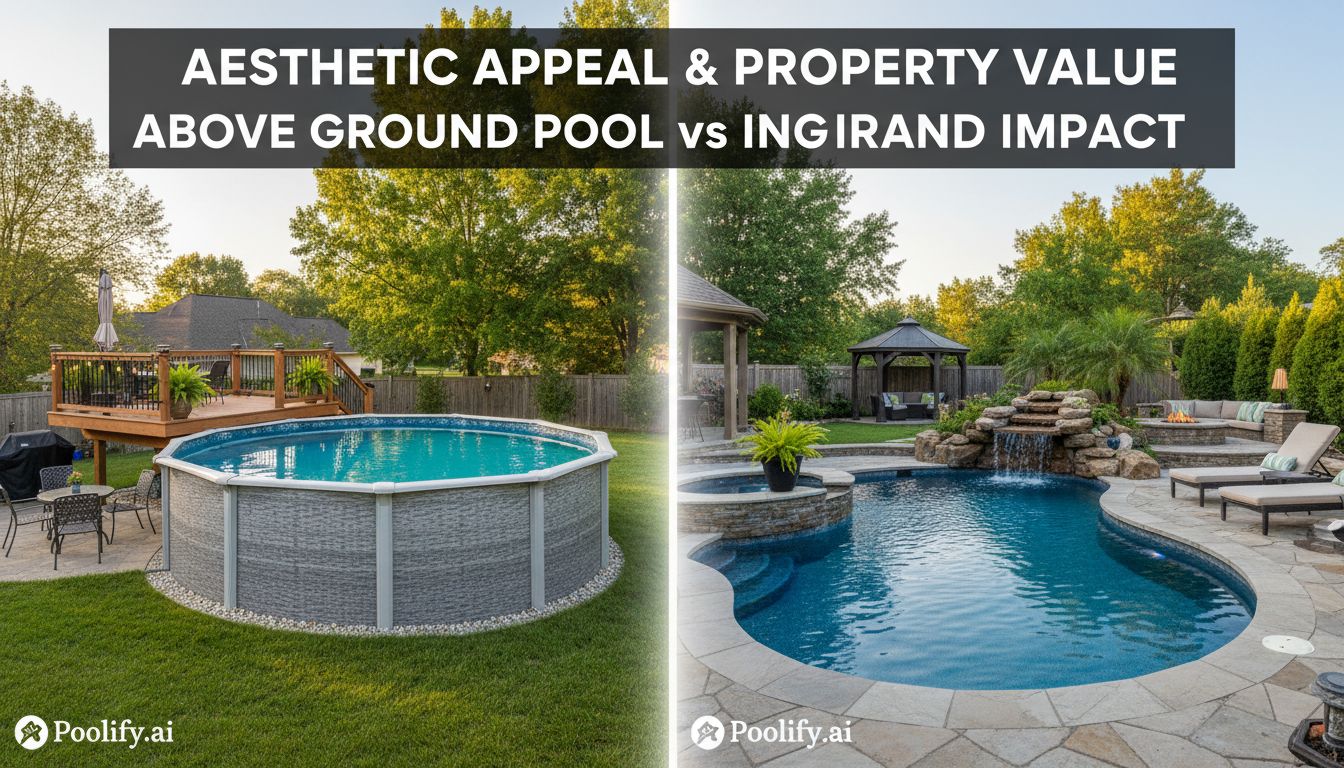
Visual integration into your landscape represents a clear advantage for inground pools in the above ground pool vs inground aesthetic comparison. Inground pools blend seamlessly with surrounding decking, patios, and landscaping, creating resort-style outdoor living spaces. Custom shapes, integrated spas, waterfalls, and infinity edges offer unlimited design possibilities that enhance your property’s overall appeal.
Above ground pools have evolved significantly in 2026, with modern designs challenging traditional perceptions. Premium models feature wood-grain finishes, decorative panels, and integrated decking that minimize the “temporary” appearance. Strategic landscaping, surrounding decks, and creative lighting can transform above ground pools into attractive backyard focal points, though they’ll never achieve the seamless integration of inground designs.
Property value impact clearly favors inground pools in most markets. Real estate experts estimate that well-maintained inground pools can return 50-70% of their installation cost in increased home value, depending on location and market conditions. The National Association of Realtors notes that pools are most valuable in warm climates where year-round use is possible.
Above ground pools typically add minimal resale value and may even deter some buyers who view them as temporary structures requiring removal. However, they don’t trigger the same concerns about liability, maintenance costs, or reduced yard space that can negatively impact marketability in some demographics. For more insights on pool design and property enhancement, explore our pool design ideas collection.
Safety Considerations: Above Ground Pool vs Inground Comparison
Safety features differ substantially in the above ground pool vs inground evaluation. Above ground pools offer inherent safety advantages with their elevated walls, typically 48-54 inches high, creating a natural barrier that prevents unsupervised access by young children. Removable ladders provide additional security when the pool isn’t in use, making unauthorized entry more difficult.
Inground pools require comprehensive safety measures including fencing, alarms, and covers to prevent accidental drowning. Most jurisdictions mandate four-sided fencing at least 48 inches high with self-closing, self-latching gates. Safety covers, pool alarms, and automatic gate closers add $2,000-$5,000 to initial costs but are essential for households with children or pets.
Both pool types benefit from modern safety technology in 2026. Motion-sensor alarms, smartphone-connected monitoring systems, and automatic safety covers provide peace of mind regardless of which option you choose in the above ground pool vs inground decision. Proper supervision, swimming lessons, and clear safety rules remain the most important factors for preventing accidents with either pool type.
Durability and Lifespan: Above Ground Pool vs Inground Longevity
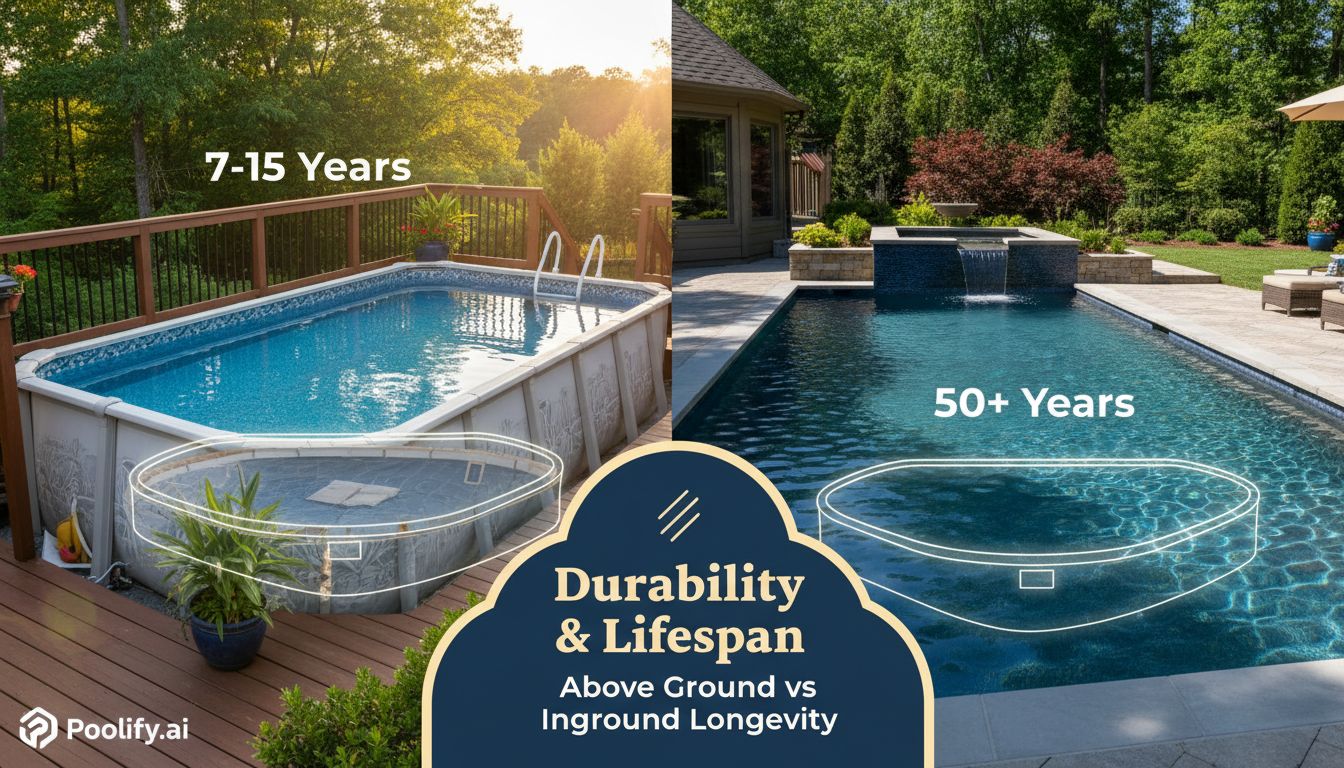
Expected lifespan represents a significant factor in the above ground pool vs inground value proposition. Quality above ground pools last 7-15 years with proper maintenance, though individual components may need replacement sooner. Steel walls can rust in 10-12 years despite protective coatings, while resin pools resist corrosion and may last 15-20 years. Liners typically need replacement every 5-9 years regardless of wall material.
Inground pools offer superior longevity, with concrete pools lasting 50+ years, fiberglass pools 25-30 years, and vinyl liner pools 25+ years (though liners need periodic replacement). The permanent infrastructure—plumbing, electrical, and structural components—can serve for decades with proper maintenance, making inground pools a true long-term investment rather than a consumable purchase.
Climate significantly impacts durability in the above ground pool vs inground comparison. Harsh winters with freeze-thaw cycles stress above ground pool structures, potentially shortening lifespan in northern regions. Inground pools better withstand temperature extremes when properly winterized, though surface materials still suffer from weather exposure over time.
Customization and Features: Above Ground Pool vs Inground Options
Customization possibilities heavily favor inground pools in the above ground pool vs inground feature comparison. Inground pools offer unlimited shape options, from classic rectangles to freeform designs mimicking natural lagoons. Integrated features like beach entries, tanning ledges, swim-up bars, grottos, and infinity edges create personalized outdoor experiences impossible with above ground pools.
Above ground pools come in limited shapes—primarily round and oval—with sizes ranging from 12 to 33 feet in diameter or length. However, 2026 innovations have expanded above ground pool capabilities. Saltwater systems, LED lighting, heating options, and advanced filtration now match inground pool technology. Some manufacturers offer semi-inground installation, burying the pool partially for improved aesthetics while maintaining cost advantages.
Water features and entertainment options distinguish the above ground pool vs inground experience. Inground pools easily accommodate waterfalls, fountains, fire features, and integrated spas. Above ground pools can add deck-mounted waterfalls and adjacent hot tubs, but integration lacks the seamless quality of inground designs. For creative enhancement ideas, visit our pool accessories guide.
Frequently Asked Questions: Above Ground Pool vs Inground
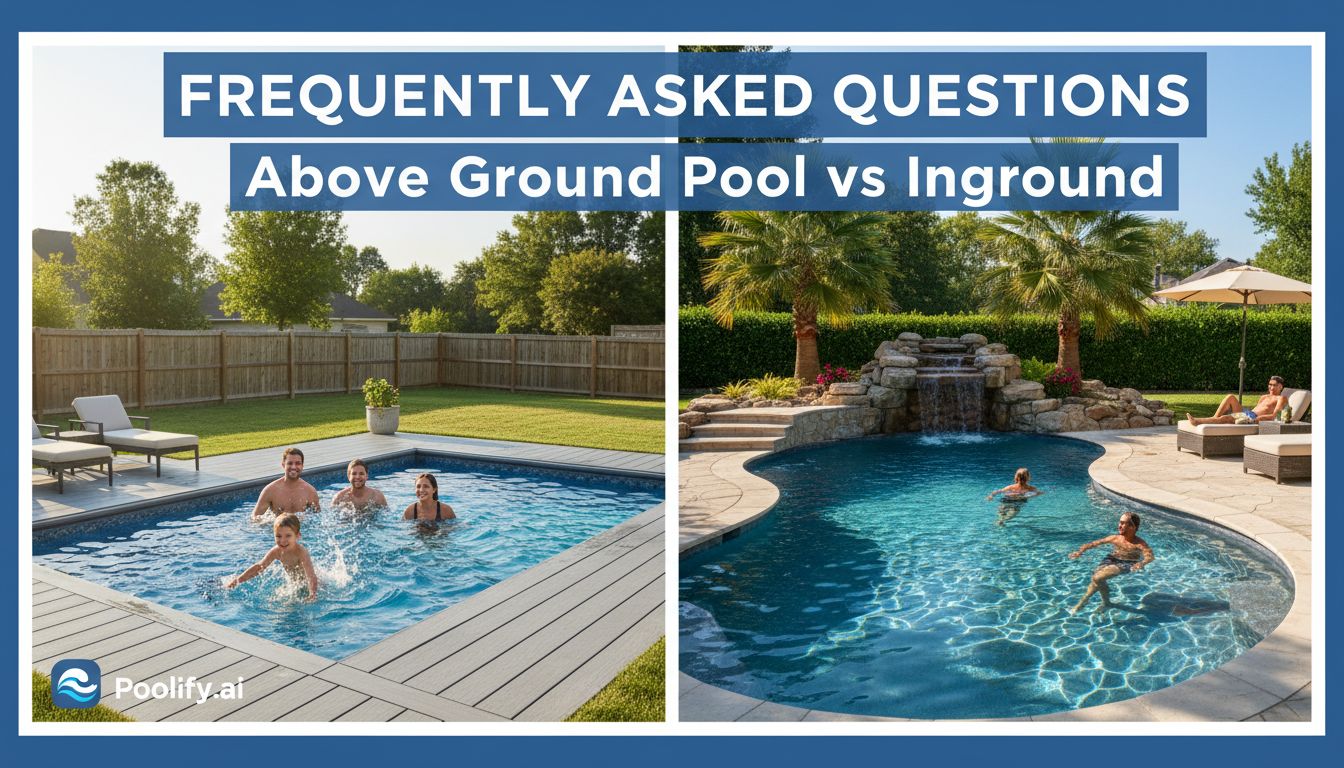
Can above ground pools be heated like inground pools?
Yes, above ground pools can be heated using gas, electric, or solar heating systems similar to inground pools. However, their smaller water volume means they heat faster and cost less to maintain desired temperatures. Heat pumps and solar heating systems are particularly cost-effective for above ground pools in 2026, offering energy-efficient temperature control throughout the swimming season.
Do above ground pools require permits like inground pools?
Permit requirements for above ground pool vs inground installations vary by municipality. Most jurisdictions require permits for inground pools without exception. Above ground pools may not need permits if they’re under certain size thresholds (often 24 inches deep or 5,000 gallons) and considered temporary structures. Always check local building codes before installation, as requirements differ significantly between locations.
Which pool type is better for small backyards?
Above ground pools often work better for small backyards in the above ground pool vs inground comparison. They require less surrounding space for installation equipment and can be positioned closer to property lines in many jurisdictions. Additionally, they don’t require extensive decking or safety fencing that consumes yard space. However, small inground plunge pools or cocktail pools (10×20 feet or smaller) can maximize limited space while providing the aesthetic benefits of inground construction.
How does resale value compare between above ground pool vs inground?
Inground pools typically add 5-8% to home value in favorable markets, potentially recovering 50-70% of installation costs. Above ground pools add minimal resale value and may be viewed neutrally or negatively by buyers. In the above ground pool vs inground resale comparison, inground pools are considered permanent improvements, while above ground pools are seen as personal property that sellers often remove before listing.
Can you convert an above ground pool to inground?
While technically possible to partially bury some above ground pools (called semi-inground installation), true conversion from above ground pool vs inground isn’t practical. Above ground pool structures aren’t engineered to withstand soil pressure from burial. Semi-inground installation involves burying the pool 2-3 feet deep with proper retaining walls and drainage, creating a compromise between above ground pool vs inground aesthetics and costs.
Key Takeaways: Making Your Above Ground Pool vs Inground Decision
- Budget drives the decision: Above ground pools cost $1,500-$15,000 installed, while inground pools require $35,000-$100,000+, making above ground pools accessible for homeowners seeking immediate pool ownership without major financial commitment.
- Longevity favors inground: Inground pools last 25-50 years compared to 7-15 years for above ground pools, offering better long-term value despite higher upfront costs in the above ground pool vs inground comparison.
- Installation timeline differs dramatically: Above ground pools install in 1-3 days, while inground pools require 6-12 weeks of construction, making above ground pools ideal for those wanting immediate summer enjoyment.
- Property value impact varies: Inground pools can recover 50-70% of costs in home value, while above ground pools add minimal resale value, making inground pools better investments for long-term homeowners.
- Modern technology narrows the gap: 2026 innovations in above ground pool design, materials, and features have reduced traditional disadvantages, offering sophisticated options that challenge the above ground pool vs inground hierarchy for many homeowners.
Conclusion: Choosing Between Above Ground Pool vs Inground for 2026
The above ground pool vs inground decision ultimately depends on your specific circumstances, priorities, and long-term plans. Above ground pools excel for budget-conscious homeowners, renters, those with challenging property conditions, or anyone seeking quick installation with minimal commitment. They provide genuine swimming enjoyment at a fraction of inground costs, with modern designs that have shed the “temporary” stigma of previous generations.
Inground pools represent the premium choice for homeowners planning to stay in their property long-term, those prioritizing aesthetics and property value, or anyone wanting unlimited customization options. The higher initial investment delivers decades of use, seamless landscape integration, and potential return through increased home value. In favorable climates and markets, inground pools can be sound financial investments beyond their recreational value.
Consider your timeline, budget, property characteristics, and long-term goals when making your above ground pool vs inground choice. Both options provide wonderful outdoor entertainment and family memories in 2026. The “right” answer isn’t universal—it’s the pool that best fits your unique situation and brings you years of enjoyment within your means.
References
- U.S. Census Bureau – Housing Construction Data: https://www.census.gov/construction/chars/completed.html
- National Association of Realtors – Research and Statistics: https://www.nar.realtor/research-and-statistics