
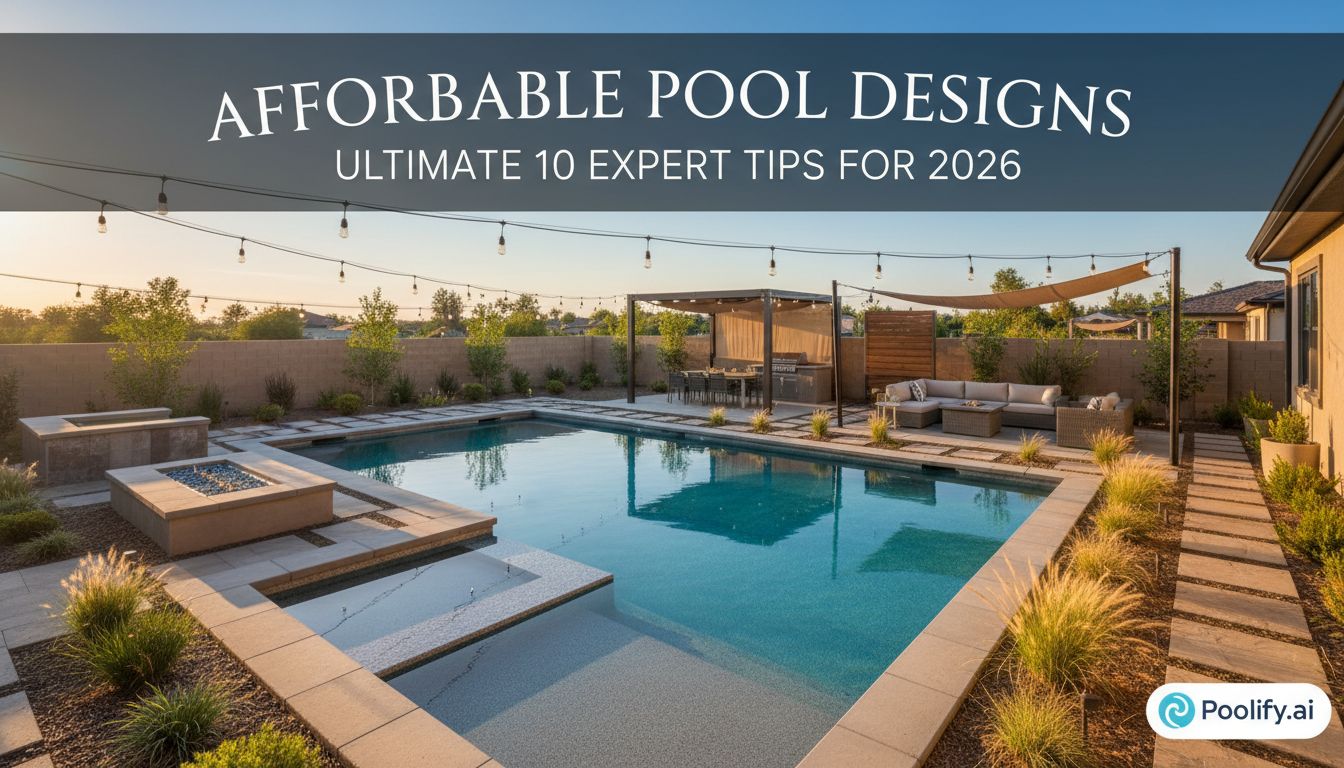
Creating the perfect backyard oasis doesn’t require unlimited funds. Affordable pool designs have evolved significantly in 2026, offering homeowners countless options to enjoy a swimming pool without the traditional six-figure price tag. Whether you’re working with a modest budget or simply seeking to maximize value, understanding the key principles of cost-effective pool design can help you achieve the backyard retreat you’ve always wanted. This comprehensive guide explores proven strategies, innovative materials, and smart design choices that make pool ownership accessible to more families than ever before.
Understanding What Makes Pool Designs Affordable
The foundation of affordable pool designs lies in understanding where costs accumulate and how to optimize each decision. Traditional in-ground pools can cost between $50,000 and $100,000, but strategic planning can reduce this substantially. The key factors affecting pool costs include size, depth, materials, site preparation, and additional features. By making informed choices in each category, you can create a beautiful pool that fits your budget.
Material selection plays a crucial role in determining overall cost. Vinyl-liner pools typically represent the most affordable option for in-ground installations, with costs ranging from $25,000 to $45,000. Fiberglass pools offer a middle-ground option at $30,000 to $60,000, while concrete pools remain the premium choice. Understanding these baseline costs helps you set realistic expectations and make strategic compromises that preserve the features most important to your family.
Site conditions significantly impact installation expenses. A level yard with good drainage and easy access for equipment will cost substantially less than a sloped property requiring extensive excavation and retaining walls. According to the U.S. Census Bureau’s construction data, site preparation can account for 15-30% of total pool installation costs, making property assessment a critical first step in planning affordable pool designs.
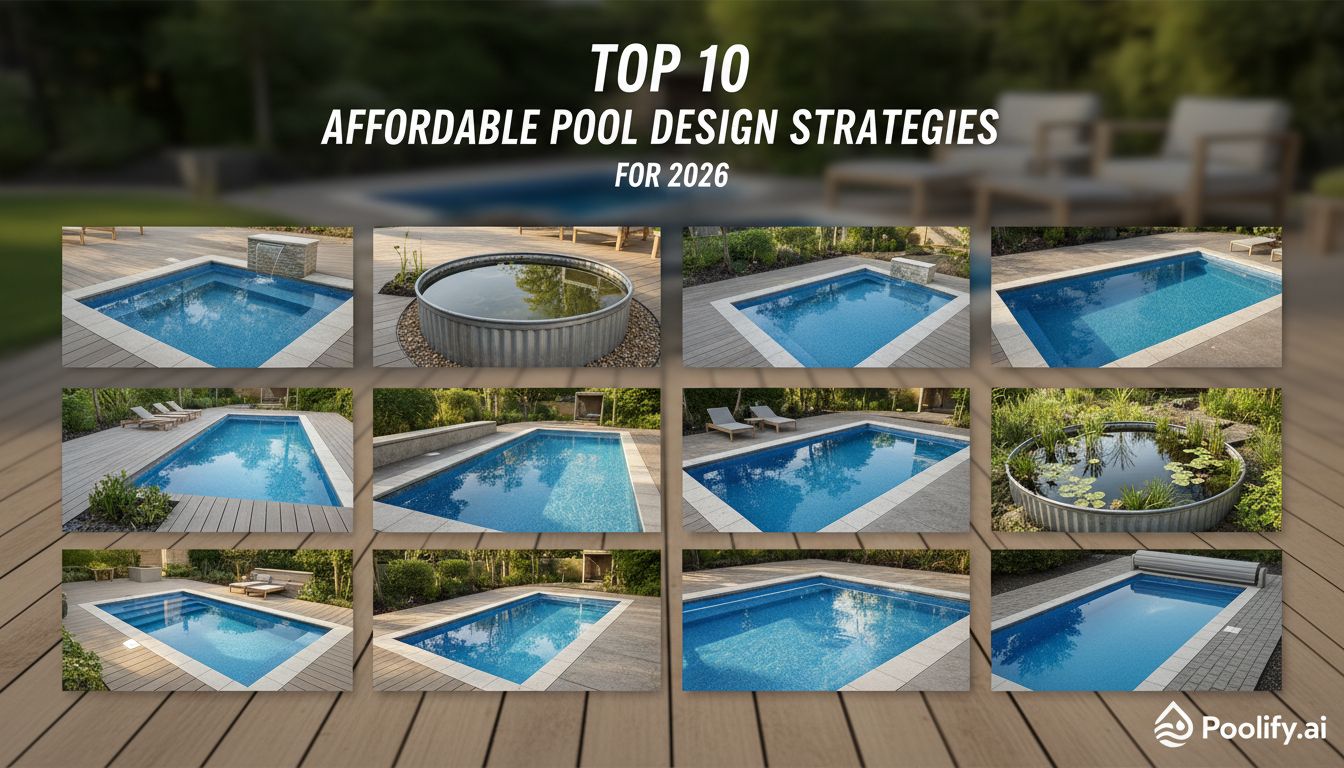
Top 10 Affordable Pool Design Strategies for 2026
1. Optimize Pool Size and Shape
Smaller pools dramatically reduce costs without sacrificing enjoyment. A compact pool measuring 12×24 feet provides ample space for swimming, playing, and relaxation while costing 40-50% less than a standard 16×32-foot pool. Simple rectangular or oval shapes also minimize construction complexity and material waste, translating directly to lower installation costs. Many families discover that a well-designed smaller pool actually receives more use than an oversized one requiring extensive maintenance.
Consider your actual usage patterns when planning dimensions. If your primary goal is cooling off during hot weather rather than lap swimming, a plunge pool measuring just 8×12 feet might perfectly suit your needs at a fraction of traditional costs. These compact designs have surged in popularity throughout 2026, offering the essential pool experience with minimal space and budget requirements.
2. Choose Cost-Effective Pool Types
Above-ground pools represent the most budget-friendly option, with complete installations ranging from $3,000 to $15,000. Modern above-ground designs have evolved far beyond the basic metal-walled pools of previous decades. Today’s models feature attractive resin frames, wood-look finishes, and integrated decking that creates a semi-inground appearance at a fraction of the cost. These affordable pool designs can be installed in days rather than weeks, further reducing labor expenses.
Semi-inground pools offer a compelling middle option, combining the affordability of above-ground construction with the aesthetic appeal of in-ground pools. By partially burying the pool structure, you create a more integrated look while avoiding the extensive excavation costs associated with fully in-ground installations. This approach works particularly well on sloped properties where the natural grade can be leveraged to create a tiered backyard design.
3. Select Budget-Friendly Materials
Vinyl liners provide the most economical in-ground pool surface, requiring replacement every 7-10 years but offering significant upfront savings. The initial installation costs 30-40% less than concrete alternatives, and modern vinyl options include attractive patterns and textures that mimic expensive tile or stone finishes. When planning affordable pool designs, vinyl represents a smart choice for families prioritizing initial affordability over long-term material longevity.
Fiberglass pools have become increasingly competitive in 2026, with manufacturers offering a wider range of sizes and styles. These one-piece shells arrive ready to install, reducing labor costs and construction time. While the shell itself costs more than vinyl, the faster installation and lower long-term maintenance requirements often make fiberglass an excellent value proposition for budget-conscious homeowners seeking durability.
4. Simplify Pool Depth
Uniform depth pools eliminate the need for complex excavation and specialized construction techniques required for deep ends and diving areas. A consistent depth of 4-5 feet throughout the pool reduces material and labor costs by 15-25% while still accommodating most recreational activities. Unless you specifically need diving capability, variable depth adds expense without proportional value for most families.
Shallow pools also offer safety advantages for families with young children and reduce heating costs since less water volume requires warming. The reduced excavation depth may also help you avoid complications with high water tables or rocky soil conditions that can dramatically increase construction costs in challenging sites.
5. Minimize Additional Features
While waterfalls, fountains, and elaborate lighting create visual appeal, each feature adds $2,000 to $10,000 to your project. Focus initially on the basic pool structure and add enhancements later as budget allows. This phased approach lets you enjoy your pool sooner while spreading costs over multiple years. Many homeowners discover that simple designs provide just as much enjoyment as heavily featured pools.
When you do add features, consider cost-effective alternatives. LED lighting costs less to install and operate than fiber optic systems. A simple bubbler or deck jet provides water movement and sound at a fraction of waterfall costs. These strategic substitutions maintain visual interest while preserving your budget for essential components.
6. DIY Landscaping and Decking
Professional hardscaping can double your total project cost. By handling landscaping, decking, and finishing work yourself, you can save $10,000 to $30,000 on affordable pool designs. Simple poured concrete decking costs far less than pavers or natural stone while providing a clean, functional surface. You can always upgrade materials in future years as finances permit.
Pressure-treated wood decking offers another budget-friendly option, particularly for above-ground and semi-inground installations. With basic carpentry skills and rented equipment, many homeowners successfully complete deck projects over several weekends. Online tutorials and pool deck design resources provide step-by-step guidance for DIY enthusiasts willing to invest sweat equity instead of cash.
7. Choose Standard Equipment
High-efficiency pumps and advanced filtration systems offer long-term savings but increase upfront costs. For affordable pool designs, standard equipment that meets basic requirements provides reliable performance at lower initial investment. You can always upgrade to premium equipment later, but starting with quality standard components keeps the project within budget while ensuring proper pool function.
Single-speed pumps cost $300-$800 compared to $1,200-$2,500 for variable-speed models. While variable-speed pumps reduce operating costs, the payback period extends 3-5 years. If your immediate priority is getting the pool operational within budget, standard equipment makes financial sense. Focus your spending on proper sizing and quality brands rather than premium features.
8. Time Your Installation Strategically
Pool contractors experience seasonal demand fluctuations, with spring and early summer representing peak periods. Installing your pool during fall or winter months can yield 10-20% savings as contractors offer discounts to maintain steady work. This timing also ensures your pool is ready for the following swim season, letting you avoid the construction chaos that accompanies peak-season installations.
Some regions offer even greater off-season advantages. In areas with mild winters, construction can continue year-round, and contractors become particularly motivated to book projects during traditionally slow months. Flexible timing represents one of the simplest ways to reduce costs without compromising quality or features in your affordable pool designs.
9. Obtain Multiple Detailed Quotes
Price variations between contractors can reach 30-40% for identical projects. Request itemized quotes from at least three licensed pool builders, ensuring each bid includes the same specifications for accurate comparison. This process helps you identify fair market pricing and reveals where individual contractors may be overcharging or underestimating costs.
Don’t automatically select the lowest bid. Verify licensing, insurance, references, and completed project examples. A mid-range quote from an experienced contractor with strong references often provides better value than a rock-bottom price from an unproven builder. Quality installation prevents costly repairs and ensures your affordable pool design delivers years of reliable enjoyment.
10. Consider Pool Kits
DIY pool kits have improved dramatically in 2026, offering complete packages with detailed instructions for handy homeowners. In-ground pool kits range from $10,000 to $25,000, representing 40-60% savings compared to professional installation. These kits include the pool structure, liner, filtration equipment, and all necessary components. You’ll still need to hire excavation services and potentially electrical and plumbing contractors, but handling the assembly yourself creates substantial savings.
Above-ground pool kits offer even more dramatic savings, with complete packages available for $2,000 to $8,000. Most homeowners with basic tool skills can complete installation in a weekend with help from family or friends. Online communities and manufacturer support provide troubleshooting assistance, making DIY pool installation more accessible than ever for budget-conscious families pursuing affordable pool designs.
Material Comparisons for Budget-Conscious Builders
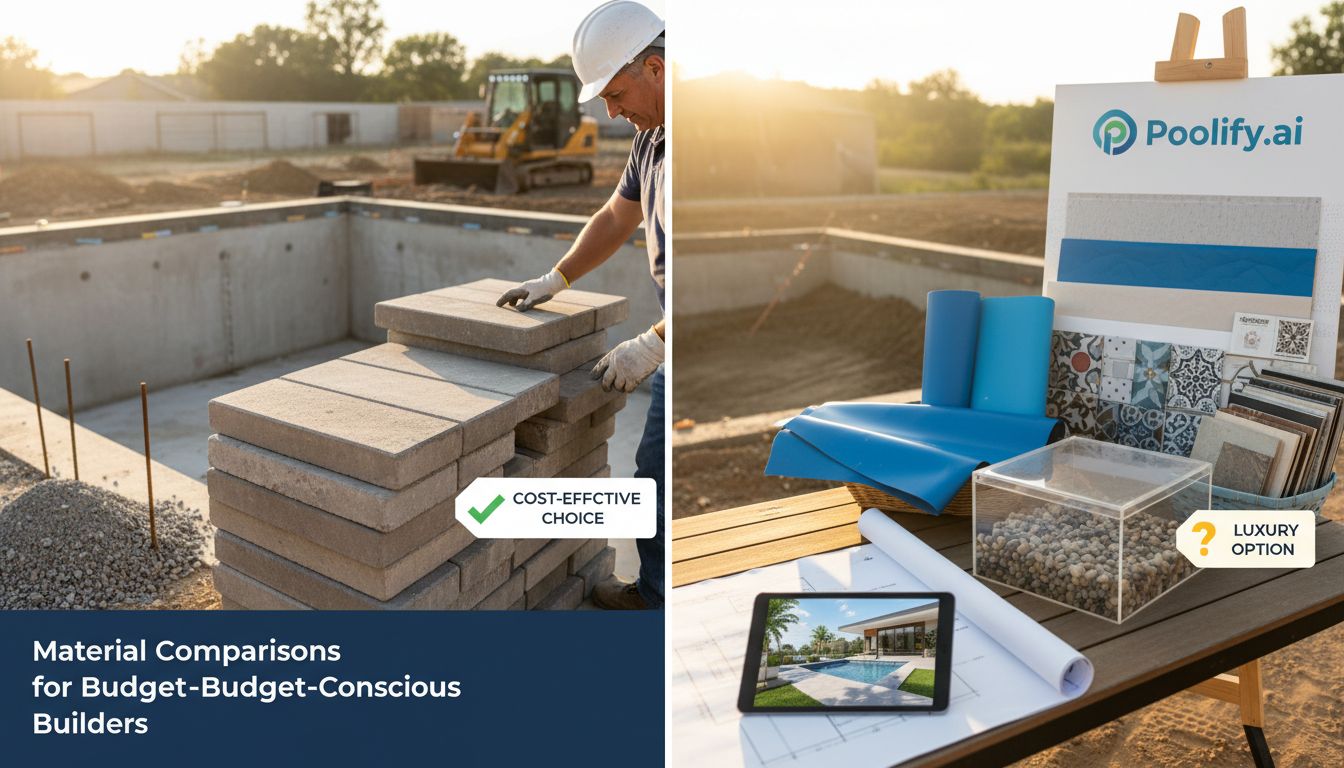
Understanding material trade-offs helps you make informed decisions aligned with your priorities and budget. Vinyl-liner pools offer the lowest initial cost but require liner replacement every 7-10 years at $3,000-$5,000 per replacement. Over a 30-year ownership period, you’ll invest $9,000-$15,000 in liner replacements beyond the initial installation cost. However, the lower upfront expense makes pool ownership immediately accessible for families who couldn’t otherwise afford in-ground pools.
Fiberglass pools cost more initially but eliminate liner replacement expenses. The smooth gel-coat surface resists algae growth better than vinyl, reducing chemical and maintenance costs by 20-30% annually. These savings accumulate over decades of ownership, potentially offsetting the higher purchase price. For families planning long-term residence, fiberglass represents an excellent value despite the premium initial investment.
Concrete pools offer unlimited customization but command the highest prices and require the most maintenance. Unless you need a truly custom shape or size unavailable in vinyl or fiberglass options, concrete pools rarely qualify as affordable pool designs for budget-conscious homeowners. The 30-50% cost premium and higher ongoing maintenance expenses make concrete more appropriate for luxury installations rather than value-focused projects.
Smart Design Features That Add Value Without Breaking the Bank
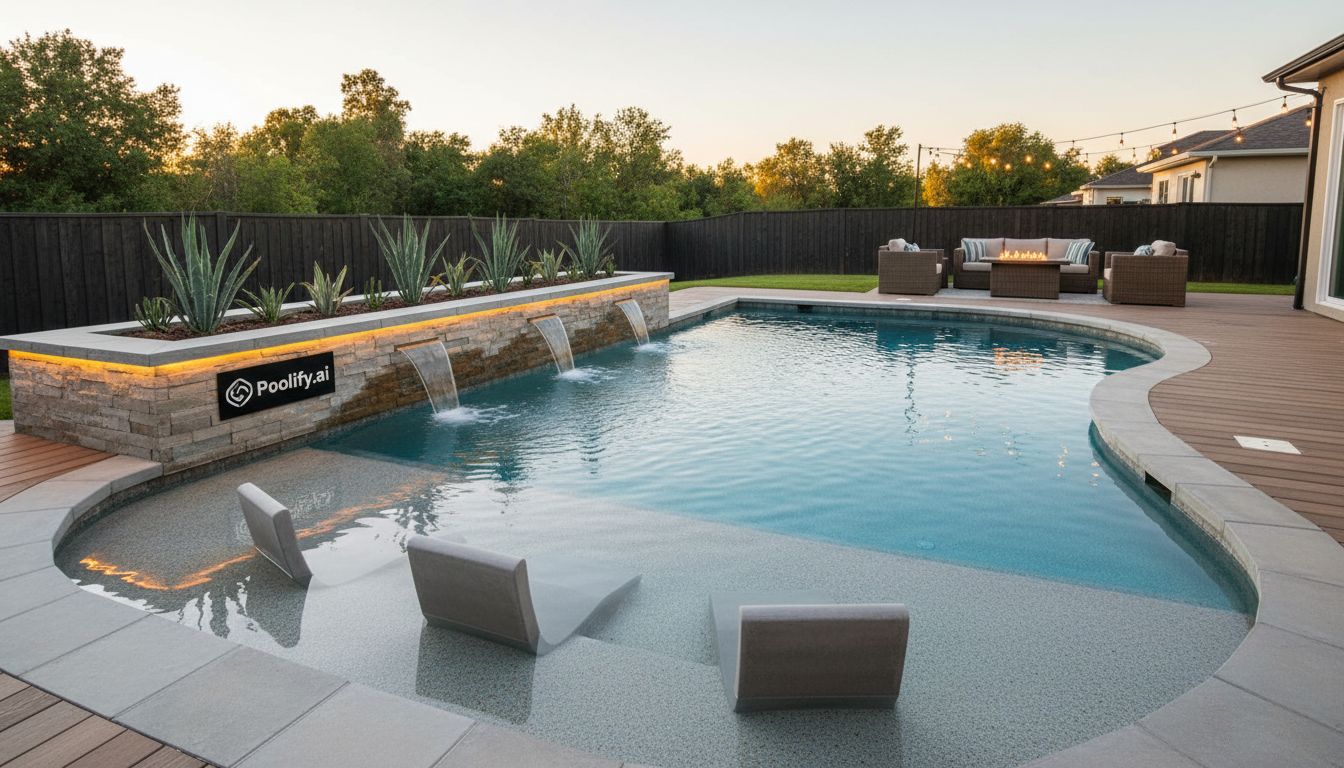
Certain enhancements provide disproportionate value relative to their cost. Beach entries or tanning ledges add just $2,000-$4,000 to construction costs while creating versatile spaces for young children, lounging, and social gatherings. These shallow areas increase pool functionality without the expense of complex features like grottos or infinity edges.
Built-in benches and steps cost minimally during initial construction but would require major renovation to add later. Including these features in your original affordable pool designs enhances comfort and usability for decades. Similarly, conduit for future electrical additions costs pennies during construction but hundreds of dollars to retrofit later. Planning ahead for potential upgrades preserves flexibility without immediate expense.
Salt-water chlorination systems add $1,500-$2,500 to initial costs but reduce ongoing chemical expenses and maintenance time. The gentler water quality provides a more pleasant swimming experience without the harsh chlorine smell and irritation. For many families, this upgrade represents the sweet spot of affordable luxury—meaningful improvement without extravagant cost. Learn more about maintaining water quality with our comprehensive pool maintenance guide.
Hidden Costs to Budget For
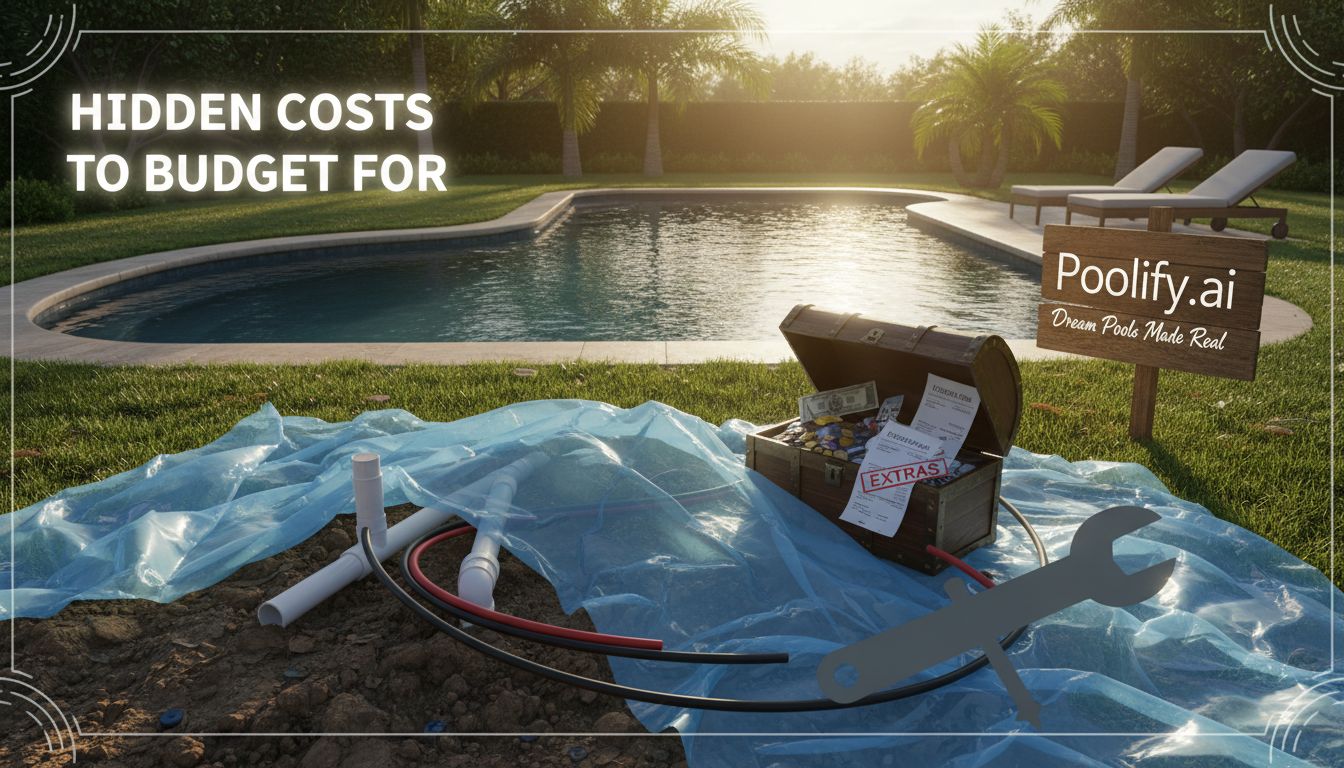
Affordable pool designs require accounting for expenses beyond the pool itself. Permit fees range from $200 to $2,000 depending on location, and most municipalities require professional surveys and engineered drawings. Fencing represents another significant expense, with basic aluminum options starting around $2,000 for the required enclosure. Many homeowners overlook these regulatory requirements, leading to budget shortfalls that delay or compromise their projects.
Utility costs increase substantially with pool ownership. Expect $50-$150 monthly for electricity to run pumps and heating systems, plus $30-$100 for chemicals and maintenance supplies. Water costs for initial filling and ongoing evaporation replacement add another $100-$300 annually. Insurance premiums typically increase $200-$500 per year when you add a pool. Accounting for these ongoing expenses ensures your affordable pool design remains financially sustainable long-term.
Site preparation costs vary wildly based on conditions. Tree removal, rock excavation, and grading can add $3,000-$15,000 to projects in challenging locations. Request a thorough site evaluation before finalizing designs to avoid expensive surprises during construction. Some homeowners discover that relocating the pool to a different area of their property dramatically reduces preparation costs, making this flexibility worthwhile during planning stages.
Financing Options for Affordable Pool Designs
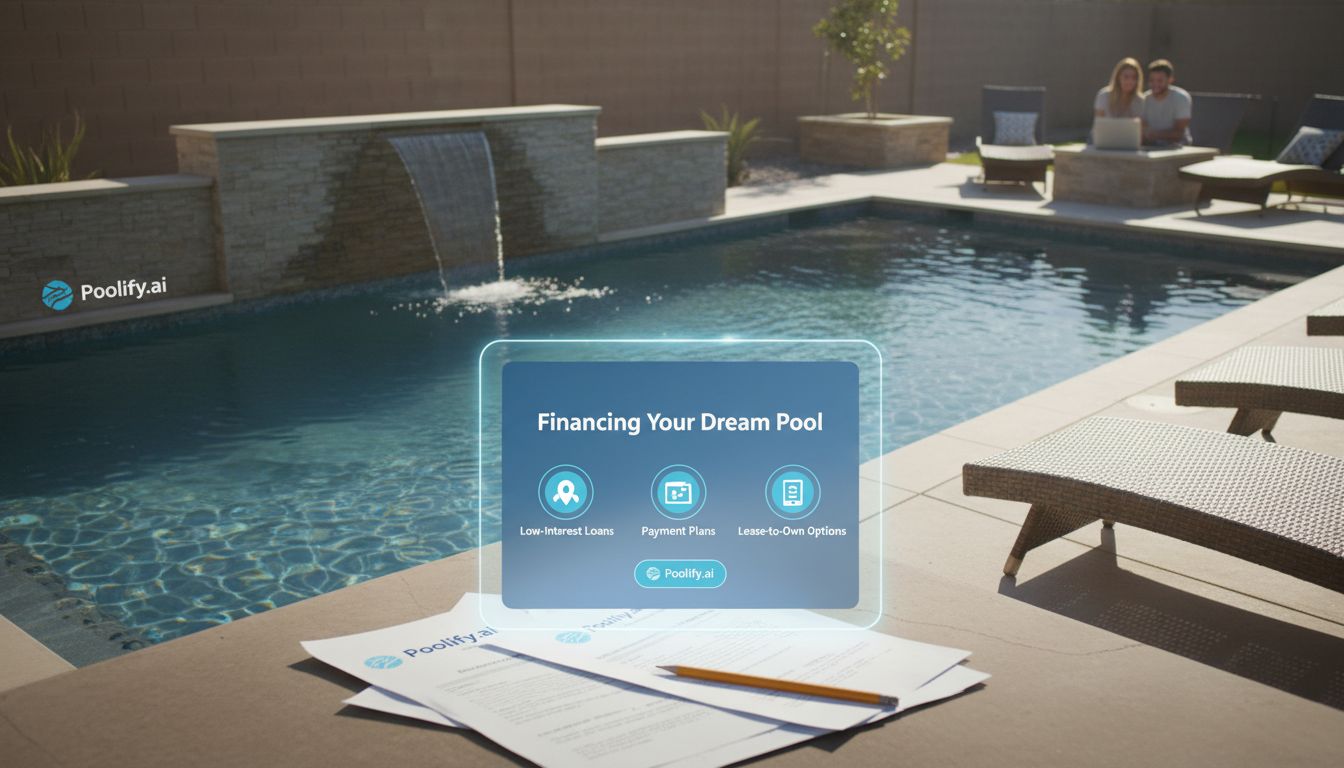
Home equity loans and lines of credit typically offer the lowest interest rates for pool financing, with rates in 2026 ranging from 6-9% for qualified borrowers. These options let you spread costs over 10-15 years while potentially maintaining tax deductibility on interest payments. The extended repayment period makes monthly payments manageable even for larger projects, effectively making higher-quality pools more accessible.
Personal loans provide faster approval without using home equity as collateral, though interest rates run higher at 8-15%. Many pool contractors partner with financing companies offering promotional rates or deferred interest periods. Read terms carefully to understand when promotional rates expire and what standard rates apply afterward. Some homeowners strategically use 0% introductory credit card offers for smaller projects or specific components, paying balances before interest accrues.
Cash payment sometimes yields negotiation leverage for 5-10% discounts from contractors who avoid credit card processing fees and payment delays. If you’ve been saving for a pool, paying cash also eliminates interest costs that can add thousands to total project expenses. However, never deplete emergency savings entirely for pool construction—maintaining financial security should always take priority over backyard improvements.
Maintenance Considerations for Long-Term Affordability
The most affordable pool designs consider lifetime costs, not just installation expenses. Larger pools require more chemicals, longer pump run times, and higher heating costs. A 12×24-foot pool might cost $600-$1,200 annually to maintain, while a 20×40-foot pool could require $1,500-$3,000 yearly. Over 20 years of ownership, these differences total $18,000-$36,000—enough to significantly impact overall affordability.
Simple rectangular shapes minimize surface area relative to water volume, reducing chemical needs and heat loss. Avoiding complex curves and features also simplifies cleaning, letting you spend less time and money on maintenance. Many homeowners discover that streamlined designs require 30-40% less maintenance effort than elaborately shaped pools, making simple affordable pool designs more enjoyable long-term.
Investing in a quality pool cover pays dividends through reduced heating costs, chemical consumption, and debris cleaning. Solar covers cost $100-$400 and can reduce heating expenses by 50-70% while minimizing evaporation and chemical loss. Automatic covers cost $8,000-$15,000 but provide superior convenience and efficiency. Even budget-conscious projects should allocate funds for basic covers that protect your investment and reduce ongoing costs. For more strategies, explore our pool cost-saving techniques.
Frequently Asked Questions About Affordable Pool Designs
What is the cheapest type of pool to install?
Above-ground pools represent the most affordable option, with complete installations ranging from $3,000-$15,000. For in-ground pools, vinyl-liner designs offer the lowest costs at $25,000-$45,000. Pool kits that you install yourself can reduce expenses by 40-60% compared to professional installation, though you’ll need excavation and utility work performed by licensed contractors. The cheapest option depends on your property, skills, and long-term plans.
How much can I save by installing a smaller pool?
Reducing pool dimensions from 16×32 feet to 12×24 feet typically saves $15,000-$25,000 on installation costs and reduces annual maintenance expenses by $400-$800. Smaller pools also cost less to heat, cover, and repair. Many families find that compact affordable pool designs provide all the functionality they need while preserving budget for other backyard improvements or ongoing expenses.
Are pool kits really worth the savings?
DIY pool kits can save 40-60% compared to professional installation, but require significant time, physical effort, and basic construction skills. You’ll still need professional excavation, electrical, and plumbing work. Kits work best for handy homeowners with helper support and flexible schedules. The savings are substantial, but ensure you honestly assess your capabilities before committing to a DIY approach that might ultimately require professional rescue.
What pool features should I avoid to save money?
Eliminate waterfalls, elaborate lighting, heating systems, and automatic covers from initial installations. Avoid variable depths, custom shapes, and premium finishes. These features can easily add $20,000-$50,000 to projects. Focus on the basic pool structure and standard equipment, then add enhancements in future years as budget allows. This phased approach lets you enjoy your pool sooner while spreading costs over time.
Can I finance a pool with bad credit?
Financing options exist for borrowers with challenged credit, though interest rates will be higher at 15-25%. Some contractors offer in-house financing with more flexible approval criteria. Alternatively, consider saving for a smaller pool you can purchase with cash, or explore secured loan options using other assets as collateral. Improving your credit score before applying can save thousands in interest over the loan term, making delayed gratification financially worthwhile.
Key Takeaways
- Size matters most: Smaller pools reduce installation costs by 40-50% while providing full functionality for most families. A well-designed compact pool delivers all the benefits of larger designs at a fraction of the cost.
- Material selection drives affordability: Vinyl-liner and above-ground pools offer the lowest entry costs, while fiberglass provides excellent long-term value. Choose materials based on your budget timeline and maintenance preferences.
- Simple designs save substantially: Rectangular shapes, uniform depths, and minimal features reduce construction complexity and ongoing maintenance. Affordable pool designs succeed by focusing on essentials rather than luxury additions.
- Strategic timing and shopping matter: Off-season installation, multiple quotes, and DIY components can reduce total costs by 20-40%. Patient planning and research yield significant savings without compromising quality.
- Consider lifetime costs: The cheapest installation isn’t always the most affordable long-term. Factor in maintenance, utilities, and replacement costs when evaluating options. True affordability balances initial expense with sustainable ongoing costs.
Conclusion
Affordable pool designs in 2026 offer more possibilities than ever before, with innovative materials, construction techniques, and financing options making pool ownership accessible to a broader range of homeowners. By focusing on smart design choices, appropriate sizing, and strategic feature selection, you can create a beautiful backyard pool that fits your budget without sacrificing quality or enjoyment. The key lies in understanding where costs accumulate and making informed decisions that align with your priorities and financial situation.
Remember that the most expensive pool isn’t necessarily the best pool for your family. A thoughtfully designed affordable pool that you can comfortably maintain and enjoy provides far more value than an elaborate installation that strains your finances. Start with the basics, plan for future enhancements, and focus on creating a functional space that serves your family’s needs. With careful planning and realistic expectations, your dream of pool ownership can become an affordable reality in 2026.
References
- U.S. Census Bureau – Construction Data: https://www.census.gov/construction/
- Centers for Disease Control and Prevention – Healthy Swimming: https://www.cdc.gov/healthywater/swimming/