
Introduction: Finding the Best Pool Material for Your Home
Selecting the best pool material represents one of the most critical decisions you’ll make when installing a swimming pool. The material you choose affects everything from initial installation costs to long-term maintenance expenses, aesthetic appeal, and structural durability. In 2026, homeowners have three primary options: concrete, fiberglass, and vinyl liner pools. Each material offers distinct advantages and challenges that align differently with various budgets, climates, and lifestyle preferences.
Understanding the best pool material for your specific situation requires examining factors like regional climate conditions, soil composition, budget constraints, and personal aesthetic preferences. This comprehensive guide explores each material option in depth, providing actionable insights to help you make an informed investment decision that you’ll appreciate for decades to come.
Concrete Pools: The Premium Choice Among Pool Materials
Concrete remains a top contender when evaluating the best pool material for customization and longevity. Also known as gunite or shotcrete pools, concrete installations offer unparalleled design flexibility. Homeowners can create virtually any shape, size, or depth configuration, making concrete the best pool material for those seeking unique architectural features like beach entries, integrated spas, or custom tanning ledges.
The construction process involves spraying concrete mixture over a reinforced steel framework, creating a robust shell that can withstand decades of use. According to the U.S. Census Bureau’s construction data, concrete pools typically last 50 years or more with proper maintenance, making them an excellent long-term investment despite higher upfront costs.
Advantages of Concrete as the Best Pool Material
Concrete pools excel in durability and customization potential. The material allows for complete creative freedom in pool design, accommodating irregular lot shapes and integrating seamlessly with landscape architecture. Concrete surfaces can be finished with plaster, pebble aggregate, or tile, offering diverse aesthetic options that other materials cannot match.
The structural strength of concrete makes it the best pool material for properties with challenging soil conditions or steep slopes. The material’s rigidity prevents shifting and maintains structural integrity even in freeze-thaw climates when properly winterized. Additionally, concrete pools add substantial value to properties, often recouping 50-70% of installation costs upon resale.
Considerations When Choosing Concrete
Despite its advantages, concrete requires significant investment both initially and over time. Installation typically takes 3-6 months, considerably longer than alternative materials. The porous nature of concrete necessitates regular resurfacing every 10-15 years, adding to lifetime ownership costs. Chemical maintenance also demands more attention, as concrete’s alkalinity affects water chemistry balance.
Homeowners should budget $50,000-$100,000 or more for concrete pool installation in 2026, depending on size and features. When considering whether concrete is the best pool material for your needs, factor in these long-term maintenance commitments alongside the initial investment.
Fiberglass Pools: The Low-Maintenance Pool Material Option
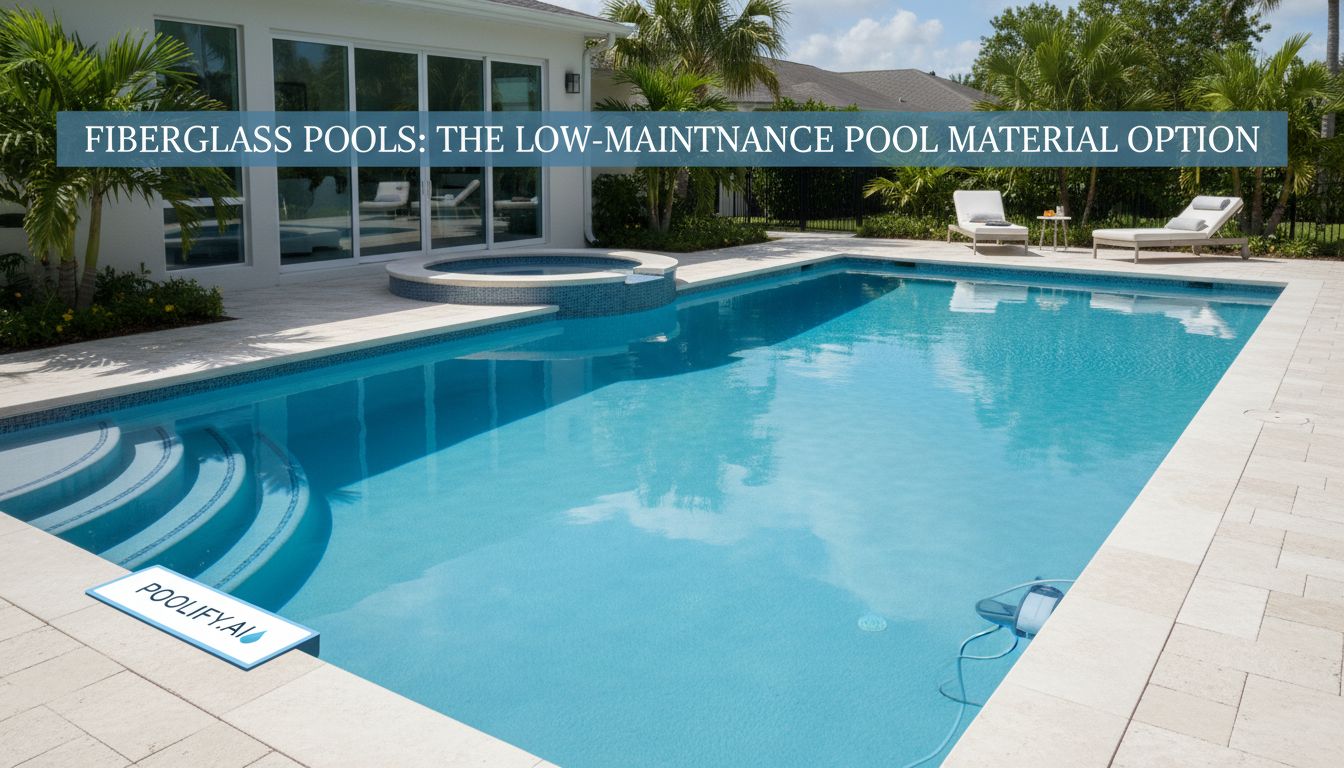
Fiberglass has emerged as the best pool material for homeowners prioritizing convenience and quick installation. These pools arrive as pre-manufactured shells that are craned into excavated holes, dramatically reducing installation time to just 2-4 weeks. The non-porous gel coat surface resists algae growth naturally, making fiberglass the best pool material for those seeking minimal maintenance requirements.
The smooth surface of fiberglass pools feels comfortable underfoot and requires fewer chemicals to maintain proper water balance. This characteristic makes fiberglass the best pool material from an environmental perspective, reducing chemical usage by approximately 25-30% compared to concrete alternatives. For busy families or vacation property owners, this low-maintenance profile offers significant appeal.
Why Fiberglass Might Be Your Best Pool Material
The primary advantage of fiberglass centers on convenience. The rapid installation minimizes landscape disruption and allows homeowners to enjoy their pools within weeks rather than months. The gel coat finish eliminates the need for liner replacements or periodic resurfacing, reducing lifetime maintenance costs substantially.
Fiberglass pools also demonstrate excellent durability, with shells typically lasting 25-30 years before requiring significant repairs. The material’s flexibility allows it to withstand ground movement better than rigid concrete, making it the best pool material for areas with expansive clay soils or minor seismic activity. Energy efficiency represents another benefit, as the smooth surface reduces friction and pump energy requirements by up to 15%.
Limitations of Fiberglass Pool Materials
While fiberglass offers many advantages, design limitations represent the primary drawback. Manufacturers produce pools in predetermined shapes and sizes, typically maxing out at 16 feet wide and 40 feet long due to transportation constraints. This restriction means fiberglass may not be the best pool material for those requiring custom dimensions or unique architectural features.
Initial costs for fiberglass pools range from $45,000-$85,000 in 2026, positioning them in the mid-to-upper price range. The upfront investment approaches concrete pricing, though lifetime costs remain lower due to reduced maintenance requirements. Color fading can occur over 15-20 years, though modern gel coat formulations have significantly improved UV resistance compared to earlier generations.
Vinyl Liner Pools: The Budget-Friendly Pool Material
Vinyl liner pools represent the most economical entry point into pool ownership, making vinyl the best pool material for budget-conscious homeowners. These pools feature walls constructed from steel, aluminum, or polymer panels, with a custom-fitted vinyl liner creating the waterproof barrier. Installation costs typically range from $25,000-$45,000, significantly less than concrete or fiberglass alternatives.
The smooth vinyl surface feels pleasant and provides a non-abrasive swimming experience. Modern vinyl liners feature attractive patterns and colors that simulate tile, stone, or other premium finishes. For homeowners prioritizing affordability over longevity, vinyl may be the best pool material to achieve backyard swimming without breaking the bank.
Benefits of Vinyl as Your Pool Material Choice
Cost efficiency stands as vinyl’s primary advantage. The lower initial investment makes pool ownership accessible to a broader range of homeowners. Installation proceeds quickly, typically completing within 4-8 weeks. The smooth surface eliminates the rough texture associated with concrete, making vinyl the best pool material for families with young children concerned about scraped knees and elbows.
Vinyl pools offer moderate customization options, with various shapes and sizes available within the constraints of panel-based construction. The material works well in most climates when properly maintained, and the non-porous surface resists algae growth similarly to fiberglass. For more information on maintaining different pool surfaces, explore our comprehensive pool maintenance guide.
Drawbacks to Consider with Vinyl Materials
Despite affordability advantages, vinyl liners require replacement every 7-10 years at costs ranging from $4,000-$7,000. This recurring expense means lifetime ownership costs can eventually exceed fiberglass alternatives. Liners are vulnerable to punctures from sharp objects, pet claws, and UV degradation, requiring careful maintenance to maximize lifespan.
The seams where liner sections join represent potential weak points for leaks. While modern welding techniques have improved reliability, vinyl remains the most vulnerable of the three primary pool materials. Structural walls also have finite lifespans, with steel panels potentially corroding after 15-20 years in harsh conditions. These factors mean vinyl may not be the best pool material for those seeking a permanent, low-maintenance solution.
Comparing the Best Pool Material Options: Which Suits Your Needs?
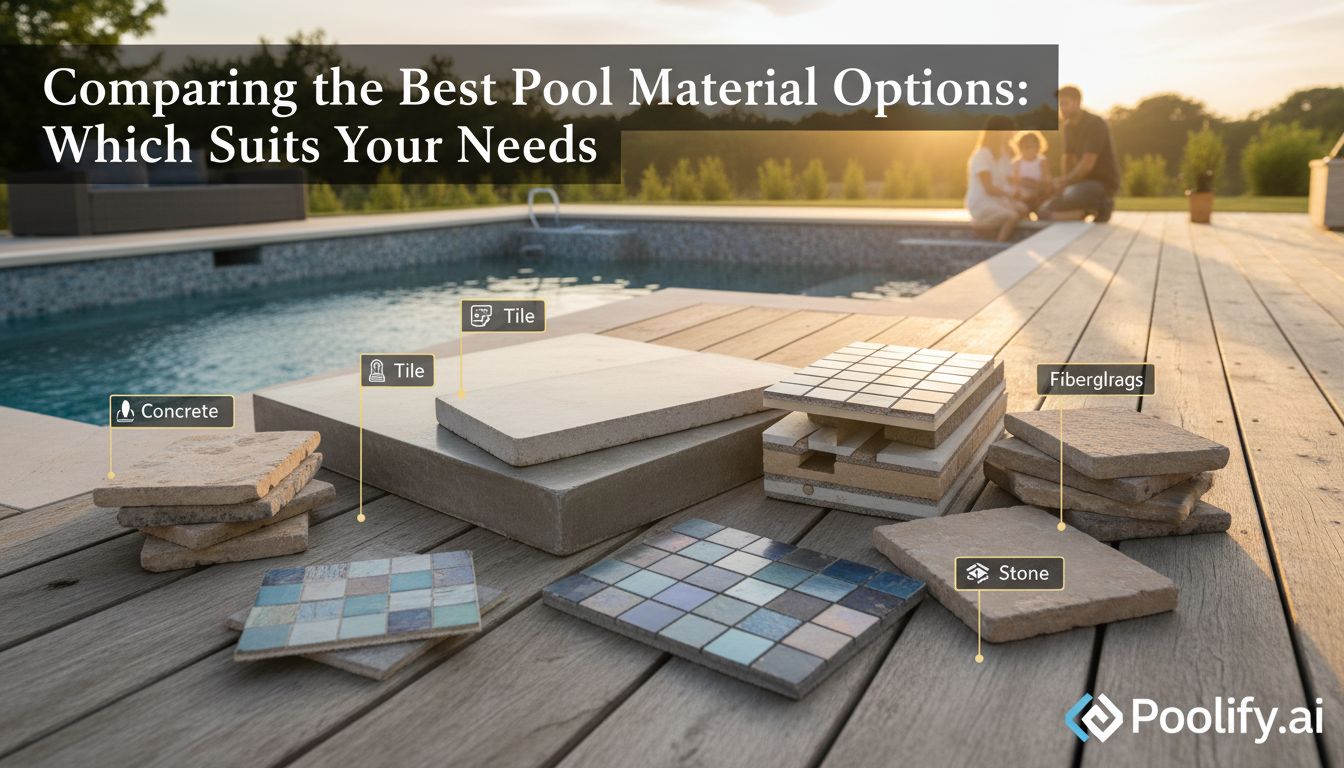
Determining the best pool material requires evaluating multiple factors specific to your situation. Climate plays a crucial role, as freeze-thaw cycles affect materials differently. Concrete performs well in all climates with proper winterization, while vinyl can become brittle in extreme cold. Fiberglass offers excellent flexibility for ground movement but may experience color fading in intense sun exposure.
Budget considerations extend beyond initial installation. While vinyl offers the lowest entry cost, recurring liner replacements add up over decades. Concrete demands the highest upfront investment but can last 50+ years with periodic resurfacing. Fiberglass sits in the middle price-wise but offers the lowest lifetime maintenance costs, potentially making it the best pool material from a total cost of ownership perspective.
Maintenance Requirements Across Pool Materials
Maintenance demands vary significantly among pool materials. Concrete’s porous surface requires weekly brushing, frequent chemical adjustments, and professional acid washing every 3-5 years. The alkaline nature of concrete continuously affects pH levels, necessitating regular monitoring and correction. For those seeking the best pool material with minimal upkeep, concrete ranks lowest in convenience.
Fiberglass requires the least maintenance among the three options. The smooth, non-porous surface resists algae naturally and requires less frequent brushing. Chemical usage decreases by 25-30%, and the stable surface doesn’t affect water chemistry like concrete. This makes fiberglass the best pool material for vacation homes or busy families with limited time for pool care.
Vinyl falls between concrete and fiberglass in maintenance intensity. The smooth surface resists algae well and doesn’t affect water chemistry, but the liner requires gentle handling to prevent punctures. Homeowners must avoid abrasive brushes and be cautious with pool toys and equipment. Regular inspection for leaks and prompt repair of small tears prevents larger problems from developing.
Aesthetic Considerations for Pool Materials
Visual appeal influences which material homeowners consider the best pool material for their landscape design. Concrete offers unlimited aesthetic possibilities through custom shapes, integrated water features, and diverse finish options including plaster, aggregate, and tile. High-end concrete pools can seamlessly integrate with architectural styles ranging from modern minimalist to Mediterranean resort.
Fiberglass pools feature attractive gel coat finishes in various colors and patterns. While design flexibility is limited to manufacturer molds, modern options include convincing stone and tile patterns. The glossy finish creates an appealing water appearance that many homeowners prefer. For those valuing aesthetics within predetermined shapes, fiberglass can be the best pool material choice.
Vinyl liners have evolved significantly, now offering patterns that simulate premium materials at a fraction of the cost. However, the visible seams and eventual fading detract from the high-end appearance that concrete and fiberglass provide. For homeowners prioritizing aesthetics above all else, vinyl typically ranks as the least desirable option despite its cost advantages.
Climate and Soil Considerations for Choosing Pool Materials
Regional climate significantly impacts which material proves to be the best pool material for your location. In northern climates with harsh winters, proper winterization becomes critical regardless of material choice. Concrete pools handle freeze-thaw cycles well when water is properly lowered and equipment is protected. The rigid structure resists ground movement from frost heaving when installed below the frost line.
Fiberglass demonstrates excellent performance in cold climates due to its flexibility. The material can flex slightly with ground movement without cracking, making it potentially the best pool material for areas with unstable soil or moderate frost heaving. The smooth surface also simplifies winterization and spring opening procedures compared to concrete’s porous texture.
Vinyl liners can become brittle in extreme cold, potentially cracking if water levels drop too low during winter. However, modern vinyl formulations have improved cold-weather performance substantially. In warm southern climates, UV exposure becomes the primary concern, as intense sunlight degrades vinyl more rapidly than in northern regions. This makes vinyl less ideal as the best pool material in areas like Arizona or southern Florida.
Soil Type and Pool Material Selection
Soil composition influences structural stability and determines which material works best in your location. Expansive clay soils that swell when wet and shrink when dry pose challenges for rigid concrete structures. While concrete can handle these conditions with proper engineering and reinforcement, the added structural requirements increase costs. Fiberglass’s flexibility makes it the best pool material for clay soil areas, as the shell can accommodate minor ground movement without cracking.
Sandy soils drain well but offer less structural support. All three materials work in sandy conditions with appropriate excavation and backfill techniques. Rocky soil increases excavation costs across all materials but doesn’t favor one option over another. According to the U.S. Geological Survey’s soil classifications, understanding your property’s soil composition helps contractors recommend the best pool material for stable, long-term installation.
Installation Timeline and Process for Different Pool Materials
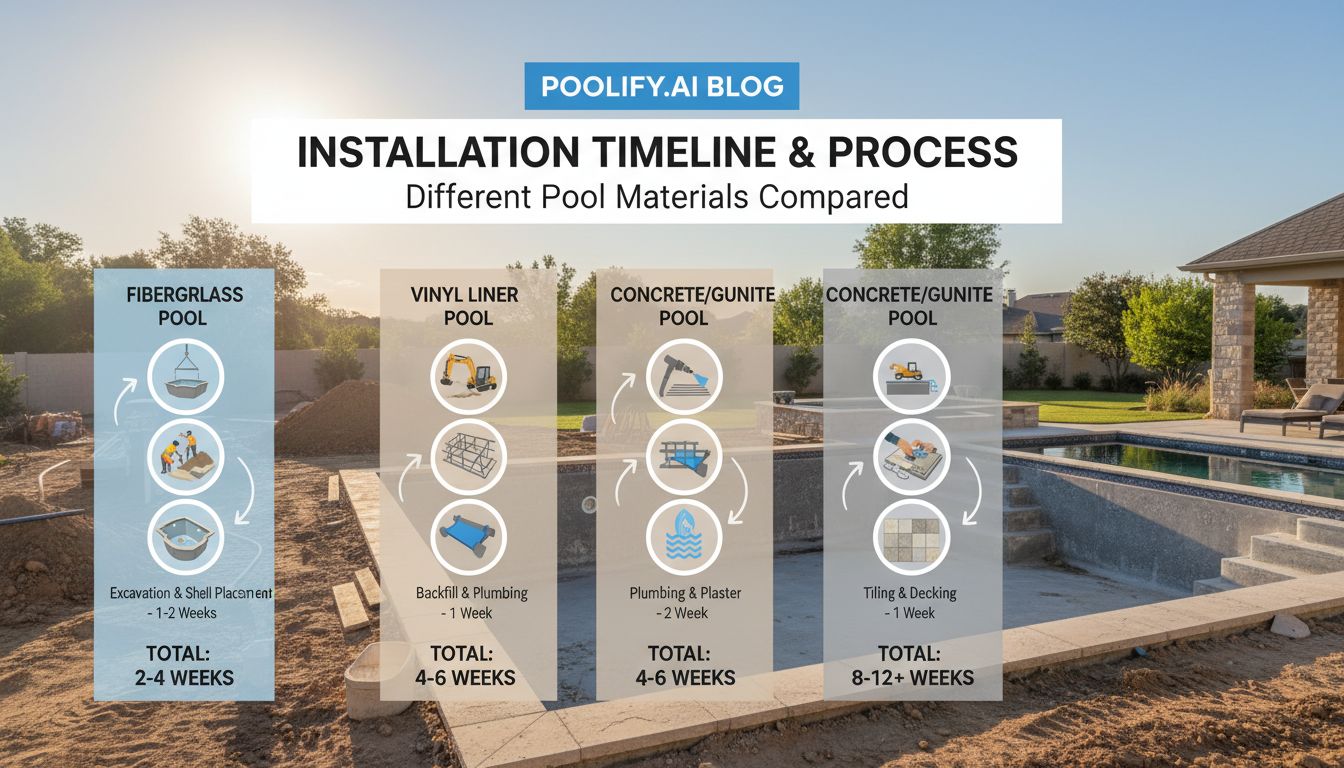
Installation duration varies dramatically among pool materials, affecting project planning and landscape disruption. Concrete pools require the longest installation period, typically 8-12 weeks from excavation to completion. The process involves excavation, steel reinforcement installation, plumbing and electrical work, concrete spraying, curing time, and finish application. Weather delays can extend timelines further, making concrete less ideal as the best pool material for those seeking quick project completion.
Fiberglass installation proceeds much faster, usually completing within 2-4 weeks. The shell arrives pre-manufactured, eliminating on-site construction time. Installation involves excavation, creating a gravel or sand base, craning the shell into place, backfilling, and connecting plumbing and electrical systems. This rapid installation makes fiberglass the best pool material for minimizing landscape disruption and allowing quick enjoyment of your investment.
Vinyl liner pools fall between concrete and fiberglass in installation time, typically requiring 4-8 weeks. The process includes excavation, panel wall assembly, plumbing installation, backfilling, and custom liner fabrication and installation. While faster than concrete, vinyl doesn’t match fiberglass’s speed advantage. For homeowners planning summer installations, considering timeline differences helps determine the best pool material to ensure completion before peak swimming season.
Long-Term Value and Resale Considerations
Property value impact varies among pool materials, influencing which option represents the best pool material from an investment perspective. Concrete pools typically add the most value to properties, particularly in luxury markets where custom features and premium finishes appeal to buyers. Well-maintained concrete pools can recoup 50-70% of installation costs upon resale, though this varies significantly by region and market conditions.
Fiberglass pools add moderate value, appealing to buyers who appreciate low maintenance requirements. The newer technology may concern some traditional buyers, but younger homeowners increasingly recognize fiberglass as the best pool material for convenience. Resale value recovery typically ranges from 40-60%, depending on local market preferences and the pool’s condition.
Vinyl liner pools add the least value to properties, often recovering only 30-50% of installation costs. Buyers may view vinyl as a temporary solution requiring ongoing liner replacements. However, in markets where pools are highly desirable amenities, even vinyl installations can enhance property appeal and marketability. For those planning to stay in their homes long-term, resale value becomes less critical in determining the best pool material.
Frequently Asked Questions About the Best Pool Material
What is the most durable pool material?
Concrete is the most durable pool material, lasting 50+ years with proper maintenance and periodic resurfacing. The structural integrity of reinforced concrete exceeds both fiberglass and vinyl in longevity. However, fiberglass offers excellent durability with less maintenance, lasting 25-30 years without resurfacing. Vinyl liners require replacement every 7-10 years, making vinyl the least durable option despite adequate structural wall longevity.
Which pool material requires the least maintenance?
Fiberglass is the best pool material for low maintenance, requiring 25-30% fewer chemicals than concrete and minimal brushing due to its smooth, non-porous surface. The gel coat finish resists algae growth naturally and doesn’t affect water chemistry. Concrete requires the most maintenance with weekly brushing, frequent chemical adjustments, and periodic acid washing. Vinyl falls in the middle, requiring gentle care to prevent liner damage but offering a smooth surface that resists algae.
Can I customize the shape with any pool material?
Concrete offers unlimited customization as the best pool material for unique designs, accommodating any shape, depth, or feature you can imagine. Vinyl provides moderate customization within panel-based construction constraints. Fiberglass offers the least customization, limited to manufacturer-produced molds, though modern options include diverse shapes and sizes. For those requiring specific dimensions or architectural features, concrete remains the best pool material choice despite higher costs.
How does climate affect which pool material is best?
Climate significantly influences the best pool material selection. Concrete performs well in all climates with proper winterization and handles freeze-thaw cycles effectively. Fiberglass excels in cold climates due to flexibility that accommodates ground movement, making it potentially the best pool material for northern regions. Vinyl can become brittle in extreme cold and degrades faster in intense sun, making it less ideal for extreme climate zones. Consider your local weather patterns when determining the best pool material for your area.
What is the most cost-effective pool material over 20 years?
Fiberglass typically offers the best long-term value as the most cost-effective pool material over 20 years. While initial costs approach concrete pricing, minimal maintenance requirements and no resurfacing needs reduce lifetime expenses. Vinyl starts cheapest but requires 2-3 liner replacements over 20 years, adding $8,000-$21,000 to ownership costs. Concrete demands the highest initial investment plus resurfacing costs of $5,000-$15,000 every 10-15 years. When calculating total cost of ownership, fiberglass often emerges as the best pool material for value-conscious homeowners. Check our pool cost calculator for detailed estimates based on your specifications.
Key Takeaways: Selecting the Best Pool Material
- Concrete is the best pool material for customization and longevity, offering unlimited design possibilities and 50+ year lifespans, but requires the highest initial investment and ongoing maintenance commitment.
- Fiberglass provides the best pool material option for low maintenance, reducing chemical usage by 25-30% and eliminating resurfacing needs, though design options are limited to manufacturer molds.
- Vinyl offers the most affordable entry point as the best pool material for budget-conscious buyers, but recurring liner replacements every 7-10 years increase lifetime ownership costs significantly.
- Climate and soil conditions heavily influence which material proves to be the best pool material for your location, with fiberglass excelling in cold climates and unstable soils while concrete performs well universally with proper engineering.
- Total cost of ownership over 20-30 years often makes fiberglass the best pool material from a financial perspective, balancing moderate initial costs with minimal maintenance expenses and no major renovations required.
Conclusion: Making Your Best Pool Material Decision
Choosing the best pool material requires careful consideration of your budget, lifestyle, climate, and long-term plans. Concrete delivers unmatched customization and durability for those willing to invest significantly upfront and commit to ongoing maintenance. Fiberglass offers an excellent balance of convenience, durability, and lifetime value, making it the best pool material for many homeowners seeking low-maintenance enjoyment. Vinyl provides accessible entry into pool ownership for budget-conscious buyers, though recurring costs and limited lifespan should factor into your decision.
No single material represents the best pool material for everyone. Evaluate your priorities, consult with experienced pool contractors, and consider how each option aligns with your specific circumstances. Whether you choose concrete’s versatility, fiberglass’s convenience, or vinyl’s affordability, proper installation and maintenance will ensure decades of backyard enjoyment. For additional guidance on pool installation and care, explore our complete pool installation guide to make the most of your investment.
References
- U.S. Census Bureau – Construction Characteristics: https://www.census.gov/construction/chars/
- U.S. Geological Survey – Soil Types and Classifications: https://www.usgs.gov/faqs/what-are-major-soil-types