
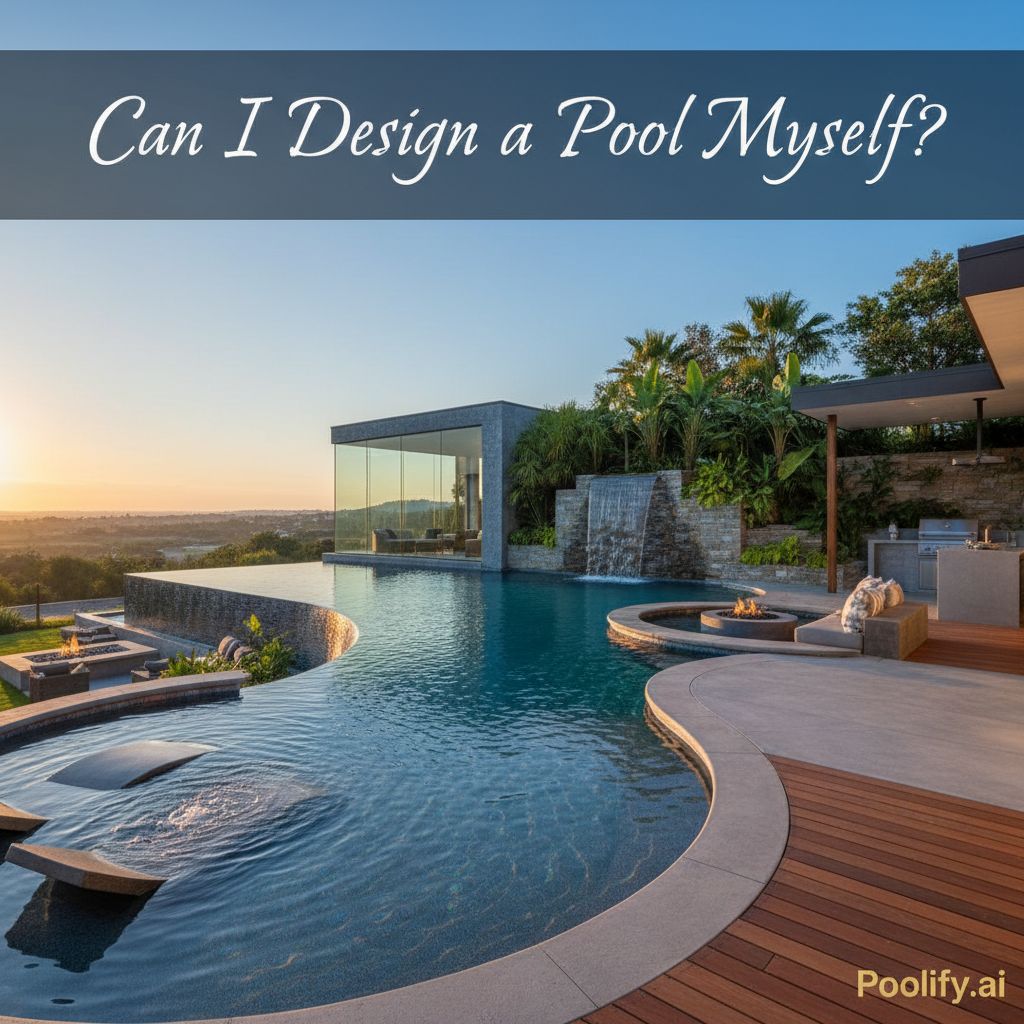
Yes, you can design a pool yourself — and for many homeowners, doing so before contacting a builder is one of the smartest steps in the entire process. While final engineering and construction still require professionals, early-stage pool design is largely about layout, size, shape, and usability. These are decisions homeowners are fully capable of making with the right tools.
This guide explains what parts of pool design you can do yourself, where professional input is still required, and how modern tools make self-guided pool design far easier than it used to be.
What “Designing a Pool” Actually Means
Pool design is often misunderstood. It is not a single step, but a sequence of decisions made at different stages.
Early-stage pool design includes
- Choosing pool size and shape
- Deciding where the pool sits in the yard
- Determining how the pool will be used
- Selecting major features like tanning ledges or spas
- Understanding how the pool fits with patios and landscaping
These decisions define the project long before construction plans exist.
What Homeowners Can Design Themselves
Most homeowners can confidently handle the conceptual phase of pool design.
Design decisions you can make on your own
- Pool shape and orientation
- Approximate dimensions
- Placement relative to the house
- Decking and circulation layout
- Feature priorities and tradeoffs
These choices are based on lifestyle, preferences, and spatial awareness — not engineering calculations.
What Requires a Professional
While homeowners can handle early design, some elements must be finalized by professionals.
Professional responsibilities include
- Structural engineering
- Soil and site analysis
- Plumbing and electrical systems
- Permits and code compliance
- Final construction drawings
Designing a pool yourself does not eliminate the need for professionals. It simply makes the process more efficient and collaborative.
Why Designing a Pool Yourself Is Often Better
When homeowners skip the design phase and rely entirely on builders, they often receive generic layouts.
Designing your pool yourself helps you:
- Avoid one-size-fits-all templates
- Understand tradeoffs before spending money
- Communicate clearly with builders
- Compare bids using the same design concept
- Stay in control of decisions
Prepared homeowners tend to get better outcomes.
Tools That Make Self-Guided Pool Design Easier
In the past, designing a pool yourself meant sketches and guesswork. Today, visualization tools make the process far more accessible.
Modern pool design tools allow you to
- Test multiple layouts quickly
- See how the pool fits your actual yard
- Compare sizes and shapes visually
- Explore different feature combinations
This removes much of the uncertainty from early planning.
Common Concerns About Designing a Pool Yourself
“I’m not a designer”
You do not need design training to make layout decisions about your own yard. Tools are built for non-professionals.
“What if I make the wrong choice?”
Visualization and iteration reduce risk. Seeing multiple options helps identify what works.
“Will builders take my design seriously?”
Builders generally appreciate clients who come prepared and clear about their goals.
How AI Pool Design Supports DIY Planning
AI-powered pool design tools make self-guided planning even easier by generating multiple design concepts automatically. Instead of starting from a blank slate, homeowners can explore options and refine what they like.
Tools like Poolify are designed for this early stage, helping homeowners design pools themselves before committing to a builder or final plans.
When to Involve a Builder
The best time to involve a builder is after you have:
- A clear sense of pool size and shape
- A preferred placement in the yard
- A shortlist of must-have features
- A realistic budget range
At that point, builders can focus on execution instead of redefining the vision.
Key Takeaways
- Homeowners can design a pool themselves at the conceptual stage
- Early design focuses on layout, size, and usability
- Professionals are still required for engineering and permits
- Designing first gives homeowners more control
- Visualization tools make self-guided design practical and effective
Designing a pool yourself is not about replacing professionals. It is about making smarter decisions before construction ever begins.