
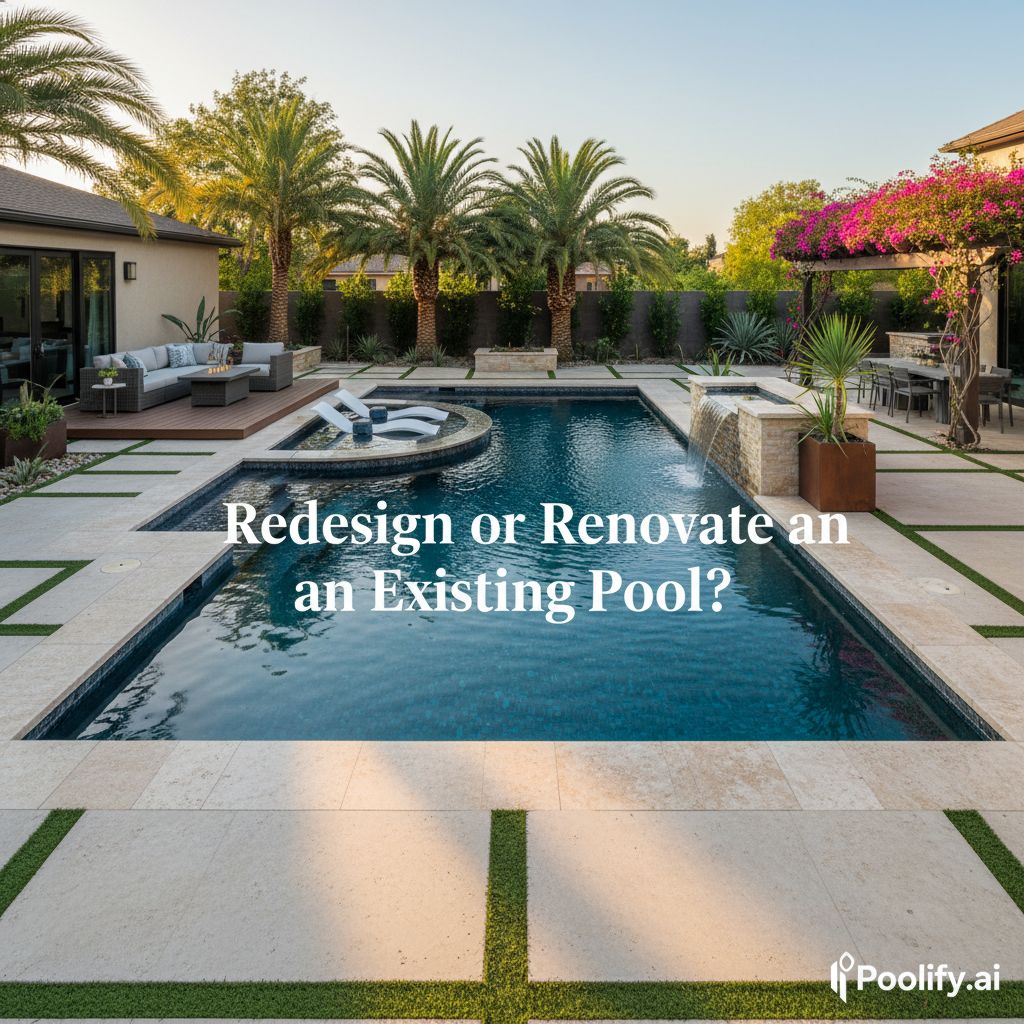
Yes, an existing pool can often be redesigned or renovated, and many homeowners choose this route to improve usability, appearance, or efficiency without starting from scratch. The key is understanding what can be changed, what typically cannot, and how early planning helps avoid unnecessary expense.
This guide explains when pool redesign makes sense, common renovation options, and how to plan changes before committing to construction.
Redesign vs Renovation: What’s the Difference?
The terms are often used interchangeably, but they mean different things.
Pool redesign
- Focuses on layout, features, and how the pool is used
- May change steps, benches, ledges, or shape perception
- Often involves visual and functional improvements
Pool renovation
- Focuses on repairing or upgrading existing elements
- Includes resurfacing, tile replacement, equipment upgrades
- May or may not change layout
Many projects include elements of both.
What Parts of a Pool Can Usually Be Changed
Most existing pools offer flexibility for meaningful improvements.
Common redesign and renovation options
- Adding or modifying steps and entry points
- Installing tanning ledges or benches (when structure allows)
- Updating finishes and tile
- Improving lighting
- Reworking surrounding decking and hardscape
- Updating water features
These changes can dramatically improve how the pool looks and feels.
What Is Harder or More Expensive to Change
Some elements are difficult or costly to modify.
Changes that increase complexity
- Expanding the pool footprint
- Changing the structural shell shape
- Altering major depth profiles
- Relocating the pool entirely
Understanding these limits early helps set realistic expectations.
When Redesigning an Existing Pool Makes Sense
Redesign is often a good option when:
- The pool structure is sound
- The layout works but feels outdated
- Features are underutilized
- The surrounding space needs improvement
- You want better functionality without full replacement
In these cases, redesign can deliver high impact at lower cost than new construction.
Start With How You Use the Pool Today
The best redesigns are driven by current use, not original intent.
Questions to ask
- Which areas are rarely used?
- Where do people naturally gather?
- Are entries comfortable and safe?
- Is there enough shallow or seating space?
Answering these questions guides smart changes.
How Redesign Affects Cost
Redesign costs vary widely based on scope.
Cost factors include
- Structural changes vs surface upgrades
- Plumbing and electrical modifications
- Finish and material choices
- Access and construction complexity
Clear design direction early helps control renovation budgets.
Visualize Redesign Options Before Building
Redesigning an existing pool without visualization can lead to disappointment.
Visualization helps you:
- See how new features fit the existing shell
- Compare options side by side
- Balance pool space with deck and landscaping
- Avoid changes that reduce usability
This step often reveals better solutions than initial ideas.
How AI Pool Design Helps With Redesign Planning
AI pool design tools can be used to explore redesign concepts before committing to construction. By visualizing new layouts and features in context, homeowners can test ideas without costly trial and error.
Tools like Poolify help users explore redesign options during the planning phase, making it easier to decide what changes are worth pursuing.
Common Pool Redesign Mistakes
Making changes without a clear goal
This leads to scattered upgrades without real improvement.
Over-customizing
Highly specific changes may reduce long-term flexibility.
Ignoring surrounding space
Decking and circulation matter just as much as the pool.
Skipping professional input when needed
Structural changes should always involve experienced professionals.
When to Talk to a Professional
Professional input is important when:
- Structural changes are planned
- Plumbing or electrical systems are modified
- Permits are required
- Safety or code compliance is involved
Early visualization helps make those conversations more productive.
Key Takeaways
- Existing pools can often be redesigned or renovated
- Many impactful changes do not require full replacement
- Structural changes increase cost and complexity
- Visualization helps guide better redesign decisions
- Early planning prevents wasted renovation expense
Redesigning an existing pool can breathe new life into your backyard when decisions are made thoughtfully and with clear goals from the start.