Category: AI Pool Design

AI pool design is changing how homeowners plan and visualize backyard pools before construction begins. This category focuses on how artificial intelligence can be used to generate realistic pool design concepts tailored to your specific property. By combining real backyard photos with intelligent design logic, AI pool design allows homeowners to explore layout options, styles, and features with greater clarity and confidence.

In this section, you’ll find examples of AI-generated pool designs, explanations of how the design process works, and breakdowns of different design styles and configurations. These posts highlight how AI pool design can quickly produce multiple concepts, helping homeowners compare ideas, refine preferences, and make informed decisions earlier in the planning phase.

One of the biggest advantages of AI pool design is the ability to visualize changes without committing to construction. This category demonstrates how design variables such as pool shape, size, placement, features, and surrounding hardscapes can be adjusted digitally to test different outcomes. This approach reduces guesswork and helps bridge the gap between inspiration and execution.

Many of the AI pool designs featured here are created using Poolify’s design platform, which transforms uploaded backyard images into customized pool concepts. These examples show how AI-generated designs can be used as a communication tool with builders, designers, and contractors to align expectations and streamline the planning process.

Whether you’re exploring pool ideas for the first time or refining a concept before meeting with professionals, the AI pool design category provides educational insights and visual examples to help you understand how technology can support smarter pool planning.

  • What Pool Features Are Worth It?

    What Pool Features Are Worth It?

    What Pool Features Are Worth It?

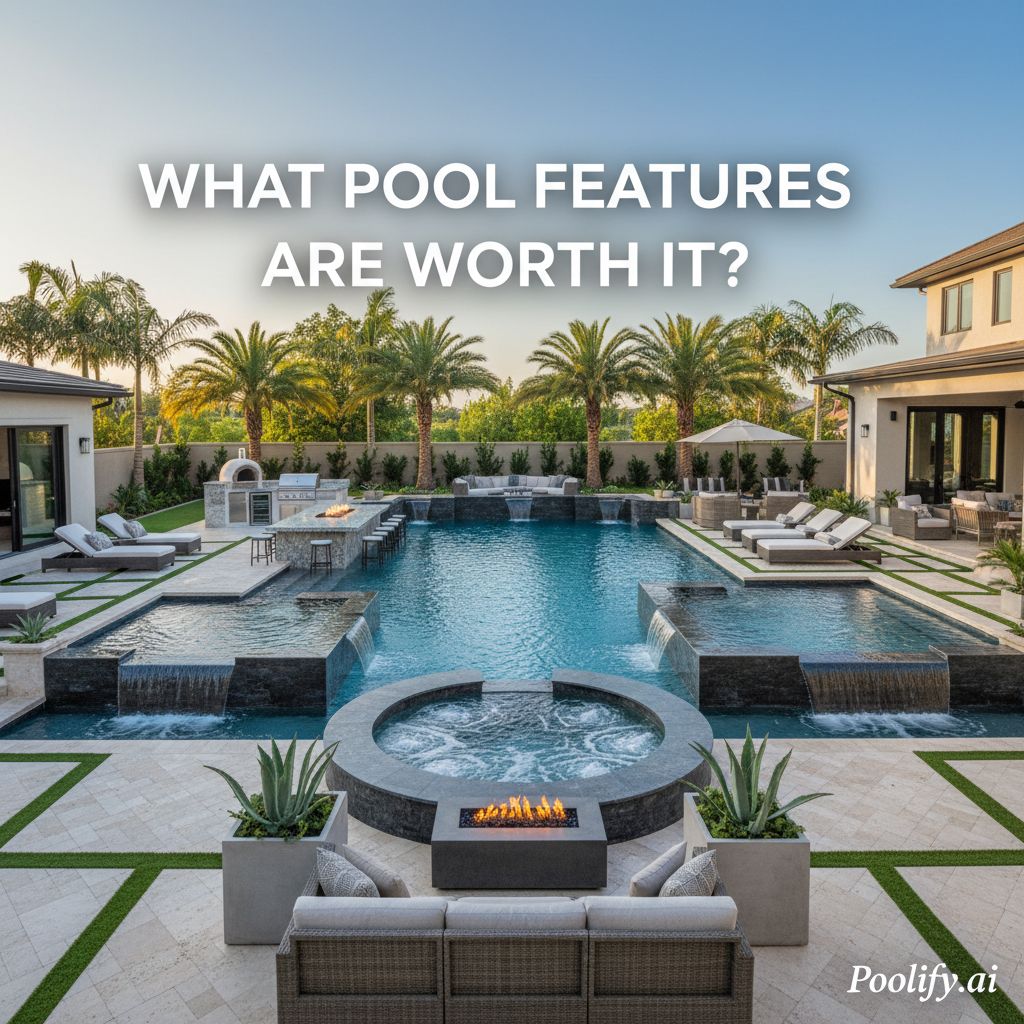
    Pool features can dramatically improve how a pool looks and functions, but not every feature adds real value. Some features enhance daily use and enjoyment, while others increase cost without delivering much long-term benefit.

    This guide explains which pool features are worth it, which ones to think carefully about, and how to choose features that match how you actually plan to use your pool.


    Start With How You Will Use the Pool

    Before choosing features, define how the pool will be used most often. Features should support behavior, not just appearance.

    Common usage priorities

    • Family recreation and kids
    • Entertaining guests
    • Relaxation and lounging
    • Exercise and lap swimming
    • Visual appeal and resale value

    Features that align with these goals tend to be worth the investment.


    Pool Features That Add Real Value

    These features are consistently useful and popular with homeowners.

    Tanning ledges and sun shelves

    Shallow ledges are ideal for lounging, kids, and socializing. They expand usable space without increasing overall pool size.

    Why they’re worth it

    • High daily use
    • Family-friendly
    • Visually appealing
    • Often improve resale appeal

    Built-in seating and benches

    Integrated seating creates natural gathering areas without needing extra furniture.

    Why they’re worth it

    • Encourages social use
    • Saves deck space
    • Simple, durable design

    Quality pool lighting

    Good lighting extends usability into the evening and improves safety.

    Why it’s worth it

    • Improves nighttime use
    • Enhances atmosphere
    • Increases visibility and safety

    Lighting is one of the most cost-effective upgrades.


    Simple water features

    Subtle water features add movement and sound without overwhelming the design.

    Examples

    • Sheer descents
    • Small scuppers
    • Bubblers on tanning ledges

    These features add ambiance without significant complexity.


    Features to Consider Carefully

    These features can be worthwhile, but only in the right context.

    Attached spas

    Spas add functionality, but they also add cost and complexity.

    Worth it if

    • You will use it regularly
    • Space allows proper integration
    • Budget can support the added expense

    Automation and smart controls

    Automation makes pool operation easier but may not be essential for every homeowner.

    Worth it if

    • You value convenience
    • You want simplified maintenance
    • You plan to use multiple features regularly

    Fire features

    Fire bowls and fire pits add visual impact but are mostly aesthetic.

    Worth it if

    • You entertain often
    • They fit the overall design
    • Budget allows for decorative upgrades

    Features That Often Add Cost Without Much Value

    Some features look appealing but provide limited long-term benefit.

    Overly complex water features

    Large waterfalls or elaborate features can dominate the design and increase maintenance.

    Excessive depth changes

    Multiple depth transitions reduce usable swim space and increase construction complexity.

    Trend-driven features

    Design trends change quickly, but pools are permanent.


    How Pool Features Affect Cost and Layout

    Every feature affects more than just appearance.

    Feature impacts to consider

    • Increased construction cost
    • More plumbing and electrical systems
    • Higher maintenance requirements
    • Reduced usable swim space
    • Longer build timelines

    Choosing fewer, well-placed features often leads to a better overall pool.


    Visualizing Features Before You Commit

    Features are easier to evaluate when you can see them in context. Visualizing different feature combinations helps identify what enhances the pool and what feels unnecessary.

    Seeing features in your actual backyard often changes priorities and prevents overspending.


    How AI Pool Design Helps With Feature Selection

    AI pool design tools allow homeowners to explore feature combinations visually before committing. By comparing designs with and without certain features, it becomes clear which upgrades truly improve the pool experience.

    Tools like Poolify focus on this early planning stage, helping homeowners test feature ideas and make confident decisions before construction begins.


    Key Takeaways

    • The best pool features support how you plan to use the pool
    • Tanning ledges, seating, and lighting provide consistent value
    • Some features should be chosen carefully based on space and budget
    • Overly complex or trend-driven features often disappoint
    • Visualizing features early prevents regret and overspending

    Choosing the right pool features is about balance. Focus on usability, simplicity, and long-term enjoyment rather than adding everything at once.

  • Pool Design Apps

    Pool Design Apps

    Pool Design Apps

    Is There an App to Design a Pool?

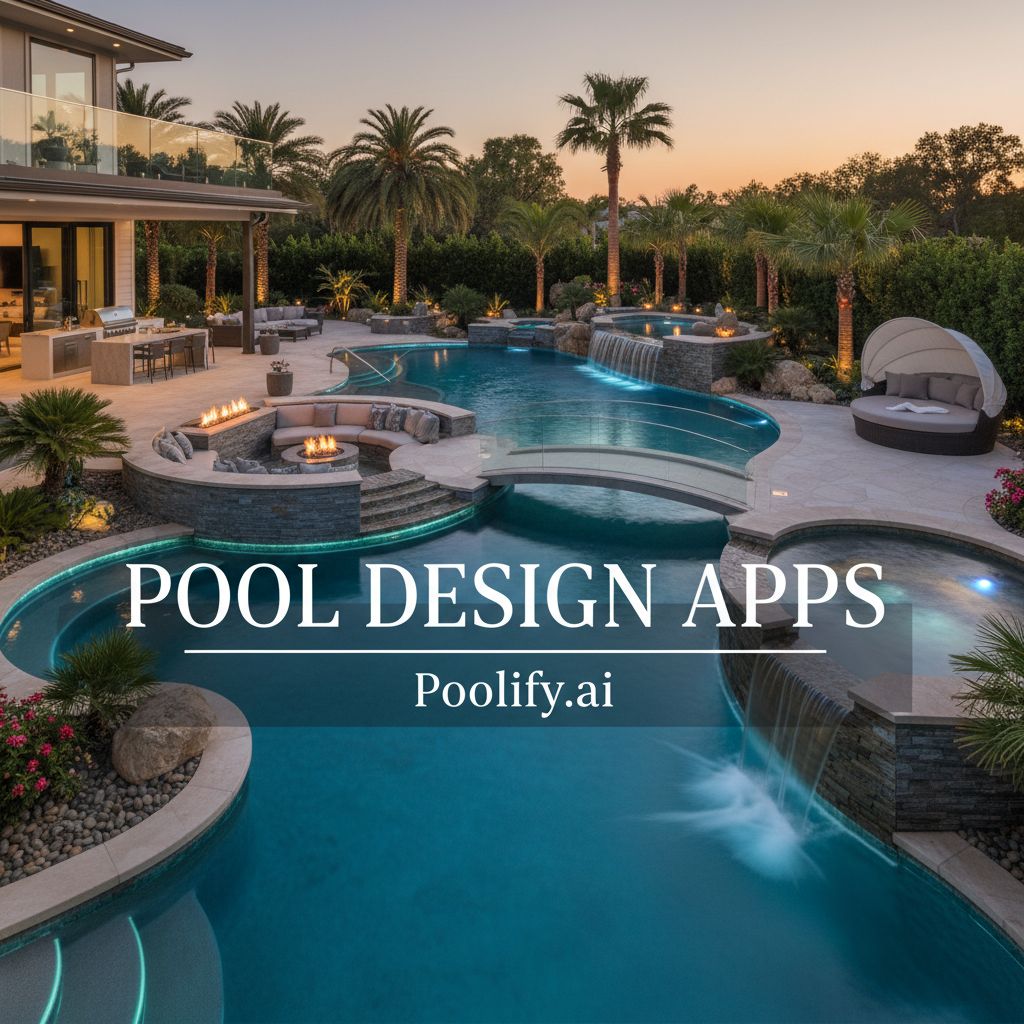
    Yes, there are pool design apps that allow homeowners to design a pool before construction begins. Pool design apps make it possible to explore layouts, compare shapes and sizes, and visualize how a pool will fit into your backyard without needing technical drawings or professional design software.
    This guide explains what pool design apps can do, how they differ from traditional design methods, and what to look for if you want to design a pool with confidence before contacting a builder.


    What a Pool Design App Does

    A pool design app is built for early planning and visualization. Instead of focusing on construction documents, these apps help homeowners understand how a pool will look and function in their space.

    Common capabilities

    • Create pool layouts digitally
    • Explore different shapes and sizes
    • Visualize placement in a backyard
    • Compare multiple design options
    • Adjust features and proportions

    The goal is clarity, not technical complexity.


    Pool Design Apps vs Traditional Pool Design

    Many homeowners confuse pool design apps with professional CAD software. They serve very different purposes.

    Traditional pool design

    • Built for contractors and engineers
    • Focuses on measurements and construction details
    • Requires technical knowledge
    • Often expensive and slow to modify

    Pool design apps

    • Built for homeowners
    • Focus on visualization and decision-making
    • Easy to use without technical training
    • Allow fast iteration and comparison

    Design apps are ideal for the pre-construction phase, when ideas are still flexible.


    Can You Design a Pool Without a Builder?

    A pool design app does not replace a builder, but it allows you to design before involving one.

    Using an app first helps you:

    • Clarify what you want
    • Avoid generic builder templates
    • Compare bids using the same design concept
    • Communicate ideas clearly

    Builders are more effective when homeowners arrive prepared.


    Types of Pool Design Apps Available

    Not all pool design apps work the same way. Understanding the differences helps set expectations.

    Template-based apps

    These use preset pool shapes and layouts. They are fast but limited in customization.

    3D visualization apps

    These provide more realistic views and allow better understanding of scale and depth.

    Photo-based pool design apps

    Some apps allow you to upload a photo of your backyard and place a pool directly into the image. This provides the most realistic sense of how the pool will fit your space.

    Photo-based visualization is often the most helpful for homeowners.


    What to Look for in a Pool Design App

    Choosing the right app matters. Focus on tools that support decision-making, not just visuals.

    Key features to prioritize

    • Easy-to-use interface
    • Ability to test multiple designs
    • Realistic proportions and scale
    • Visual placement in your actual yard
    • Fast iteration without technical steps

    An app should reduce uncertainty, not add complexity.


    Are Pool Design Apps Accurate?

    Pool design apps are intended for planning and visualization, not final engineering.

    They are accurate enough to:

    • Understand layout and scale
    • Compare sizes and shapes
    • Identify spacing issues
    • Make confident design decisions

    Final construction details still require professional input, but early visualization prevents many costly mistakes.


    How AI Pool Design Apps Are Changing Planning

    AI-powered pool design apps take visualization a step further by generating multiple design concepts automatically. Instead of manually testing one layout at a time, homeowners can compare different options quickly.

    Tools like Poolify focus on helping homeowners explore pool designs early, before committing to a specific layout or builder. This makes the planning phase faster and more flexible.


    Common Mistakes When Using Pool Design Apps

    Treating the first design as final

    Exploration is the point. Compare options before deciding.

    Ignoring deck and circulation space

    The space around the pool matters just as much as the pool itself.

    Skipping real-world context

    Apps that do not reflect your actual yard can lead to scale issues.


    Key Takeaways

    • Pool design apps allow homeowners to plan before building
    • They focus on visualization rather than construction details
    • Photo-based and AI-driven apps provide the clearest context
    • Using an app before contacting a builder gives you more control
    • Design apps reduce guesswork and prevent costly changes

    A pool design app is one of the most effective ways to make smart decisions before construction ever begins.

  • How Big of a Pool Can Fit in My Backyard?

    How Big of a Pool Can Fit in My Backyard?

    How Big of a Pool Can Fit in My Backyard?

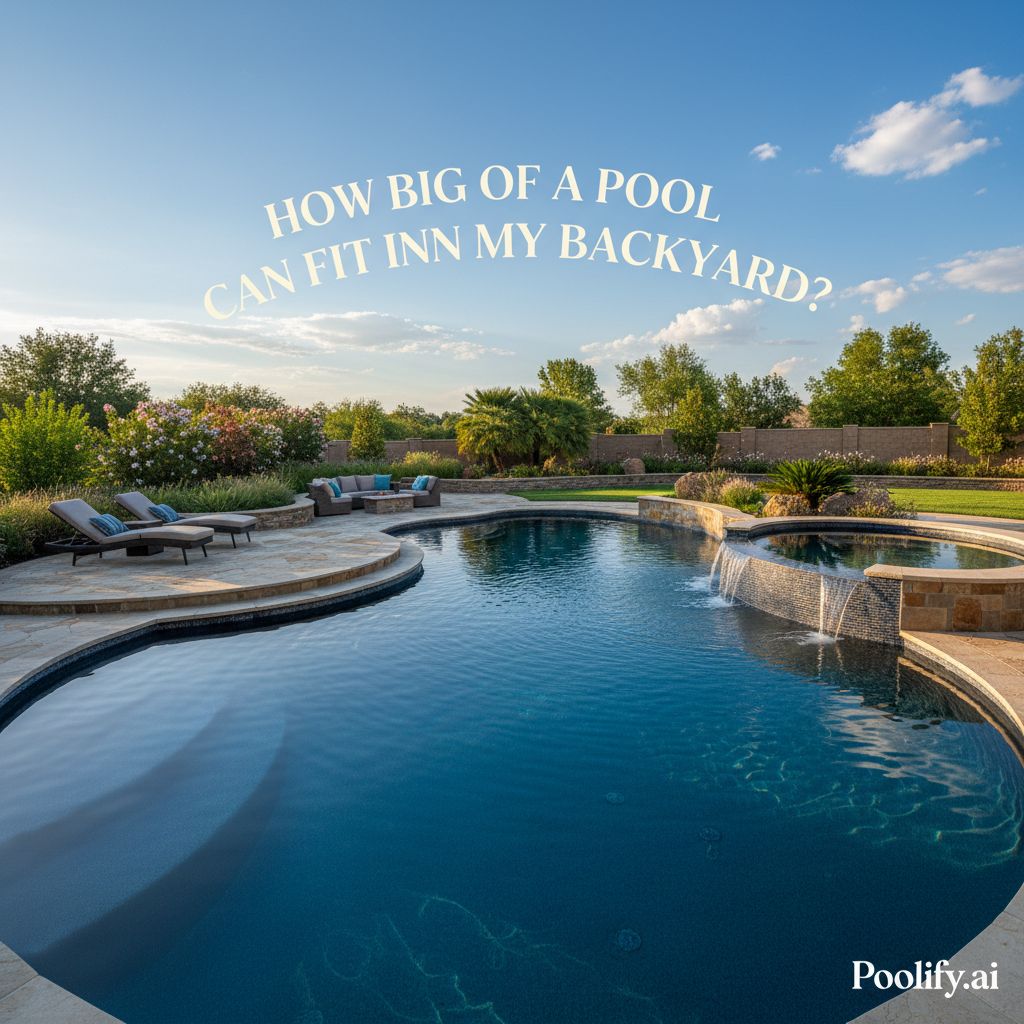
    One of the most common questions homeowners ask when planning a pool is how big of a pool can actually fit in their backyard. While lot size matters, it is only one piece of the equation. The right pool size depends on usable space, layout, setbacks, and how you want to use the pool.
    This guide explains how to determine how big of a pool can fit in your backyard, what limits size in real-world projects, and how to avoid designing a pool that overwhelms the space.


    Start With Usable Backyard Space

    The size of your backyard and the size of your pool are not the same thing. Many yards have areas that cannot be used for construction.

    What reduces usable space

    • Required setbacks from property lines
    • Distance from the house or foundation
    • Easements and utility lines
    • Slopes or retaining walls
    • Existing patios, decks, or structures

    The usable area is what remains after these constraints are accounted for. Pool size should be based on this space, not total lot size.


    Pool Size Includes More Than Just the Water

    When calculating how big a pool can fit, it is critical to think beyond the pool shell.

    Space needed around the pool

    • Decking or hardscape
    • Walkways and circulation paths
    • Seating and lounging areas
    • Safety clearances
    • Landscaping buffers

    A pool that technically fits but leaves no room to move around it will feel cramped and uncomfortable.


    Match Pool Size to How You Will Use It

    The best pool size is not always the largest possible pool.

    Common use-based sizing

    • Family recreation: Medium-sized pools with shallow areas
    • Entertaining: Pools with generous deck space and seating
    • Exercise: Long, narrow lap pools
    • Relaxation: Smaller pools with tanning ledges or built-in seating

    Designing around use prevents overspending on unnecessary water volume.


    Typical Backyard Pool Size Ranges

    While every property is different, most residential pools fall within common size ranges.

    Common pool sizes

    • Small pools: approximately 10×20 feet
    • Medium pools: approximately 12×24 to 14×28 feet
    • Large pools: approximately 16×32 feet and up

    Smaller pools often feel more intentional and are easier to maintain, while larger pools require more space, cost, and upkeep.


    How Yard Shape Affects Pool Size

    A wide, shallow yard may support a different pool size than a long, narrow yard with the same square footage.

    Layout considerations

    • Narrow yards favor lap or rectangular pools
    • Irregular yards benefit from custom or L-shaped pools
    • Sloped yards may reduce buildable area

    The shape of the yard often determines pool proportions more than total area.


    Pool Size and Budget Go Hand in Hand

    Larger pools generally cost more to build and maintain.

    Cost factors tied to size

    • Excavation and materials
    • Structural reinforcement
    • Filtration and heating requirements
    • Ongoing maintenance and energy use

    Choosing a pool size that aligns with your budget early avoids difficult compromises later.


    Why Bigger Is Not Always Better

    Many homeowners assume a larger pool is automatically better. In practice, oversized pools often reduce the enjoyment of the backyard.

    Common issues with oversized pools

    • Limited deck or seating space
    • Reduced landscaping options
    • Higher operating costs
    • Visual imbalance in the yard

    A well-proportioned pool almost always feels more luxurious than a pool that consumes the entire yard.


    Visualizing Pool Size Before Building

    It is difficult to judge pool size from measurements alone. Visualizing the pool in your actual backyard provides clarity that drawings cannot.

    Seeing different pool sizes placed in your yard helps you:

    • Compare proportions
    • Understand how much space remains
    • Balance pool size with outdoor living areas
    • Make confident decisions before construction

    This step often leads homeowners to choose a smaller, better-fitting pool.


    How AI Pool Design Helps Determine the Right Size

    AI-based pool design tools allow homeowners to test multiple pool sizes quickly. Instead of guessing, you can see how different layouts fit your yard and how much usable space remains around the pool.

    Tools like Poolify focus on this early planning phase, helping you explore realistic pool size options before contacting a builder or finalizing plans.


    Key Takeaways

    • Pool size depends on usable space, not total lot size
    • Decking and circulation space are just as important as water area
    • The best pool size matches how you plan to use it
    • Yard shape influences pool proportions
    • Visualizing pool size prevents overcrowding and regret

    Choosing the right pool size early leads to a more functional, balanced, and enjoyable backyard.

  • What Pool Shape Fits My Yard Best?

    What Pool Shape Fits My Yard Best?

    What Pool Shape Fits My Yard Best?

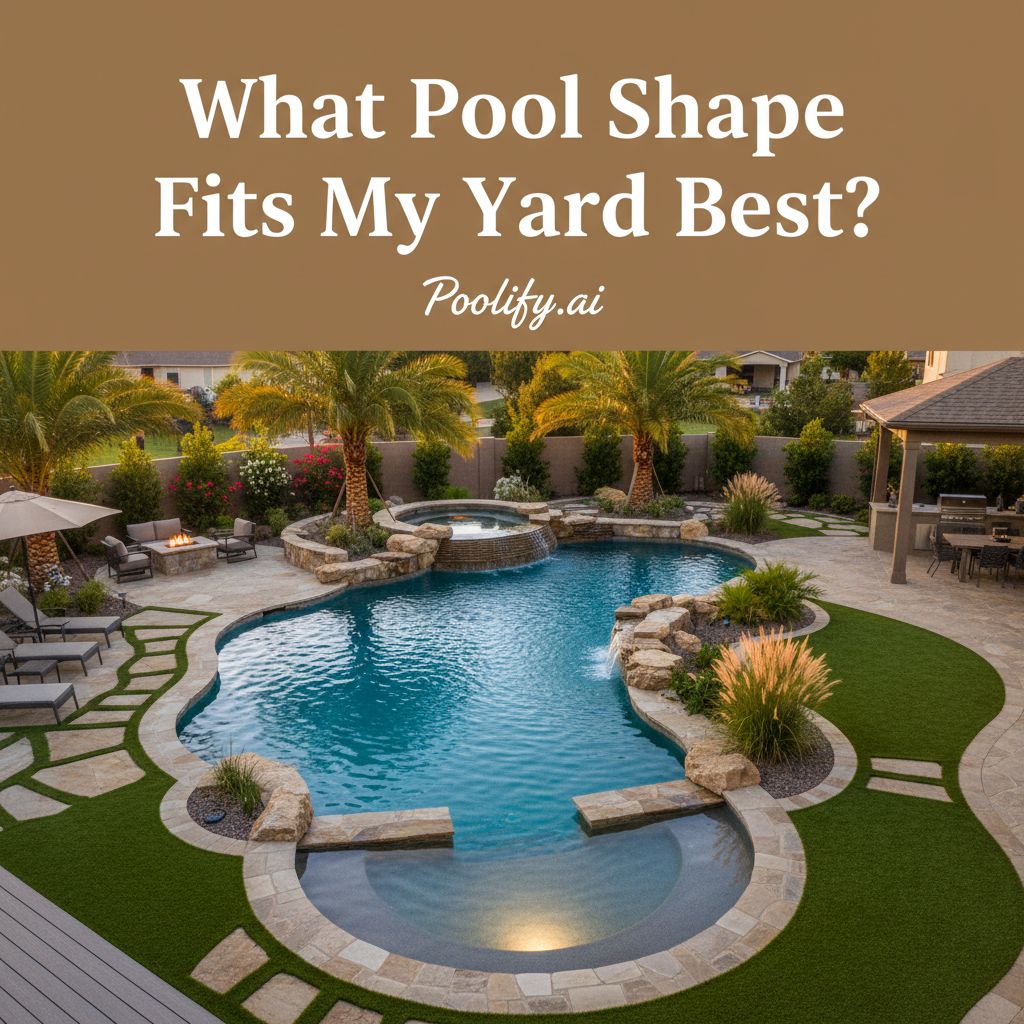
    Choosing the right pool shape is one of the most important decisions in the pool design process. The shape determines how the pool fits your yard, how the space feels, how the pool is used, and how well everything flows together. A pool shape that looks great in one yard can feel awkward or oversized in another.
    This guide explains how to determine what pool shape fits your yard best, what factors actually matter, and how to avoid common design mistakes before construction begins.


    Start With the Shape of Your Yard

    The best pool shape almost always mirrors the geometry of the backyard.

    Things to evaluate first

    • Overall yard shape (rectangular, narrow, irregular)
    • Distance from the house
    • Existing patios, decks, or walkways
    • Setbacks and property lines
    • Slopes or elevation changes

    A pool should feel intentional in the space, not forced into it.


    Rectangular Pool Designs

    Rectangular pools are one of the most popular choices because they are clean, simple, and versatile.

    When rectangular pools work best

    • Modern or contemporary homes
    • Straight property lines and clean geometry
    • Yards with limited width
    • Lap swimming or exercise use

    Pros

    • Efficient use of space
    • Easy to furnish with decking and seating
    • Often lower construction complexity

    Cons

    • Can feel rigid in organic landscapes
    • Less forgiving in irregular yards

    Rectangular pools often feel larger than they are because of their simplicity and symmetry.


    Freeform Pool Designs

    Freeform pools use curves and organic shapes to blend into the landscape.

    When freeform pools work best

    • Large or irregularly shaped yards
    • Natural or tropical landscaping
    • Properties with curves or elevation changes

    Pros

    • Softer, more natural appearance
    • Flexible layout options
    • Works well with landscaping features

    Cons

    • Can reduce usable swim space
    • More complex to design and build

    Freeform designs are visually appealing but should still be carefully scaled to the yard.


    L-Shaped Pool Designs

    L-shaped pools are practical solutions for complex layouts.

    When L-shaped pools make sense

    • Homes with wraparound patios
    • Yards with limited central space
    • Families wanting separate activity zones

    Benefits

    • Clear separation of shallow and deep areas
    • Fits around structures better than standard shapes
    • Supports multiple uses at once

    This shape often solves layout problems that other designs cannot.


    Narrow and Lap Pool Designs

    Narrow pools are ideal for tight or urban yards.

    Best use cases

    • Side yards
    • Long, narrow spaces
    • Exercise-focused swimming

    Advantages

    • Minimal footprint
    • Strong visual impact
    • Lower water volume

    These pools prioritize function while still adding visual appeal.


    Plunge Pool Designs

    Plunge pools focus on relaxation rather than swimming.

    When plunge pools work best

    • Very small backyards
    • Courtyards
    • Urban or high-density neighborhoods

    Key benefits

    • Lower cost than full-size pools
    • Easier maintenance
    • Great for cooling off and lounging

    A well-designed plunge pool can feel intentional and luxurious despite its size.


    How Pool Shape Affects Cost

    Pool shape plays a direct role in construction cost.

    Shapes that tend to cost less

    • Simple rectangular designs
    • Minimal curves
    • Standard dimensions

    Shapes that increase cost

    • Complex curves
    • Custom geometry
    • Integrated features like spas or infinity edges

    Choosing the right shape early helps prevent budget overruns.


    Visualizing Pool Shapes in Your Yard

    It is difficult to choose the best pool shape without seeing how it fits your space. What looks good on paper may feel oversized, cramped, or out of proportion in reality.

    Visualizing different pool shapes directly in your backyard allows you to:

    • Compare multiple layouts quickly
    • Understand scale and spacing
    • See how shapes interact with patios and landscaping
    • Make confident decisions before construction

    This step often changes opinions and prevents costly redesigns.


    Common Pool Shape Mistakes to Avoid

    Choosing based on trends

    Trends change, but your yard does not.

    Oversizing the pool

    Bigger is not always better.

    Ignoring deck space

    The area around the pool is just as important as the pool itself.

    Skipping visualization

    Seeing the shape in context avoids guesswork.


    How AI Pool Design Helps With Shape Selection

    AI pool design tools make it easier to explore multiple pool shapes without committing to one too early. Instead of guessing, homeowners can compare layouts and see how each option fits their actual yard.

    Tools like Poolify focus on early-stage planning, allowing you to visualize different pool shapes and layouts before contacting a builder or finalizing plans.


    Key Takeaways

    • The best pool shape depends on your yard, not trends
    • Rectangular pools work well in modern, structured spaces
    • Freeform pools suit organic or irregular yards
    • Narrow, L-shaped, and plunge pools solve space constraints
    • Visualizing shapes in your actual backyard leads to better decisions

    Choosing the right pool shape early makes the entire pool project smoother, faster, and more successful.

  • How Can I See a Pool in My Backyard Before Building?

    How Can I See a Pool in My Backyard Before Building?

    How Can I See a Pool in My Backyard Before Building?

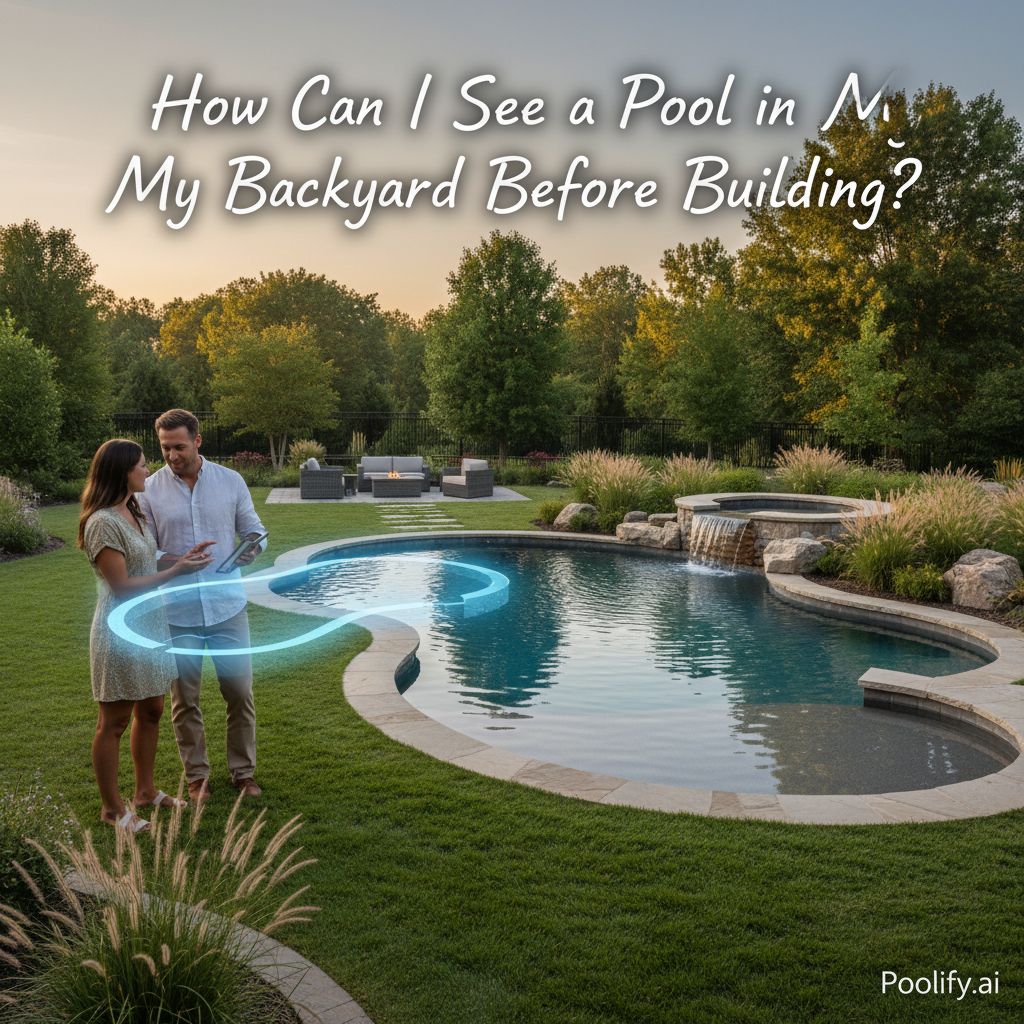
    One of the hardest parts of planning a swimming pool is trying to imagine how it will actually look in your backyard. Sketches, inspiration photos, and builder examples help, but they rarely answer the most important question: How will this pool look in my space?

    Today, homeowners have far better options. You can see a pool in your backyard before building it, compare multiple designs, and make confident decisions long before construction begins. This guide explains how that works and why visualization is one of the most important steps in pool planning.


    Why Seeing the Pool First Matters

    Pools are permanent, expensive, and highly visible. Once construction starts, changes are difficult and costly.

    Visualizing a pool in your backyard before building helps you:

    • Understand scale and proportions
    • Avoid pools that feel too large or too small
    • Confirm placement relative to the house and patio
    • Compare shapes, features, and layouts
    • Reduce redesigns and change orders later

    Most design regrets come from not fully understanding how the pool would look in context.


    Traditional Ways Homeowners Try to Visualize Pools

    Before modern tools, homeowners relied on a few common methods.

    Sketches and drawings

    Hand-drawn or CAD-style drawings show dimensions but lack realism. They do not reflect landscaping, elevation, or sightlines well.

    Inspiration photos

    Photos help with style ideas but are taken in completely different yards. What works elsewhere may not work in your space.

    Builder templates

    Builders often start with standard layouts. These can be useful but are rarely customized enough for unique properties.

    These methods are helpful, but none truly show your backyard.


    Modern Ways to See a Pool in Your Backyard

    Technology has changed how pool planning works. Today, visualization happens before construction instead of during it.

    3D pool visualization

    3D models allow you to see the pool from multiple angles, understand depth changes, and explore different layouts.

    Photo-based pool visualization

    Some tools allow you to upload a photo of your backyard and place a pool directly into the image. This shows real scale, perspective, and how the pool interacts with existing features.

    Multiple design options

    Instead of committing to one layout, you can compare several pool designs side by side and quickly see what works best.

    This approach removes guesswork and makes design decisions far easier.


    What to Look for in a Pool Visualization Tool

    Not all visualization tools are the same. When choosing a way to see a pool in your backyard, focus on clarity and flexibility.

    Key features to look for

    • Ability to upload your actual backyard photo
    • Multiple pool design options, not just one
    • Realistic proportions and placement
    • Fast iteration without technical complexity
    • Clear visuals that non-designers can understand

    The goal is confidence, not complexity.


    Why Visualization Should Happen Before You Contact a Builder

    Many homeowners wait until they speak with a builder to see design options. This often limits creativity and puts the builder in control of early decisions.

    Visualizing your pool first allows you to:

    • Walk into builder conversations prepared
    • Compare bids based on the same design
    • Avoid being steered toward generic layouts
    • Communicate your vision clearly

    Builders work best when the homeowner already understands what they want.


    Common Mistakes When Visualizing Pools

    Relying on a single design

    Seeing only one option makes it hard to judge whether it is truly the best fit.

    Ignoring surrounding space

    Decks, walkways, and landscaping matter as much as the pool itself.

    Over-focusing on features

    Water features and extras look great, but placement and scale matter more early on.

    Skipping visualization entirely

    This leads to uncertainty, redesigns, and regret.


    How AI Pool Design Makes Visualization Easier

    AI-based pool design tools simplify the process of seeing a pool in your backyard. Instead of manually drawing layouts or interpreting technical plans, homeowners can generate realistic concepts quickly.

    Tools like Poolify focus on the pre-construction phase, helping you explore designs, compare layouts, and understand how a pool will fit your yard before making any commitments.

    This approach saves time and helps you move forward with confidence.


    Key Takeaways

    • Seeing a pool in your backyard before building is critical for good decisions
    • Traditional sketches and inspiration photos have limitations
    • Modern visualization tools place the pool directly into your space
    • Photo-based and AI-driven tools provide clearer context
    • Visualizing first gives you control before working with builders