
Category: Outdoor Living & Hardscapes

Outdoor living and hardscape design play a major role in how a pool fits into the overall backyard experience. This category focuses on the spaces, structures, and surfaces that surround a pool and turn it into a cohesive outdoor environment. Thoughtful outdoor living design improves functionality, comfort, and visual flow while maximizing how the backyard is used throughout the year.

In this section, you’ll find content covering patios, decks, outdoor kitchens, pergolas, shade structures, fire features, and landscaping that complement pool installations. These posts explore how hardscape materials, layout choices, and design elements work together to create inviting outdoor spaces that extend beyond the pool itself.

Hardscapes also influence safety, drainage, maintenance, and long-term durability. This category highlights practical considerations such as surface materials around pools, spacing for furniture and walkways, and how different design choices affect usability and upkeep. By addressing both form and function, these posts help homeowners design outdoor spaces that look great and perform well over time.

Many of the outdoor living concepts featured here are integrated with AI-generated pool designs, showing how pools, patios, and surrounding structures interact within real backyard environments. These visual examples help homeowners plan complete outdoor layouts rather than isolated features.

Whether you’re designing a full backyard retreat or refining the space around an existing pool, the outdoor living and hardscapes category provides inspiration and guidance for creating balanced, well-connected outdoor spaces.

  • What Pool Design Works Best for Luxury Backyards?

    What Pool Design Works Best for Luxury Backyards?

    What Pool Design Works Best for Luxury Backyards?

    Luxury pool design is less about size and more about proportion, restraint, and integration. The most successful luxury pools feel intentional, calm, and seamlessly connected to the home and outdoor living space rather than oversized or overly complex.
    This guide explains what pool design works best for luxury backyards, which elements create an upscale feel, and how to avoid choices that look expensive but feel chaotic.


    Luxury Starts With Proportion, Not Size

    One of the biggest misconceptions about luxury pools is that bigger automatically means better.

    Hallmarks of proportional luxury design

    • Pool size that complements the home
    • Balanced relationship between water, deck, and landscaping
    • Clear negative space instead of crowding

    A well-proportioned pool often feels more luxurious than a much larger one.


    Simple, Intentional Pool Shapes

    Luxury design favors clarity and restraint.

    Common luxury pool shapes

    • Rectangular and linear pools
    • Clean geometric layouts
    • Subtle L-shaped designs for zoning

    Simple shapes provide a timeless look and integrate easily with architecture.


    Seamless Integration With the Home

    Luxury pools feel like an extension of the home rather than a separate feature.

    Integration strategies

    • Align pool edges with architectural lines
    • Continue materials from interior to exterior
    • Minimize visual barriers between pool and living spaces
    • Maintain clear sightlines from key rooms

    This approach creates a cohesive, high-end experience.


    Fewer Features, Executed Well

    Luxury pools avoid feature overload.

    Features that enhance luxury

    • Shallow lounging ledges with clean detailing
    • Subtle water features like sheer descents
    • Thoughtful lighting that highlights form
    • Integrated seating instead of loose furniture

    Quality execution matters more than quantity.


    High-End Materials With Neutral Palettes

    Luxury design favors materials that age well.

    Popular luxury finish choices

    • Natural stone or stone-look materials
    • Soft grays, whites, and neutral tones
    • Matte or lightly textured surfaces

    These choices feel refined and avoid trend-driven regret.


    Privacy and Spatial Calm

    Luxury backyards prioritize comfort and privacy.

    Design considerations

    • Strategic landscaping for screening
    • Pool placement away from noise sources
    • Defined zones for relaxation and entertaining
    • Avoidance of visual clutter

    Luxury pools should feel calm, not busy.


    Thoughtful Lighting Design

    Lighting plays a major role in luxury perception.

    Effective luxury lighting

    • Even, understated illumination
    • Emphasis on safety and ambiance
    • Avoidance of harsh or overly bright fixtures

    Good lighting extends usability without drawing attention to itself.


    Visualizing Luxury Before Building

    Luxury design decisions are subtle and benefit from visualization.

    Seeing the pool in context helps you:

    • Fine-tune proportions
    • Evaluate material choices
    • Balance simplicity and impact
    • Avoid overdesigning

    Visualization supports refinement rather than experimentation at this stage.


    How AI Pool Design Supports Luxury Planning

    AI pool design tools allow homeowners to explore luxury layouts quickly and compare subtle variations. This helps refine proportions and integration before committing to expensive materials or construction decisions.

    Tools like Poolify focus on early-stage planning, making it easier to visualize high-end designs and make confident luxury-oriented choices.


    Common Luxury Pool Design Mistakes

    Oversized pools

    They overwhelm the yard and reduce elegance.

    Too many statement features

    Luxury comes from restraint, not excess.

    Ignoring architectural alignment

    Pools that clash with the home feel disconnected.


    Key Takeaways

    • Luxury pool design prioritizes proportion over size
    • Simple, intentional shapes feel more refined
    • Integration with the home elevates the design
    • Fewer, well-executed features create impact
    • Visualization helps refine luxury details

    Luxury pool design is about clarity, balance, and thoughtful execution. When done right, the pool enhances the entire property without competing for attention.

  • What Pool Design Works Best for Entertaining?

    What Pool Design Works Best for Entertaining?

    What Pool Design Works Best for Entertaining?

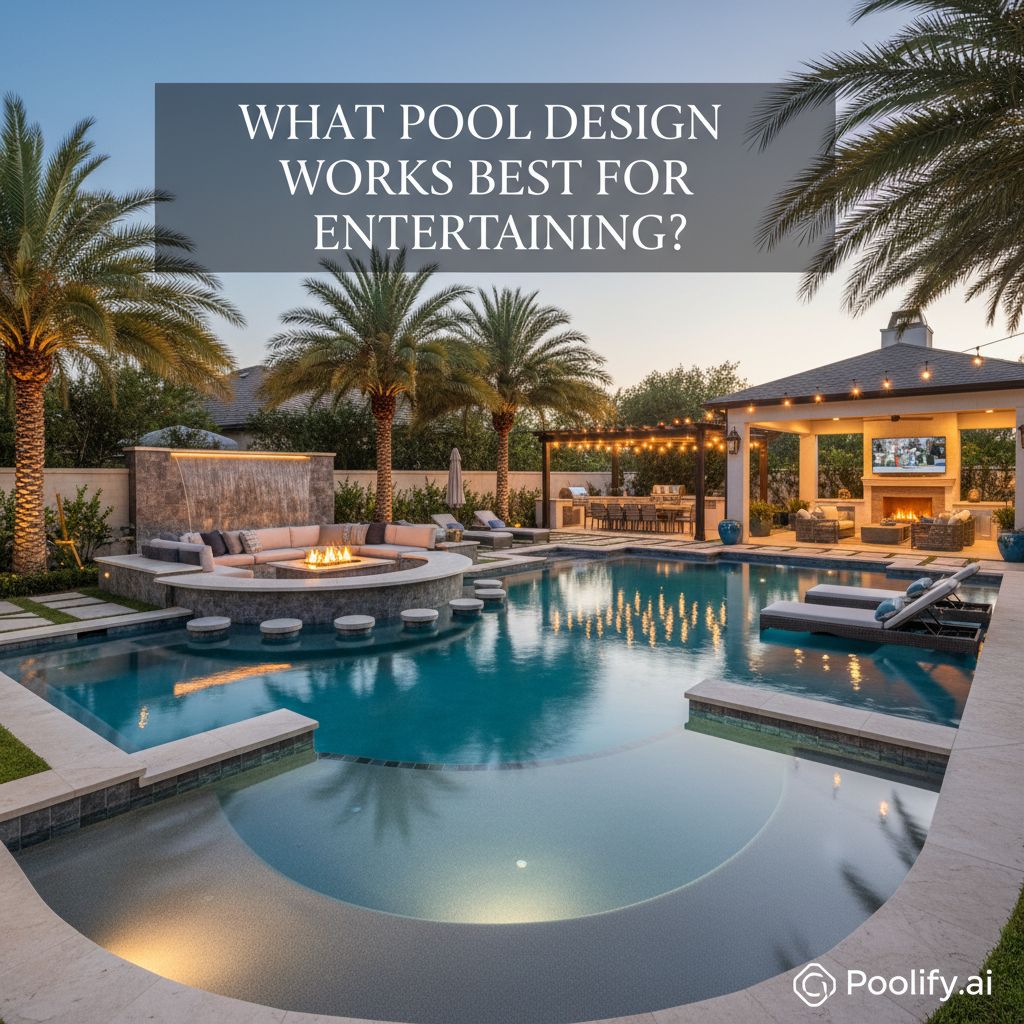
    If you plan to host friends and family, pool design should prioritize social flow, comfort, and visibility. The best pools for entertaining are not necessarily the largest or most expensive. They are the ones that support conversation, movement, and shared use without feeling crowded.

    This guide explains what pool design works best for entertaining, which features add real social value, and how to avoid layouts that disrupt gatherings.


    Design Around People, Not Just Swimming

    Entertaining pools are used differently than exercise or lap pools.

    Key entertaining priorities

    • Easy entry and exit
    • Areas for standing and sitting
    • Clear sightlines between pool and patio
    • Space for groups to gather without congestion

    Swimming distance matters less than interaction and comfort.


    Choose Pool Shapes That Encourage Social Use

    Certain shapes work better for groups.

    Rectangular and geometric pools

    Straight edges make it easier to place seating, loungers, and furniture nearby. They also keep circulation clear during gatherings.


    L-shaped pools

    L-shaped designs naturally create separate zones, allowing part of the pool to be active while another area remains relaxed.


    Avoid overly narrow designs

    Very narrow pools limit movement and make social use feel cramped.


    Include Shallow Social Areas

    Shallow zones are essential for entertaining.

    Tanning ledges and sun shelves

    These areas allow people to lounge, sit, and talk while staying cool.

    Why they work

    • Support conversation
    • Comfortable for all ages
    • Reduce crowding in deeper areas

    Built-in seating and benches

    Benches provide places to rest and gather without adding furniture to the deck.


    Design the Pool and Patio Together

    An entertaining pool should feel connected to the outdoor living space.

    Layout considerations

    • Align pool edges with patios
    • Minimize barriers between water and seating
    • Keep serving and dining areas nearby
    • Maintain clear walking paths

    Poor connection between pool and patio disrupts social flow.


    Balance Pool Size With Deck Space

    Entertaining happens as much around the pool as in it.

    Common mistake

    Oversizing the pool at the expense of deck and seating areas.

    A slightly smaller pool with generous deck space almost always works better for gatherings.


    Choose Features That Enhance Atmosphere

    Not all features add social value.

    Features that work well for entertaining

    • Subtle water features for background sound
    • Good lighting for evening use
    • Simple steps and wide entries

    Avoid features that dominate attention or restrict movement.


    Consider Visibility and Sightlines

    Entertaining pools benefit from open visibility.

    Design tips

    • Keep pool visible from seating areas
    • Avoid tall walls or barriers
    • Maintain clear lines of sight from the house

    Visibility improves safety and keeps gatherings cohesive.


    Visualize the Pool During a Gathering

    The best way to evaluate an entertaining design is to imagine people using it.

    Visualizing the pool in your backyard helps you:

    • See crowd flow
    • Identify bottlenecks
    • Balance pool and seating areas
    • Adjust layout before building

    This step often changes priorities.


    How AI Pool Design Supports Entertaining Layouts

    AI pool design tools allow homeowners to test layouts with social use in mind. By comparing designs, it becomes easier to see which layouts support gatherings and which ones feel restrictive.

    Tools like Poolify focus on early planning, helping users visualize entertaining-friendly designs before construction begins.


    Common Entertaining Pool Design Mistakes

    Too much water, not enough deck

    Socializing happens outside the pool as much as inside it.

    Isolated pool placement

    Pools that feel disconnected from seating areas disrupt gatherings.

    Overcomplicated layouts

    Simple designs are easier to use and enjoy with groups.


    Key Takeaways

    • Entertaining pools prioritize social flow over swim distance
    • Shallow areas and seating improve usability
    • Pool and patio should be designed together
    • Deck space is critical for gatherings
    • Visualization helps identify social layout issues

    A pool designed for entertaining should bring people together naturally, making gatherings feel effortless and enjoyable rather than crowded or constrained.