Category: Pool Design

Pool design plays a critical role in how your backyard looks, functions, and adds long-term value to your home. This category explores a wide range of pool design ideas, layouts, and visual concepts to help homeowners plan pools that fit their space, style preferences, and budget. Whether you’re working with a compact yard or designing a luxury outdoor retreat, the right pool design balances aesthetics, usability, and construction feasibility.

Inside this section, you’ll find modern pool designs, luxury pool concepts, family-friendly layouts, and creative backyard pool ideas that showcase how shape, size, materials, and features come together in real-world projects. These posts focus on design inspiration while also considering practical factors like yard dimensions, surrounding structures, and how pools integrate with patios, landscaping, and outdoor living spaces.

Pool design is not one-size-fits-all. Small backyard pool designs require a different approach than large open properties, while contemporary pool styles differ greatly from natural or resort-style pools. This category highlights those differences so you can compare options, visualize possibilities, and make informed decisions before moving forward with construction or renovation.

Many of the pool designs featured here are generated using Poolify’s AI pool design tools, allowing homeowners to see realistic design concepts customized to their own backyard photos. These examples help bridge the gap between inspiration and execution by showing what’s possible in your exact space.

If you’re in the early planning phase or refining ideas before talking to a builder, this pool design category serves as a visual and educational hub to guide your project from concept to confidence.

  • How Do I Compare Pool Design Options?

    How Do I Compare Pool Design Options?

    How Do I Compare Pool Design Options?

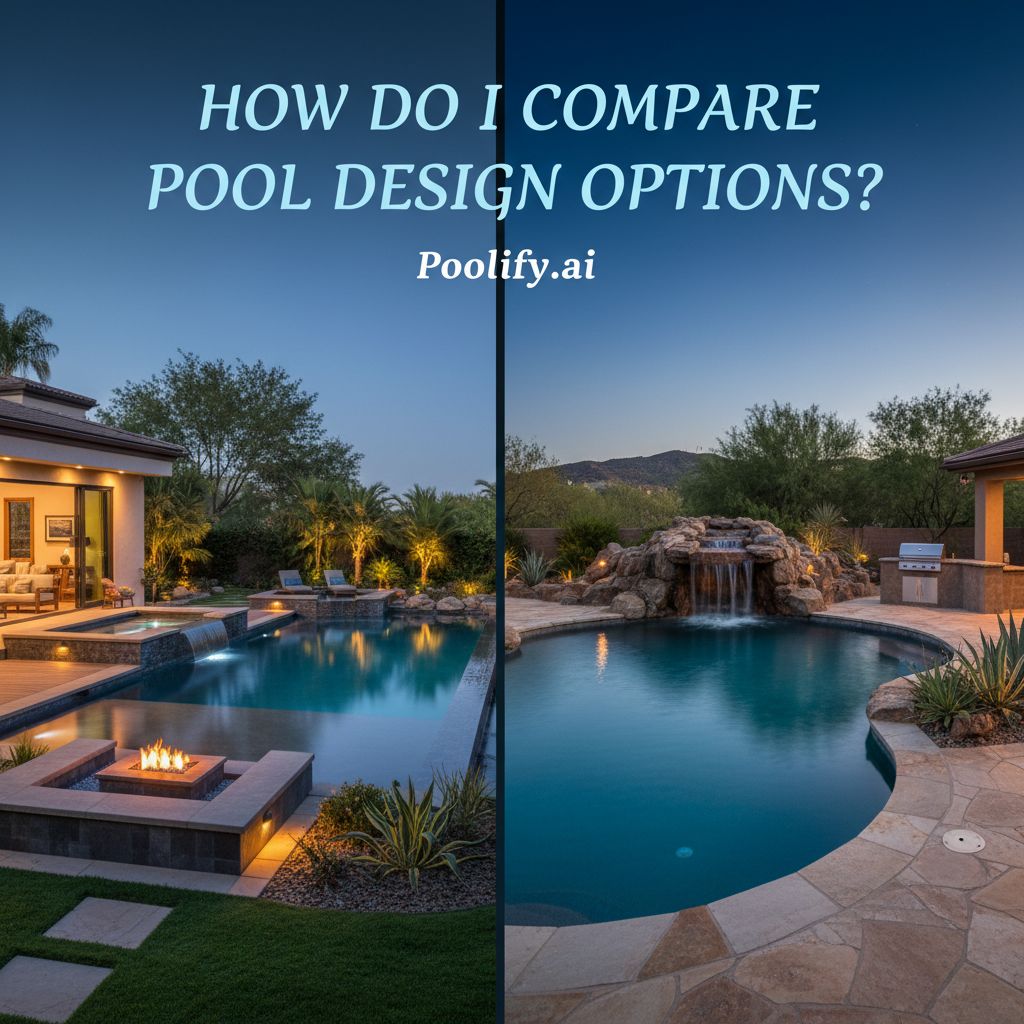
    Comparing pool design options is one of the most important steps in planning a pool. Many homeowners see one design and assume it is “good enough,” only to realize later that another layout would have worked better for their space, budget, or lifestyle.

    This guide explains how to compare pool design options effectively, what factors matter most, and how to avoid locking into the wrong design too early.


    Why Comparing Pool Designs Matters

    Pools are permanent. Once built, changing the size, shape, or placement is difficult and expensive.

    Comparing multiple designs helps you:

    • Understand tradeoffs between layouts
    • Avoid oversizing or poor placement
    • Balance pool space with deck and landscaping
    • Choose features intentionally
    • Feel confident before construction begins

    Seeing only one option limits perspective.


    Start With the Same Backyard Context

    To compare designs fairly, each option should be evaluated in the same context.

    What should stay consistent

    • The same backyard photo or site layout
    • Similar viewing angles
    • Comparable scale and proportions
    • The same surrounding features

    Changing context between designs makes comparisons unreliable.


    Compare Pool Size First

    Pool size affects nearly every aspect of the project.

    Questions to ask

    • Does the pool feel too large or too small?
    • How much usable yard space remains?
    • Is there enough deck and circulation space?
    • Does the pool overwhelm the house or yard?

    Often, the “right” size becomes obvious when designs are viewed side by side.


    Compare Pool Shape and Layout

    Shape determines how the pool interacts with the space.

    Layout factors to evaluate

    • How the pool aligns with the house
    • Flow between the pool and outdoor living areas
    • Sightlines from windows and patios
    • Ease of movement around the pool

    Some shapes look appealing in isolation but feel awkward once placed in context.


    Compare Features Intentionally

    Features should be evaluated as part of the whole design, not individually.

    Feature questions to consider

    • Does the feature improve daily use?
    • Does it reduce usable swim space?
    • Does it increase maintenance or cost?
    • Would you miss it if it were removed?

    Comparing designs with and without certain features often clarifies priorities.


    Compare Cost Implications Early

    Design options can look similar but have very different cost implications.

    Design elements that affect cost

    • Pool size and depth
    • Shape complexity
    • Number of features
    • Site constraints
    • Decking and hardscape area

    Comparing designs with cost in mind prevents surprises later.


    Avoid Comparing Too Many Options at Once

    While comparison is valuable, too many options can create confusion.

    Best practice

    • Start with 3 to 5 design options
    • Narrow to 2 strong candidates
    • Refine the final choice

    Focused comparison leads to clearer decisions.


    Why Visual Comparison Works Best

    Written descriptions and measurements are hard to interpret. Visual comparison reveals differences quickly.

    Seeing multiple designs side by side helps you:

    • Identify which layout feels balanced
    • Spot crowding or wasted space
    • Understand how features interact
    • Make decisions with confidence

    Visualization turns abstract choices into concrete ones.


    How AI Pool Design Helps With Comparison

    AI pool design tools are well-suited for comparing options. Instead of manually creating each layout, AI can generate multiple design concepts using the same backyard image.

    Tools like Poolify focus on helping homeowners compare pool designs visually, making it easier to choose the best option before committing to construction or a builder.


    Common Comparison Mistakes to Avoid

    Comparing designs in isolation

    Always view designs in the same context.

    Focusing only on appearance

    Usability and flow matter just as much.

    Ignoring future use

    Think beyond the first season.

    Choosing too quickly

    Take time to evaluate tradeoffs.


    Key Takeaways

    • Comparing pool design options leads to better outcomes
    • Keep context consistent when evaluating designs
    • Compare size, shape, features, and cost together
    • Visual comparison makes differences clear
    • AI tools simplify side-by-side evaluation

    Comparing pool designs thoughtfully helps ensure the final choice fits your backyard, your budget, and how you plan to use the pool for years to come.

  • Can I Upload a Photo to Design a Pool?

    Can I Upload a Photo to Design a Pool?

    Can I Upload a Photo to Design a Pool?

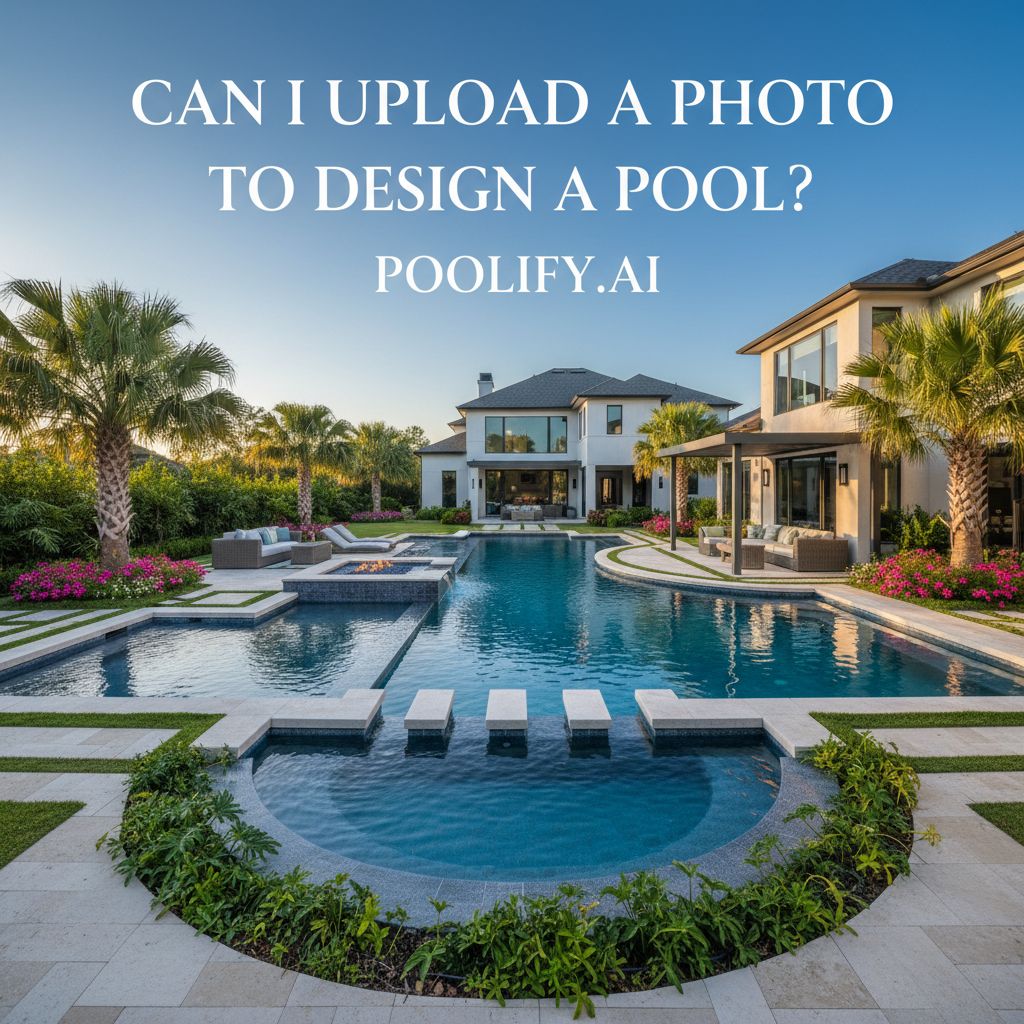
    Yes, you can upload a photo of your backyard to design a pool, and this is one of the most effective ways to plan a pool before construction begins. Photo-based pool design allows you to see how a pool fits into your actual space instead of relying on generic templates or imagination.

    This guide explains how photo-based pool design works, why it is so helpful, and what to look for when using a tool that lets you upload a backyard photo.


    Why Uploading a Backyard Photo Matters

    Every backyard is different. Lot size, shape, slopes, and surrounding structures all affect how a pool will look and function.

    Uploading a photo helps you:

    • See realistic scale and proportions
    • Understand placement relative to the house
    • Identify space constraints early
    • Compare designs in real context
    • Avoid pools that feel too large or too small

    Seeing the pool in your own yard removes guesswork.


    How Photo-Based Pool Design Works

    Photo-based pool design tools use your backyard image as the foundation for visualization.

    Typical process

    • Take a clear photo of your backyard
    • Upload the image to a pool design tool
    • Generate pool layouts placed into the photo
    • Compare different sizes, shapes, and features

    This approach shows how design choices interact with real-world conditions.


    Photo-Based Design vs Template-Based Design

    Not all pool design tools offer photo uploads.

    Template-based design

    • Uses generic yard models
    • Limited sense of scale
    • Requires imagination
    • Less accurate for real properties

    Photo-based design

    • Uses your actual backyard
    • Shows true proportions
    • Makes layout decisions clearer
    • Reduces design uncertainty

    Photo-based visualization is especially valuable for small or irregular yards.


    What Makes a Good Backyard Photo

    The quality of the photo affects the quality of the design.

    Tips for better results

    • Take photos in good daylight
    • Capture as much of the yard as possible
    • Stand far enough back to show scale
    • Avoid extreme angles when possible

    Clear photos lead to more accurate visual results.


    What You Can Learn From Photo-Based Pool Design

    Uploading a backyard photo helps answer important questions early.

    Questions it helps resolve

    • Where should the pool be placed?
    • How much deck space remains?
    • Does the pool overwhelm the yard?
    • Which shape fits best?
    • Which features work in the space?

    These answers are difficult to get from drawings alone.


    Common Misunderstandings About Photo-Based Design

    “If it looks good, it’s ready to build”

    Photo-based designs are for planning, not construction.

    “The design will be exact”

    Visuals represent concepts, not final measurements.

    “One design is enough”

    Comparing multiple designs leads to better decisions.


    How AI Enhances Photo-Based Pool Design

    AI-powered tools take photo-based design further by generating multiple concepts automatically. Instead of manually testing layouts, homeowners can see a range of options quickly.

    Tools like Poolify focus on this early planning phase, allowing users to upload backyard photos and explore pool designs visually before contacting a builder or finalizing plans.


    When to Use Photo-Based Pool Design

    Uploading a photo is most useful:

    • At the very beginning of planning
    • Before talking to builders
    • When comparing pool sizes or shapes
    • When space feels limited or complex

    This step often reshapes expectations in a positive way.


    Key Takeaways

    • You can upload a photo to design a pool
    • Photo-based design shows realistic scale and placement
    • It reduces guesswork compared to templates
    • Multiple designs provide better insight
    • AI tools make photo-based planning faster and easier

    Uploading a backyard photo is one of the best ways to design a pool with confidence before construction begins.

  • What Is the Best Pool Design Software?

    What Is the Best Pool Design Software?

    What Is the Best Pool Design Software?

    The best pool design software depends on who you are and what stage of planning you are in. Homeowners, pool builders, and designers all use different tools for different reasons. What works well for construction professionals is often slow, expensive, or overly complex for early planning.
    This guide explains what the best pool design software is for different use cases, how the options compare, and how to choose the right tool for your situation.


    What “Best” Means in Pool Design Software

    There is no single best tool for everyone. The right software depends on your goals.

    Common goals include

    • Visualizing a pool in your backyard
    • Comparing sizes, shapes, and layouts
    • Presenting designs to clients
    • Creating construction-ready plans
    • Estimating cost and materials

    Understanding your goal makes choosing the right software much easier.


    Pool Design Software for Homeowners

    Homeowners benefit most from tools that focus on visualization and clarity rather than technical detail.

    What homeowners should prioritize

    • Ease of use
    • Realistic visualization
    • Ability to test multiple designs
    • Placement in an actual backyard
    • Fast iteration without technical knowledge

    Traditional professional software is usually unnecessary at this stage.


    Pool Design Software for Pool Builders

    Builders need tools that support sales, estimating, and construction workflows.

    What builders typically need

    • 3D pool design and rendering
    • Accurate dimensions
    • Feature configuration
    • Integration with estimating tools
    • Client presentation capabilities

    These tools are powerful but often slower and more complex.


    Pool Design Software for Architects and Designers

    Architects and designers focus on early concepts and integration with the site.

    Common priorities

    • Conceptual layouts
    • Site-responsive design
    • Visual balance and proportion
    • Flexibility during early planning

    Many architects prefer conceptual tools before committing to CAD-based workflows.


    Comparing Types of Pool Design Software

    Professional construction-focused software

    • Built for builders and contractors
    • Produces detailed plans
    • Expensive and complex
    • Not homeowner-friendly

    Visualization-first pool design apps

    • Built for early planning
    • Easy to use
    • Focus on layout and scale
    • Ideal for homeowners and conceptual design

    AI-based pool design tools

    • Generate multiple concepts quickly
    • Focus on comparison and exploration
    • Reduce guesswork
    • Support early decision-making

    Each category serves a different role in the planning process.


    Why Early Planning Tools Often Work Better

    Most important pool decisions are made before construction plans exist.

    Early-stage design tools help users:

    • Avoid oversized or poorly placed pools
    • Understand tradeoffs early
    • Communicate ideas clearly
    • Reduce revisions later

    Choosing the right software early often leads to better outcomes overall.


    What to Look for When Choosing Pool Design Software

    Before selecting any tool, ask:

    • Who is this software built for?
    • Does it match my current planning stage?
    • Can I visualize my actual yard?
    • Can I compare multiple designs easily?
    • Will this help me make decisions faster?

    The best software reduces uncertainty instead of adding complexity.


    How AI Pool Design Fits Into the “Best Software” Question

    AI-based pool design tools are becoming the preferred option for early-stage planning. They allow users to explore layouts quickly, visualize designs in context, and narrow choices before moving into professional design or construction.

    Tools like Poolify focus on this conceptual phase, helping homeowners and designers understand what works best in a given space before committing to detailed plans.


    When to Use More Advanced Software

    Advanced, professional-grade software makes sense when:

    • Construction details are finalized
    • Permits and engineering are required
    • Exact measurements are needed
    • A builder is preparing final documentation

    Using these tools too early often slows the process.


    Key Takeaways

    • The best pool design software depends on your role and goals
    • Homeowners benefit most from visualization-first tools
    • Builders need detailed, construction-focused software
    • Architects value flexible conceptual design tools
    • AI-based tools excel at early planning and comparison

    The best pool design software is the one that fits your stage of planning and helps you make confident decisions before construction begins.

  • Pool Design Apps

    Pool Design Apps

    Pool Design Apps

    Is There an App to Design a Pool?

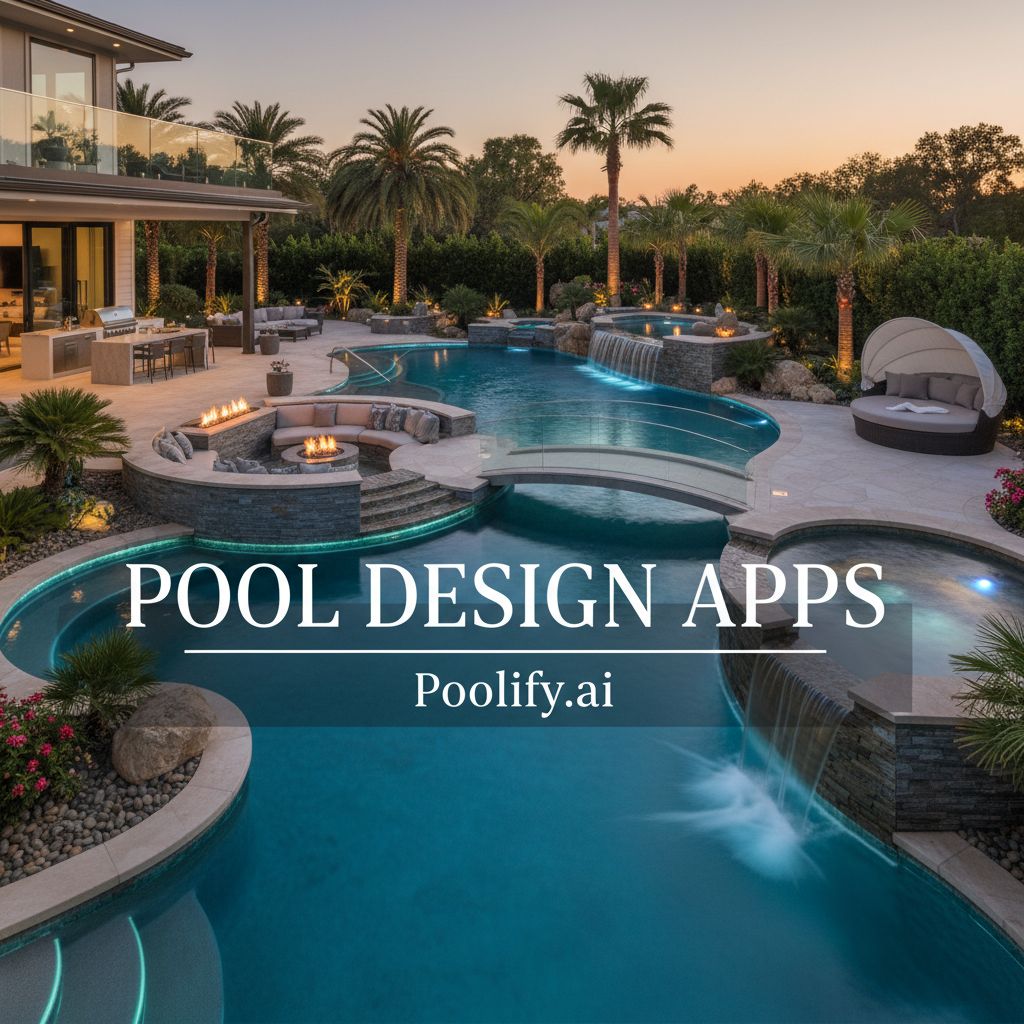
    Yes, there are pool design apps that allow homeowners to design a pool before construction begins. Pool design apps make it possible to explore layouts, compare shapes and sizes, and visualize how a pool will fit into your backyard without needing technical drawings or professional design software.

    This guide explains what pool design apps can do, how they differ from traditional design methods, and what to look for if you want to design a pool with confidence before contacting a builder.


    What a Pool Design App Does

    A pool design app is built for early planning and visualization. Instead of focusing on construction documents, these apps help homeowners understand how a pool will look and function in their space.

    Common capabilities

    • Create pool layouts digitally
    • Explore different shapes and sizes
    • Visualize placement in a backyard
    • Compare multiple design options
    • Adjust features and proportions

    The goal is clarity, not technical complexity.


    Pool Design Apps vs Traditional Pool Design

    Many homeowners confuse pool design apps with professional CAD software. They serve very different purposes.

    Traditional pool design

    • Built for contractors and engineers
    • Focuses on measurements and construction details
    • Requires technical knowledge
    • Often expensive and slow to modify

    Pool design apps

    • Built for homeowners
    • Focus on visualization and decision-making
    • Easy to use without technical training
    • Allow fast iteration and comparison

    Design apps are ideal for the pre-construction phase, when ideas are still flexible.


    Can You Design a Pool Without a Builder?

    A pool design app does not replace a builder, but it allows you to design before involving one.

    Using an app first helps you:

    • Clarify what you want
    • Avoid generic builder templates
    • Compare bids using the same design concept
    • Communicate ideas clearly

    Builders are more effective when homeowners arrive prepared.


    Types of Pool Design Apps Available

    Not all pool design apps work the same way. Understanding the differences helps set expectations.

    Template-based apps

    These use preset pool shapes and layouts. They are fast but limited in customization.

    3D visualization apps

    These provide more realistic views and allow better understanding of scale and depth.

    Photo-based pool design apps

    Some apps allow you to upload a photo of your backyard and place a pool directly into the image. This provides the most realistic sense of how the pool will fit your space.

    Photo-based visualization is often the most helpful for homeowners.


    What to Look for in a Pool Design App

    Choosing the right app matters. Focus on tools that support decision-making, not just visuals.

    Key features to prioritize

    • Easy-to-use interface
    • Ability to test multiple designs
    • Realistic proportions and scale
    • Visual placement in your actual yard
    • Fast iteration without technical steps

    An app should reduce uncertainty, not add complexity.


    Are Pool Design Apps Accurate?

    Pool design apps are intended for planning and visualization, not final engineering.

    They are accurate enough to:

    • Understand layout and scale
    • Compare sizes and shapes
    • Identify spacing issues
    • Make confident design decisions

    Final construction details still require professional input, but early visualization prevents many costly mistakes.


    How AI Pool Design Apps Are Changing Planning

    AI-powered pool design apps take visualization a step further by generating multiple design concepts automatically. Instead of manually testing one layout at a time, homeowners can compare different options quickly.

    Tools like Poolify focus on helping homeowners explore pool designs early, before committing to a specific layout or builder. This makes the planning phase faster and more flexible.


    Common Mistakes When Using Pool Design Apps

    Treating the first design as final

    Exploration is the point. Compare options before deciding.

    Ignoring deck and circulation space

    The space around the pool matters just as much as the pool itself.

    Skipping real-world context

    Apps that do not reflect your actual yard can lead to scale issues.


    Key Takeaways

    • Pool design apps allow homeowners to plan before building
    • They focus on visualization rather than construction details
    • Photo-based and AI-driven apps provide the clearest context
    • Using an app before contacting a builder gives you more control
    • Design apps reduce guesswork and prevent costly changes

    A pool design app is one of the most effective ways to make smart decisions before construction ever begins.