Category: Pool Guides

Pool guides provide in-depth, educational resources to help homeowners navigate specific pool planning questions, regional considerations, and unique design challenges. This category is designed to house comprehensive guides that go deeper than individual blog posts, offering structured insights that support confident, well-informed decisions throughout the pool planning process.

In this section, you’ll find pool guides covering topics such as climate considerations, regional building factors, design constraints, and planning strategies tailored to different environments and use cases. These guides are ideal for homeowners who want a broader understanding of how location, weather, regulations, and lifestyle factors influence pool design and construction choices.

Pool guides also serve as reference material for comparing approaches and understanding best practices before engaging with builders or designers. Rather than focusing on a single feature or idea, this category brings together multiple planning elements to create a clearer, more holistic view of what goes into a successful pool project.

Many of the guides in this category incorporate AI-generated pool design examples to visually demonstrate how concepts apply across different scenarios. These visuals help translate abstract planning considerations into realistic backyard outcomes, making complex topics easier to understand.

Whether you’re researching pools by region, climate, or specific planning scenario, the pool guides category acts as a centralized knowledge base to support smarter, more confident pool decisions.

  • What Pool Design Works Best for Traditional Homes?

    What Pool Design Works Best for Traditional Homes?

    What Pool Design Works Best for Traditional Homes?

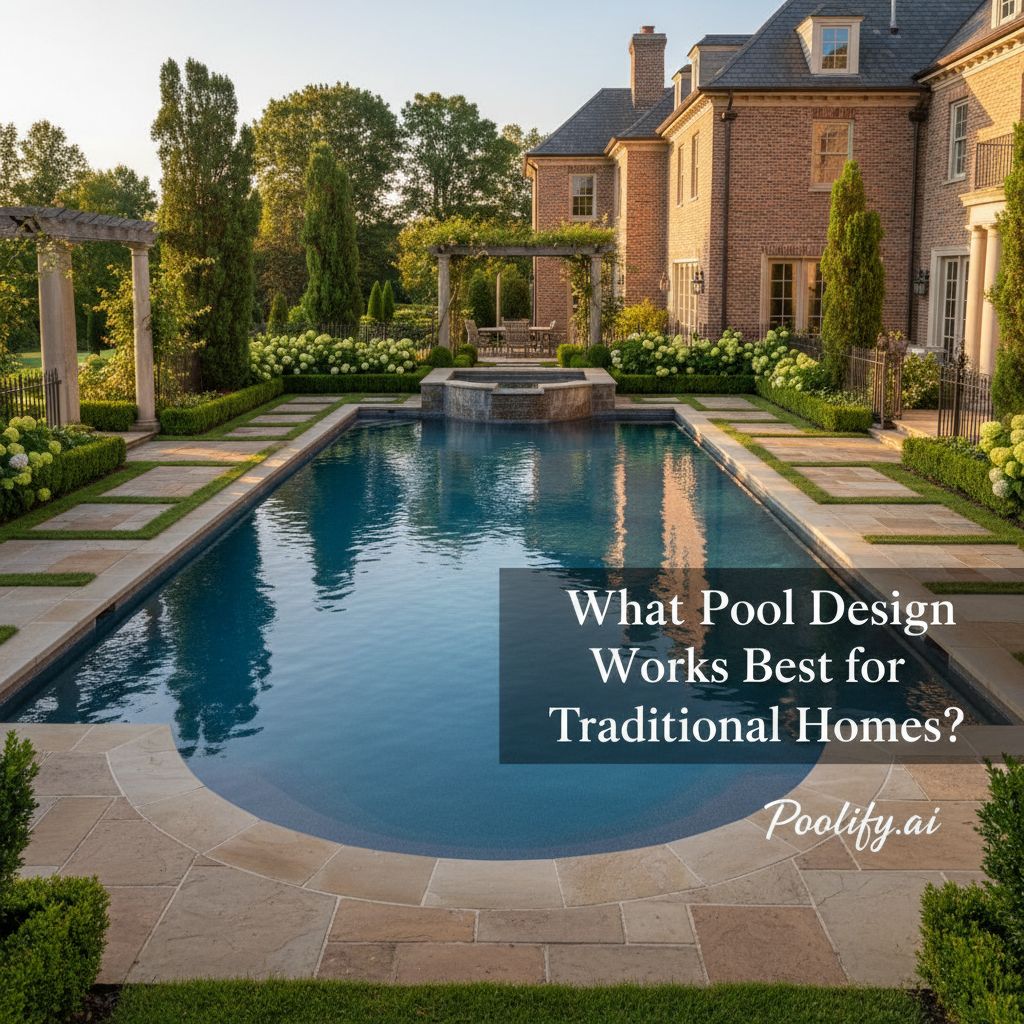
    Traditional homes benefit from pool designs that feel balanced, timeless, and well-integrated with the architecture. The best traditional pool designs avoid extremes, focusing instead on proportion, symmetry, and subtle detailing that complements the home rather than competing with it.

    This guide explains what pool design works best for traditional homes, which design choices reinforce a classic aesthetic, and how to avoid elements that feel out of place.


    Emphasize Symmetry and Balance

    Traditional architecture values order and proportion.

    Pool shapes that suit traditional homes

    • Rectangular pools
    • Symmetrical geometric designs
    • Classic L-shaped layouts with clean lines

    Symmetry creates a sense of permanence and visual stability.


    Align the Pool With the Home’s Layout

    Traditional pools should feel intentionally placed.

    Alignment strategies

    • Center the pool on primary sightlines
    • Align edges with major architectural elements
    • Maintain consistent spacing from the house

    This creates a composed, formal feel that complements traditional architecture.


    Choose Timeless Materials and Finishes

    Material selection plays a major role in traditional design.

    Common traditional finish choices

    • Neutral plaster or pebble finishes
    • Natural stone or brick-inspired coping
    • Warm, muted tones

    Avoid overly bold or high-contrast finishes that distract from the overall design.


    Use Features That Feel Classic, Not Trendy

    Traditional pools benefit from familiar, understated features.

    Features that work well

    • Wide, formal steps
    • Simple built-in benches
    • Subtle water features like small scuppers
    • Balanced lighting for evening use

    Features should enhance usability without drawing attention to themselves.


    Integrate the Pool With Landscaping

    Landscaping plays a larger role in traditional pool design.

    Landscaping strategies

    • Framed planting beds
    • Symmetrical tree or shrub placement
    • Clear transitions between pool and garden areas

    The pool should feel like part of a composed outdoor setting.


    Avoid Overly Modern or Organic Elements

    Certain elements can clash with traditional homes.

    Use caution with

    • Irregular freeform shapes
    • Ultra-minimalist detailing
    • Highly contemporary finishes
    • Overly dramatic water features

    Consistency with the home’s style is key.


    Balance Pool Size With Yard Scale

    Traditional homes often emphasize proportion over scale.

    Layout considerations

    • Moderate pool sizes that fit the property
    • Adequate deck and circulation space
    • Clear boundaries between pool and lawn

    An oversized pool can disrupt the balance of a traditional yard.


    Visualize the Pool in Context

    Traditional design relies on subtle relationships between elements.

    Visualization helps you:

    • Confirm symmetry and alignment
    • Evaluate material choices
    • Balance pool and landscaping
    • Avoid design clashes

    Seeing the pool in your actual yard supports better traditional design decisions.


    How AI Pool Design Supports Traditional Planning

    AI pool design tools allow homeowners to explore classic layouts and visualize how a pool fits within a traditional setting.

    Tools like Poolify focus on early planning, helping users refine proportions, placement, and style before construction begins.


    Common Traditional Pool Design Mistakes

    Over-modernizing

    Design elements that are too contemporary can feel out of place.

    Ignoring landscaping

    Traditional pools rely on strong landscape integration.

    Oversizing the pool

    This disrupts balance and formality.


    Key Takeaways

    • Traditional pool design emphasizes symmetry and balance
    • Rectangular and geometric shapes work best
    • Timeless materials reinforce classic appeal
    • Landscaping integration is critical
    • Visualization helps refine traditional details

    A well-designed traditional pool feels permanent, balanced, and naturally integrated with the home, creating an outdoor space that remains appealing for decades.

  • Can I Upload a Photo to Design a Pool?

    Can I Upload a Photo to Design a Pool?

    Can I Upload a Photo to Design a Pool?

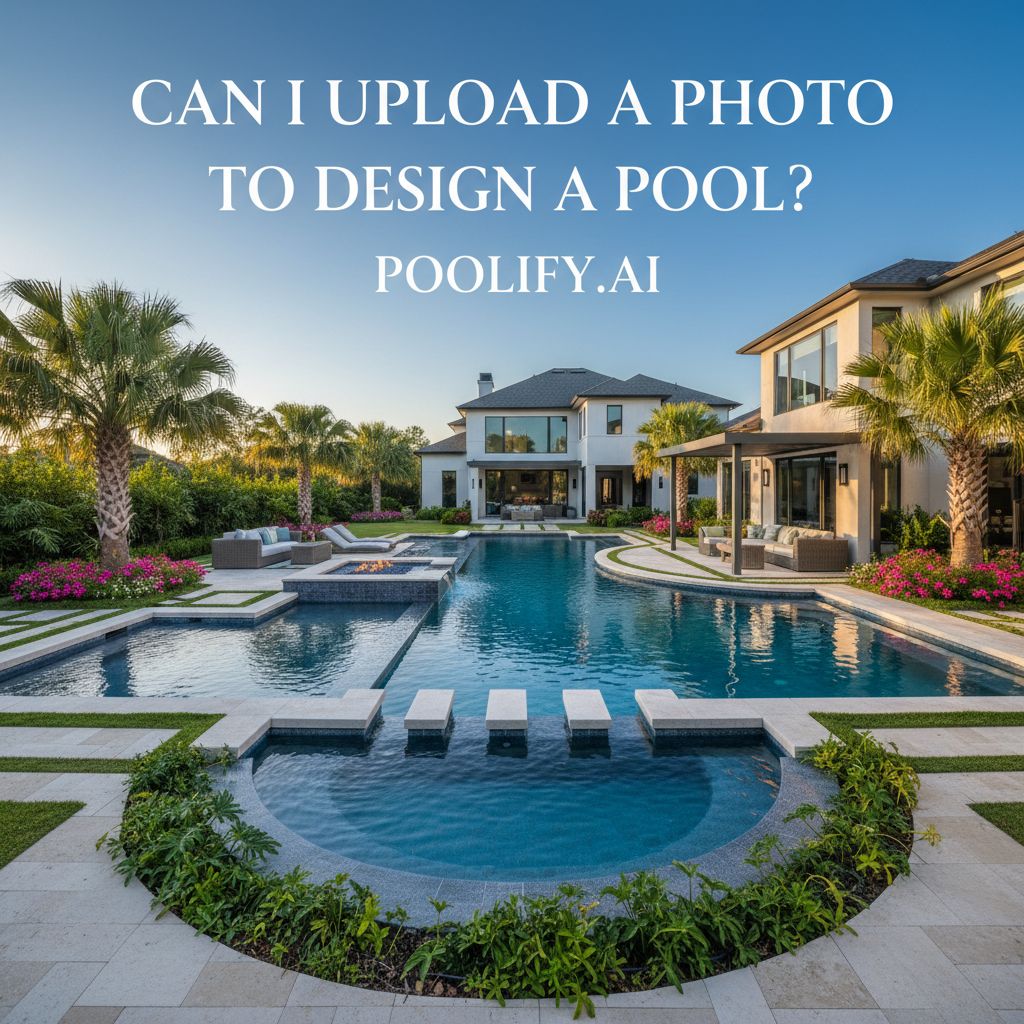
    Yes, you can upload a photo of your backyard to design a pool, and this is one of the most effective ways to plan a pool before construction begins. Photo-based pool design allows you to see how a pool fits into your actual space instead of relying on generic templates or imagination.

    This guide explains how photo-based pool design works, why it is so helpful, and what to look for when using a tool that lets you upload a backyard photo.


    Why Uploading a Backyard Photo Matters

    Every backyard is different. Lot size, shape, slopes, and surrounding structures all affect how a pool will look and function.

    Uploading a photo helps you:

    • See realistic scale and proportions
    • Understand placement relative to the house
    • Identify space constraints early
    • Compare designs in real context
    • Avoid pools that feel too large or too small

    Seeing the pool in your own yard removes guesswork.


    How Photo-Based Pool Design Works

    Photo-based pool design tools use your backyard image as the foundation for visualization.

    Typical process

    • Take a clear photo of your backyard
    • Upload the image to a pool design tool
    • Generate pool layouts placed into the photo
    • Compare different sizes, shapes, and features

    This approach shows how design choices interact with real-world conditions.


    Photo-Based Design vs Template-Based Design

    Not all pool design tools offer photo uploads.

    Template-based design

    • Uses generic yard models
    • Limited sense of scale
    • Requires imagination
    • Less accurate for real properties

    Photo-based design

    • Uses your actual backyard
    • Shows true proportions
    • Makes layout decisions clearer
    • Reduces design uncertainty

    Photo-based visualization is especially valuable for small or irregular yards.


    What Makes a Good Backyard Photo

    The quality of the photo affects the quality of the design.

    Tips for better results

    • Take photos in good daylight
    • Capture as much of the yard as possible
    • Stand far enough back to show scale
    • Avoid extreme angles when possible

    Clear photos lead to more accurate visual results.


    What You Can Learn From Photo-Based Pool Design

    Uploading a backyard photo helps answer important questions early.

    Questions it helps resolve

    • Where should the pool be placed?
    • How much deck space remains?
    • Does the pool overwhelm the yard?
    • Which shape fits best?
    • Which features work in the space?

    These answers are difficult to get from drawings alone.


    Common Misunderstandings About Photo-Based Design

    “If it looks good, it’s ready to build”

    Photo-based designs are for planning, not construction.

    “The design will be exact”

    Visuals represent concepts, not final measurements.

    “One design is enough”

    Comparing multiple designs leads to better decisions.


    How AI Enhances Photo-Based Pool Design

    AI-powered tools take photo-based design further by generating multiple concepts automatically. Instead of manually testing layouts, homeowners can see a range of options quickly.

    Tools like Poolify focus on this early planning phase, allowing users to upload backyard photos and explore pool designs visually before contacting a builder or finalizing plans.


    When to Use Photo-Based Pool Design

    Uploading a photo is most useful:

    • At the very beginning of planning
    • Before talking to builders
    • When comparing pool sizes or shapes
    • When space feels limited or complex

    This step often reshapes expectations in a positive way.


    Key Takeaways

    • You can upload a photo to design a pool
    • Photo-based design shows realistic scale and placement
    • It reduces guesswork compared to templates
    • Multiple designs provide better insight
    • AI tools make photo-based planning faster and easier

    Uploading a backyard photo is one of the best ways to design a pool with confidence before construction begins.