
Introduction to Child Pool Safety in 2026
Every parent’s worst nightmare is a pool-related accident involving their child. This child pool safety guide provides essential information to prevent drowning and pool injuries, which remain a leading cause of unintentional death for children ages 1-4. With over 8 million residential pools across America and warmer temperatures extending swimming seasons, understanding comprehensive safety measures has never been more critical. This child pool safety guide covers supervision strategies, physical barriers, emergency preparedness, and modern safety technologies that every family needs in 2026.
The Critical Importance of Active Supervision
Active supervision forms the foundation of any effective child pool safety guide. Unlike passive watching, active supervision means maintaining constant, focused attention on children in or near water without distractions from phones, books, or conversations. According to the Consumer Product Safety Commission’s Pool Safely campaign, most child drownings occur during brief lapses in supervision lasting less than five minutes.
The concept of a designated “water watcher” has become a best practice in this child pool safety guide. This person wears a distinctive item like a lanyard or bracelet and commits to watching children exclusively for a set period, typically 15-20 minutes, before passing responsibility to another adult. This prevents the bystander effect where everyone assumes someone else is watching.
Touch Supervision for Young Children
For children under five years old, this child pool safety guide recommends “touch supervision,” meaning an adult stays within arm’s reach at all times. Even if a child knows how to swim, developmental limitations mean young children cannot reliably save themselves from drowning. Their cognitive abilities don’t allow them to recognize danger or respond appropriately in emergencies.
Never rely on flotation devices as a substitute for supervision. While puddle jumpers and arm floaties provide buoyancy, they create a false sense of security. Children can slip out of them, they can deflate, and they don’t teach proper swimming skills. This child pool safety guide emphasizes that flotation devices are tools for fun, not safety equipment.
Essential Physical Barriers and Pool Fencing
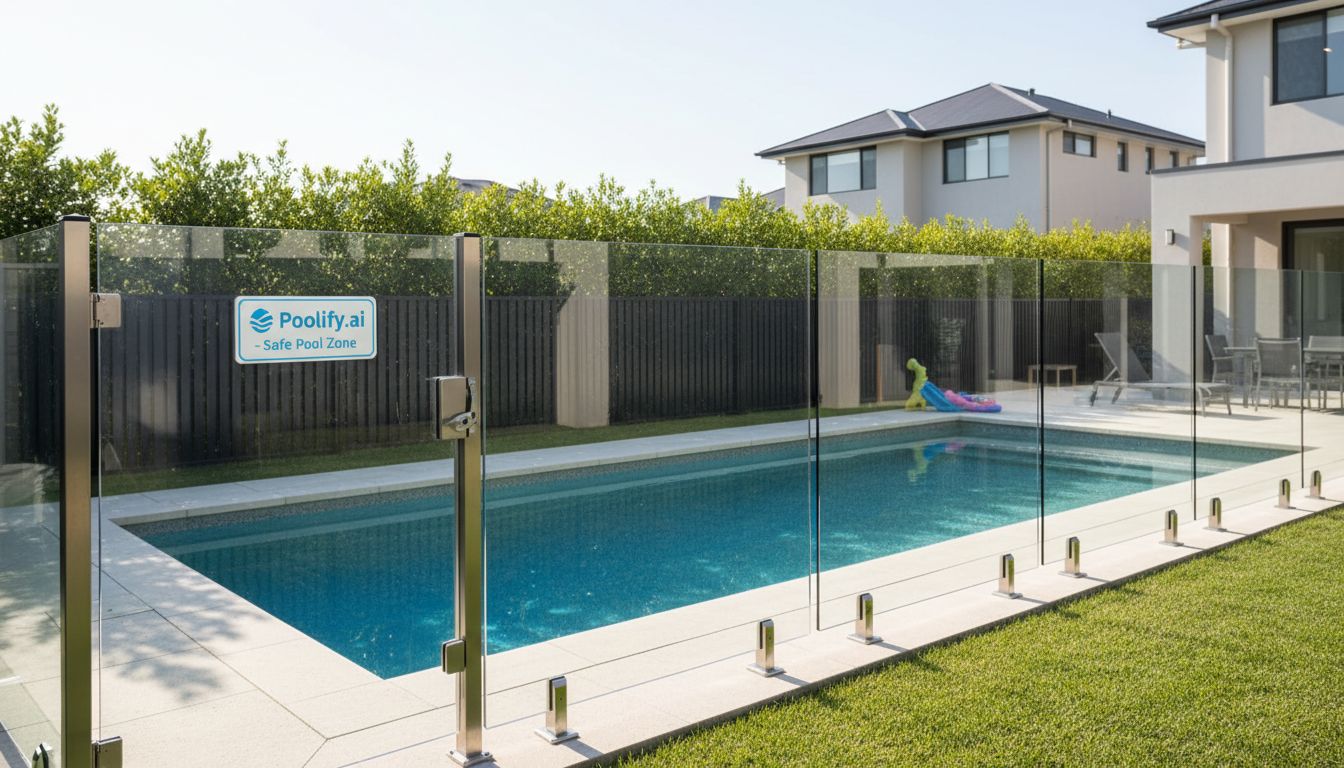
Physical barriers represent the second critical layer in this child pool safety guide. The Centers for Disease Control and Prevention reports that proper four-sided fencing reduces child drowning risk by 83%. Yet many homeowners still use inadequate three-sided barriers that use the house as the fourth side, allowing unsupervised access through doors.
A proper barrier as outlined in this child pool safety guide should be at least four feet high, completely surround the pool, and have self-closing, self-latching gates that open outward away from the pool. Gate latches must be at least 54 inches from the ground, beyond the reach of young children. Vertical fence slats should be spaced no more than four inches apart to prevent children from squeezing through.
Modern Safety Technology Integration
Technology has transformed what belongs in a comprehensive child pool safety guide. Pool alarms now use advanced sensors to detect disturbances in water, immediately alerting parents through smartphone apps. Some systems use underwater motion detection, while others monitor wave patterns to distinguish between normal activity and potential emergencies.
Safety covers provide another barrier when pools aren’t in use. However, this child pool safety guide stresses that only automatic safety covers meeting ASTM standards provide reliable protection. These covers can support significant weight and deploy at the touch of a button. Floating solar covers offer no safety value and actually create additional hazards by obscuring visibility.
Swimming Lessons and Water Competency
Swimming instruction forms an essential component of any child pool safety guide, though it never replaces supervision. Research shows that formal swimming lessons reduce drowning risk by 88% for children ages 1-4. Modern swim instruction in 2026 emphasizes water competency skills rather than just stroke technique.
This child pool safety guide recommends starting swim lessons around age one, when most children have the developmental readiness to learn basic water survival skills. These foundational lessons teach children to roll onto their backs, float, and breathe until help arrives. Programs like ISR (Infant Swimming Resource) and survival swimming focus on these critical self-rescue skills.
Age-Appropriate Skill Development
Different ages require different focuses in this child pool safety guide framework. Toddlers learn survival floating and basic propulsion. Preschoolers develop front and back swimming for short distances. School-age children master stroke refinement, treading water, and deep-water skills. Teenagers learn advanced techniques including rescue skills and CPR.
Water competency extends beyond swimming ability. This child pool safety guide emphasizes teaching children to respect water, recognize hazards, and understand their limitations. Children should learn never to swim alone, always to enter water feet-first in unknown areas, and to stay away from pool drains and suction outlets.
Emergency Preparedness and Response Protocols
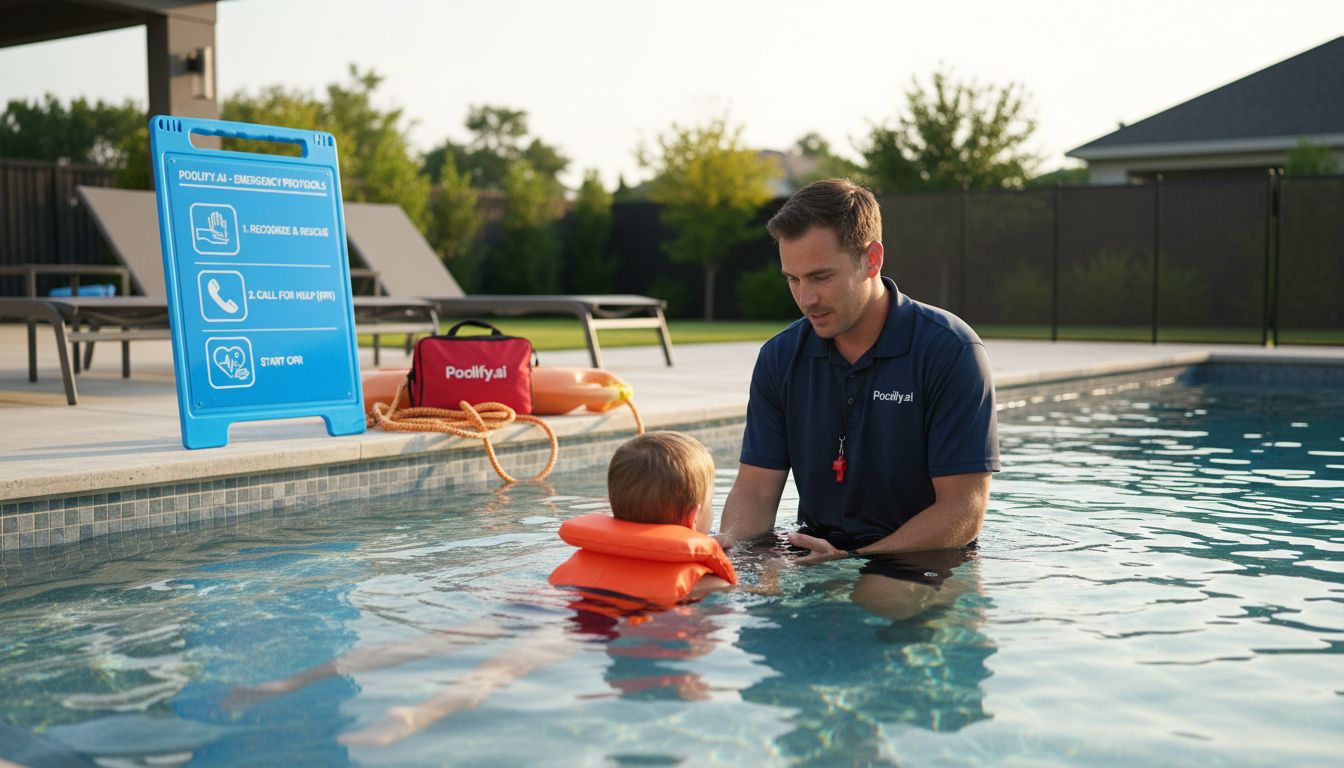
Every child pool safety guide must include comprehensive emergency preparedness. Drowning is often silent—children don’t thrash or call for help like in movies. They slip under water quietly, often in less than 20 seconds, and can suffer brain damage within 4-6 minutes without oxygen.
All adults with pool access should maintain current CPR and first aid certification. This child pool safety guide recommends refresher courses every two years, as techniques evolve and skills fade without practice. Pediatric CPR differs significantly from adult CPR, particularly regarding compression depth and rescue breathing ratios.
Creating an Emergency Action Plan
This child pool safety guide recommends posting a laminated emergency action plan in a visible location near the pool. The plan should include emergency contact numbers, the home address for 911 operators, and basic rescue steps. Keep a reaching pole and life ring with a throwing rope within immediate reach of the pool area.
Practice emergency scenarios with your family. Children should know to yell for help, call 911, and never jump in to attempt a rescue themselves. This child pool safety guide stresses that even adults should use reaching or throwing assists rather than entering water for rescue when possible, as panicked victims often pull rescuers under.
Chemical Safety and Water Quality Management
While often overlooked, chemical safety belongs in every comprehensive child pool safety guide. Improperly stored pool chemicals cause hundreds of injuries annually, from chemical burns to respiratory problems. Pool chemicals should be stored in a locked area separate from the pool, in original containers with intact labels, and never mixed together.
Maintaining proper water chemistry protects children’s health. This child pool safety guide recommends testing water at least twice weekly for pH, chlorine, and alkalinity. Improper chemical balance can cause skin irritation, eye problems, and create conditions where harmful bacteria thrive. Free chlorine should stay between 2-4 ppm, pH between 7.4-7.6, and alkalinity between 80-120 ppm.
Preventing Recreational Water Illnesses
This child pool safety guide addresses recreational water illnesses (RWIs) caused by germs spreading through contaminated pool water. Cryptosporidium, the most common cause of RWI outbreaks, is chlorine-resistant and can survive for days in properly treated water. Teaching children proper hygiene prevents contamination.
Children should shower before swimming, take bathroom breaks every 60 minutes, and never swim when experiencing diarrhea. This child pool safety guide recommends checking diapers every 30-60 minutes and changing them away from poolside. Swim diapers contain solid waste but don’t prevent bacteria from entering water, so extra vigilance is essential with infants and toddlers.
Drain Safety and Entrapment Prevention
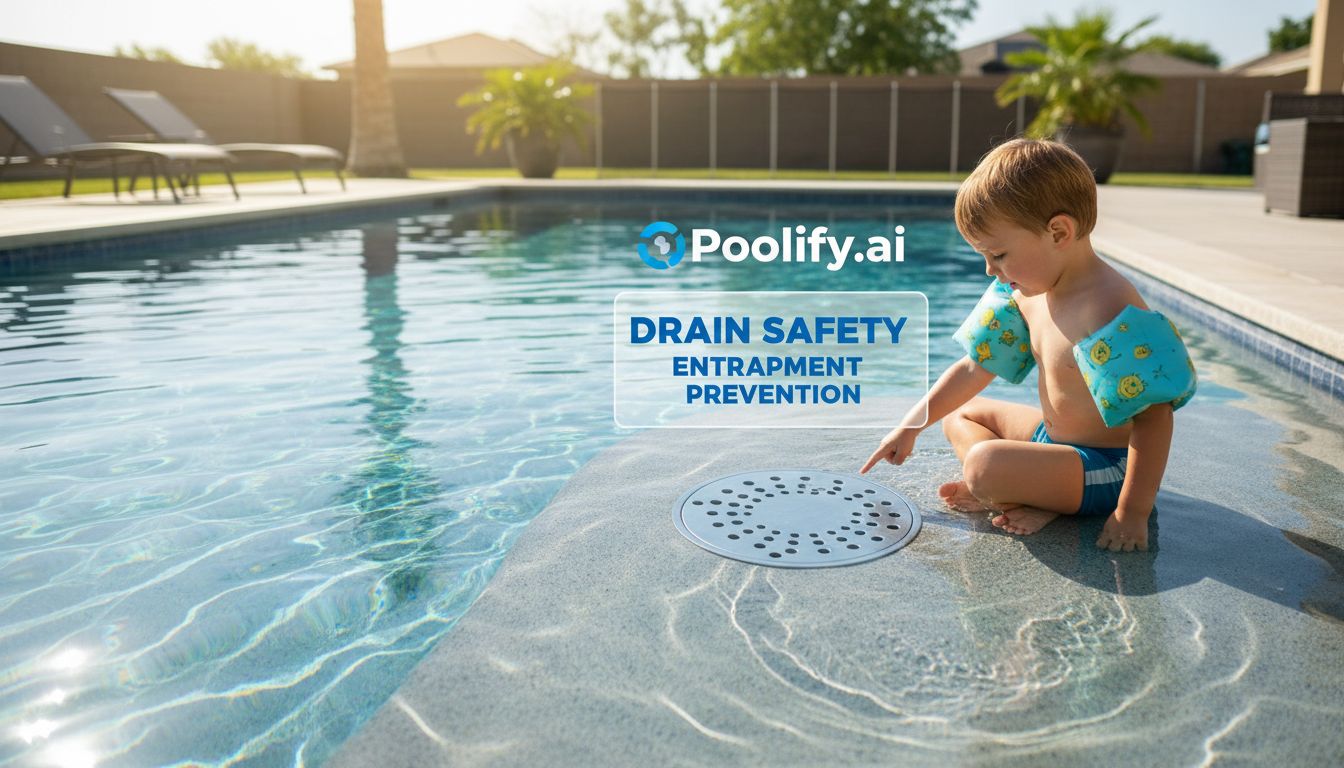
Suction entrapment represents a serious but preventable hazard addressed in this child pool safety guide. Pool drains create powerful suction that can trap children underwater by hair, limbs, jewelry, or swimsuit. The Virginia Graeme Baker Pool and Spa Safety Act mandates anti-entrapment drain covers, but older pools may not comply.
This child pool safety guide recommends inspecting drain covers before each swim season. Covers should be secured with all screws present and show no cracks or damage. Missing or broken drain covers create deadly hazards—never allow swimming if covers are damaged. Modern pools should have multiple drains per pump to reduce suction strength.
Teaching Children Drain Awareness
Children should learn drain safety as part of this child pool safety guide education. Teach them to stay away from drains and suction outlets, never play near them, and immediately tell an adult if they feel suction pulling on them. Long hair should be tied up or contained in a swim cap. Remove jewelry and avoid swimsuits with drawstrings before entering pools.
If entrapment occurs, this child pool safety guide emphasizes immediate action: turn off the pump immediately using the emergency shut-off switch, which should be clearly marked and accessible. Every second counts, as children can drown in less than two minutes when trapped underwater.
Pool Rules and Behavioral Safety Guidelines
Clear, consistently enforced rules form an essential element of this child pool safety guide. Children thrive with structure, and pool rules establish safe behavioral expectations. Post rules visibly near the pool and review them before each swim session, especially with guests who may not know your family’s protocols.
This child pool safety guide recommends these fundamental rules: no running on pool decks, no diving in shallow water, no pushing others into the pool, no swimming alone, and no glass containers in pool areas. Slippery surfaces cause injuries, shallow diving causes paralysis, and unexpected immersion can cause dangerous inhalation of water even in swimmers.
Supervision of Multiple Children and Pool Parties
Pool parties and multiple children present increased risks addressed in this child pool safety guide. The ratio should be one actively supervising adult per every two to three young children. Older children still require designated supervision, though one adult can monitor more teenagers than toddlers.
This child pool safety guide suggests implementing a buddy system where children pair up and watch out for each other. Buddies stay together and alert adults if their partner goes missing. Take regular headcounts, especially after busy periods or when children move between pool and house. Consider using waterproof wristbands in different colors to identify swimmers by skill level.
Special Considerations for Different Pool Types

This child pool safety guide addresses safety across various pool types, as each presents unique hazards. Above-ground pools require special attention to ladder security. Ladders should be removed or locked when the pool isn’t in use, as they provide easy access for unsupervised children. Despite being above ground, these pools pose equal drowning risks.
Inflatable pools, while seemingly safer due to their size, still require all precautions outlined in this child pool safety guide. Children can drown in as little as two inches of water. Empty inflatable pools completely after each use, store them deflated, and never leave them filled overnight. Even small amounts of standing water attract children and create hazards.
Hot Tubs and Spa Safety
Hot tubs and spas require additional precautions in this child pool safety guide. Children under five should not use hot tubs, as their bodies cannot regulate temperature effectively, risking dangerous overheating. Older children should limit sessions to 15 minutes maximum, and water temperature should never exceed 104°F.
This child pool safety guide emphasizes that spa covers must meet ASTM standards and be locked when not in use. Suction hazards are even more dangerous in spas due to stronger pumps in smaller spaces. Ensure all spas have compliant drain covers and functioning emergency shut-off switches within easy reach.
Seasonal Safety and Pool Winterization
Year-round vigilance appears throughout this child pool safety guide, as drowning risks don’t disappear off-season. Winter pool covers must support weight and be properly secured. Mesh covers that allow water accumulation on top create additional drowning hazards, as children can fall through into cold water below while also being trapped under the cover.
This child pool safety guide recommends maintaining barriers and locks during winter months. Children are attracted to frozen or partially frozen pools, which present multiple dangers including falling through ice, hypothermia, and inability to escape due to cold shock. Regular inspections ensure covers remain intact and fencing stays secure despite weather exposure.
Key Takeaways
- Active supervision is non-negotiable: Designate a water watcher, maintain touch supervision for children under five, and eliminate all distractions during pool time as emphasized throughout this child pool safety guide.
- Layer multiple safety barriers: Install four-sided fencing at least four feet high with self-closing gates, use compliant safety covers, and integrate modern alarm technology for comprehensive protection.
- Ensure swimming competency: Enroll children in formal swimming lessons starting around age one, focusing on water survival skills and age-appropriate stroke development as outlined in this child pool safety guide.
- Prepare for emergencies: Maintain current CPR certification, post emergency action plans, keep rescue equipment accessible, and practice response scenarios with your entire family.
- Establish and enforce clear rules: Create consistent behavioral guidelines, implement buddy systems during parties, conduct regular headcounts, and inspect safety equipment before each season as recommended in this child pool safety guide.
Frequently Asked Questions
At what age can children swim without direct supervision?
This child pool safety guide recommends that children under 14 always have adult supervision regardless of swimming ability. Even strong swimmers can experience cramps, injuries, or unexpected medical events. Teenagers with advanced skills and demonstrated water safety knowledge may swim with indirect supervision, meaning an adult is immediately available though not necessarily watching continuously. Individual maturity and local regulations should guide decisions.
Are pool alarms reliable enough to replace fencing?
No. This child pool safety guide emphasizes that pool alarms supplement but never replace proper four-sided fencing. Alarms can malfunction, have dead batteries, or be accidentally disabled. They also react after a child enters water, whereas fencing prevents access entirely. The most effective approach layers multiple safety measures including fencing, alarms, covers, and supervision.
How often should I practice emergency drills with my family?
This child pool safety guide recommends practicing emergency response drills at least quarterly, or at the beginning of each swim season. Drills should cover recognizing drowning, calling 911, using rescue equipment, and performing CPR. Regular practice builds muscle memory and confidence, ensuring family members can respond quickly during actual emergencies when stress impairs decision-making.
Can older siblings supervise younger children in the pool?
This child pool safety guide strongly advises against relying on siblings for water supervision. Children lack the cognitive development, strength, and emergency response skills to rescue someone in distress. While older children can help watch younger siblings as an additional layer, a responsible adult must always provide primary supervision for any child in or near water.
What should I look for when choosing swimming lessons?
This child pool safety guide suggests evaluating instructor credentials, class size, teaching philosophy, and facility safety. Instructors should be certified through recognized organizations like the Red Cross or YMCA. Classes should maintain small student-to-teacher ratios, typically 4:1 for young children. Programs should emphasize water survival skills, not just stroke technique, and facilities should maintain proper water quality and safety equipment.
Conclusion
Implementing the strategies in this child pool safety guide dramatically reduces drowning and injury risks while allowing families to enjoy swimming safely. No single measure provides complete protection—effective safety requires layering supervision, barriers, education, and emergency preparedness. As pool technology and safety research advance in 2026, staying informed about best practices remains essential. Review this child pool safety guide regularly, update your safety equipment, refresh your skills, and maintain constant vigilance. The investment of time and resources in pool safety is minimal compared to the precious lives it protects. For additional information on maintaining a safe pool environment year-round, explore our comprehensive pool maintenance guide and learn more about essential pool equipment safety to create the safest possible aquatic environment for your family.
References
- Consumer Product Safety Commission – Pool Safely Campaign: https://www.cpsc.gov/Safety-Education/Safety-Education-Centers/Pool-Safely
- Centers for Disease Control and Prevention – Drowning Prevention: https://www.cdc.gov/drowning/prevention/index.html