
Introduction: Making the Right Choice Between Pool Sanitation Systems
The chlorine pool vs saltwater pool debate has intensified in 2026 as homeowners seek the perfect balance between cost, maintenance, and swimming comfort. Whether you’re installing a new pool or converting an existing one, understanding the fundamental differences between these two sanitation systems will save you thousands of dollars and countless hours of frustration. This comprehensive guide examines every aspect of the chlorine pool vs saltwater pool decision, from initial installation costs to long-term maintenance requirements, helping you make an informed choice that aligns with your lifestyle and budget.
Understanding How Each System Works
Before diving into the chlorine pool vs saltwater pool comparison, it’s essential to understand the mechanics behind each system. Traditional chlorine pools rely on manually adding chlorine tablets, liquid chlorine, or granular chlorine directly to the water. Pool owners must regularly test water chemistry and adjust chlorine levels to maintain proper sanitation, typically keeping free chlorine between 1-3 parts per million (ppm).
Saltwater pools, despite their name, still use chlorine for sanitation. The key difference lies in how that chlorine is generated. A saltwater chlorinator, also called a salt cell or salt chlorine generator, converts dissolved salt into chlorine through a process called electrolysis. The system continuously produces chlorine as water passes through the salt cell, creating a more consistent chlorine level throughout the day.
The chlorine pool vs saltwater pool distinction isn’t about whether chlorine is used, but rather how it’s introduced into the water. This fundamental difference affects everything from water feel to maintenance schedules and operating costs. According to the CDC’s guidelines on residential pool disinfection, both systems can effectively sanitize pool water when properly maintained.
The Chemistry Behind Saltwater Systems
Saltwater pools maintain salt concentrations around 3,000-4,000 ppm, roughly one-tenth the salinity of ocean water. As water circulates through the salt cell, an electrical current separates sodium chloride (salt) into sodium and chlorine gas, which dissolves into the water as hypochlorous acid—the same sanitizing agent found in traditional chlorine. This chlorine then reverts back to salt after killing bacteria and algae, creating a continuous cycle that requires minimal intervention.
Traditional Chlorine Delivery Methods
The chlorine pool vs saltwater pool comparison must acknowledge that traditional systems offer multiple chlorine delivery options. Tablet feeders provide slow, steady chlorination; liquid chlorine offers quick adjustments for problem-solving; and granular chlorine works well for shock treatments. This flexibility allows pool owners to customize their approach based on usage patterns, weather conditions, and personal preferences.
Chlorine Pool vs Saltwater Pool: Initial Investment Costs
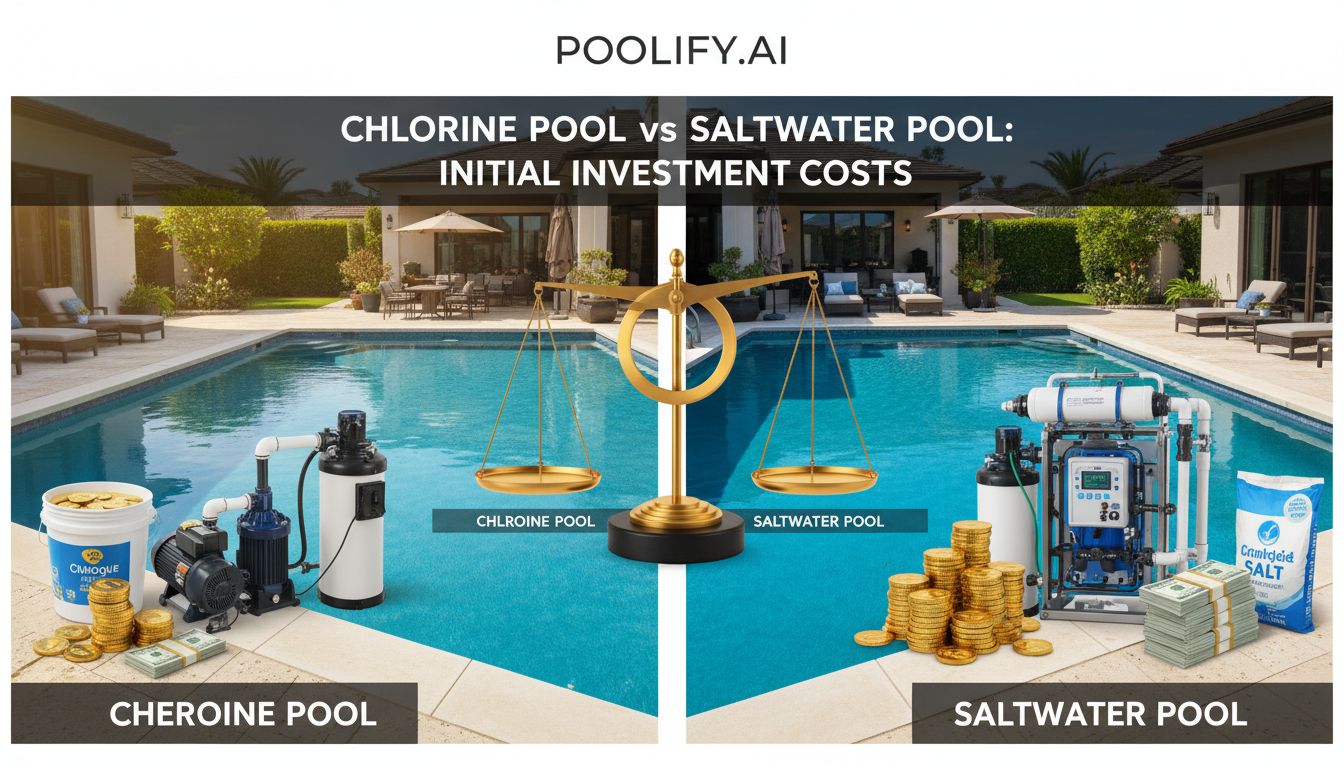
The upfront cost difference represents a significant factor in the chlorine pool vs saltwater pool decision. Traditional chlorine systems require minimal equipment beyond the pool itself—a basic chemical feeder costs between $150-$400, and you’ll need testing supplies and storage containers for chemicals. The total initial investment for chlorine equipment typically ranges from $300-$800.
Saltwater systems demand substantially higher initial investment. A quality salt chlorine generator for an average residential pool costs between $1,200-$2,500 for the unit alone, plus $300-$800 for professional installation. You’ll also need to purchase the initial salt load, which runs $50-$200 depending on pool size. Total startup costs for saltwater conversion typically range from $1,500-$3,500.
When evaluating the chlorine pool vs saltwater pool investment, consider that saltwater systems may require additional equipment upgrades. Older pool equipment, particularly metal components, may corrode faster in saltwater environments. Some homeowners need to replace ladders, handrails, heaters, or lighting fixtures with salt-compatible versions, adding $500-$2,000 to conversion costs.
Long-Term Equipment Replacement Costs
The chlorine pool vs saltwater pool cost analysis extends beyond initial installation. Salt cells require replacement every 3-7 years depending on usage and maintenance, costing $500-$900 per replacement. Traditional chlorine systems have minimal equipment replacement needs, though automatic feeders may need replacement every 5-10 years at $150-$400 each. Over a 10-year period, saltwater systems typically require $1,500-$2,500 in equipment replacement versus $300-$800 for chlorine systems.
Ongoing Maintenance and Operating Costs
The chlorine pool vs saltwater pool debate often centers on monthly operating expenses. Traditional chlorine pools require regular chemical purchases—chlorine tablets, shock treatments, pH adjusters, alkalinity increasers, and stabilizers. The average homeowner spends $300-$800 annually on pool chemicals, depending on pool size, climate, and usage frequency. In 2026, with improved chemical formulations, many pool owners find pool maintenance costs more predictable than in previous years.
Saltwater pools reduce chemical costs significantly. After the initial salt investment, you’ll only need to add salt occasionally to replace what’s lost through splashing, backwashing, or drainage—typically $50-$150 annually. You’ll still need pH adjusters, alkalinity balancers, and occasional shock treatments, bringing total annual chemical costs to $150-$400. However, electricity costs for running the salt cell add $200-$500 yearly, depending on local energy rates and pool size.
When comparing chlorine pool vs saltwater pool operating costs over five years, saltwater systems typically cost $1,750-$4,500 total ($350-$900 annually) while traditional chlorine systems run $1,500-$4,000 ($300-$800 annually). The difference narrows considerably when factoring in all expenses, making the decision less clear-cut than marketing materials suggest.
Time Investment and Labor Considerations
Beyond monetary costs, the chlorine pool vs saltwater pool comparison must account for time investment. Traditional chlorine pools demand more frequent attention—testing water chemistry 2-3 times weekly, adding chemicals as needed, and adjusting levels based on weather, usage, and water temperature. Most pool owners spend 30-60 minutes weekly on basic chlorine pool maintenance.
Saltwater systems automate chlorine production, reducing hands-on maintenance to weekly water testing and monthly salt cell inspection. Most saltwater pool owners spend 15-30 minutes weekly on routine maintenance. However, when problems arise, saltwater systems require more technical troubleshooting, potentially necessitating professional service calls that chlorine pool owners can often handle independently.
Water Quality and Swimming Experience
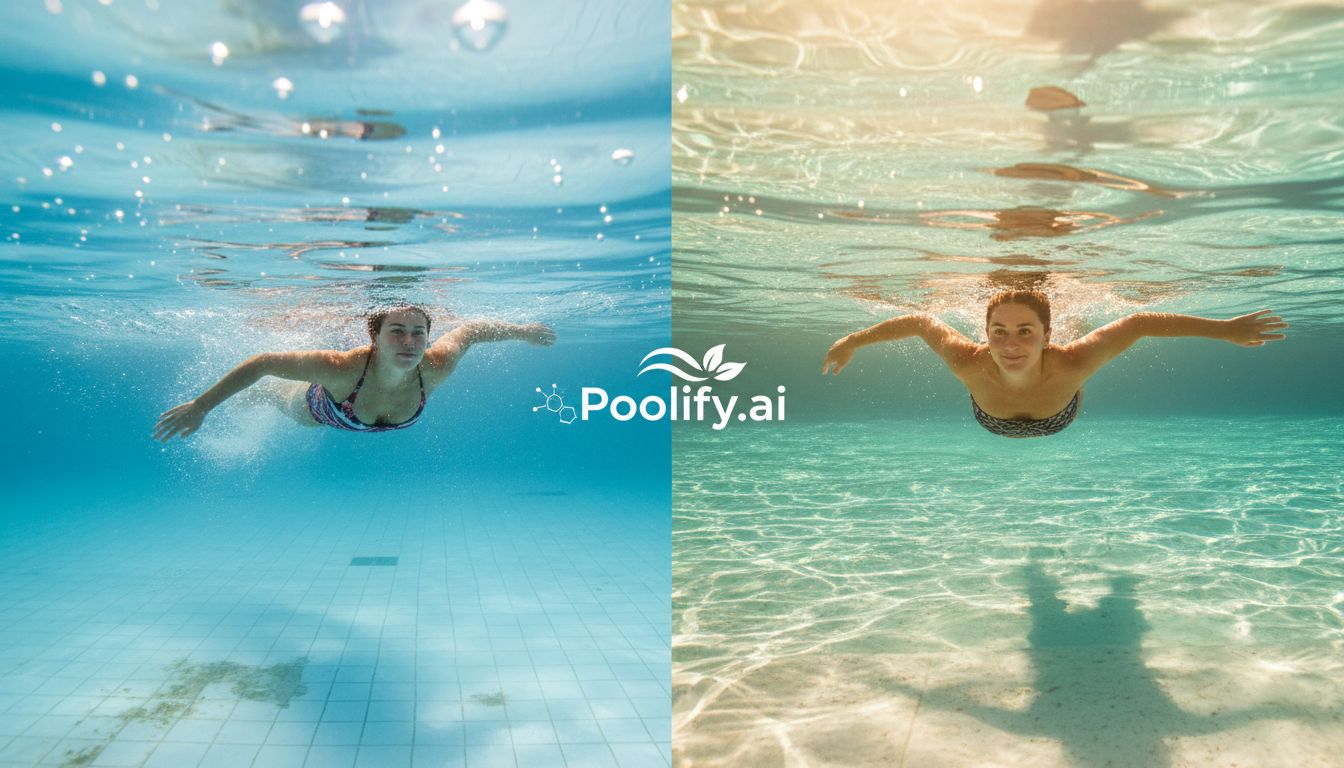
The chlorine pool vs saltwater pool debate frequently highlights water feel and comfort. Saltwater pool advocates praise the softer, silkier water feel that’s gentler on skin, eyes, and hair. The lower chloramine levels in saltwater pools reduce the harsh “chlorine smell” and eye irritation that many swimmers associate with traditional pools. The consistent chlorine production creates more stable water chemistry, resulting in fewer dramatic fluctuations that cause discomfort.
Traditional chlorine pools, when properly maintained, provide perfectly safe and comfortable swimming conditions. The key phrase is “properly maintained”—inconsistent chemical additions can create spikes in chlorine levels, leading to eye irritation, dry skin, and bleached swimsuits. However, diligent pool owners who test frequently and maintain steady chlorine levels report water quality comparable to saltwater systems.
The chlorine pool vs saltwater pool water quality comparison also involves clarity and aesthetics. Saltwater systems typically maintain clearer water with less effort due to consistent sanitization. The continuous chlorine production prevents algae blooms and bacterial growth more effectively than periodic chemical additions. Traditional chlorine pools can achieve identical clarity, but require more vigilant monitoring and quicker response to emerging issues.
Health Considerations and Sensitivities
For the chlorine pool vs saltwater pool health comparison, individuals with sensitive skin or respiratory conditions often prefer saltwater systems. Lower chloramine levels reduce respiratory irritation, particularly important for children and those with asthma. The gentler chemical environment causes less skin dryness and irritation, making extended swimming sessions more comfortable.
However, both systems maintain safe chlorine levels that effectively kill harmful bacteria and viruses. The EPA’s information on chlorine disinfection confirms that properly maintained chlorine levels in both system types provide adequate sanitation without health risks for the general population.
Maintenance Complexity and Technical Requirements
The chlorine pool vs saltwater pool maintenance learning curve differs significantly. Traditional chlorine systems follow straightforward principles—test water, add chemicals, retest, and adjust. Most homeowners master basic chlorine pool maintenance within a few weeks, and troubleshooting typically involves adding more or less of specific chemicals. The simplicity makes DIY maintenance accessible for most pool owners.
Saltwater systems introduce electronic components and automated processes that require technical understanding. Pool owners must monitor salt levels, clean salt cells regularly to prevent calcium buildup, and troubleshoot electronic control boards when issues arise. The chlorine pool vs saltwater pool technical complexity means saltwater system problems often require professional diagnosis and repair, while chlorine pool issues usually have straightforward solutions.
In 2026, modern saltwater systems feature improved diagnostics and smartphone connectivity, making monitoring easier than ever. Many systems alert owners to low salt levels, dirty cells, or system malfunctions through mobile apps. Despite these advances, the chlorine pool vs saltwater pool maintenance complexity still favors traditional systems for homeowners who prefer hands-on control and simple troubleshooting.
Seasonal Maintenance and Winterization
The chlorine pool vs saltwater pool seasonal maintenance differs in important ways. Traditional chlorine pools require standard winterization—balancing chemicals, lowering water levels, and adding winter chemicals. Spring opening involves removing covers, refilling, and rebalancing chemistry. The process is well-established and straightforward.
Saltwater pools require additional winterization steps. Salt cells must be removed, cleaned, and stored indoors to prevent freeze damage. The salt cell housing needs protection from freezing temperatures. Spring startup involves reinstalling the salt cell, checking electrical connections, and ensuring proper system function before the swimming season begins. These extra steps add complexity to the chlorine pool vs saltwater pool seasonal transition.
Environmental Impact and Sustainability
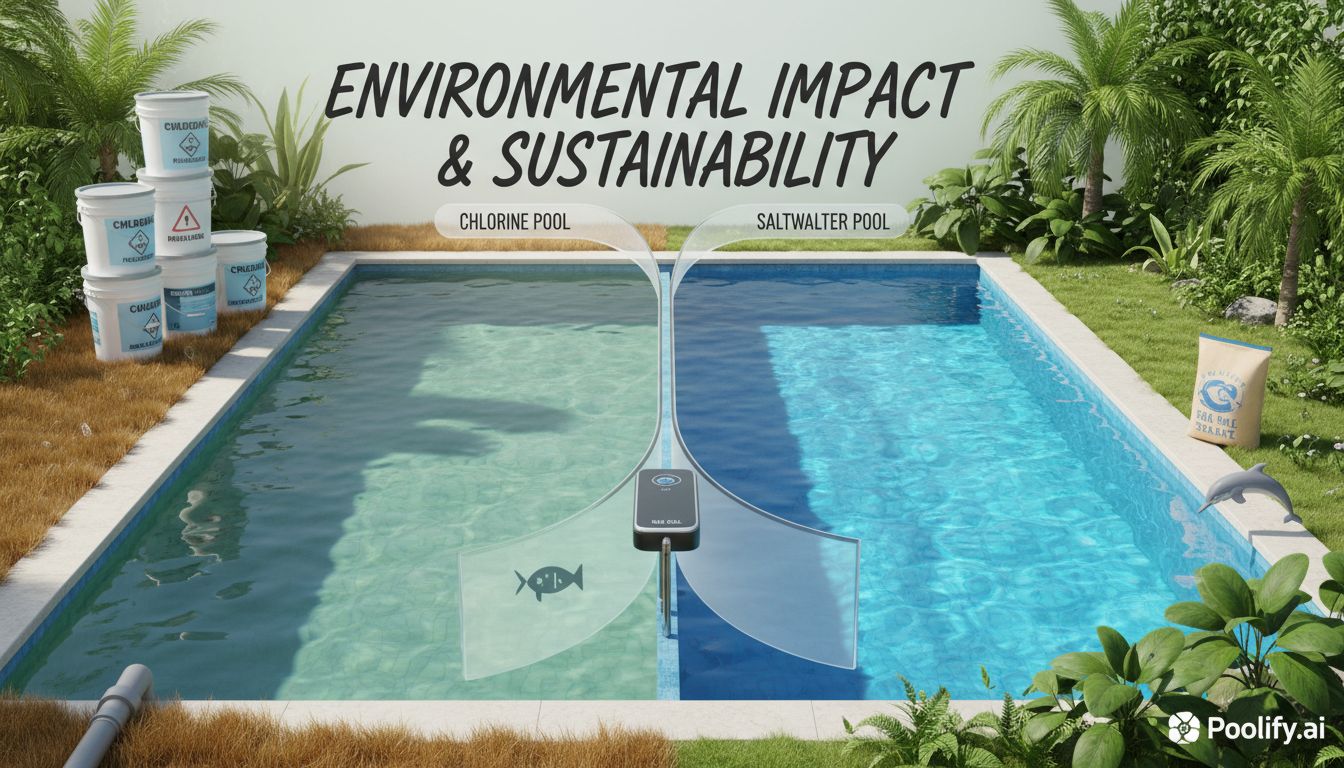
The chlorine pool vs saltwater pool environmental comparison reveals nuanced considerations. Traditional chlorine production involves chemical manufacturing processes that consume energy and produce industrial byproducts. Transporting chlorine products to retailers and homes adds carbon emissions. However, the chemicals themselves break down naturally in pool water, leaving minimal environmental residue.
Saltwater systems eliminate the need for manufactured chlorine products, reducing industrial chemical production and transportation emissions. The salt itself is a natural mineral with minimal processing requirements. However, saltwater pools consume more electricity to power the chlorination process, and the environmental impact depends on local energy sources. In regions with renewable energy, saltwater systems offer clear environmental advantages; in coal-dependent areas, the benefit diminishes.
The chlorine pool vs saltwater pool sustainability discussion also involves water conservation. Saltwater systems require less frequent draining and refilling because the automated chlorination maintains more stable chemistry. Traditional chlorine pools may need partial water replacement more frequently to manage total dissolved solids and cyanuric acid buildup. For those interested in comprehensive eco-friendly pool maintenance strategies, both systems can be managed sustainably with proper practices.
Disposal and Drainage Considerations
When comparing chlorine pool vs saltwater pool drainage, saltwater systems require more careful disposal planning. The elevated salt content can damage lawns, gardens, and landscaping if drained directly onto property. Many municipalities restrict saltwater pool drainage into storm sewers due to environmental concerns. Pool owners may need to hire professional drainage services or dilute water before disposal, adding complexity and cost.
Equipment Compatibility and Pool Material Considerations
The chlorine pool vs saltwater pool decision affects equipment longevity and material compatibility. Saltwater accelerates corrosion of metal components, including pool ladders, handrails, light fixtures, heaters, and decorative features. Stainless steel equipment corrodes faster in saltwater environments, and even “salt-friendly” metals show increased wear over time. Pool owners often face unexpected replacement costs for corroded equipment.
Traditional chlorine pools are gentler on metal components and equipment. Standard pool accessories and equipment last longer in traditional chlorine environments, reducing long-term replacement costs. The chlorine pool vs saltwater pool equipment compatibility strongly favors traditional systems for pools with extensive metal features or expensive decorative elements.
Pool surface materials also respond differently to each system. Plaster, pebble, and tile surfaces generally perform well with both systems, though saltwater can slightly accelerate calcium scaling on certain surfaces. Vinyl liners show comparable longevity in both chlorine pool vs saltwater pool environments when properly maintained. Fiberglass pools work excellently with both systems, showing no significant difference in durability or appearance over time.
Heater and Automation System Compatibility
The chlorine pool vs saltwater pool equipment discussion must address heating systems. Gas heaters with copper heat exchangers corrode rapidly in saltwater pools, often requiring replacement within 3-5 years versus 7-10 years in traditional chlorine pools. Heat pumps with titanium heat exchangers perform better but still show accelerated wear. Pool owners should budget for more frequent heater replacement or invest in salt-compatible heating systems upfront.
Common Problems and Troubleshooting
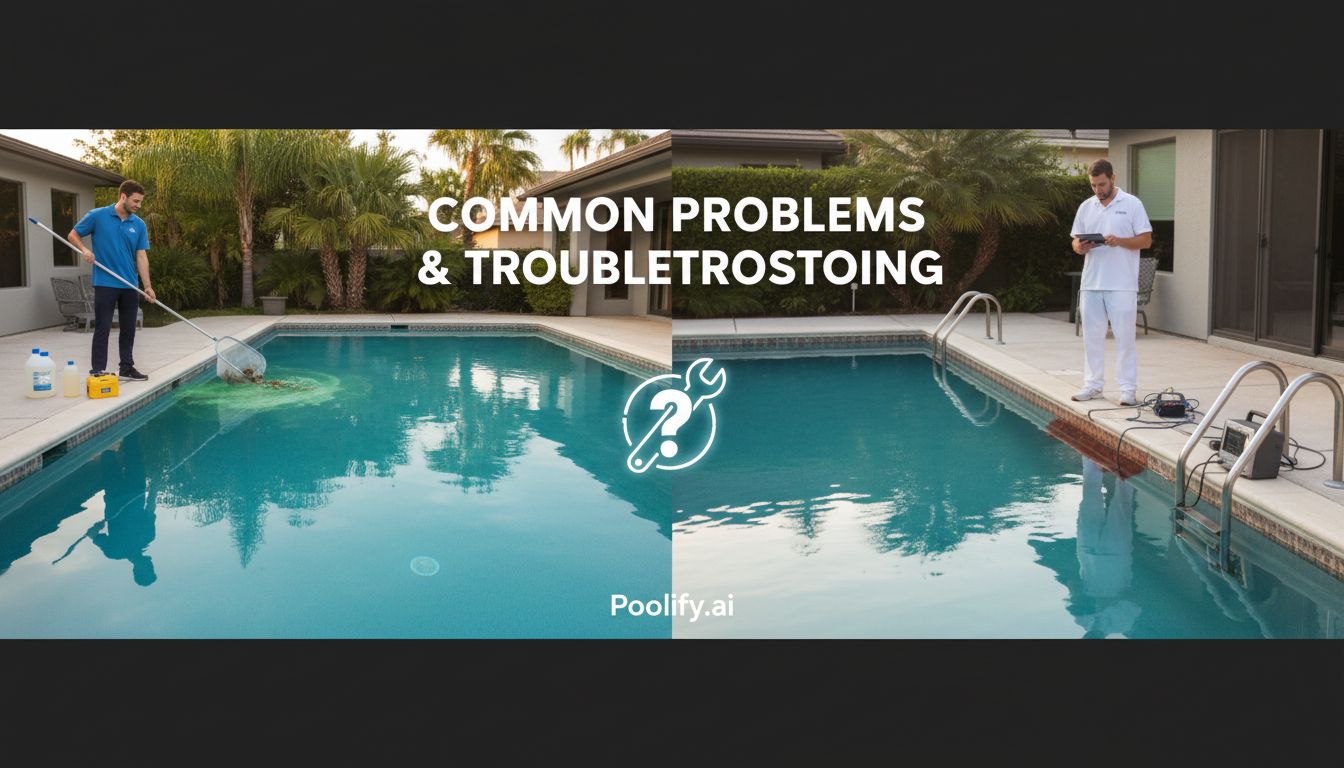
Understanding typical issues helps inform the chlorine pool vs saltwater pool decision. Traditional chlorine pools commonly face algae blooms during hot weather, requiring shock treatments and increased chlorination. Chlorine demand fluctuates with temperature, rainfall, and swimmer load, necessitating frequent adjustments. Cloudy water often results from inadequate filtration or improper chemical balance, but responds quickly to corrective measures.
Saltwater systems encounter different challenges. Salt cell calcium buildup reduces chlorine production efficiency, requiring regular cleaning with acid solutions. Low salt levels trigger system shutdowns, stopping chlorination until salt is added. Electronic control boards can malfunction, requiring professional diagnosis and repair. The chlorine pool vs saltwater pool troubleshooting complexity differs significantly, with saltwater issues often requiring technical expertise or professional service.
In 2026, improved salt cell technology has reduced some common problems. Self-cleaning cells automatically reverse polarity to prevent calcium buildup, extending cleaning intervals. Advanced diagnostics identify issues before they affect water quality. Despite these improvements, the chlorine pool vs saltwater pool problem-solving still requires different skill sets and approaches.
Addressing Green Pool Recovery
The chlorine pool vs saltwater pool recovery from severe algae blooms differs substantially. Traditional chlorine pools allow aggressive shock treatments with high chlorine doses, often clearing green water within 24-48 hours. Pool owners can add large quantities of chlorine quickly, overwhelming algae growth and restoring clarity.
Saltwater systems produce chlorine at fixed rates, limiting their ability to quickly address severe problems. Green pool recovery often requires supplemental chlorine addition through traditional methods, essentially treating it as a chlorine pool temporarily. This limitation represents a significant consideration in the chlorine pool vs saltwater pool comparison for pools prone to algae issues or infrequent maintenance.
Frequently Asked Questions About Chlorine Pool vs Saltwater Pool
Can I convert my existing chlorine pool to saltwater?
Yes, most existing pools can convert to saltwater systems. The process involves installing a salt chlorine generator, adding salt to achieve proper levels, and ensuring equipment compatibility. Professional installation costs $1,500-$3,500 depending on pool size and necessary equipment upgrades. The chlorine pool vs saltwater pool conversion makes sense for pools with salt-compatible equipment and owners seeking reduced chemical handling.
Do saltwater pools taste salty when swimming?
Saltwater pools contain significantly less salt than ocean water—about one-tenth the concentration. Most swimmers notice minimal to no salty taste, and the water feels softer rather than noticeably salty. The chlorine pool vs saltwater pool taste difference is subtle, with saltwater pools offering a more neutral taste than heavily chlorinated traditional pools.
Which system is better for people with sensitive skin?
Saltwater pools generally cause less skin irritation due to lower chloramine levels and more consistent chlorine concentrations. The softer water feel and reduced chemical odor make saltwater systems preferable for individuals with sensitive skin or respiratory conditions. However, properly maintained traditional chlorine pools can also provide comfortable swimming conditions. The chlorine pool vs saltwater pool choice for sensitive swimmers typically favors saltwater systems.
How long do salt cells last before replacement?
Salt cells typically last 3-7 years depending on usage hours, maintenance quality, and water chemistry. Proper care—including regular cleaning, balanced water chemistry, and appropriate salt levels—extends cell life. Replacement costs range from $500-$900. This recurring expense is a key consideration in the chlorine pool vs saltwater pool long-term cost analysis.
Can I use a saltwater system with my pool heater?
Yes, but heater compatibility varies. Copper heat exchangers corrode rapidly in saltwater environments, while titanium heat exchangers perform well. Check your heater specifications before converting to saltwater. Many pool owners upgrade to salt-compatible heaters during conversion. The chlorine pool vs saltwater pool equipment compatibility significantly affects total conversion costs when heating systems require replacement.
Key Takeaways: Making Your Chlorine Pool vs Saltwater Pool Decision
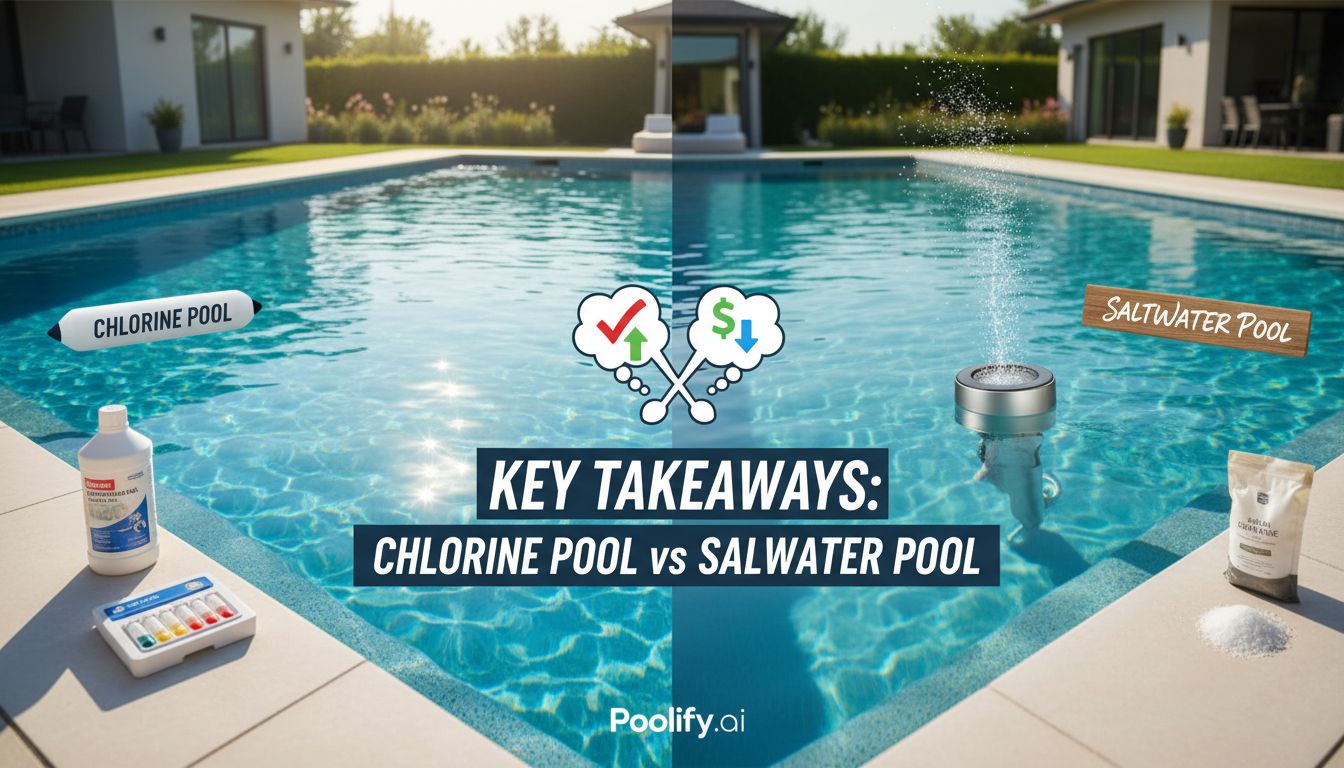
- Initial costs favor chlorine pools: Traditional systems require $300-$800 in startup equipment versus $1,500-$3,500 for saltwater conversion, making chlorine pools more budget-friendly initially.
- Operating costs are comparable: While saltwater systems reduce chemical expenses, electricity costs and equipment replacement narrow the long-term cost difference between chlorine pool vs saltwater pool systems to $50-$100 annually.
- Water quality and comfort lean toward saltwater: Softer water feel, reduced eye irritation, and more consistent chemistry make saltwater systems preferable for swimmers prioritizing comfort, though well-maintained chlorine pools provide excellent water quality.
- Maintenance complexity differs significantly: Traditional chlorine pools offer simpler, more intuitive maintenance that most homeowners master quickly, while saltwater systems require technical understanding and may need professional service for complex issues.
- Equipment compatibility matters: Saltwater accelerates corrosion of metal components and certain heaters, potentially adding thousands in unexpected replacement costs that favor traditional chlorine pool longevity.
Conclusion: Choosing the Right System for Your Lifestyle
The chlorine pool vs saltwater pool decision ultimately depends on your priorities, budget, and maintenance preferences. Saltwater systems excel for homeowners seeking softer water feel, reduced chemical handling, and automated maintenance, despite higher initial costs and technical complexity. Traditional chlorine pools remain ideal for budget-conscious owners who prefer hands-on control, simpler troubleshooting, and lower equipment replacement costs.
In 2026, both systems deliver safe, enjoyable swimming experiences when properly maintained. The chlorine pool vs saltwater pool debate has no universal winner—only the right choice for your specific situation. Consider your technical comfort level, long-term budget, swimming frequency, and equipment compatibility before making this significant investment. Whether you choose the automation of saltwater or the simplicity of traditional chlorine, consistent maintenance and proper water chemistry management ensure years of swimming enjoyment.
For homeowners still undecided about the chlorine pool vs saltwater pool question, consult with local pool professionals who understand regional water conditions, climate factors, and equipment availability. Many companies offer trial periods or detailed cost analyses comparing both systems for your specific pool size and usage patterns. Taking time to thoroughly evaluate the chlorine pool vs saltwater pool options ensures you select the system that best fits your lifestyle, budget, and swimming preferences for years to come.
References
- Centers for Disease Control and Prevention – Residential Pool Disinfection and Testing
- Environmental Protection Agency – Chlorine Disinfection Information
- Poolify.ai – Pool Maintenance Costs Guide
- Poolify.ai – Eco-Friendly Pool Maintenance Strategies