
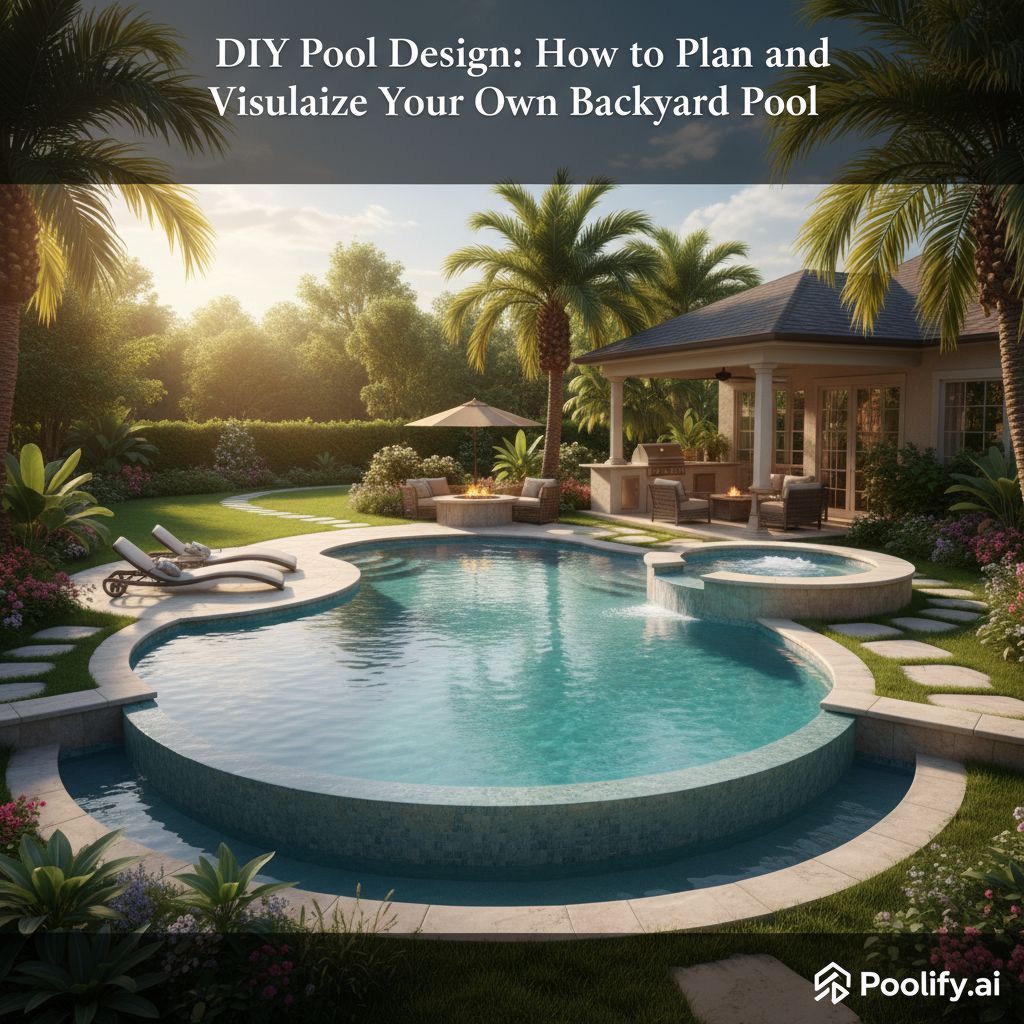
DIY pool design is becoming increasingly popular as homeowners look for ways to plan a backyard pool before talking to builders or committing to expensive designs. Whether you’re exploring ideas, comparing layouts, or trying to understand what’s possible in your space, DIY pool design allows you to take control of the early planning process and make smarter decisions from the start.
This guide walks through how DIY pool design works, what you should think about before construction, and how to visualize your ideas clearly enough to move forward with confidence.
What DIY Pool Design Actually Means
DIY pool design doesn’t mean building a pool yourself from scratch. Instead, DIY pool design refers to the process of planning, conceptualizing, and visualizing a pool layout on your own before involving contractors or designers.
With DIY pool design, homeowners focus on:
- Pool size and shape
- Placement within the backyard
- How the pool connects to patios and outdoor spaces
- Feature ideas like steps, tanning ledges, or water features
- Overall style and aesthetic direction
This approach helps you arrive at conversations with builders prepared, informed, and aligned on your goals.
Why Homeowners Are Choosing DIY Pool Design
There are several reasons DIY pool design has gained traction in recent years.
First, pool construction is a major investment. DIY pool design helps homeowners avoid rushed decisions by allowing them to explore options visually before money is on the line.
Second, many homeowners struggle to imagine how a pool will look in their actual backyard. DIY pool design bridges that gap by turning abstract ideas into concrete visuals.
Finally, DIY pool design gives you flexibility. You can experiment with layouts, adjust ideas, and refine preferences without the pressure of timelines or sales conversations.
Key Factors to Consider in DIY Pool Design
Before jumping into layouts or styles, it’s important to understand the foundational elements that shape any successful DIY pool design.
Backyard Size and Shape
Every DIY pool design starts with the physical boundaries of the yard. The size, shape, and orientation of your backyard directly influence what kind of pool design is realistic.
Small or narrow yards often benefit from:
- Rectangular or plunge-style pools
- Minimal decking
- Clean, efficient layouts
Larger yards allow more flexibility with curves, features, and surrounding outdoor living areas.
Pool Placement
DIY pool design isn’t just about the pool itself — it’s about where it sits in relation to your home.
Consider:
- Sightlines from windows and doors
- Proximity to patios or outdoor kitchens
- Sun exposure throughout the day
- Privacy from neighboring properties
Good DIY pool design places the pool where it feels intentional, not squeezed in as an afterthought.
Pool Shape and Style
DIY pool design works best when you choose a clear style direction early. This helps avoid mismatched features later.
Common DIY pool design styles include:
- Modern and minimalist
- Resort-style
- Natural or lagoon-inspired
- Family-focused recreational designs
Your chosen style should complement your home’s architecture and the way you plan to use the pool.
How to Design a Pool Yourself Without Guesswork
One of the biggest challenges in DIY pool design is visualization. Sketches and imagination can only go so far, especially if you’re not a designer.
This is where modern DIY pool design tools make a major difference.
Instead of relying on generic inspiration photos, homeowners can now visualize pool designs directly in their own backyard using real images. Seeing a pool placed in your actual space helps answer critical questions quickly:
- Is the pool too large or too small?
- Does the layout feel balanced?
- How much room is left for seating and walking space?
DIY pool design becomes far more effective when ideas are grounded in your real environment.
Common DIY Pool Design Mistakes to Avoid
While DIY pool design offers flexibility, there are a few common pitfalls homeowners should avoid.
One mistake is designing a pool that’s too large for the space. Oversized pools can limit movement, reduce usability, and increase costs unnecessarily.
Another issue is ignoring how the pool connects to the rest of the yard. DIY pool design should account for circulation, furniture placement, and access points.
Finally, many homeowners overlook future maintenance and ownership. Design choices made during DIY pool design can affect cleaning, energy use, and long-term upkeep.
Using DIY Pool Design to Communicate With Builders
One of the biggest advantages of DIY pool design is how it improves communication with professionals.
When you arrive with a clear design concept, builders can:
- Provide more accurate estimates
- Identify feasibility issues early
- Suggest improvements instead of starting from scratch
DIY pool design doesn’t replace professional expertise — it enhances it by aligning everyone around a shared vision.
How AI Is Changing DIY Pool Design
AI-powered tools are transforming DIY pool design by making visualization faster and more accessible. Instead of weeks of back-and-forth, homeowners can generate multiple pool design concepts in minutes.
By uploading a photo of your backyard, AI-based DIY pool design tools can:
- Place realistic pool layouts into your space
- Adjust size, shape, and positioning
- Experiment with different design styles
This makes DIY pool design more intuitive and less intimidating, even for first-time pool owners.
When DIY Pool Design Makes the Most Sense
DIY pool design is especially useful if:
- You’re early in the planning phase
- You want to explore ideas before contacting builders
- You’re comparing multiple layouts or styles
- You want clearer visuals to guide decisions
Even homeowners who plan to hire designers benefit from DIY pool design as a starting point.
Final Thoughts on DIY Pool Design
DIY pool design empowers homeowners to take an active role in planning one of the most significant upgrades to their property. By understanding your space, clarifying your goals, and visualizing ideas early, you reduce uncertainty and improve outcomes.
Whether you’re experimenting with layouts, refining a concept, or preparing to talk with builders, DIY pool design helps turn inspiration into actionable plans.