
Introduction to DIY Pool Maintenance in 2026
Maintaining a swimming pool doesn’t require professional expertise or expensive service contracts. With the right diy pool maintenance tips, homeowners can keep their pools crystal clear, chemically balanced, and equipment running smoothly throughout the year. This comprehensive guide provides proven diy pool maintenance tips that save money while ensuring your backyard oasis remains safe and inviting. Whether you’re a first-time pool owner or looking to refine your maintenance routine, these diy pool maintenance tips will transform your approach to pool care in 2026.
Understanding Pool Water Chemistry Basics
Water chemistry forms the foundation of effective diy pool maintenance tips. Proper chemical balance prevents algae growth, protects equipment, and ensures swimmer safety. The primary chemical parameters include pH levels, chlorine concentration, alkalinity, and calcium hardness. According to the CDC’s guidelines on pool water quality, maintaining proper disinfectant levels is essential for preventing recreational water illnesses.
pH levels should remain between 7.4 and 7.6 for optimal comfort and sanitizer effectiveness. When pH drifts outside this range, chlorine becomes less effective, and swimmers may experience eye irritation. Test your water at least twice weekly using reliable test strips or liquid test kits. These diy pool maintenance tips for chemistry testing help you catch imbalances before they become serious problems.
Chlorine serves as your pool’s primary defense against bacteria and contaminants. Free chlorine levels should maintain between 1-3 parts per million (ppm) for residential pools. Shock treatments, which involve adding concentrated chlorine, should occur weekly during peak season or after heavy pool usage. These essential diy pool maintenance tips for sanitization keep water safe and clear.
Balancing Total Alkalinity and Calcium Hardness
Total alkalinity acts as a pH buffer, preventing rapid fluctuations that damage pool surfaces and equipment. Ideal alkalinity ranges from 80-120 ppm. When alkalinity drops too low, pH becomes unstable and difficult to maintain. Adding sodium bicarbonate (baking soda) raises alkalinity levels, making this one of the most cost-effective diy pool maintenance tips available.
Calcium hardness prevents corrosion in plaster pools and equipment. Target levels fall between 200-400 ppm for most pool types. Low calcium causes water to become aggressive, potentially etching plaster surfaces. High calcium leads to scaling and cloudy water. Regular testing and adjustment represent crucial diy pool maintenance tips for protecting your investment.
Essential Pool Cleaning Techniques
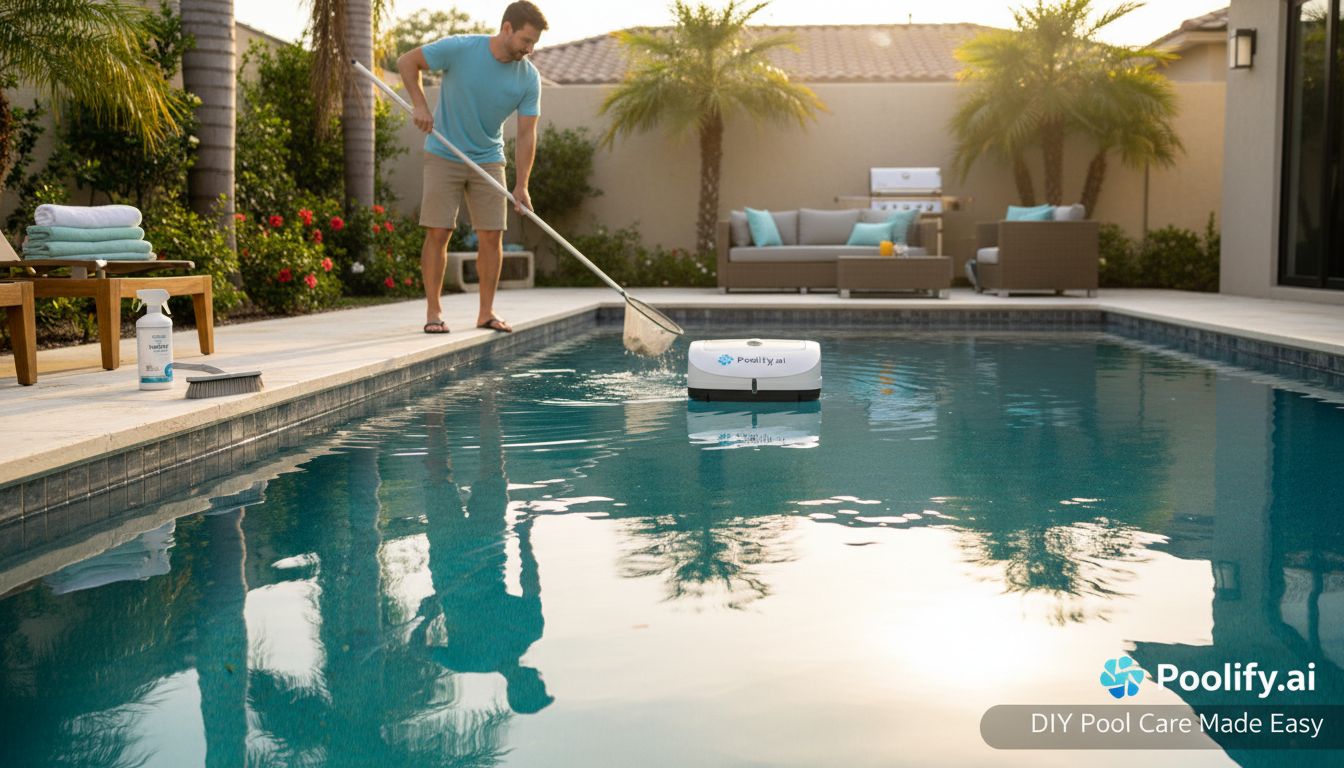
Physical cleaning complements chemical treatment in comprehensive diy pool maintenance tips. A consistent cleaning schedule prevents debris accumulation, reduces chemical demand, and maintains water clarity. Daily skimming removes leaves, insects, and floating debris before they sink and decompose, contributing to poor water quality.
Brushing pool walls and floors weekly dislodges algae spores and prevents buildup in corners and crevices. Use a nylon brush for vinyl liners and a stainless steel brush for concrete or plaster surfaces. Pay special attention to steps, ladders, and behind fixtures where circulation is limited. These targeted diy pool maintenance tips prevent stubborn algae colonies from establishing.
Vacuuming removes settled debris that skimming and filtration miss. Manual vacuuming provides thorough cleaning and allows you to inspect pool surfaces for damage. Automatic pool cleaners save time and maintain baseline cleanliness between manual sessions. For homeowners seeking efficiency, investing in quality cleaning equipment ranks among the smartest diy pool maintenance tips for 2026.
Tile and Waterline Maintenance
The waterline accumulates oils, sunscreen, and mineral deposits that create unsightly rings. Weekly scrubbing with a tile brush and specialized cleaner prevents buildup. For stubborn calcium deposits, pumice stones safely remove scaling without damaging tile surfaces. These simple diy pool maintenance tips keep your pool looking professionally maintained.
Filter cleaning maintains optimal circulation and water clarity. Cartridge filters require monthly rinsing and deep cleaning quarterly. Sand filters need backwashing when pressure gauges read 8-10 psi above normal operating levels. DE filters combine backwashing with fresh DE powder addition. Regular filter maintenance represents non-negotiable diy pool maintenance tips that protect water quality and equipment longevity.
Seasonal Pool Maintenance Strategies
Seasonal changes demand adjusted diy pool maintenance tips to address varying usage patterns and environmental conditions. Spring opening requires thorough cleaning, equipment inspection, and chemical balancing after months of dormancy. Remove winter covers carefully to prevent debris from entering the pool, then vacuum and shock the water before beginning regular filtration.
Summer maintenance intensifies due to increased usage, higher temperatures, and intense sunlight. UV radiation depletes chlorine rapidly, requiring more frequent testing and adjustment. Evaporation concentrates minerals and chemicals, necessitating dilution with fresh water. These summer-specific diy pool maintenance tips prevent common warm-weather problems like algae blooms and cloudy water.
Fall preparation gradually reduces chemical usage as temperatures drop and swimming frequency decreases. Continue running filtration systems until water temperature falls below 60°F to prevent algae growth. These transitional diy pool maintenance tips help extend your swimming season while preparing for eventual winterization.
Winterization and Off-Season Care
Proper winterization protects pools and equipment from freeze damage in cold climates. Lower water levels below skimmer openings, drain equipment, and add winterizing chemicals to prevent algae growth. Cover pools with secure winter covers that block sunlight and debris. These protective diy pool maintenance tips prevent expensive spring repairs and ensure quick reopening.
In warmer climates where pools remain operational year-round, winter diy pool maintenance tips focus on reduced chemical usage and less frequent cleaning. Monitor water levels during rainy seasons and adjust chemical balance accordingly. Year-round pool owners benefit from consistent maintenance routines that prevent neglect during cooler months.
Pool Equipment Care and Troubleshooting
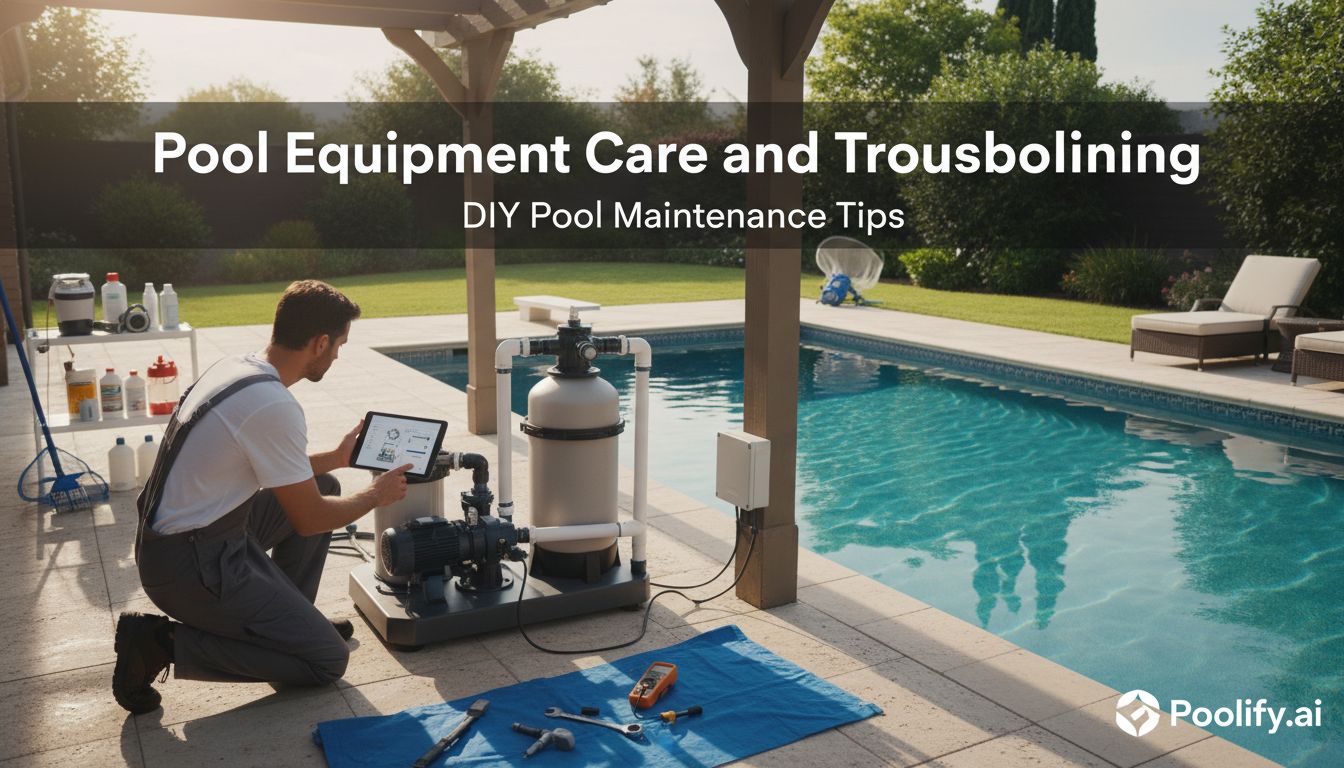
Equipment maintenance extends beyond water chemistry in comprehensive diy pool maintenance tips. Pumps, filters, heaters, and automation systems require regular attention to function efficiently. Monthly pump basket cleaning removes debris that restricts flow and strains motors. Check for unusual noises, vibrations, or leaks that indicate developing problems.
Filter pressure monitoring provides early warning of maintenance needs. Rising pressure indicates clogging that reduces circulation efficiency. Falling pressure suggests damaged filter elements or air leaks in the system. Understanding these indicators ranks among the most valuable diy pool maintenance tips for preventing equipment failure.
O-ring lubrication prevents leaks in pump lids, filter housings, and valve connections. Apply silicone-based lubricant annually or whenever replacing o-rings. This simple preventive measure represents one of the easiest diy pool maintenance tips that saves significant repair costs. For more detailed guidance on equipment selection and care, explore our comprehensive pool equipment guide.
Identifying and Resolving Common Problems
Cloudy water typically results from poor filtration, chemical imbalance, or inadequate circulation. Run filtration systems longer, shock the pool, and verify proper chemical levels. These troubleshooting diy pool maintenance tips resolve most clarity issues within 24-48 hours without professional intervention.
Green water indicates algae growth requiring immediate attention. Brush all surfaces thoroughly, shock with triple the normal chlorine dose, and run filtration continuously until water clears. Algaecide supplements chlorine treatment in severe cases. Preventing algae through consistent maintenance represents far easier diy pool maintenance tips than remediation.
High chlorine demand occurs when pools consistently consume chlorine faster than expected. This condition often indicates organic contamination, inadequate circulation, or stabilizer imbalance. Address underlying causes rather than simply adding more chlorine. These diagnostic diy pool maintenance tips prevent wasted chemicals and frustration.
Money-Saving DIY Pool Maintenance Strategies
Cost-effective diy pool maintenance tips help homeowners maintain pristine pools without breaking budgets. Buying chemicals in bulk during off-season sales reduces per-unit costs significantly. Generic sodium hypochlorite (liquid chlorine) performs identically to premium brands at fraction of the price. These budget-conscious diy pool maintenance tips maintain quality while controlling expenses.
Energy efficiency reduces operational costs substantially. Running pumps during off-peak electricity hours, using variable-speed pumps, and maintaining clean filters minimize energy consumption. Solar covers reduce heating costs and evaporation, conserving both water and chemicals. These sustainable diy pool maintenance tips benefit both your wallet and the environment.
Preventive maintenance costs far less than repairs. Regular equipment inspection, prompt minor repairs, and consistent water chemistry prevent expensive component failures. Replacing worn o-rings costs dollars; replacing damaged pump seals costs hundreds. This preventive approach represents the most financially sound diy pool maintenance tips available.
Creating a Maintenance Schedule
Systematic schedules ensure consistent care without overwhelming homeowners. Daily tasks include skimming and checking equipment operation. Weekly responsibilities encompass chemical testing, brushing, vacuuming, and shocking. Monthly maintenance involves filter cleaning and detailed equipment inspection. These organized diy pool maintenance tips transform pool care from reactive crisis management to proactive routine.
Digital tools and smartphone apps help track chemical levels, maintenance activities, and supply inventory. Setting reminders ensures critical tasks never slip through cracks. Modern technology enhances traditional diy pool maintenance tips, making pool ownership more manageable than ever in 2026.
Advanced DIY Pool Maintenance Techniques
Experienced pool owners benefit from advanced diy pool maintenance tips that optimize efficiency and results. Cyanuric acid management stabilizes chlorine against UV degradation but accumulates over time. Maintain levels between 30-50 ppm for optimal protection without diminishing sanitizer effectiveness. Dilution with fresh water reduces excessive stabilizer when levels climb too high.
Phosphate control prevents algae growth by eliminating this essential nutrient. While not traditionally emphasized, phosphate removal represents emerging diy pool maintenance tips gaining popularity in 2026. Test phosphate levels quarterly and treat with specialized removers when concentrations exceed 500 ppb.
Salt chlorine generators automate sanitizer production, reducing manual chlorine addition. These systems require specific diy pool maintenance tips including cell cleaning, salt level monitoring, and pH management. Salt systems produce chlorine continuously, eliminating the peaks and valleys of manual dosing. Learn more about automated systems in our pool automation guide.
Water Conservation Strategies
Water conservation represents increasingly important diy pool maintenance tips as resources become scarcer. Solar covers reduce evaporation by 95%, saving thousands of gallons annually. Fixing leaks promptly prevents waste and reduces chemical consumption. Backwashing filters only when necessary rather than on arbitrary schedules conserves water while maintaining cleanliness.
Rainwater harvesting systems can supplement pool water needs in appropriate climates. While initial setup requires investment, long-term savings and environmental benefits make this one of the most forward-thinking diy pool maintenance tips for 2026. Always test and balance rainwater additions to maintain proper chemistry.
Safety Considerations in Pool Maintenance
Safe chemical handling forms critical diy pool maintenance tips that protect homeowners and families. Never mix different chemicals, which can produce dangerous reactions. Store pool chemicals in cool, dry locations away from children and pets. Always add chemicals to water, never water to chemicals, to prevent splashing and reactions.
Wear protective equipment including gloves and safety glasses when handling concentrated chemicals. Read product labels thoroughly and follow manufacturer instructions precisely. These safety-focused diy pool maintenance tips prevent injuries and ensure effective chemical application.
Electrical safety around pools demands attention in comprehensive diy pool maintenance tips. Ensure GFCI protection on all pool-related electrical circuits. Never operate electrical equipment with wet hands or while standing in water. Inspect cords and connections regularly for damage. Professional electricians should handle any electrical repairs or modifications.
Emergency Preparedness
Maintain emergency supplies including extra test kits, shock treatment, and pH adjusters for unexpected problems. Know how to quickly address green water, equipment failure, or chemical accidents. These preparedness-oriented diy pool maintenance tips ensure you can handle problems promptly without waiting for professional help or supply deliveries.
Document your pool’s normal operating parameters including pressure readings, chemical levels, and equipment settings. This baseline information helps identify problems quickly and communicate effectively with professionals when needed. Thorough record-keeping represents often-overlooked diy pool maintenance tips that prove invaluable during troubleshooting.
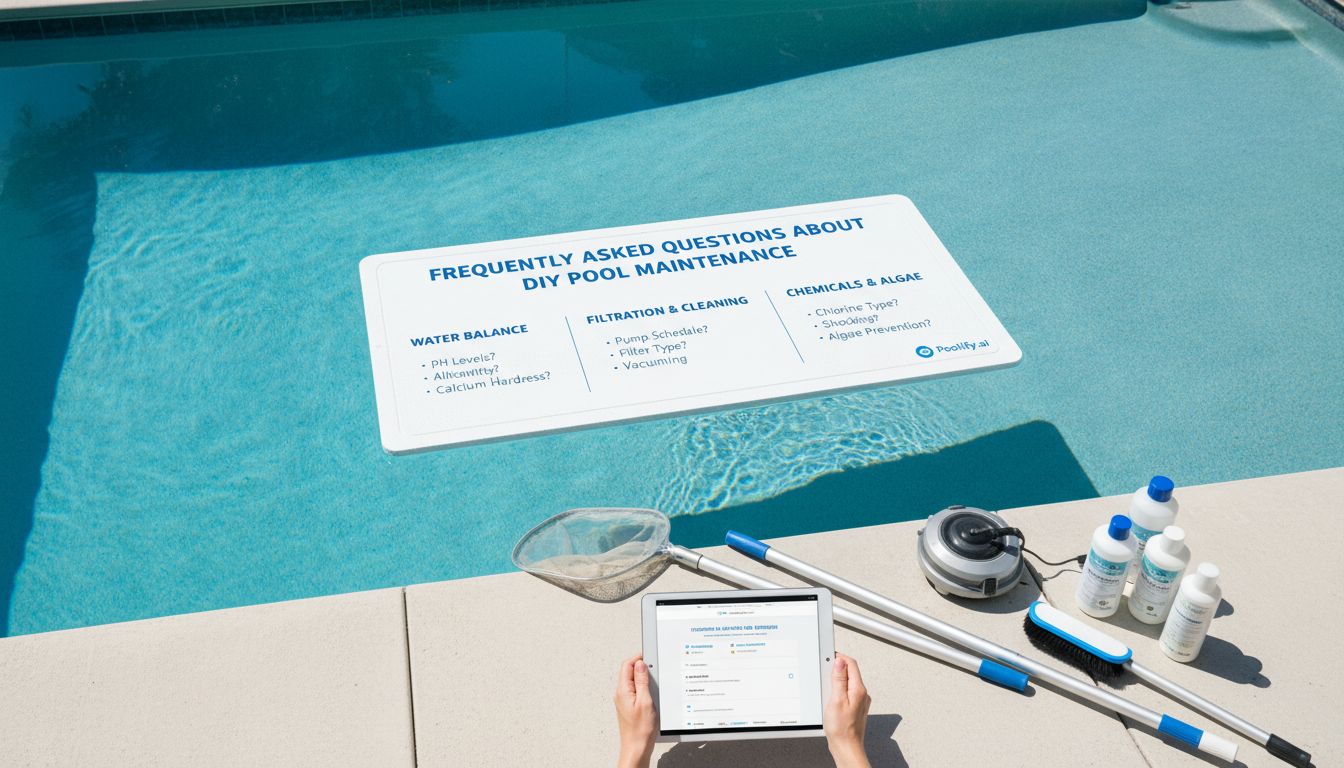
Frequently Asked Questions About DIY Pool Maintenance
How often should I test my pool water chemistry?
Test pool water at least twice weekly during swimming season, focusing on pH and chlorine levels. Test alkalinity, calcium hardness, and stabilizer monthly. More frequent testing becomes necessary after heavy rain, high usage, or when water appears cloudy. Regular testing represents foundational diy pool maintenance tips that prevent most water quality problems.
Can I use household bleach instead of pool chlorine?
Unscented household bleach (sodium hypochlorite) works effectively for pool sanitization and costs less than branded pool chlorine. Ensure bleach contains no additives, fragrances, or splashless formulas. Calculate dosing based on concentration, typically 6-8% for household bleach versus 10-12% for pool chlorine. This cost-saving approach ranks among popular diy pool maintenance tips for budget-conscious owners.
What causes my pool to turn green overnight?
Rapid algae blooms result from chlorine depletion, often following heavy rain, high swimmer loads, or equipment failure. Insufficient circulation, poor filtration, or phosphate accumulation accelerate algae growth. Address green water immediately with shock treatment, brushing, and continuous filtration. Prevention through consistent chemical maintenance represents easier diy pool maintenance tips than remediation.
How can I reduce my pool maintenance time?
Automation systems, robotic cleaners, and salt chlorine generators significantly reduce hands-on maintenance time. Consistent weekly routines prevent time-consuming problems from developing. Proper chemical balance reduces cleaning frequency by preventing algae and scaling. These efficiency-focused diy pool maintenance tips help busy homeowners maintain beautiful pools with minimal time investment.
Should I drain my pool for winter in cold climates?
Most pools should not be completely drained for winter, as groundwater pressure can damage empty pools. Lower water below skimmer level, drain equipment, and use appropriate winter chemicals and covers. Consult local diy pool maintenance tips specific to your climate and pool type. In-ground pools particularly benefit from maintaining water for structural support.
Key Takeaways
- Master water chemistry fundamentals – Understanding pH, chlorine, alkalinity, and calcium hardness forms the foundation of effective diy pool maintenance tips that keep water safe and clear.
- Establish consistent cleaning routines – Daily skimming, weekly brushing and vacuuming, and regular filter maintenance prevent problems before they develop, representing essential diy pool maintenance tips for all pool owners.
- Adapt maintenance to seasons – Adjust chemical usage, cleaning frequency, and equipment operation based on temperature, usage patterns, and weather conditions using season-specific diy pool maintenance tips.
- Practice preventive equipment care – Regular inspection, cleaning, and minor repairs prevent expensive failures, making preventive maintenance among the most cost-effective diy pool maintenance tips available.
- Prioritize safety and documentation – Handle chemicals properly, maintain emergency supplies, and document normal operating parameters to ensure safe, effective pool care using comprehensive diy pool maintenance tips.
Conclusion
Mastering diy pool maintenance tips empowers homeowners to maintain pristine pools while controlling costs and building valuable skills. The comprehensive diy pool maintenance tips covered in this guide address water chemistry, cleaning techniques, equipment care, seasonal adjustments, and troubleshooting strategies that keep pools sparkling year-round. By implementing these proven diy pool maintenance tips consistently, you’ll enjoy a safe, beautiful pool without relying on expensive professional services.
Success with diy pool maintenance tips requires commitment to regular routines, attention to detail, and willingness to learn from experience. Start with fundamental diy pool maintenance tips like proper chemical testing and consistent cleaning, then gradually incorporate advanced techniques as your confidence grows. The investment in learning effective diy pool maintenance tips pays dividends through reduced costs, improved water quality, and the satisfaction of maintaining your own backyard oasis. For additional resources on pool care, visit our complete pool care resource center.
As pool technology and products evolve in 2026, staying informed about new diy pool maintenance tips ensures you benefit from innovations while maintaining time-tested fundamentals. Whether you’re a new pool owner or experienced enthusiast, these diy pool maintenance tips provide the knowledge and confidence to keep your pool in exceptional condition throughout every season.
References
- Centers for Disease Control and Prevention – Residential Pool Disinfection and Testing: https://www.cdc.gov/healthywater/swimming/residential/disinfection-testing.html